Manufactured mystery
I tried out a new mystery writer, D. D. Black, on the recommendation of someone on “What Should I Read Next?” and I’m feeling a little conflicted about whether to continue after the first two books. On the one hand, I liked the setting a lot (a small town on one of the many islands and peninsulas off Puget Sound, near Seattle), and I also liked the main character, Thomas Austin. He’s a former NYPD detective who, after a personal tragedy, retired on his pension to the Pacific Northwest and bought a combination mini-mart, café, and bait shop to keep him marginally occupied (not a lot of traffic). He’s smart and interesting and intuitive, and a little dark. I also liked the secondary characters, including Anna, a reporter/blogger destined to become a love interest in a future novel if Thomas can get out of his own way, and the three officers from the local police force—Ridley, Lucy, and Jimmy. I also like Austin’s corgi, Run.
What I didn’t particularly care for was the mysteries themselves. I know I have maintained in previous blog posts that mystery lovers read as much for the characters as they do for the mysteries, and that although the plots fade into one another, interest in the character’s ongoing storyline is what keeps the readers coming back. But the caveat to that is, the mysteries have to be at least marginally believable and present some sort of cohesive story arc to provide the background for a favorite detective, and…these didn’t, in my opinion.
The debut volume, The Bones at Point No Point, did a nice job of introducing all the characters, and then harked back to a case in which Thomas Austin was the lead detective when he was in New York City. It seems there is now a copycat killer on the loose, but the details are so eerily similar that it has him (and everyone else) wondering if he locked up the wrong woman or, at least, missed that she had a partner. This sounds plausible as a bare-bones description, but the likelihood of any of it was highly suspect. Also, for his first novel D. D. Black chose to portray a particularly gruesome murder scenario, in shocking detail, and I didn’t want to read about it, especially because he described it several times in scenes from the past and circumstances in the present.
I thought about stopping with the first, but then read the description for the second, The Shadows of Pike Place, and was intrigued. This was more of a “locked-room” mystery, in that the protagonist was murdered during an evening when she was in the company of a limited number of people, and therefore the killer had to be one of those present. Again, I enjoyed the dynamic between Austin and Anna, the introduction of the Seattle police chief, and the colorful characters Black writes as members of the murdered woman’s family; but again, the mystery took off in various weird directions and the result was dependent on so many doubtful events that I found it somewhat absurd and also anticlimactic.
These are what I call “manufactured” mysteries, in that the scenario is so out of the box that it strains credulity. In both cases, I would have much preferred a tamer mystery less dependent on extraordinary events, one that showcased its detective’s abilities rather than dropping him in the midst of chaos and expecting sense to be made of it when it wasn’t plausible in the first place.
I may come back to this series someday, just for the characters and locales, but I think I’m done with the Thomas Austin Crime Thrillers for now—they’re just too frustrating.
Zig-zag
I recently discovered that Elly Griffiths, who writes the Ruth Galloway mysteries and has three volumes in a fairly recent story line starring Harbinder Kaur, has yet another series, called either The Brighton Mysteries or Stephens & Mephisto, new to me although not new. She wrote the first, The Zig Zag Girl, in 2014, and the sixth one came out in 2021, so presumably it is an ongoing effort. I was excited by the prospect of another series by this author, especially because this one is billed as more of a “cozy,” so I picked up the first when it was offered at a discount by Book Bub. I am disappointed to say that it will not be a new favorite.
The first book begins in the 1930s, moves through World War II, and ends up in a “present-day” 1950s mystery in England. The pre-war and war years are told in flashback as background for what is happening “now.” During the war there was a group of recruits called the Magic Men (mostly made up of magicians by trade) who were deployed undercover to Norway to deceive and distract the Germans by building decoy camps, tanks, and aircraft carriers to make the enemy think there was a base of operations about which they should worry. In the present day, one of those people—Edgar Stephens—has gone on to become a police detective; a person associated with the war group has been brutally murdered, and Stephens is assigned to the case. It’s an odd one, employing a magical trick called the Zig Zag Girl, in which the magician’s assistant is apparently sliced into three parts, only to emerge whole at the end of the trick. (In the case of the murder, she has actually been dismembered.)
After a second person, also associated with the undercover war effort, turns up dead, Stephens and his friend Max Mephisto, a magician who still headlines in variety shows around Brighton where the murders have taken place, conclude that not only are the murders related, but that the other members of the group (including themselves) may be in danger. An effort is made to track them down and warn them, simultaneously checking to see if it could be one of them committing the murders.
The premise and the historical time period appealed to me, but there were so many flaws in this initial book that I doubt I will continue on to read another. The historical aspect is sketchy, and the timeline of the war itself doesn’t correspond to reality; the Norway campaign was in 1940, and in the book the group’s efforts there last only two years and a few months before the war ends, leaving out three years of World War II!
The police procedural elements of the book were likewise hard to believe: These are gruesome and high-profile murders (each based on a magic trick, so they were bound to have the media all over them, not to mention capturing the public’s imagination), yet the only people investigating them are one policeman, his assistant at the station, and his magician friend? It’s just too casual—even in the 1950s, there would have been some sort of investigative team. Most of the activities that, in a regular police procedural, would be featured and discussed (for instance, forensics) were merely dropped into narrative between the sole policeman and his civilian buddy, so that they seemed incidental rather than central to the case. Despite its being a murder mystery, there was more attention paid to the lifestyle of the traveling magician than there was to the murders!
Other than the two protagonists, the characters were thinly developed; perhaps the intent was to have you figure them out for yourself, but they just weren’t that interestingly presented, and some members of the Magic Men (even central ones) remained cardboard cutouts to the end. There wasn’t much scene-setting in terms of details about the era. The witness observations were repetitive and clumsy, and although the descriptions frustrated both the detective and the supposedly canny magician, I figured out “whodunnit” from them pretty early on in the book, and from there I was just reading to get to the big reveal.
If this book were a debut novel by a novice writer I might have been a bit more forgiving; but this is a skilled storyteller who has published 29 books and counting. My advice: Stick with Ruth Galloway, or try one of her Harbinder Kaur books. Perhaps the rest of the Brighton Mysteries are better than the initial one, but I don’t intend to investigate. There wasn’t enough zig-zag in this one to draw me further in.
Re-wilding
Scottish-American conservationist John Muir, the “Father of the National Parks,” once wrote that
“…when we try to pick out anything by itself, we find it hitched to everything else.”
John Muir
This quote was specifically called into use when considering the failing ecosystem of Yellowstone National Park, where the purposeful removal of wolves, Yellowstone’s top predator, meant that the elk population overgrazed the plants and trees, leading to the demise of songbirds, beavers, and cold-water fish. Wolves were the missing link in the equation that would keep Yellowstone healthy and, 28 years after they were reintroduced (in 1995), the ripple effect is considered one of the most successful rewilding efforts ever undertaken. The culling of the elk herds by the 80+ wolves now living in Yellowstone benefitted ravens, eagles, magpies, coyotes, and bears. Wolves’ preying on coyotes increased the populations of rabbits and mice, providing a wider food source for hawks, weasels, foxes, and badgers. Muir’s quote was certainly prescient.
Charlotte McConaghy’s novel Once There Were Wolves posits a similar experiment to bring wolves back to the forests and Highlands of Scotland to rebalance biodiversity, depicting the difficulties inherent in convincing the resident human population (primarily sheep farmers) of the benefits to be had, and protecting the wolves against the farmers’ and ranchers’ conviction that humans and wolves can’t
co-exist on the land.
The protagonist is lead biologist Inti Flynn, a passionate young woman whose unusual upbringing by her father—living a subsistence life deep in the forests of Canada—has shaped both her beliefs and her career. She arrives in Scotland accompanied by her twin, Aggie, who is deeply damaged, mostly silent and passive, and spends all her time sequestered in their cabin. Inti has an extraordinary affinity for the wolves, heightened by an actual neurological condition called mirror-touch synesthesia:
“My brain re-creates the sensory experiences of living creatures, of all people and even sometimes animals; if I see it I feel it, and for just a moment I am them, we are one and their pain or pleasure is my own. It can seem like magic, but really it’s not so far removed from how other brains behave: the physiological response to witnessing someone’s pain is a cringe, a recoil, a wince. We are hardwired for empathy.”
Inti Flynn, Once There Were Wolves, by Charlotte McConaghy
The book is part literary fiction, part mystery, and engrossing in its narrative. Although the rewilding program is officially sanctioned by the government, there is massive resistance by the locals, some of whom are aggressive with their threats to kill wolves who set foot on “their” land. Inti struggles between her desire to protect her wolves and her need to engage with the locals as something other than a know-it-all outsider. She is assisted in making the human connections by the sheriff, local-boy Duncan MacTavish, but he remains something of an enigma throughout the story, and his passivity when it comes to enforcing Inti’s cause frustrates her. Then a local farmer goes missing, and speculation inevitably turns to assumptions about wolf culpability.
The best parts of the book are Inti’s detailed observations about the wolves—how they relate to one another and to their surroundings, and their habits, travels, and behaviors as they integrate into this foreign environment. The reader is transported to the hillside blind where Inti watches a new batch of pups scramble and play just outside the mouth of their den while the adults warily sniff the air, cognizant of the human close by, and the welfare of the small packs dispersed around the town becomes personal as each wolf becomes familiar.
Less effective, for me, was the rest of the narrative, especially that surrounding the sheriff, Duncan, and Inti’s sister, Aggie. I felt like we were too far into the story before we understood what happened to destroy Aggie’s confidence and turn her into the near-catatonic figure she now presents. Likewise, Duncan runs hot and cold, both with Inti and also with his commitment to doing his job (although his devotion to the individuals in his community is touching), and I was frustrated by the incitement to waffle over whether he was a good guy or a bad one. But McConaghy knows how to keep the action flowing throughout the narrative, and the mystery remains intriguing up to its final solution. Readers should be aware that this book presents scenes including violence and abuse, although much of that action takes place “off screen,” or is implied but not graphically described. But the few graphic depictions are powerful and potentially disturbing.
I enjoy a story with some meat on its bones—focusing on a particular iteration of a wider philosophy. As happens with my reading choices from time to time, there was a serendipity of theme between this book and The Crow Trap, by Ann Cleeves, which also detailed a biodiversity study in a rural area, but whereas I found that book almost completely lacking in appeal, Once There Were Wolves delivers all kinds of intellectual and empathetic content. Despite the few caveats above, I would definitely recommend this book to anyone interested in both a gripping story and a thorough education about how the biological world works.
For more information about the Yellowstone rewilding project:
https://www.muchbetteradventures.com/magazine/yellowstone-wolves-rewilding-1995-history-books/
The essence of a genre
As I discuss in my genre lecture in my readers’ advisory class at UCLA, crime fiction accounts for as much as a third of the fiction published in English worldwide. If you regard that statistic you must conclude that there are many for whom the reading of mysteries is an attractive or even compelling way to occupy their leisure time.
A basic definition of mystery fiction is “any work of fiction in which a crime or the threat of a crime is central to the theme or plot.” But there is so much beyond that basic definition—at the very least, Who are the characters? What is the situation? and Who will figure it out? Think about all the elements that can be components: the red herring, the false clues, the inside job; the amateur vs. the professional detective, the reconstruction of the scene and circumstances, the procedural details of discovering the means, motive, and opportunity—the list goes on. There is also, amongst mystery readers, a certain vicarious authority or presence indulged in by their choice of protagonist. In other words, since most mysteries are part of a series, you as the reader are going to be spending a lot of time with that protagonist, i.e., the detective or person acting as such. That protagonist is
going to become far more important to you than any individual plot or story.
If you ask a mystery reader to describe Harry Bosch, the main character in Michael Connelly’s long-running series set in Los Angeles, they can give you a complete catalogue of what he looks like, how old he is, where he lives, how many times he’s been married and to whom, his relationship with his daughter, how many times he has been hired and then fired by the LAPD, in what other capacities he has performed as a detective, and even his war record in Vietnam; but if you ask that same reader the plot of one of the 24 Harry Bosch novels, that person may say “they all run together after a while.” It seems that everything about a series protagonist is recalled as a unit, with little or no memory of which specific texts revealed these details.
That’s not to say that plot isn’t vitally important to the experience; by reading a mystery, you are participating in the process of going from the unknown (the whodunnit) to the known, and following many indicators to get to the resolution, and mystery readers are notoriously unforgiving of a poorly laid-out plot. But characterization, of both the protagonist and the other participants, is key to a successful mystery.

I say all this as a lead-in to discussion of the book I just read, the first of a fairly long (10 books) and apparently successful body of work by a well-respected author whose other, more recent writing (Shetland Islands) I have recently enjoyed. It was because of those books that I decided to sample Ann Cleeves’s more well-known series about Detective Inspector Vera Stanhope, beginning in 1999 with The Crow Trap.
Having finished the book, I am utterly baffled about why, once having read this first one, anyone would bother to continue onward with the rest. Perhaps, if I had first seen the television show Vera, based on the series and starring the wonderful Brenda Blethyn, I might barrel on through, convinced that things could only get better. But if it were left to The Crow Trap to convince me, it simply wouldn’t happen.
To me, this book violated so many of the criteria we mystery readers have come to expect from our genre: A compelling story, an interesting if not charismatic lead, an engaging mystery. Instead, there is a vaguely presented low-key conflict in a country town, about which even the principal players don’t seem passionate, and a detective who isn’t introduced (beyond a cameo appearance where she is mistaken for someone else) until about the 45-percent mark in a book that is about 150 pages too long. There are multiple murders of people that everyone, including the principals, seems hard-pressed to care about. The main characters are not well defined or described, and each of their personalities border on irritating to downright unlikeable. The detective herself is repellent in a way that would, for me, be hard to recover from in subsequent volumes, because I disliked her so much—both her manners and her methods. There is little order or logic to the investigation, and the resolution is so completely underplayed that I had a hard time understanding that yes, indeed, it was this person for these reasons, and the story is over.
This book received a preponderance of four-star ratings on Goodreads, while I struggled between the flat three-star “I liked it” score and the more accurate (but still maybe too enthusiastic) “it was okay” of two stars. I won’t descend to one star, giving Cleeves credit for at least creating an initial interesting scenario, but beyond that I would say, Read her Shetland books instead, or, hey, watch the TV series guilt-free.
Books about/with books, writers
I picked up a bargain e-book last week, a “relationship fiction” novel by author Susan Mallery. I hadn’t read Mallery before, but she’s quite popular, apparently. Most of her books seem to edge over the line into romance, but some are more story- or character-driven. She has quite a few short series and some stand-alones, one of which I chose from the BookBub E-book Deals that arrive in my inbox each day, because I was drawn in by the title: Boardwalk Bookshop. I am a sucker for any book that includes bookstores, libraries, readers, and writers in its title or content, so it was inevitable.
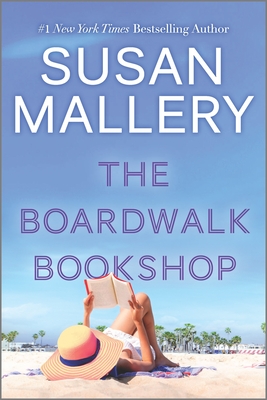
Although supposedly about a bookshop, the store in question is actually one large space divided up into three separate retail establishments (bookstore, bakery, and gift shop) shared by three women who wanted shops on the beachfront but neither needed the larger space nor could afford the price tag on their own. Despite not knowing one another, they impulsively team up to lease the place, installing their three enterprises side by side, each operating independently with their own employees and cash registers but benefitting greatly from the cross traffic of the other two businesses.
Mikki, the gift store owner, is a recently divorced 39-year-old who has two almost-grown children and a comfortable co-parenting arrangement with her ex-husband. Although they have been apart for three years, Mikki has not really moved on; right after the divorce she went on three separate but equally disastrous dates with various partners and gave up. A planned solo trip to Europe has suddenly awakened her to the fact that she could live another 40 or 50 years and doesn’t want to do so alone, but she’s not sure she has it in her to put herself forward again as a single, datable woman, with all the trial-and-error that involves.
Ashley, the baker, is swoonily in love with her live-in boyfriend Seth, who seems like the perfect man and mate except for one large flaw that, when it manifests, throws Ashley for a loop and has her doubting him, herself, and what will ultimately become of their relationship.
Bree, the book purveyor, raised by indifferent, self-involved author parents, met a man equally as brilliant as they were but who seemed to promise what they never gave her—love and a sense of belonging. Instead, he betrayed her rather spectacularly and then died, leaving her a young widow whose walls don’t come down for anyone—even Ashley’s persistently interested brother, Harding (who is also a writer).
The three women, initially bonded over their joint enterprise, slowly become friends and weigh in on each other’s options for romance, personal growth, and more. There is a dynamic, well-fleshed-out cast of secondary characters to interact with them, and the Los Angeles seaside setting is well utilized.
I liked this book, with some reservations: I thought both the narrative and the language could have been more nuanced. I found each of the women in turn to be dithery about her choices and actions. The three kept circling around to the same indecisiveness again and again, and while this may be how real life goes, in a novel it became repetitive and a little irritating. But the growth and change ultimately exhibited by each of them, while uneven, did move along to satisfying conclusions for all, and I mostly enjoyed the reading experience. I could be persuaded to try some other Mallery titles, probably when I am looking for a light, fast read as a palate cleanser between more serious novels.
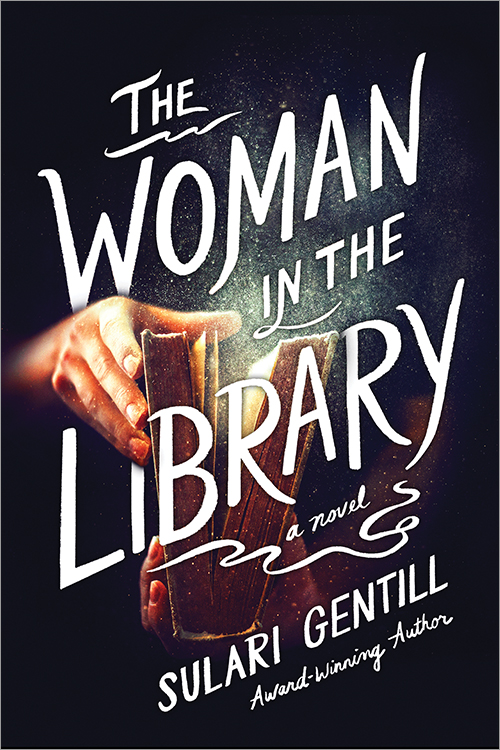
The second book-oriented story I read this week was The Woman in the Library, by Sulari Gentill, and it was a cat of a different color! I don’t remember where I came across this—it might have been on the readers’ Facebook group—but I’m so glad I picked it up, although others were not so happy with it. This is one of those books that (on Goodreads) either gets a five-star exclamation of “Yes!” from its reader, or a one-star “too weird for me.” I fell into the former group, with a few reservations—but mostly I was enthralled.
This book is the ultimate in meta, and the jump between reality and fiction is what kept me reading. The real-life set-up is that an Australian author of mysteries, Hannah Tigone, is writing a novel set in Boston, but she can’t travel from Sydney to do any on-site research due to Covid quarantine restrictions. Enter email pen pal Leo Johnson. Leo is initially introduced as an author trying to get his book published and reaching out to Ms. Tigone, a writer he admires, for suggestions or, preferably, actual assistance with finding an agent. But then Leo moves on to suggest that since he lives in Boston, he can easily assist with on-the-ground research, acting as a beta reader to give her information about locations and also vetting her language, since American slang differs markedly from Australian and it’s easy to slip up (calling a sweater a jumper, for instance) if you’re not paying attention.
After Leo’s initial email, the book moves into Hannah’s writing of her mystery. Her protagonist is Australian Winifred “Freddie” Kincaid, working on her own novel, living in Boston courtesy of the Marriott Scholarship, a writer’s grant that comes with a brownstone in Carrington Square. In the opening, Freddie has gone to the Boston Public Library for the day, planning to work on her book in its famous Reading Room, but is distracted by the three other people sitting at her table. She idly jots down notes on each of them as possible characters—she calls them Handsome Man, Heroic Chin, and Freud Girl—but then all four, along with the rest of the library users, are startled by a terrified scream coming from somewhere nearby. The library is locked down while security searches for the woman who cried out, and the four begin to chat about their immediate circumstance and a little about themselves; when they are released, they decide to go together to get something to eat, and this is the beginning of a four-way friendship.

It becomes harder as you go on to remember that Freddie is not the true protagonist, nor are these others real people—all are a part of Hannah’s story—but at the end of each chapter, the reader is yanked back to that reality by Leo’s comments on the last chapter Hannah has sent to him. Leo becomes increasingly invested in the contents of Hannah’s book, and…but that would be telling, and I have revealed enough. There are two stories here (or are there three?) and their juxtaposition and relation to one another kept me reading to finish this book in 48 hours.
The reservations I mentioned: The pacing wavers here and there, and sometimes the characters are a little flat—not well enough fleshed out. Also, insta-love rears its weary head. But these things didn’t bother me because they are, after all, part of a first draft of a manuscript! Remembering that as you go along makes everything completely believable, because Hannah still has the opportunity to come back and fix or change any of the details.
Hoping you pick this one up and are as delighted by it as I was, rather than falling into the group who considered it “weird.” The truth is, it IS weird and that’s what I liked!
Over the top is okay!
The latest installment of Elle Cosimano’s Finlay Donovan series dropped on January 31st, and I started reading it a few days later when I discovered it on my Kindle (I had prepaid for the e-book dump and then forgotten all about it).
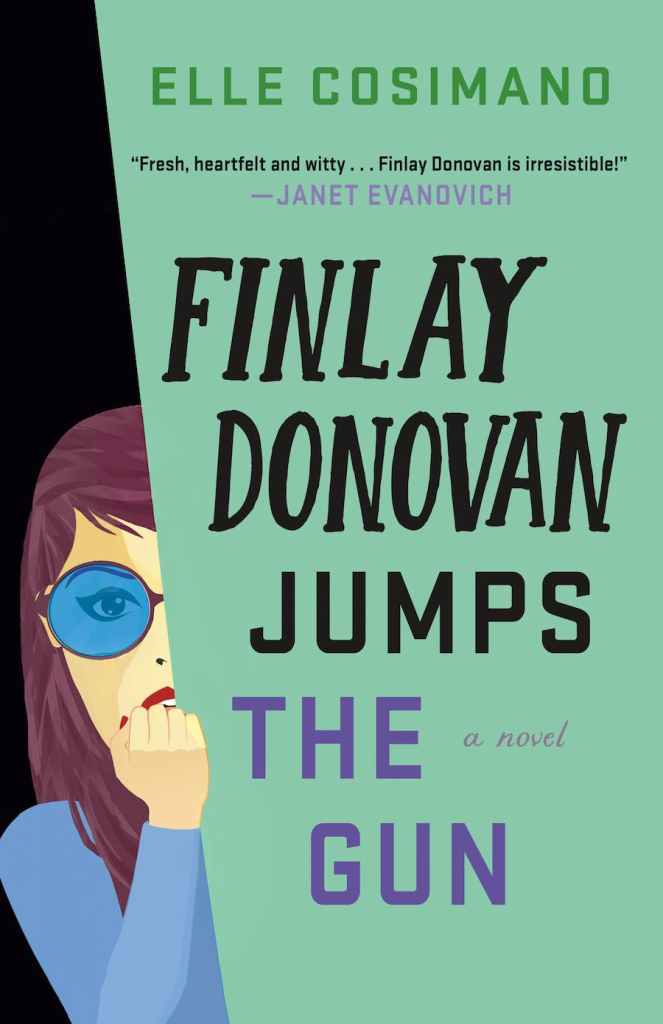
Finlay Donovan Jumps the Gun carries on fairly precisely where the last book left off: Finlay and her sidekick, nanny/ accountant Vero, are indebted to Feliks Zhirov (the local Russian mob boss) for saving them from an embarrassing and dangerous situation, and he (of course) wants something in return. There’s a person called “EasyClean” who is operating online as a paid assassin; Feliks wants to know this person’s identity, and believes that Finlay can deliver that to him. Being impatient (as mob bosses often are, don’t you know), he gives her a two-week deadline, which doesn’t make her one-week time limit with her agent for the final manuscript of her latest novel any easier to achieve, especially since the contents of the book are so close to the circumstances of her personal life that she has run head-on into writer’s block trying to resolve them.
Meanwhile, Vero has a deadline of her own—she’s delinquent on a gambling debt with a loan shark out of Atlantic City, and his enforcers are hot on her heels. What’s the solution? Finlay and Vero decide it’s to enroll in a one-week civilian police academy training. After all, they have come to believe that EasyClean may actually be a cop, so where better to figure it all out than from in amongst ’em? And where else could they be sure that pesky flunkies for the mob won’t be able to touch them? Finlay hands over the kids to Steven for a week, and the two move into the police academy dormitory to see what they can see. And, since it’s Finlay Donovan, chaos immediately ensues. Did I mention that Finlay’s crush, Detective Nick, is running the thing? and that both of his slightly suspicious partners and Finlay’s police officer sister are in attendance? And that the supposedly well-guarded barriers to the facility turn out to be as porous as swiss cheese when it comes to characters, suspicious or otherwise, making their way to the window of Finlay’s room?
In short, this is yet another frenetic flourish of Cosimano’s pen in pursuit of the author/single mom/accidental hit woman, and carries the franchise along nicely. I had been under the impression, for some reason, that this series would be a trilogy, but that’s not the case—this one ended on yet another cliff hanger, ensuring there are more books to come. (If all of this description has intrigued you, read the series in order from the beginning or you will be lost.)
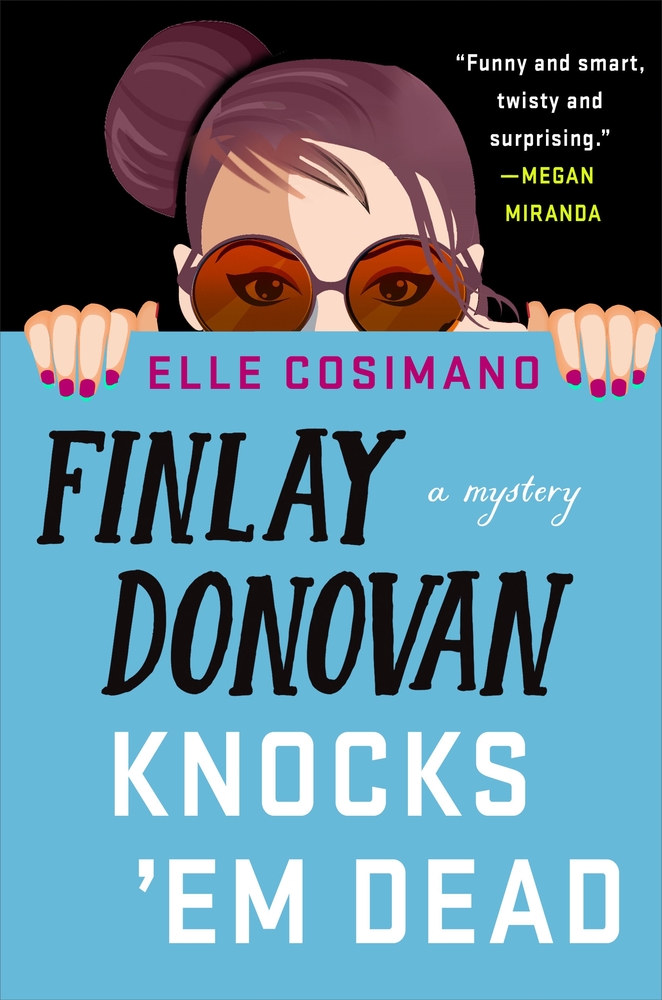
I’m a little torn on my rating for this book. I gave the first one five stars, and the second one got four; I’m tending towards four stars on this one as well. Although it had moments that were totally brilliant (the opening scene with toddler Zach comes to mind), it also had some repetitive stuff (the continued misunderstandings about poor Javi); and the restriction of the scene-setting to the police academy means we miss out on some of the fun interactions with unsuspecting civilians that were so important to the first two books. But I did enjoy the thought processes behind figuring out EasyClean, and Cosimano is an expert at writing the hapless, accidental escalation into total mayhem that feels like Lucy Ricardo has landed in the middle of a murder mystery! I will definitely look forward to the next installment in Finlay’s overwrought journey, particularly the resolution of so many relationships: Will she finally put Steven firmly in his place? Will they ever get Vero out of debt and able to show her face again? Will Finlay be able to have a relationship with Nick without revealing all her (mostly inadvertent) criminal activities? Will Georgia find a girlfriend? Will Zach complete potty training? For these and many other crucial details, we once again await you, Elle Cosimano!
Atmospheric
For my first two reads of 2023, I chose mysteries set in the Shetlands, by new-to-me author Ann Cleeves. I got Raven Black as a Kindle deal, and then followed up with White Nights. There are six more books in the series. I think I had heard her name before, but had never come across her books, although they are apparently popular—this series, and also her Vera Stanhope books, were both made into TV shows, possibly still accessible via Netflix or other networks (Shetland aired first in 2012, and the Vera Stanhope TV show, with three seasons, is older than that). She started writing a new series, Two Rivers, in 2019.

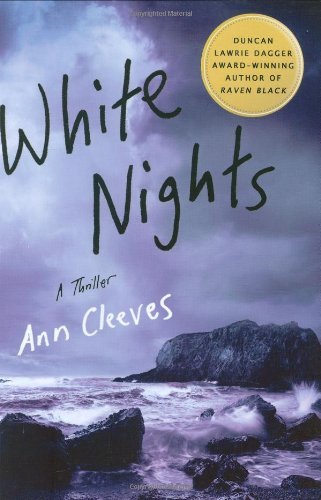
The primary appeal of these novels is location. The Shetland archipelago lies between Orkney, the Faroe Islands, and Norway, and is the northernmost part of the United Kingdom; there are 16 inhabited islands. They used to be owned by Norway, and there is a heavy Norse influence on the population’s culture, including fire festivals and music. They are also known for both the Shetland sheep dog and the Shetland pony, and many of the islands are seabird refuges.
Cleeves has done an excellent job of giving her books a dual atmosphere: There is the free, wild aspect of being so close to nature, buffeted by the elements, with ocean on all sides; and then there is the somewhat claustrophobic experience of living on an island with a small, fixed population where everyone knows everyone else and secrets are hard to keep. All of this plays perfectly into the mysteries she creates—murders and missing persons investigated by a local police officer with assistance from a supervisor transplanted from the mainland.
Detective Inspector Jimmy Perez, descended from a shipwrecked member of the Spanish Armada, is the laconic native son who is responsible for law and order in his small island community. In complete contrast, the impatient, forceful, and fidgety DI Roy Taylor has been sent from Inverness to coordinate when a murder takes place, bringing most of the forensic people along with him by boat or by air. Although the two initially struggle a bit for dominance, since one has both the authority and the overwhelming personality while the other knows the community intimately, they eventually figure out a way to work side by side to discover why and how murder has invaded the Shetlands.
These are not slick, fast-paced mysteries; they are slow-moving, with lots of intricate low-key exploration of the island personalities, and the solutions to the crimes evolve with each revelation rather than yielding an explosive disclosure. They are, to an extent, police procedurals, although the team is small and most of the focus comes from DI Perez. But if you enjoy arriving at a conclusion simultaneously with your “host detective,” you will like these very well. There are also some romantic elements for various characters, Jimmy among them, and lots of beautiful descriptions of the environs. I found them quietly enjoyable and will at some point continue the series.
Time out for lighter fare
After reading that somewhat grisly dystopian, I have been in the mood for less intensity; I picked up and started reading two separate fantasy books—one a continuation of a series I loved last year, the other a stand-alone quirky one that’s been on my TBR list for a while—and couldn’t get into either one. So I went instead for a combination of relationship reads and light mysteries.

First up was An Island Wedding, #5 in the series of books Jenny Colgan set on the island of Mure, in Scotland. It was lovely to be back with a cast of familiar characters in a magical (not literally, just in terms of pristine scenery) place where I have enjoyed previous stories so much. In this one, Flora and Joel are finally to be wed; but Joel, product of a violent childhood followed by a long line of foster homes, doesn’t seem to “get” what it means to Flora, only daughter of a large and affectionate family and member of an extended community to which she has belonged since birth, to have a traditional wedding. Unmeeting wishes become exacerbated when another “daughter” of the island, a glamorous trend-setter, decides to hold her wedding on Midsummer’s Eve (the same day as Flora’s) at the grand hotel Flora manages, and Flora has to put up with Olivia’s overboard plans while being distinctly underwhelmed by her own. Since it’s Jenny Colgan, you know that it will all work out, but it’s fun to experience it along with your favorites. There is also movement in a side story involving the island’s immigrant doctor and its favorite schoolmistress.
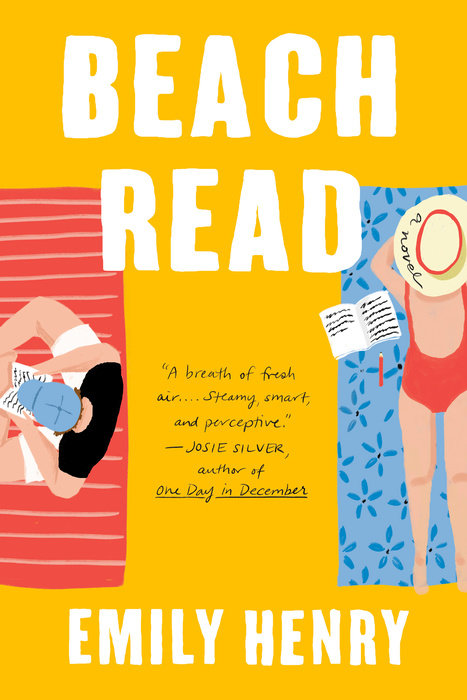
After listening to a student in my readers’ advisory seminar wax poetic about Beach Read, by Emily Henry, in last week’s book-talk for the class, I picked that up and read it one more time, and enjoyed it again by noticing different things this time through. I do have to agree with Taylor, though, that neither the title nor the book cover is appropriate, considering the beach in question is the shore of one of the Great Lakes in Michigan, and it’s mostly too cold to go there for more than 15 minutes! And if the title was meant to reference one of the books that the two author protagonists were writing, that was off base as well. Still a good read, though.
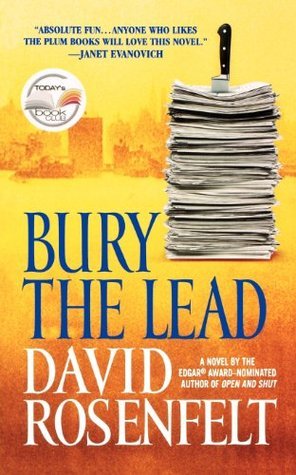
Then I jumped back to the mystery series I started at the recommendation of a librarian friend a few weeks back, and read the next two books in the Andy Carpenter legal thrillers by David Rosenfelt, First Degree and Bury the Lead. I am continuing to enjoy these, despite my initial reluctance to tackle a legal mystery series. As another person on Goodreads commented, Rosenfelt (i.e., his character, Andy) is “quick with a quip,” and I am enjoying the mix of humor, exasperation, frustration, bafflement, and creative thinking that seems to propel him towards the solution of these mysteries. I do wonder how many more books in this series Carpenter can sustain by presenting a defense of SODDIT (“some other dude did it,” acronym made famous by Dismas Hardy)—his clients can’t all be the victims of frame-ups…can they? But so far he has done it well…
Given my preoccupation with the last few weeks of my readers’ advisory class combined with some recent health challenges that make me tend to lose patience with long, intricate narratives, I may keep reading this kind of distracting, pleasurable fare for the rest of this year! We will see if the mood turns…but in the meantime Andy Carpenter #4 (Sudden Death—he’s fond of the sports metaphor) is next on my list.
Legal luck
I was talking, this past week, with my Readers’ Advisory students about the peculiarities of mystery fiction, one of them being the prevalence of the series. I’m sure some are saying to themselves, But, fantasy! and yes, other genres, notably fantasy and science fiction, are also heavy on series. The difference is, the series exists in those genres specifically to advance the story, while in mystery fiction that’s not true or, at least, true in a different way.
Mystery readers love their series because they get attached to the protagonist. If you think of some of the series out there that have not just been popular on the page but also on the television or the big screen, it is the character who is the prevalent element around which everything else circles. Harry Bosch, Kinsey Milhone, Walt Longmire, Stephanie Plum—in every case, readers keep reading (or watching) because they find the character compelling. It doesn’t seem to matter so much what the story is, as long as the dynamic and charismatic detective is at the center of it.
For this reason, mystery readers can be more forgiving than readers of some other genres. If the character is one they like and with whom they identify, and if more details are revealed about this character in each subsequent book in the series, mystery readers may go along a book or two or even three further even if the mysteries themselves—the plots—aren’t so great, just because they enjoy the familiarity of the character’s world and person.
This doesn’t mean that mystery readers can’t be hypercritical of a poorly plotted novel—a clumsy reveal, a red herring that doesn’t go anywhere, an epilogue for an ending instead of the direct action that they crave—but they will hang in, hoping for a renaissance of their writer’s story-telling skills, just to be with the character.
I have found myself being a perfect example of this with several mystery series over the years (Elly Griffiths, I’m looking at you), none more obvious than my abandonment of John Lescroart’s legal mysteries that all take place in the courtroom long after the (initial) crime was committed. The masters of this oeuvre are, of course, Grisham and Turow, but Lescroart’s Dismas Hardy definitely held his own until…he didn’t. The first two-thirds of the series was fresh and exciting, starting with #1, Dead Irish; I liked the protagonist, the side characters, and the setting (San Francisco). But after a while I could have written many of the scenes myself, because they were based on and exceedingly repetitive of similar scenes in every single volume. I think I finally gave up at about #17. To give him credit, Lescroart did try to shake things up by going with different characters from the same world (Abe Glitsky, Wyatt Hunt), but since they all worked in the same or adjacent venues that had already been exhaustively portrayed (and ate lunch in the same dismal hole that had been described at excessive length in each and every volume), it just didn’t work, and I gave up on Lescroart.

This soured me for quite a while on the subgenre of legal thrillers itself, but I’m happy to say I may have discovered a new one for which I can muster enthusiasm. I read the first book—Open and Shut—in David Rosenfelt’s Andy Carpenter series, and found it fresh, somewhat humorous, and possessed of a mystery both satisfying and entertaining, so now it’s only incumbent on me to keep reading and see how long it lasts—there appear to be at least 25 more books behind that one.
Open and Shut introduces Andy, a brash young defense attorney whose choice of profession pleases neither his father, a formidable former District Attorney for New Jersey, nor his financially and politically ambitious (and temporarily estranged) wife, Nicole. Then, after asking Andy to take on a seemingly unwinnable appeal for a man on death row who was convicted seven years previous, his father drops dead at a Yankees game, leaving Andy with two puzzles: Why would his dad, who was heavily involved in convicting the guy himself, put Andy in this position; and why did he hide the fact that when he died, his son would be inheriting 22 million dollars? It slowly becomes clear that these two seemingly unrelated facts are somehow tied together; but does Andy really want to know how his father acquired $2 mil almost 37 years ago, but never mentioned it or touched a dime of it for all this time?
Some things I liked about this book: The protagonist, a down-to-earth, pragmatic guy with his share of issues; his associates—sharp (though pessimistic) investigator and potential love interest Laurie; Kevin, who gave up the law to run a laundromat because he was too good to lose and felt guilty no matter who he prosecuted or defended; and of course Andy’s golden retriever, Tara, who is his best friend and tends to garner more attention than most of the humans in Andy’s vicinity.
I liked it well enough to keep reading the series; we’ll see how long it takes for Andy to wear out his welcome.
Interlude
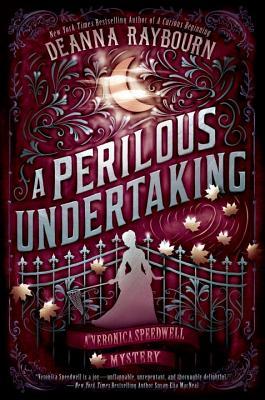
After dedicating a chunk of time to the Sydney Rye saga, I circled back to read the second book in the Veronica Speedwell series by Deanna Raybourn. Called A Perilous Undertaking, it is indeed a story fraught with potential missteps, as Veronica and her colleague, Stoker, must deal with royals, police detectives, high society eccentrics, and a whole slew of artsy bohemian hedonists as they try to figure out who committed a murder in 1887 London.
The catch is, someone has already been convicted of the crime; but at least one extremely high-up individual doesn’t believe Miles Ramsforth, art patron, to be guilty of killing his pregnant mistress, Artemisia, and has demanded that the unconventional duo prove it by discovering who did. Since the case is emphatically closed according to the police, there will be little assistance (or cooperation) from that direction, so Veronica and Stoker explore the original circumstances of Artemisia’s death with an eye to who benefits, and use a variety of stratagems to spend time with and focus on the many suspects.
I liked this book almost as well as the first. The various relationships are continuing to evolve, the new characters are fun and interesting, and the places the story goes are unexpected. I will probably continue with this series, though not right away.
That’s because, at the moment, I am rereading the first and second books in the Finlay Donovan series by Elle Cosimano, for two reasons: One is that the third book is due out in January, and I always like to review before continuing; but the other is that Ms. Cosimano has graciously agreed to be a guest speaker during the mystery genre segment of my readers’ advisory class at UCLA’s library school this coming Tuesday (via Zoom, since she is an east-coaster). We are all excited about her appearance; if you wish to read my review of her books about the hapless accidental hit woman, it can be found here.

After I am finished with her two books, I am quite excited to read the brand-new (out on Tuesday, and pre-ordered to arrive from Amazon that same day) Barbara Kingsolver novel, Demon Copperhead (with a nod to David Copperfield). I have loved every one of her books with the exception of her greatest success story, The Poisonwood Bible, which people tend to either love or put down after 100 pages of effort. I was one of the latter; but everything else in her catalogue is a winner for me. I hope this one is, too!
 The Book Adept