New series from Connelly
I am a steady reader of mysteries. I’m not a fanatic, and I prefer fantasy and science fiction, but it’s my number one category in terms of number of books read, probably because when I find a writer whose detective and style I like, I stick with them until I have read the entire series (and mystery writers are generally pretty prolific). I enjoy different kinds of mysteries: cozies, historical, thrillers, police procedurals. When I first heard the title of that last category, I thought “procedural” made it sound dull, but the truth is that, in skillful hands, all the minute details of how a case is built and a murder is solved can be fascinating to the reader, as well as to the detective.
With Los Angeles County Sheriff’s Detective Stilwell as its lead character, Michael Connelly is starting a new series featuring someone other than Harry Bosch, Renée Ballard, or the Lincoln Lawyer. While he could still be termed loosely within the “Bosch Universe,” which is based in Los Angeles, Detective Stilwell, or “Stil,” as his friends and colleagues call him, is off the beaten path; he is the detective presiding over the police substation on Santa Catalina Island, 22 miles off the coast of Southern California. He has two subordinates and an office manager who work directly under him, and liaises with a coroner’s department and with the Harbor Master (who is also his girlfriend).

He’s been on Catalina for a year; he was exiled there from the L.A. Homicide desk after he crossed horns with another detective and was deemed at fault in their dispute. His duties now consist mostly of dealing with petty thefts and drunk-and-disorderly cases that proliferate on the weekends when the tourists come to the island to let off a little steam. While he was initially somewhat bitter about his demotion and didn’t appreciate being shunted to this backwater, he has come to love the island and seems to feel that he’d like to stay there, at least for a good long while. But when a shrouded, weighted-down body washes up into the bay, Stilwell refreshes his skills at solving a murder, despite resistance from both his boss and his old nemesis at LAPD Homicide, who is assigned the case.
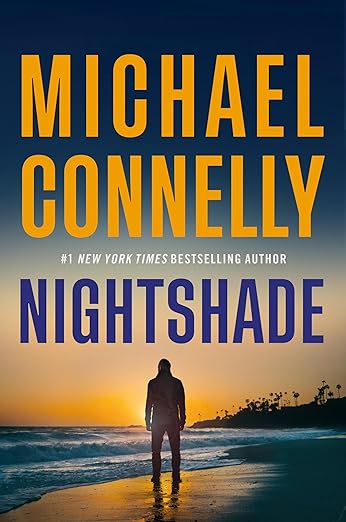
About halfway through this book, I became increasingly irritated by several things. First, although it’s fine that the guy has been nicknamed “Stil” from Stillwell, it would seem normal and necessary to know the detective’s actual first name, but that hasn’t been revealed. Are we going to have to wait to meet his mother (if he still has one—we also know nothing about his family situation or past associations) to find out his given name?
Second, while there is a wealth of detail about what differentiates a ketch from a regular sailboat (I couldn’t care less), or what color hair dye the victim used for the streak in her hair (“Nightshade” purple), we have absolutely no physical description of the main character. The only hint is that when he feels he may need to overpower a guy in his custody, he notes that he is taller than the 5-foot-eight-inch perp by at least four inches, and outweighs him by 25 pounds. So we know that he is about six feet tall, and has more meat on his bones than this slender, wiry criminal Connelly does bother to describe. But we don’t know how old he is, whether he is dark- or light-skinned, color of eyes, color of hair, whether he has a big nose or his ears stick out—not one measly iota of physical description is vouchsafed by the author.
Some people might see this as an advantage and, based on experience from other book series that have later been turned into movies or television, I can understand that viewpoint. People were outraged when Tom Cruise was cast as the protagonist in the first Jack Reacher movie, and quite vocal with their approval when the makers of the television series picked the taller, blonder, and more muscular Alan Ritchie, who conforms quite closely to the description of Reacher in the novels. And the reverse can also happen: I have been watching Will Trent on TV since the series began, and that led me to try one of Karin Slaughter’s books, since I enjoyed the TV series so much; but I simply couldn’t get past the fact that on TV, Will is short, compactly built, and Latino, while in the books he is tall, blond, and blue-eyed. I was really looking forward to exploring the stories in depth after seeing the show, but I stopped after book #1. Since Connelly’s other books have been optioned for movies or TV, perhaps he is thinking ahead to casting.
There is a difference, however, between giving a few details and giving absolutely none. For instance, knowing the approximate age of the character and how long he has been on the job will clue you in to how much experience he has and whether he’s plausible as an authority, but we don’t know if Stilwell is 28 or 50. Except for the exceedingly indirect clue I mentioned above (which would have been easy to miss), we don’t know any physical details. These are the idiosyncracies that help readers begin to build a picture of the character in their minds. In a lone-policeman or lone-detective type mystery series, it’s crucial that readers be able to identify with the lead character, who is the sole arbiter of each story. If that person is essentially faceless, it’s hard to care.
The third thing that bothered me—and this one may end up being the most significant—is that from the get-go Detective Stilwell comes off as Harry Bosch “lite.” Everyone who has read the Bosch books knows that Harry is a renegade, a person who, without fail, puts his own values and integrity first and therefore eventually runs afoul of almost every boss and many of his co-workers, who are either motivated by politics or tend to be lax about the work, seeing it as a job rather than as a calling. So when Stilwell turns out to have been sent to Catalina because he has burned down relationships at LAPD Central, that sounds too similar to Harry’s many reassignments to the wilds of the San Fernando Valley or the dead end of the cold-case bureau. It inevitably follows that he will have a problem with his fellow officers who are not as punctilious as he is about dogged follow-up, and that he will break rules and cross lines to get at the information he needs. Classic Bosch, which isn’t a problem for that character but is a problem (for me, at least) when Connelly claims to be launching a brand-new protagonist who bears all the characteristics of the old one except that he is presumably not near retirement age! It made the story seem stale from the outset.
As for the two mysteries in this book, they had their moments, but in light of the characters who seemed either stereotyped or kind of blah, it was hard to invest. I will try another when he writes it, but I’m afraid this “fresh start” isn’t different enough to pry people away from their Bosch worship and keep them reading Connelly. We will see.

Still waiting
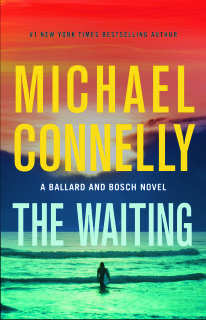
I finally picked up Michael Connelly’s latest, The Waiting, which features Detective Renée Ballard, backed up in one of the three plotlines by the retired Harry Bosch and in another by his daughter, Maddy, a fledgling police officer. And my title refers to the feeling that I am regrettably still waiting for this new protagonist to take off and give me the same fondness for Connelly that I have had throughout Harry Bosch’s long and checkered career and also that of Mickey Haller, the Lincoln Lawyer, in that side series.
Alas, after this fourth (fifth?) book featuring Ballard, I’m thinking that once Harry is well and truly no more, I will be letting this series slide off my TBR list. At this point, Ballard feels irretrievable to me; I believe Connelly’s best bet would be to dump her and start fresh with a brand-new protagonist who has absolutely no associations to previous characters (and therefore doesn’t suffer by comparison).
It’s hard to say exactly why I verge on disliking Renée; but it’s more than just that she’s not Harry. As I mentioned in a previous review, I was open to the switch to her quirky, nomadic character in the first book, when she was living on the beach in a tent with her dog and gave almost equal importance to surfing that she did to police work; but once she was integrated into the system, she became almost immediately boring. She has no life, she has no friends (even her relationships with her co-workers being either adversarial or more transactional than comradely), she is constantly reckless on the job but then inexplicably irritated that management doesn’t view her favorably or even benignly, and she’s a terrible dog parent! Honestly, she’s kinda toxic. Harry was also a rule-breaker, but his motivation was almost always clean: It was all for the sake of solving the case, helping the victim, catching the criminal. Ballard, next to him, seems calculated and kind of manipulative; she complains about the politics, but then fully enters into them to get what she wants.
I didn’t love any of the three plot lines in this one either. In the first, Renée’s car is broken into while she’s out on the water before work, and rather than simply report the theft of her wallet, badge, and gun, she decides that it’s a potential career ender (although it wouldn’t have been had she not given her superiors and colleagues reason to be exasperated with her consistently erratic behavior) and involves multiple people in surreptitious plotting and planning to get them back without anyone in power finding out. Even though it leads to a major take-down of dangerous people, it was so shortsighted in its motivation that it irritated me. She brings Harry in on her convoluted plotting to mask her own involvement, then wallows in guilt in case he gets hurt. I think this is one of those reasons for dislike of the character: She can’t herself decide who to be, so as a reader it’s hard to fasten onto some character trait to love.
The second plotline is initially gripping; a cold case that the Open/Unsolved Unit has been exploring via volunteer Colleen’s genealogy and DNA studies yields a familial connection to a serial rapist who terrorized the city for almost five years and then abruptly went inactive 20 years ago, and if the connection is correct, the rapist is a political hot potato. It could be a sensational “win” for the beleaguered unit, but then things take an unexpected (and less interesting) turn and the case is dragged out for the rest of the book only to be resolved quite abruptly in the last 20 pages.

Likewise, the involvement of Officer Madeline Bosch feels contrived, and her personality and participation are so muted that I could have wished this were simply omitted. Perhaps Connelly’s plan is to substitute Maddy for Harry now that Renée isn’t doing so well in the ratings, but if he’s going to do that, he has to get her off “the beat” and into a detective job in a hurry, which means doing some career short-cutting. What better way to achieve that than to have her volunteer for the Open/Unsolved Unit with the specific motive of solving the most notorious cold case in Los Angeles history? Like I said, it felt contrived.
All the other characters in the book, from the captain and the chief to Ballard’s volunteer co-workers to the FBI guys remained essentially cardboard characters, serving only as foils for the main characters, and not great ones.
I’m feeling like a huge curmudgeon—here she goes with another “damning with faint praise” review—but honestly, it’s been so long since an author and a book really knocked my socks off that I’m starting to believe that either they don’t exist or that I have become so hard to please that it will never happen again. I hope neither of those is true. I started this blog to encourage people to read, not to turn them away from books they might potentially enjoy!
Anyway, I’m also hoping Connelly will back himself out of this trajectory and pick a new one, because he’s been a good story-teller with a lot to offer throughout the Bosch and Haller years and I want that to continue. But I don’t think it’s going to happen if he sticks with Ballard.
Interesting, but…
I’m going to finish that phrase with “not compelling.”
I started a new series by J. J. Marsh called the DI Beatrice Stubbs mysteries, and although the first book, Behind Closed Doors, has much to recommend it, I found myself reacting somewhat tepidly to its charms. There were three books on offer at a discount as a boxed e-book set (with another three-book set if you liked these), and the description—a team of Interpol agents led by a detective inspector from Scotland Yard, trying to solve a bunch of murders camouflaged as suicides—sounded intriguing.
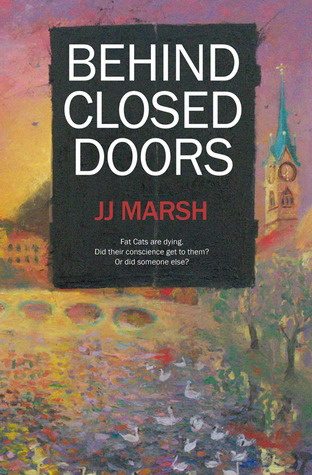
The tip-offs that they were not suicides were two, the first being that DNA from the same individual was found at all the death sites, and the second that these were all singularly unpleasant characters, responsible between them for a lot of dirty dealing and corruption in the world. Obviously, the team feels, someone has targeted them for elimination and has gone to great lengths to do so both thoroughly and cleverly—and also what would have been undetectably save for the DNA. The conclusion is ultimately drawn that the DNA is purposefully planted to give a hint that these were, indeed, diabolically successful revenge killings.
The set-up sounds wonderful: The killings take place across Europe, mostly at glamorous and diverse locations (a luxury hotel, a ski run, a dam) and by creative methods (freezing, asphixiation, beheading). Because the victims are villains, mostly from the world of international finance, no one seems to excessively regret their deaths.
The team of investigators is what should be an interesting crew made up of three women and three men of various ranks and nationalities from several countries and organizations, brought together to definitively determine whether those who initially dealt with the deaths are right to be suspicious. There is a thinly disguised villainess who is either personally or professionally connected to all of the victims, but against whom nothing has been proven. The home base of the team is Zurich, with side trips to all the destinations where the killings took place, and there is a lot of name-dropping of cities and their tourist attractions—museums, opera houses, parks, resorts—to give everything an air of glamour. And yet…
I had a lot of trouble investing in anyone in this book. The main character, Detective Inspector Beatrice Stubbs, is supposed to be the primary driver of the action and thus, presumably, the sympathetic character, and she is nicely rendered as a person of brilliance who has just come back to work after a period of instability during which she may have attempted suicide herself. She is not painted as a tragic figure, though; she has a stable home life with a supportive partner, is committed to regular visits with her therapist, and has a boss who wants her to succeed and has her back. She’s a little older and a bit less fashionable than the other women on the team, which gives her both authority and vulnerability, and she has moments of both darkness and joy in the course of her days.
Other than her, however, I found the members of the team to be opaque. Each of them has a quirk or two that is played up in the course of their interactions, but you never really get to know the people behind those quirks. There’s just not enough detail provided to make you care about them one way or another and, in some cases, the element of personality chosen for them is actively irritating, making you not want to know them.
Similarly, the way the victims are described is probably accurate; since they are all from a certain class of wealthy, ruthless men, one might assume that they would each be likely to fall prey to flattery and deceit by the young women who set out to entrap them— but after a while the stereotypical behavior verges on misandry and becomes both unpleasant and repetitive.
When she’s not writing, J. J. Marsh works as a language trainer in four languages, so her prose is mostly fluid and descriptive. But despite all of this (and high praise from some readers), I found this book to be only okay, and probably won’t read the next two. Another near miss for my reading preferences.
Dog Day Afternoon

No, this isn’t a post about a 1975 bank robbery movie. But the title seemed appropriate, given that it’s National Dog Day and also that I am getting such a late start that my post won’t be available until after noon, one of those hot, sleepy afternoons when dogs (and people) prefer to lie around and languish (i.e., read!) during the summer heat. I did some pre-planning for this post by making a list of some pertinent dog-oriented books, but then my distracted brain failed to follow up, so a list is pretty much all you’re going to get this time. But don’t discount it just because it’s not elaborated upon; these are some great reads, encompassing fantasy, mystery, dystopian fiction, science fiction, some true stories, and a short list for children.
NOVELS FOR ADULTS (AND TEENS)
The Beka Cooper trilogy (Terrier, Bloodhound, Mastiff),
by Tamora Pierce
A Boy and His Dog at the End of the World, by C. A. Fletcher
Iron Mike, by Patricia Rose
A Dog’s Purpose, by W. Bruce Cameron
First Dog on Earth, by Irv Weinberg
The Companions, by Sheri S. Tepper
The Andy Carpenter mysteries, by David Rosenfelt
The Dog Stars, by Peter Heller

DOGGIE NONFICTION
Marley and Me: Life and Love with the World’s Worst Dog,
by John Grogan
Best Friends: The True Story of the World’s Most Beloved
Animal Sanctuary, by Samantha Glen
James Herriot’s Dog Stories, by James Herriot
A Three Dog Life, by Abigail Thomas
Inside of a Dog: What Dogs See, Smell, and Know,
by Alexandra Horowitz

CHILDREN’S BOOKS WITH DOGS
Sounder, by William H. Armstrong
No More Dead Dogs, by Gordon Korman
Harry the Dirty Dog books, by Gene Zion
(illustrator Margaret Bloy Graham)
Bark, George, by Jules Feiffer (one of the best for reading aloud!)
And for those who wanted more, here is an annotated list of more dog days books from a previous year, along with some suggestions for dog lovers that go beyond reading about them.
Books to TV (or movie)
I am usually quite critical of how a favorite book is translated to television or movie form, and in the past I would most likely have favored the book over the visual version almost every time. But in this day of bountiful offerings on a dozen pay channels, the properties are bought and transformed at such a rapid rate that I have found myself getting to know stories and characters on my television screen ahead of reading their origin stories, and in some cases I have to confess that I have enjoyed them far more than I later did the books.
Some for-instances: The writing is sharper and more clever in Shonda Rimes’s Bridgerton than in the books, so much so that I didn’t even finish reading the first book. The racial themes and the character motivations depicted in the Hulu production of Celeste Ng’s Little Fires Everywhere were less enigmatic and more relateable than in the written version. And although I read it first and gave five stars to Liane Moriarty’s suspenseful and engaging Big Little Lies, I equally loved the HBO version for the sheer star power represented and how well they pulled the whole thing off.
I also have to give exceedingly belated and somewhat awed credit to the team of Denis Villeneuve, John Spaihts, and Eric Roth (co-writers) and Villeneuve again as the director of the new version of Dune. After suffering through David Lynch’s 1984 version and Sci-Fi Channel’s three-part miniseries in 2000, I found myself devoutly hoping that no one else would try to take on the depiction of this classic on film or television, but the new one feels, finally, like the intentions of Frank Herbert have been realized.
This all brings me to my latest book-vs.-television experience, which has been quite a bit bumpier and more jarring than anything I have yet mentioned.
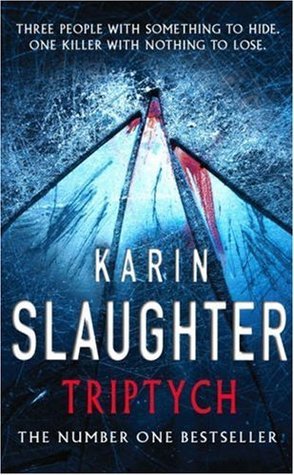
I started watching the ABC TV show Will Trent with its premier episode, and immediately fell in love with the protagonist, his dog, and the rest of the excellent cast. I didn’t even realize, until near the end of Season Two, that the material came from a series of novels by author Karin Slaughter; the minute the season ended I decided I would spend the time until Season Three reading the original stories. And what a shock it was….
First of all, let me say what things are similar about the series. Will Trent and Angie Polaski grew up as lifelong friends in the foster child system. Will now works for the Georgia Bureau of Investigation (GBI), while Angie is a police officer (Vice) for Atlanta PD. Will’s boss is named Amanda, and she knows a lot about him. Her secretary’s name is Caroline. There is a police officer named Michael Ormewood. And there is a cheeky chihuahua named Betty, an adorable but somewhat ludicrous pet for Will. And…that’s pretty much it.
In the TV series, Will is short, compactly built, and Latino. In the books, Will is tall, blond, and blue-eyed, with significant facial scarring. In the TV series, Angie is tough on the surface but exceedingly vulnerable not too far beneath; she is struggling desperately to stay clean from a severe drug habit, and is involved with Will in a sexual relationship that occasionally verges on emotional. In the book, Angie is tough almost through and through, with a tiny bit of her left open to caring for her friend Will; they “broke up” almost two years ago, because Angie knows she’s not good for him and needs to leave him alone if he’s ever to achieve happiness with someone else. On TV, Will is almost immediately paired with Faith Mitchell as his new partner, while in the books she is still on the horizon by the end of book #1. On TV, Michael Ormewood is Angie’s partner on the police force and also works frequently with Will. He’s not entirely likeable, being reckless and kind of a chauvinist, but he’s basically not a bad guy. In the books, well, that would be a spoiler, but Ormewood isn’t who he seems. He’s also short, compact, and dark-complected in the books, while he’s tall, blond, and blue-eyed in the TV show—the exact opposite of the Will-to-Will transition! The only consistent character between the two mediums is Betty.

After having loved the TV show so much, I struggled for the first third of the book with the written versions of these characters. I came to terms most quickly with the character of Will, because despite the physical differences, the inside person is consistent, from the crippling guilt to the dyslexia to the brilliant insights, and the outside Wills both wear three-piece suits as armor. But I mourned the loss of the vulnerable friend/lover Angie, and when I read in the afterword that there is a “legitimate” love interest for Will starting with book #2, I wasn’t sure I wanted to continue. As for Ormewood…I don’t know how I can look at TV Michael the same after reading about Book Michael. By the end of Triptych I had subconsciously decided that it was worth continuing with Slaughter’s written version, but I honestly don’t think I’ll ever find these people either as likeable or as engrossing as the TV characters, and that’s a real departure for me!
Someone in my “Friends and Fiction” Facebook group told me that I should go back and read the series Slaughter wrote before she arrived at the first Will Trent book in order to thoroughly understand the back story; perhaps I will do that and see where it gets me.
“New” mystery writer
I have just discovered the County Kerry mysteries by writer Carlene O’Connor, who is American by birth but Irish by heredity and has made the most of it. I initially thought she was a new author, because she only had two books out in this series, one written last year and one this: No Strangers Here, and Some of Us Are Looking. But it turns out she has been penning mysteries for some time, but in a different subcategory. She has two other series, both of them “cozy” mystery: The Irish Village Mystery Series, (8 books so far), and The Home to Ireland Series (2 books). But these County Kerry ones are not cozies, they are straight-up mystery.
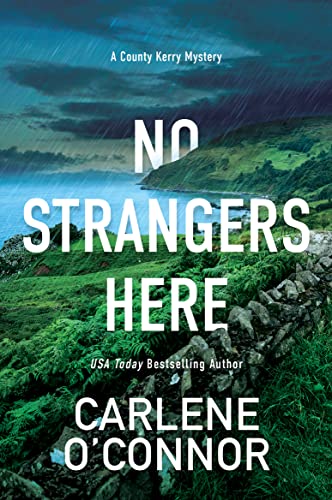

You could maybe call them borderline cozy, because one of the regularly featured characters isn’t a detective, she’s a veterinarian—the diminutive but feisty Dr. Dimpna Wilde. But there is also a main policeman, Detective Inspector Cormac O’Brien, recently transplanted from Killarney to the Dingle peninsula, and a local policewoman, Barbara Neely, under whose jurisdiction the somewhat grisly murders from both books fall. In addition to these principal protagonists, there is a highly colorful bunch of characters who could only be Irish, including Dimpna’s idiosyncratic extended family (parents, brother, son, and a few more sinister connections), Cormac’s Mam, office staff members at the veterinary clinic, subordinate officers at the police station, and a plethora of fascinating villagers only too ready to get up in each other’s business and then spread the gossip far and wide. There are also, thanks to Dr. Wilde’s veterinary practice, a supporting cast of endearing animals, from cats and dogs to donkeys, sheep, bulls, and bunnies.
The world-building is effective, making excellent use of the natural setting of the Dingle peninsula and all the towns, villages, nature preserves, cliffs, harbors, and wild places that exist there, nicely described and incorporated into the action.

The mysteries are complex, there are plenty of promising red herrings, and the personal relationships developing amongst the characters—particularly between Dr. Wilde and DI O’Brien—keep you reading to see what happens. In short, based on these two books I will definitely keep going. And, also based on these, I will try out her cozy series, even though my general preference is for mainstream mystery, because the totality of her story-telling is that good.
Riches
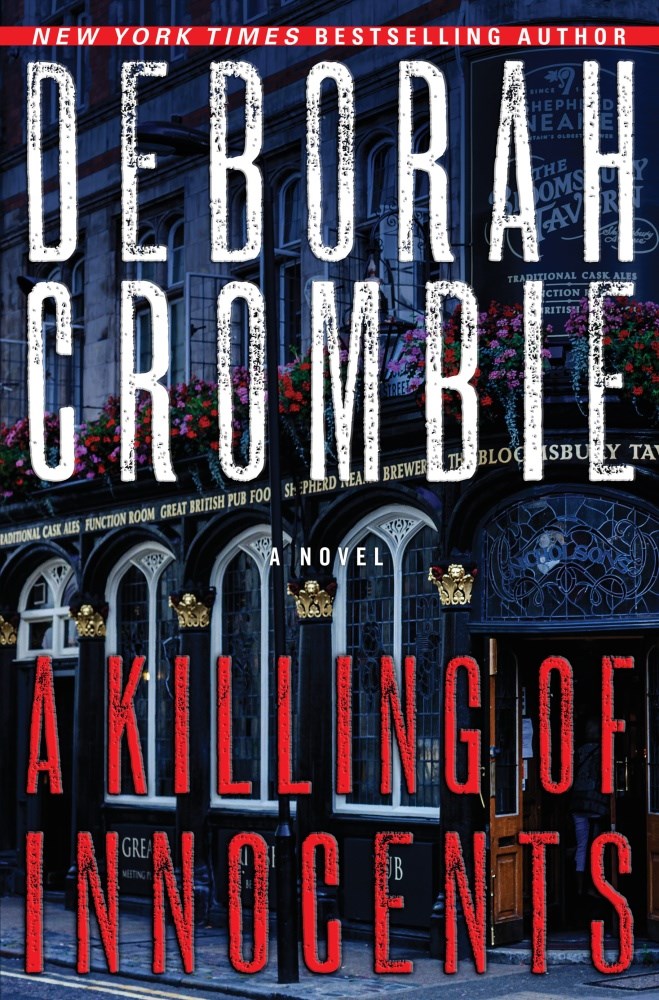
Sometimes forgetfulness or inattention is a gift. I was so busy for a while there trying out new authors and new titles garnered from various Facebook reading groups that I quit paying attention to the yield of some of my favorite mystery writers, with the result that I built up a backlog and got to enjoy three of them in succession: First I read the two Bosch/Ballard books by Connelly, then I followed up with the latest Cormoran Strike; when I finished that (which took some time, since it was 960 pages!), I remembered that I hadn’t checked on Deborah Crombie’s output in a while (I don’t check her too often because she’s an exceedingly slow writer, with as much as four years between books), and discovered she’d published a new one in February! This was a case of gulping down a dessert and then wishing retroactively that I’d made it last a little longer. I was still reading at the intense pace necessary to peruse a Cormoran Strike, but the latest Crombie book in the Kincaid/James series was only 368 pages, and I got through it in under 48 hours, reading at mealtimes and in the middle of the night when histamines from a recent prescription drug reaction kept me awake, and before I knew it, it was over.
I really enjoyed this one although, again, contrasting with the Strike tome with all its wealth of detail made me wish Crombie went a little more in depth into some of her subplots and red herrings to stretch out my experience! Still, we got a nice dose of the main protagonists, the secondaries, the friend circle, and a bunch of new and intriguing characters, and they sucked me into their messy, complex lives and made me want to figure out both the mystery and the relationships.
If you’re not familiar, Crombie’s series is about two detectives who are married to one another—Detective Superintendent Duncan Kincaid, and Detective Inspector Gemma James—although they didn’t start out that way at the beginning of the series (so this is a spoiler for those who haven’t read any of it yet, sorry!). They share a house and a life in London with children from separate previous relationships plus a recently added foster they acquired while together, and some dogs and cats. The books are populated with several significant co-workers and some old family friends from both sides who are ongoing, and then introduce one-off relationships related to the various cases in which they find themselves embroiled. I particularly like this literary pairing because Crombie alternates the lead detective in each book, so one will have Kincaid as the primary while the next will feature James, keeping things both fresh and non-sexist!
In this instance, Gemma has just taken a new position heading a task force on knife crime that places her primarily at a desk rather than in the field, so it’s Duncan who is called out to the scene when a young woman is murdered while walking through the well-populated Russell Square. But Gemma is rapidly involved as well when it turns out that Sasha Johnson, a young trainee doctor at a local hospital, has been stabbed. Is it part of the gang activity that Gemma and colleague Melody Talbot are investigating? It seems to have no connection; but another stabbing in a public park just days later seems to indicate a disturbing trend that will keep everyone looking for associations as they try to solve both cases.
This was well thought out and compelling, and I enjoyed the variety of characters and situations brought into the investigation as all involved look for clues to who might have wanted these people dead and why. Crombie is great at building suspense by switching POV, finding one fact, then changing again, letting each isolated realization begin to form a picture for the team. This was multi-layered with many threads, but they were and remained interesting right through an exciting climax and a satisfying wrap-up.
This series is now 19 books long, and it’s well worth your time if you haven’t tried it yet. I’m envious of those who haven’t, because once you’re caught up, it’s a long time to wait for the next! I keep threatening to start over at the beginning for a massive re-read, and I may well resort to that in the interim before #20.
Harry Bosch is 70
Speaking of a Golden Bachelor…it had to come sometime. Has there ever been another police officer who has joined and left the LAPD and joined up again so many times? and had a career that spanned three or four departments and several separate locations and even a different police department or two? Not to mention a brief foray as a private eye. Yep, Harry’s getting up there, and I don’t want to say that Connelly is phasing him out just yet, but the fact that he has, in each of the past five books, shared star billing with Renée Ballard says “transition” to me. Seventy isn’t so old these days, but after being exposed to cesium during a previous case, Harry’s mortality is apparently something to contemplate more immediately.
I’m not real happy about that; although I liked Renee well enough in her debut novel, when she appeared to be an outsider to rival Bosch—sleeping in a tent on the beach with her dog, and dividing her time between the police force and surfing—I have mainly read the Renée Ballard books because she always appears in conjunction with Harry, and when he’s no longer with us, I’m not sure she has the moxie to carry a series alone. While I would definitely call the Bosch books police procedurals, the focus has always been squarely on Harry, and his personality defines and permeates every story; but Renée doesn’t have the same spark, and I fear that once Bosch is no longer even an outlier, I won’t find enough pizzazz left to keep reading.

I read the latest Harry/Renée book, and then realized that I had missed the one just before that, so I went back and read that one. In The Dark Hours, Renée is still working “the late show” (the overnight shift) without a partner, but when she gets in too deep or needs some backup, she doesn’t call on a fellow officer, most of whom seem to be phoning it in since the twin discouragements of the “defund the police” movement and the Covid epidemic, but rather on the retired Harry Bosch, at home and at loose ends. This could ultimately get her in a lot of trouble with the department, but she’s a risk-taker and knows what she needs to get a solve on her cases; what she needs is Bosch. In this book the two have an almost instinctual camaraderie that is fun to watch.

There’s a big contrast between that book and the next one, Desert Star. In this latest Bosch/Ballard pair-up, Ballard has become almost unrecognizable as the junior-grade maverick following in her mentor’s footsteps. Towards the end of The Dark Hours, a disgraced Ballard had quit the force and was considering teaming with Bosch in a private detective firm, but at the beginning of this one she is back in the LAPD, and has been made head of her own department, examining cold/unsolved cases for the Robbery/Homicide division, and reopening ones that are viable for moving ahead, due to DNA evidence or other new information. This promotion seems to have turned her into a cautious, uptight, stuffy version of herself, and it takes practically the whole book for her to unwind back into the Ballard we’ve met before.
The inclusion of Harry is made legitimate this time, since Ballard is empowered to recruit him as a volunteer and he is more than willing to fill his time focusing on a multiple murder he was never able to solve. He’s supposed to be working on a case that is important to the city councilman sponsoring the new unit, but as usual Harry prioritizes what he believes to be more essential, and in so doing gets both himself and Ballard in hot water more than once. Most of it is believable, but when he takes off for Florida without telling either Ballard or his daughter that he’s going, it was one step too far into uncharacteristic behavior for me. I ultimately enjoyed most of this book, but it certainly didn’t make me warm up to Ballard or cease to dread the retirement of one of the best detectives any mystery novelist ever created.
Catching up
I have read so very many series that I can’t keep track any more when a new book from one of them comes out, particularly if it’s a writer who is irregular in their production. With Louise Penny, you can always plan on a new Gamache hitting the bookstores somewhere between August and November each and every year, but others (such as Deborah Crombie) produce one so seldom that it’s depressing to go check up on what’s (not) happening.

Cynthia Harrod-Eagles is a fairly prolific writer, especially when one considers she has at least three different series going, and in different genres to boot. I discovered her first as a writer of police procedurals in the Bill Slider mystery series, but she’s more well known for her Morland Dynasty saga, and is now writing a new historical fiction series as well. I found out via my Kindle membership that there was a new Bill Slider, so this week I embarked on a read of #24, Before I Sleep.
The past few Sliders of late have been somewhat uneven, so I was pleased to discover that this was a particularly good one. Slider is tasked by the bumbling but good-natured Detective Superintendent Porson with a missing persons case, even though it’s not in his district and that’s not what he does (he generally solves murders), because word has come down from “on high” that this is a case that needs solving pronto. A woman has disappeared, and her husband is old school chums with the big boss, so Slider, who has an impressive solve rate and is also sometimes tiresome enough for the politicos to want to be rid of him, gets stuck with it. If he solves it, the glory redounds, and if he doesn’t, maybe he loses his job, so there’s a lot on the line.
Felicity Holland is a settled middle-aged woman married to a successful author, with an active social schedule and lots of hobbies and charities. One Tuesday after breakfast, when the husband has gone upstairs to begin his day of writing, she heads out for her weekly pottery class, but according to her husband she didn’t come home that night and hasn’t been heard from since. Being a vague, self-centered guy, he doesn’t remember the name of where she takes the class, has no idea who her after-class lunching friends are, and is basically unable to provide any useful information to the police, but expects immediate results nonetheless. His rather hysterical theory that she has been snatched up by a serial killer is causing him to make himself a nuisance, while Slider and his team have to buckle down to do the plodding police work that will ultimately trace her movements—check the CCTV cameras, the bus passes, the taxi services, talk to her relatives, find her friends, maybe delve a little into her past.
I liked how this evolved from a nuisance case into a legitimate “misspers” and from there to a probable murder mystery. The usual team is on duty, with a few new people added; Porson continues with his malapropisms, now enabled by Slider, who somewhat ironically inserts his own into the conversation to enjoy watching Porson struggle with the thought that what he said just isn’t right. Atherton is quick with the puns, and also has a new, possibly more permanent love interest at last. There’s not a whole lot about Joanna and the family in this one, but enough to keep things going. I figured out a key plot point quite a while before it was revealed, but it didn’t spoil my enjoyment of its revelation at the end. All in all, a satisfying read. Keep them coming, Ms. Harrod-Eagles!
 The Book Adept