Old-fashioned feel
I have always enjoyed the books of Rosamunde Pilcher, although she wrote so few that I have had to resort to re-reading each of them multiple times (which is no hardship). I was therefore delighted when someone in the Friends and Fiction Facebook group mentioned that British author Marcia Willett wrote in a similar vein but that she liked Willett’s even better than Pilcher’s. I went to the Los Angeles Public Library website to see if they carried any of hers as e-books, given that I don’t get out much but can order books through Overdrive straight to my Kindle. I was happy to find a few, and checked out Indian Summer, which was almost immediately available.
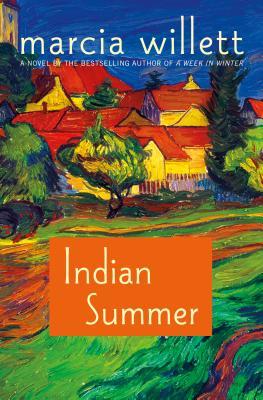
After having read about 25 percent of the book, I logged onto Goodreads to enter it as my “currently reading” title and was shocked to discover that it had just been published in 2014, a mere 10 years ago. The book’s setting and characters and particularly the writing style are old-fashioned to the point that they remind me of some of my favorite authors of the 1940s-1960s—Rumer Godden, Elizabeth Goudge, Daphne du Maurier, James Hilton and Dodie Smith. In fact, this book reminds me particularly of Smith’s lesser known It Ends with Revelations, probably because of the theatrical connections of the books’ protagonists.
Willett’s earliest novel appears to have been published in 1995 (which may seem aeons ago to some of my younger blog-followers, but is just yesterday to someone born 40 years before that), and she didn’t begin writing until she was 50 years old; but that makes her about 80, not nearly elderly enough to channel this particular sensibility in her novels. It’s not just the setting, in rural Devon, that makes it feel this way; it’s the characters, who are generational landowners and tenants on the one hand and theater people and writers on the other, and in the way they relate to one another and to their environment. There is still that unspoken, unacknowledged consciousness of class that hasn’t existed to this degree in England for a while now (or at least I don’t think it has!) but is definitely still alive in this story. Additionally, there is a certain focus with which some of the writers from the era I mentioned approached their story-telling that includes a specific attention to nature and a leisurely and appreciative approach to the organic cycles of life that you simply don’t come across much in modern works.
The book revolves around a central character, Mungo, a retired theater actor and director whose primary residence is London but who also has a place in Devon, a part of the larger property owned by his brother. I say “revolves around” because while all the characters have at least a tenuous connection with Mungo, he mostly facilitates, rather than stars in, the little stories portrayed here. Mungo’s brother, Archie, inherited from their father, a conservative man who didn’t appreciate either Mungo’s profession or his sexual identity. Archie and his wife, Camilla, are struggling to make ends meet on the estate by renting out their two cottages. Philip and Billy are brothers who inherited the running of the “Home Farm” (a portion of Archie’s estate) from their father and will pass it to Philip’s son, unless Archie decides to sell up. Staying in the two cottages—one updated and the other dilapidated and awaiting repairs—are Emma, an army wife with two children, Joe and Dora, and a six-month lease; and James, a writer, who is wandering around Dorset for part of the summer, researching locations for his second book. Completing the cast are Kit, a friend of Mungo’s who has come down to consult with him on what to do about the reappearance of a figure from her past; and Marcus, a military friend of Emma’s husband who is trying to make time with her while her husband is away in Afghanistan.
Each of these characters or groups of characters stars in their own vignette within the larger picture of this Indian summer in Devon. Although there is one secret from the past that turns out to be rather shocking, for the most part the events are only exciting to those directly involved, being ponderings about what will or may happen in the future based on choices made now. There is a gentle humor revealed in the obliviousness of the author, who has met all the other locals but has not only completely misconstrued their personalities and concerns but has arrived at the assumption that life here in Devon is constant, unchanging, and bucolic, when in fact there are many tempestuous passions hiding behind the façades of everyone in the story.
While I could not agree with the woman who considered Willett superior to Rosamunde Pilcher in her authorial abilities, I did enjoy this gentle, rather charming tale of friendships and secrets in the English countryside.
American classic
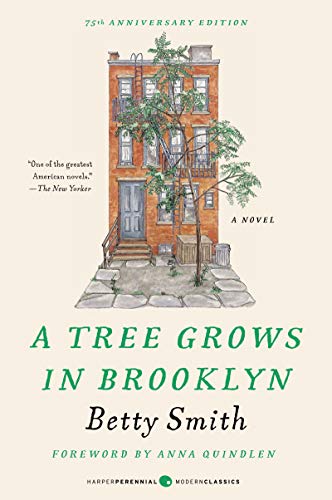
I don’t have much to say about A Tree Grows in Brooklyn, by Betty Smith, that hasn’t already been said. This is probably my third or fourth time reading it, but I haven’t done so for a couple of decades so I decided to revisit it. I remembered the brilliant, colorful depiction of life in Brooklyn in the early 20th Century, but had forgotten the simple yet elegant and nuanced language with which it is described. I remembered most of the details of Francie Nolan’s life, but some of the wonderful details of the outlying characters—her sexy Aunt Sissy, the interactions of Willie with his horse, Drummer, the English teacher who praised Francie’s artificial flights of fantasy but denigrated her realistic portrayals of Broolyn life—I happily rediscovered.
The story is funny and tragic, lighthearted and heartfelt, emotional, a little sentimental, inspiring. It kept my attention throughout, and I loved sitting down each day to another chapter. I would hand it to almost anyone over the age of 12—most girls, some boys—who wanted to be both entertained by and enlightened about the human condition.
One warning: If you have never read it and happen to pick up the edition with the forward by Anna Quindlen, save that to read later, because it delivers a few spoilers.
Faint praise
The phrase “damning with faint praise” (from a poem by Alexander Pope) keeps coming to mind as I think about the book The 100 Years of Lenni and Margot, by Marianne Cronin. But I think what my reaction to this book really suffers from is damning from excessive praise!

It’s just another lesson to me to go my own way when I pick things to read instead of following the popularity contest of a narrow number of books that “everyone” on Facebook is reading and about which they are raving.
I did love the opening lines, in which Lenni hears the word “Terminal” (in reference to her condition, from her doctors and nurses in the hospital in which she now lives) but instead pictures an airline terminal, where she is awaiting imminent departure on a flight to…somewhere.
I also liked Lenni’s narrative about the life she was living in that hospital, with its boredom occasionally alleviated by an interesting person (like an old woman wearing a purple bathrobe and clinging to the side of a trash bin while trying to reach something within its depths, or a priest who doesn’t know what to make of Lenni and her questions). But once Lenni, the 17-year-old terminal patient, and Margo, her 83-year-old friend, met and became friends, I felt the focus moved so much more toward Margo that further character development of Lenni was suspended until near the end of the book, to its detriment.
As a painter, I loved the concept that the pair came up with as a project for their art class. Added together, their ages (17 + 83) made 100, a nice round number on which to base a goal, which they do:
So, we will paint a picture for every year we have been alive. One hundred paintings for one hundred years. And even if they all end up in the bin, the cleaner who has to put them there will think, Hey, that’s a lot of paintings. And we will have told our story, scratching out one hundred pictures intended to say: Lenni and Margot were here.
As an artist, I wish there had been more detail about the individual paintings. They were supposedly each based on an event from one year in the life of each person, but the stories themselves took precedence and there were mere glimpses of the art, not the full descriptions they deserved as the central theme! I also felt like the narrative kept pulling and pushing between the two characters while giving Margot the advantage, with the result that I never felt fully engaged and emotionally invested like all the other people who loved this book seemed to be. I felt like too much importance was given to Lenni’s interactions with Father Arthur, the hospital priest, and too little to her own personal story; and Margot’s tales were all over the map—as they would be covering an 83-year span—taking too much away from the present-day events.
The language was lovely, and there was a lot to like about the book, but it didn’t wow me the way I expected. On to the next….
Binchy’s best?
The winning title for that is endlessly debated in Facebook reading groups, but having just completed my third (fourth?) reread, I can say that this is the one for me. It’s hard to synopsize Scarlet Feather, because there’s so much going on all at once in different arenas, but I’ll give it a shot.

Cathy Scarlet and Tom Feather met and became fast and eternal friends in catering school; both of them have had the unwavering aspiration to start a catering company together. Not a restaurant, but rather a company that cooks for large functions and intimate dinner parties alike and delivers (and sometimes serves) the food to whatever venue is required. The story begins on New Year’s Eve; Cathy is catering a party for her harridan of a mother-in-law, while Tom is out walking the streets trying to cool down after a jealous outburst when he saw his girlfriend on the dance floor with a drunken, handsy party goer. Tom happens upon a “premises” that would be perfect for their business, while Cathy encounters her husband’s niece and nephew, the twins Maud and Simon, at the NYE party. This evening kicks off the book.
Cathy is married to Neil, the son of Hannah and Jock Mitchell. Cathy’s mother, Lizzie Scarlet, used to clean for Hannah and bring Cathy along with her when Cathy was small, so the fact that Cathy has wedded the son of the snobbish Hannah is a big deal. Lizzie’s husband/Cathy’s father Muttie is a sweet man whose “bad back” has kept him from doing any meaningful work in his life but hasn’t prevented his frequenting the local bookie’s and spending every penny he can scrounge on the horse races. Neil is a barrister with big ideals to help people with immigration problems and find solutions for the homeless, and is constantly on call to deal with important issues.
Tom is involved with the beautiful Marcella, who aspires to be a model while working as a manicurist at Hayward’s, the big department store. She spends her off hours working out and attending any function where she has a chance of getting her picture taken and into the society pages in the newspaper, all to advance her dream career.
Maud and Simon are the young children of Jock Mitchell’s brother, Kenneth, and his wife Kay; Kenneth travels quite a bit with his friends, while Kay has a drinking problem, and their elder son, Walter, isn’t, shall we say, a responsible individual, so when the twins find themselves alone in the house on New Year’s Eve, they decamp to their uncle’s and become a problem that has to be solved by anyone willing to take it on. This turns out to be Cathy and Neil, aided by Lizzie and Muttie.
The feature that makes Scarlet Feather the one for me is Binchy’s treatment of the characters and how she shows their interactions, changes and growth. Specifically:
- Tom and Cathy and their passionate aspirations. I love a story about people who are determined in every way to do whatever they set their hearts on, and won’t be deterred. And the contrast between what they were doing and the lofty heights to which Cathy’s husband Neil aspired was a good reminder that yes, there are more important things in the world than running a small business, but the truth is, you never know what is your role in life, and how it will impact those around you. So it’s best to be focused on being impactful from whatever position in which you find yourself.
- Maud and Simon, the nine-year-old twins who are tossed from pillar to post throughout this story. There needs to be more emphasis on and exposure (in fiction and in life) of the plight of children who are not wanted by their biological family but who may be badly wanted by the many caregivers who step up to help them when they’re in need, as was also noted in the history between two other characters in the book. Also, the twins are so hilariously written, it’s a joy every time they appear on the page.
The one thing that irritates me about Binchy’s books, because it feels like simple laziness, is her insistence on using the same five surnames (and many of the same given names too!) for every character in every book she wrote. Scarlet and Feather were the anomalies in this one, for obvious reasons (had to have a title and a name for the catering company), but the rest are a small assortment of Ryans, Flynns, Daleys, Hayes, and Nolans, without an O’this or an O’that to be found, and I swear there is a girl named Orla in every book but it’s never the same girl. Since Irish monnikers run to two pages on the internet, a little more imagination in the naming would have been good. But that’s just pickiness—I really do enjoy her books to an extraordinary degree. You might, as well!

The test of a good book

When I first read The Gravity of Birds, by Tracy Guzeman, in 2013, I said, “This is one of those books that I wanted to turn around and read again as soon as I finished it.” After having read it for the second time 10 years later, I experienced the exact same impulse as soon as I turned the last page.
There can be a few reasons for doing that:
1. You liked it so much that you don’t want to be done;
2. It was so complex that when you got to the end you said, Hey, wait a minute…and went back to see if you completely understood how to get to where you “got”;
3. You wanted to wallow more in the writing or the characters or the imagery or the story.
Parts of all three of those play into my desire to start over. Paradoxically, this is a fairly simple story, and simply written, yet the complexity of human emotions and betrayals involved made it intricate and nuanced, as does the language.
A reclusive artist who quit painting 20 years ago summons an art authenticator and an art historian who has documented the artist’s career to reveal to them that there is a painting of his that no one has ever seen. It is a triptych that includes a self portrait of the artist, Thomas Bayber, with two young girls. Bayber has the main central panel, but the two side panels are missing; he wishes to sell the work, but will only do so if it is complete, and he tasks the two men with locating the other panels. The pair set out on this quest, but the historian, intimately familiar with Bayber’s foibles, soon realizes it’s not just about the paintings but about the subjects contained within them; Bayber wishes to track down the “girls,” now in their 60s.
Natalie and Alice Kessler (19 and 14, respectively) are sisters, spending a month with their parents at a cottage by a lake, next door to the precociously talented painter, Thomas Bayber (28). The family befriends the young man, but there is a special bond between him and the young Alice, who is just beginning a lifelong challenge from rheumatoid arthritis. Their friendship is resurrected eight years later when Alice is on the cusp of some life decisions and goes back to the cottage for a contemplative weekend, unexpectedly encountering Thomas, who is on the outs with his family and staying next door again. Their relationship shifts to something more intimate until Alice figures out something from the past that causes a permanent rift, and there is no contact between them for 30-odd years. Meanwhile, Natalie keeps her thoughts to herself…
The characters are complex and three-dimensional, especially the sisters. But there is a lot of set-up and it took a long time to appreciate their subtleties, so once I did, I wanted to spend more time understanding them than the author had given me.
The imagery is powerful and descriptive—I so wanted the artists in this book to be real, so that I could look them up on the internet and see their paintings and sculptures. I could almost picture them, but I wanted to see them “IRL,” as they say.
The story took place on a triple timeline in multiple locales, so I felt the need to go back and check exactly when certain things happened and who knew what at the time they did.
It was a compelling first novel, but although Guzeman mentions in her afterword that she is working on another, none has been forthcoming. It would be a shame if this author never wrote anything else; but this book is a solid accomplishment that can stand as a testament to her talent. An evocative book that will stick with you.
Quiet transformation
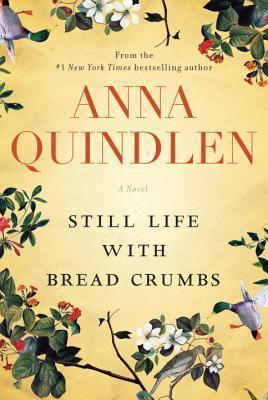
Still Life with Bread Crumbs, by Anna Quindlen, is a book that doesn’t have an initially heavy impact, but it sticks with you. It’s about a woman in a situation to which many of us in our 60s can relate: We were “somebody” once (or if we weren’t exactly prominent, we were at least identified as a certain kind of person who does a specific kind of thing, whose identity is wrapped up with that activity), and now we’re beginning a downsizing of that role; and this narrowing could be an end, or it could be an avenue for change, depending on how we react to it, how we see it through, what we are willing to allow.
Rebecca Winter was a famous photographer who produced iconic images relating to womanhood and motherhood—views of common items that grew in importance to express a certain kind of lifestyle or mindset in those who viewed them. Once, she was revered, sought out, exhibited, solicited for new works, invited to lecture, sometimes even recognized on the street. But now her sales are dropping off while her responsibilities (and bills) are growing, so she has chosen to solve the problem of her scant bank balance by renting out her costly Manhattan apartment and moving to a cheap rental in a small town in the middle of nowhere in particular. This will allow her to pay for her parents’ old age care until she can figure out what her next step should be.
It’s initially difficult for her to adapt to the dramatic change in circumstances, and she finds herself unprepared for the solitude, the immersion in nature, the lack of stimulation formerly provided her by big-city living, the inability to solve her problems by throwing money at them. But gradually she sinks into her place in this small community, finds regular routines, changes her expectations about what constitutes a success, and begins to tentatively create something different for herself. And these shifts in perspective also allow her to look at herself, her work, and her relationships in a way that finally breaks down the wall she has built between the idealized world of a woman behind a camera and the everyday experience of someone with nothing between herself and reality. It is a kind of coming-of-age story, but at the end, rather than at the beginning, of the spectrum.
Some reviewers really pick this book apart, belittling the transformative experience of the main character and calling it overly sentimental or even trite. Some also focus heavily on the May-December (well, perhaps July-December) romance, which to me was only one small element in the bigger picture being presented, not nearly as important as all the rest of it. Perhaps I am just a naive reader, or easily satisfied, but I would call this book a sort of “comfort food” read on the surface, but with strong underlying themes that give it a universal affect. I enjoyed both the superficial story and the deeper ruminations. I liked the storytelling, and tapped into the emotion, and I liked Rebecca’s authenticity and transparency, as well as the humorous side stories and anecdotes that keep the narrative lively and unexpected. It may not be to everyone’s taste, but for me, where I find myself in life, it was just the thing.
Metaphor
If I had to define the central theme of the book Black Cake, by Charmaine Wilkerson, it would probably be summed up by this quote:
“But the fact was, when you lived a life, under any name, that life became entwined with others. You left a trail of potential consequences. You were never just you, and you owed it to the people you cared about to remember that.”
ELEANOR BENNETT
The cake in the title, made with blended fruits soaked in liquor and with burnt sugar added to produce its distinctive black color, is a symbol of family, tradition, a thread of familiarity that stretches back to connect all the disparate parts down through generations. It’s also a metaphor for the complexities of culture, in which such issues as colonization, slavery, immigration, assimilation, and social, racial, and political borders figure into every aspect of life—or a recipe.
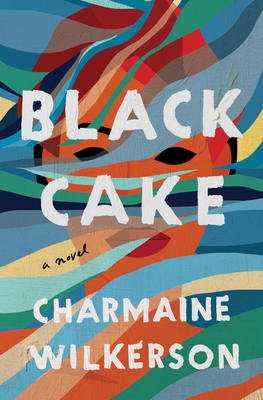
This book is a kind of revelatory fiction; the story is told completely in third person, but from multiple voices and points of view, and a new bit of the story is revealed as another person takes up the narrative and adds his or her perspective. Situations are fleshed out by hearing about them from different voices and seeing them through different eyes, and each narrator has a reaction to share. Although Eleanor Bennett, the matriarch of this family, is the pivotal character, the story is moved forward by noting the effects all the secrets of her life have had on the members of her family, most specifically her children, and also by revealing the major impact that both significant and tertiary characters in her past have had on hers and everyone else’s future.
Although I had some difficulties with the book, the most persistent probably being that Wilkerson stuffed it as full of social issues as her black cake bulges with fruit, I appreciated it as a whole. I couldn’t wait, when I reached the end of a chapter, to turn the page and see what the next one would contain, and I was seldom disappointed. Murder, desperate acts, rebirths, aliases, grand secrets, it’s all there in Black Cake. The story is about decisions made that can never be taken back, about necessary sacrifice and stubborn persistence. It’s a powerful picture of what it means to be a survivor, and to preserve a sense of racial and cultural identity throughout. The thing I liked most about it was that the narrative evolved as a true storyteller would reveal it, carrying you along with her into an evocative past. Give it a taste and see if it’s to your liking.
A classic based on a classic

I feel like I need some kind of reward for having finished, just as the author deserves an award for having written! I enthusiastically and optimistically started Demon Copperhead, by Barbara Kingsolver, two days after Christmas, thinking it would be my first read of 2023, but my count is now up to 11 books, and I just finished it. I took two breaks, one motivated by wanting to be able to read on my Kindle in the dark of night in my bed (I bought the hardcover of Demon Copperhead, knowing that I’d want to keep it on my shelf), and the other by realizing that the depressing nature of the story was having such a profound effect on my mood that I needed to read something else for a while! But I was determined to finish, and the wink-out of my Kindle battery mid-sentence day before yesterday sent me, finally, back to the last 13 percent of this tangible book.
It’s not that I didn’t want to read it—it’s an amazing story of a quirky, irrepressible, sad, endearing red-headed boy who nobody wants, and it’s also both a literary masterpiece and a stern indictment of America’s marginalization of the disadvantaged. For all those reasons, it is worth my time and yours. But lordy, is it depressing! Damon Fields (the protagonist’s real name) is a logical (though still incredibly unlucky) product of his surroundings, growing up in the foster care system after his junkie mother leaves him an orphan in a single-wide at a young age. But he is not an anomaly—there are plenty of unfortunates in the culture of Southern Appalachia who contribute to the dour mood. One of the most powerful understandings comes towards the end of the book, when Tommy, one of Demon’s former foster brothers, crafts a philosophy of America that pits the “land” people against the “money” people, and the land people—those who hunt and fish, farm tobacco, and share what they have with their family and anyone else in need, operating outside the monetary system—always lose.
I am somewhat ashamed to say that I have never read David Copperfield, the book on which Kingsolver based this one, although I have a fairly good knowledge of its contents and am in awe of how she translated Dickens’s “impassioned critique of institutional poverty and its damaging effects on children in his society” (Kingsolver, Acknowledgments) into this stunning story of the opioid crisis in Appalachia. But unlike the Jodi Picoult novel about which I blogged last, this book is not preaching about the social crisis but instead is determined to tell the story via the victims and survivors of it in a straightforward, completely realistic manner that guts the reader who is invested in them. Every person in this book (and there are dozens) is vivid, individual, and completely memorable. Even though I broke it up into multiple reading sessions over the course of more than a month, I never once had to think, Um, who is this character again? and backtrack, because every single one of them stood out as a person. I can’t think of a much better compliment you could give to a writer, and Kingsolver deserves it.
But it is the character of Demon who dominates—and sometimes overwhelms. His circumstances are beyond tragic, horrifying when you think of a child having to endure what he does, and yet he is a source of continual hope. It’s not that he’s a falsely optimistic Pollyanna of a character, it’s that he has somehow assimilated a work/life ethic that causes him to put his head down and push through every challenge in his desire to live. And even when he fails—and he does that just as spectacularly—he somehow never gives up on himself. As he loses family, friends, mentors, homes, abilities, he manages to continue focusing on what he does have and what he can use, and keeps hauling himself back to his feet.
One reviewer on Goodreads repeated a quote from a Washington Post book review that said,
“Demon is a voice for the ages—akin to Huck Finn or Holden Caulfield—only even more resilient.”
I couldn’t agree more. Another said “This is a book about love and the need for love, the search for love,” and that, too, is true. And the language, both brutal and brilliant—Kingsolver’s way with words is beyond skillful. I won’t say much more about the book, I’ll leave it to you to discover. But it deserves all the accolades.
Departure?

I have read many (most?) of Alice Hoffman’s books, and although there are major shifts in the tone of her writing at certain points in her career, she is consistently someone who is attentive both to detail and to character. Her book Faithful is no exception to that, but what is missing (despite erroneous labeling by Goodreads) is the element of magical realism that pops up in many of her books. There is one part of the story that I suppose, at a stretch, could qualify, but it’s such a low-level background piece of information that I don’t really count it, especially because the magic is cited but doesn’t exactly manifest. At first I was disappointed at its absence, but as the character and the story grew on me, I put that aside and just enjoyed the transformation of Shelby Richmond
I admired one Goodreads reviewer’s phrase when addressing what this novel is about: “Rather than coming of age, it’s coming to grips.” That is the plot in a nutshell. Shelby and Helene are best friends throughout most of their lives, until a treacherous, icy road under their wheels leaves Helene in a coma and Shelby trying to deal with the idea that she is walking away unharmed while her friend will never come back from this. The thought that she wasn’t damaged is, of course, not the truth at all: Shelby is overwhelmed by grief and guilt, and spends years cancelling herself out of life as a punishment for the one she believes she ruined.
The doctors and her parents can call her condition whatever they wish; Shelby knows what’s wrong with her. She is paying her penance. She is stopping her life, matching her breathing so that it has become a counterpart of the slow intake of air of a girl in a coma.
This is a somewhat dark tale, as some of Hoffman’s later writings have tended to be (for me, the turning point was her book Here on Earth, which forsook the lighthearted, sort of wacky heroines for a more serious tone and incorporated magic that was more portentous than incidental), but it is still enlivened by moments of comic relief. In this case, it’s Shelby’s impulsive nature, which slowly begins to rescue her from emotional trauma and depression and carry her forward into a new life. I love that it takes the form that it does, but I won’t specify what that is here, because it was such a delight to read.
The people and their relationships are the essential and most engaging part of this book; Hoffman paints a vivid picture when she develops a character, and it’s hard not to become emotionally involved with them, from Ben to Maravelle, Jasmine to James, to Shelby’s mom. This is a wonderful story of the effect persistent caring can have on someone, even when they don’t believe they deserve to be the recipient.
I never really figured out the significance of calling the book “Faithful.” While Shelby is faithful to her resolution to atone for the damage to Helene, and the two men in her life are both faithful to her redemption (as are her dogs), it just didn’t seem to fit. But I’m sure Hoffman knew what she meant.
Verisimilitude
I love that word, and it’s not one that you often get the chance to use. But it perfectly describes the book Holding Smoke, by Elle Cosimano, which I reread this week after a six-year hiatus and discovered that I liked it every bit as well the second time as I did on first perusal (another good word).

I originally picked up the book back in 2016 because of its setting—juvenile hall. While I was in library school, I took a class that required racking up service hours as part of the grade, and a dozen of us started book-talking groups (like a book club, but each person reads their own choice of book) in seven of the living units there. My friend Lisa and I ran a group in one of the four maximum security units (which more closely resembled the set-up of this book), and we loved doing it so much that we ended up continuing for two years, long after both the class and library school were over.
Cosimano, whose father was a warden, really has the setting, the interpersonal relations and interactions, and the rhythms of the place down in this book. I felt like I was right back at Barry J. Nidorf Juvenile Detention Facility in Unit W, but with a new group of troubled kids.
The title of this blog post doesn’t entirely fit the vibe of the book, since part of the story qualifies as magical realism. The main character, John Conlan, nicknamed Smoke, is serving time in a long-term facility in Denver, Colorado, for two murders, and although one was self defense and the other was committed by someone else, no one believed any part of his account when it went up against the damning circumstantial evidence. During the course of the event, John died for a period of six minutes and then was brought back, and during that six minutes had an out-of-body experience that he discovers he is now able to replicate. So while the other inmates are locked up inside the concrete walls of the “Y,” John is able to pass through them and wander out in the world in spirit form, tied to his body by a sort of cable that seems to be fraying the more trips he takes.
He uses this ability to good purpose by checking in on the families or business partners or girlfriends of other inmates and reporting back on their status—are they okay? are they cheating me? are they cheating ON me? No one can figure out how Smoke is communicating with his outside sources to garner this information, but they’re willing to pay in favors for his services.
He doesn’t use this ability in his own interests until, in the course of observing a drug dealer’s transactions at a bar, he meets a waitress he calls Pink, who can see and hear him in his spirit form, and with her help he begins to explore the truth around who could have manipulated the situation to put him in prison. But someone has a vested interest in keeping him there and keeping him quiet, and suddenly his existence is perilous, as is everyone’s who helps him…
The scene-setting, the characters, the pacing of this story are all visceral and gripping, and I also appreciated the philosophical elements Cosimano brings to the characters. I had no trouble with the suspension of disbelief over Smoke’s abilities, and the author makes the whole thing palpable by setting up and exploring the rules of how those abilities work. There are quite a few twists, and an exciting ending I didn’t see coming. This is a good example of gritty fiction crossed with the paranormal that will appeal to a wide range of teen readers. Although I have enjoyed Cosimano’s other books (particularly the Finlay Donovan series), I think I would call Holding Smoke her best so far.
 The Book Adept