Impossible

I picked up this book mainly because I thought I had read Matt Haig’s previous book, The Midnight Library. And at some point I must have actually believed I had read it, because I gave it a five-star rating on Goodreads. But there is no accompanying book review, which is unheard of for me since about 2012, so I looked through all my back posts and discovered that I had planned to read it, but somehow ended up instead with The Left-Handed Booksellers of London, by Garth Nix!l Anyway, that means The Life Impossible is the first book by this author that I have read, which means I came to it under false pretenses.
I may still read The Midnight Library, because I did enjoy parts of this one, and that one is better, according to the reviews of countless others.
I was initially drawn to this one by the description, which was about Grace Winters, a retired teacher who has been experiencing a dreary sameness to her days. (I related to this, being a retired librarian of a certain age who is mostly housebound.) Then she discovers that someone with whom she had a brief friendship decades before has left her a house on the island of Ibiza (one of the Balearic islands off the coast of Spain in the Mediterranean). There is some mystery about what happened to this friend—she is presumed dead, but no one can give Grace a clear account of how—and Grace decides, impulsively, to go to Ibiza and find out.
Up to that point, the story seemed like it was going to be one of those books where somebody who is stuck hits a turning point and changes her life, and that is, indeed, Grace’s story; but the magical bit to this tale isn’t that she discovers herself by embracing a different lifestyle in a fresh locale, or that she meets someone or acquires a new and exciting avocation. The magical bit is, indeed, magic—it’s something that is described by those who introduce her to it as a natural phenomenon that is the next step along the way for the evolution of humans’ innate powers or abilities that just looks like magic. And the explanation of its source is even more bizarre. So, this is a story for which you have to be willing to suspend disbelief, which at some moments feels easy and natural and at others may cause you to say “What?!” and put down the book.
I don’t know whether to characterize this story as magical realism or as a metaphysical metaphor or what. It has some uplifting and ah-hah moments, but I had as hard a time embracing them as Grace does. I appreciated the setting and the beautiful descriptions of Ibiza, about which I have been fascinated ever since I read about the place in a Rosamunde Pilcher novel 25 years ago, and I liked the eco-consciousness the author promotes; but some of the elements of the story were just too weird for me, and the narrative becomes borderline didactic in its zealous promotion of self-actualization.
Also (and some may find this too nit-picky, but so be it), I didn’t like the vehicle that caused Grace to write down her saga: She receives an email from a former student who is having a really hard time—Maurice has lost his mother, lost his job, been dumped by his girlfriend, and is in despair—and instead of doing something concrete to assist him, such as sending him an encouraging response, or engaging in a series of helpful phone conversations during which she listens and is supportive, or referring him to a therapist and following through to make sure he is okay, she makes it all about herself. She tells him “I know what you’re going through” and then writes a 300-page manuscript about her own issues and how she resolves them, and sends it to him as if that will somehow fix things. I mean, he might find that it briefly diverts him from his own problems, but short of going to Ibiza himself and trying to replicate her experience, it certainly doesn’t address his crisis, particularly because what did happen to her could cause him to think she’s lost her mind.
Hmm. Have you ever started out writing a book review thinking that you had enjoyed the book and discovered, by the time you dissected all of its elements for your readers, that maybe you weren’t so thrilled by it after all? Yeah. Well.
Positives:
• Some truly epic descriptions of the character and beauty of the island of Ibiza
• Some engaging characters
• A protagonist with whom some may closely identify (at least initially)
• A useful portrayal of how capitalism is destroying nature
• Some lyrical writing and a few memorable moments and quotable quotes
Negatives:
• A lot of angst and some petulant indignation
• Meandering narrative that prolongs the story to no purpose
• Magical elements that start out appealing but end up being pretty weird
• A certain self-centeredness on the part of the protagonist and several of the other characters
I guess you will have to decide for yourself on this one.
Revisiting Mount Polbearne
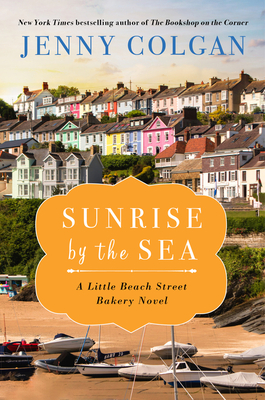
I just finished reading Sunrise by the Sea, the fourth book by Jenny Colgan set on the fictional island of Mount Polbearne, modeled on St. Michael’s Mount in Cornwall with its tide-bound causeway from the mainland. The first book, Beach Street Bakery, tells the story of Polly Waterford, who moves to the island to get over a bad relationship and ends up turning her avocation for bread-baking into a job, then meets Huckle, a local bee keeper with hidden depths. The two subsequent volumes (Summer at the… and Christmas at the…) continue their story. This fourth chapter definitely includes Polly and Huckle and their quirky twins, Avery and Daisy, but it is primarily the story of a newcomer to Mount Polbearne, and could probably be read as a stand-alone, although you would miss some of the nuance contained in Polly and Huckle’s back story.
Marisa Rosso’s grandfather has died and, although he lived in Italy and she saw him rarely (she lives in England), her cherished childhood memories from their time together have sidelined her with grief. The two of them were similar in demeanor and had a quiet but close relationship in the midst of their loud Italian family, and soon the grief has metamorphosed into something bigger; Marisa feels that along with her grandfather she has also lost an essential piece of herself. Grief turns into anxiety and then agoraphobia, and soon Marisa is working her job remotely from the confines of her sublet bedroom and curtailing every other activity. Her rather self-centered landlord thinks he’d prefer a less fraught home existence, and decides that Marisa has to go, to make room for more fun-loving roommates, but he speaks to a wealthy friend of his and manages to get her a place to live in a holiday rental on Mount Polbearne. Once the overwhelming anxiety of getting to Cornwall and out onto the island is past, Marisa thinks she could enjoy the solitude of the tidy little apartment, until her next-door neighbor moves in. He’s large, loud, Russian, and teaches piano lessons from morning to evening, then plays melancholy discordant compositions late into the night, and the constant clamor keeps Marisa in a state. Something has got to give…
This is the usual charming signature Colgan mixture of beguiling location, delightful characters, some life challenges, and lots of cooking and baking. I enjoyed catching up with the protagonists from the other books, and Marisa’s passage through grief is both revelatory and cathartic. It’s not “great literature,” but what can I say—I’m a fan.
Prescience
I have always been confused by how this word is pronounced; the syllables divide up as pre•science, but according to the dictionary, you pronounce it PRESH•ens. Before I looked it up the first time, I was pronouncing it “pre-science,” because the definition is “the fact of knowing something before it takes place,” so it made sense to me that it would be pre-, or before, science, because that would mean it was something known “before the fact.” In other words, a prediction, which is another weird word (previous to speaking it?). The English language is wild and wonderful.
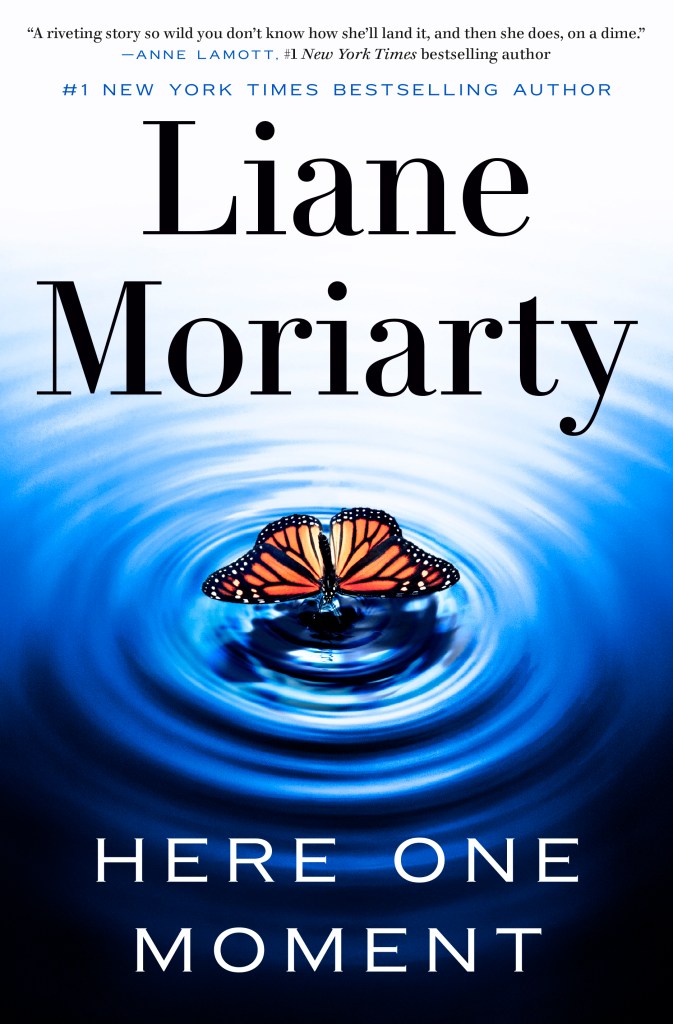
Anyway, I thought it was an appropriate title for a review of Liane Moriarty’s most recent book, Here One Moment. A bunch of people get on a plane—parents, children, young people, middle-aged, elderly, all caught up in their own plans—and among them is an unremarkable older lady who rises to her feet during the long delay before takeoff and, pointing her finger at each passenger, methodically predicts their deaths (age and cause). Some laugh as if it’s a good joke (mostly those whose prediction is for 96 or 103, of old age), while others panic as she details disease, accident, or violence at a young age or in the immediate future. When the short flight is over and they all disembark, the incident is put out of the minds of most, whether it’s skeptically, uneasily, or forcefully, but when the first passenger dies exactly as the “Death Lady” predicted, the rest are no longer so dismissive.
After the events of the flight, the story jumps between multiple story-lines detailing the lives and reactions of half a dozen passengers, interspersed with chapters from the lady’s life, and we wait to see whether she is a delusional fraud or a true clairvoyant, worrying right along with those passengers with imminent and uncertain ends as they pretend normalcy, choose avoidance, or change their lives to avoid their fate.
The question for the reader is, of course, if you knew your death date, would you do anything differently? Would you try to defy fate, manipulate the statistical likelihoods, shift your timeline? The germane quote Moriarty used in the book was from Elisabeth Kubler-Ross:
“It is only when we truly know and understand that we have a limited time on Earth and that we have no way of knowing when our time is up that we begin to live each day to the fullest, as if it were the only one we had.”
I enjoyed the exploration of the Butterfly Effect idea and, of course, drew parallels with that movie and also with Final Destination. It’s also been compared with The Measure, by Nikki Erlick, which I have not read (except for the Goodreads summary). This book dragged a bit during the detailing of Cherry Lockwood’s life (the lady with the pointing finger), but suspense was maintained in the sections about each person who was dealing with the prospect of an imminent demise, of causes mostly not under their control. So although the book seemed to take me an inordinate amount of time to get through, I would recommend it for those who find this question philosophically intriguing. Not my favorite book of Moriarty’s, but also not my least favorite!
Old-fashioned feel
I have always enjoyed the books of Rosamunde Pilcher, although she wrote so few that I have had to resort to re-reading each of them multiple times (which is no hardship). I was therefore delighted when someone in the Friends and Fiction Facebook group mentioned that British author Marcia Willett wrote in a similar vein but that she liked Willett’s even better than Pilcher’s. I went to the Los Angeles Public Library website to see if they carried any of hers as e-books, given that I don’t get out much but can order books through Overdrive straight to my Kindle. I was happy to find a few, and checked out Indian Summer, which was almost immediately available.
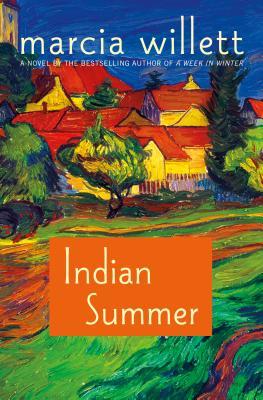
After having read about 25 percent of the book, I logged onto Goodreads to enter it as my “currently reading” title and was shocked to discover that it had just been published in 2014, a mere 10 years ago. The book’s setting and characters and particularly the writing style are old-fashioned to the point that they remind me of some of my favorite authors of the 1940s-1960s—Rumer Godden, Elizabeth Goudge, Daphne du Maurier, James Hilton and Dodie Smith. In fact, this book reminds me particularly of Smith’s lesser known It Ends with Revelations, probably because of the theatrical connections of the books’ protagonists.
Willett’s earliest novel appears to have been published in 1995 (which may seem aeons ago to some of my younger blog-followers, but is just yesterday to someone born 40 years before that), and she didn’t begin writing until she was 50 years old; but that makes her about 80, not nearly elderly enough to channel this particular sensibility in her novels. It’s not just the setting, in rural Devon, that makes it feel this way; it’s the characters, who are generational landowners and tenants on the one hand and theater people and writers on the other, and in the way they relate to one another and to their environment. There is still that unspoken, unacknowledged consciousness of class that hasn’t existed to this degree in England for a while now (or at least I don’t think it has!) but is definitely still alive in this story. Additionally, there is a certain focus with which some of the writers from the era I mentioned approached their story-telling that includes a specific attention to nature and a leisurely and appreciative approach to the organic cycles of life that you simply don’t come across much in modern works.
The book revolves around a central character, Mungo, a retired theater actor and director whose primary residence is London but who also has a place in Devon, a part of the larger property owned by his brother. I say “revolves around” because while all the characters have at least a tenuous connection with Mungo, he mostly facilitates, rather than stars in, the little stories portrayed here. Mungo’s brother, Archie, inherited from their father, a conservative man who didn’t appreciate either Mungo’s profession or his sexual identity. Archie and his wife, Camilla, are struggling to make ends meet on the estate by renting out their two cottages. Philip and Billy are brothers who inherited the running of the “Home Farm” (a portion of Archie’s estate) from their father and will pass it to Philip’s son, unless Archie decides to sell up. Staying in the two cottages—one updated and the other dilapidated and awaiting repairs—are Emma, an army wife with two children, Joe and Dora, and a six-month lease; and James, a writer, who is wandering around Dorset for part of the summer, researching locations for his second book. Completing the cast are Kit, a friend of Mungo’s who has come down to consult with him on what to do about the reappearance of a figure from her past; and Marcus, a military friend of Emma’s husband who is trying to make time with her while her husband is away in Afghanistan.
Each of these characters or groups of characters stars in their own vignette within the larger picture of this Indian summer in Devon. Although there is one secret from the past that turns out to be rather shocking, for the most part the events are only exciting to those directly involved, being ponderings about what will or may happen in the future based on choices made now. There is a gentle humor revealed in the obliviousness of the author, who has met all the other locals but has not only completely misconstrued their personalities and concerns but has arrived at the assumption that life here in Devon is constant, unchanging, and bucolic, when in fact there are many tempestuous passions hiding behind the façades of everyone in the story.
While I could not agree with the woman who considered Willett superior to Rosamunde Pilcher in her authorial abilities, I did enjoy this gentle, rather charming tale of friendships and secrets in the English countryside.
Bafflement and outrage
Have you ever read a book that, in the end, you wished was even worse than it was? I have just had that experience.
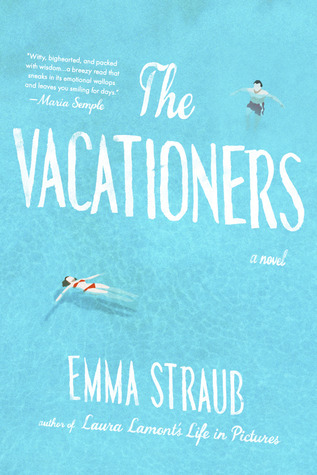
The real wish is, of course, that you had never read it in the first place, but that ship has sailed, to indulge in a cliché for the sake of staying on point with this book’s entire raison d’être. The Vacationers, by Emily Straub, should come printed with a disclaimer at the front that says, Please check the Goodreads reviews before assaying this!
No, I’m not usually this vindictive when reviewing a book I didn’t like, because, I reason, perhaps someone else will like it better. But despite a couple of pre-publication glowing reviews (how much were you paid?), no one does, and people need to know that!
The characters were a group of the most repellently dislikable people I have encountered since trying to read The Casual Vacancy, by J. K. Rowling, which can serve as the perfect example of that book I mentioned in my first sentence—bad enough to make me stop reading by Chapter 4. Unfortunately, these people had enough of an initial tinge of normalcy that I was bamboozled into believing that this story could go somewhere and be something, so I kept reading, wondering when that might happen, only to arrive at the end and say, “What? What?” As a reviewer on Goodreads who is rendered even more bitter than I observed,
“I kept reading in the hopes that
someone would drown.”
—Meghan
So, you’re wondering, what is so terrible? It’s kind of hard to explain. The Vacationers is basically a book about a family who go on vacation together in Mallorca. There are the parents, New Yorkers Franny and Jim, who are having a crisis in their relationship that happened after the reservations were made, so they decide to go through with the vacation anyway; there are the children, 28-year-old Bobby (lives in Florida, sells real estate with a sideline in health supplements) and 18-year-old Sylvia (about to leave for college, desperate to lose her virginity); there is Bobby’s cougar girlfriend, Carmen (who everyone resolutely dislikes); and there is the best friend of Franny, gay Charles, and his husband, Lawrence (hoping to adopt a baby), all brought together in a beautiful house in the hills for a two-week sojourn. The potential family dynamics could, and should have, proved interesting, but…they didn’t. All the things under scrutiny mostly happened or have at least been substantially foreshadowed before the trip began, which causes tension and a lot of talking. Let me amend that: whining, over-dramatizing, obsessive dwelling on he-said she-said I should’ve you could’ve why didn’t you, if only? “White people problems!” should be printed on the cover as one of those shorthand blurbs offered up by other authors to help out their friend’s book sales. There is a load of privilege, entitlement, and snobbery accompanied by a faint whiff of racism, a bit of misogyny and, as some reviewers noted, the reader keeps wondering if this is a send-up but concludes that unfortunately,
it is not.
I’m not going to dwell on everything that was wrong with this “slice of life” disaster (Definition: “A storytelling technique that presents a seemingly arbitrary sample of a character’s life, which often lacks a coherent plot, conflict, or ending”) except to give a small spoiler by way of illustration: When girlfriend Carmen walks out on the vacation (and on Bobby) and makes her own way back home rather than stay and be subjected to any more of this, I should have followed her out the door. But that unfortunately happens too late in the story to have made a significant difference.
I gave it one star on Goodreads. I wavered around two, simply for the descriptions of the locale and the food, but no. Those were merely unfairly employed lures to keep me reading.
Sweetness and lies
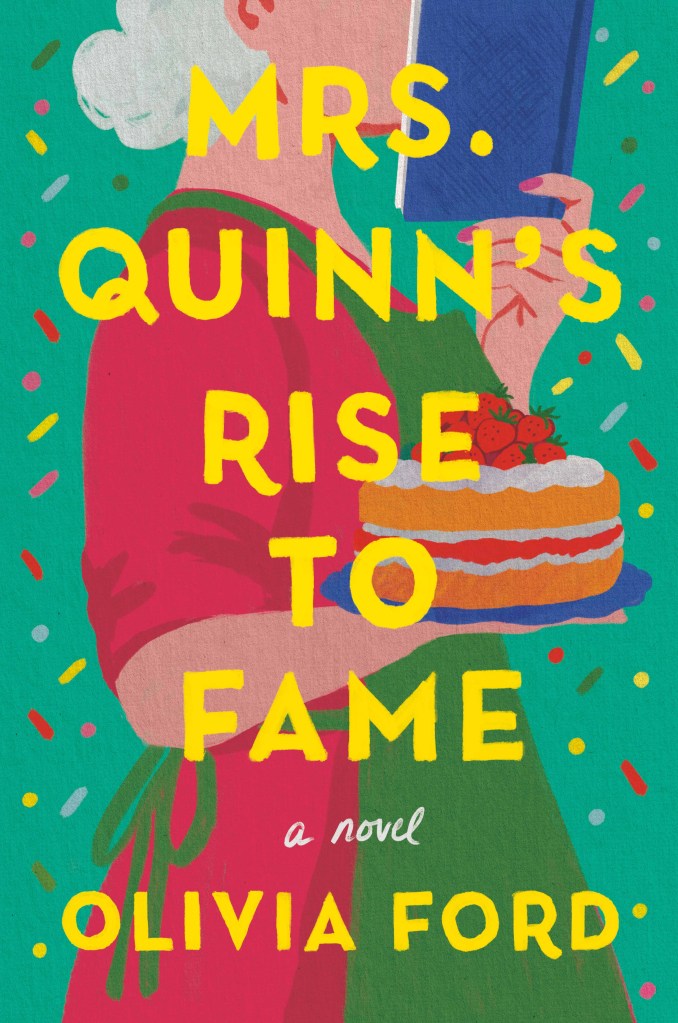
The description of Mrs. Quinn’s Rise to Fame gives off major cozy vibes: Jenny, a woman of 77, happily part of a couple for 59 years with her beloved Bernard, 83, feels a little restless settling further and further into the undeviating routine of their retirement. She takes an unexpected opportunity to apply to be a contestant on the television show “Britain Bakes” (yes, think The Great British Bake-off), to see if life still offers the potential for meaning and adventure. She enjoys the new-found independence of her choice, but it brings up some old memories that begin to affect both her and her relationship…
It sounded ideal: I like baking and recipes, and I like seeing older people charging towards life rather than sinking into it. But…I’m going to quote another Goodreads reviewer here:
“I feel tricked. I wanted ‘elderly woman finds herself through entering a baking contest.’ Instead, I got ‘elderly woman reminisces about the most traumatic thing that ever happened to her (which she’s kept a secret for 60 years) while participating in a baking contest.'”
The trouble started for me when Jenny decides to keep her application a secret from her husband until she knows for sure that she got in, or at least has a good chance. I didn’t have such a problem with that—you don’t want to get people’s hopes up, or deal with their expectations, for that matter—but the way she went about it was inconsiderate and rather thoughtless (not to mention incredibly inept), and leads her husband to believe that she’s hiding something serious, like a life-threatening illness. And when she realizes that is the conclusion he has drawn, she doesn’t come clean and put his mind at ease! I began to like and respect Jenny a little less.
Then we discover that there’s a much bigger secret she’s been keeping from Bernard (and everyone else) for the entire 59 years of her marriage, as the baking of some of her old family recipes brings up memories of her life at 17. She claims that she has kept the secret all this time in order to protect him, but we figure out pretty quickly that it’s to protect herself from being looked at differently by him and by her other close family members. Which didn’t track at first for me, because the secret would explain so much—but once I realized in what way the trauma has shaped their subsequent lives, I liked Jenny even less.
I would really, really like to go into the specifics of why I was kind of horrified by the ramifications of her secret, but I don’t want to give away a central plot point. I will say that I felt like she robbed her beloved (and charmingly portrayed) husband of his agency in a particularly cruel way by never taking him into her confidence.
But…I did thoroughly enjoy the baking narrative, with its descriptions of such delectables as Battenburg Cake and Treacle Tarts; the interactions with her extended family and with the people she met and in some cases befriended on the show; and the descriptions of the filming of the show’s production. Reading those parts immersed me in the bake-off experience, and if the book had been exclusively about that I think I might have liked it better. Many people gave this book five stars, with few being as curmudgeonly as I have been here. Perhaps I am overreacting…but I didn’t like the lies, the implications of Jenny’s emotions about the traumatic event, or the way it finally resolves, which seemed a little too pat.
You will have to decide for yourself whether you want to allow yourself to be whisked away into this story, pun intended.

An addendum: This is my 500th post on The Book Adept Blog!
Funny story
I was headed towards a long, intense perusal of Paolo Bacigalupi’s latest, Navola, but just as I was about to open it, the library popped up in my email to tell me this Emily Henry book was now available for checkout, and I decided to prioritize a shorter, lighter read in the midst of ranting about the Republican convention and scolding Democrats trying to ditch Biden in a last-minute bid for the nonexistent “perfect” candidate. And I’m glad I did.

I was surprised by this one, because I have read four other Emily Henry books and enjoyed them all, but so far Funny Story is my favorite. It’s surprising because a bunch of die-hard Emily fans gave it a low rating and found many things to pick at about the protagonists, the set-up, the story, the writing…not a bestie for many.
I may have been prejudiced by a few things: Daphne, the protagonist, is a somewhat buttoned-up children’s librarian. Miles, the other MC, is scruffy, mischievous, but also deep and troubled, and dead sexy. I also liked the opening premise: Daphne is engaged to Peter, and the wedding is imminent. Peter has a lifelong best friend named Petra, who is dating/living with Miles. Everything is on track when Peter and Petra decide, at his bachelor’s party no less (to which she was, of course, invited), that they are in love with each other, and dump Daphne and Miles. Peter then gives Daphne a week to move out of “their” house, to which he holds exclusive title and, given her limited options as a poorly paid librarian (trust me, there is no other kind), she moves into the second bedroom of Miles’s apartment. So yeah, she’s now living with her ex-fiancé’s new fiancée’s ex…
The next inevitable step is that Daphne, motivated by panic (and by revenge fantasies), intimates to Peter that she and Miles are a couple, and then she has to confess this to Miles. He is surprisingly sanguine about this lie, and promptly starts taking couples selfies to post on Daphne’s social media. And…you can probably guess the rest, although it’s nicely written and plotted, with a fair number of roadblocks in various directions, and also features some wonderful side characters, such as Miles’s sister Julia and Daphne’s new friend Ashleigh, and explores familial issues that illustrate why the MCs are the way they are.
The title may have been misleading for some, hence the disappointment when the book didn’t turn out to be particularly humorous (although it has its moments). It alludes to the story that all couples have and, if it’s a good one, like to tell, about the moment they met. Peter was fond of recounting his with Daphne, but it turns out not to hold a candle to how Daphne and Miles start their relationship. I really liked this book, beginning to end; some of Henry’s others have lagged for me at key points, but this one kept me going, start to finish. Don’t listen to the naysayers on Goodreads—check it out!
Book pharmacy
The pandemic did something to our libraries from which I’m not sure they will ever recover completely: It made the in-person experience first precarious, then impossible, and then precarious again, as libraries first changed policies to prevent close contact, then completely closed their doors, and finally opened again only to discover that their patrons were either still being cautious or had completely changed their methods of book access and weren’t readily returning to their former habits.

My experience has been particularly acute, since, in the year after the formal lockdown when we were all mostly still staying away from any public place with more than half a dozen people in it, my disability began to ramp up to the point where making my weekly rounds to the market, the post office, the feed store, and the library became at first painful and then fairly impossible. The only time I go to the library nowadays is if I am booked to teach an art workshop at one of the local branches, and it takes me two hours to get ready and a double dose of Tylenol to weather climbing in and out of the car four times (leave-arrive, leave-arrive) and walking from the parking lot to the meeting room to set up for contour drawing or watercolor or T-shirt stenciling.
My previous library habits were filled with serendipity for my reading life; I had a particular routine that varied but usually included most of the same checkpoints. I would return my books and then look at the return shelves to see what “everyone else” had been reading and whether any of it looked intriguing to me. I would check the new books shelves and grab at least one or two unknown and untried authors. I would look to see if the latest volume in half a dozen mystery series I read had arrived, or if there was new science fiction, and I would visit the YA section for fantasy, because some of the best fantasy writers live there. And if all that failed to garner me at least half a dozen books to take home, I would stroll languidly up and down the aisles, looking for beloved authors, and would consider re-reading one of their books; but then I would also look around them on the shelves to see who I might discover because they were shelved close by. That’s how, while looking to see if there were any Rumer Goddens I hadn’t read, I noticed and borrowed the books of Robert Goddard. That’s how, while standing by the shelf containing Betty Smith and Dodie Smith, I found A Simple Plan, by Scott Smith. The books of Robert Heinlein led me to the Dune saga by Frank Herbert “next door.” In short, I can’t say enough about the expansion of one’s reading life through the luxury of browsing.
In my readers’ advisory class at UCLA, I used the book Reading Still Matters, by Catherine Sheldrick Ross, as one of the texts; Ross and her colleagues did multiple in-depth surveys and studies of thousands of readers to discover how they select, but I never realized, until I just now took the time to describe my own exact experience, that I almost perfectly characterize the habits of the successful readers she catalogues. Part of that book is also dedicated to the purpose of discovering what happens when a person’s own habits and methods fail them and they are flailing about trying to find a book. And now, I can relate to that, too….
These days, being so nearly housebound as I am, my choices suffer from a certain paucity. Although I belong to a couple of Facebook groups of avid readers, most of the time they all seem to be reading the same two dozen or so books, many of which are not to my taste. I have never been a peruser of the bestseller or award-winner lists in the newspaper or online, mostly because long experience has shown me that the former are not as good as their publisher’s blurbs declare, while the latter have won awards simply because some esoteric bunch of people decided they should, and we apparently have little in common! So without my library routine, I struggle to find what I want, just as much as any more naive reader with fewer developed resources. I wasn’t conscious of this until my annual Goodreads challenge (how many books you read in a year) began to number fewer and fewer books, mostly because I am not finding the ones that would hold my attention and keep me reading on a continuous basis. One year, while working full-time (at the library) with a long commute, I nonetheless managed to clock more than 150 books; but last year I struggled to complete 80, despite being retired and mostly at loose ends. Part of it, of course, is a certain lack of concentration that comes with my physical challenges, but I blame most of it on the functional lack of choice.
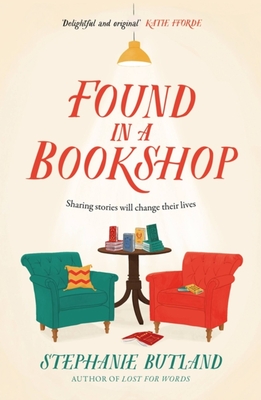
Being a readers’ advisor carries a certain amount of responsibility with it to keep up with current literary output while having a deep base of older choices on which to fall back, and I confess that I’m not as good at it as I have been in the past. But I still manage, in the Facebook reading groups (and sometimes on Goodreads) to find the books people want, if they give the slightest bit of personal information that would lead me to their preferences. And that brings me to the book I am currently reading (at last! you may be exclaiming with relief), which is called Found in a Bookshop, by Stephanie Butland, and which is resonating so closely with certain parts of my own personal experience that I am finding it positively cathartic.
I didn’t know, until I had already reached chapter 11, that it is actually a sequel to Butland’s book The Lost for Words Bookshop. But several Goodreads reviewers said you could read the second as a stand-alone, and I somehow couldn’t bring myself to stop, once started, so I’ll get to the first one when I am done with the second. (EDITED TO ADD: I apparently did read the first book, back in 2018, and gave it five stars. I didn’t review it here, since I hadn’t yet started this blog, and I don’t remember a thing about it! That’s kinda scary….)
A couple of Goodreads reviewers groused about the book being set during the Covid lockdown (“outdated” said one, while the other elaborated: “Boring. Too many characters. Hate Covid books. Could do without the author’s opinions. Glad I only spent 99 cents.”) but that was precisely what I loved most about it. Butland so perfectly captures the feeling of being isolated from everyone, from standing on one side of a door but not allowed to open it, the nervous retreat from other people when encountering them in public places, the quiet of the streets with nothing but essential traffic…it brought the whole thing back with complete clarity. I suppose some people wouldn’t want to experience that again, and while I didn’t precisely crave it, I found it comforting, in a way, to recognize that this author’s experience (and that of her characters) so perfectly echoed my own.
The description of the pervasive quiet of the bookshop without any of its customers and the nervousness of its proprietor and her employees as the lockdown went from weeks to months with no sign of abatement was evocative and painful. The vignettes of the various people who were tenuously connected through their previous status as customers of the bookshop were likewise poignant and familiar. But the thing that really got me, in the end, was that this was a story not just about Covid but about readers’ advisory. At some point, after one long-time patron mails a check and requests that the bookshop send her books each week—leaving the selection up to the staff—the owner, Loveday Carew, decides that she will enlist her employee, Kelly, to craft more of a presence on social media and then to advertise their services as a “book pharmacy.” Basically, they tell the town of York that they will be happy to select books for people who aren’t sure what it is they want or need, a sort of reading prescription, and either deliver them to their porch via bicycle, make them available for pickup, or send them in the post. And then the emails and letters start to arrive, some requesting specific genres or types of reading but others simply describing the feeling the reader wishes to experience and hoping the bookshop staff can figure out what book will produce that. The books couldn’t cure Covid, but they could do something about fear, boredom, loneliness, and the desire for escape. It was like this author took my favorite area of study—and my life’s preferred work—and laid it all out on the pages of her book.
In addition to all of this synchronicity with my own life’s experience, I love that in the “prescriptions” the bookshop staff write out for their customers I discovered at least a dozen intriguing titles with which I was unfamiliar, and which I promptly noted and added to my Goodreads “want to read” list. After doubling back to peruse the first book in this duology, I can scarcely wait to explore that extra list of smart suggestions from an author who has obviously done her homework. Great work, Ms. Butland!
Retrograde
The blurb for this book describes it as “funny and heartfelt.” It’s also supposed to be a romance about a woman who writes romances for a living and wants to open a romance-only bookstore with her two best friends, also authors. So you would think I would love it, or at least find it charming and/or germane to my interests. I’m beginning to think all the books I want to read have banded together to evade me on purpose, leaving me with a bunch of hopeful choices that don’t quite pan out.
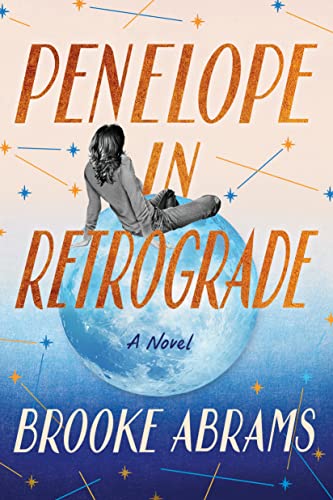
Penelope in Retrograde, by Brooke Abrams, isn’t a bad book, and I didn’t hate it; but it’s too slight to make much of an impression. It’s also annoying in some specific ways. I feel like the author is trying too hard to include all the romance memes, from the meet-cute to the friends-to-enemies-to-friends, and throwing in a conflicted familial situation to spice it all up—none of which turns out to be satisfying.
The main character, Penelope (Penny) has been, not exactly estranged from her family, but out of regular contact for about a decade. Her father is a workaholic businessman in finance; her twin, Phoebe, graduated with honors from college and works in his firm; and Penny has always been the odd one out. Phoebe is successful, Phoebe has a relationship, Phoebe lives close to her parents and sees them on a regular basis, while Penny lives more than half the state of California away from them, and writes romance novels. She is so insecure about her lack of acceptance from her family (her mother wants her to dress better and get a husband and maybe have some kids) that she hasn’t even told them the pen name she uses to write her books.
Once upon a time, Penny was briefly married to Smith, with whom she grew up. She had a better relationship with his family than she does with hers, and mourns the loss of them more than the marriage. The present-day setting of the book is the Thanksgiving holiday, for which Penny is finally returning home after 10 years of avoiding every family gathering. And why is she gracing them with her presence? She needs money to open her bookstore. This immediately made me think poorly of her, since the only reason she’s willing to connect again is to get the funding.
Karma trips her up when she phones for a rideshare from the airport and ends up sharing the Úber with her ex, Smith, who is also returning home to spend the holiday with his sister. Penny then discovers two things: Her parents have invited a young and handsome colleague from her father’s company to dinner, because they never give up matchmaking (even after 10 years of no contact?), and Smith is dating someone new. So Penny immediately decides it’s a good idea for Martin, the set-up guy, to pretend to be her boyfriend. The problem is, her whole family knows he’s not, so he has to convince Smith without revealing what he’s doing in front of her family. The whole thing is cloyingly cute. (Sorry, that was all a little spoiler-y.)
Basically, I agreed with one Goodreads reviewer who said that the story tries way too hard to be funny. Penny’s compulsive avoidance of any genuine conversational moment by turning everything into a joke is grating, while the ride-share scene stretches out forever and is patently silly. Penny’s narrative paints her as the victim of her family’s rigid expectations, but her own behavior shows her up as kind of selfish, and definitely as tone-deaf to their needs as she feels they are to hers. And everybody fights nonstop, which is likewise wearing.
The other thing about this story is that it’s so, so easy. Martin immediately falls in with her plans; Smith turns out not to be plotting what she thinks he is; her father has changed drastically in completely implausible ways while her mother has remained distressingly static; and Nana Rosie as the comic relief is too, too coy. And even though her sister is justifiably irate at how Penny is constantly stealing her thunder, forgiveness also comes easily. Despite Penny raging about how they are all hostile to her, everybody cooperates with hardly a whimper, and then when a stressful life event occurs, Penny transforms into someone else and we have a qualified HEA like all good romance novels. I was surprised when I discovered I had already turned the last page, because I kept expecting things to become, well, more. The desire for more seems to be the one bell I keep ringing lately.
Can anybody recommend something to me that will generate some genuine feelings of joy when I read it?
Darlings
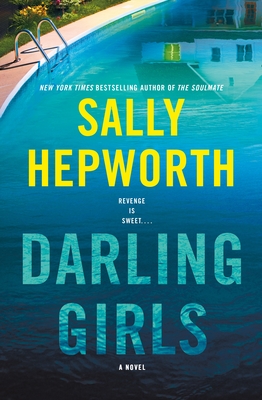
The title of this book is pretty good at pointing up the false affection shown to three foster children by a deeply narcissistic sociopath masquerading as a loving foster mother. I don’t have a lot to say about this book; I enjoyed it less than my favorite of Sally Hepworth’s (that would be The Good Sister) and more than my least favorite (The Mother-in-Law), so it falls somewhere in the middle with the others of hers I have read (three to date).
I did like the format Hepworth chose, in which we get the alternating point of view of each of the three foster sisters—Jessica, Alicia, and Norah—in adulthood and also in childhood (present and past). I didn’t care much for the psychiatrist session segments of the book, mostly because I was so uncomfortable with the way she wrote the therapist’s part (he was so repellent!), but it did render a little more intrigue as the story went on. I felt like the murder mystery was a bit generic—I mean, after we get an idea of who Miss Fairchild (the foster mother) is underneath her sugary sweet façade, it’s hard to believe any red herrings about who could have been responsible for the body buried under the house (that’s a minor spoiler, we find out about the body almost immediately). But the thought that the killer (if there is one) might get away with it definitely carried the suspense further, a good move on the author’s part.
I think part of the reason I didn’t love this book, apart from it feeling obvious in some respects, is that I didn’t feel a strong connection to at least one of the foster children (which turned out to have some basis in reality). I won’t say which one, because that would spoil things further. But it was a fairly engrossing read, and I think most people would find it a quite satisfying example of relationship fiction with a suspense twist. It also points up the ongoing problem of the way fostering is handled and the many opportunities for abuse of that system, which I appreciate.
Three stars out of five for me. But you might like it better.
 The Book Adept