Cork O’Connor
After reading and loving This Tender Land, by William Kent Krueger, I was excited to try out his mystery series featuring Cork O’Connor, since that book had met my expectations for good writing, good character development, and imagination. I wasn’t exactly disappointed by Iron Lake, the first in the series, but I wasn’t bowled over, either.

First of all, when I started reading I felt disoriented when I realized that we had come in halfway through O’Connor’s career, and at a low point. O’Connor had worked in Chicago as a cop while his wife, Jo, went through law school; after she was done, he moved her and the kids back to his home town of Aurora, Minnesota, where he had expectations of a better life for them all. His part-Irish, part-Anishinaabe heritage let him fit in as the town’s sheriff with both the whites and the tribe, whose reservation (and casino) border on the town; but when we enter the story, a catastrophe has resulted in a recall election that has kicked O’Connor out of office, and the aftermath of emotional mood swings (and drinking) has also caused his wife to push him out of the house. His wife is distant, his children live at home with her, and Cork is staying in the living quarters behind a drafty old hamburger stand willed to him by a native friend and mentor, who is also dead.
Despite his no longer being the sheriff, many of the townsfolk (especially those of Anishinaabe blood) still call on him when in need. Darla’s son Paul turns up missing after going out to do his paper route in the midst of a blizzard, and when, at her request, Cork goes to the last house on Paul’s route to see if he made it all the way through, he discovers one of the town’s prominent citizens shot through the head.
At this point, things started to go awry for me. The new sheriff isn’t painted as incompetent, exactly, but he plays by the book and isn’t really interested in above and beyond, so Cork takes it upon himself to keep investigating. While I liked the main character and enjoyed his initiative to a point, I felt that he didn’t have enough legitimate agency, even as the former sheriff, to get away with all that he subsequently does. And I found it decidedly weird how the sheriff kept reminding Cork that he was no longer sheriff…and then either directly solicited his help or let him get away with stuff that would be considered obstruction of justice, pollution of crime scenes, and rank interference. It didn’t seem like it would be consistent for even a lackadaisical sheriff to do this, and this one was not that bad.
I did like the tie-in to the Anishinaabe culture and the pervasive sense of place in Krueger’s writing, and hope that he keeps that up in future books. But I felt the mystery in this one was diffuse and kind of unsatisfying; by the time it gets pinned on the proper villain, so many lesser bad guys and red herrings had been trailed across my path that I almost didn’t care.
I also didn’t appreciate the double standard the author promotes in this book, although I realize it is somewhat a product of its time 20 years past: Cork is portrayed as paunchy and balding, but is still apparently hot stuff to the sexy local waitress, while his wife’s sister, Rose, who has lived with the family for 17 years and essentially kept the household afloat while both the parents worked, is dismissed as ineligible for a relationship because she is “heavy.” This despite being kind, sweet, helpful, and a great cook. C’mon, Krueger, cut it out with the fat-shaming of women. We’re not all perky blondes or voluptuous redheads, but we’re just as worthy of love as you paunchy balding men with hair growing out of your ears.
I didn’t love this book…but I liked it well enough (because of the writing and some of the characters) to try another in the series to see where it goes. Hopefully it will go there without quite so many clichés. I’ll keep you posted.
Fans of Craig Johnson’s Walt Longmire series would probably enjoy this one too; they share in common a maverick leading man, wide open spaces beautifully described, and First Peoples details.
Summer reading #2
The topic for this list is fantasy. I’m going to include both stand-alone and series, both old and new, and from different subgenres, so all is hopefully represented. I will note that some of my choices may be found in the Young Adult section of the library, but I include them here because I believe them to be works that probably should have been released as mainstream, rather than under the YA banner; they would appeal to anyone who likes the fantastical, the speculative, the magical, the offbeat and quirky. Adults who read fantasy should seek these out!
This is by no means a comprehensive list of all the best fantasies out there, merely my choices from among my extensive pursuit of the genre. I hope you find something new, or new to you, that satisfies your preference as well.
Alphabetical, by author’s last name:
ADAMS, RICHARD: The Beklan Empire. This is a duology—Shardik and Maya—and although some of the events of Maya predate those of Shardik, that book should be read first and Maya treated as a flashback, or there will be many things that are unclear. This is what I would term an epic fantasy, featuring in the starring roles a giant bear and a simple hunter, Kelderek, who believes the bear to be divine, a prophesied savior of his semi-barbaric people. Kelderek follows both his and the bear’s destiny, first as a humble devotee and ultimately as a priest-king of an empire. The story continues in Maya with a very specific viewpoint (from the perspective of a “bed girl”) on how the empire has evolved under the priest-king’s stewardship.
BARDUGO, LEIGH: The Six of Crows duology—Six of Crows, and Crooked Kingdom. Some are more familiar with Bardugo for her Shadow and Bone trilogy about the Grisha, but I much prefer this duology, written later, set in the same general universe, but without all the magic and (mostly unrequited) angsty teen love. This duology features a gang of characters—a thief, a sharpshooter, a spy, and more—fighting their way up from the underbelly of their society to get what’s theirs and wreak revenge on those who took it from them. There is attraction among the characters, but it’s subtle and doesn’t take over the story. The books are set in an alternate universe much like a slightly medieval Amsterdam, in its alley-ways, bordellos, warehouses, and other haunts of the city’s outcasts. The language is beautiful, the plotting is compelling, and the characters are unique.

CASHORE, KRISTIN: The Graceling Realm—Graceling, Fire, Bitterblue. I absolutely adore Graceling, but it’s not for everyone. But if you like a story with an underdog who triumphs, with magic but also encompassing real, tangible hardships and joys plus a love story, you may feel about it as I do. Graceling is set in the Five Kingdoms, where children who are born with eyes that are two different colors are recognized as possessing some exceptional skill or Grace. For some it’s as mundane as being able to curl your tongue, while for others it’s a power akin to magic. In one of the five kingdoms, the ruler requires that any child who has a gift revealed by the two-color eyes be given up by their parents and delivered to his service. This is how Katsa becomes the king’s assassin: Her Grace is killing. But the darkness of her gift casts a heavy shadow over Katsa, so when the opportunity comes to stop killing but nonetheless put her associated skills to good use, she takes it, embarking on an adventure that will require all her resources. This is an odd grouping of books: Fire, the second in the series, features another protagonist from a different one of the kingdoms and with a peripheral relationship to the first book, and Bitterblue, the third book, is the actual sequel to Graceling, but takes place some years later. I enjoyed them all, but the first the most. They remind me of the books of Robin McKinley.
FFORDE, JASPER: The Last Dragonslayer, The Song of the Quarkbeast, The Eye of Zoltar, and the upcoming Jennifer Strange: Humans v. Trolls. This series has been promoted (although I’m not sure the author had that intention) as reading for children. In fact, the content is filled with satire, parody, and sly, inside jokes about the British Empire that no child reading it will ever perceive. And while some teens like the series well enough, I have found it to be much more popular with adult readers who can appreciate its subtleties. The story is about a 15-year-old foundling named Jennifer Strange, who runs Kazam, an employment agency for magicians. The problem is, magic is fading, and where magicians used to take on major projects, now the guy with the magic carpet delivers pizza. The magicians who live at and work from Kazam (an old hotel) rely on faded glory rather than actual present talent, and it takes an ideal combination of tact and motivational speaking on Jennifer’s part to keep the agency going. But then a precognitive vision starts circulating the land, predicting the death of the world’s last dragon at the hands of an unnamed Dragonslayer. If the visions are true, Big Magic is on its way. There are currently three books in the series, with the fourth promised “sometime in 2021” (I have this direct from Fforde himself, in an email).
GODWIN, PARKE: Firelord, Beloved Exile. This is one of the best, most realistically depicted stories about the life, triumph, and death of Artorius Pendragon—the legendary King Arthur. The first tells his story, in the wake of the Roman abandonment of its British holdings, and the second is about what happens to Guinevere and his kingdom after his death. Gripping, gritty, and also lyrical.
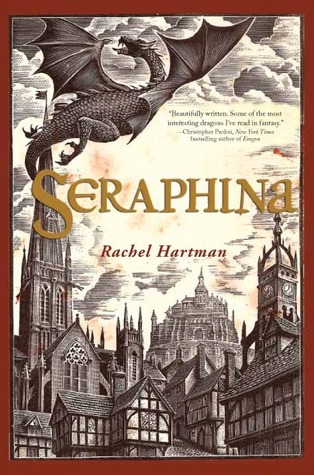
HARTMAN, RACHEL: Seraphina, Shadow Scale, Tess of the Road. If you are an aficionado of dragon books and dragon lore, you must read Hartman’s take on them. The story is set in the kingdom of Goredd, a medieval world where there has been an uneasy truce between dragons and humans for about 40 years. The dragons, shapeshifters who can take on human guise, bring their gift of rationality and mathematical expertise to humans as scholars and teachers at the university. Seraphina Dombegh, a gifted musician who plays in the court orchestra, has become aware of tensions between humans and dragons, and when a member of the royal family is murdered in a specifically draconian fashion, she is drawn into the investigation. But Seraphina herself has a secret, and she struggles to protect it as she teams up with the captain of the Queen’s guard to discover a sinister plot to destroy the interspecies treaty. Original, thought-provoking, with sly humor and dark moments. The third book is not a direct sequel, but takes place in the same “universe” with a few of the same characters appearing in minor roles.
HOBB, ROBIN: The Farseer Trilogy—Assassin’s Apprentice, Royal Assassin, Assassin’s Quest. I have only recently discovered Robin Hobb and am currently halfway through the third book in this trilogy. The world-building is absolutely riveting, and the depth and complexity of character development carries you away into the land of the Six Duchies with no desire to leave. The protagonist, FitzChivalry, is the bastard son of the King-In-Waiting to the throne of the Six Duchies, but his very existence causes his father to abdicate, leaving it to the second son, Verity. But son #3, Regal, is determined that he will be the one to rule, and he is willing to take any measures to make that happen, including eliminating all competition—his father, his brother, and the Bastard. This is a fascinating look at a kingdom and a dynasty from the perspective of one of its lowliest subjects, who is, despite his own wish for a simple, peaceful life, destined to be the Catalyst to resolve the kingdom’s problems or die trying—to which fate he comes perilously close on multiple occasions. There are magical abilities manifested by some of the characters, but these hinder as much as help, and it is the raw humanity that sticks with you from this story. Hobb has other series, which I will be seeking out soon!
KLUNE, T. J.: The House in the Cerulean Sea. An unalloyed delight from start to finish. Here is my recent review. Don’t miss this one.

LEGUIN, URSULA K.: The Earthsea cycle—A Wizard of Earthsea, The Tombs of Atuan, The Farthest Shore, Tehanu, Tales from Earthsea, The Other Wind. This started out many years ago as a self-contained trilogy, but then LeGuin came back to it and wrote three more books (one of them is short stories). LeGuin is a masterful storyteller, with a combination of simplicity and profundity that no one else can match. The boy known as Sparrowhawk, a herder of goats from a small outlying island, gets a taste of the power of magic and pursues it to the Isle of Wizards. But in his quest for skill and knowledge, he tampers with powers beyond his abilities and looses a terrible shadow upon the world. This is the tale of his testing: how he masters the mighty words of power, confronts an ancient dragon, rescues a girl from an unimaginable life, discovers a prince, and crosses death’s threshold to restore balance to the world.
de LINT, CHARLES: The Newford books—too many to list here. De Lint writes urban fantasy, set in the mythical city of Newford (compared to Montréal, Canada). They are wonderful in that they seem to be about a group of regular friends, but then magical elements seep in from across the veil to invade everyday life with whimsy and wonder. My favorites of his are Trader, about a musician who doesn’t appreciate his life until he has it forcibly taken away from him when a loser manages to use Inuit magic to swap bodies with him, and Memory and Dream, in which a young artist learns to physically paint her fantasy people into real life. But there are many other titles to be enjoyed.
MARCHETTA, MELINA: The Lumatere Chronicles—Finnikin of the Rock, Froi of the Exiles, Quintana of Charyn. This is a trilogy that is harder than it should be to promote because, although the first book is good, it’s not far beyond the ordinary. (I shouldn’t downplay it too much—it consistently receives five stars on Goodreads.) But the second and third books in the trilogy are so amazingly conceived of and written that I am on a constant quest to convince people to read the first so that they can benefit from the others! In Finnikin of the Rock, a false king has taken over a kingdom, slaying the entire royal family; he has also put to death the high priestess of one of the goddesses worshipped there. As she dies, she curses the kingdom so that all still in it are trapped inside, and all outside its borders are exiled. The story starts 10 years later, as Finnikin, best friend of the young prince of the true ruling family, meets Evanjelin, a strange novice from a religious retreat house who claims that they both have a role in restoring the kingdom. Froi of the Exiles and Quintana of Charyn pick up with characters we met in the first book, about three years after those incidents. The richness of the world, the depth and versatility of the characters, the emotion infusing everything make this a magnificent series worthy of much more attention by fantasy readers.
McGUIRE, SEANAN: The Wayward Children series—Every Heart A Doorway is the first, and there are five more so far. Among all the old tales are those of children who have disappeared, who have departed through the back of a wardrobe, jumped down a rabbit hole, walked through a mirror, and have arrived somewhere else. But nobody ever talks about what happens to those children who return from their alternate worlds. How do they adjust to being regular people in a mundane life? And what happens to those who just can’t? Eleanor West runs a home for those wayward children, whose parents believe Eleanor is attempting to bring the children back to a sense of their place in the real world. But Miss West’s actual intentions are to enable them to return to the worlds where they truly feel at home. These books are little jewels, more novella length than full novels, but fully realized, beautifully imagined, and skillfully written.
McGuire also writes urban fantasy; I love one of the series (The InCryptids), and dislike the other (October Daye), but you must decide for yourself.
McKINLEY, ROBIN: Almost all standalones, too many to list. McKinley’s success for me is uneven; I absolutely love some, and don’t care for others at all. Her Damar duology—The Hero and the Crown, and The Blue Sword—are wonderful classic fantasy. Of her others, I also love Deerskin, Chalice, Sunshine, and Shadows, all completely different one from another.
NOVIK, NAOMI: I reviewed her book Spinning Silver here; it’s the only one I have read as of yet, but I fully intend to follow up with her.
OWEN, MARGARET: Reviews of her duology are here for The Merciful Crow and here for The Faithless Hawk. I was blown away when I discovered these were first books for her; they are so full of nuance that I believed her to be a long-established writer.

PIERCE, TAMORA: The Beka Cooper trilogy—Terrier, Bloodhound, Mastiff. Most of Tamora Pierce’s books about the kingdom of Tortall, a semi-feudal land populated by knights and ladies, craftspeople and thieves, commoners, and some supernatural creatures, are written specifically for middle-school readers. But one trilogy from all the Tortall “cycles” stands out as something quite different. Beka Cooper is a young woman, but she is more woman than girl, and virtually everyone else in the books is an adult. The series fluidly combines medieval fantasy with mystery and police procedural, using a memoir format. The characters are engaging, the themes are sophisticated, and the mysteries are well paced and satisfying. Beka is a “Dog,” which is the nomenclature used to refer to police officers in the Provost’s Guard. In the first book, Terrier, she is in her trainee year, assigned to two veteran officers. In Bloodhound, the second book, she ends up with a canine partner, a scent hound she rescues from an abusive handler. She, the hound, and one of her former training partners are sent undercover to another city to research the spread of counterfeit silver destroying its economy. The third book, Mastiff, pairs Beka with the other of her training officers, on an assignment critical to the fate of the Tortallan royal family and government. The supernatural element is the hardest to accept for some readers—Beka gets messages from the recently dead by listening to their voices, which are carried by pigeons, and she also gathers clues by standing in the middle of dust devils, picking up conversation the dust devil has absorbed. But these details, plus the made-up dialect for the Tortallan lower city inhabitants, gives a more special cast to this already compelling series. One warning: The books start out with a flash-forward to the journal of one of Beka’s descendents, and this element is completely confusing (and somewhat off-putting) in reference to the rest of each book. I would skip these prologues and perhaps return to them after reading the rest.
PRATCHETT, TERRY: The Tiffany Aching books—The Wee Free Men, A Hat Full of Sky, Wintersmith, I Shall Wear Midnight, The Shepherd’s Crown. One of the most delightful fantasy series ever written, in my opinion—a wonderful combination of sincerity and message with tongue-in-cheek hilarity. It begins with young Tiffany, granddaughter of the Witch of the Chalk (although to Tiffany she’s just her granny), having to stave off an attack by an evil water sprite on her baby brother while armed only with a frying pan. When the Queen of the Faeries later kidnaps her brother, she seeks allies in the Nac Mac Feegle (the wee free men of the title), a clan of sheep-stealing, sword-wielding six-inch high blue men with Scottish kilts and the dialect to match. Subsequent books show Tiffany preparing to herself become the Witch of the Chalk, through various means and with a highly divergent cast of characters. By turns vastly entertaining and quite touching, with puns galore and lots of witchy wisdom, plus the Feegle for leavening.

SCHWAB, V. E. (VICTORIA): The Shades of Magic trilogy—
A Darker Shade of Magic, A Gathering of Shadows, A Conjuring of Light. In this world, there are four parallel Londons: Red, Grey, White, and (no longer accessible) Black. Kell is an Antari, a magician with the ability to travel between them. Kell was raised in Red London and serves the monarchy of that empire as an ambassador. He’s also a smuggler, not attuned enough to the dangerous consequences of his actions. When an exchange goes badly, he escapes to Grey London, where he encounters Delilah Bard, a pickpocket with aspirations (she wants to be a pirate), who first robs him, then saves him from a deadly enemy, ultimately convincing him to take her to a London with magic. The two end up being major players in events of consequence to all the Londons. Great characters and a gripping adventure.
Schwab is also the author of the books Vicious and Vengeful (more sci fi than fantasy), with a third book upcoming, and the recent bestseller The Invisible Life of Addie Larue. So different are all these one from another that they truly showcase Schwab’s masterful talent. Vicious is one of my favorite books of all time—don’t miss it.
STIEFVATER, MAGGIE: The Shiver trilogy, the Raven Cycle, the Dreamer trilogy, The Scorpio Races… Do NOT let the fact that these are all shelved in Young Adult deter you from reading an amazing fantasy writer. The Shiver books are more YA than the others, but if you like tales of werewolves and doomed love you will enjoy them. The Raven Cycle and the Dreamer trilogy take place in the same universe and are complex, interesting, and original. The Scorpio Races is another favorite of mine (I was a horsey girl at age 12). Check her out.
TAYLOR, LAINI: Strange the Dreamer, and Muse of Nightmares. At the center of these two books is Lazlo Strange, a foundling, a librarian’s assistant with his head full of stories. He never believed, while growing up as an orphan with the priests, that his adventures would extend beyond his current world. But humans, gods, and monsters all conspire to make Lazlo the protagonist of this fascinating tale, luring him across the great desert Elmuthaleth to the city now known as Weep, which cowers in the shadow of a giant metal seraph in the sky with nightmares at its heart. Lush language, complexities of emotion, and conflicts of conscience characterize this sophisticated fiction that simultaneously manages to deal with larger issues but still be a whale of a good story, with conflicts and twists and gripping love.
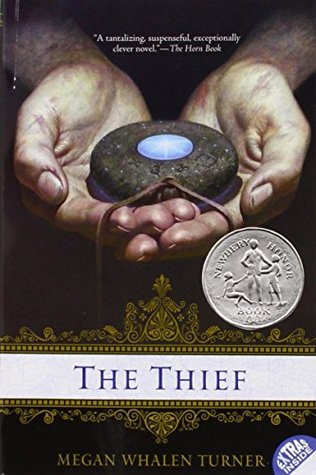
TURNER, MEGAN WHALEN: The Queen’s Thief series. This series has suffered from two unfortunate circumstances: It was billed for some reason as a series for children, which it emphatically is not; and because of this fact, the cover art on the original book was juvenile in appearance and served to sink the series into the realm of unread 5th-grade fiction. (The publisher also stubbornly maintains that the books in this series may be read as stand-alones, which is emphatically not the case. You must read them all, and in order!)
In reality, while the writing is deceptively simple, the story line is sophisticated, sly, and engaging to the most adult of readers. This is one of those series whose first book is good but maybe not great, but in which each subsequent book grows in interest, in style, in sophistication, until by the end there has been an exponential increase in enjoyment. The first book is The Thief, narrated by a rather mysterious young man named Gen, who has gotten himself into hot water through his daring thefts and now must serve as a guide to a hidden treasure for the king’s mage and his companions. The journey (and the story) seem fairly commonplace until the ending, when everything you know gets turned upside down and makes you immediately want to reread the book with this additional knowledge. The second book is narrated by the queen of an adjacent kingdom; the third by a soldier who serves that queen; the fourth by the heir to a perilous heritage he is being prevented from achieving; the fifth by a slave of a great power across the ocean, and the last brings us back full circle to Eugenides (Gen). The series is set, unlike most fantasy, in more of a Greek islands type theme, with the islands being ruled by various royal houses who are all threatened with conquest by the Medean Empire. This is my favorite fantasy series ever, hands down.

WHEW! that was a long post! But I hope it enables you to you spend a summer immersed in fantasy, if that is your wish!
Innocent vs. not guilty
I just finished reading Michael Connelly’s latest, The Law of Innocence. This was a “Lincoln Lawyer” book featuring Mickey Haller, and the case he was attempting to defend was his own. A traffic stop turns into a fishing expedition when the cop sees something leaking from under Haller’s car, and when he pops the trunk it contains a dead body.
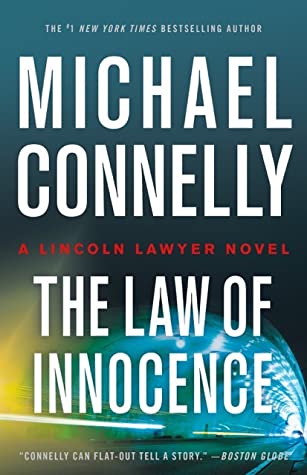
The body is that of a former client of Haller’s, and the evidence that he was killed in the trunk of the car while inside Mickey’s garage is pretty damning. Obviously (to the reader), Haller is being framed by someone, but by whom and for what purpose? Denied bail due to the machinations of a spiteful judge, Mickey has to muster his team and plan his defense while living in a cell inside Los Angeles’s Twin Towers Correctional Center, where he’s a potential target of inmates and jailers alike.
I enjoyed this mystery for a variety of reasons, including Connelly’s usual attention to detail as he presents the story from a Los Angeles resident’s viewpoint, including that of an inmate of Twin Towers. The distinction between a not-guilty verdict and proof of innocence was the quandary that drove the story, since Haller’s reputation and his future as a successful attorney is on the line if there is a shadow of a doubt about his culpability. He doesn’t just have to prove reasonable doubt—he needs everyone to know that someone else did this.
One reader commented that he liked the Haller novels better than the Bosch ones because the Haller ones were narrated in first person and therefore more compelling than the third-person Bosch. Weirdly, I usually have the opposite reaction to these. I don’t know whether it’s because I don’t identify with Haller as a person or if it’s just that I prefer police procedurals to legal drama, but I find the Bosch narratives much more involving. Also, whenever Bosch is featured as a character in the Haller books in his role as Mickey’s half-brother and an investigator on his behalf, it seems like Connelly suddenly doesn’t know how to write him—his presence is positively wooden. Maybe he’s attempting to show how Haller sees and reacts to him instead of putting him across with his usual personality? but it’s weird how unlike himself he is.
In general, this book is the usual entertaining crime thriller from Connelly. I have to say that I found it less than riveting until it gets to the trial, at which point the accelerating discoveries and the vituperative back-and-forth between prosecution and defense enliven things considerably. I wasn’t entirely happy with the ending, but I can see why Connelly went there. It will be interesting to read the next Lincoln Lawyer volume, whenever it comes along, to see how Mickey’s career is impacted, if at all, by the events of this one.
As for the “big controversy” over which people have declared they would never read Connelly again, I didn’t find it in the least unbelievable that someone who was trying to beat a murder rap would want to weed a Trump supporter from his jury. Since they seem unable to discern when he is lying to them, it seems logical that having someone on a jury who can’t distinguish lies from truth would be counter-productive. I didn’t view this as a huge political statement, but merely a way to point up the importance of honesty within our legal system. Of course, my politics apparently fall on the same side as Connelly’s….
Predictable dystopian
The Fight for Power and The Will to Survive are books #2 and 3 in the trilogy that begins with The Rule of Three, by Eric Walters. I read and reviewed the first book here, and then solicited the other two books from the library, so I waited to read them until they became available. (I wasn’t going to spend money on them, even on Kindle.)
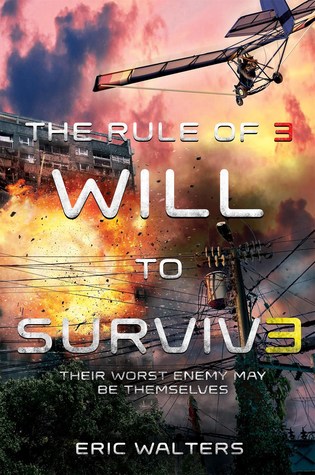
I decided to finish the trilogy, even though I was less than impressed with #1. Book #2 was more of the same—literally, since it begins in the middle of the scene in which the first one ended—and Book #3 repeats that process.
Again, I enjoyed the flying scenes and some of the ingenuity used by the survivors in achieving their goals, and again, I thought that what could have been a much more exciting tale of dystopia was rendered somewhat mundane by the laborious writing style. A couple of moral dilemmas gave some spice to both volumes, but ultimately the fate of everyone involved was pretty much foreseeable from space! You don’t want your dystopian fiction to be this predictable.
It’s not horrible by any means, and I think might even be quite enjoyable for a certain type of kid of about middle-school age, but this series is never going to be mentioned in the same breath with The Hunger Games, Legend, or even The Maze Runner, which I heartily disliked for its inconsistencies and ridiculous plot while admiring its ability to mobilize fans. If you just can’t resist any dystopian tale, check it out from the library like I did and save your dollars for better fiction.
Summer reading #1
I noticed this week that several teachers and students who are members of the “What should I read next?” page on Facebook have posted that school is already or is about to be finished for the year, and wanting suggestions for things to read over the summer. While lots of suggestions of popular bestsellers were made in return by all the readers there, some of these requestors are more specific in their wants. One said, “I like mysteries and thrillers, and would love to get socked into a good series, but there are so many out there, I don’t know where to start. Any suggestions?”
Since my mystery list is the longest amongst my genres, only given a contest for first place by fantasy, I put my Goodreads list of “mysteries read” into order by author so I could see those series I have faithfully pursued and make some suggestions, and since I was doing it there, I thought I’d do the same here, with a little bit of summary attached to each.
I will note that I tend to favor procedurals, lone detectives, and partnerships (many of them British), and none of these are light, cosy reads. Perhaps I’ll do a separate blog post including some of those, because everybody likes to read them once in a while; but for a steady diet of mystery, here are the ones I go back to with each new release, in alphabetical order by author:
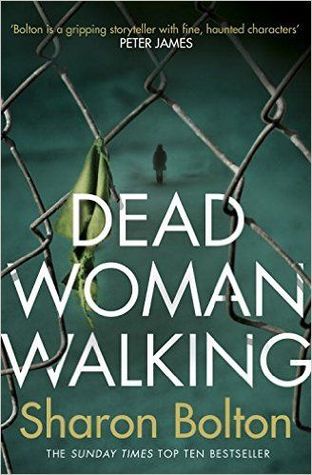
SHARON J. BOLTON: A host of stand-alones, plus a short series with Detective Constable Lacey Flint, all good. Her stand-alones are more thriller than mystery, and are set in intriguing locations and have unusual plots. The series stars a young iconoclast risk-taker who gets too closely involved with her cases.
MICHAEL CONNELLY: The mystery master. If you haven’t read them, the Harry Bosch series starts with The Black Echo. Harry is a combination of dogged and intuitive that gets the job done, a loner with a commitment that goes above and beyond. If you like them, you can spend the entire summer…
ROBERT CRAIS: He has about five stand-alones and a series. The stand-alones are great, particularly The Two-Minute Rule and Demolition Angel. The series features a smart-aleck private detective named Elvis and his dead-serious and deadly war vet partner, Joe.
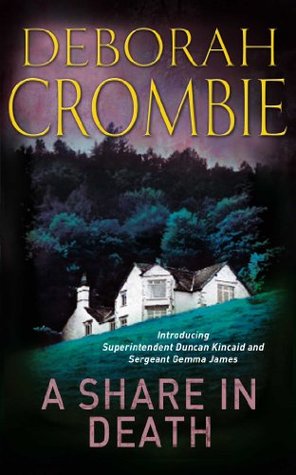
DEBORAH CROMBIE: A British duo, Gemma James and Duncan Kincaid. Gemma starts out working for Duncan, and then roles shift and change as the series progresses. Good writing, intricate plotting, and she makes each the lead in alternating books to keep it fresh. I really like these.
DICK FRANCIS: An oldie but goodie. Each book has some peripheral relation to horse-racing. They are a little “formula” and a little old-fashioned in terms of man-woman relationships, but they are some of the greatest escapist reading ever. (Don’t bother with his son’s continuation of the series. They’re not bad; but they’re not good.)
CAZ FREAR: A relatively new series starring a British rookie cop, Cat Kinsella, whose background keeps getting in the way of the job. There are three so far, and quite gripping.

The amazing TANA FRENCH: She has a loosely related Dublin Murder series, with a different protagonist starring in each one (my favorite is Faithful Place), and also several stand-alones. You have to like LOTS of detail and literary language. Quite immersive.
ROBERT GALBRAITH (shhh, it’s J. K. Rowling): The Cormoran Strike series is wonderfully weird, and Cormoran himself is a tough nut with a gooey center, especially when it comes to his new assistant, Robin Ellacott.
ELIZABETH GEORGE: The Inspector Lynley mysteries. He’s a British lord who some say is “slumming” as a cop, while his partner, Barbara Havers, is fiercely proletariat and dresses in clogs and sweatpants. The mysteries are intriguing.
ALEX GRECIAN: The Scotland Yard mysteries, detailing the beginning of forensics. Quite engaging, but sometimes dark.

JANE HARPER: Only a few books, but all solid. A couple of stand-alones, and a series featuring Federal Police Investigator Aaron Falk, set in the wilds of Australia.
CHARLAINE HARRIS: The Harper Connelly quartet. After being hit by lightning at age 16, Harper can tell you how your loved one died by standing on their grave. Yeah, I know…but they’re GOOD.
CYNTHIA HARROD-EAGLES: The Bill Slider mysteries. You have to like procedurals, and it’s a bonus if you “get” British humor. There’s also a lot about Bill’s personal life, which rounds out all the mystery stories. I like them a lot and laugh aloud frequently while sitting alone reading these.

CRAIG JOHNSON: Walt Longmire, Wyoming sheriff. They are like the show, if you have seen it, but the plots on the show went off-script fairly early, so the books are a different experience.
KATE MORTON: I love her books, but consider them more “puzzle” books than mysteries. They are not populated by detectives or police—they center around somebody on a quest to solve a weird thing in their past history. Quite detailed, and character-driven.
LOUISE PENNY: The inimitable Chief Inspector Armand Gamache of Three Pines and the Sûreté du Québec. Start at the beginning with Still Life, and keep going! She releases one every August, and I pre-order them all. Have French pastries on hand, you will need them.
This is by no means a comprehensive list of every mystery series I read—I follow several other historical series, as well as some featuring legal eagles in place of the detectives and private eyes, and some starring people with weird murder-related professions—but these are the most accessible, most immediately engaging, and hopefully with enough variety in their composition to give everyone an idea about an author they’d like to try. Please let me know what you think if you end up assaying one of these.
Quandary
Sorry for the seeming stretch of inattention to this blog. I usually try to post at least once a week, and preferably two or three times, but there are occasions on which I can’t, for various reasons. One of the most distressing is when I get into a book slump—either the book I read isn’t deserving of a review, or it is, but I found it so offputting that I don’t want to give it the attention. Both of those happened to me during the past 10 days. First I read the sequel to a book I had reviewed here, and it was so much the same as the first and had so insignificant an impact that I decided not to talk about it. Then I picked up a book that had good language and description and all the elements of a gripping suspense story, but the contents were so unrealistic, melodramatic, and deeply disturbing that I chose not to give it the attention of a review, since I couldn’t recommend it but didn’t want to trash it. After that I started reading a book that had come highly recommended, but I couldn’t shake off the effects of the previous read to give it proper attention, so I put it aside and picked up something escapist (a Dick Francis mystery) to cleanse my palate.
Now I’m reading something that I will definitely want to highlight; but since it is the first book in a trilogy, I don’t know if I’ll want to do that after reading just one or wait for the impact of the entire series. So I’m writing this to say: I’m still here, I’m still reading, and I’ll be back in a short while with something to talk about!
The plight of women
I didn’t know what to expect when beginning A Woman Is No Man, by Etaf Rum, although the title of course gave me clues. And having read it, I’m not sure what exactly I was able to take from it.

The story is an intergenerational saga about Arab women. The two main protagonists are Isra, and Isra’s daughter Deya, separated by 17 years but experiencing many of the same life choices. Isra was born and raised in Palestine in a restrictive, traditional home, with a mother obsessed with getting her married off properly at the youngest age possible. Although Isra realizes her life is not ideal, in Palestine she has at least the beauty of the landscape in which she lives, and which she loves. But when her mother picks the suitor from America, whose family is visiting Palestine to find him a bride, Isra can’t help letting a tiny bit of excitement surface about what her new life might be like in America. She envisions certain freedoms her parents would never have permitted her, and she hopes to find love with her taciturn young suitor, Adam, the eldest in a family of three boys and a girl.
The reality is far different. Her home is in the basement of her inlaws’ house, with one window that looks out on a street barren of all greenery but a plane tree or two. Her mother-in-law, Fareeda, is every bit as conservative as Isra’s own family—all she wants from Isra is for her to relieve Fareeda from the cooking and cleaning and to produce a male heir for the family. There is no question of college, a job, or even a walk around the block on her own; Isra is essentially a prisoner of her new family’s culture, as stultifying as the old. Fareeda’s obsession with a male grandson prompts pregnancy after pregnancy for Isra, who is “unlucky” enough to bear only girls.
Seventeen years after Isra came to New York, we see the same household, headed by Fareeda, from the viewpoint of Deya, Isra and Adam’s eldest daughter. Adam and Isra are dead, and the girls are being raised by their grandparents. Deya is now the one in the hotseat being exhorted to pick a suitor, and though she has expressed interest in college and some kind of life outside the home and the marriage bond, no one is listening to her…until she meets a strangely familiar woman who urges her to stand up for herself and refuse to perpetuate the life of restriction and abuse experienced by her mother.
I’m really torn by how to react to this book. I feel like the representation rings true, but I’m not sure how widespread is this author’s experience in the context of present-day Palestinian Americans. I applaud the author for taking on the difficult subjects of generational discrimination and family/spousal abuse, but even though the point she is making is that the women who suffer from this are essentially prisoners of a tiny sequestered life, I found myself becoming bored and impatient with the incessant, repetitive details of that life. Despite being the recipient of awards and encomiums from critics, this is not beautifully written literary fiction, but simply a straightforward narrative. There are occasional flights of fancy that draw one in, but it’s mainly kind of a slog.
Also, the usual result of telling a story from the perspective of two generations is that the more recent one has learned something from the experiences of the previous one; but in this book, I feel like in some ways Isra and Deya are almost interchangeable, both in their experience and their thought patterns; neither of them is able to articulate their situations. They dither a lot without drawing conclusions because the basic question, “What do you want?” seems to be so far beyond them, which, while possibly being the point, is also deeply unsatisfying. It made the story both horrifying and boring, and I don’t know what to do with that. I kept reading to the end, and was confused all over again.
I can’t say I’m happy to have read this book, but perhaps I can express gratitude that it’s in the world for those who need it and will benefit by it? It gives a voice to a certain sector of the Arab Muslim community, but its lack of nuance will enrage some, even as they acknowledge the representation.
All the feels
His thoughts were all cerulean.
Linus Baker, The House in the Cerulean Sea
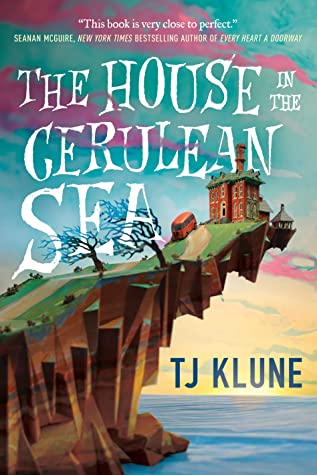
From my first glimpse of the whimsical cover illustration with its charming lettering,
I had high hopes that I would love this book. It reminded me in some ways of another unexpected pleasure, The Extraordinary Education of Nicholas Benedict, by Trenton Lee Stewart. They have some similar central themes—difference, acceptance, empathy, friendship—but I would say that whereas Nicholas Benedict is primarily written for children, this book—though certainly appropriate for youth above a certain age—is definitely targeted towards the adults in the audience, despite its population of characters who are as young as six years. Just like another favorite of mine—The Last Dragonslayer, by Jasper Fforde—this is fantasy that, while it may appeal to people of all ages, can only be fully appreciated by an understanding of the nuance, the inferences, the underlying message.
Linus Baker is the quintessential civil servant. He works hard at his mid-level job, refrains from involvement in the petty office politics that surround him, and spends his scant leisure time snug at home with his cat, Calliope, and his vintage record player. He is occasionally made unhappy by the arbitrary pronouncements of his immediate supervisor and her lackey, and is also sometimes discouraged by the unrelenting rain that afflicts the city in which he lives, but since these things have been essentially the same for the past 17 years, he doesn’t think about it much.
Linus works for DICOMY, the Department in Charge of Magical Youth, as a Case Worker. His job is to investigate the state-run orphanages specifically designated for the housing of children with special powers and gifts, and to make recommendations regarding the best care of the orphans. He is painstakingly thorough at this job, but has learned not to look past his final reports to wonder what happens once he has been and gone.
One particularly miserable morning, Linus is summoned to meet with Extremely Upper Management, and they tell him that because of the excellence of his reports related to previous endeavors, he has been selected to investigate Marsyas Island Orphanage, a level-four classified institution that houses some of the rarest and most dangerous children, to comment on the welfare of those housed there and also on the caretaker, one Arthur Parnassus.
Linus’s journey to the island is the beginning of an adventure that initially seems wasted on this stuffy 40-year-old bureaucrat, but which proves to be a transformation for all involved.
This story was an unalloyed delight from start to finish. The level of exaggeration in the set-up is borderline ridiculous, and yet renders the rest of it perfectly realized. It’s a character-driven tale, and oh what characters! In contrast to the stereotypical nature of those appearing in the first section, the children of the orphanage are as diverse as an author could imagine: The six children are either completely or virtually unique, either the last or only of their kind, or at least exceedingly rare, and this isn’t just a commentary on their magical natures but also on their personalities. Likewise, Arthur Parnassus is an enigma worth exploring, and Linus Baker soon discovers that he is very much interested in doing so, though it be against his conscious will, which is obsessed with strictly following the Rules and Regulations.
Linus has been allotted a month on the island to do his research, write four weekly reports, and deliver his conclusions to Extremely Upper Management, and though initially dismayed by the prospect, Arthur and the children soon draw him into their isolated little world and cause him to embrace feelings he has never before experienced. The level of unconditional love and kindness expressed is heartwarming, and yet this is not a cloying story but rather a plea by the different among us to be seen, recognized, and accepted with all their idiosyncrasies. It asks tough questions about prejudice and complacency, and challenges our need to categorize people into stereotypes in order to deal with—or forget—them more easily. But ultimately the book is all about hope and about love that doesn’t discriminate. As I said in my title, it has all the feels. I can’t give it higher praise than to say that while it made me laugh and entertained me thoroughly, it also made me want to be a better person. It’s the perfect book for that moment when your faith in people is slipping.

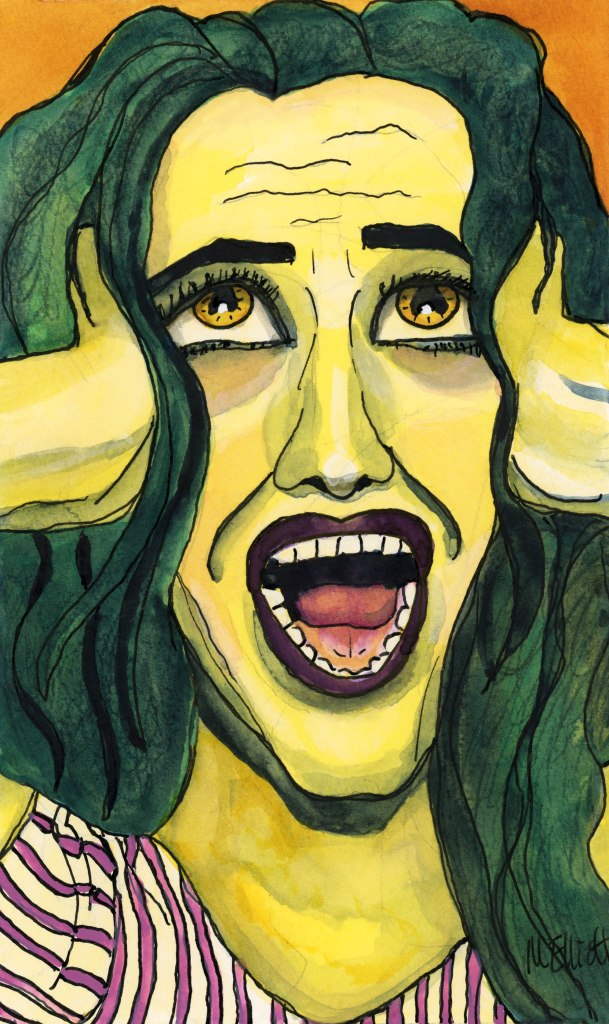
Just for fun, I decided to illustrate one of the opening scenes when Linus Baker arrives on the island and confronts some of the children. The green blob is Chauncey, whose sweet nature belies his monstrous form, and whose most dearly held wish is to become a bell-boy at a hotel in the city (thus the bellman’s cap). He has come to greet Linus and deal with his luggage. The Pomeranian peeking out from behind him (and faintly visible in his entirety through the amorphous blob of Chauncey’s body) is Sal, a large, shy, silent boy who shifts, in moments of panic, into the form of a small dog.
But IS it a PP?
As I remarked in my previous review (Sam Hell), I wanted to read one of Robert Dugoni’s series to benefit from the skill of his writing without dealing with the religious overtones I found offputting in his latest bestseller. After too many disappointments in that subgenre, I tend to avoid the courtroom drama series now; apart from a few standouts, I have found them to be too cerebral, as well as inevitably repetitive. So when given a choice between his courtroom series and the one described as a “police procedural,” I chose the latter without hesitation.
My Sister’s Grave is the first in the Tracy Crosswhite series. Tracy is a Seattle-based homicide detective, but in her former life she was a schoolteacher (science) living in a small (fictional) town called Cedar Grove. Then her sister Sarah disappeared and was presumed murdered, although her body never came to light, and that shifted Tracy’s trajectory towards police work. She quit teaching, went to the police academy, and became a detective, all the time focusing her skills and attention on solving her sister’s disappearance.
The twist in the story is that a man was convicted of her murder; but it was on purely circumstantial evidence that Tracy has always found highly suspect. Then Sarah’s body is finally discovered, 20 years later, and Tracy is drawn back to Cedar Grove and into the storm of lies and betrayals that are keeping her from learning the truth about what happened to Sarah.
Sounds good, yes? Hm. I set out with high expectations: In Sam Hell, Robert Dugoni painted such a vivid picture of his characters and their lives that I assumed I would be equally drawn to those in this story. But everyone in it had a strangely lackluster quality, with insufficient physical descriptions, clichéd reactions, and such a low-key affect that I just couldn’t get a handle on the book’s atmosphere or bond with anybody.
Also, and this was a bigger problem, about 85 percent of this book isn’t a police procedural at all, it’s a courtroom drama! Although Tracy is assiduous in pursuing certain clues, no one else is interested in helping her and, of those few who do, they keep their results from everyone but Tracy (including the reader), so we are left with nonsense along the lines of “Ah hah! I thought as much,” but with no answers. When the answers finally come out, it is within the context of an appeal by Sarah’s convicted killer, and all plays out through courtroom testimony.
It isn’t until the last 15 percent of the book that it actually turns into an action-oriented, exciting narrative, and then it’s pretty straightforward, because you already have nearly everything you need to solve the mystery, it’s just a matter of waiting for it to be confirmed and clearing up the mess. And after a slow, almost sleepy three-quarters, the author provides a whole lot of mess, in graphic detail not telegraphed by the rest of the book. It was kind of disturbing, not because I haven’t read anything like it before but because of the juxtaposition.
I may give Dugoni the benefit of the doubt and try another before I give up, because so many people have raved about the two prequels and the rest of the series; but if the next is as monotone as I found this one, that will be it. At the moment, I’m disappointed.
Overcoming
As with other recent choices, this book came to me through the multiple raves of members of the “What Should I Read Next?” Facebook group. Like the others I have read, I did my best not to learn what it was about until I decided to pick it up myself.

The Extraordinary Life of Sam Hell is a coming-of-age tale with something of a twist: Sam is born with ocular albinism, which results in him having red eyes. Everyone who encounters him does a double-take, starting with his father, when he takes one look at his new-born son and exclaims, “What in the Sam Hell?!” Their last name is Hill; they christen him “Samuel,” and the nickname sticks.
This story was so engaging, from page one. Sam’s mother is definitely the heroine of the early years, as she fiercely stands up to all the people who discriminate against Sam because of his weird appearance, starting with Sister Beatrice, the Catholic school principal who wants to exclude him from her school because he “may be a disturbing influence.” His mother is quick to point out the inherent lack of Christian charity in this attitude and the concomitant opportunity for her students to practice tolerance and, when this fails to accomplish her objective, takes the story to a friend at the local newspaper. Score one for Mom—Sam is admitted on day two. It’s not a blessing to Sam himself, however, who is shunned, mocked, and called “devil boy,” and eats his lunch alone on the bleachers. His salvation comes in the form of Ernie Cantwell, the only African American kid in the school, who makes common cause with Sam, and Mickie Kennedy, whose mid-term banishment to Our Lady of Mercy is a blessing in disguise for all three of the children over the length of their extended friendship.
As a child who was targeted for being fat (despite the fact that there were at least three other kids bigger than me in my grade), I completely sympathized with Sam’s plight as a bullied outsider, although no one acted against me beyond hurtful words. But after a while, I wondered just how bad he really had it, especially when he became old enough to choose to wear contact lenses that hid his secret from the world, a luxury not afforded to those with more obvious “flaws.” I appreciated Mickie’s perspective on Sam’s “disability” when she finally delivers it to him, and wished that this had happened earlier in the story: When bad things happen to Sam and he is bewailing the results of “God’s will” (as his mother has always insisted on calling it), Mickie points out to him that despite his red eyes, Sam has grown up with two loving, involved parents, friends who have always had his back, and pretty much every other advantage, while Mickie lived with an alcoholic mother whose dysfunction caused Mickie to be the adult in the household from age 12. This perspective is a bit arresting for Sam and causes him to rethink some things.

The writing style flows easily, and the characters in this book are so personable and real that I thoroughly enjoyed reading about them, up until about 15 percent from the end. The book began to drain me of interest when Sam lets guilt over a terrible circumstance he could not have foreseen nor prevented run his life off the familiar track into a prolonged period of atonement for a nonexistent “sin.” Although he does eventually have an epiphany that brings him back to himself, I felt like the book turned sentimental and overtly religious, and I didn’t like the dragged-out ending, although I appreciated the author’s final conclusions (shorn of the religious overtones).
I found out in the afterword to the book that Robert Dugoni writes a mystery series about which many people rave. I can well believe, from his writing chops in this book, that they are good, and will regard this as my fortunate introduction to an excellent writer. Someone with fewer buttons to push regarding Christianity will no doubt love this book, as attested to by the many five-star ratings on Goodreads; I’m not sorry I read it—the characters will remain extraordinary in my memory—but I do look forward to enjoying some of the author’s product not focused on religious themes.

 The Book Adept