Euphoria
After my previous reading experiences with Lily King,
I was intrigued by the concept of her book Euphoria. Although itself fiction, it is said to be based on a small portion of the life and experiences of the great anthropologist Margaret Mead.
In the book, Nell Stone, her enigmatic and combative husband, Schuyler Fenwick (called “Fen”), and their colleague Andrew Bankson are all studying tribes along a river in the jungles of New Guinea. Each has his or her own way of going about their research: Nell provokes the villagers with constant questions reinforced by various activities, taking copious notes that she transcribes and reflects upon daily; Fen immerses himself in some aspect of the tribe’s activities and in essence becomes part of them as best he can, apparently without much reflection and sometimes with massive misperceptions; and Bankson (at least up until he met Nell and Fen) subscribes to a much more traditional and passive observational method that leaves him feeling unsatisfied and sometimes duped.
Although the description of the book implies that the three of them are transformed by working together, there is only a brief period during which this is true; the rest of the time, Nell is constantly refining her research methods and publishing her results to great acclaim, while Fen looks on them with contempt (but also with jealousy for her success) and goes his own way, and Bankson moons after Nell and wishes he could simultaneously be with her and be more like her. The description also remarks on “a firestorm of fierce love and jealousy,” but again, the depiction was (at least for me) a pallid version of what is implied. For me, the center of the book was Nell, and I wanted to know a lot more about her personally and also about the thoughts behind the work she was doing than I was given by King.
Honestly, I can’t quite define how I feel after finishing this book. The language and imagery were so immediate and so incredibly beautiful…and yet the characters seemed oddly elusive. The way it’s written, from one person’s viewpoint (Bankson) interspersed with another person’s diary (Nell), was a little off-putting to me, perhaps because the narrator’s part of the tale was inhibited by his innate Englishness, while the diary was written in truncated entries that didn’t quite fulfill my curiosity. And of course there is a third person in this book (Fen) who is a main character and yet remains largely a mystery, both to the reader and to his fellow anthropologists.
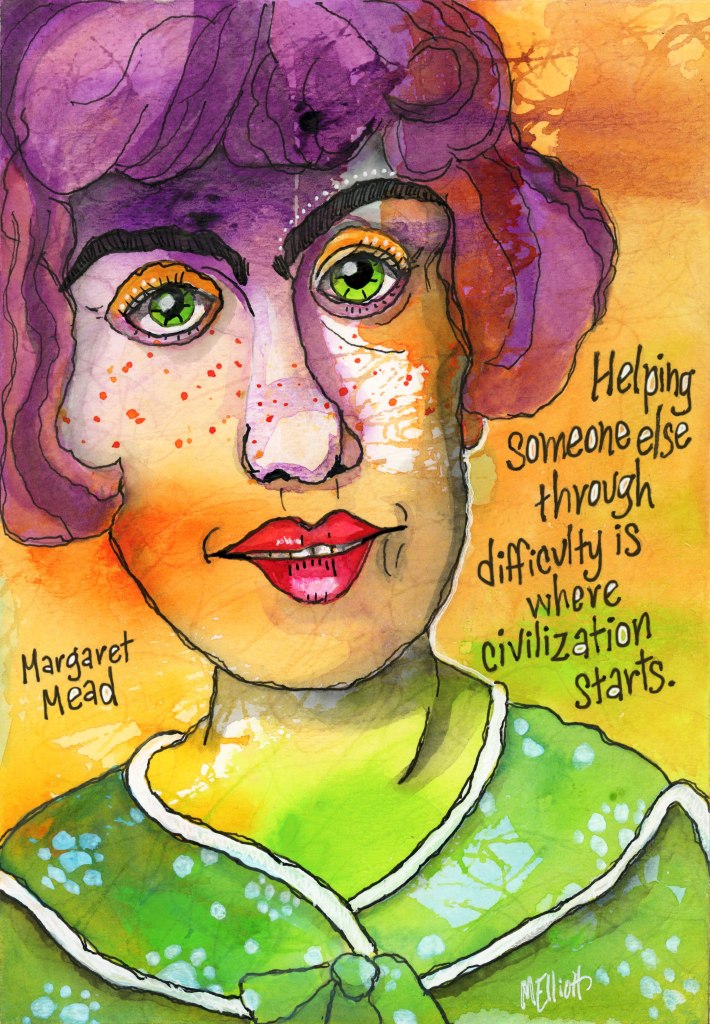
Some of the thinking about the similarities and differences between so-called civilized people and the native tribes they are studying—and how that study inevitably impacts and changes those being observed—was fascinating, and the “grid” they created to divide peoples and individuals into types felt like as big a breakthrough as when the characters depicted it, inspiring me to want to read the works of Margaret Mead directly. But I wanted a lot more than I got from the core relationships in this book, and was ultimately left feeling dissatisfied, depressed, and a bit disturbed by the whole thing. So, a mixed bag for me, despite my admiration for the writing.
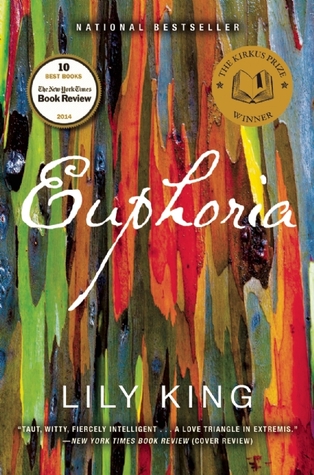
Note: Gorgeous, perfectly appropriate cover. It depicts the colors of the rainbow gum tree growing up through the center of the protagonists’ house.
Open ended
Writing a book review by basing it on this readers’ advisory concept may be unfair, in that it’s a sort of spoiler. If you plan or planned to read this book but decide not to because I reveal that the ending is somewhat inconclusive, then I apologize. But I mention it for the good reason that I usually avoid open-ended fiction like the plague, being a person who wants my stories resolved, if not tied up with a too-tidy bow—but I enjoyed the questions left by this one and applaud the author for ending it in the manner she chose.

The book I am talking about is Verity, by Colleen Hoover, and I have been under subtle pressure to read it for a long time. Most of the pressure came from my own mind, but some from friends who urged it on me. It is one of the five books continually discussed, lauded, and recommended as “best” on the “What Should I Read Next?” Facebook page of which I am a member. This week, I discovered that the e-book was actually available from the library, and I finally succumbed.
Too much hype is almost always off-putting, and I think I probably would have enjoyed this book a little more if I had come to it with fewer expectations. Fortunately, I had never previously read a description of it, so some semblance of surprise remained intact. I knew Colleen Hoover was a romance writer, and for some reason I expected this to be romantic historical fiction, so when I opened the book to the first line, I was shocked and somewhat taken aback, but also intrigued.
In case you know nothing about this book (which seems impossible but probably isn’t), it’s the story of a self-effacing young author, Lowen Ashleigh, who has had some critical success but is on the verge of financial disaster when she is asked to “collaborate on” (which turns out to be code for write) the last three books in a series by the well known and immensely popular writer Verity Crawford. Verity has been in a debilitating automobile accident and her condition is “uncertain” at the moment, according to her publishers. Lowen accepts the lucrative offer made by Verity’s husband, Jeremy, and travels down to the Crawford home to look through Verity’s notes to get an idea of how to proceed. Although she plans to be there for only a day, financial difficulties paired with the sheer volume of material to peruse (plus her undeniable attraction to Jeremy) causes her to stay a while. But the entire sojourn is made increasingly uncomfortable by the discovery of an autobiography written by Verity that reveals a horrifying side to the Crawfords’
tragic story.
On its face, this is a rather typical gothic plot: Our heroine, young and unsure of herself, is put into a situation where she craves the attention of a seemingly unavailable man who may actually be more receptive than she initially believes. An obstacle (this time in the form of a critically injured wife) presents itself, but there may be a way around it, resulting in the union of the star-crossed couple. Victoria Holt mastered this one many times over, back in the 1970s.
That’s not to say that this book is a cliché, only that it’s not as unique as some would paint it. There are several things that set it apart: the frank depiction of sexual activities, which was verboten in the gothic oeuvre; the extenuating circumstances that occurred before the current timeline in this disaster-prone family; and the sheer creepiness of the alternation between the protagonist’s and the author’s voices as we jump back and forth between the present-day narrative (Lowen) and the words of the autobiography (Verity). And there is also the dark quality of life in the Crawford domicile in this moment, which is not to be discounted.
The final difference is that in the gothic romance tradition, all is resolved by the end of the book. Not so here, where a crucial piece of information casts all certainty into doubt and the reader is left to ask, What the hell just happened?
In the past in this column, I have complained of authors who just couldn’t resist putting the fix on every single dangling detail of their plot, to the detriment of the book, as in my rant about the epilogue of Things You Save In A Fire. At the same time, I am a person who does in general like a clear resolution to a story; it doesn’t have to be absolute, but if something is left hanging, I want it to give the implication that there will be satisfaction at some point. But having read Verity, I will say that there is something incredibly effective about making your reader say “Whaaaat?” at the end, which is that it keeps them thinking about your book for days after!
Perhaps you will read it and see what I mean; or perhaps you will curse me for leading you down this path without a pretty conclusion. Either way, be prepared for an interval of wild energy, uneasiness, confusion, and dread, wondering about the sanity of anyone who would willingly stay in a situation permeated by those emotions, regardless of the incentive.
Upbeat fiction
I have been enjoying an interlude of positive stories this week while I work hard on some paintings. It seems like I can’t read anything too taxing while I’m focused on making art, so I put aside the dystopian sequel, the historical fiction about a difficult period, and the literary masterpiece waiting my attention and instead checked out two Jenny Colgan books from the library. One (yay) was the third in her series about the village of Kirrinfeif, on the banks of Loch Ness in Scotland, and the other is (as far as I know) a stand-alone.
500 Miles From You takes us back to the site made famous by Nina, the former librarian from Birmingham who lost her job, impulsively bought a van from a couple of old codgers, and turned it into a traveling bookshop with a base in the Scottish countryside. The second book brought Londoner Zoe and her son, Hari, in answer to an advertisement for a nanny, to a grand baronial house on the lake, with a family of unruly children needing to be tamed.

Both Zoe and Nina make cameo appearances in this one, which is about Lissa, a nurse for the NHS in London who is suffering painfully from PTSD after witnessing a shocking crime. She is determined to keep on with her job, but her supervisor realizes she needs a complete break with everything familiar while she heals, and arranges for a swap. Cormac, a nurse practitioner in Kirrinfeif, is restless and up for a change, so he moves into Lissa’s nurse’s housing in London for a three-month upgrade on his skills, while Lissa retreats to the eerily quiet town on the loch and tries to get her feet back under her. As they trade files, write emails, and text one another for updates on the patients they have inherited, they develop an unexpectedly close rapport, each of them wondering if it will become something more, once they finally meet.
This was nicely told, and I enjoyed several aspects of it quite a lot. Although both her other books touched on this aspect, Lissa’s and Cormac’s experiences really point up the difference between living in an anonymous city where you avoid the glances of others, don’t speak on the subway or in the elevator, and bolt your doors at the first sound of trouble on the street, vs. in a small town where everyone knows you (and probably knows too much of your personal business), greets you, sees you, and expects you to run out your front door to help if you know someone is in need.
I also liked the gentle and sympathetic treatment of mental health, and the truths about how thoroughly and even devastatingly we are affected by our experiences, sometimes without even realizing the damage until someone helps us figure it out.
These are definitely “formula” books, but they are intelligent, quirky, and interesting. In Colgan’s case, the formula seems
to be:
- Move to Scotland;
- Fall in love with somebody there;
- Find some kind of work that expresses your best self;
- Never go “home” to [fill in the ugly depressing dirty dangerous big city here].
Every time I read one, I think, “I’m down with that!”
The stand-alone is Diamonds Are A Girl’s Best Friend. I worry a little when I read a Colgan “single” that I won’t like it; I read her first-ever novel, Amanda’s Wedding, which made me tell everyone to avoid all books before 2012 and stick to the warm-hearted series of series about finding your place in life and making good. This one violated my rule, having been published in 2009, but it had the recent re-release date on it and I was fooled into believing it was new!

It was better than Amanda’s Wedding, but not nearly as good as her later books. The reason I disliked her first book so much is that the “women” in it were billed as charming wisecrackers but were, in reality, just mean girls. I could find nothing to like about them for a good part of the book, and the fact that they were out to stop someone even meaner than themselves from marrying their friend for his money and title didn’t endear them to me until the absolute end, and not much then.
In Diamonds, the mean girls make a reappearance, and the protagonist, Sophie, starts out as one of them. They are all in a set of shallow, entitled rich people who don’t acknowledge anyone below a certain level of money, status, or fashion sense. Fortunately (for the reader, not for her), Sophie almost immediately loses her protected status and her allowance (via the 2008 crash) and has to fend for herself for the first time in her life. She rents a room in an apartment with four guys and, in lieu of a deposit, she agrees as her contribution to clean their truly disgusting habitat. The mishaps that ensue when this person whose morning latte used to arrive on her nightstand every morning courtesy of a housekeeper has to figure out how to scrub a toilet, clean an oven, and cook something are fairly entertaining, as is her pursuit of a paying job; and the romantic relationships on offer also spice up the narrative. I still didn’t care for the mean-girl setting or her continued interactions with her former so-called friends, but having this be about someone who conquers that, even if it’s not initially by choice, made it way more palatable.
I enjoyed my sojourn with Colgan so much that I have now moved on to another series by Phillipa Ashley, set in Cornwall. Those other books will have to wait yet a while longer.
Tender
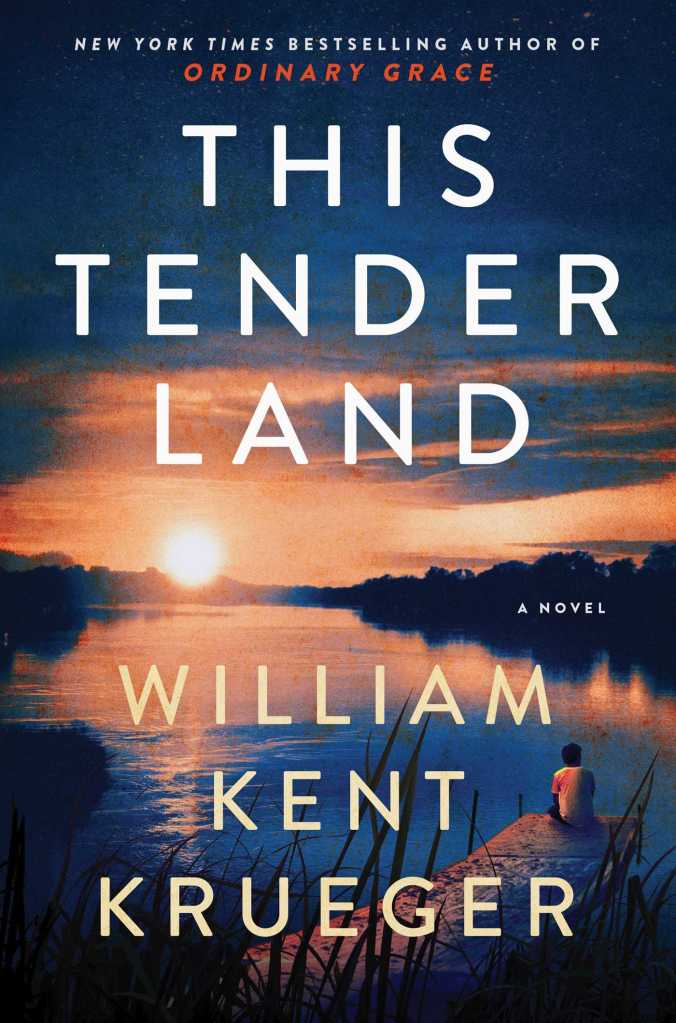
When I ran across the quote in This Tender Land, by William Kent Krueger, after which the book was named, I thought the reference too slight to justify calling it that. But there are, in fact, many tender and poignant moments in this book to be enjoyed and appreciated, not the least of which is expressed in the beautiful narrative of the natural world through which the characters pass.
I didn’t know what to expect from this story, but my pulse beat a little faster when I saw the description of four children traveling downriver by canoe; ever since having read The Adventures of Huckleberry Finn as a child, I have loved the adventurous nature of travel by water, somewhat in control of your vessel but ultimately subject to the whims of the ever-changing river. And yes, I know that Huck Finn has fallen out of fashion since its reexamination for egregious racism but, despite that, the central narrative of a couple of disadvantaged people at the bottom of the rungs of society encountering others supposedly more elevated along their way but themselves turning out to be the more ethical and compassionate is a powerful theme, repeated in this tale by Krueger.
Odie, 12, and his brother Albert, 16, are the only two white children at one of the notorious “training” schools for Indian children, this one in Minnesota. Albert is stolid and even-tempered, an engineer by talent as well as by nature, but the more volatile Odie is constantly in trouble for one reason or another, and at this school under the reign of Superintendent Brickwood (the Black Witch, as the boys call her), the last thing you want to do is stand out. The brothers have a best friend, Moses, an Indian boy about Albert’s age, whose tongue was cut out when he was too small to remember; due to the brothers’ having had a deaf mother, they are able to teach him American Sign Language and he is thus able to communicate.
The boys survive an existence marked by ragged clothes and and shoes with holes, too little food and too much labor, and constant persecution from the staff of the school by focusing on the good: They have a champion in two of their teachers—Herman Volz and Cora Frost—and Mrs. Frost does her best to ensure they spend carefree time in her company, helping out at her farm and playing with her beloved daughter, six-year-old Emmy, while Volz tries to protect them from the worst of the punishments inflicted upon them by Mrs. Brickwood and her henchman. But disaster comes calling, and the boys decide their only option is to run away from the school. Rather than take to the roads or the railroad—both almost guaranteed routes to recapture—they hit upon the idea of rowing Mrs. Frost’s canoe downstream from the small tributary near her house to a larger river within a few days’ travel, ultimately hooking up with the mighty Mississippi. They also, against their better judgment, take Emmy along with them, knowing that the charge of kidnapping will bring more avid pursuit.
The helpless and downtrodden yet stubbornly optimistic outlook of the main protagonist, Odie, is endearing and captivating. Likewise the natures of his three companions—his brother Albert, a realist with a soft heart; their friend Mose, unspoiled despite the terrible treatment he has received at the hands of multiple offenders; and the small but immensely matter-of-fact Emmy, with her weird fit-induced pronouncements—immediately draw the reader in and engender commitment to their fates.
The four Vagabonds, as Odie calls them in his made-up stories told around multiple campfires, go from bad to worse to better in the course of their journey. Ultimately, each is looking for “home,” whatever that means to them, and each finds a version of this waiting for them, although it may not be what they expected when they set out. This is a beautifully told odyssey of privation (it takes place during the height of the Depression, in 1932) and the powerful bonds of love and friendship that overcome all hardships. The epilogue, of which literary device I am usually not a fan, gives a look at how this significant period in their lives impacted everyone who participated, and brings the journey to a satisfying conclusion, once more along the banks of the Gilead River. I’m so happy I took this trip with the Vagabonds.
Bonus feature: Odie’s talent (other than storytelling) is that of playing the harmonica, and the author mentions a Spotify playlist (This Tender Land, by Jen Hatmaker Book Club) that enables the reader to experience the songs he (and other characters) played in the book, popular in that era and location in history.
Lucky Charms

I was between books and having a hard time deciding what kind of reading experience I was craving, and I ended up doing a reread of Crosstalk, by Connie Willis, to provide some light comic relief in between the literary and the dystopian.
To really love Connie Willis, you have to be willing to go along with a writing style that is a sort of frenetic stream-of-consciousness experience led by one or more of her characters. No matter their major premise, many of Willis’s books are based on the idea that people hope for the best but continually expect the worst, and that they can’t keep their mind on the present moment because they are either obsessively dwelling on the past or compulsively anticipating the future. And because sometimes more than just the protagonist behaves in this way, you have a built-in tendency for poor communication, missed opportunities, and sometimes comical results. Not that all her books are intended as farce (as is this one); but this frustrating communication style is almost universal in her stories, meaning that the tension builds from low to high as you continue to read. It engenders excitement along with the frustration, and certainly guarantees that you want to finish the book to find out what happens—did the protagonist’s worst fears come true? or did they somehow manage to pull off whatever was necessary to meet their objective? The test is whether you (unlike the main character) can deal with the anxiety while enjoying (in this case) the romantic comedy.
Crosstalk takes place in the not-too-distant future. Its main protagonist, Briddey Flannigan, works at Commspan, a company that is in direct competition with Apple to produce the latest smart-phone technology. Briddey is dating one of her co-workers, the sharply dressed smooth-talking Porsche-driving Trent, and is thrilled when Trent suggests to her that they undergo a new outpatient procedure that is all the rage, the EED. Simply explained, if two people are sufficiently invested in their relationship, then this operation creates empathy between the romantic partners so that they can actually experience one another’s true feelings. Trent implies that undergoing this procedure would be the run-up to a marriage proposal once they have achieved this desirable emotional connection.
There is a lot of interest from Briddey and Trent’s co-workers (and inexplicably from his boss) in their daring step, and attention of a different kind from Briddey’s family, who are all opposed to her undergoing the procedure. But when the celebrated Dr. Verrick who performs the surgery has an unexpected opening, Briddey and Trent go for it, only to end up with some unexpected consequences: Briddey finds herself connected, not to Trent, but to someone else entirely, and empathy is just the beginning of what she experiences.
The tension ramps up as Trent wonders why—a couple of days past the estimate when the doctor said their “channel” would open—the two of them have not yet connected; and between keeping it a secret that she is in synch with someone else and keeping her increasingly suspicious family at bay, Briddey is at the end of her rope. But that’s only the beginning, as unforeseen complications take all her energy and attention.
Crosstalk explores a timely topic for the Information Age—the perils of over-communication, along with miscommunication, gossip, deception and the many other ways human interchanges can go wrong. Connie Willis says on her blog,
The novel was partly inspired by our wildly over-connected world, in which we’re constantly bombarded with communication, most of it unwelcome, and partly by the misconceptions people have about what being telepathic would be like. They always assume it would either be profitable (finding out people’s computer codes or social security numbers or blackmailable personal secrets) or fun.
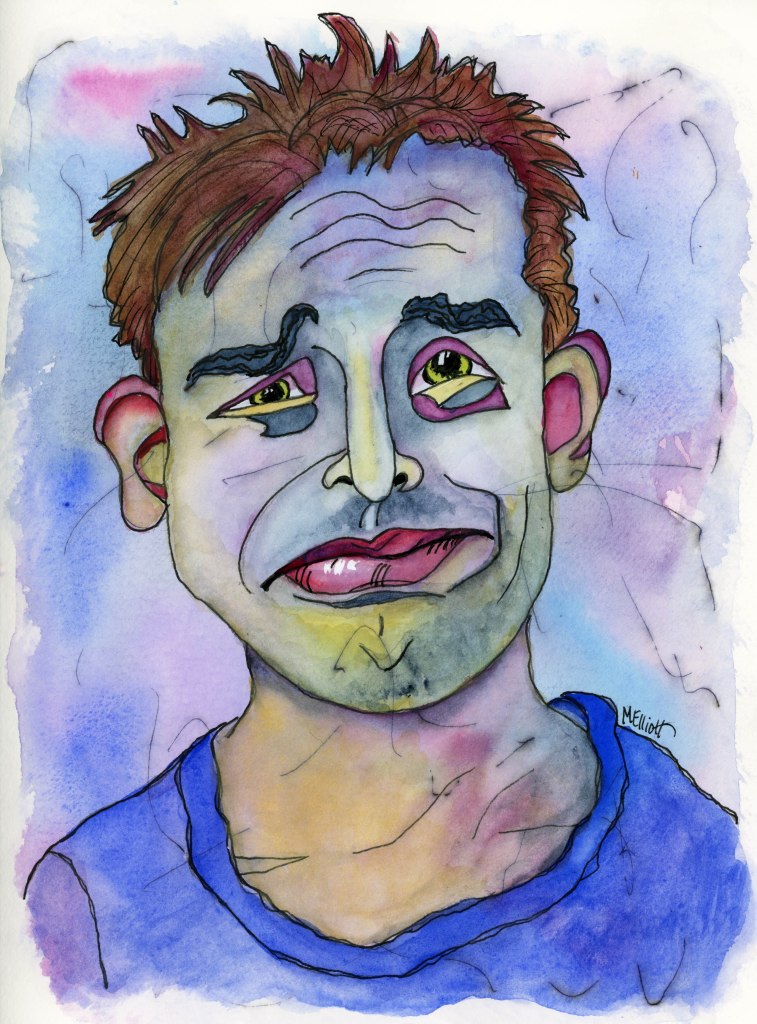
Mentioning the telepathy is a spoiler, but I guess if the author is going to do it, I can too, and it comes up quite early in the book. I made an illustration that goes with the story: This is Briddey, building an internal “perimeter wall” out of make-believe bricks, the reciting of poems and stories, and the enumeration of the types of marshmallows in Lucky Charms cereal, in order to keep other people’s thoughts at bay.

My reaction to this book is positive, although I do think that Willis could have cut about 100 pages from it and it would have been more readable. At some points the dithering, the familial interactions, and the feeling that you’re in the middle of an Abbott and Costello routine become wearing, and you want to move on to the next bit rather badly. My favorite romantic comedy of hers is To Say Nothing of the Dog; but the fact that I have read this twice speaks to its merits, even if they aren’t quite as great as some others of her books. It’s definitely worth it for the fun pop culture references if for nothing else!
Don’t ask…

I picked up Ask Again, Yes, by Mary Beth Keane, because it has been so hyped and apparently so beloved by so many; and it sounded like an interesting story.
I have to say I can’t understand why this book gets almost exclusively four- and five-star ratings and rave reviews from everyone on Goodreads. First of all, it was interminably long relative to the story that emerges, which is to say that it was slow. In fact, I’m looking at my Goodreads timetable in disbelief, because it seemed like my reading experience went on so much longer than two days!
There were certainly tumultuous events included in the story, but in between it was a rather mundane accounting, and several times in various characters’ segments I thought to myself, Do I really need to know that about you? Isn’t there something more important or personal you’d like to share? There is a certain degree of soul-searching amongst the many protagonists, but mostly we get the symptoms without the explanation of the root of the problems (or else we are expected to intuit them for ourselves), and several of the characters dwell so obsessively within the symptoms that it becomes wearing on the reader.
It’s hard to know, from chapter to chapter, what—or whom—the book is about. It begins with two young rookie cops, Brian Stanhope and Francis Gleeson, on the beat in the Bronx, but it only dwells on their work lives for a minute. Then it focuses on the fact that they both decide to move to a suburb known to be hospitable to those “on the job.” There is a lengthy description of the quiet, rather barren and empty vibe of Gillam by Francis’s wife, Lena, who would have preferred to stay in the lively and friendly heart of the city. Bill and his wife, Anne, then move in next door; but all Lena’s hopes for companionship and the raising of their children together is dashed by the cold aloofness of Anne despite all Lena’s friendly overtures. At this point in the book, I thought the story was going to be about this isolated and specialized town of cops, perhaps exploring the corruption or the bigotry that results from this false association of all one “kind” of people. But after Lena’s narration is done, not another mention is made of that aspect of the town, throughout the rest of the book. It felt to me like a complete false start, and I had to consciously reorient myself from that point in the story to see what the rest of it was about.
Despite Bill’s wife’s coldness and sense of superiority, their only son Peter ends up being best friends with Francis and Lena’s youngest daughter, Kate until, in the year they turn 14, everything goes off the rails in a volatile and ultimately tragic way. Then we get the years of estrangement from several points of view, detailing what happens to each of the characters, although this is quite uneven and gives vastly more attention to some than to others. It seems, despite everything that has happened between their families, that Peter and Kate are both adamant they are a match not to be broken, and they end up together. (This isn’t a spoiler, it’s in the book description.) And then we get the details of their joint life and how everything plays out, influenced by the tragedy and drama of the past.
Again, I felt like I was reading several separate books. There’s the parents’ story, together and separately, there’s Peter’s story and Kate’s, there’s Peter’s and Kate’s together…and at each turn I felt at a loss to say what this book was about. Is the point of the story that true love prevails no matter what? Is the point that a person’s upbringing has lasting effects that reverberate throughout his life, even if he thinks he is fine and the past is the past? Is the point that people can recover from anything, given time and space and an occasional helping hand? Is the point that you’re stuck with your family, no matter what? Is the point that living in the suburbs is the kiss of death to a fulfilling or exciting life?
Many other reviewers noted that the book was a masterful character study, and I guess I could admit to this; but when I think back on what I actually know about some of these characters, it’s hard to say, based on the dearth of personal feelings they reveal. Peter’s character, in particular, has upsetting feelings that he is completely unable either to express or explain. So…what’s the point of an outsider dwelling on them? If I, as the reader, have insight into Peter that he doesn’t share, what does that benefit the story?
There was a comment in the book about things being very different in the 1970s than they were 25 years later in terms of therapy, shame, avoidance, and all the other ways to deal with mental illness or addiction, and that this reticence to talk about or even bring up the subject had a profound effect on people who suffered from or were associated with it, but I didn’t understand this as the point of an entire book. There is a resolution of sorts in the end, but it felt so anticlimactic and like such a platitude that I turned the last page with resentment for having had to go through every step with these characters to get there.
One reviewer compared this book to Big Little Lies, by Liane Moriarty, a book I read with enthusiasm and reviewed positively, finding it smart, witty, and suspenseful. Perhaps the disconnect with Ask Again, Yes is that I failed to find a home with any of the characters, to identify with one sufficiently that I cared about what happened to them. All I can say is, if you enjoy a character-driven plot (and aren’t put off by a somewhat disjointed story arc), you might love this book.
I did not.
The English teacher
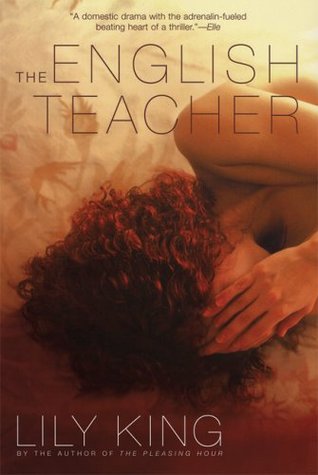
After being completely bowled over by Lily King’s Writers & Lovers, I decided to check the library for others of her books I could immediately access with my Kindle, and discovered The English Teacher.
The story is about Vida Avery and her 15-year-old son, Peter. Vida (pronounced Vee-dah) showed up 16 years ago at the Fayer Academy, an elite private school housed in the mansion formerly owned by her grandfather. She was pregnant, and there was no sign of a father’s presence for the baby; she took an entry-level job and began slowly working her way up through the grades and positions until she came out where she wanted to be, which was as the best and most revered English teacher in the school, instructor to honors students and seniors. She and her son live in an old gardener’s cottage on the grounds of the school, so they are both cocooned by this small academia, socializing only with other faculty members and students, eating most meals in the cafeteria, and hardly ever leaving the grounds.
Then widower Tom Belou encounters and is smitten by Vida (or by a version of her that he sees at an emotional moment), and soon comes the thing for which Peter has prayed his entire life: Tom asks Vida to marry him, and for her and Peter to become a part of his family (he has three children). Peter has dreamed of having a father (Vida never lets a word about his pass her lips) and siblings and a real family home where meals are made in the kitchen, people sit down together to eat them, and experiences are shared. It’s too bad for Peter that married life doesn’t change his mother one iota, and his hopes are largely unfulfilled. And soon he begins to observe that Vida, far from being happy in her new life, is exhibiting strange signs of disconnection, not just from her changed circumstances but from all parts of her life, including in the classroom where she formerly ruled.

This was a weird one, coming off King’s other book, which I adored. Although this, too, was a character study of a person in transition, the thing that initially put me off about it was the very thing I loved about the other—the protagonist. As much as I loved Casey, that much and more did I dislike Vida. I had the sense all through the book that there was something deeply damaged about her, that it would come out, and that I would then discover some empathy for her; but for a large percentage of the book she was simply repellent. I pitied her, but I didn’t like her at all until about the 85-percent mark! (Remember, I’m reading on Kindle, so we go by percentages, not pages.)
It was a good story, revealing and proficiently told, and the parts that were attuned to Peter kept me going, but it was a hard one to sit through in some ways. I’m glad the book wasn’t longer, and that it started to resolve just as I thought I couldn’t hang in there any more.
Lily King is an expert writer who always searches for and finds the perfect word, and whether I liked or loathed Vida, this ended up being a worthwhile experience. I have placed a hold on her book Euphoria at the library. It’s apparently popular—I’m #410 on the wait list!
Writers & Lovers
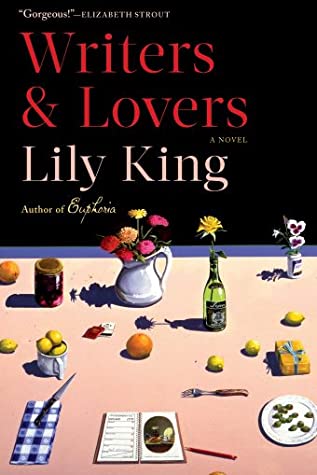
Writers & Lovers, by Lily King, is the subject of discussion Saturday at the book club I joined but somehow never manage to attend. By the time you read this, which I’m purposely publishing on Saturday afternoon so as not to interfere with that discussion, it will hopefully be a book club I have now attended, at least once, because I couldn’t resist the lure of sharing thoughts about this special book with other readers.
I don’t know how to begin about what a different experience it is to read this book. On the surface, it’s a balanced, mostly sequential story of a 31-year-old woman that includes her private writing life, her daily grind at the upscale restaurant where she waitresses to afford time for her writing, her grief over her mother’s death, and her relationships with co-workers, friends, and two new men; but it’s so much more that it almost renders any one of these topics insignificant.
The description of the book—she’s a writer, she’s dating two men—could be the precursor to yet another story about love life choices, but because of the author’s incredible perception of this woman’s life at a particular age in a particular place with a specific mindset, it’s not clichéd, it’s not even “regular”—the character somehow transcends her experience while living it fully.
My first impulse is to say that it’s an interior novel, that it’s about the character’s inner self, and that would be true…but it also deals squarely and realistically with all the mundanities of her life in a way that makes them simultaneously matter-of-fact and wildly interesting. There’s something about her particular responses that makes her story a compelling read throughout, even when you feel like you should find it boring.
This is making me incoherent. Here’s the thing: In reading this book, I identified so closely with the protagonist that her anxiety on the page began to leak into my life. When she experienced a sleepless night, when she could hardly sit still or even stay in the same room for five minutes, when she walked it off or sat and cried or hid in the bathroom at work, I was right there with her. There was grief, sadness, uncertainty, an almost overwhelming lack of self-confidence in Casey, and yet I never despised or looked down on her, judged her, perceived her in the way that she sometimes did herself; there was something transformative and positive about her, no matter what her fumbling actions portrayed. She charmed me with her honesty, authenticity, and humor.
This is an introspective, literary novel, and yet nothing about it is dry, removed, superior. It is completely immersive and it engaged me in a fascinated hopefulness on behalf of its heroine. And she felt more like a heroine than a simple protagonist, because even though she was sad and sometimes indecisive, bereft, depressed, and occasionally clueless, she kept going. She kept going, she thought, she learned, she acted, and ultimately she came out the other side, and it was all her.
This book is witty, profound, and nuanced, with language that is both beautiful and intentional. It might not be for everyone, but for me it was practically perfect.
Oh, and I love the cover.
Three is too many
I tend to love dystopian and post-apocalyptic stuff. I don’t think it’s because I’m a worst-case-scenario kind of person, it’s that I love the ingenuity and creativeness with which the author has created the world, and also the way the characters rise (or don’t) to the occasion.

I picked up The Rule of Three, by Eric Walters, with the expectation of enjoying it, and I did…to a certain extent. The initial premise, which is basically the end of technology, was a familiar one (although the obvious conclusion—electro-magnetic pulse—is never mentioned). Suddenly, everything dies—computers, cell phones, electricity, all late-model cars run by computer—and all anyone can think of is to return to their homes to regroup, check on their families, and figure out what will happen next.
The apocalypse is set in present day, with the disaster happening now, to people like us, and it’s done plausibly, making it relateable. But…there are some major flaws.
The book is set in a suburban community with a small police force, and the protagonist’s mother is the police chief. Next door to Adam and his mother and siblings lives a somewhat mysterious retired guy, Herb, who quickly becomes the driving force behind finding and keeping security and promoting survival in their immediate neighborhood of about 1600 people. Herb’s extensive life experience in international covert operations (we assume he was CIA) makes him the oracle, and Adam is his willing disciple.
The good thing about this novel is the way it lays out the likely progression from unease to panic to lawlessness in the event of a catastrophe so overwhelming. The bad thing about it is that it does so with much less sense of drama and suspense than it should. In some cases it feels more like a survivalist handbook than a story. There are a lot of ingenious ideas and solutions to problems that would naturally arise from such a situation, but they are revealed without impact, as if anybody could think of them. Obviously the writer has done his research, but the delivery is too matter-of-fact for
this kind of story.
Each time a challenge arises, whether it’s looters at the grocery store, a valuable tanker full of gasoline that needs protecting, or bigger decisions about how to bring the community together, Herb has an answer. He is depicted as the chess master, always eight steps ahead, and the police chief and everyone else—including the supposedly “bad” people—are content to follow his lead once he speaks up in his soft and reasonable voice and simply explains the facts. Dissenters are rapidly brought around to his point of view.
The idea that people would respond positively to a person with natural leadership qualities isn’t surprising; but the supposition that this one man has all the answers, has plotted out the logical progression, and rises to meet every occasion and deflect the worst that could happen is a little god-like. Not to mention the fact that his basement might as well contain a lamp with a subservient genie in it, bringing upstairs all good things—canned food, hand grenades—in the nick of time.
Large parts of the book are obviously written for teens, giving Adam’s inner thoughts about his friends, the girl he likes, his worries about his missing dad (he’s a pilot, stranded by the emergency in Chicago—they all hope). But there is a lack of spontaneity in the writing that causes Adam to come across as stiff and awkward and makes the scenes of friendship and love unexciting in the same way that the serial problems are solved too easily.
For me, the best part about the book was Adam’s love of flight and his adventures piloting his ultralight in pursuit of information for the community. I probably enjoyed that so much because in my 20s I was a typesetter for three aviation magazines, including one exclusively about ultralights, so I recognized a lot of the jargon and enjoyed the depiction of soaring over the countryside in what is basically a glorified lawnmower with seats and wings. (In all the time I worked for the aviation mags, I was never persuaded into the air in one of the homebuilt aircraft they featured.) But these scenes were not enough to redeem the rest of the tale from its somewhat wooden tone.
This is a three-part story, with the first book ending after one big challenge to the community’s autonomy, with the promise of fallout to be revealed in the next book. I will probably read book #2, just for closure, but I’m not sure I’ll stick it out through a third one, and if I had read a few of the reviews on Goodreads I might not have gotten involved with book #1 in the first place. I appreciated the chapter appended at the end with the details of what one should have on hand to survive such an eventuality more than I did the book preceding it.
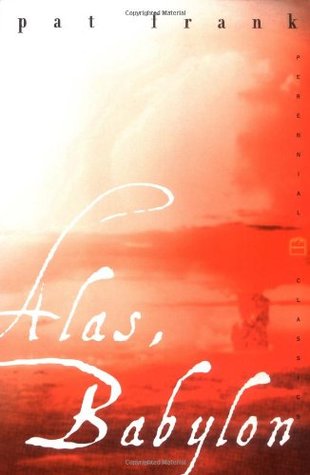
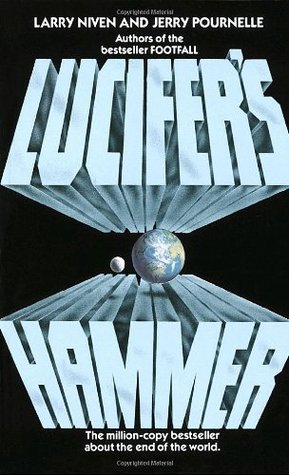
If this sounds like the kind of book you might enjoy, my recommendation would be to instead seek out an oldie but goodie, Pat Frank’s Alas Babylon, for a similar story with a lot more human interest and a starkly realistic resolution to replace the somewhat pat answers offered by this one. You would also appreciate Lucifer’s Hammer, by Larry Niven and Jerry Pournelle, 629 pages of disaster-driven excitement.
Wings

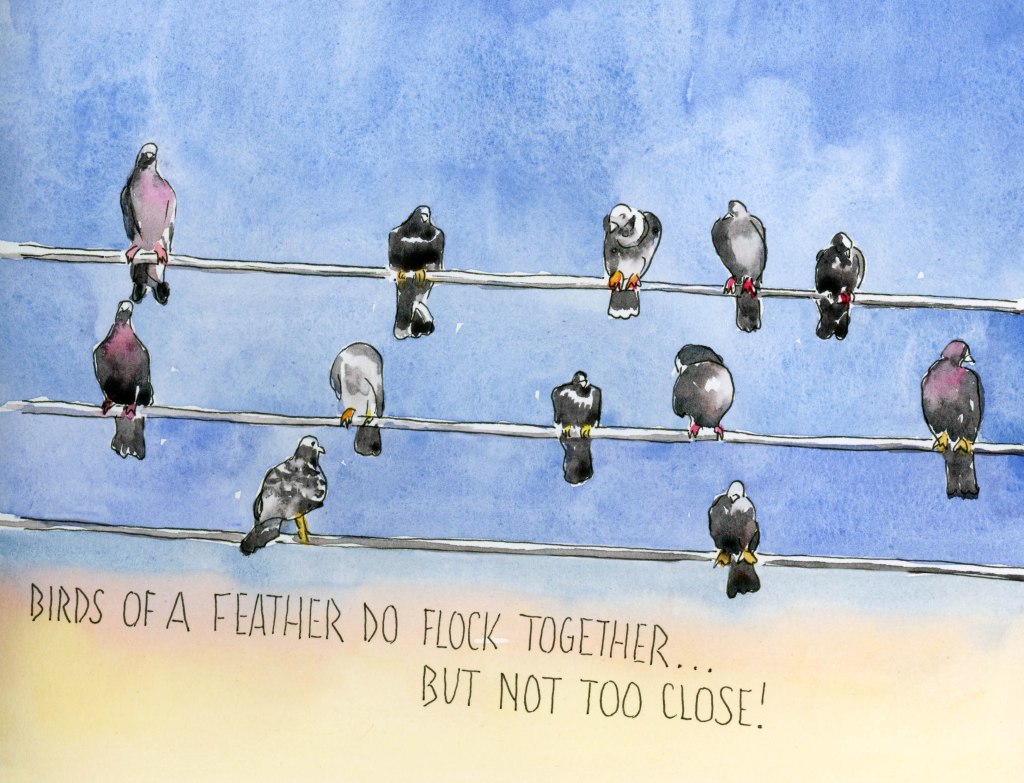
As with her book The Language of Flowers, Vanessa Diffenbaugh has found a nature-based analogy to support the story in We Never Asked for Wings. The theme of birds and their migratory habits is connected to more than just the immigration part of this tale in which people cross over the border between California and Mexico each for his or her own reasons, or in some cases try to avoid re-crossing that border at all costs. There is a fact about migration that sums up the actions of at least one of the protagonists:
“Migrating birds reorient themselves at
vanessa diffenbaugh
sunset. The exact reason is unknown,
but at twilight, just when the sun
drops beyond the horizon line,
birds flying in the wrong direction
correct their paths all at once.”
Although she has born two children—Alex, now 15, and Luna, just six—Letty has in many respects been an absent mother for most of their lives. Only 18 when she became pregnant with Alex, she chose not to tell the father, who had a bright future with which she didn’t want to interfere, instead essentially handing over the baby to her own parents, who raised first Alex and then Luna while Letty worked three jobs to support the family and send money back to relatives in Mexico. She spent the rest of her time partying like a perennial teenager (which is how she ended up with Luna).
Suddenly, everything changes: Letty’s father makes the decision to visit Mexico and, while he initially allows his family to believe he will return, he doesn’t. Once Letty’s mother realizes he’s not coming back—whether by choice or because the “coyote” they paid to bring him was no good—she leaves San Francisco, her grandchildren, and Letty, with a freezer full of pre-made meals, a bunch of notes on how to do all the parenting tasks so foreign to her daughter, and a belief constructed almost entirely from her own wishes that everything will be okay with them.
Everything is emphatically not okay—they get off to a rocky start and, as the story progresses partly through Letty’s eyes and partly narrated by Alex, their existence becomes increasingly complicated and precarious. But all of them are given the opportunity, like the migrating birds, to correct their paths, and it’s the chronicle of these struggles to do right that makes up the rest of this engaging story.
Diffenbaugh deals in this book with a lot of themes—immigration, parenting, bullying, responsibility, and love—seriously, but with a light touch. The book held my attention throughout, and I enjoyed the change of voice between Alex and his mother and their different perceptions of what was going on in their lives. I can’t say I enjoyed it quite as much as I did The Language of Flowers, but it’s definitely a worthy addition to the author’s oeuvre.
Appended note: The cover is sadly inappropriate. The child is too young to be Luna; they never (would never) have a bird in a cage; and I can only conclude that whoever designed it didn’t read the book. The cover on the Italian version, depicting a worried-looking young woman who could be the frantic Letty, is a better fit, but why not do something with the grandfather’s beautiful traditional feather art or include some migratory birds? A big miss.

 The Book Adept