The last?

I just finished what has been billed as the “last installment” of the Gunnie Rose story by Charlaine Harris—The Last Wizards’ Ball, number six in the series. And although I thought that it was appropriately told, with plenty of drama and intrigue and some fascinating new characters, I admit I am feeling a little puzzled. There was no cliffhanger as there was at the end of previous installments, but everything was left more than a little unsettled and open-ended, and I could see this series going on for several more books, based on the impression I received from this one. I can’t decide whether Harris likes an open-ended story, or is hedging her bets just in case.
Of course, one could posit a spin-off or two that, for instance, followed Felicia to New York City and then to Europe, or trailed Lizbeth to a possible new home in a place both greener and less fraught than Texoma, or followed the fortunes of Eli as he resumes his services to the Russian Tsar of California…
Just to inform those who are unaware of this series…
The setting is the former United States, but one event—the assassination of Franklin Delano Roosevelt—has significantly altered the history of the country. Without Roosevelt’s guiding hand during the Great Depression, the crippled country fractures, and various states were either absorbed into surrounding countries, taken over by former rulers, or banded together to form small nations. The original 13 Colonies pledged fealty to the British Empire; a few of the “top” border states became part of Canada; the south-eastern states are now “Dixie” while Texas and Oklahoma formed “Texoma”; the “flyover” states remained “New” American territory; the rest of the southwest was annexed by Mexico; and the biggest surprise was the Pacific Northwest, which was taken over—by a combination of invitation, treaty, advantageous marriages, and magic—by Tsar Nicholas and the remains of the Holy Russian Empire, which is now its new name.
The main protagonist, Lizbeth Rose, lives in Texoma and makes her living by hiring herself out as a “gunnie”—a combination of escort, guard, and gunslinger paid to protect people and/or cargos being transported by land or rail from one territory to another. It’s an unusual profession for a young woman, but Lizbeth is a crack shot used to relying on no one but herself, and takes all the risks to keep her clients alive and her cargos safe. Here is my full review of the first two installments, which also further explains the magic part of the tale.
In this the sixth book, Lizbeth Rose’s half-sister Felicia, a powerful wizard, is 16 and attending her first Wizards’ Ball, described by Lizbeth as similar in nature to the “Season” in a Georgette Heyer novel, otherwise known as the Marriage Mart. The most prominent grigoris, wizards, and magic-makers from around the globe send or bring the eligible members of their families (unattached youth under 30) to a week-long series of garden parties, tea parties, balls, theatricals, and what-not so that they can all meet one another and make suitable marriage matches. The aims are power (both magical and political), wealth, and the acquisition of a bloodline that will match well with, freshen, or diversify a perhaps played-out heritage.
Felicia is much in demand but also at great risk, since some would do anything to “acquire” her and her power for themselves, while others are bent on keeping that power away from those people, regardless of Felicia’s personal wishes. But Felicia is no pushover when it comes to defending her own rights, and she has her gunslinger sister and her grigori brother-in-law, Eli, along for protection and observation.
The time period in this book is during the build-up to what was, in another timeline, World War II—the ascendence of Hitler—and all negotiations are colored by political loyalties and intentions as it becomes apparent that war is in everyone’s future. This is part of the reason why I find it confusing that this is the last book, because in a world where there was no strong, unified American government with its military that jumped in at the end to turn the tide of the war, the possibilities are endless, and Harris has set it up with the added detail of magical abilities being in play on both sides.
While the book was entertaining, full of plots, drama, and detail, I was left feeling that if this was the end of the story, we have been dumped just as things were about to get truly intense. I’m hoping that Harris has a segue up her sleeve, as she did when she wrote the Midnight, Texas stories based on a character from her Harper Connelly series. If not…I have quite enjoyed them anyway, some more than others.
Wrapping up

This year it feels more like a winding down than a wrapping up. I read the fewest books in one year since I started doing the Goodreads Challenge 12 years ago. That year I read 75 books; my highest number ever was in 2019, when I read 159 books while working full-time from January to October (I retired from the library in October of that year). You would think it would be the reverse, since I have so much more time now than I did then; but there were some factors at play that ensured I would read a lot more then. First, I was running three teen book clubs, so I had to read one book per month for each club, plus a couple extra books in each age range (the clubs were 6th- and 7th-graders, 8th- and 9th-graders, and grades 10-12) so I would have ideas to propose as the following month’s read. I was also reviewing books for both the teen and adult library blogs (both of which I supervised), so I was heavily invested in spending all my spare time reading new teen and adult fiction to showcase there. And finally, of course, there was a certain amount of reading for my own particular pleasure! I basically worked, commuted, ate, slept, and read, and did absolutely nothing else!
Nowadays there are circumstances that tend to decrease my reading time: With my particular disability, sitting in one position for long periods of time isn’t great for keeping my legs at their best possible condition for mobility. I also watch a lot more on television these days, now that streaming services let you binge-watch an entire five-season show, one episode after another for as long as you can stay awake, as opposed to waiting for one weekly episode for a 12- to 20-week season and then waiting in turn for the following season. And I spend way too much time “doom-scrolling” political stuff online, or keeping up with friends on Facebook. Finally, once I took up painting I started spending at least a few days a week focused on making a portrait or two or a still life featuring items from my antique collection.
Anyway, this year I read a meager-for-me 66 books. Some of them were literary and some of them were chick lit, some were re-reads of beloved stories, and others were authors previously unknown. My statistics include:
23,782 pages, with an average book length of 360 pages
(shortest was 185, longest was 698)
Average rating was 3.6 stars
Some favorite new titles were:
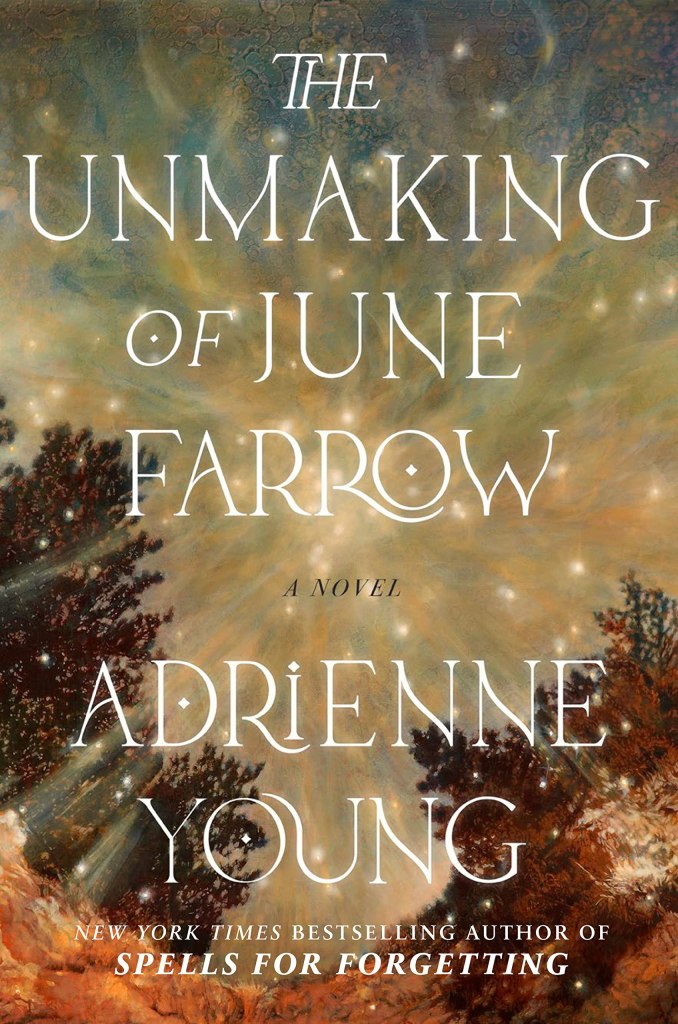
The Unmaking of June Farrow, by Adrienne Young
Starter Villain, by John Scalzi
Vera Wong’s Unsolicited Advice for Murderers, by Jesse Q. Sutanto
The Long Way to a Small, Angry Planet, by Becky Chambers
All the Dead Shall Weep, and The Serpent in Heaven, by Charlaine Harris
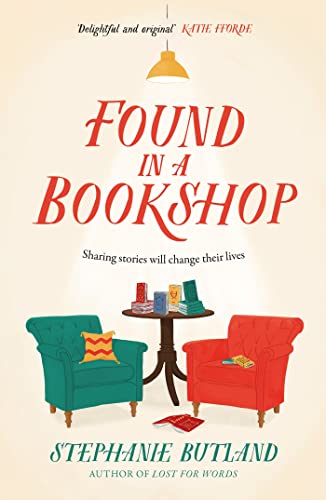
Found in a Bookshop, by Stephanie Butland
I felt throughout the year like I was having trouble discovering books that really resonated with me. Although I had some pleasurable reading discoveries, I never found that one book or series or author that really sucked me in and kept me mesmerized for hours at a time. I found myself reading during breakfast or on my lunch break and easily stopping after a chapter or two to go do something else, rather than wanting to settle in for a solid afternoon of reading. I’m hoping to find more compelling books in the new year. But reading continues to be one of my best-beloved pastimes.
Gunnie Rose continues!
At the end of my review of the third book in this series, I devoutly hoped there would be more, and I discovered last week that Charlaine Harris has come through with two more volumes while I wasn’t looking! Imagine my delight at getting to continue this entertaining dystopian historical fantasy mash-up for not one book but two!

You can read my entire review of the first two here, and the third one here, but just to quote myself to give a reaction to those too impatient to do so,
“This series is pure delight, from the elaborate world-building to the laconic Western flavor of Texoma, and the characters are so alive they could step off the page. Harris has written this with just the amount of detail you crave, without drowning you in either description or explanation, and the pace of this mystery/adventure story is perfect. The minute I finished the first book, I jumped without hesitation into the second one.”
You really should read at least my review of the first two, because it gives a thorough description of a rather complicated world-building exercise. But even there, Harris achieves the maximum in understanding with the minimum of detail. She is apparently no more a fan of the info-dump than am I, for which I am thankful.
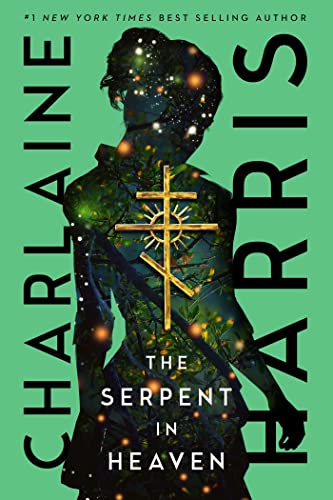
The fourth book, The Serpent in Heaven, picks up pretty much where the third left off; Felicia is now a school boarder at the Grigori academy in San Diego. She was initially admitted as a sort of honorary student because of the need to keep her safely squirreled away, since she is one of the few blood donors remaining who can save young Tsar Alexei’s life should he have a mishap (he’s a hemophiliac). But in this book, due to some unexpected hazards at the school, Felicia reveals the true scope of her wizardy powers and gets promoted to the “real” classes to learn to control, direct, and expand them, mentored by the curmudgeonly Victor.
This book was told from the first person viewpoint of Felicia herself, which added an extra element to the story, since in the course of her narration you get to know her much better and understand her background, upbringing, and level of skill. Lizbeth (Gunnie) and Eli are mostly missing from this chapter, because they have married and gone off to live in Texoma after the disastrous coup that disgraced parts of Eli’s family in the last book. We get news of them only through an occasional letter or telegram or word-of-mouth message. I thought this would be upsetting to the narrative, but I was completely absorbed in Felicia’s story and didn’t miss them, for the most part, compelling characters though they are.

Harris makes up for this in book #5, All the Dead Shall Weep, when Felicia, accompanied by Eli’s brother Peter, goes to visit Lizbeth and Eli in Texoma, mostly to get away from an ongoing threat of kidnapping by various factions who have figured out her value as a wizard and want to (either voluntarily or forcibly) marry her into their bloodline to amp up their descendants’ talent pool. But bad fortune follows Felicia like a hungry stray dog, and there’s also a new military rebellion beginning to muster, with which the sisters and their men must contend. This book is told by alternating narrators Lizbeth and Felicia, which was initially jarring when I didn’t realize the voice had changed, but actually really helpful in giving all the behind-the-scenes thoughts and feelings you craved from these characters.
And this fifth book ends on a truly ominous cliffhanger, historical in nature, which bodes well for more sequels, though ill for their contents! Still a fan. Check them out!
Reiteration

I got frustrated this week by my seeming inability to pick a winner of a book, and fell back on a sure thing by rereading Charlaine Harris’s four-book series about Harper Connelly, victim of a lightning strike, who uses the ability given her by this event to make a new life for herself. And now, once again stymied by a new-to-me book series that isn’t grabbing my attention or enthusiasm, I’ve been considering rereading Harris’s other series about dystopian gunslinger Lizbeth “Gunnie” Rose. So imagine my delight, after going to Goodreads to remind myself which book was first in the trilogy, at discovering that Harris wrote two more in this series while I wasn’t paying attention!
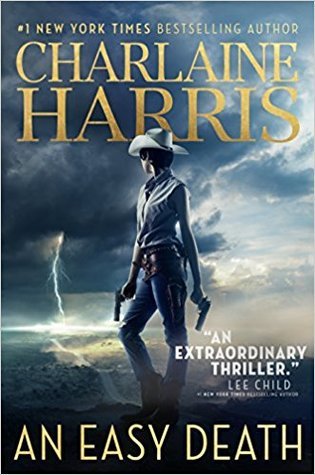
If you’d like a more thorough dissection of these two favorite series of mine by Harris, go here and read all about them. This post reviews the third book in the Gunnie Rose series. And stay tuned for reviews of The Serpent in Heaven, and All the Dead Shall Weep.
What I wished for
The Unmaking of June Farrow, by Adrienne Young, is the book I have been wishing to read. It’s both an elegantly written and a beautifully told story that incorporates a curse, a murder, something sort of like time travel but not exactly, and an emotionally complex web of relationships that are a pleasure to try to untangle. If I had to label it, I guess I would call it magical realism.

June Farrow was born into a family in which the women are believed to be cursed, and June intends to be the last member of this family in order to break that curse, resolving never to marry nor have children.
At some point in each of their lives, the Farrow women are overcome by madness—seeing, hearing, and experiencing things that aren’t there as their minds slowly unravel. June’s own mother, Susanna, became increasingly troubled, finally abandoning the infant June to be raised by her grandmother, then disappearing, never to be seen again. In the past year, June, 34, has begun to experience the warning signs that she, too, is beginning to lose touch with reality. She’s hearing phantom wind chimes, seeing a man’s silhouette looming and smelling cigarette smoke on the breeze from the open window, but there’s no one there. And then there is the red door that appears, standing in the middle of a field of tobacco or at the side of the road outside of Jasper, North Carolina, as if waiting for her to walk up, turn the knob, and step across the threshold. This is the story of what happens when she yields to that impulse.
I don’t want to tell much more than this, because you should be allowed, as I was, to unwrap this tale for yourself. I think it will be enough to say that it is immersive, atmospheric, romantic, and mysterious, and I thoroughly enjoyed it from beginning to unexpected end.

Hiatus, nostalgia, TV
I haven’t published anything here for a while because I started reading Demon Copperhead, the new book from fave author Barbara Kingsolver, and it has been taking forever. I am enjoying the voice of the protagonist and the high quality of her descriptive writing and somewhat quirky scene-setting, but the combination of the length of the book and the depressing quality of the narrative finally got to me at about 83 percent, and I set it aside to take a quick refreshment break.
I re-read two books by Jenny Colgan—Meet Me at the Cupcake Café, and The Loveliest Chocolate Shop in Paris—for their winning combination of positivity, romance, and recipes, and enjoyed them both. My plan was to go back to Kingsolver today, but instead I found myself picking up Dying Fall, the latest Bill Slider mystery by Cynthia Harrod-Eagles, which has been in my pile for months. I will get back to Demon Copperhead at some point, but the mood isn’t yet right.

Meanwhile, Netflix made me happy this weekend, having come out with season one of Lockwood & Co., adapted, partially written, and directed by Joe Cornish, and based on the young adult paranormal mystery series by author Jonathan Stroud. This has been a favorite series of mine since I read book #1 with my middle school book club and eagerly perused all the rest as they emerged from his brain onto the page (there are five books and a short story in it).
The series is set in a parallel world where Britain has been ruled for 50 years by “the Problem”—evil ghosts that roam freely, but can only be dealt with by children and teenagers young enough to be in touch with their perceptive gifts. Adults can be harmed by them but can’t see or even sense them, while the youth still see, hear, and sense their presence and fight them by discovering their “source” (the place or object to which they are attached) and either securing or destroying it.
The mythology seems to have evolved at least partially from faerie, vampire, and werewolf lore: The main weapons are iron chains, silver containers, running water, salt bombs, lavender, and longswords! The ghost-hunting teens are most of them employees operating under the supervision of corporate, adult-run agencies, but Lockwood & Co. is independent of adult supervision. It’s a startup existing on the fringes, run by two teenage boys—Anthony Lockwood, the putative boss and mastermind, skilled sword fighter and ingenious planner, and George Karim, the brainy researcher who provides background for their cases from the city’s archives. The two have advertised for and just recently acquired a girl colleague, Lucy Carlyle, who is new to London and technically unlicensed, but more psychically gifted than anyone they have ever met. This renegade trio is determined not just to operate on their own but to outdo the agency blokes in all their endeavors, so they take risks no adult at the corporations (or at DEPRAC, the Department of Psychical Research and Control) would sanction, in order to gain both notoriety and clients.

Cornish and his colleagues have nicely captured both the flavor of the overwrought atmosphere of beleaguered London and the perilous camaraderie of the principal characters—Lockwood, George, and Lucy—in their series. Season one covers the events from books #1 (The Screaming Staircase) and #2 (The Whispering Skull), so one assumes there will be at least one and perhaps two more seasons, if viewers make it popular enough for renewal. I certainly hope they do! But in case that doesn’t happen (or even if it does), the books are out there, and well worth your attention (and I don’t just mean middle-schoolers!).
The words, the will, the way
Someone recommended The Ten Thousand Doors of January, by Alix E. Harrow, to me, and since it has won several enviable awards in a genre I like, I decided it would be my next book, but alas! the holds list at Los Angeles Public Library thought otherwise. But I noticed that her book The Once and Future Witches was available, so I decided to pass the time by reading that one first.
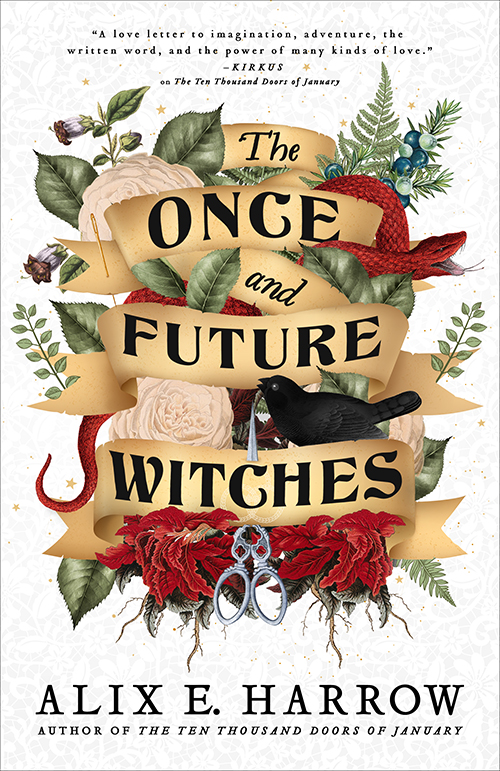
Three estranged sisters who haven’t seen each other for many years end up in the same town (New Salem) at the same event and are drawn together by a weird magical bond. The eldest of the Eastwood sisters, Beatrice Belladonna (Bella), is an introverted librarian who spends her days doing translation and transcription work for others while indulging herself by digging through the archives looking for fairy tale fragments, rhymes, and stories that appeal to her. It is her speaking one of these rhymes aloud that brings about the cataclysmic reunion. The middle sister, Agnes Amaranth, has bitterly accepted that she is not special or entitled, and works in a factory for a living, keeping to herself and letting no one in. The youngest, James Juniper, is the wild and impulsive one, angry with her sisters for leaving her behind with their sadistic father. When she arrives in New Salem (just ahead of the law) and encounters a demonstration/rally by the local group of suffragettes, she is inspired to join up with them, bringing her own background as a spell-caster to shake up their staid activities and hoping to turn the women’s movement into a witch’s movement. Then Bella’s inadvertent recitation of an odd rhyme has an astonishing result and, while it brings the three sisters together, it definitely isn’t anything with which the suffragettes wish to be associated. But June doesn’t let this stop her from recruiting women from their midst who are tired of never getting what they want and are willing to take things into their own hands—women who have the will, and are eager to learn the words and the way.
This book bowled me over. It tapped into some major threads, both for me personally and in the context of current events.
First of all, as have many ex-Christian women, I did my time exploring Wicca, and although I’m not a practitioner, I do have a soft spot for celebrating (or at least acknowledging) the Sabbat rituals, and this story played right into that. The idea that fragments of spells are concealed within fairy tales, legends, and nursery rhymes as a way to pass them on in plain sight with no one else the wiser is simply brilliant. And the book’s chapter headings, each of which is a variation on one of these spells, accompanied by the purpose of the spell and the “tools” needed to accomplish it, gave a delightful continuity to the story, as well as making you want to believe they are true. Likewise, Harrow’s fairy tale retellings, recast in a more feminist mode, made me think twice about story origins. I love it when an author takes the time and thought to make their magic both plausible and useful, and in this book everything is so organic to the atmosphere, the times, the old stories that the narrative just flows.
There are familiar themes from history in this book—the Salem Witch Trials (and burnings), the Triangle Shirtwaist Factory fire, the suffrage movement—but the story is something of an alternate history: Old Salem is a burnt-out ruin and New Salem is taking over its legacy; the suffrage ladies, while brave to a point, are exposed as the elitist, racially exclusive group that they were; and the author freely uses the historical context to serve her story without stubborn adherence to dates and facts, which I thought was fine in a book that doesn’t purport to be historical fiction. You find out late in the book that the action takes place in 1893, but it doesn’t really matter that much to the story, which is universal.
The thing that struck me, in reading it at this particular moment in history, is how cyclical are women’s issues, and how we keep getting trounced until we band together and learn (again) how to stand up for ourselves. We are at a place now where rich white men are once again attempting control over our options and our bodies, and the seditious revolution led by the three witch sisters in this story is a good example of what can happen when information and rebellion spreads from woman to woman, from group to group, to a whole nation of women fighting back.
I can’t say a single negative thing about this book. The protagonists are compellingly realistic (well, apart from the witchcraft, although that feels real as well!), the villain is truly creepy, the side characters contribute wonderful scenes and perspectives, and the setting is both dangerous and mundane in just the right balance. The pacing, the twists and surprises, the bonds between the sisters and in fact between most of the women, are all solid. I’m so glad I had to wait on her other book and took a chance on this one.
Altering the past
It’s been many years since I read a Stephen King book; not because I haven’t liked some of them, but for a combination of reasons including a dislike of most horror and a prevailing impulse to call his editor and tell him to automatically edit out 300 pages from everything King writes. There was a time, in my youth, when I gravitated towards gigantic tomes—the longer the better!—and managed to immerse myself until the deed was done. I find these days that I am a bit more impatient, and it takes some really good writing, story-telling, and character/world building to keep my attention.

But…as I have mentioned before, I am a sucker for time travel. Also, for all children of the ’60s, the biggest conundrum was and remains the assassination of President John F. Kennedy, that new, young, charismatic leader whose death was variously chalked up to Lone Gunman Lee Oswald or a mysterious shooter from the grassy knoll, and attributed to J. Edgar Hoover, Lyndon Johnson (impatient to succeed), or the CIA for some reason having to do with Cuba. Put those elements together, and it was inevitable that I would get around to reading 11-22-63 by Stephen King.
The idea of going back in time to kill Hitler or witness the birth of Jesus or whatever has always been out there; but most time travel writers find some unbeatable reason why it can’t be done—like simply stating, “If something happened, then it happened.” otherwise known as the Novikov self-consistency principle. Even if you allow for the possibility of paradox, the problem with changing something in the past is, of course, that it has the potential to alter all future outcomes, so even if it were possible, people might hesitate to do it—unless there was a really good reason. This is the idea upon which King’s book is built—that if JFK hadn’t died, everything would have turned out differently—presumably better (for instance, no war in Vietnam)—and that’s a really good reason to go back and thwart the assassination.
The method of time travel in this book is vague. It’s not even loosely based in science or invention—there’s no time machine, no De Lorean or Tardis, no black hole in space, it’s more like a version of Narnia, reached via a portal at the back of a wardrobe or, in this case, the pantry of a local diner. And it leads to only one place and time, a small town in Maine in 1958. It is from this place and time that Jake Epping, aka George Amberson departs 2011 and takes up residence in the ’50s, making a living as a substitute teacher while he scopes out Oswald, his associates, his various addresses, and his ultimate destination—Dallas, the Texas School Book Depository, and November 22nd, 1963, when JFK drives through town in an open car to meet his fate.
In the process of taking on this quest, “George” will also meet and change the lives of a bunch of other people, and fall for the love of “his” life, small-town school librarian Sadie Dunhill, thereby endlessly complicating what was already nigh impossible to achieve.
All the potential for a roller-coaster ride of a story is built right in, and King provides a lot of exciting moments…and a lot of sitting and waiting. Since the only entry point to the past is 1958, and returning to 2011 means the time on the “other side” resets to 1958, Jake has no other choice but to take on an identity that will allow him to live in the past for five years while waiting for the right moment to take out Lee Harvey Oswald. Even though there is research involved, and even though we are provided with such distractions as a rescue mission for an unrelated family and Jake’s romance with the beautiful but ungainly Sadie, it’s about 700 pages of waiting before we get to the ultimate climax, which then goes by quickly and with much less explanation than this reader would have liked.
Also, you have to keep in mind that even though this is presented as an alternate history, Stephen King is, when all is said and done, a horror writer. He can’t resist adding in sinister bits involving characters or even whole towns that give him the willies; he makes the hero the target of various ill-intentioned people or groups, leading to a fair amount of violence and uncertainty; and history itself is cast as the “monster” of the tale. Jake comments (more than 60 times, as another Goodreads reviewer helpfully provided) on the immutability of the past and its obduracy, and this irrevocable tendency manifests as a series of catastrophes that intervene between Jake and his goal. No, it’s not a clown, but it’s still creepy.

The part I found most disap-pointing is the many oppor-tunities King misses to comment on the time and place as it was; instead, he does a virtual whitewash. Despite some of the threatening characters, questionable neighborhoods, and ominous events, the 1950s are primarily presented as a place where the “real” food tastes so much better (butter, root beer, deep-fried lobster), people in the ideal small town are trusting (leaving their doors unlocked and greeting one another as they walk down the street), and the automobiles are an aficionado’s dream (tailfins). He mentions the ever-present smoking of cigarettes and the bad smells of unregulated industry and diesel-belching transport, yet fails to find them particularly offensive; he gives (and then repeats) exactly one example of the separate-and-unequal state of bathrooms for whites vs. “colored people” but neglects to further notice or comment upon any inequities he sees, whether they be race-related or examples of rampant sexism. I think I could have forgiven this aspect of the book more easily had it been a fast-paced thriller; but there are at least (the aforementioned) 300-400 pages where we wander from New Orleans to Dallas to Fort Worth and back again, pondering what little is known about Oswald, attempting to observe he and his family and his associates, and waiting, waiting, waiting. Some of that waiting could have been more profitably spent.
Ultimately, I did enjoy more than half of this flash to the past…but for all the reasons cited above, I could have loved it better.
Gunnie Rose returns!
Lizbeth “Gunnie” Rose is back, in The Russian Cage, the third book in this quirky dystopian urban fantasy series by Charlaine Harris. I reviewed the first two books here. This one was published in late February, but I’m just getting to it now, mostly because I have been well and thoroughly distracted by about 6,000 pages of the Farseer saga by Robin Hobb! But I’m happy to check back in with this interesting world that could be our own with just a few divots gouged out of our history. Well, maybe minus the magic.

Lizbeth’s half-sister, Felicia, is now living in the Holy Russian Empire (HRE), which extends down the west coast of the former United States of America where Oregon and California used to be. The capitol city is San Diego, where she is going to school (and training as a grigori, a magician) while making herself available as a blood donor to the Tsar, Alexei, who suffers from Russian royalty’s fatal flaw of hemophilia and can only maintain his health by periodically receiving transfusions from the descendants of Rasputin, of whom Felicia is one.
Lizbeth, back home in Texoma (the former Texas and Oklahoma plus a few other territories) receives an exceedingly cryptic letter from her sister, and it takes her a little while to figure out that it’s a secret message telling her that her former lover and partner in magical shenanigans, Eli Savarov, is in prison; Felicia is hoping that Lizbeth can come up with an idea to break him out. Lizbeth immediately packs her bags and her weapons, borrows money from her stepfather, and hops on a train to California, er, Russia-in-exile.
The HRE is completely foreign territory to Gunnie Rose, and at first she is helpless to imagine how to help Eli. But with support and collusion from her sister, Eli’s family, and Felix, a grigori wizard she knows only slightly but has to trust as an ally, a plan comes together. She’s up against a lot—a seemingly impenetrable foreign system of bureaucracy with which she is unfamiliar; enemies masquerading as friends; the impulsive actions of Eli’s younger brother, Peter, who keeps making everything worse; and her own inability to carry weapons openly as she can at home in Texoma. But Gunnie Rose isn’t to be deterred, so she has to work all these things out, and it’s big fun to watch.
You definitely need to have read the first two books to understand at all what’s happening here and to whom, especially as regards the historical setting and background of this western urban fantasy. It’s a crazy hybrid, but once you get all the details down, it just works, somehow. And I love that at the center of it all is this 20-year-old gunslinger, tough and nearly humorless but with a tiny gooey center she shows to nearly no one. I have included a tag for (among a bunch of other things!) young adult fiction because, although it’s not written as such, high school-age teens would love this series.
The conclusion of this book could signal the end of the trilogy…but I’m hoping Harris has more adventures up her sleeve for Lizbeth and her Russian prince.
Libraries, booksellers…
So, on the Facebook page “What Should I Read Next?” a lot of people have been touting the book The Midnight Library, by Matt Haig, as a really good read. I took note because, as you know if you read this blog, I love books about books and reading, plus I’m a former librarian. Also, the description sounded intriguing! So the next time I had a break in my reading schedule, I remembered that there was a book about books that I wanted to read, and…I somehow ended up with The Left-Handed Booksellers of London, by Garth Nix.
It’s on my Kindle, which The Midnight Library is not; but I’m pretty sure that I have a physical copy of that book floating around my house somewhere (although I may have confused it with The Librarian of Auschwitz, which is definitely in my living room pile), so I will get to it. But in the meantime…Garth Nix!
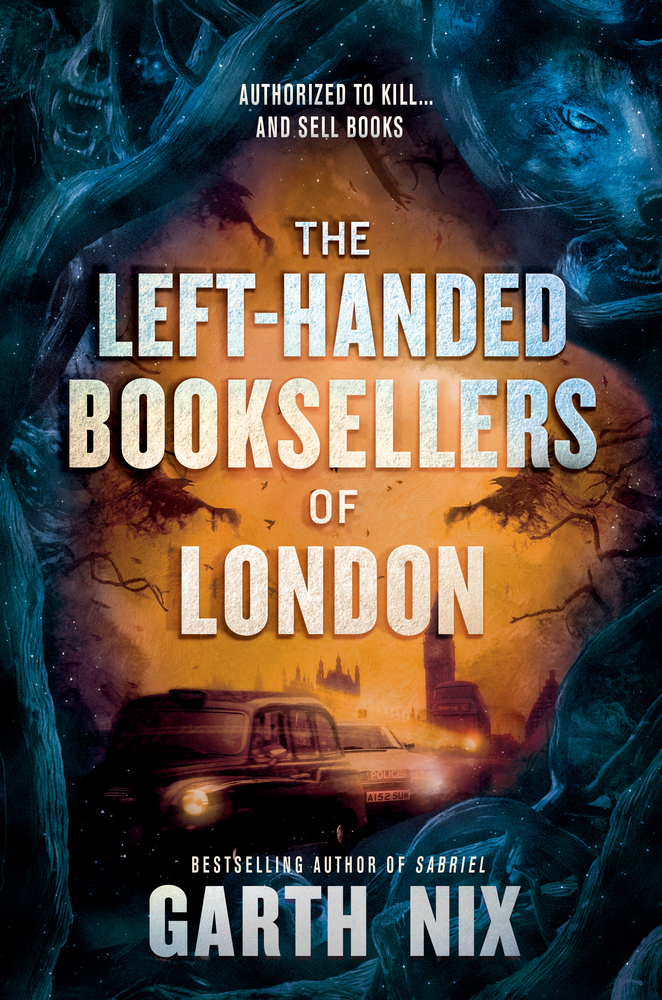
I have several friends who are huge fans of Garth Nix, particularly of his Abhorsen series that begins with the book Sabriel, and also the series containing The Keys to the Kingdom. I have picked up the book Sabriel several times meaning to read it, and then put it down again, because the whole necromancy theme doesn’t, in general, appeal to me. But people whose reading tastes I trust have consistently raved about him, so last year I purchased his YA book Newt’s Emerald as a remainder from Book Outlet. The description roped me in because Nix said he was inspired to write this historical fiction based in Regency England by one of my absolute faves, Georgette Heyer. And he got all the details right, plus he added magical elements, but…there are some books that—no matter how much you enjoy them in the moment—are just not memorable. There was absolutely nothing wrong with the book, but the things that were right with it were not quite enough. I liked it, it was cute, it was mildly entertaining, and…that’s it. So I wasn’t sure, when I started Left-Handed Booksellers, of what my experience would be.
I can definitely say that I liked it much better than I did Newt’s Emerald. There were several things that made it instantly appealing. First, it’s a “quest” book. The protagonist, Susan, is enrolled in art school for the fall semester in London, but decides to come a few months early, for several reasons: She wants to scope out her new surroundings, having visited London before but never lived there; she wants to try to pick up some work waitressing in a café to put some extra spending money by for the school year; and, last but not least, she wants to find her father. Her mother, an exceedingly vague lady whose manner most assume is the result of an excessive intake of drugs during the 1960s, has never told her who her father is, and in fact Susan isn’t positive Jassmine even knows for sure. But Susan, with a keen desire to find out, has written down a list of men her mother has mentioned over the years, and has collected a few artifacts that might be related to him in some way, and she is fully prepared to play detective.
Unfortunately, her first research foray is not only unsuccessful, but lands her in the middle of a situation with which she is not prepared to cope. The first man on her list was a vaguely gangsterish fellow named Frank Thringley, who used to send her a birthday card every year, but before she can question him, he is turned to dust by an exceedingly handsome young man wearing a glove on his left hand like Michael Jackson. Merlin turns out to be a left-handed bookseller, and explains to Susan that along with the right-handed ones, he is part of an extended family of magical beings who police the mythic and legendary Old World when it intrudes on the modern world, in addition to running several bookshops. This is the second thing that makes the book appealing: It is full of beguiling concepts and characters that all hang together to make a plausible, if not entirely logical, alternate London, offering constant surprises as you continue to read.
Susan has drawn unwanted attention from the wrong people, both human and otherworldly, with her mere presence at the death of Thringley, and discovers that her best bet is to stick with Merlin and his sister, the right-handed Vivien, to gain some protection and some aid from the booksellers, while trying to find her father and, incidentally, helping the siblings with a quest of their own.
Although the main and two subsidiary protagonists in this tale are all around 18 years of age, I would not necessarily characterize this book as Young Adult, although I’m sure it would appeal to any teenager who likes fantasy. But I think it would equally appeal to any person who likes fantasy, regardless of age. It’s briskly paced and intelligently written, and immediately engages you in the story, which is full of fanciful descriptions of all the old-world denizens. There are lots of adventures, mysteries, and surprises contained within its pages, and it comes to a satisfying conclusion while leaving the door open for more possible stories about the booksellers of London, which I, for one, would welcome.
I don’t know how it stacks up to Sabriel, but based on my enjoyment of this book, I may decide it’s worth my while to find out someday.
 The Book Adept