Navola
That was…an experience.

When I was 20 percent in, I actually wrote on Paolo Bacigalupi’s Facebook page that I was enjoying his world-building and the use of language and nuance in his new novel, Navola. (As has been previously commented upon, I am a stickler for authentic world-building.) He responded that he had enjoyed creating them, and I can believe that, because there is a lot of loving detail in this book. As it turns out, maybe too much? At first it reminded me of my best-beloved fantasy series, The Queen’s Thief, by Megan Whelan Turner, and also gave me the feel of Ursula LeGuin’s masterpiece of pseudo-historical fiction, Malafrena. But as it went on, I felt so overwhelmed by the discussion of every niggling detail (and the need to figure out what was meant by all the semi-Italian, sometimes Latin-based lingo) that it almost felt like being back in English class, being forced to read a classic work about which I felt reluctant, since it wasn’t my choice. I couldn’t help but contrast this with Bacigalupi’s excellent Shipbreaker series, in which he masterfully paints the scene using just what he needs, and then jumps full-force into the story.
The world of Navola seems to be based on a loosely historical evocation of city-states from the Italian Renaissance. There is all the intrigue of the Borgias, with both front-facing and behind-the-scenes manipulation of absolutely everyone by everyone else, except by our protagonist, Davico, son and heir to the wealthy and successful merchant banker, Devonaci di Regula da Navola, who is the power behind the titular heads of state of Navola. Di Regulai rules by maintaining a calculated balance between greed and politics, alternately controlling and rewarding his many clients within Navola and in all the surrounding states. But despite Davico’s training in all the arts both physical (knife- and sword-fighting, equestrian, etc.) and mental/political (negotiation, the reading of faces and body language, the subtle acquisition of background information), he remains largely ignorant (or innocent) of the real breadth of knowledge necessary to step up to the challenge presented by his father—to rule Navola as Devonaci has done. Davico is a tragic hero: His honesty and authenticity is a liability in the world to which he has been born, and although he toys with rejecting his heritage, he is not strong enough to stand up to the culture within which he is embedded, nor to the expectations of his father.
Although I have always been a proponent of thorough world-building, I found myself overwhelmed by the sheer volume of the information Bacigalupi attempts to convey throughout this nearly 600-page tome. There are multiple information dumps—my least favorite parts of the book—and even in the course of the sometimes exciting and action-packed scenes, the “behind-the-hand” translations of the language, the explanations about the involved parties, and the setting of context weigh down the actual events to the point where I felt I was constantly digging for the meat of the story.
There is a fantasy element (introduced on the cover by the depiction of a dragon’s eye, an actual artifact Devonaci keeps on his desk in his library), but while its presence is strong in the parts of the story in which it is included, those are few and far between. Its significance to Davico is toyed with early on, and then mostly recedes until near the end of the book, almost past the point where anyone would care.
There is also a grimness to this story that may be disturbing to some; in addition to the mental manipulation, there is no escape from murder, rape, or graphic revenge amidst the noble families’ bloody pursuit of power. It’s not quite as overwhelming as, say, Jay Kristoff’s Nevernight Chronicles, but it has its moments of queasy-making horror.
The real fault I have to find with this book, however, is the complete lack of foreshadowing by anyone—the author, the publisher, Goodreads—that this is merely the opener for a continuing story! I began to realize, at about the 80 percent mark, that this would have to be the case, because the events took such a back seat to the development of the venue itself that there would be no time, unless it was criminally truncated, to resolve the hero’s situation and provide a satisfactory ending, and indeed I was right; it’s one of those cliffhangers where the hero lives to fight another day. It’s not abrupt, but the story is by no means at an end and, if it is, then I would have to say, What was the point of all that? Navola is too well written to give it a bad rating, but if, when perusing the teaser for the book on Goodreads, it had said “volume one,” I would have approached it with a completely different attitude that wouldn’t have left me feeling duped.
Maybe the lack of this was the author’s way of leaving himself an out; if the first book doesn’t go over so well, do you really want to invest the time in writing a sequel? But I am here to say, Paolo Bacigalupi, you owe us all the rest of the story, having made us endure through the laborious stick-upon-stone of the world you built to house it!
Back to Ardnakelty

After weeks or months of reading nothing but formulaic genre fiction—some of it quite entertaining but none of it particularly special—I forgot what it’s like to suck up some genuine literary prose. While reading The Hunter, I was reminded that Tana French’s characters are so immediate and solid that they jump off the page at you—their physicality, their mannerisms, their patterns of speech, their inner thoughts, all draw such a finely tuned picture of who they are that you are right there inhabiting the story alongside them. And not just the characters, but the setting, the look and feel of the natural world she portrays, lets you perceive the particular texture of the dirt under your bare feet and the golden-green hills silhouetted against the horizon.
The Hunter is the second of her books set in the village of Ardnakelty in the west of Ireland and centered around the American transplant, Cal Hooper, and the local teenager, Trey Reddy, with whom he has bonded. And as with its predecessor (The Searcher), French is telling a story that, while it has a mystery of sorts at its heart, is more a tale of people, of community, of life-changing choices.
In the first book, Hooper, a former Chicago detective, had recently moved to this small community and started making it his home, although he will always be an outsider to its provincial inhabitants. But it’s now two years on, and Cal has settled more deeply into his role as a citizen of Ardnakelty, in a relationship with local woman Lena and still serving as a foster father of sorts to Trey Reddy. He and Trey have built up a nicely profitable woodworking business, repairing old and building new furniture for the locals, and their future seems like clear sailing until Trey’s wayward father Johnny shows up, bringing along an Englishman whose ostensible purpose is the exploration of his Irish roots. But Johnny Reddy is an opportunist bent on exploiting the easy advantage, and his scheme to find gold in the townland sets everyone at odds and leads Trey astray as she tries to cope with the fallout from her father’s return.
Johnny Reddy has always struck Cal as a type he’s encountered before: the guy who operates by sauntering into a new place, announcing himself as whatever seems likely to come in handy, and seeing how much he can get out of that costume before it wears too thin to cover him up any longer.
Trey, two years older, has neither forgiven nor forgotten the unidentified villagers’ role in the disappearance of her brother, Brendan, and thoughts of revenge smolder close under the surface of her thoughts. Johnny’s scheming and double-dealing with the tourist Englishman and the participation of the men of Ardnakelty give her what she sees as the perfect opportunity to get back at them, but there are events, intentions, and emotional currents she’s too young and too fixated on her goal to suss out for herself. It’s left to Cal and Lena to help her walk a perilously narrow path without falling off an unanticipated cliff.
In my review of the first book, I called it subtle, lovely, and special, and this continuation is no less nuanced and intriguing. But you have to be able to sufficiently immerse yourself in that subtlety in order to appreciate it. French’s books always get radically opposite reviews from readers, with some lauding their slow burn, intricate plots, and gorgeous prose while others liken reading them to watching paint dry! I am obviously of the former opinion, loving every small shift of expression and change of attitude and tone by each character and holding my breath to see which way the wind will blow next. You will have to decide for yourself where you land. But if you enjoy the work of such writers as Donna Tartt, Kate Morton, and Diane Setterfield, give this book (and its predecessor) a try. There are rumors of a third book to round this out into a trilogy, and I say, Bring it on!
Mistaken identity
The ratings and comments on Goodreads for On Rotation, by Shirlene Obuobi, are so spot-on to illustrate why publishing companies have to be held accountable for the way they promote a book. There were a few people who thoroughly appreciated the story for what it was, which was a combination of “relationship fiction” and and the immigrant experience, with coming-of-age (early 20s variety) thrown in; the rest were disgruntled and showed that in their ratings, because the blurbs had led them to believe this was a rom-com.

Don’t get me wrong: There is a romance in this book that takes up a significant amount of air. But it isn’t a comedy (although there are a few funny moments), and it doesn’t have that coy, somewhat self-conscious vibe that lets you know when you’re supposed to acknowledge the ironies or coincidences or other plot points common to the specific rom-com subgenre.
Instead, it’s a narrative about the experiences of a young black woman in medical school; but moderating that more generic scenario is the specificity of being a first-generation Ghanian, seeing how that sensibility and those traditions differentiate a part-West African, part-British heritage from that of the American descendents of slaves. It’s a showcase for the immigrant point of view—the older generation who gave up much to move their lives to a new arena having hefty, sometimes crushing expectations of and for their children, who are perceived to have every advantage and are expected to make perfect choices. It’s an examination of friendship and love and what place and importance those two levels of engagement can have in life. And yes, it’s also a romance, but from a more complicated context than the usual rom-com fare.
On Rotation focuses on Angie, a 20-something black woman who is prioritizing her career goals and having to juggle wildly to keep up with everything else. The style is engaging, and the cast of characters is lively, diverse, and inclusive. I liked the detail of the story where she decides to enhance her chances at getting a plum residency by doing a study about how the black experience with doctors and hospitals differs from that of white patients. While I am a white woman, the fact that I have a health condition about which many doctors are ignorant and/or dismissive made me able to relate to and appreciate the information she gathered.
The challenges of trying to live up to her parents’ expectations, which are many and encompass both the significant and the trivial—including everything from her success as a doctor and her choice of romantic partner down to the tidiness of her apartment and how she wears her hair—will probably ring true for many of us, but there is definitely an added amount of pressure for children of immigrants. I loved the connections she had and maintained within her circle of “ride or die” friends, and the bewilderment and grief with which she faces the possible ending of one of those relationships. And the shallowness of her past dealings with men who appreciated certain aspects but couldn’t embrace the whole of Angie were a nice contrast to the relationship she wants but doesn’t trust with a man who may be different.
I confess that I would have preferred a little less of what was going on inside Angie’s head at all times for a little more of what was happening in the thoughts or behind the scenes of certain other characters; but this is a minor caveat—it was, after all, Angie’s story.
There was one truly irritating aspect of the book and, perhaps blessedly, something I could blithely choose to ignore: The author appends footnotes to almost every page, in which she didactically explains medical terms, Ghanian customs, black hair, contemporary slang, and everything else she must have believed the reader was either too ignorant to get or too lazy to research. But because I read this as an e-book, the footnotes all appeared sequentially at the very end of the book and, rather than jumping back and forth between whatever page I was on and the last 20 pages of footnotes, which is a major pain when reading on a Kindle, I simply gave up on knowing what she was choosing to share in those addenda, which probably saved the book for me. Footnotes in fiction are almost never a good idea unless they serve an alternate purpose, such as the ones in Jonathan Stroud’s Bartimaeus saga, wherein the main story is about the boy magician Nathaniel who summons an ancient genii, while the footnotes contain the sly side commentary of the genii himself. So I guess my recommendation for enjoying Obuobi’s book is to read the Kindle version and ignore the asterisks liberally seeded throughout the text!
Third time continues the charm
I just finished Alix Harrow’s third full-length novel, Starling House, and was nearly as taken with it as I was by her other two (The Once and Future Witches, and The Ten Thousand Doors of January). That’s saying something—if you read my reviews, you will know how blown away I was by every aspect of those two amazing stories.

This one is perhaps not as original an idea as either of the other two; instead, it takes some trope stuff and makes it fresh and interesting. It’s a combination of a Southern Gothic fantasy/horror hybrid and a coming-of-age story, and has a lot of levels.
In some ways it is a commentary on the bigotry and trauma one encounters as an outsider in a small town, particularly a small “company” town in the deep South. This one is Eden, Kentucky, and the town’s reason for existence is the working of the coal mines owned by the Gravely family. The town and its residents are either singularly unlucky or the story of a curse is true, because a sadder and less hospitable place could scarcely be conceived. The supposed origin of the curse is tied up with the history of E. Starling, a 19th-century children’s book author who was married to one of the three original Gravely brothers, wrote a story about a creepy place called Underland, built a mansion for herself after her husband’s death, and ultimately disappeared. Starling House has since been host to a number of owners, all of whom show up just when the previous owner dies or leaves, but such is its unsavory reputation that the people of the town cross the road rather than walk on the sidewalk near its gates.
The book revolves around Opal, a young woman who has never caught a single break. Her mother died in a car crash when she was a child, and she and her younger brother Jasper have continued to live in the motel room where they landed shortly before her death. Opal works a minimum wage job at the local hardware store, trying to save enough money to get her brother, a smart young man with debilitating asthma made worse by the miasma that hangs over the industrial town, into a private high school far from the environs of Eden; but there’s scant hope of that until she gets a job as a cleaner for Arthur Starling. She’s heard all the rumors about both the house and its owner, but she’d do almost anything to get Jasper the chance he deserves in life, so she begins the task of bringing this house full of dust and cobwebs (and other, more sinister things) back to life. But the feeling of sentience she gets from the house and the weird vibes coming off of Arthur, who seems alternatively tortured, coldly aloof, and strangely sympathetic, are getting under her skin, and she’s wondering where it’s all going to end…
You could scarcely find a less likable protagonist than Opal, but she somehow endeared herself to me. Maybe it’s because every small victory she has is so hard-earned that it’s almost not worth it, and you can feel the palpable intensity of her longing for things to change and her simultaneous hopeless conviction that they never will.
The best thing about this book for me was the language. Admittedly, it’s sometimes over the top or overly descriptive, but there are moments that struck me so forcefully that I marked them in my notes on my Kindle. Alix Harrow knows how, with one phrase, to invoke a memory or even an entire phase of life, as with this one, where she is describing some symbols incised into the wood of a door:
The carved symbols are still very slightly luminescent, like glowsticks the day after a sleepover.
I read that one sentence and jumped back to a moment in childhood: We were in someone’s yard at dusk, at the end of a birthday barbecue. We all cracked glowsticks that had been passed out by the birthday girl’s mother, manically waving the neon tubes and dancing around, lighting up the dark. By the next day, most of the chemical inside the sticks had finished its reaction and was subsiding, but there was still a dim glow to them if you turned out the lights in a windowless room.
The biggest flaw in the story for me is the revelation that Opal is 27 years old. Her character, while honestly and intricately drawn, seems more typical of a teenager—16, 17, maybe 18 tops—than of a young woman approaching her late 20s. Honestly, this book works better as a young adult novel, both in its characterizations and in the way the story is couched in a particular kind of gritty magical realism. But since I am a big fan of good young adult literature (note the emphasis on good), that’s fine with me. I simply decided to forget Opal’s age and read it as it reads. There are other problems—unresolved plot points, underutilized characters, unexplained mysteries—but ultimately it all worked for me, with its beautiful prose, interesting characters, and slow-burn sense of menace.
Scalzi saves the day
So…I have a couple of rules that I rarely break here. One is that I don’t utterly pan a book, but rather try to say something nice even if it wasn’t a book I enjoyed, and if I can’t do that, I simply ignore it. The other is not to review books that I haven’t finished, because I spent so many years as a librarian having to argue with self-righteous people who wanted to get books pulled and banned from the library shelves simply on hearsay when they hadn’t personally read the book for themselves. But…sometimes I succumb to temptation. And I’m not trying to persuade anyone not to read a book, I’m just saying why I quit after five chapters.

After a lot of positive hype in two Facebook book groups, I decided to read Go As A River, by Shelley Read, as my first book of the year. The description was intriguing—a combination of historical small-town fiction and coming-of-age novel—and people had praised it for its literary language. Within a few chapters of beginning it, not only was my interest flagging, but I was becoming actively irritated; when I finally decided to quit reading, I skimmed some reviews on Goodreads (fives down to twos) and decided that this time I would leave one, even though I had categorized this book as “Changed my mind.” Here is that review:
I’m wondering why no one is focused at all on the thing that has stopped me reading Go As A River after five chapters?
The people who disliked the book mainly say it’s because of the too minimal dialogue and too florid description, or the theme of unrelenting heartbreak, or their lack of interest in nature or motherhood. And many who disliked the book still cite the writing as beautiful and lyrical. Not one seems to have been bothered by the thing I dislike the most in storytelling, which is foreshadowing. I don’t know if it continues throughout the book, but the first few chapters are rife with text dedicated to phrases (or sentences or paragraphs) of “if only she had known,” or “she was to learn this lesson from him one day, but not just yet” or “she came to wish that he had left town that day instead” or some such. It completely steals both the momentum and the element of delightful surprise that comes from reading a story from start to finish without all the ominous “da da da DUM” of foreknowledge.
Also, the so-called beautiful writing is so over the top! Just to use one example: The main character, Victoria, mentions that her uncle-in-law went away to fight in World War II just a few short months after he married her aunt. Then she seemingly cuts away to describe an event that took place in her town, in which a man stalls out his roadster on the railroad tracks and the car is hit and destroyed by the train. She mentions that it grew into an elaborate tale about the supposedly gruesome details of the death of the driver (decapitated, splatted on the windshield of the train engine, etc), despite the fact that he had actually jumped clear of the car before the train hit. But this detail has absolutely nothing to do with how the author is using this simile, because after going on for three full paragraphs about it, she then says that what that train did to that car (i.e., mangled it beyond recognition) was what World War II did to Victoria’s Uncle Og, changing him from a young, enthusiastic, engaging, funny guy into a bitter, mean, spiteful slob in a wheelchair who delights in provoking discord. And she keeps doing this kind of thing, but as far as I can tell it’s just an exercise in “look at me,” because few of these passages materially advance the narrative, or give any significant perspective to either the main thread or any side story. She could have just said “the war didn’t treat my uncle kindly” and his nastiness and lack of mobility would have revealed what she meant. My ultimate reaction to the part of this book that I did read is total exasperation. No thank you.

After this inauspicious beginning to my reading year, I was about to begin searching my TBRs for something else when Los Angeles Public Library let me know that a book on my holds list had become available—Starter Villain, by John Scalzi, a completely different genre of book, without either baggage or literary pretensions—so I checked it out to my Kindle and began to read. I’m so glad that this book popped up when it did, because it completely saved my mood and provided a delightfully fresh interlude.
Scalzi seems to write two kinds of books, the first being the fairly straightforward story of something-or-other happening in space and/or on other planets—colonization, exploitation, war, murder mysteries with a technological twist—the kind of thing that Heinlein wrote about, but considerably updated. These would be his Old Man’s War series, his Interdependency trilogy, the Locked In books. The second category is when he takes some premise based in more outlandish science fiction—environmentally challenged dinosaurs on an alternate-dimension Earth, aliens on a religious quest, sentient fuzzy monkey-like beings threatened by a planetary takeover—and goes to town with all the wry and unexpected humor he’s been storing up while writing the serious stuff. While I have enjoyed all his books, I think these are my favorites; The Android’s Dream is one of the funniest books I have ever read, in any genre. Starter Villain joins the ranks of this second group of books and, despite its fairly short length, gives full value to those looking for a clever, twisty, funny read.
Charlie had a career as a journalist, but when everything went digital he lost that gig, along with the majority of other newspaper writers on the planet. Around that same time, his dad got sick, so rather than find a new job, Charlie elected to do some substitute teaching to fill in the financial holes while living with his dad and caring for him. But after his dad died, he felt both stalled and trapped, and hasn’t really made a move since. He’s still living in his dad’s house, but he shares the inheritance with three half-siblings, all of whom want him to move out and sell up, and the subbing doesn’t really pay the bills.
His new dream is to buy the town’s most popular pub—both the business and the building it’s in are recently up for sale, and he’s trying to think of a way to finagle it, but the bank looks askance at a divorced part-time substitute teacher whose meager liquidity is dependent on three uncooperative siblings. Then his Uncle Jake dies, and he is distracted from his life plans when his uncle’s right-hand assistant shows up at his house with a request from his uncle to conduct the funeral. Despite the fact that Charlie’s father and uncle were estranged from the time Charlie was five years old, he feels some obligation, as Jake’s only remaining next of kin…not to mention that Jake was an extremely wealthy man and there may be something in it for Charlie.
Becoming involved with his uncle’s estate, however, also means he has come to the extremely unwelcome attention of the other wealthiest men in the world—rich, soulless, and very curious about what will happen if and when Charlie inherits. But Jake has left Charlie some unexpected advantages to help him with his new profession as a “starter” villain, and he finds himself carried along in his uncle’s wake, trying to make sense of what is happening and what will happen next if he fulfills his destiny as heir apparent.
This is one of Scalzi’s most entertaining ventures. Charlie is a wonderful character—innocent, sincere, and somewhat bumbling, but not unintelligent; and although part of him is reluctant to become ensnared in Jake’s labyrinthine business dealings, he is nonetheless fascinated by some of their more outlandish results. The supporting characters are intriguing, the villains are, well, villainous, and it doesn’t hurt that genetic engineering has provided some unlikely spies who are on Charlie’s side—at least for now. It has a decidedly contemporary vibe, what with its themes of income inequality, workers’ rights, animal liberation, unions, nepotism, and corruption in capitalism. It’s also whimsical, silly, irreverent, and occasionally laugh-out-loud funny. Grab this one with gusto. [Warning to those who care: Lots of strong language, and a fair bit of over-the-top violence.]

How it is
Laurie Frankel’s book is called This Is How It Always Is, I believe with the direct message (and hope) that someday it will not be this way. I am happy to say that I picked up this book without knowing anything about it, and therefore got to have the “clean,” straightforward experience of reading it without expectations. If you are contemplating reading it and okay with having its contents be a surprise, perhaps you should stop reading my review right here and go put your energy into the book instead.
If you do have some idea of what it’s about and want more perspective, or a simple reassurance that it will give you a distinctive understanding of the issue, then read on.
A few reviewers on Goodreads called this book sentimental (one even said “cloying”), but I didn’t find it so in the least. I thought it was a lovely, honest, positive depiction of the foibles of one large, eclectic family when confronted with the difficulties of navigating life in our culture.
Rosie and Penn already have a set-up that is not the norm in America: Rosie is an emergency room doctor, while Penn is a stay-at-home father working on a novel and caring for their large family—four boys, when the story opens. After having two in a row followed by twins, Rosie is longing for a girl (and fairly convinced she will finally have one), but Claude comes along and they are happy with their new baby, boy or not. But at an early age, Claude begins the show-and-tell process of becoming someone whose name for the next eight years will be Poppy.
After the initial surprise that when he grows up he wants to be a girl, Rosie and Penn step up for Claude. He is allowed to wear what he wants, play how he wants, and call himself the name with which he feels most comfortable, making an almost seamless transition at home between pronouns and names, from Claude to Poppy, son to daughter. But the transition for his brothers, his school, and the people in their orbit is not so seamless. After several parent-teacher and parent-administration discussions at school, the absurdity of the rules for a transgender child make themselves apparent: Wisconsin schools have accommodations for a trans student, but still somehow manage to insist that the gender binary be enforced. This is best illustrated in quotes from his teacher, Miss Appleton:
“Little boys do not wear dresses.
Little girls wear dresses. If you are a
little boy, you can’t wear a dress. If you are a little girl, you have to use the nurse’s bathroom.
***
“Meaning if he is a girl, he has gender dysphoria, and we will accommodate that. If he just wants to wear a dress, he is being disruptive and must wear
normal clothes.”
Meaning, in other words, that trans students must still check one box or the other, and adopt all the expected characteristics of the “selected” role of “male” or “female,” thus invalidating any character trait that might not conform to our static and polarized cultural gender norms. (Please note that I put the word “selected” in quotes on purpose.) One character comments,
“This is a medical issue, but mostly
it’s a cultural issue. It’s a social issue and an emotional issue and a family dynamic issue and a community issue.
Maybe we need to medically intervene so Poppy doesn’t grow a beard.
Or maybe the world needs to learn to love a person with a beard who goes by ‘she’ and wears a skirt.”
When Wisconsin proves to be hostile in several ways to the child Poppy is becoming, Rosie and Penn decide it’s time to go somewhere their child can find a greater degree of acceptance, and they move the entire family to Seattle, shaking up all their children’s lives in order to accommodate the needs of the youngest. For the eldest, Roo, this means leaving behind all those things that are precious to a high school teenager who has lived his entire life in one place with one group of friends. It has similar, though lesser, effects on the other three boys, who are divided between accepting the necessity of providing safety for Poppy while also believing it won’t make much difference. In this, they are perhaps more realistic than their parents. On the first day in their new house, Rosie and Penn reveal Poppy’s “secret” to their next-door neighbors (intending to be similarly honest with everyone in their new city), but the neighbors encourage them to allow Poppy to be a girl without revealing her past as a boy to anyone. This is how the entire family’s never intentional life of deception begins, and continues until Poppy is on the verge of puberty and the whole thing blows up in their faces.
I won’t say much more about the story, because I have already outlined the first half pretty thoroughly, and would like you to have a reading experience unfettered by expectations for the remainder of the book. I will say that I appreciated the author bringing in the situations of transgender individuals in more fluid societies, which is why I feature this painting at the end. If you read the book, which I hope you will do, you will understand its significance and inclusion.

Immersive

I just finished a re-read (for the third—or fourth?—go-round) of Rosamund Pilcher’s book, Coming Home, which has to be one of my favorite books, as much as I try not to name favorites (because it always provokes a way-too-long list in my head and ends up getting re-ordered during hours of insomnia). Pilcher is sometimes under-rated because of a handful of (short) books she wrote that are obviously formula-driven romance novels, and people expect all her writing to be the same, when, in fact, it’s almost as if (except for the Cornwall setting, which remains pretty constant) there are two writers, with the second waiting to emerge when all the formula stuff was out of her system.
Her most famous books are The Shell Seekers and Winter Solstice, and I love (and re-read) those as well, but for me, Coming Home is the definitive book of her career. It’s a coming-of-age story set within the framework of World War II, beginning in the pre-war years and ending after the war is over. It follows the life of Judith Dunbar, whose father works for a company in Ceylon; Judith spent her first 10 years there, but when her younger sister, Jess, came along, her mother brought the two girls back to England, to Cornwall, leaving her father to a bachelor existence. (This was a common living situation in a time when it was considered dangerous to try to raise Caucasian children in that hot climate.) Now Jess is four years old and Judith is 14; in 1935, their father receives a promotion to a position at the company’s offices in Singapore and wants his wife with him, so Mrs. Dunbar and Jess are traveling back out to the East, while Judith will stay in Cornwall, attending a boarding school in Penzance and holidaying with either her father’s or her mother’s sister, both of whom live fairly close by.
Judith’s existence is transformed by her friendship with a week-to-week boarder at the school, Loveday Carey-Lewis, who returns home each weekend and invites Judith to accompany her. These British aristocrats have an extensive estate called Nancherrow, out at Land’s End, with luxuries about which Judith has never dreamed—a butler, a cook, a nanny, stables, their own cove and beach—and soon Judith is welcomed as one of the extended family by Loveday’s glamorous mother, Diana. But the war imposes hardships on everyone, lower class to royalty, and Judith has her share of life changes that determine her responses to both love and tragedy as the years pass.
It doesn’t sound like such an exciting story, detailed here, but there is something so poignant and so immersive about the stages of Judith’s somewhat lonely teenage and young adult years, especially set against the magical backdrop of Cornwall (and her adoptive family) and dealing with the sobering consequences of living in a country at war. The joys, the sorrows, the suspense about which way the story will go next always hold me enthralled from beginning to end.

I also confess that the artistic aspect Cornwall represents, with its Newlyn School of painters (that are also detailed in Pilcher’s The Shell Seekers), is an additional draw for me. Pilcher’s books, along with Daphne du Maurier’s, are the reason I spent 10 days in Cornwall in April of 2002; my cousin Kirsten and I rented Whitstone Cottage from the National Trust, formerly inhabited by the blacksmith for the Penrose estate between Helston and Porthleven. After reading about it for all those years, it was like coming home for me!
If you’re in the mood for an intimately personal tale with an historical backdrop and multiple settings that portray various ways of life during that time, be sure to check out this book. If you’d like to read an amusing anecdote about our stay in Cornwall, go here.
Literary fiction
As I get older, read more, and spend a lot of time and energy reviewing what I have read, I am beginning to realize that I am not, despite aspirations, a particularly sophisticated reader. Beyond that, I have recently concluded that I tend not to trust my own reactions when it comes to reading and reviewing books that are deemed “literary” by other critics and/or readers. My priority in my reading life has always been to find and experience good story, but when I am confronted with something that doesn’t feel that way to me, rather than judge the book as being lacking, I judge myself as a reader. I think I am going to aim to change that in future.
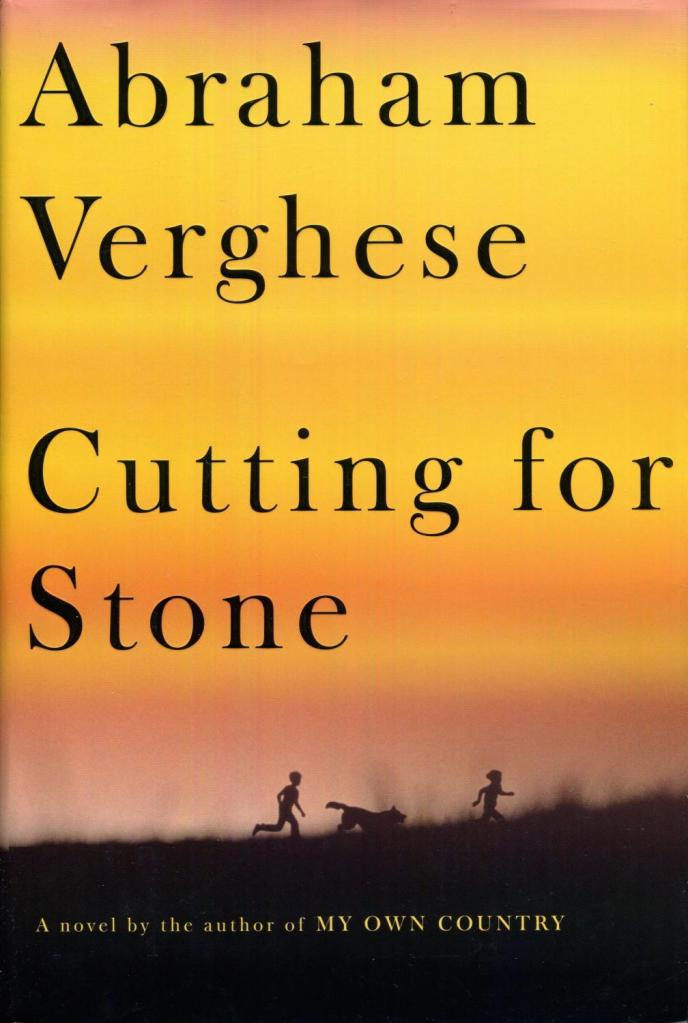
I have experienced this twice in the past six months, and the way I came to realize it was to read others’ extremely perceptive (and much more objective) reviews on Goodreads. I just finished reading Cutting for Stone, by Abraham Verghese, and at some point during its perusal I remarked that I found it nearly as hard going as Demon Copperhead, by Barbara Kingsolver. This observation should have revealed more to me than it did; but it took the remarks of “Ayaz,” on Goodreads, who gave the book a measly two stars (indicative of “it was okay”) to make my thoughts suddenly gel on the whole subject of literary fiction.
First, a description of the book: The protagonist, Marion, is a twin. He and his brother, Shiva, are the offspring of a brilliant but flawed British surgeon and his surgical assistant, a young and extremely devout Indian nun, whose pregnancy is only revealed to her colleagues (including the father) when she goes into labor. Their mother dies and, unable to cope with either the loss of Sister Mary Joseph Praise or the unexpected manifestation of offspring, their father abandons them; the twins are raised by a loving foster family made up of the remaining staff members (and their servants) of the mission hospital in Ethiopia in which they were born. Given the circumstances of their birth and that they are constantly exposed by their foster parents to both talk about and observation of medical procedures, it’s nearly inevitable that the two will grow up to become doctors, although the twins take entirely different paths towards this end. Personal conflicts and political events serve to separate the twins for an extended period, until tragedy reunites them.
I always have high hopes at the beginning of a book that has come recommended for its voice, its story, and/or the quality of its writing. Sometimes, as with Demon Copperhead, I recognize those merits for myself, while nonetheless being somewhat dragged down by both the intensity and longevity. But sometimes, as with Cutting for Stone, I struggle to recognize the merit as I grapple with the completion of the reading.
I’m not saying this is a bad book; although I breathed a small sigh of relief and reduced my rating from five stars to three after coming to certain realizations about my reaction to the book, I still found much to admire. But there were also unacknowledged problems with its narrative that I didn’t trust myself to articulate but that I could plainly see when someone else pointed them out for me.
One observation that resonated was a problem with a sustained development of the characters. When I reviewed Demon Copperhead, I noted that even though the book took me more than a month to read—having put it down for extended intervals to peruse more light-hearted works—I never lost sight of who the characters were, because their portrayal was so strong. With Verghese’s book I came to recognize that part of my frustration that caused me to drag out its completion was that there were certain key characters about whom I wanted to know more, but the author’s promising start in developing them was, over and over again, truncated or abandoned in favor of a sensationalistic denouement in the story as it transitioned from one stage to the next. His female characters are particularly clichéd, but even the men sometimes become indistinguishable one from another because of the similarity of their language, sentiments, and presentation. There were a couple of characters who stood out, but for the most part they were all subsumed by their careers.
Although Verghese is himself a medical doctor, I discovered that having that expertise and perspective were not enough for his descriptions to transport me into the lives of his characters. There were certain compelling moments in the throes of a complex operation that were exciting and involving, but the rest of it felt both clinical and too educational, for want of a better word, for a novel.
The purpose of this book was clearly to illustrate the depth and breadth of the idea of family amongst people who are unrelated but bonded, and although that was, to an extent, achieved, I grew first exasperated with and then bored by Marion’s viewpoint. And although this is ultimately a coming-of-age story like Demon Copperfield, I never perceived from Marion the same quality of voice that carried us from childhood to manhood. There was a certain sameness about the narration that caused it to be more tedious than it should have been.
The part I think I enjoyed most, and where I felt Verghese shone, was in the presentation of Ethiopia as a country and culture, caught up in the politics of change that were sweeping that nation in the upheaval of multiple revolutions. The world-building felt fresh and genuine.
Because of my realization about the sometimes excessive reverence I have for literary fiction, I will freely admit that I may have gone too far the other direction in judging this book. Certainly there are many readers out there who find its language, characters, and story completely compelling and who have freely awarded it top marks. If you still have a desire, after my comments, to read it for yourself, then by all means do so. We are all gripped differently by our reading, and you may agree with many that this is a masterpiece. But as for me, I’m going to try, in future, to tune in better to my innate sense of the quality of the story itself, which is my ultimate criteria, and let that lead me when evaluating any book, literary or otherwise.
Chefs of the gods
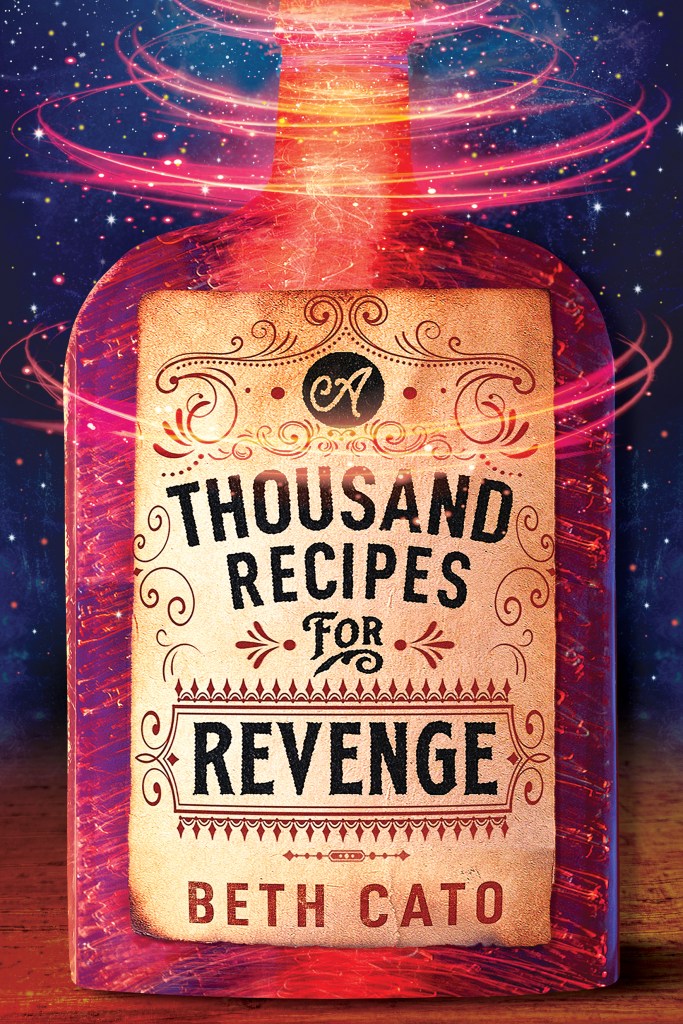
I picked up A Thousand Recipes for Revenge, by Beth Cato, as a bargain book through BookBub. This sometimes indicates that book sales haven’t been that great, but in this case it seems that it was simultaneously published in three formats (paperback, Kindle, and audio book) all on June 1st, so perhaps it was just a promotional gimmick. It’s a fantasy, and as such I found it immediately immersive.
The premise is intriguing: The tag line is “Chefs of the Five Gods #1,” and it’s about people who are born with the special gift of an empathic connection to food and wine—a magical perception of aromas, flavors, and ingredients and, in special cases, the actual ability to intuit what dishes, with what seasonings in kind and quantity, would best please the palate of the diner with whom they are confronted. Needless to say, this ability is highly prized, with the result that while the Chefs, as they are known, are treated like royalty, they are also constrained in their freedom. There are several kingdoms in this story, and in one of them (Verdania) the chefs are “in service” to the gods-ordained rulers of the country, another way to say they are virtual prisoners, not allowed to go elsewhere or work for anyone but the crown. (This is reminiscent of the children born with two different colored eyes and some innate gift in the world of Graceling, by Kristin Cashore.)
The story is told from two points of view, the first being that of Adamantine Garland, who escaped 16 years ago from the position forced upon her, and is living under the radar with her grandmother, both of them rogue Chefs. Since the punishment for abandoning the post of Chef is either death or to lose your tongue (and therefore your gift), they have good reason to take care not to reveal themselves, especially by cooking too well! But circumstances that transpired just before Ada disappeared from the court of Verdania are about to bring her perilously out of hiding.
Solenn is the princess of Braiz, a neighboring land to Verdania, and a marriage has been arranged between her and Verdania’s prince, a 14-year-old boy still more concerned with his friends and amusements than with girls and weddings. It is hoped by the union of these two children and countries that together they will be able to withstand the greater might of another nearby more powerful kingdom, Albion. Something unexpected happens, however, during Solenn’s ceremonious and extended welcome to Verdania—her own magical perceptions awaken (this usually happens at a much younger age), and make her aware that there is a plot by Albion to kill the prince. This unexpected kindling of power (as far as she knows, there are no Chefs in her ancestry) sets in motion several plot twists that will bring together unlikely players in the attempt to save civilization from destructive forces.
I enjoyed the story for several reasons. I liked the world-building: The background felt like a French court from the 17th Century, with musketeers, fancy dress, and court intrigue. But the principle characters who played things out against this backdrop were refreshingly ordinary in their thoughts, actions, and priorities. I liked that there was a wide span of age groups represented in the participants—a few teenagers, some middle-aged adults, and elderly relatives with infirmities that must be regarded. I enjoyed the set-up of the Five Gods of these kingdoms, their various affinities connecting to both food and the greater world (for instance, Selland is associated both with salt and with the sea), and the relationships people maintained with a specific god they considered their patron or guardian. The gods were also refreshingly arbitrary and human in their behavior, which made things more interesting. I enjoyed all the plot twists and, although I’m not sure this was intended as a young adult novel, I felt like this was an example of a book that would appeal equally to teens and to grown-ups who enjoy fantasy. I did not enjoy the somewhat abrupt ending with the realization that I would have to wait for the sequel!
It seems the plan is for the next book to come out in the same three formats next January. This one has been nominated for a Nebula Award, and Beth Cato has apparently also written another duology and a trilogy that I will have to check out. She also has a blog called “Bready or not” (I love a good pun, I used to have a bread-baking business called “Friends in Knead”), and an Instagram page (@catocatsandcheese) featuring gardening, bread, cheese, and cats. I could definitely be friends with this person!
A classic based on a classic

I feel like I need some kind of reward for having finished, just as the author deserves an award for having written! I enthusiastically and optimistically started Demon Copperhead, by Barbara Kingsolver, two days after Christmas, thinking it would be my first read of 2023, but my count is now up to 11 books, and I just finished it. I took two breaks, one motivated by wanting to be able to read on my Kindle in the dark of night in my bed (I bought the hardcover of Demon Copperhead, knowing that I’d want to keep it on my shelf), and the other by realizing that the depressing nature of the story was having such a profound effect on my mood that I needed to read something else for a while! But I was determined to finish, and the wink-out of my Kindle battery mid-sentence day before yesterday sent me, finally, back to the last 13 percent of this tangible book.
It’s not that I didn’t want to read it—it’s an amazing story of a quirky, irrepressible, sad, endearing red-headed boy who nobody wants, and it’s also both a literary masterpiece and a stern indictment of America’s marginalization of the disadvantaged. For all those reasons, it is worth my time and yours. But lordy, is it depressing! Damon Fields (the protagonist’s real name) is a logical (though still incredibly unlucky) product of his surroundings, growing up in the foster care system after his junkie mother leaves him an orphan in a single-wide at a young age. But he is not an anomaly—there are plenty of unfortunates in the culture of Southern Appalachia who contribute to the dour mood. One of the most powerful understandings comes towards the end of the book, when Tommy, one of Demon’s former foster brothers, crafts a philosophy of America that pits the “land” people against the “money” people, and the land people—those who hunt and fish, farm tobacco, and share what they have with their family and anyone else in need, operating outside the monetary system—always lose.
I am somewhat ashamed to say that I have never read David Copperfield, the book on which Kingsolver based this one, although I have a fairly good knowledge of its contents and am in awe of how she translated Dickens’s “impassioned critique of institutional poverty and its damaging effects on children in his society” (Kingsolver, Acknowledgments) into this stunning story of the opioid crisis in Appalachia. But unlike the Jodi Picoult novel about which I blogged last, this book is not preaching about the social crisis but instead is determined to tell the story via the victims and survivors of it in a straightforward, completely realistic manner that guts the reader who is invested in them. Every person in this book (and there are dozens) is vivid, individual, and completely memorable. Even though I broke it up into multiple reading sessions over the course of more than a month, I never once had to think, Um, who is this character again? and backtrack, because every single one of them stood out as a person. I can’t think of a much better compliment you could give to a writer, and Kingsolver deserves it.
But it is the character of Demon who dominates—and sometimes overwhelms. His circumstances are beyond tragic, horrifying when you think of a child having to endure what he does, and yet he is a source of continual hope. It’s not that he’s a falsely optimistic Pollyanna of a character, it’s that he has somehow assimilated a work/life ethic that causes him to put his head down and push through every challenge in his desire to live. And even when he fails—and he does that just as spectacularly—he somehow never gives up on himself. As he loses family, friends, mentors, homes, abilities, he manages to continue focusing on what he does have and what he can use, and keeps hauling himself back to his feet.
One reviewer on Goodreads repeated a quote from a Washington Post book review that said,
“Demon is a voice for the ages—akin to Huck Finn or Holden Caulfield—only even more resilient.”
I couldn’t agree more. Another said “This is a book about love and the need for love, the search for love,” and that, too, is true. And the language, both brutal and brilliant—Kingsolver’s way with words is beyond skillful. I won’t say much more about the book, I’ll leave it to you to discover. But it deserves all the accolades.
 The Book Adept