The last?

I just finished what has been billed as the “last installment” of the Gunnie Rose story by Charlaine Harris—The Last Wizards’ Ball, number six in the series. And although I thought that it was appropriately told, with plenty of drama and intrigue and some fascinating new characters, I admit I am feeling a little puzzled. There was no cliffhanger as there was at the end of previous installments, but everything was left more than a little unsettled and open-ended, and I could see this series going on for several more books, based on the impression I received from this one. I can’t decide whether Harris likes an open-ended story, or is hedging her bets just in case.
Of course, one could posit a spin-off or two that, for instance, followed Felicia to New York City and then to Europe, or trailed Lizbeth to a possible new home in a place both greener and less fraught than Texoma, or followed the fortunes of Eli as he resumes his services to the Russian Tsar of California…
Just to inform those who are unaware of this series…
The setting is the former United States, but one event—the assassination of Franklin Delano Roosevelt—has significantly altered the history of the country. Without Roosevelt’s guiding hand during the Great Depression, the crippled country fractures, and various states were either absorbed into surrounding countries, taken over by former rulers, or banded together to form small nations. The original 13 Colonies pledged fealty to the British Empire; a few of the “top” border states became part of Canada; the south-eastern states are now “Dixie” while Texas and Oklahoma formed “Texoma”; the “flyover” states remained “New” American territory; the rest of the southwest was annexed by Mexico; and the biggest surprise was the Pacific Northwest, which was taken over—by a combination of invitation, treaty, advantageous marriages, and magic—by Tsar Nicholas and the remains of the Holy Russian Empire, which is now its new name.
The main protagonist, Lizbeth Rose, lives in Texoma and makes her living by hiring herself out as a “gunnie”—a combination of escort, guard, and gunslinger paid to protect people and/or cargos being transported by land or rail from one territory to another. It’s an unusual profession for a young woman, but Lizbeth is a crack shot used to relying on no one but herself, and takes all the risks to keep her clients alive and her cargos safe. Here is my full review of the first two installments, which also further explains the magic part of the tale.
In this the sixth book, Lizbeth Rose’s half-sister Felicia, a powerful wizard, is 16 and attending her first Wizards’ Ball, described by Lizbeth as similar in nature to the “Season” in a Georgette Heyer novel, otherwise known as the Marriage Mart. The most prominent grigoris, wizards, and magic-makers from around the globe send or bring the eligible members of their families (unattached youth under 30) to a week-long series of garden parties, tea parties, balls, theatricals, and what-not so that they can all meet one another and make suitable marriage matches. The aims are power (both magical and political), wealth, and the acquisition of a bloodline that will match well with, freshen, or diversify a perhaps played-out heritage.
Felicia is much in demand but also at great risk, since some would do anything to “acquire” her and her power for themselves, while others are bent on keeping that power away from those people, regardless of Felicia’s personal wishes. But Felicia is no pushover when it comes to defending her own rights, and she has her gunslinger sister and her grigori brother-in-law, Eli, along for protection and observation.
The time period in this book is during the build-up to what was, in another timeline, World War II—the ascendence of Hitler—and all negotiations are colored by political loyalties and intentions as it becomes apparent that war is in everyone’s future. This is part of the reason why I find it confusing that this is the last book, because in a world where there was no strong, unified American government with its military that jumped in at the end to turn the tide of the war, the possibilities are endless, and Harris has set it up with the added detail of magical abilities being in play on both sides.
While the book was entertaining, full of plots, drama, and detail, I was left feeling that if this was the end of the story, we have been dumped just as things were about to get truly intense. I’m hoping that Harris has a segue up her sleeve, as she did when she wrote the Midnight, Texas stories based on a character from her Harper Connelly series. If not…I have quite enjoyed them anyway, some more than others.
Short but jam-packed
As I have mentioned here before, I am generally not a reader of short stories. The last time I blogged about a couple of them that I picked up for my Kindle, I commented that in the future I would resist temptation even if they were written by authors I admire (those two were by Alice Hoffman and Margaret Atwood, so the star power was bright) because I found the brief format unsatisfying, no matter who wrote them. But I didn’t keep that resolution, and this time I’m glad I didn’t, although, alongside the satisfaction they gave me, I still feel a little frustration for the attenuated content.
First I was offered one by John Scalzi, who is one of my latest favorite science fiction authors and, when I saw it was about time travel (a particular fascination of mine), I couldn’t say no. Then one popped up by Alix Harrow, who has written three books since 2019 all of which enthralled me when I read them. This one had a knight in the title, so I assumed it was fairy tale-ish and therefore likely to please me, but it turned out to be something I like even better—a dystopian story.
Why, then, did these impress me so much? In trying to dissect that, the first thing that occurred to me was their immediate impact. In less than a page I knew that I couldn’t stop reading. Part of this is due to something novelists and readers have discussed for years (or millennia or eons): the first line.
When I think of a famous first line, the one that most immediately comes to me is “Last night I dreamt I went to Manderley again.” That’s the opener for Rebecca, by Daphne du Maurier, and if you ask readers on a Facebook page dedicated to books, it’s one that is often quoted. Others that crop up frequently are “It is a truth universally acknowledged, that a single man in possession of a good fortune must be in want of a wife” (Pride and Prejudice, by Jane Austen), and “Call me Ishmael” (Herman Melville’s Moby-Dick), “Happy families are all alike; every unhappy family is unhappy in its own way” (Anna Karenina, by Leo Tolstoy), or “It was the best of times, it was the worst of times…” (A Tale of Two Cities, Charles Dickens). These are all from classics, but there are many others nearly as famous that source from books that are popular, perhaps well known, but not considered in that pantheon, such as “I write this sitting in the kitchen sink” (Dodie Smith, I Capture the Castle), or “When Mary Lennox was sent to Misselthwaite Manor to live with her uncle, everybody said she was the most disagreeable-looking child ever seen” (The Secret Garden, by Frances Hodgson Burnett) or “We were somewhere around Barstow on the edge of the desert when the drugs began to take hold” (Fear and Loathing in Las Vegas, by Hunter S. Thompson).
I cite all these because they have the unique ability to cue you to a lot of what’s coming in one simple phrase. You immediately want to know: What or where is Manderley? who is the dreamer? Why did they leave Manderley in the first place? You want to argue that perhaps the last thing a single man with a good fortune might either want or need is a wife to spend it! If you have any Bible knowledge, you get all the deep connections to the name “Ishmael.” You instantly begin debating whether that statement about families and happiness or lack of same is true—you think about your own, and then you want to know why the author has embraced this premise. If you know that A Tale of Two Cities is about the French Revolution, then it must have been a bad time, but then wonder how being in the middle of a war could also possibly be the best. You ponder why someone would write while sitting in a sink; you immediately perceive that this person might be out of the ordinary and therefore worth cultivating. You want to know why Mary had to go live with her uncle, and what it was that made her disagreeable—was it that, or something else? You think about someone driving across Interstate 40 in a drugged state and are presuming you probably know what will happen next, but you don’t…so you keep reading.
Alix Harrow’s story, “The Knight and the Butcherbird,” begins:
Once upon a time,
a knight came riding into the holler.”
It is immediately arresting, because it’s like that game where you see a group of pictures and are asked the question, “what one thing is not like the others?” The “Once upon a time” and the “knight” immediately set you up for the expectation of fairy tale; but there are few areas in the world where someone would call a small, v-shaped, riverine type of valley a “hollow,” and when that gets transmuted to “holler” you know you are in southern Appalachia, most likely in West Virginia. So, what is a knight (presumably wearing armor to distinguish him as such) doing riding into Appalachia? The disconnect drags you in and glues your eyes to the page.
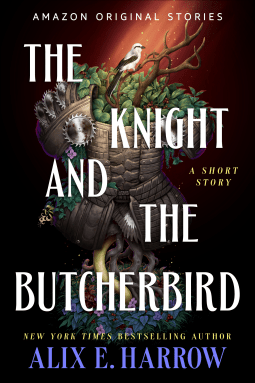
In the next paragraph you find out it’s been 300+ years since “the apocalypse,” that the knight is expected (people are standing around waiting for him), and that the protagonist is a misfit in her community (“I stood among them like a tumor at a birthday party: silent, uninvited. Likely fatal.”)
In the third, you get a picture drawn of the knight—specifically his armor, sewn of fine black steel-corded tire treads, the rusty state of his pauldrons, and the fact that he was “crazy old, maybe even fifty.” He is a Knight of the Enclaves, “tall, raised on multivitamins and clean meat.”
This is all on the first page, and tells us that: something terrible has happened to the world; there are survivors in a backward corner of it who are in need of assistance; and from “somewhere else” there is a person characterized as a knight who has come to help them with their problem. I could immediately, viscerally picture the poor, raggedy, sickly people (the ones raised without the vitamins or untainted protein) standing around at the mouth of their small valley home, waiting patiently for a hero to arrive; and I could also perceive the colossal impact of the knight’s presence.
Wouldn’t you want to keep reading?
John Scalzi’s story “3 Days, 9 Months, 27 Years” doesn’t start with quite such an arresting contradiction, but for a science fiction fan and time travel junkie, it still dragged me in:
The time machine is, in itself, not much to look at.

The remainder of the paragraph goes on to describe its physical appearance, concluding with “At the far end is a portal. One takes the client away. The other brings them back.” With this it is established that time travel has become a business (thus the clients), and that the narrator is probably the operator of the machine (confirmed in the next paragraph). The next page and a half describes in extremely simple terms what happens in the chamber when someone takes a trip and comments that, once the client has returned, “Where they go after that, like where they go when they walk through the first portal, is not specifically my concern. I am here to run the time machine.” The client, however, “has aged three days, or nine months, or twenty-seven years. They have been through a time machine, after all. This is how the time machine works.” Then, however, the operator, who sounds like he is describing the daily duties of a fairground carousel operator, comments that this is the theoretical process, but that is almost never what actually happens. “Theory is almost never practice.”
Could you put it down after that leading sentence? I couldn’t.
I’m not going to go into any more detail here on either story; I will just say that there is an exception to every rule, and I’m glad I made these exceptions to my “no short stories” one. They are special cases because they do absolutely everything that a good novel does: They each have a clearly worked-out premise; they are both amazing at both world- and character-building in the space of a few short sentences or paragraphs; there is a set-up, a conflict, and a resolution; and, best of all, they made me think about issues I had never considered, despite being a long-time reader of fairy tales, dystopian/post-apocalyptic fiction, and time travel theories. I finished both of them two days ago, and they keep on wandering through my mind, inspiring more questions. And yes, one of these is to ask the authors “Why not write the BOOK?”—but many more of them are diverting inquiries into the nature of time, anomalies, and serendipity, or thoughts about the eventual evolution or dissolution of humankind, depending on the paths taken (or not).
Thank you, John Scalzi and Alix Harrow. Keep writing.
Boarding-school books
I’m off on my own personal nostalgia kick right now, re-reading Georgette Heyer novels to escape from the depressing real world of politics and sub-optimum health. But on one of the book-lovers’ pages on Facebook, a mom was asking for recommendations for her teenage son who is a reluctant reader, so I combed through my various categories of YA fiction for some and was thus inspired to write about this sub-set of coming-of-age fiction, the boarding-school book.
I think those who have never attended a boarding school are in some way fascinated with the culture—I know I always have been, from the time I read my first children’s book with a protagonist who had been posted off by their parents to “sleep-over” school. And there are a lot (hundreds) of examples out there of the away-from-home scholastic experience, from Harry Potter to A Separate Peace. There are books in every genre, for almost every age, so I thought I’d mark some of my personal favorites and some that seem to be perennially popular.
The boarding-school book is by no means limited to children and teens—there are many written for (and sometimes about) adults as well, especially if you include the college boarding experience. I’ll give age groups and categories and (in some cases) some brief synopses, and if you have the same interest I do, you can gravitate to whichever piques your interest.

For children, a classic example is
A Little Princess, by Frances Hodgson Burnett, about a young girl sent home to England from India, where her father is a successful merchant, because it was believed that the climate of India was not salubrious for British children. They were separated from their families and entrusted to the care of an English boarding school, where they would hopefully get an education and a proper upbringing and be reunited with their families when they were grown. Young Sara Crewe goes from riches to rags when her father disappears and is presumed dead, and Miss Minchin’s Select Seminary can no longer collect hefty fees for her maintenance. I sometimes think of this book as the child’s version of the first third of Jane Eyre, by Charlotte Brontë (although Sara is much better-natured than Jane ever was!). It’s a romantic story with a protagonist who remains upbeat and optimistic in the face of cruelty, guaranteed to appeal to the kind of reader I was at a young age.

There are many boarding-school books with more fantastical settings, the most well known probably being the Harry Potter books, in which gifted children are sent to Hogwarts School of Witchcraft and Wizardry to hone their talents. But in the fantasy category are also the Harper Hall books by Anne McCaffrey, which take place on the planet Pern and feature dragons and fire lizards in these stories of children studying to be professional musicians; and The Rithmatist, by Brandon Sanderson, featuring another magical school, this time for math geniuses with a little something extra. These are all for younger children and teens (maybe 4th through 8th grades?), although older teens and adults can (and do) enjoy these books as well.

In the specifically Young Adult category, there are fantasies, mysteries, and realistic fiction all set at private academies that either offer the standard schooling or are geared towards inhabitants with a specialty. For the middle school set: One realistic one in which the rule of the bullies and the plight of the bullied are revealed is The Mockingbirds, by Daisy Whitney. Another fairly normal boarding school that is the site of a mystery is the backdrop for the Truly, Devious trilogy by Maureen Johnson, in which death visits Ellingham Academy. And the Gallagher Girls series by Ally Carter (beginning with I’d Tell You I Love You But Then I’d Have to Kill You) showcases a girls’ school that is supposedly for the upper-crust daughters of the snobby set but is actually a training curriculum for those who wish to become undercover agents for the CIA and like agencies.

Among the boarding-school franchise for older teens, there are also a variety of settings. In the realistic category are such mainstream stories as Winger, by Andrew Smith (at a boys’ school focused on rugby); and Looking for Alaska, by John Green and Saving Francesca, by Melina Marchetta, both with a challenging co-ed population. A fun book in its development of one character from age 14 to 16 as she figures out how to dominate her environment is The Disreputable History of Frankie Landau-Banks, by E. Lockhart. Another is the trilogy by Stephanie Perkins that begins with Anna and the French Kiss, following a Georgia girl who is transplanted to an American school in Paris for her senior year.

A huge boarding-school subset is the paranormal category, with vampires dominating and witches coming in a close second—the Vampire Academy books by Richelle Mead, the Hex Hall series by Rachel Hawkins, the Gemma Doyle stories by Libba Bray, and Evernight, by Claudia Gray. One series that I particularly like and admire is Wayward Children by Seanan McGuire, which could arguably be classed as either YA or adult; the books are unusual, smart, and varied in their approach. I reviewed them on this blog when I first discovered them, and continue to find them unique.

Moving on to books more appropriate for adults, there are some in every category. The Magicians (and sequels) by Lev Grossman have been billed as Harry Potter for grown-ups. Mysteries that feature boarding schools include Well-Schooled in Murder, from the Inspector Lynley mysteries by Elizabeth George; The Secret Place, one of the Dublin Murder Squad books by Tana French; and The River King, by magical realism author Alice Hoffman. A book that is written about young people but is (in my opinion) too intense for their age group to read is Brutal Youth, by Anthony Breznican, a co-ed Lord of the Flies set in a Catholic private school in Pennsylvania. I didn’t so much enjoy reading it as remain fascinated and unable to put it down. It’s definitely powerful, and in some ways brilliant, but also stark and frightening. Gentlemen and Players, by Joanne Harris, is written from the point of view of the teaching staff at St. Oswald’s Grammar School for Boys, a cat-and-mouse tale of revenge as one staff member with secret ties to the school tries to destroy it from the inside. Finally, Never Let Me Go, by Kazuo Ishiguro, is dystopian literary fiction with a boarding school setting that may not be what you had in mind when you read the initial description, but it’s a fascinating premise with a heartbreaking (and kind of depressing) outcome.
This is a mere drop in the bucket of what’s out there; if you want to research this category further, go to Goodreads, select “browse” and “lists” and type “boarding schools” into the search box, and you will find multiple lists containing all these and many more. But the books mentioned here are a great start if you, like me, enjoy that particular setting for your fiction.

Water, water everywhere
I love dystopian and post-apocalyptic novels. I have a fairly long list on Goodreads of those I have already read, and I continue to look out for others amidst all the book recommendations I see online. Included in my favorites are A Boy and HIs Dog at the End of the World, by C. A. Fletcher; Starhawk’s Maya Greenwood trilogy set in San Francisco about the division of California into the good, bad, and ugly that includes The Fifth Sacred Thing (the best of the three); the seemingly neverending post-nuclear-war saga detailed in Obernewtyn and sequels by Australian writer Isobelle Carmody (that has taken her decades to complete); the weird and horrifying Unwind series by Neal Shusterman; and a few oddball stand-alones such as The Gate to Women’s Country and The Family Tree, by Sheri S. Tepper; Lucifer’s Hammer, by Larry Niven and Jerry Pournelle; and War Day, by James Kunetka and Whitley Streiber. I have about two dozen more on my list, and probably that many again that I still want to read. But Kassandra Montag’s After the Flood crossed paths with me purely by accident.
In December, I found a vendor on Etsy who put together cute “blind date with a book” packages including bookmarks, teabags, and a book, and thought this would be the perfect Christmas gift for a friend who seemed to be in an emotional slump; so I purchased the package and told the seller what book I would like her to include. Her response was to say that she didn’t take specific requests, but would try to accommodate if I gave her a list of preferred genres and some example titles. I felt that her advertising had been misleading, but ultimately went along with the program by giving her my friend’s favorite genres (romance and science fiction), with my sole request being that she send an upbeat story, since the whole idea was to cheer up my friend. Her choice was this dystopian novel by Montag, whose description alone should have warned her off.
After apologizing to my friend for this weird choice, I decided that I would read it myself to see just what she was in for; and after having finished it, I can say that it’s wholeheartedly depressing and that I’m really wishing I could get my money back. Not so much for me, but it definitely won’t be lifting my friend’s mood!
It’s set about 100 years in the future, when global warming has (presumably) done its worst…
We still called oceans by their former names, but it was really one giant ocean now, littered with pieces of land like crumbs fallen from the sky.
The ice caps melted and the water rose, first engulfing the coastlines and then, with the Six-Year Flood, the flatlands were likewise covered by water, and the remaining land consisted of mountaintops sticking up above the watery horizon. People fought to cling to the small settlements carved out of those elevated spaces, or they took to the water, living their lives on the sea and only docking to trade fish for vegetables, flour, fabric, and materials to repair their boats.
Myra and her daughter Pearl are eking out a precarious existence on their boat Bird, built by Myra’s grandfather when the water began to overwhelm their Nebraska farm. Myra’s husband Jason was so terrified of the encroaching floods that he decamped in a friend’s boat, kidnapping their five-year-old daughter, Row, while Myra was in her last month of pregnancy. Her grandfather and her mother didn’t survive the floods, and Myra was forced to set sail when Pearl was an infant still carried swaddled on her mother’s chest.
Now it’s seven years later, and Myra and her daughter are living day-to-day, keeping their heads down, avoiding other people for fear of their intentions. But one day Myra encounters a raider who inadvertently gives her news she never expected to hear; her older daughter, Row, is still alive, in a settlement up in Greenland. This hopeful news is offset by his comment that she’s nearly old enough (13) to be sent to a “breeder” ship, which is exactly what it sounds like; and Myra becomes determined to go and get Row, whatever it takes, to protect her from this fate.
Unfortunately, luck and nature are against her, and she has to team up with others to pursue her goals. But how many people is she willing (or right) to endanger to get what she wants?
The world-building in this book is excellent: visceral, realistic, and detailed. The disintegration of the moral integrity of desperate people also rings true, and many of her characters are compelling. But…there were a few things that work against elevating this to among my favorite dystopian novels. I found myself disliking the main character quite a bit for her ever-shifting moral compass and especially for all her justifications; so living inside her head in order to follow the story proved both exhausting and occasionally distasteful. And while the synopsis given by the publisher promises to serve up hope along with the angst, it seems like there is pitifully little room for that amidst all the catastrophe, and I didn’t feel like the end of the story justified the means.
Still, it was fairly engrossing, especially in the action-packed parts, and it also painted a poignant picture of the joys, the pains, the requirements of motherhood. So I would recommend it as a solid dystopian tale, but I wouldn’t rank it in my top ten.
Wrapping up

This year it feels more like a winding down than a wrapping up. I read the fewest books in one year since I started doing the Goodreads Challenge 12 years ago. That year I read 75 books; my highest number ever was in 2019, when I read 159 books while working full-time from January to October (I retired from the library in October of that year). You would think it would be the reverse, since I have so much more time now than I did then; but there were some factors at play that ensured I would read a lot more then. First, I was running three teen book clubs, so I had to read one book per month for each club, plus a couple extra books in each age range (the clubs were 6th- and 7th-graders, 8th- and 9th-graders, and grades 10-12) so I would have ideas to propose as the following month’s read. I was also reviewing books for both the teen and adult library blogs (both of which I supervised), so I was heavily invested in spending all my spare time reading new teen and adult fiction to showcase there. And finally, of course, there was a certain amount of reading for my own particular pleasure! I basically worked, commuted, ate, slept, and read, and did absolutely nothing else!
Nowadays there are circumstances that tend to decrease my reading time: With my particular disability, sitting in one position for long periods of time isn’t great for keeping my legs at their best possible condition for mobility. I also watch a lot more on television these days, now that streaming services let you binge-watch an entire five-season show, one episode after another for as long as you can stay awake, as opposed to waiting for one weekly episode for a 12- to 20-week season and then waiting in turn for the following season. And I spend way too much time “doom-scrolling” political stuff online, or keeping up with friends on Facebook. Finally, once I took up painting I started spending at least a few days a week focused on making a portrait or two or a still life featuring items from my antique collection.
Anyway, this year I read a meager-for-me 66 books. Some of them were literary and some of them were chick lit, some were re-reads of beloved stories, and others were authors previously unknown. My statistics include:
23,782 pages, with an average book length of 360 pages
(shortest was 185, longest was 698)
Average rating was 3.6 stars
Some favorite new titles were:
The Unmaking of June Farrow, by Adrienne Young
Starter Villain, by John Scalzi
Vera Wong’s Unsolicited Advice for Murderers, by Jesse Q. Sutanto
The Long Way to a Small, Angry Planet, by Becky Chambers
All the Dead Shall Weep, and The Serpent in Heaven, by Charlaine Harris
Found in a Bookshop, by Stephanie Butland
I felt throughout the year like I was having trouble discovering books that really resonated with me. Although I had some pleasurable reading discoveries, I never found that one book or series or author that really sucked me in and kept me mesmerized for hours at a time. I found myself reading during breakfast or on my lunch break and easily stopping after a chapter or two to go do something else, rather than wanting to settle in for a solid afternoon of reading. I’m hoping to find more compelling books in the new year. But reading continues to be one of my best-beloved pastimes.
Gunnie Rose continues!
At the end of my review of the third book in this series, I devoutly hoped there would be more, and I discovered last week that Charlaine Harris has come through with two more volumes while I wasn’t looking! Imagine my delight at getting to continue this entertaining dystopian historical fantasy mash-up for not one book but two!
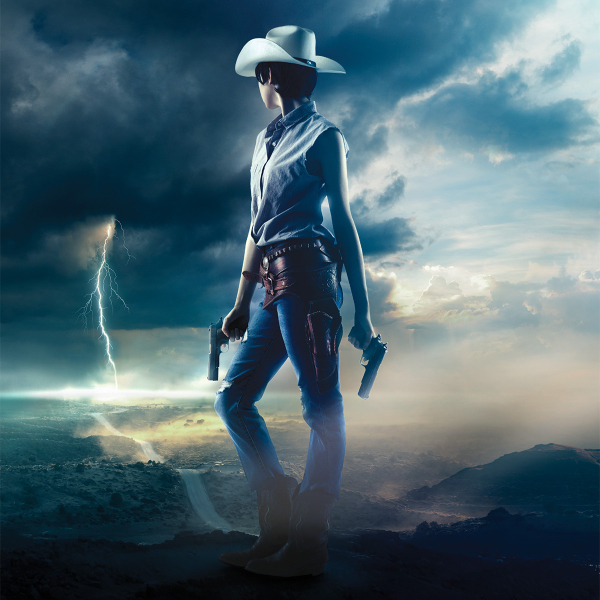
You can read my entire review of the first two here, and the third one here, but just to quote myself to give a reaction to those too impatient to do so,
“This series is pure delight, from the elaborate world-building to the laconic Western flavor of Texoma, and the characters are so alive they could step off the page. Harris has written this with just the amount of detail you crave, without drowning you in either description or explanation, and the pace of this mystery/adventure story is perfect. The minute I finished the first book, I jumped without hesitation into the second one.”
You really should read at least my review of the first two, because it gives a thorough description of a rather complicated world-building exercise. But even there, Harris achieves the maximum in understanding with the minimum of detail. She is apparently no more a fan of the info-dump than am I, for which I am thankful.
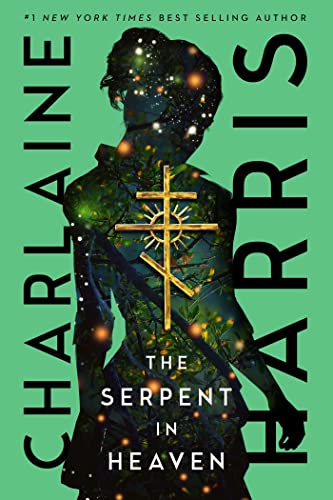
The fourth book, The Serpent in Heaven, picks up pretty much where the third left off; Felicia is now a school boarder at the Grigori academy in San Diego. She was initially admitted as a sort of honorary student because of the need to keep her safely squirreled away, since she is one of the few blood donors remaining who can save young Tsar Alexei’s life should he have a mishap (he’s a hemophiliac). But in this book, due to some unexpected hazards at the school, Felicia reveals the true scope of her wizardy powers and gets promoted to the “real” classes to learn to control, direct, and expand them, mentored by the curmudgeonly Victor.
This book was told from the first person viewpoint of Felicia herself, which added an extra element to the story, since in the course of her narration you get to know her much better and understand her background, upbringing, and level of skill. Lizbeth (Gunnie) and Eli are mostly missing from this chapter, because they have married and gone off to live in Texoma after the disastrous coup that disgraced parts of Eli’s family in the last book. We get news of them only through an occasional letter or telegram or word-of-mouth message. I thought this would be upsetting to the narrative, but I was completely absorbed in Felicia’s story and didn’t miss them, for the most part, compelling characters though they are.

Harris makes up for this in book #5, All the Dead Shall Weep, when Felicia, accompanied by Eli’s brother Peter, goes to visit Lizbeth and Eli in Texoma, mostly to get away from an ongoing threat of kidnapping by various factions who have figured out her value as a wizard and want to (either voluntarily or forcibly) marry her into their bloodline to amp up their descendants’ talent pool. But bad fortune follows Felicia like a hungry stray dog, and there’s also a new military rebellion beginning to muster, with which the sisters and their men must contend. This book is told by alternating narrators Lizbeth and Felicia, which was initially jarring when I didn’t realize the voice had changed, but actually really helpful in giving all the behind-the-scenes thoughts and feelings you craved from these characters.
And this fifth book ends on a truly ominous cliffhanger, historical in nature, which bodes well for more sequels, though ill for their contents! Still a fan. Check them out!
Reiteration

I got frustrated this week by my seeming inability to pick a winner of a book, and fell back on a sure thing by rereading Charlaine Harris’s four-book series about Harper Connelly, victim of a lightning strike, who uses the ability given her by this event to make a new life for herself. And now, once again stymied by a new-to-me book series that isn’t grabbing my attention or enthusiasm, I’ve been considering rereading Harris’s other series about dystopian gunslinger Lizbeth “Gunnie” Rose. So imagine my delight, after going to Goodreads to remind myself which book was first in the trilogy, at discovering that Harris wrote two more in this series while I wasn’t paying attention!
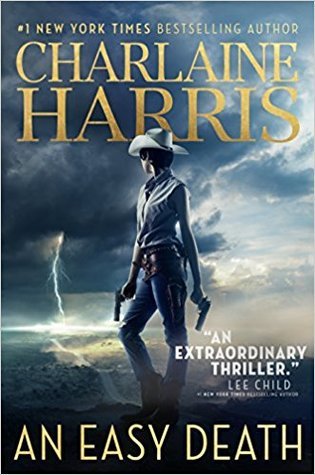
If you’d like a more thorough dissection of these two favorite series of mine by Harris, go here and read all about them. This post reviews the third book in the Gunnie Rose series. And stay tuned for reviews of The Serpent in Heaven, and All the Dead Shall Weep.
Dog Day Afternoon

No, this isn’t a post about a 1975 bank robbery movie. But the title seemed appropriate, given that it’s National Dog Day and also that I am getting such a late start that my post won’t be available until after noon, one of those hot, sleepy afternoons when dogs (and people) prefer to lie around and languish (i.e., read!) during the summer heat. I did some pre-planning for this post by making a list of some pertinent dog-oriented books, but then my distracted brain failed to follow up, so a list is pretty much all you’re going to get this time. But don’t discount it just because it’s not elaborated upon; these are some great reads, encompassing fantasy, mystery, dystopian fiction, science fiction, some true stories, and a short list for children.
NOVELS FOR ADULTS (AND TEENS)
The Beka Cooper trilogy (Terrier, Bloodhound, Mastiff),
by Tamora Pierce
A Boy and His Dog at the End of the World, by C. A. Fletcher
Iron Mike, by Patricia Rose
A Dog’s Purpose, by W. Bruce Cameron
First Dog on Earth, by Irv Weinberg
The Companions, by Sheri S. Tepper
The Andy Carpenter mysteries, by David Rosenfelt
The Dog Stars, by Peter Heller

DOGGIE NONFICTION
Marley and Me: Life and Love with the World’s Worst Dog,
by John Grogan
Best Friends: The True Story of the World’s Most Beloved
Animal Sanctuary, by Samantha Glen
James Herriot’s Dog Stories, by James Herriot
A Three Dog Life, by Abigail Thomas
Inside of a Dog: What Dogs See, Smell, and Know,
by Alexandra Horowitz

CHILDREN’S BOOKS WITH DOGS
Sounder, by William H. Armstrong
No More Dead Dogs, by Gordon Korman
Harry the Dirty Dog books, by Gene Zion
(illustrator Margaret Bloy Graham)
Bark, George, by Jules Feiffer (one of the best for reading aloud!)
And for those who wanted more, here is an annotated list of more dog days books from a previous year, along with some suggestions for dog lovers that go beyond reading about them.
Subversive, epic
This week when my Kindle ran out of juice and I wanted something to read before bed, I impulsively picked up a book I have read several times before (although it inexplicably remained uncatalogued on Goodreads): The Terrorists of Irustan, by Louise Marley. I have mentioned it at least twice before on this blog, but after reading it for, I think, the fourth time, I wanted to give it a space of its own, because I think it’s that important.
This book is hard to classify. It is science fiction, set as it is on a planet distant from Earth, colonized for the purposes of mining a precious material (rhodium) that is sold back to the industries on the parent planet; it is also powerfully dystopian; and it is definitely a feminist manifesto.

Lest any of those put you off from reading it, it is also a grippingly told story with powerful scene-setting and characters you won’t easily forget. If none of those themes sounds appealing to you, read it for the story!
The book takes place in the future on a planet that was settled by humans long ago, but the society on Irustan is ruled by the Second Book of the Prophet, and mirrors (and expands upon) the claustrophobic (especially for women) religions of middle eastern countries today. Everything is governed according to this restrictive religion, and as long as the rhodium keeps coming, Earth’s Port Authority on the planet refuses to intervene.
On Irustan, the men dominate every aspect of the culture, while the women remain virtually invisible: They do not appear outside the home without being wrapped head to foot in veils, and may not communicate directly with any man save their husband and the servants of their household, nor be seen by them. They may not own property, drive, or use a wave-phone. Their husbands have complete control over their destinies and those of their children. The highlight of their lives is “Doma Day,” once a week when the husbands all go to the temple and the wives and children are allowed to gather at the homes of their close friends to socialize, trade gossip, and share a meal.
The main character is Zahra IbSada, one of the women on the planet with a tiny portion of independence. In this world of male dominance, there is a strong taboo against even the acknowledgment by men of illness or infirmity, so any kind of medical treatment has to fall to a small group of women (fewer than 100 for the entire population of the planet) who are trained as “medicants.” They are a somewhat poor excuse for doctors, because their training is severely restricted, but they are aided by amazing medical technology from Earth, where machines have been developed that can diagnose illness and provide remedies directly into the bloodstream. The medicants are instructed in the use of these machines and most go no farther in their development as doctors.
Zahra is one such medicant, with better training than most due to the woman with whom she apprenticed, and also because of her own insatiable appetite for medical knowledge. The medicants treat the colonists injured in the rhodium mines, dosing them regularly with a drug therapy that prevents them from contracting a deadly prion disease from inhaling the dust, and also minister to any others who are sick or injured. This gives them an extraordinary knowledge of the private lives of those on their clinic list, and ultimately provokes Zahra to make a controversial personal decision in the course of her duties that will have unexpectedly wide ramifications.
Zahra is aided in this course of action by a Port Authority employee, a longshoreman who is in charge of delivering the medical supplies shipped from Earth to the various women’s clinics. Jing-Li comes from the ghettos of Hong Kong and used a job working for Port Authority as a way to leave Earth without having to go to college or obtain a career that would qualify a person for interplanetary travel, an option that was unavailable to someone from Jing-Li’s social class. The collaboration between the two is slight but powerful, and their fates end up being intertwined as Zahra seeks a way to change the oppressive social structures of her world.
Somewhere in The Handmaid’s Tale, Margaret Atwood comments about how extremist Eastern religions are not that different from extremist Western religions; The Terrorists of Irustan is Louise Marley’s example of a faux Middle Eastern counterpart to Atwood’s book, and I believe should be read with the same attention given to that classic. (And yes, it would make an amazing series as well!)
Dystopian YA

The Grace Year, by Kim Liggett, has been variously compared to The Handmaid’s Tale, The Hunger Games, and Lord of the Flies, by reviewers and readers alike. I can see some parallels: The subjugation of women, with their fixed roles and color-coded hair ribbons, by men who use fear and ignorance to stifle female individuality; pitting the young girls against one another in a contest for supremacy; the artificially created isolation while waiting to see who survives. But this book is both more and less than any of those—more frightening in its depiction of the virulence that comes out when these girls are made to understand (or led to believe) that they will thrive only at the expense of other girls; yet less intense in the sense that the threats they encounter are many of them manufactured, some existing only in their minds. Certainly the relentless bullying of one group by another, and the ganging up of the many on the one, are true to form for all the books.
The story: Garner County is ruled by a strict form of religion, mostly unspecified although pseudo-Christian in some aspects. But there is a magical component that feels like it was introduced directly from the Salem Witch trials: Young girls are believed to have an uncanny set of powers that gradually come to fruition following puberty, and the girls are sent away to live together in isolation in a guarded compound for an entire year when they turn 16, supposedly so they can dissipate their magic into “the wild” and return to the County ready for marriage and motherhood. Their society is ruled by a council of men, and punishment for the flouting of rules includes banishment, stoning, hanging, and death by fire, further perpetuating the Salem reference. It’s baffling that most of the girls will compete so hotly to be a part of such a society, but if you know nothing else and are all too aware of the alternatives (banishment includes prostitution on the outskirts of the county, for instance, and that’s one of the less fatal destinies), it makes more sense.
Tierney James has other plans for herself. She has no desire to wed just to be controlled by man and motherhood, and has calculated that her best bet is to become a field worker, so she can be outdoors and remain as free of constraint as possible. But her hopes are shattered when she is given a veil, the symbol of being claimed by a man as soon as she returns from her “grace year.” This news is likewise unwelcome to other girls in her year who thought they were much more likely to claim one, so Tiffany is set up from the beginning of the year as a victim for bullies and malcontents. Tiffany is, because of her former tomboy ways, better prepared than most to survive in the wilderness to which they are all conveyed, and she soon realizes that the threat to her happiness—and safety, and survival—isn’t the wilderness, the woodland creatures, the poachers, or the guards, it’s the other girls. But she is unprepared for the mad intensity with which she is pursued…
They can call it magic.
THE GRACE YEAR
I can call it madness.
But one thing is certain:
There is no grace here.”
The narrative by Tierney is atmospheric and consuming. The fears of the girls are stoked up to exploding point by the little knowledge they are given, coupled with their dismay upon seeing other groups of girls, greatly decimated in number and also in health and looks, returning to the County from their own grace years. The dread and anticipation are palpable, and the greatest horror is the way the women and girls all act against one another, fueled by misogynistic feelings of insecurity and doubt about their futures. Tierney does her best to combat these knee-jerk reactions and pull some of the girls out of the mob mentality, but her success is sporadic and limited. I don’t want to tell too much about the plot or the individual events or relationships, because it’s something that should be experienced first-hand by the reader, but there are many unexpected twists, especially in the last third of the book, that will keep you guessing to the end.
This book is terrifying enough to qualify as a horror read as well as a dystopian one. (Who decided that a pink cover was appropriate?!) I can’t say it’s exactly enjoyable, because it’s so brutal; but it’s definitely a book you won’t forget, and one that deals in a graphic manner with more subtle currents in society that should be addressed, from stereotypical roles to religion gone awry. I particularly liked that the resolution of the book wasn’t neat and tied up with a bow, but left some room for both despair and hope.
This book came out in 2019, yet seems to be on everyone’s radar now, for some reason. Maybe it’s the delaying effect of the pandemic, or perhaps readers were subconsciously influenced by the attacks on our democracy and personal freedoms to read about this oppressive, unpleasant society as a warning. For whatever reason, you might want to pick it up while enthusiasm is running high.
 The Book Adept