Constructive maundering
This week my breakfasts were beguiled by a book I have meant for some time to read: Three Men in a Boat (To Say Nothing of the Dog), by Jerome K. Jerome. You may or may not have heard of it; although it is considered a classic, it’s not the kind typically assigned as part of a high school curriculum. Nonetheless, as Wikipedia cites, “The book, published in 1889, became an instant success and has never been out of print. Its popularity was such that the number of registered Thames boats went up 50 percent in the year following its publication, and it contributed significantly to the Thames becoming a tourist attraction. In its first 20 years alone, the book sold over a million copies worldwide.”

I only know about it because I am a science fiction fan(atic), and a reader of the books of Robert Heinlein and Connie Willis. Three Men in a Boat is mentioned in Heinlein’s Have Spacesuit—Will Travel, wherein it inspired Willis to read it and then title one of her time travel series To Say Nothing of the Dog, the actions in that book being a loose tribute to the original.
I have mentioned Willis’s book here before, describing it as a sort of French farce featuring a hapless cast of misfits and, now having read the original inspiration, I can see even more clearly where the frenetic, chase-your-tail style in which Willis wrote her book originated. Three Men is chock full of the most hilarious minutiae of everyday life, not to mention the mental maunderings of its narrator, who wanders away from each topic to discuss the most useless and suspect bits of information, only to eventually work his way back again to the original subject, pulling himself up and getting on with the narrative.
It’s not exactly a story, per se; its main protagonist and first-person voice, “J.,” is more concerned with travelogue—commenting on points of interest as the boat advances up the Thames—coupled with self-indulgent flights of fancy about Man and Nature and the recounting of numerous ridiculous anecdotes about his fellow travelers, his dog, random bartenders and fishermen he has encountered during his life, and so on. He will ramble on about the next stop along the river—its history and monuments, what events transpired, who slept in what public house and which one now stocks the best ale, who is buried there, etc.—and then comment about the petty details of their day on the boat—who inadvertently dragged whose shirt through the water, what food they had to eat and its effect on their mood and/or bowels—interrupting all this once in a while to recount a close call with a launch or a ferry, a hang-up of their boat inside one of the river’s locks, and then switching to laudatory ravings about nature…and so it goes for about 185 pages.
An example of the flowery language he uses when making his observations about the natural world:
“Sunlight is the life-blood of Nature. Mother Earth looks at us with such dull, soulless eyes, when the sunlight has died away from out of her. It makes us sad to be with her then; she does not seem to know us or to care for us. She is as a widow who has lost the husband she loved, and her children touch her hand, and look up into her eyes, but gain no smile from her.“
One reviewer on Goodreads remarked that the book is abrupt and atonal, what with the author occasionally forgetting that he’s writing a comic novel to come out with these paeans and flights of fancy but, for me, that’s the fun of it, the whimsical British humor.
The account, once they have made their decision to go on holiday on the Thames for a fortnight, is completely driven by the sights they see and the stops they make up the river, so one can see why the book was popular when first published and how it generated so much interest in boating as a tourist activity; people would naturally want to observe all these things for themselves. But 135 years later, although some of the landmarks will retain their ruins and their burial grounds, all else will have changed enough to be unrecognizable, so the pleasure in reading Three Men in a Boat becomes more nostalgic than anything else.
I must say, however, that the humor with which Mr. Jerome tells his tale is so engaging that I actually saved bits to read out loud to my cousin when she came by the other day. He has a way of having his protagonist say something so that you don’t know whether it is meant for him to be serious or tongue in cheek; it’s hard to pull off being ironic and gently making fun of your characters but at the same time presenting them and some of their views in all seriousness. I laughed out loud a few times.
Here’s an example: They had just finished eating supper, which they really wanted after a long day of rowing.
“How good one feels when one is full—how satisfied with ourselves and with the world! People who have tried it, tell me that a clear conscience makes you very happy and contented; but a full stomach does the business quite as well, and is cheaper, and more easily obtained. One feels so forgiving and generous after a substantial and well-digested meal—so noble-minded, so kindly-hearted.
“It is very strange, this domination of our intellect by our digestive organs. We cannot work, we cannot think, unless our stomach wills so. It dictates to us our emotions, our passions. After eggs and bacon, it says, “Work!” After beefsteak and porter, it says, “Sleep!” After a cup of tea, it says to the brain, “Now, rise, and show your strength. Be eloquent, and deep, and tender; see, with a clear eye, into Nature and into life; spread your white wings of quivering thought, and soar, a god-like spirit, over the whirling world beneath you, up through long lanes of flaming stars to the gates of eternity!”
(I don’t know about you, but I don’t think I have ever been quite that inspired by a cup of tea!) He then goes on for another entire paragraph delineating the effects of muffins, brandy, and so on, and concludes with this thought:
“We are but the veriest, sorriest slaves of our stomach. Reach not after morality and righteousness, my friends; watch vigilantly your stomach, and diet it with care and judgment. Then virtue and contentment will come and reign within your heart, unsought by any effort of your own; and you will be a good citizen, a loving husband, and a tender father—a noble, pious man.”
And thus it goes, with the conversation moving from the positive effects of a good meal to the discussion of whether they would be happier away from the world living on a desert island, to fears about damp and drains, to the recounting of an anecdote about sleeping in the same bed with a stranger at a crowded inn…

This book is not one I would unreservedly recommend that everyone should read, but it has a certain reminiscent air for me of the beloved antics of Bertie Wooster, Jeeves and Co. in the tomes of P. G. Wodehouse and, if you like that kind of story where the characters are disingenuous and rather simple-minded while the writing itself is quite clever, then you might enjoy Three Men in a Boat. But even if you don’t read it, do have a go at To Say Nothing of the Dog, by Connie Willis.
Scalzi saves the day
So…I have a couple of rules that I rarely break here. One is that I don’t utterly pan a book, but rather try to say something nice even if it wasn’t a book I enjoyed, and if I can’t do that, I simply ignore it. The other is not to review books that I haven’t finished, because I spent so many years as a librarian having to argue with self-righteous people who wanted to get books pulled and banned from the library shelves simply on hearsay when they hadn’t personally read the book for themselves. But…sometimes I succumb to temptation. And I’m not trying to persuade anyone not to read a book, I’m just saying why I quit after five chapters.

After a lot of positive hype in two Facebook book groups, I decided to read Go As A River, by Shelley Read, as my first book of the year. The description was intriguing—a combination of historical small-town fiction and coming-of-age novel—and people had praised it for its literary language. Within a few chapters of beginning it, not only was my interest flagging, but I was becoming actively irritated; when I finally decided to quit reading, I skimmed some reviews on Goodreads (fives down to twos) and decided that this time I would leave one, even though I had categorized this book as “Changed my mind.” Here is that review:
I’m wondering why no one is focused at all on the thing that has stopped me reading Go As A River after five chapters?
The people who disliked the book mainly say it’s because of the too minimal dialogue and too florid description, or the theme of unrelenting heartbreak, or their lack of interest in nature or motherhood. And many who disliked the book still cite the writing as beautiful and lyrical. Not one seems to have been bothered by the thing I dislike the most in storytelling, which is foreshadowing. I don’t know if it continues throughout the book, but the first few chapters are rife with text dedicated to phrases (or sentences or paragraphs) of “if only she had known,” or “she was to learn this lesson from him one day, but not just yet” or “she came to wish that he had left town that day instead” or some such. It completely steals both the momentum and the element of delightful surprise that comes from reading a story from start to finish without all the ominous “da da da DUM” of foreknowledge.
Also, the so-called beautiful writing is so over the top! Just to use one example: The main character, Victoria, mentions that her uncle-in-law went away to fight in World War II just a few short months after he married her aunt. Then she seemingly cuts away to describe an event that took place in her town, in which a man stalls out his roadster on the railroad tracks and the car is hit and destroyed by the train. She mentions that it grew into an elaborate tale about the supposedly gruesome details of the death of the driver (decapitated, splatted on the windshield of the train engine, etc), despite the fact that he had actually jumped clear of the car before the train hit. But this detail has absolutely nothing to do with how the author is using this simile, because after going on for three full paragraphs about it, she then says that what that train did to that car (i.e., mangled it beyond recognition) was what World War II did to Victoria’s Uncle Og, changing him from a young, enthusiastic, engaging, funny guy into a bitter, mean, spiteful slob in a wheelchair who delights in provoking discord. And she keeps doing this kind of thing, but as far as I can tell it’s just an exercise in “look at me,” because few of these passages materially advance the narrative, or give any significant perspective to either the main thread or any side story. She could have just said “the war didn’t treat my uncle kindly” and his nastiness and lack of mobility would have revealed what she meant. My ultimate reaction to the part of this book that I did read is total exasperation. No thank you.

After this inauspicious beginning to my reading year, I was about to begin searching my TBRs for something else when Los Angeles Public Library let me know that a book on my holds list had become available—Starter Villain, by John Scalzi, a completely different genre of book, without either baggage or literary pretensions—so I checked it out to my Kindle and began to read. I’m so glad that this book popped up when it did, because it completely saved my mood and provided a delightfully fresh interlude.
Scalzi seems to write two kinds of books, the first being the fairly straightforward story of something-or-other happening in space and/or on other planets—colonization, exploitation, war, murder mysteries with a technological twist—the kind of thing that Heinlein wrote about, but considerably updated. These would be his Old Man’s War series, his Interdependency trilogy, the Locked In books. The second category is when he takes some premise based in more outlandish science fiction—environmentally challenged dinosaurs on an alternate-dimension Earth, aliens on a religious quest, sentient fuzzy monkey-like beings threatened by a planetary takeover—and goes to town with all the wry and unexpected humor he’s been storing up while writing the serious stuff. While I have enjoyed all his books, I think these are my favorites; The Android’s Dream is one of the funniest books I have ever read, in any genre. Starter Villain joins the ranks of this second group of books and, despite its fairly short length, gives full value to those looking for a clever, twisty, funny read.
Charlie had a career as a journalist, but when everything went digital he lost that gig, along with the majority of other newspaper writers on the planet. Around that same time, his dad got sick, so rather than find a new job, Charlie elected to do some substitute teaching to fill in the financial holes while living with his dad and caring for him. But after his dad died, he felt both stalled and trapped, and hasn’t really made a move since. He’s still living in his dad’s house, but he shares the inheritance with three half-siblings, all of whom want him to move out and sell up, and the subbing doesn’t really pay the bills.
His new dream is to buy the town’s most popular pub—both the business and the building it’s in are recently up for sale, and he’s trying to think of a way to finagle it, but the bank looks askance at a divorced part-time substitute teacher whose meager liquidity is dependent on three uncooperative siblings. Then his Uncle Jake dies, and he is distracted from his life plans when his uncle’s right-hand assistant shows up at his house with a request from his uncle to conduct the funeral. Despite the fact that Charlie’s father and uncle were estranged from the time Charlie was five years old, he feels some obligation, as Jake’s only remaining next of kin…not to mention that Jake was an extremely wealthy man and there may be something in it for Charlie.
Becoming involved with his uncle’s estate, however, also means he has come to the extremely unwelcome attention of the other wealthiest men in the world—rich, soulless, and very curious about what will happen if and when Charlie inherits. But Jake has left Charlie some unexpected advantages to help him with his new profession as a “starter” villain, and he finds himself carried along in his uncle’s wake, trying to make sense of what is happening and what will happen next if he fulfills his destiny as heir apparent.
This is one of Scalzi’s most entertaining ventures. Charlie is a wonderful character—innocent, sincere, and somewhat bumbling, but not unintelligent; and although part of him is reluctant to become ensnared in Jake’s labyrinthine business dealings, he is nonetheless fascinated by some of their more outlandish results. The supporting characters are intriguing, the villains are, well, villainous, and it doesn’t hurt that genetic engineering has provided some unlikely spies who are on Charlie’s side—at least for now. It has a decidedly contemporary vibe, what with its themes of income inequality, workers’ rights, animal liberation, unions, nepotism, and corruption in capitalism. It’s also whimsical, silly, irreverent, and occasionally laugh-out-loud funny. Grab this one with gusto. [Warning to those who care: Lots of strong language, and a fair bit of over-the-top violence.]

Witchy women

I just finished the book Weyward, by Emilia Hart. It’s one of those books that seduced me both with its cover (a crow and a bunch of beautiful botanical illustrations) and the first third of its description, which sounds like a gothic novel written by Victoria Holt or Mary Stuart. You know the plot—a young woman inherits a cottage in the country from an aunt she hasn’t seen since she was six years old, and retreats there to escape from danger, only to encounter more mysteries from her past, and ultimately comes into her own by recognizing how she fits into her family’s history.
I would have been happier, I think, had the plot just stuck to that, with some flashback through the lens of the character Kate. Instead, what this book does is present parallel stories of three young women from the same family/bloodline who lived in the cottage at widely disparate times, from 1619 to 2019, and it didn’t quite work for me. I felt constantly dissatisfied by the amount of information we would get about one of the three before jumping to one of the others; although I liked the characters, I felt like each of them was given short shrift because there wasn’t enough space to tell their stories as completely as might have been done. I also wasn’t sure I needed to read three such desperate accounts of physical, sexual, and emotional abuse!
The book is touted as empowering, but although each of the women—Altha, Violet, and Kate—triumphs over tragedy in the end, the fact that it is with the help of some witchy magical realism makes it harder to focus on their progress. And honestly, the story is quite polarizing, in that all the men are uniformly horrid (except for Kate’s father, who’s dead), and all the women are victims hyper-focused on childbirth and legacy, who manage to rise above with assistance from their connection with nature. I can’t decide if the book was too long or not long enough, because I felt periodically bored while reading it, but also wanted more details on some aspects!
Bottom line, I didn’t hate it but wish I’d spent my time reading something less depressing, for which I had more affinity. If you want a good witchy/magical book, read The Once and Future Witches, by Alix Harrow, instead, or try any one of half a dozen of Alice Hoffman‘s.
Kudos to the cover artist, though.
Fictional memoir
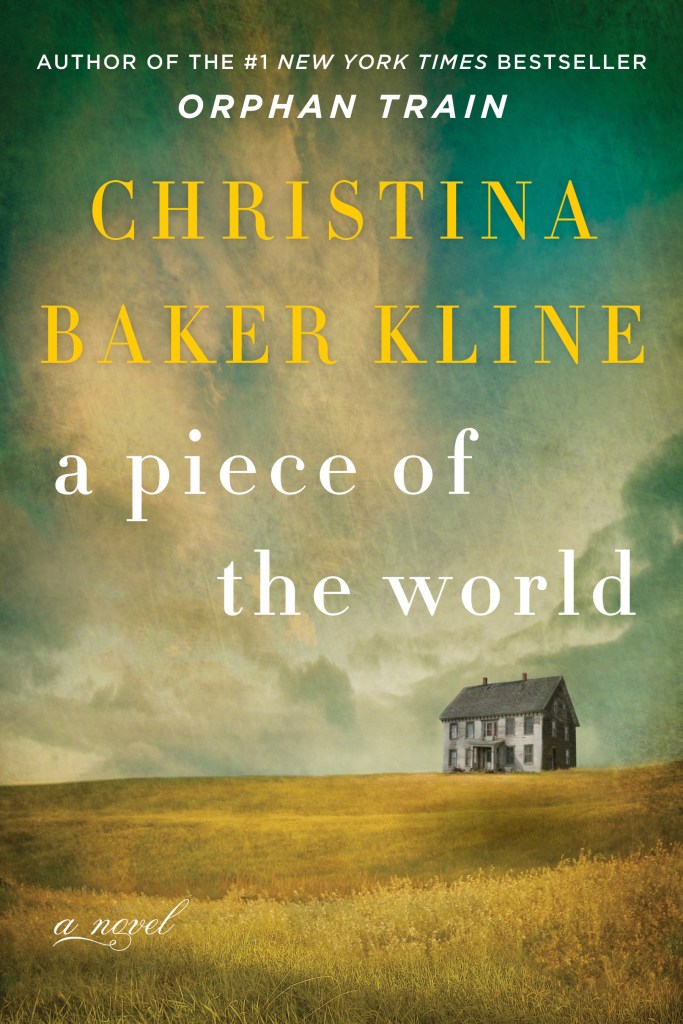
A Piece of the World, by Christina Baker Kline, is in a special category: Although the overall story is fiction, it is based on facts about real people, and reads like memoir.
The book is based on Andrew Wyeth’s painting called Christina’s World, pictured here. People have always noticed something slightly odd about the figure in this one—she’s not just reclining in that field, she looks like she’s wanting to get to that house, or perhaps even pushing or dragging her body along in the attempt. This is the germ of the idea for the entire book, which, although it does showcase some of Wyeth’s career, is primarily about the subject of the painting, Christina Olson of Cushing, Maine.

The book documents Christina’s entire life, which turns out to be a small one except insofar as she serves as muse to the famous painter. Christina suffers some kind of illness at age three (they never state what, but my thought was polio) that twists her legs up and makes her awkward and clumsy in all her movements. This and her own pride and self-reliance make her an outsider, both in her family and in her community, with the result that the chances others have for happiness seem to pass her by, no matter how hard she tries to grasp them. She grows up in the house previously occupied by generations of her ancestors; she cares for her brothers and her aging, ailing parents as her disability gradually worsens; and she is finally left with one brother to live out her days in an ever-diminishing daily routine circumscribed by her physical condition…until one day Andrew Wyeth’s young wife, Betsy, a family friend, brings him to visit, and he becomes fascinated with Christina, her brother Alvaro, and their house and farm in all its aspects. No detail is too large or too small for him to tackle in his art—he paints the rusty padlocks and spiderwebs, the sheer curtains blowing in the breeze from an upstairs window, Alvaro smoking his cigar—and this begins an almost 20-year relationship between himself and the two remaining Olsons, resulting in possibly his most famous picture/portrait.
“Later he told me that he’d been afraid to show me the painting. He thought I wouldn’t like the way he portrayed me: dragging myself across the field, fingers clutching dirt, my legs twisted behind. The arid moonscape of wheatgrass and timothy. That dilapidated house in the distance, looming up like a secret that won’t stay hidden.”
CHRISTINA OLSON
In some ways this is a dark, dour portrayal, but it is rescued from being too depressing by Christina’s will and strength of spirit, and by wanting to know what happens next. The book deals with complex issues; resentment, shame, lost dreams, family challenges, and social classes are explored, and the writer makes us realize that there is depth and intensity to even such a simple existence devoid of major events. There are some fine lyrical moments of expression, and Kline paints pictures with the words she chooses. I didn’t expect to like this book as much as I did—it kept me reading through one sleepless night, and I was a little sorry when it ended. It’s a great example of what an author can do with the kernel of a story, some thorough research, and a vivid imagination to bring them both to life.
Two authors, one story?
In my last post, I wrote about two books by Jenny Colgan, set in a derelict bookstore in Edinburgh. The protagonist’s task is to work in the bookstore and try to help its elderly and somewhat hapless owner get it back in the black. In the course of doing this, she meets two men—one a wealthy, successful author, the other a penniless but quietly charming student—and has to choose between them. Against all odds, she manages to keep the bookstore going long after everyone thinks it will fail.

Just as I finished reading those, a hold from Los Angeles Public Library became available—The Lost and Found Bookshop, by Susan Wiggs. In it, the protagonist inherits her mother’s foundering bookshop in San Francisco. She needs to sell it, to settle the debts and also to provide for her grandfather, whose health is failing, but she can’t because it turns out he is the owner of record, and refuses to sell. So she has to jump in and try to save the store. In the process, she meets two men—one a wealthy, successful author who she persuades to do a book-signing, the other a carpenter/ handyman/musician who she hires to do some repairs around the place—and she has to choose between them. Through a series of happy accidents plus a lot of hard work, she keeps the doors open and makes her grandfather happy.
Leo Tolstoy said, “All great literature is one of two stories: A man goes on a journey, or a stranger comes to town.” A 1919 writing manual penned by Wycliff Aber Hill posited that there are only 37 basic plots in the world. In 2015, Matthew Jockers used a computer analysis of 40,000 novels to conclude that all literature follows only six possible stories. And how many people have repeated the old saw, “There is nothing new under the sun”? Still…when the formula already involves a bookshop in financial trouble and a young female protagonist sent in to save the day for its elderly owner, maybe its author could check other books about bookshops to see if at least some of the rest of the tropes could be tweaked or avoided?
Since The Lost and Found Bookshop‘s publication preceded that of Jenny Colgan’s books by about a year, Jenny is probably the one who should have done the checking; but I have to say that I preferred her books by a considerable margin for a couple of reasons, the first of which was a less-than-satisfying protagonist in this one. Natalie Harper is simply too self-involved and angsty to be as likeable as Carmen, and I found myself getting annoyed with the author about the things she left out that would have made this character more well rounded.
I did like the manner in which she addressed the subject of grief, and I enjoyed the mentions of actual books and authors throughout. Some of the historical back-story was interesting, especially the bits about the San Francisco earthquake. But the other reason I didn’t care for this one was the series of three discoveries based on that history, and how the characters dealt with them; this subplot was too implausible (and convenient).
There were also some nitpicky little omissions that bugged me. One example: One of the love interests notices that Natalie has amazing abs “that you only get from a lot of yoga,” but we never see her take an exercise class, participate in any kind of physical activity or, in fact, even mention something about exercise. Yeah, I know, it’s a small thing, but don’t you find it annoying when authors throw in details and then don’t follow through?
Finally, I hated the way she ended the book. I am a person who doesn’t care for totally open-ended stories; I like a real conclusion. But I also have a pet peeve, which is the use of an epilogue as a tool to tie things up with a bow (or multiple ribbons!) and that’s what Wiggs does here, in a cutesy way (everything is presented via a series of newspaper articles). I reviewed another book on this blog (Things You Save In A Fire, by Katherine Center) and panned it because I loved it until the 20-page epilogue, where the author ruined it for me by ruthlessly and thoroughly tying off every possibility other than the ones she chose.
So—not a bad read, but probably not one I would recommend over some other bookshop stories.
Literature as solace

I’m not sure what to say about Good Night, Mr. Wodehouse, by Faith Sullivan. I was intrigued by the title, since I love what I have read by Wodehouse, notably the Bertie Wooster and Jeeves pairing. This book made me want to seek out his other books to see what I’ve been missing…but it didn’t particularly make me want to seek out others of this author’s. I did enjoy the book, but it’s what I would call a quiet read, almost too quiet for my taste.
It’s an old-fashioned story, told in a rather demure style (I wasn’t sure, initially, that this was a modern novel) about a woman who lives in a small town called Harvester, Minnesota, at the turn of the 20th century. The action begins around 1900 and finishes up when Nell Stillman is in her 80s, so the story encompasses many of the big changes of that century, including technological innovations (indoor plumbing, the telephone, airplanes) and two world wars, but all seen from the vewpoint of a 3rd-grade schoolteacher in a semi-rural, insular setting.
There isn’t much of a story arc; it’s more an accounting of one woman’s life as she moves through both historical and personal events. Hers has its share of tragedy and not a huge amount of joy; she is widowed young, loses her child’s sanity to the after-effects of war, and is plagued by the small-minded gossips and nay-sayers who surround her. But her growing love of all kinds of literature sustains her through many of her trials, particularly the writings of P. G. Wodehouse, with whom she has a personal relationship in her active imagination.
Life could toss your sanity about like a glass ball; books were a cushion. How on earth did non-readers cope when they had nowhere to turn? How lonely such a non-reading world must be.”
Nell Stillman, reader
The story has the feel, although not quite the literary quality, of the books of Kaye Gibbons; I haven’t read those for many years, but Gibbons’ book Charms for the Easy Life kept coming to mind for some reason while I was reading this—another small-town saga of generational and community ties featuring eccentric characters.
There were aspects that I found disappointing: A truly major character in the first half of the book (and my personal favorite) leaves the town in disgrace and the author simply drops her character except for a few sparse references towards the end. Similarly, when Nell is elderly she takes three young girls under her wing; they feature briefly but vividly, and then nothing more is heard about them. These weren’t major flaws, but they did cause my enjoyment of the book to be considerably less than if their arcs had been followed through.
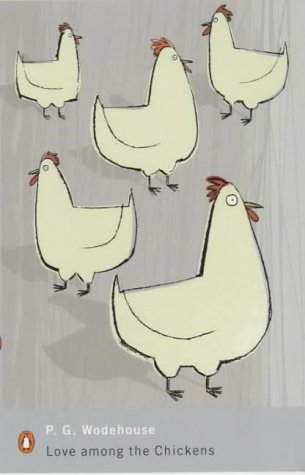
I found Good Night, Mr. Wodehouse to be a pleasant read, but it left me with no desire to find out more about either the main character herself or the town of Harvester, which is apparently featured in others of Ms. Sullivan’s works. I did, however, identify closely with all her sentiments about the blessings being a reader brings to one’s life, so I do plan to find and peruse a copy of Love Among the Chickens!
Immersive

I just finished a re-read (for the third—or fourth?—go-round) of Rosamund Pilcher’s book, Coming Home, which has to be one of my favorite books, as much as I try not to name favorites (because it always provokes a way-too-long list in my head and ends up getting re-ordered during hours of insomnia). Pilcher is sometimes under-rated because of a handful of (short) books she wrote that are obviously formula-driven romance novels, and people expect all her writing to be the same, when, in fact, it’s almost as if (except for the Cornwall setting, which remains pretty constant) there are two writers, with the second waiting to emerge when all the formula stuff was out of her system.
Her most famous books are The Shell Seekers and Winter Solstice, and I love (and re-read) those as well, but for me, Coming Home is the definitive book of her career. It’s a coming-of-age story set within the framework of World War II, beginning in the pre-war years and ending after the war is over. It follows the life of Judith Dunbar, whose father works for a company in Ceylon; Judith spent her first 10 years there, but when her younger sister, Jess, came along, her mother brought the two girls back to England, to Cornwall, leaving her father to a bachelor existence. (This was a common living situation in a time when it was considered dangerous to try to raise Caucasian children in that hot climate.) Now Jess is four years old and Judith is 14; in 1935, their father receives a promotion to a position at the company’s offices in Singapore and wants his wife with him, so Mrs. Dunbar and Jess are traveling back out to the East, while Judith will stay in Cornwall, attending a boarding school in Penzance and holidaying with either her father’s or her mother’s sister, both of whom live fairly close by.
Judith’s existence is transformed by her friendship with a week-to-week boarder at the school, Loveday Carey-Lewis, who returns home each weekend and invites Judith to accompany her. These British aristocrats have an extensive estate called Nancherrow, out at Land’s End, with luxuries about which Judith has never dreamed—a butler, a cook, a nanny, stables, their own cove and beach—and soon Judith is welcomed as one of the extended family by Loveday’s glamorous mother, Diana. But the war imposes hardships on everyone, lower class to royalty, and Judith has her share of life changes that determine her responses to both love and tragedy as the years pass.
It doesn’t sound like such an exciting story, detailed here, but there is something so poignant and so immersive about the stages of Judith’s somewhat lonely teenage and young adult years, especially set against the magical backdrop of Cornwall (and her adoptive family) and dealing with the sobering consequences of living in a country at war. The joys, the sorrows, the suspense about which way the story will go next always hold me enthralled from beginning to end.

I also confess that the artistic aspect Cornwall represents, with its Newlyn School of painters (that are also detailed in Pilcher’s The Shell Seekers), is an additional draw for me. Pilcher’s books, along with Daphne du Maurier’s, are the reason I spent 10 days in Cornwall in April of 2002; my cousin Kirsten and I rented Whitstone Cottage from the National Trust, formerly inhabited by the blacksmith for the Penrose estate between Helston and Porthleven. After reading about it for all those years, it was like coming home for me!
If you’re in the mood for an intimately personal tale with an historical backdrop and multiple settings that portray various ways of life during that time, be sure to check out this book. If you’d like to read an amusing anecdote about our stay in Cornwall, go here.
Clandestine

That’s the word most descriptive of the third “episode” in Cynthia Harrod-Eagles’s newish series about the inhabitants of Ashmore Castle. This one is called The Mistress of Ashmore Castle, although I was a bit puzzled, by the end, at the name, since the book seems to divide its attention equally between multiple “actors” without focusing particularly on Kitty, aka the new Lady Stainton.
Lord Stainton, Giles, has rejected the stifling existence at the castle to resume his chosen avocation excavating tombs in Egypt, leaving poor Kitty behind to cope with their young son, the house, and the rest of his family, while longing for him to return. Kitty seems to be the only one in her family-by-marriage (my mother always called them “the outlaws,” which works here) to love the person with whom she is paired; Giles remains enamored of Kitty’s best friend Nina, who is married to the elderly and smitten businessman Joseph Cowling but who returns Giles’s affections. Both must keep their forbidden feelings a secret from their respective spouses and from everyone else; Nina attempts to deflect her energies towards a pursuit of women’s rights, while Giles is reunited in Egypt with Julia, the daughter of an old friend on a previous dig, who was six years old when he met her but is now in the full flower of sultry Italian womanhood. He is enjoying what he thinks is the simple resumption of their friendship, but his attentions may be giving Julia other ideas. (Giles is kind of a dick.)
Meanwhile, Giles’s sister, Rachel, is having her coming-out season in London. Fueled by Kitty’s money, Giles’s mother has thrown a lavish ball for the richly attired and vivacious Rachel, at which she is supposed to fall in love with a suitable suitor and make a marriage; instead, she succumbs to an infatuation for her cousin Angus, who reciprocates her passion despite his father instructing him to propose to Diana, a wealthy heiress. Thus ensues much wailing and angst and a convoluted letter-writing campaign (Angus resides in Scotland) enabled by their sisters’ connivance.
Meanwhile, Giles’s other sister, Alice, still harbors a doomed passion for the hunky woodsman on the Ashmore estate despite his inherent unsuitability; his uncle Sebastian continues his hopeless pursuit of the castle’s seamstress, who loves him but already has a husband somewhere in London; and his brother Richard hasn’t given up on persuading their father’s former mistress to come away with him to Europe, if only he can find the funds to support them both. There is even a romance (of sorts) in the offing for Giles’s formidable mother, Maud, the previous Lady Stainton, who is much affronted by anyone daring to approach her in this way, but is also considering the alternative—no longer ruling the roost of her former home, and collapsing into grandmotherhood—and wondering if a second marriage could be tolerated if enough wealth came along with it.
In short, there is not one truly happy individual in the entire bunch, either above- or below-stairs. And non-romantic drama is also brewing amongst the staff, as Mr. Moss (the butler) suffers a loss that is taken advantage of by the dastardly footman James Hook, who covets money and position and will ruthlessly exploit his position to gain both.
The ins and outs of all the relationships are simultaneously enthralling and exhausting, and while I enjoyed reading this one as much as I did the first two, Ms. Harrod-Eagles has once again dropped the ending amidst multiple cliffhangers, causing me to swear audibly at breakfast when I turned the next page only to find a listing of “other books written by Cynthia Harrod-Eagles.” And once again I have read the latest volume of this series mere days after its release, so a long year of anticipation for the next will again ensue. Sigh.
On an up note, a friend on Facebook just told me that Elly Griffiths has just published the last in her series about archaeologist Ruth Galloway, in which she finally resolves the relationship between Ruth and her baby-daddy, DCI Harry Nelson. Since I hadn’t yet read what turns out to be the next-to-last book, I’m perusing it now, so I can get on to the big finish.
A book about books

If you, like me, enjoy reading books featuring a bookstore, a library, an author, or, in this case, a bookbinder, you might enjoy the one I just finished—The Echo of Old Books, by Barbara Davis. I last encountered Davis as the author of The Keeper of Happy Endings, which featured another of my passions (Paris), and although that one wasn’t a favorite, it was well written enough that I was willing to give another book of hers a try, particularly given the theme.
Ashlyn Greer is a dealer in rare books, whose small, eclectic New Hampshire shop sits in the front room of her real income-generating activity, the restoration of old or damaged volumes. In addition to doing custom work by request, Ashlyn is constantly on the lookout for some rare find in a remainders box at the local library or thrift shop that she can restore and sell. Ashlyn has a secret gift whose scientific name is psychometry…
the ability to discover facts about an event or person by touching inanimate objects associated with them.”
In Ashlyn’s case, this extrasensory perception is limited to books. She can feel an echo of the owner or reader of the book, if their emotions were strong enough while the book was in their possession.
One day Ashlyn lucks into a find of two beautifully bound books that present something of a mystery: There are no authors listed, nor publishers nor dates, and the books are apparently the story of a doomed romance told from either side, one by the woman, the other by the man involved, each addressing the other in the first person as if writing a long letter. Ashlyn is intrigued by what purpose these books could have served, and overwhelmed by the raw emotion she feels pulsating from both of them.
She starts to investigate the mystery, first by reading the books and then by attempting to find out where they came from before she found them in a box of otherwise worthless donations at her friend Kevin’s store. The dual story takes her back four decades (The Echo of Old Books is set in 1984, and the books in the story were written in 1941) to a love affair between unequal partners—a pampered heiress and a footloose newspaperman—and also leads her to a descendent of one of these lovers, in the course of her quest to get more information.
I really liked the way the book was laid out—the scene-setting in 1984, followed by alternating chapters of the two mystery books and then a new chapter with Ashlyn’s reaction to what she has read. There are powerful themes expressed in the two old books: They explore the growing anti-Semitism amongst some wealthy and influential Americans in the ramp-up to World War II, and also comment extensively on the roles of affluent women, who seemingly had it all but were in fact marriageable chess pieces used by their fathers to capture more wealth and power.
The book was a little long, and the beginning was drawn out to the point where I almost lost interest, but that interest was renewed by some book-binding details and the introduction of an intriguing new character, and I’m glad I kept reading this story about tragic endings and second chances. I will happily add it to my Goodreads list of “books about books.”
Interlude
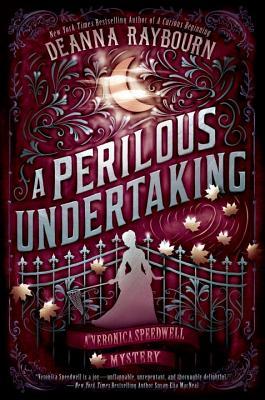
After dedicating a chunk of time to the Sydney Rye saga, I circled back to read the second book in the Veronica Speedwell series by Deanna Raybourn. Called A Perilous Undertaking, it is indeed a story fraught with potential missteps, as Veronica and her colleague, Stoker, must deal with royals, police detectives, high society eccentrics, and a whole slew of artsy bohemian hedonists as they try to figure out who committed a murder in 1887 London.
The catch is, someone has already been convicted of the crime; but at least one extremely high-up individual doesn’t believe Miles Ramsforth, art patron, to be guilty of killing his pregnant mistress, Artemisia, and has demanded that the unconventional duo prove it by discovering who did. Since the case is emphatically closed according to the police, there will be little assistance (or cooperation) from that direction, so Veronica and Stoker explore the original circumstances of Artemisia’s death with an eye to who benefits, and use a variety of stratagems to spend time with and focus on the many suspects.
I liked this book almost as well as the first. The various relationships are continuing to evolve, the new characters are fun and interesting, and the places the story goes are unexpected. I will probably continue with this series, though not right away.
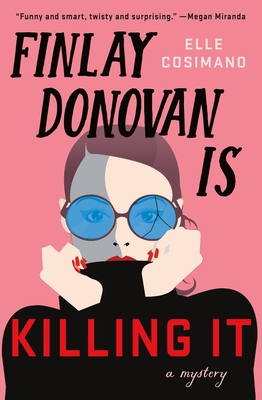
That’s because, at the moment, I am rereading the first and second books in the Finlay Donovan series by Elle Cosimano, for two reasons: One is that the third book is due out in January, and I always like to review before continuing; but the other is that Ms. Cosimano has graciously agreed to be a guest speaker during the mystery genre segment of my readers’ advisory class at UCLA’s library school this coming Tuesday (via Zoom, since she is an east-coaster). We are all excited about her appearance; if you wish to read my review of her books about the hapless accidental hit woman, it can be found here.

After I am finished with her two books, I am quite excited to read the brand-new (out on Tuesday, and pre-ordered to arrive from Amazon that same day) Barbara Kingsolver novel, Demon Copperhead (with a nod to David Copperfield). I have loved every one of her books with the exception of her greatest success story, The Poisonwood Bible, which people tend to either love or put down after 100 pages of effort. I was one of the latter; but everything else in her catalogue is a winner for me. I hope this one is, too!
 The Book Adept