A Heller of a book, until…
Peter Heller has written a couple of books that are favorites. The top one is (predictably) The Painter, and I loved The Dog Stars. I can also say that I tremendously enjoyed The River, The Guide, and Celine. So choosing to read his latest was predictable for me. It started strong, and parts of it remained strong, but…
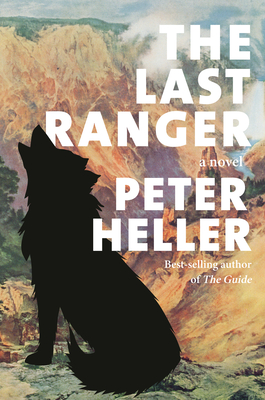
Yeah, there’s that dot-dot-dot. Heller’s writing about nature in The Last Ranger was as beautiful and lyrical as ever. He creates a sense of awe and wonder that is contagious—even if it is his protagonist who is expressing these feelings, they gradually seep into your own consciousness as if you are experiencing that environment and the engendered response firsthand. I could never find fault with that aspect of his writing.
I also liked the characters he created for this book, and enjoyed absorbing knowledge from them about how the various people in and around Yellowstone spend their days. The protagonist, Ren, is a park ranger for whom the reward of living a solitary, blissed-out life in the midst of nature must be balanced by preventing parents from taking photos of their adorable three-year-old cozying up to a baby moose while its mama is ready to kill everyone within charging distance. He breaks up traffic jams caused by too many tourists trying to photograph something-or-other by the side of the road, he prevents the wildlife from being shot by “individualists” with no respect for the boundaries of the park or the laws of the land, and everything in between those extremes. His life is sort of predictable and sometimes irritating, but ever-changing and therefore not boring.
Ren’s best friend is Hilly, a biologist who finds herself up against both man and nature when advocating to protect the wolves of Yellowstone. There are a host of other characters, both local and transient, whose descriptions and actions are meaningful and/or entertaining even when the scene or description is fleeting. That is the power of Heller’s writing.
This time, however, the big lack is in the plotting and especially the resolution of the “mystery.” As the story develops, the focus centers on the brazen actions of a local poacher and then transitions towards the end to the discovery of a large semi-secret group of wealthy men who are at odds with the goals of a national park and are inciting rebellion amongst suggestible locals. But there are so many segues from these threads into a sort of “day in the life of” narrative about both Ren and Hilly, so many outtakes about fistfights between tourists, and ignorant sightseers putting themselves and others in jeopardy, and an unexpected and exceedingly awkward romance that the story line gets lost. And just when you think it’s going to resolve itself in the last 100 pages, you get some directional hints, you get a few minor questions answered, but everything else is simply left hanging.
I’d say there’s a sequel coming, but Heller hardly ever writes sequels, let alone initiates a series, and has not indicated one here. Given that, I feel like as readers we are owed the resolution to at least three plot threads, and no amount of euphonious language has made up for that in The Last Ranger. Disappointing.
A pirate and a serial killer
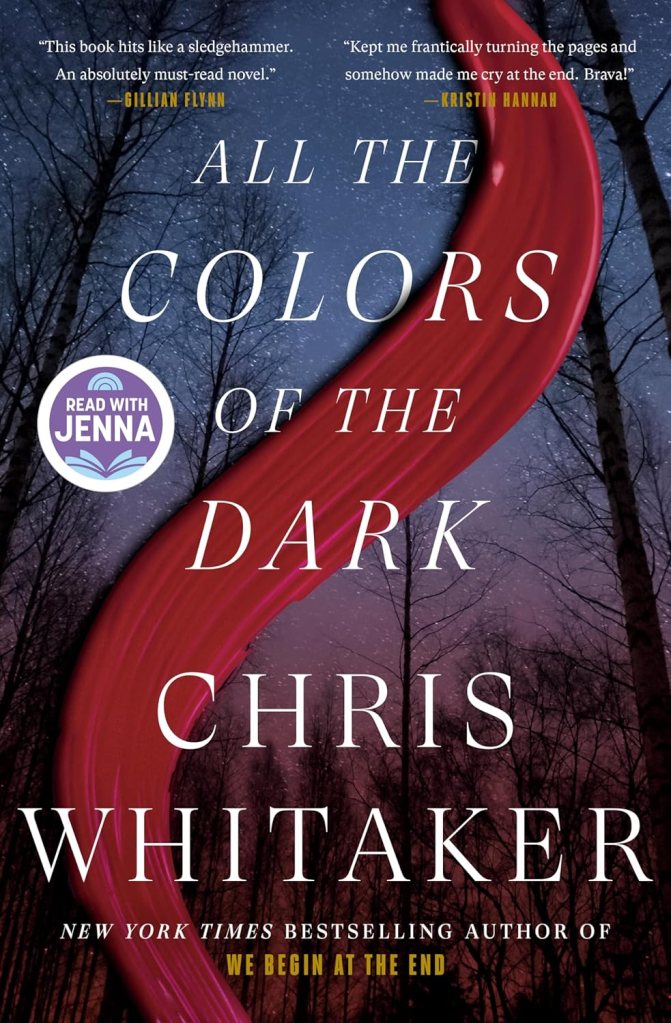
All the Colors of the Dark has been widely touted on all the Facebook readers’ pages I frequent, yet never really explained. The title alone made me curious, so I put it on the holds list at the library and waited a very long time for it.
When I started it, I was immediately filled with a sense of dejá vu; it reminded me forcefully of another dark, complex book I had read a few years back, but I couldn’t remember the name. I looked on Goodreads because I knew I had listed that book in my “coming of age” section, and then laughed; it was by the same author, Chris Whitaker, whose novel We Begin at the End bowled me over when I read it four years back.
I looked up my review of that book, and was not surprised to see that my description would pretty much do for both books:
“It is the saga of multiple people caught up despite themselves in various forms of tragedy they are mostly unable to avert.”
There are other similarities: The main characters begin as young teens with absent or derelict parents; they live in a small town and are outliers in their peer group; and they have an odd array of adults who try to look out for them but are mostly no match for what’s coming to them.
There are two characters around which the story revolves. The first is Joseph “Patch” Macauley, a boy born with one eye. His mother tried, in his younger years, to ameliorate this by sewing him a series of eye patches and buccaneer vests to let him play the pirate, but that may have made him even more of an outcast. The second is his best friend, Saint, a girl raised by her grandmother to be uniquely herself. In a small Missouri town where 13-year-old girls are mostly yearning to dress up, wear makeup, and start going on dates, Saint is more inclined to wearing overalls and keeping bees. The two are pretty much inseparable, each for their own reasons. Saint loves Patch and also wants to help him; Patch believes that Saint’s primary emotion for him is pity, because she invites him to dinner as often as she can, knowing that his mother can’t seem to hold down a job or keep the electricity on and the refrigerator stocked.
There is a girl at their school named Misty, a girl so far out of Patch’s league that even to speak to her might be considered sacrilege by her crowd of friends, a rich girl, a beautiful girl, a girl who takes life lightly—until the day she is kidnapped. Patch becomes her unexpected rescuer, and this act is like the butterfly that causes the tornado, enveloping everyone in his vicinity in chaos.
This book, like the other, is a complex interweaving of mystery, thriller, love story, and coming of age—or perhaps not that, but coming into one’s own. It’s about friendship, love, obsession, degradation, inspiration, hope. As with the first book of Whitaker’s, I don’t want to say too much more about the plot, partly because it’s too complicated to describe, but mostly because when you read it you need to do so without knowing what’s going to happen.
The thing that makes me know this is a great book is that it has some flaws that I would normally have been critical (or even scathing) about in a review. It’s far too long; at one point I thought I must be at least three quarters done, but looked at my Kindle gauge and discovered I was only 52 percent in. It has vastly unbelievable details and plot twists that, again, in another book I might have scoffed at. And he does what I dismissed in my review of the book Things You Save in a Fire as unforgiveable: He writes what feels like the end, but there are five more chapters, each of which also feels like the end until you finally get to the end. I usually hate that, but here I wanted so much to know what happened in every circumstance that I was grateful to turn a page and find more book behind it.
It’s not an easy book to read, for many reasons. There is a lot of tragedy and, just when you feel like you have encountered the worst, there’s more. But it’s also a book full of unexpected lightness and even humor, and if you are a fan of beautiful language and imagery, you will be captivated.
I won’t say it’s not a challenging read; but for me it was all-enveloping and, in the end, vastly satisfying. I will think about it for a long time.
Re-reads
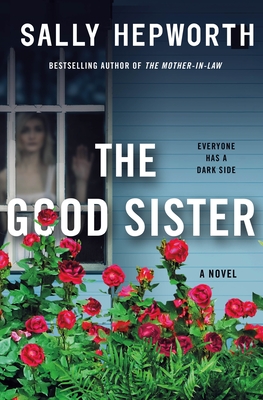
I got frustrated by the length of time I was having to wait for new library books and decided to do some rereading this week, since older books are easily obtainable. I chose the first book, The Good Sister by Sally Hepworth, because I had just reread Eleanor Oliphant and their protagonists share some things in common.
Although I remembered the story pretty well, there are always things that you don’t pick up on the first time through. One of the ones I enjoyed this time was protagonist Fern’s description of her mode of dress. She starts out by saying she is a librarian, and at 28 years old she is much younger than the average librarian (apparently the average is 45!). She comments that many librarians tend to be stodgy dressers, but Fern likes to express herself, so her typical outfit is a rainbow T-shirt topping a long, swirly skirt in some bright color (that day’s was sunshine yellow) with a pair of rainbow- and glitter-covered “trainers” (Brit for sneakers or tennis shoes) to match. She tops off all of this by putting her long strawberry blonde hair into two braids and then rolling them up above each ear for a Princess Leia look-alike effect, although she asserts that she is not copying that style; it is merely a handy way to keep her hair out of her face while working.

As a person who went to library school at 48, I was definitely up in that core demographic, but I did share some characteristics with Fern. I liked wearing colorful, full, knee-length skirts (flowered, striped) with matching solid-color leggings, black boots, and a T-shirt or sweater on top, depending on the season, and although I never did the Princess Leia ‘do, I did wholeheartedly embrace braiding during my 11-year career as a teen librarian.
I enjoyed this book as much this time around—it definitely held up. The characters are either delightfully quirky or deliciously sinister, and the action and narrative are nicely balanced to hold your interest. If you would like to read my initial full review, you can find it here.
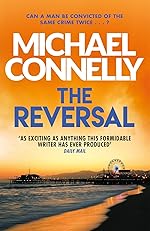
The second book I picked up was one I hadn’t read since 2015 when it first came out, and I didn’t remember a lot about the story. It’s The Reversal, by Michael Connelly, and it was the book where he shook things up in several ways: Mickey Haller (the Lincoln Lawyer) crosses the aisle to become a prosecutor for one case; he partners up with his (first) ex-wife, Maggie McPherson, an assistant district attorney for Los Angeles; and instead of his usual investigator, he hires his half-brother, LAPD detective Harry Bosch, to help put a child-killer behind bars for the second time.
I looked forward to reading it again because I liked that all my favorite characters were in one place. But in the end, I didn’t find this to be one of his better stories. I did enjoy having Haller, Bosch, and McPherson all working together on a case that Mickey was prosecuting, but there was a bit too much courtroom (without enough drama). The man they are prosecuting has spent 24 years in jail for the crime and everyone is still convinced he is guilty. But some new DNA evidence proves compelling enough for the courts to grant him a retrial, and in the meantime he’s out in the world while the trio tries to find enough evidence to put him back in prison.
I felt like not enough happened “in the field” in this book, and I also didn’t enjoy the guy in the role of defense attorney; he was whiny and not sufficiently developed in comparison to his opponents. There is also a huge foreshadowing element with the murderer that never comes to fruition, which was both disappointing and annoying, and the ending is both rushed and anticlimactic, after a big build-up. I actually dropped my rating on this one from four stars to three after rereading it. I’m still a loyal Connelly fan, but in certain books he seems off his game, and this was one for me.
Two of my “new” (to me) books just came in and got transferred to my Kindle, so there will be fresher reviews coming soon.
The Proving Ground
I picked up the latest from Michael Connelly with a teensy bit of trepidation, because I haven’t really enjoyed the last three novels he has put out into the world, whether about Bosch, Ballard, or the new guy Stillwell. They felt forced, they felt a little stale, they felt like his heart wasn’t really in it when he wrote them. But I adore the Lincoln Lawyer, so I got this one from the library and embarked on it as my first read of 2026.
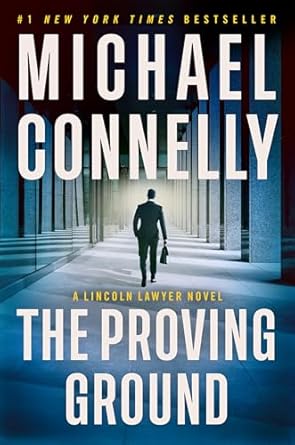
Although the title references the area in front of the jury’s box where the lawyer stands to make his opening and closing arguments, it was also prophetic for me, because with this novel I felt like Connelly proved he could still write a compelling book involving one of his regular characters. But if you are expecting the self-same iteration of Mickey Haller that we have seen in past novels, you might be disappointed.
Mickey had an epiphany that led him out of criminal defense and into civil court practice, this being his first case to actually go to trial. And it’s a big one: A mother is suing a billion-dollar Artificial Intelligence company because the boyfriend of her teenage daughter, under the influence of the company’s chatbot they claim was designed as a companion for teenagers, shot and killed the girl when she broke up with him, after the chatbot told him he should “get rid of her.” So although both gun control and murder are issues, they are not the center of this lawsuit, which is focused on the bigger picture of who should be held responsible. The premise is that the chatbot had faulty input and insufficient guardrails in place, especially when it was ostensibly designed to deal with impressionable young teens who haven’t, themselves, developed a moral compass; tragedy was the result.
I like that Connelly is addressing a current and urgent area of concern by showcasing this courtroom battle that isn’t just about guilt or innocence but about accountability. In so many aspects of our culture now, technology seems to be outpacing ethics in alarming ways, and Connelly has poured extra fuel on the battle over gun control in the United States by taking it to another level. A gun was, once again, too readily available to a teenager (his father kept the gun in the house), and his fantasies of revenge on a girl who “hurt him” (she was alarmed by his internet-driven attitudes and broke up with him) flowered into violence with support from a machine created to interact like a human
support system.
The court persona of Mickey Haller is still front and center: He manages to insert some of his trademark theatrics, although the civil court judge is quicker to reign him in than was normal in criminal court; but underlying the flamboyant drama is dogged research, a constantly evolving strategy, and then ultimately his willingness to gamble everything in the courtroom to get that lynchpin response from a witness that will make his case.
There is a fair amount of both legal-speak and technical discussions about artificial intelligence that might deter some readers. But despite some of those intricacies, this is still courtroom drama, with everything that can ensue—witness intimidation, manipulation of voir dire, attempted bribery, and plenty of dirty tricks from a corporation desperate to be held blameless and to retain control of one of its most lucrative products. Civil court is something of a misnomer here.
There is participation in preparation for the case from another character in the Connelly oeuvre not recently heard from, which was fun. There is also a personal, events-driven aspect to this book, when ex-wife Maggie’s house burns in the Eaton Fire and she moves in with him while waiting on insurance and trying to decide what to do next. Since Mickey made the move from criminal to civil court he has fewer direct clashes with Maggie “McFierce,” now the Los Angeles District Attorney, and obviously hopes that they can reconcile permanently—but that’s left for another day. Some Goodreads reviewers took issue with Connelly setting this at the time of a particular landmark event, since it dates the narrative, but as a Los Angeles resident I liked the local context he always provides.
Although I wasn’t completely in love with the way the book ended, for me this was a satisfying return to Michael Connelly showing what he can do when he’s on his game.
My Year in Books 2025
I managed to read quite a few more books this year than last (95 to 2024’s 66), but I don’t know that I realized much advantage from doing so, beyond just clocking the reading time. My stats, according to Goodreads, were:
95 books
28,425 pages read
Average book length: 346 pages (longest book 908 pages!)

Although I discovered some enjoyable reads, there wasn’t one single book that truly bowled me over or made me immediately check out another book by that author or settle in to read a lengthy series. And most of the books I did like were the lightweight ones that I ended up reading as a sort of relief between the tougher titles. Here’s a list:
The Lost Ticket, by Freya Sampson
The Busybody Book Club, also by Freya Sampson
Vera Wong’s Guide to Snooping (On a Dead Man),
by Jesse Q. Sutanto
Finlay Donovan Digs Her Own Grave, by Elle Cosimano
My favorite science fiction book was The Road to Roswell, by Connie Willis.
My new discovery in YA fantasy, with an intriguing Egyptian-like setting, was His Face is the Sun, by Michelle Jabes Corpora. I look forward to the sequel(s).
I read a few books that were award-winners, or by well-known literary authors, or touted by other readers as amazing reads, but found most of them problematic in some way, and therefore didn’t feel wholeheartedly pleased to have read them. They were:
James, by Percival Everett
The Seven Husbands of Evelyn Hugo, by Taylor Jenkins Reid
Horse, by Geraldine Brooks
The Mare, by Mary Gaitskill
Horse Heaven, by Jane Smiley
Three Days in June, by Anne Tyler
Gentlemen and Players, by Joanne Harris
These have all been reviewed on this blog, so do a search for the title or the author if you want the specifics. None of them received a thumbs-down, but none of them lit up my imagination either.
The most disappointing part of the reading year was the letdown I felt each time I finished the next book in a bestselling series I had previously enjoyed. I read two books by Michael Connelly—The Waiting, and Nightshade—and had a “meh” reaction to both. The Grey Wolf, by Louise Penny, didn’t deliver the characteristic Gamache love, and was filled with tangents and extraneous story lines. Perhaps the least successful (for me, at least) was The Hallmarked Man, by “Robert Gabraith,” aka J. K. Rowling, which was so endlessly convoluted that I felt the need to reread it—but so long, wordy, and unsatisfying that I didn’t! I’m really hoping these authors rally in the new year, but it’s more of a “fingers crossed” than an actual expectation.
Honestly, my best and most sustained reading took place when I got fed up enough to revisit beloved books from decades past by such authors as Rumer Godden, Georgette Heyer, and Charlaine Harris.
Today I am starting on 2026, two days ahead of schedule! Onward, readers!
Molly
I just finished reading Nita Prose’s first two books about Molly the Maid (The Maid and The Mystery Guest) and had planned to read the third, but three other books abruptly became available from my holds list at Los Angeles Public Library, so I’ll be putting that off for a while…or maybe forever?
(I actually thought I had already read these books, but had confused them with The Housemaid series by Freida McFadden. I much preferred these to those.)
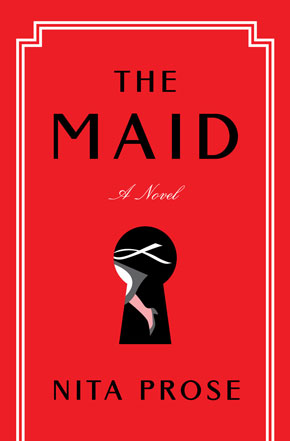

I initially felt positive about the Molly books because I do appreciate and enjoy stories about neurodivergent people; two of my favorites have been Eleanor Oliphant is Completely Fine, by Gail Honeyman, and The Good Sister, by Sally Hepworth. I also liked the Rosie books (actually about genetics professor Don Tillman) by Graeme Simpsion. But I had a few more problems with these books than I had with any of those, and that diminished my enjoyment somewhat.
Most of that was not to do with the character herself, but with how the author wrote other people’s reactions to her, which were both ignorant and cruel. In the other books I mentioned, it was fairly obvious to everyone around these people that they were fundamentally different in their perception of the world, but in the Molly books many of the characters simply treated her as an object to mock and bully rather than understanding that something more was going on, and although I’m sure that may sadly be the case in real life, it felt both too pointed and too oblivious here, and I don’t think that viewpoint added to the story. It came across as if the author felt the need to be heavy-handed in order to ensure that we “got it,” but she had already made her point with her detailing of Molly’s functional attitudes and abilities, so it just became wearying and kind of ugly, and most of the other characters were too stereotypical to be genuinely effective as a foil for Molly.
I find myself overlooking the mystery aspect to these books in my fixation with the characterizations, which is ironic considering that that is how they are presented, genre-wise; I did enjoy the puzzles themselves, which presented good levels of frustration and vindication as they proceeded.
I sort of wish I had written this review in that five minutes after I finished the first book rather than waiting to react to the entire series, because my response was much more about the positive than the negative at that point. I can’t refuse to see the deficits, but I enjoyed the book more in that moment than in retrospect, which is too bad.
Although I found many of the same flaws in the second book, it did have something interesting going for it, in that we got to find out more about Molly as a child, and the history of her grandmother that brought both of them to where they ended up. I liked the flashbacks to the past that explained what was going on in the present, and in some ways preferred the second book because of the greater depth of development. But it couldn’t compete with the initial reaction to Molly that was elicited in the first encounter, so I’d have to say I liked The Maid the best of the two. Perhaps I will read the third at some point and see what has changed.
Busybodies
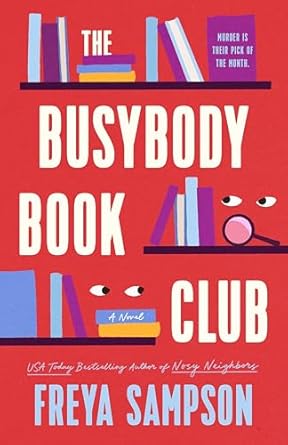
The Busybody Book Club is my first experience of the novels of Freya Sampson, and I think I will need to read at least one more just to verify what other reviewers on Goodreads had to say about them. Some loved this book, others said it was her least successful; if the latter is true, then I look forward to reading one/some of the others, because I found this a charming story with much to enjoy.
Nova Davies has recently moved to Cornwall to start a new life with her fiancé, Craig, and has found a job at the St. Tredock Community Center. She is attempting to revive a previously popular book club run by her predecessor, but so far it’s an uphill task. There are to date only five members including herself, and two of the five are distressingly silent, while the other two are all too outspoken. Arthur wants to read romances, because he is tasked at home with reading aloud to his wife, Esi, who has lost her sight and much of her mobility, and that’s what she likes. But Phyllis (accompanied by her smelly old bulldog, Craddock) insists that romances are rubbish and the club should focus on mystery, preferably the works of her favorite, Agatha Christie. She prefers Miss Marple (quietly brilliant) to Hercule Poirot (too pretentious), but is adamant about genre. Because they take turns suggesting each month’s read, however, opinions are also solicited from painfully shy teenager Ash, who is a science fiction fan, and from their new member, Michael, who is largely inarticulate and, of course, from Nina, who tries hard to keep selections eclectic and discussions moving despite Phyllis’s loud and frequent exclamations, interruptions, and wholesale scoffing.
On the night of their meeting, the only people left in the club are Nova and the four other members. At some point during the lively discussion of Where the Crawdads Sing, someone enters the center’s office and steals the petty cash box, which happens to contain ten thousand pounds allocated for a new roof. This isn’t discovered until the next morning, when the police are called by director Sandy to interview the book club members; everyone immediately focuses on the odd behavior of Michael, who received a text on his phone halfway through the meeting, looked distraught, and ran out of the room. He never returned to the meeting, and is instantly suspect; but Nova is also under scrutiny because it was her job to lock the office, thereby preventing the opportunity for the theft.
Losing that money is a disaster for the center and may actually precipitate its closing. The club members are immediately up in arms, Phyllis most of all, and are determined to figure out the puzzles of who could have stolen the money and for what purpose, and what has happened to the mysterious Michael. Theories abound, suspects are scrutinized, and meanwhile the relationships between the members change and grow based on their collaboration. Some things turn out exactly as you would expect while others are a total surprise, and the fun of the book is figuring out where you (and the characters) got it right.
This is a sort of hybrid; it’s a cozy mystery, but it’s also a story about people and their relationships with one another, their secrets, their memories, their hopes. And it’s a book about books, and who among us can resist that? I loved that the members ranged so widely in age, interests, and taste in books, and that there was “book chat” throughout. There are so many elements to this story—from coming of age to confidence issues to loneliness and grief—that kept the narrative lively and interesting. It’s not a “significant” book, but it is a well crafted and witty one that provided great entertainment and made me want to know what happens to the characters after. What more could you ask for, on a solitary rainy afternoon?
Hallmarked for letdown
I recently completed The Hallmarked Man, number eight in the Cormoran Strike detective series by “Robert Galbraith.” (I wish J.K. Rowling would just let go of the alias and publish these under her own name; it’s messing with my alphabetical filing.) More than once I harked back to the previous book, The Running Grave, while reading this one, because with that book I had a “Frenaissance” (as Phoebe Buffay calls it) with this series, and was so hopeful that things could only get better from there on out. Alas…no.
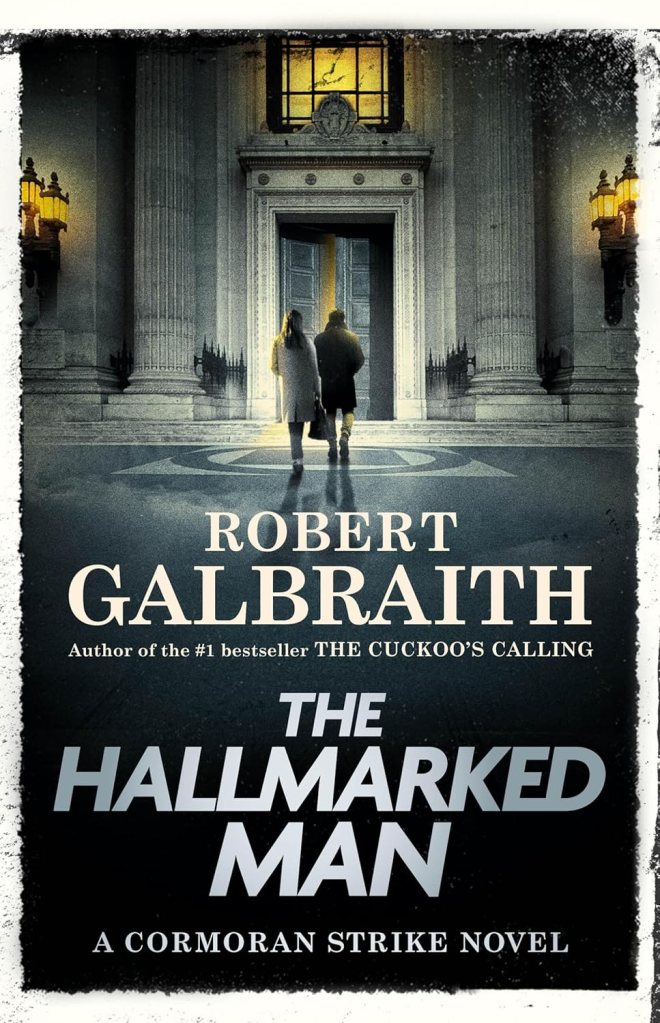
You have to maintain a real and dogged commitment to this series if you are going to read it, because each book is more than 900 pages long. I don’t mind a long book; in this series, it has made it possible not only to thoroughly explore the main mystery but also to feature other, minor ones that take up the daily functioning of the Strike and Ellacott Detective Agency, while leaving ample room for personal relationships not only between the two protagonists but also among all sorts of hangers-on, both staff and client alike, and I usually enjoy the variety contained within the larger story.
The series has, for the most part, kept a nice balance between the professional and the personal and, even if I didn’t enjoy a particular story line, I was always drawn in by the continuing evolution of the relationship between Cormoran and Robin. But this book felt like a giant misstep on almost all fronts and, while I enjoyed parts of it moment to moment, I was left feeling frustrated and dissatisfied with where we arrived by the end of it.
The mystery was so convoluted and the cast of characters so confusing that it felt like Rowling should have created the equivalent of one of those family trees that historical fiction writers often include in their books so that you can keep all the generations and their spouses and children straight. Someone is murdered and gruesomely mutilated and, because of the method, it’s hard to figure out who it is. The police have settled on one theory, but a woman comes to the agency convinced that the victim is her missing boyfriend and wants them to prove that it’s him, not the person the police have identified. In the course of the book, potential victims multiply until there are four or five possibilities, and to each of the victims is attached a cast of characters that must be interviewed to try to determine if he is the one; but the witnesses are almost as elusive as the putative dead men, and the story becomes an exercise in frustration. Add to that some red herrings about secret societies, the porn industry, human trafficking, and MI5 involvement, and it’s all just too much.
As if to take a cue from that, the personal lives are likewise chaotic, and the most disappointing part of the relationship between Cormoran and Robin is its repetitiveness. In the last book both of them seemed to have grown and, with the cliffhanger last time, I expected their relationship to be resolved or at least moved along. Instead, Robin’s boyfriend Ryan Murphy becomes her husband Matthew 2.0, if a bit nicer and less whiny, and Robin has reverted to all the self-deception and self-doubt she exhibited several books back, but with a new partner. She knows, deep down (or maybe not even that deep!) that she doesn’t want to be with him or have his children, yet she keeps deceiving herself that she loves him (as well as stringing him along). She also spends far too much time doubting Strike and putting moods and motivations on him without either his knowledge or participation.
On Cormoran’s side, the dithering becomes maddening. He has come to realize what he wants (Robin) and plans to reveal this to her, but he lets every minor misstep come between him and that revelation, and makes things exponentially worse with every hesitation. It’s all miscommunication, misunderstanding and angst. The upshot is that we end up in almost the same place we left off and, with the acknowledgment that they have now worked together for almost seven years, I for one wonder if continuing to ship them is even worth it.
The problem with a review like this is that it may turn people off to reading the series if they haven’t begun it, or to stop before assaying this chapter. I wouldn’t go that far; it’s not an irretrievably bad book, and it is, of course, necessary in order to understand the progression of both the agency and the relationship…but I’m not enthusiastic about it. When I first finished it I felt the need to turn around and reread it to pick up on all the stuff I had missed, but I didn’t love it enough to do so. That pretty much says it all. Disappointed after such a long wait, and hoping for a better outing next time…
What makes a mystery?
This is a question I have been pondering this week as I started reading Anthony Horowitz’s Magpie Murders, a book that has been recommended over and over again by readers on the various Facebook reading groups to which I belong. I am a big mystery fan—in fact, it’s probably my third most-read genre, maybe second, behind fantasy and possibly science fiction. I love a good mystery; but I specifically love one that has some quality of individuality and that arrests my attention and reawakens a somewhat jaded appetite. As I began reading, I discovered that Magpie Murders was not it.
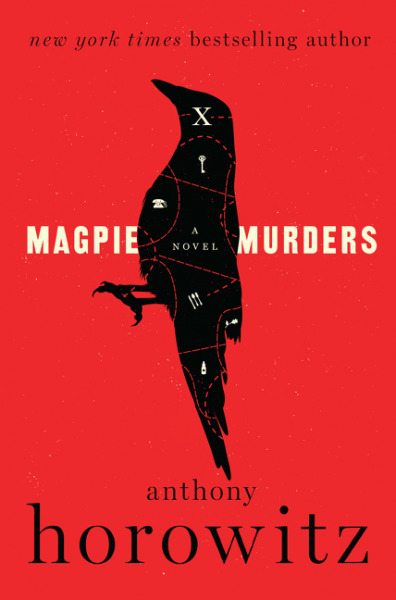
This book has been touted as the heir to Agatha Christie and Dorothy Sayers (and probably to Conan Doyle), and I can see the attempt, but to me it was a bland, by-the-numbers imitation (possibly attempting to be a parody?) rather than a “brilliant recreation of vintage English crime fiction.” When I was almost 50 percent into the book, I seriously considered posting it as a DNF. I honestly didn’t understand why there was any hoopla at all when it comes to this book.
It’s a typical cozy setting in a small town in the English countryside, with the requisite landowner, vicar, shop keepers, eccentric spinsters, surly handymen, and so forth. The detective’s only point of uniqueness in this setting is that he is German by origin; but given all his mannerisms, quirks, and habits, he might as well be Sherlock or Poirot or Jessica Fletcher. He has the slightly dense assistant, he asks seemingly unrelated questions and makes leading remarks that he won’t explain, and then he claims to know who the murderer is before anyone could possibly expect him to have solved the crime, given the vast number of suspects and the meager number of clues. The publisher described this book as “masterful, clever, and ruthlessly suspenseful,” and my response was, sadly, “none of the above.”
When I hit 50 percent, though, we stepped out of the book and into the office of the publisher of Alan Conway’s series about the detective Atticus Pünd, and I realized that the page I quickly skimmed past at the beginning of the book actually had something to do with the story and wasn’t just an introduction or something. So I went back and read it with attention this time, and realized that this was a book within a book and we were now getting to the real story.
I’m going to say here that although it was my fault that I wasn’t paying sufficient attention at the beginning, I’m also going to hold both the format and the author accountable for a little of my confusion. First, I’m reading it on my Kindle, and the way it was structured didn’t lead the reader to recognize that the start of the book was before the start of the book! As for the author, do you really tell the entire story within the story without its reader ever breaking away from it? I mean, Susan Ryeland sits down on a rainy afternoon with a bottle of wine and some chips and salsa to read a long manuscript; it’s more than plausible that she gets up at some point to replenish one of those (it says later that she had gone through more than the one bottle of wine), get something more substantial to eat (she would have needed it, to cushion the effects of all that alcohol), use the loo (I repeat, lots of wine!). A break halfway through that 48 percent of the book to remind the reader that this is a false construct, so to speak, of what the book is really about would have been helpful—and also both realistic and logical.
Anyway…
Once I hit the end of the manuscript and returned to the “real world” of Cloverleaf Books, a small publishing company whose owner and top editor were both reading the manuscript of Alan Conway’s ninth Atticus Pünd novel over a long weekend, I thought things would pick up and we would get the explosive and fascinating book we were promised by reviews and cover blurbs alike—but alas, that faith was misplaced. Others have commented how much more exciting they found the actual mystery that unpacks itself from the pages of Magpie Murders (the book within the book called Magpie Murders), but if so, I certainly wasn’t reading the same book.
Susan Ryeland was a dull and ambivalent character who constantly expressed her frustration that she couldn’t “do” the mystery thing the way all the great characters of literature were able to master it. When she wasn’t being tentative and indecisive about her attempts to solve the mystery, she was whining about her boyfriend, Andreas, who wants to whisk her away to Greece to run a small hotel with him. What an inconsiderate guy!
The other characters are likewise less than charismatic, and Alan Conway himself is written as a cold, devious, and thoroughly unlikeable person about whom it was hard to care. And there were too many instances of clues that were discovered to be clues, but then weren’t explained. Maybe Horowitz is saving something for the next novel? If so, it yielded an unfortunate sense of frustration while reading this one.

I hung in there and finished the book, but it was a near thing, and I regretted spending the time on it once I was done. I won’t be visiting the next in the series, which is 604 pages of the same, according to another Goodreads reviewer who characterized it as “ponderous, overly complicated, and too long.” I spent a decade recommending Horowitz’s Alex Rider series to many teen readers, but I can’t do the same for this one. There are so many better mysteries out there, and I’m going to go find one to expunge the irritation from my brain!
The Wong way

Vera Wong rises to another occasion in Vera Wong’s Guide to Snooping (On A Dead Man), by Jesse Q. Sutanto, the second (but hopefully not the last) in the saga of this intensely curious proprietor of a Chinatown tea shop in San Francisco. (The first was Vera Wong’s Unsolicited Advice for Murderers, reviewed here.)
Although the dead body didn’t land on the floor of her shop this time, he did, in some sense, seek her out. When Vera pays a visit to the police station to see Officer Selena Gray (the woman she hopes will marry her son, Tilly) about a problem of her own, she notices a troubled girl lurking outside the station, pacing back and forth and wringing her hands but unable to bring herself to enter. Vera knows, as a Chinese grandmother, that it is her duty to interrogate, er, offer a sympathetic ear until the young Millie gives up whatever is bothering her, so Vera takes her back to the shop for a sustaining cup of tea. Millie tells Vera that her best friend, Thomas, is missing…but Vera knows there’s a lot Millie is holding back.
That weekend, while cat-sitting at their apartment for Tilly and Selena, Vera discovers a treasure trove of information (she looks at the files in Selena’s briefcase) about a young man who has been fished dead out of Mission Bay, presumably a suicide, and although the man is listed as John Doe, it soon becomes clear that this is Millie’s missing friend. But as events progress, we learn that he had a public face as well, under a different name, as a prominent “influencer” on social media; four other people besides Millie who have possibly suspicious connections to the dead man convince Vera that this was murder, not suicide. Vera, bored since her last adventure as an amateur sleuth, jumps in with both feet to meet, interrogate, and adopt her new list of suspects into the chosen family she acquired the first time around. Despite Selena’s warnings to stay out of her investigation, Vera is determined to be one step ahead of everyone in figuring out this mystery, thus proving she is as intrepid at solving it as she was last time.
I think I liked this book even better than the first, which I thoroughly enjoyed. Vera has no filter, and her misunderstanding of American slang and her slyly manipulative cozening of people to get what she wants—which also usually corresponds to what they need from her—provides a lot of humor. It also lets us get acquainted with the cast of characters much more quickly as Vera grills them mercilessly in her quest to solve the murder. But although she can be a bit much, Vera makes up for it with her caring, which she exhibits in her preparation of vast quantities of food and tea for all and sundry. (Don’t read this when you’re hungry. You will immediately spend a fortune on DoorDash, and then be disappointed that it doesn’t measure up to the cuisine of Vera Wong.)
I was initially a little put off by yet another book with a prominent character who is an Instagram influencer, especially having recently read Sutanto’s previous book You Will Never Be Me, which was a much darker tale about two women obsessed with their online presence as “momfluencers.” But before I decided to put it down, I was drawn further into the story as each subsequent character revealed what they knew and a complicated back story emerged about the actual life of “Thomas” that led to his death.
I loved the moments in the story when each member of the motley crew that Vera assembles has the realization that…
“[L]ife gets much easier when you hand over the reins to Vera.”
Some on Goodreads said they didn’t like it that Sutanto took the story in that more serious direction, but I felt it was the perfect balance—a cozy with substance when it comes to societal issues such as family relationships, loneliness, generational differences and expectations, and also the fatal effects of greed and exploitation. It had a little bit of everything, but for me the Wong way was the right way, ha ha!
And, judging from the closing chapter, we may not have seen the last of Vera…and the next adventure could take in a much wider world than San Francisco’s Chinatown!
 The Book Adept