Boarding-school books
I’m off on my own personal nostalgia kick right now, re-reading Georgette Heyer novels to escape from the depressing real world of politics and sub-optimum health. But on one of the book-lovers’ pages on Facebook, a mom was asking for recommendations for her teenage son who is a reluctant reader, so I combed through my various categories of YA fiction for some and was thus inspired to write about this sub-set of coming-of-age fiction, the boarding-school book.
I think those who have never attended a boarding school are in some way fascinated with the culture—I know I always have been, from the time I read my first children’s book with a protagonist who had been posted off by their parents to “sleep-over” school. And there are a lot (hundreds) of examples out there of the away-from-home scholastic experience, from Harry Potter to A Separate Peace. There are books in every genre, for almost every age, so I thought I’d mark some of my personal favorites and some that seem to be perennially popular.
The boarding-school book is by no means limited to children and teens—there are many written for (and sometimes about) adults as well, especially if you include the college boarding experience. I’ll give age groups and categories and (in some cases) some brief synopses, and if you have the same interest I do, you can gravitate to whichever piques your interest.

For children, a classic example is
A Little Princess, by Frances Hodgson Burnett, about a young girl sent home to England from India, where her father is a successful merchant, because it was believed that the climate of India was not salubrious for British children. They were separated from their families and entrusted to the care of an English boarding school, where they would hopefully get an education and a proper upbringing and be reunited with their families when they were grown. Young Sara Crewe goes from riches to rags when her father disappears and is presumed dead, and Miss Minchin’s Select Seminary can no longer collect hefty fees for her maintenance. I sometimes think of this book as the child’s version of the first third of Jane Eyre, by Charlotte Brontë (although Sara is much better-natured than Jane ever was!). It’s a romantic story with a protagonist who remains upbeat and optimistic in the face of cruelty, guaranteed to appeal to the kind of reader I was at a young age.

There are many boarding-school books with more fantastical settings, the most well known probably being the Harry Potter books, in which gifted children are sent to Hogwarts School of Witchcraft and Wizardry to hone their talents. But in the fantasy category are also the Harper Hall books by Anne McCaffrey, which take place on the planet Pern and feature dragons and fire lizards in these stories of children studying to be professional musicians; and The Rithmatist, by Brandon Sanderson, featuring another magical school, this time for math geniuses with a little something extra. These are all for younger children and teens (maybe 4th through 8th grades?), although older teens and adults can (and do) enjoy these books as well.

In the specifically Young Adult category, there are fantasies, mysteries, and realistic fiction all set at private academies that either offer the standard schooling or are geared towards inhabitants with a specialty. For the middle school set: One realistic one in which the rule of the bullies and the plight of the bullied are revealed is The Mockingbirds, by Daisy Whitney. Another fairly normal boarding school that is the site of a mystery is the backdrop for the Truly, Devious trilogy by Maureen Johnson, in which death visits Ellingham Academy. And the Gallagher Girls series by Ally Carter (beginning with I’d Tell You I Love You But Then I’d Have to Kill You) showcases a girls’ school that is supposedly for the upper-crust daughters of the snobby set but is actually a training curriculum for those who wish to become undercover agents for the CIA and like agencies.

Among the boarding-school franchise for older teens, there are also a variety of settings. In the realistic category are such mainstream stories as Winger, by Andrew Smith (at a boys’ school focused on rugby); and Looking for Alaska, by John Green and Saving Francesca, by Melina Marchetta, both with a challenging co-ed population. A fun book in its development of one character from age 14 to 16 as she figures out how to dominate her environment is The Disreputable History of Frankie Landau-Banks, by E. Lockhart. Another is the trilogy by Stephanie Perkins that begins with Anna and the French Kiss, following a Georgia girl who is transplanted to an American school in Paris for her senior year.

A huge boarding-school subset is the paranormal category, with vampires dominating and witches coming in a close second—the Vampire Academy books by Richelle Mead, the Hex Hall series by Rachel Hawkins, the Gemma Doyle stories by Libba Bray, and Evernight, by Claudia Gray. One series that I particularly like and admire is Wayward Children by Seanan McGuire, which could arguably be classed as either YA or adult; the books are unusual, smart, and varied in their approach. I reviewed them on this blog when I first discovered them, and continue to find them unique.

Moving on to books more appropriate for adults, there are some in every category. The Magicians (and sequels) by Lev Grossman have been billed as Harry Potter for grown-ups. Mysteries that feature boarding schools include Well-Schooled in Murder, from the Inspector Lynley mysteries by Elizabeth George; The Secret Place, one of the Dublin Murder Squad books by Tana French; and The River King, by magical realism author Alice Hoffman. A book that is written about young people but is (in my opinion) too intense for their age group to read is Brutal Youth, by Anthony Breznican, a co-ed Lord of the Flies set in a Catholic private school in Pennsylvania. I didn’t so much enjoy reading it as remain fascinated and unable to put it down. It’s definitely powerful, and in some ways brilliant, but also stark and frightening. Gentlemen and Players, by Joanne Harris, is written from the point of view of the teaching staff at St. Oswald’s Grammar School for Boys, a cat-and-mouse tale of revenge as one staff member with secret ties to the school tries to destroy it from the inside. Finally, Never Let Me Go, by Kazuo Ishiguro, is dystopian literary fiction with a boarding school setting that may not be what you had in mind when you read the initial description, but it’s a fascinating premise with a heartbreaking (and kind of depressing) outcome.
This is a mere drop in the bucket of what’s out there; if you want to research this category further, go to Goodreads, select “browse” and “lists” and type “boarding schools” into the search box, and you will find multiple lists containing all these and many more. But the books mentioned here are a great start if you, like me, enjoy that particular setting for your fiction.

Odd mystery series
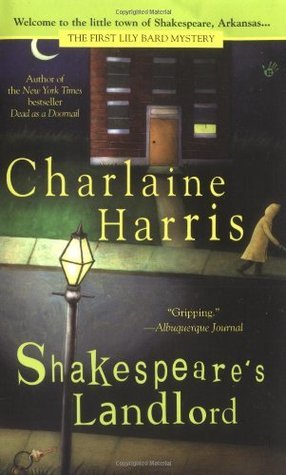
I was in between loans from the library a few days back, so I browsed the books on my Kindle to see what on there was still unread, or what I might want to reread, and I happened across Charlaine Harris’s Lily Bard mysteries. They are oddly named, and they are oddball murder mysteries—strangely engaging, given their dark tone. They would probably fall under the category of “cozy” mysteries, because they take place in a small town and the lead character isn’t a police officer or a detective, but they are, in fact, the antithesis of cozy in their theme! All five books have the name “Shakespeare” in the title, beginning with Shakespeare’s Landlord, and it’s confusing until you figure out that the protagonist, Lily Bard, was picking a town at random to call home and chose Shakespeare, Arkansas, simply because her last name is Bard. I guess there could be worse reasons for choosing to live somewhere…
Anyway, Lily, the center of all the action, is the survivor of an extremely violent and traumatizing episode in her past and, after trying and failing to get back to normal in her home town, where everyone knows what happened to her and is either pitying or prurient, depending, she moved a few times and finally landed in Shakespeare. She keeps strictly to herself: She makes her living by cleaning houses (preferably while her clients are away at work); she works out at the local gym—lifting weights and taking karate classes so that she is strong and self-sufficient; she avoids friendships and entanglements; and she walks the town at night when she can’t sleep.
When the first book opens, Lily has lived in Shakespeare for about three years, and has managed to remain a mystery to most of the town’s inhabitants, even though gossip in a small southern town is pretty pervasive. All that is about to change, however, because one dark night she witnesses a dead body being dumped in the town’s arboretum close to her house, and the murderer is using her trash bin cart to move the body. Even though she tries her best to stay out of it, an anonymous call to the local police chief, who happens to live in the neighboring apartment building, eventually drags her into the limelight. She soon realizes that the only way she’s going to get back to her peaceful existence is to figure out who killed the police chief’s landlord.
Each of the books features a murder, four of the five in the small town that apparently harbors a bunch of violent people below its deceptively peaceful surface presentation. (The fifth takes place back in Lily’s home town when she returns to serve as maid of honor in her sister’s wedding.) And Lily is somehow connected, if only tangentially by her job, her gym, or her therapy group, to all of the victims. This woman has had and continues to have some stunningly bad luck in life. To counterweight some of that, Harris has her meet a guy in book #2, the first person she doesn’t want to kick to the curb after a single encounter in all the years since her tragedy separated her old life from her new. And although the involvement is slow and cautious with many setbacks, the relationship is a true match.
It’s an weird little series, not only because it’s so relentlessly downbeat but because when I read it, I liked it enough to reread it twice! I can’t say what is so engaging about it—most of the inhabitants of the town are none too nice, and Lily herself, although admirable for her stoicism and self-reliance, is about as loveable as a cactus. Still, there’s something vulnerable about the way Harris writes these people that makes you want to know what happens to them, despite yourself.
Have a gander, as they might say in Arkansas, and see if the Lily Bard series is for you.
Chartreuse
I just finished reading The Grey Wolf, Louise Penny’s latest (#19) in her Chief Inspector Armand Gamache series, and I am torn.

On the one hand, I found myself thinking, during the course of the extremely intricate narrative in which both the reader and Gamache himself are unsure who can be trusted, who is in the know, and who is culpable, that I was enjoying a complex plot in which I wasn’t sure, at any moment, what was to happen next, or who was responsible. I have been reading too many suspense or thriller novels recently that had about as much subtlety as a romcom and disappointed my need for intelligent thought. From that standpoint, I appreciated the complexities of The Grey Wolf. I also enjoy Gamache’s philosophical musings about people and life, and his lyrically worded observations of nature. So there were definitely things to like.
On the other hand…
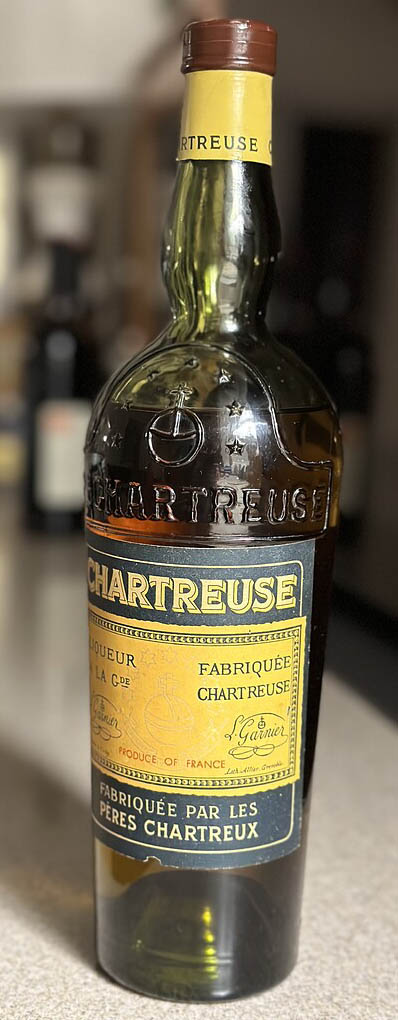
I found myself agreeing with another Goodreads reviewer, who said about this plot, “Penny needs to go back to solving homicides, not national security and international intrigue issues.” It seems like she is making a shift to writing thrillers rather than mysteries. I also agreed with several others who opined that although the plot itself is pretty clear—there is a scheme to poison the drinking water of Montréal by a ruthless person or persons who don’t mind killing anyone who knows anything and/or speaks out—the working out of it, with the jaunts to Washington, D.C., Rome and France, to obscure towns in the wilds of Quebec and to cloistered monasteries whose recipe for a well-known liqueur is another red herring, is overly convoluted and, honestly, somewhat ridiculous. I became skeptical that there was literally no one in the government to trust, other than Gamache’s son-in-law Jean-Guy Beauvoir and his compatriot Isabelle Lacoste (this must be the most corrupt government in Canadian history!) and somewhat bored by the round-and-round nature of clues that led to nothing but more obfuscation.
So…although I am always happy to discover a new Gamache mystery, this one left me more dissatisfied than not.
Also, on a separate topic, am I misremembering, or has Penny rewritten “history”? How is Gamache still in his 50s? I can’t recall the specific book, but I thought he had passed into his 60s in a previous story. And didn’t his godfather, Stephen Horowitz, who is referenced in this book, die in Paris, in All the Devils Are Here? And although I did remember the involvement of Gamache and Beauvoir with the Gilbertine monks from A Beautiful Mystery (book #8), all this back story about this “old adversary” who is now assistant to the deputy prime minister—is my memory so bad that I simply don’t remember that plotline, or WAS there no book and Penny is just making up a shared past for them for The Grey Wolf?
I’m not ready to call it a day on the further tales of Chief Inspector Armand Gamache of the Sûreté du Québec (especially because this book ended on a cliffhanger), but I’m approaching them with less expectation of true love than I used to do.
Still waiting
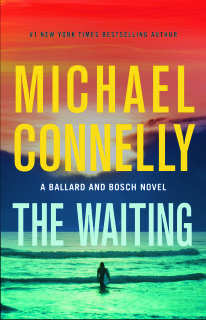
I finally picked up Michael Connelly’s latest, The Waiting, which features Detective Renée Ballard, backed up in one of the three plotlines by the retired Harry Bosch and in another by his daughter, Maddy, a fledgling police officer. And my title refers to the feeling that I am regrettably still waiting for this new protagonist to take off and give me the same fondness for Connelly that I have had throughout Harry Bosch’s long and checkered career and also that of Mickey Haller, the Lincoln Lawyer, in that side series.
Alas, after this fourth (fifth?) book featuring Ballard, I’m thinking that once Harry is well and truly no more, I will be letting this series slide off my TBR list. At this point, Ballard feels irretrievable to me; I believe Connelly’s best bet would be to dump her and start fresh with a brand-new protagonist who has absolutely no associations to previous characters (and therefore doesn’t suffer by comparison).
It’s hard to say exactly why I verge on disliking Renée; but it’s more than just that she’s not Harry. As I mentioned in a previous review, I was open to the switch to her quirky, nomadic character in the first book, when she was living on the beach in a tent with her dog and gave almost equal importance to surfing that she did to police work; but once she was integrated into the system, she became almost immediately boring. She has no life, she has no friends (even her relationships with her co-workers being either adversarial or more transactional than comradely), she is constantly reckless on the job but then inexplicably irritated that management doesn’t view her favorably or even benignly, and she’s a terrible dog parent! Honestly, she’s kinda toxic. Harry was also a rule-breaker, but his motivation was almost always clean: It was all for the sake of solving the case, helping the victim, catching the criminal. Ballard, next to him, seems calculated and kind of manipulative; she complains about the politics, but then fully enters into them to get what she wants.
I didn’t love any of the three plot lines in this one either. In the first, Renée’s car is broken into while she’s out on the water before work, and rather than simply report the theft of her wallet, badge, and gun, she decides that it’s a potential career ender (although it wouldn’t have been had she not given her superiors and colleagues reason to be exasperated with her consistently erratic behavior) and involves multiple people in surreptitious plotting and planning to get them back without anyone in power finding out. Even though it leads to a major take-down of dangerous people, it was so shortsighted in its motivation that it irritated me. She brings Harry in on her convoluted plotting to mask her own involvement, then wallows in guilt in case he gets hurt. I think this is one of those reasons for dislike of the character: She can’t herself decide who to be, so as a reader it’s hard to fasten onto some character trait to love.
The second plotline is initially gripping; a cold case that the Open/Unsolved Unit has been exploring via volunteer Colleen’s genealogy and DNA studies yields a familial connection to a serial rapist who terrorized the city for almost five years and then abruptly went inactive 20 years ago, and if the connection is correct, the rapist is a political hot potato. It could be a sensational “win” for the beleaguered unit, but then things take an unexpected (and less interesting) turn and the case is dragged out for the rest of the book only to be resolved quite abruptly in the last 20 pages.

Likewise, the involvement of Officer Madeline Bosch feels contrived, and her personality and participation are so muted that I could have wished this were simply omitted. Perhaps Connelly’s plan is to substitute Maddy for Harry now that Renée isn’t doing so well in the ratings, but if he’s going to do that, he has to get her off “the beat” and into a detective job in a hurry, which means doing some career short-cutting. What better way to achieve that than to have her volunteer for the Open/Unsolved Unit with the specific motive of solving the most notorious cold case in Los Angeles history? Like I said, it felt contrived.
All the other characters in the book, from the captain and the chief to Ballard’s volunteer co-workers to the FBI guys remained essentially cardboard characters, serving only as foils for the main characters, and not great ones.
I’m feeling like a huge curmudgeon—here she goes with another “damning with faint praise” review—but honestly, it’s been so long since an author and a book really knocked my socks off that I’m starting to believe that either they don’t exist or that I have become so hard to please that it will never happen again. I hope neither of those is true. I started this blog to encourage people to read, not to turn them away from books they might potentially enjoy!
Anyway, I’m also hoping Connelly will back himself out of this trajectory and pick a new one, because he’s been a good story-teller with a lot to offer throughout the Bosch and Haller years and I want that to continue. But I don’t think it’s going to happen if he sticks with Ballard.
Presumption
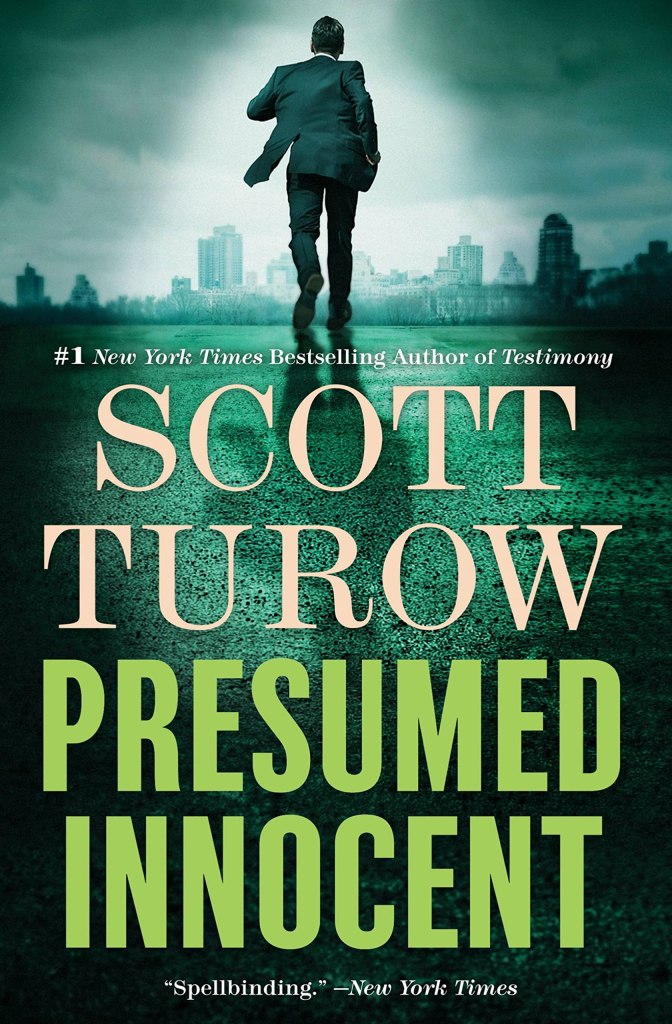
I recently watched the 2024 miniseries revamp of Presumed Innocent, based on the 1987 book by Scott Turow. I had seen the original movie, made in 1990, starring Harrison Ford, Raul Julia, and Greta Scacchi, so I was intrigued to see what Jake Gyllenhaal would make of the lead role as Rusty Sabich, and how an eight-episode miniseries would differ from a two-hour movie. My reactions were mixed: Gyllenhaal and Ruth Negga, who plays Barbara Sabich (the wife) were amazing in their roles; but I thought the woman cast as the notorious Carolyn Polhemus was so mundane and uninteresting compared to Greta Scacchi, for whom that role seemed to be custom-made, from her manner to her appearance.
Watching the miniseries brought up another whole series of questions, however; I believe I did read the book at some point, but the 1990 movie took precedence in my memory and the only way I really recalled the plot was from that. Since the miniseries has a couple of extra characters not in the movie, alters the gender of some of the original characters (which in one instance shifts the plot), and also ends differently, I was curious enough to find out whether I was remembering the book correctly by checking it out of the library for a re-read.
For those who don’t know the story: Rusty Sabich is the chief deputy prosecuting attorney, working directly under boss prosecutor Raymond Horgan, in 1980s Chicago. It’s an election year, and one of Sabich’s colleagues, Nico Della Guardia, is running against Horgan. Just a few months before the election, another colleague, Carolyn Polhemus, is murdered in her apartment, and Horgan, busy with the election, details Rusty to cover the case, hopeful that it will be a quick solve that will boost his campaign. It’s a complicated tale with a lot of stuff I don’t want to reveal because that is the main pleasure of the book—discovering the details as they unfold—but things get distinctly sticky for Sabich.
Turow has a pleasing way of combining suspenseful story-telling with the necessary legal details to create an engrossing courtroom drama. Although there were a few “wince” moments when it came to the language used around both racial and sexual identity (which surprised me a little, given when the book came out), I guess it’s easy to forget when certain language exited the approved lexicon of political correctness, and otherwise the book was not heavy-handed. Over all, it was enjoyable to experience the story one more time, and I confirmed that the first movie was more true to the book. That doesn’t take away from the impact of the miniseries, but it is a different kind of tale in some ways.
I have never read any of the follow-up books (I believe there are eight set in this universe, at least a few of them also starring Sabich), but I may do so now, because I enjoyed the characters Turow created and would like to see what happened to them after this part of their lives was over.
Wrapping up

This year it feels more like a winding down than a wrapping up. I read the fewest books in one year since I started doing the Goodreads Challenge 12 years ago. That year I read 75 books; my highest number ever was in 2019, when I read 159 books while working full-time from January to October (I retired from the library in October of that year). You would think it would be the reverse, since I have so much more time now than I did then; but there were some factors at play that ensured I would read a lot more then. First, I was running three teen book clubs, so I had to read one book per month for each club, plus a couple extra books in each age range (the clubs were 6th- and 7th-graders, 8th- and 9th-graders, and grades 10-12) so I would have ideas to propose as the following month’s read. I was also reviewing books for both the teen and adult library blogs (both of which I supervised), so I was heavily invested in spending all my spare time reading new teen and adult fiction to showcase there. And finally, of course, there was a certain amount of reading for my own particular pleasure! I basically worked, commuted, ate, slept, and read, and did absolutely nothing else!
Nowadays there are circumstances that tend to decrease my reading time: With my particular disability, sitting in one position for long periods of time isn’t great for keeping my legs at their best possible condition for mobility. I also watch a lot more on television these days, now that streaming services let you binge-watch an entire five-season show, one episode after another for as long as you can stay awake, as opposed to waiting for one weekly episode for a 12- to 20-week season and then waiting in turn for the following season. And I spend way too much time “doom-scrolling” political stuff online, or keeping up with friends on Facebook. Finally, once I took up painting I started spending at least a few days a week focused on making a portrait or two or a still life featuring items from my antique collection.
Anyway, this year I read a meager-for-me 66 books. Some of them were literary and some of them were chick lit, some were re-reads of beloved stories, and others were authors previously unknown. My statistics include:
23,782 pages, with an average book length of 360 pages
(shortest was 185, longest was 698)
Average rating was 3.6 stars
Some favorite new titles were:
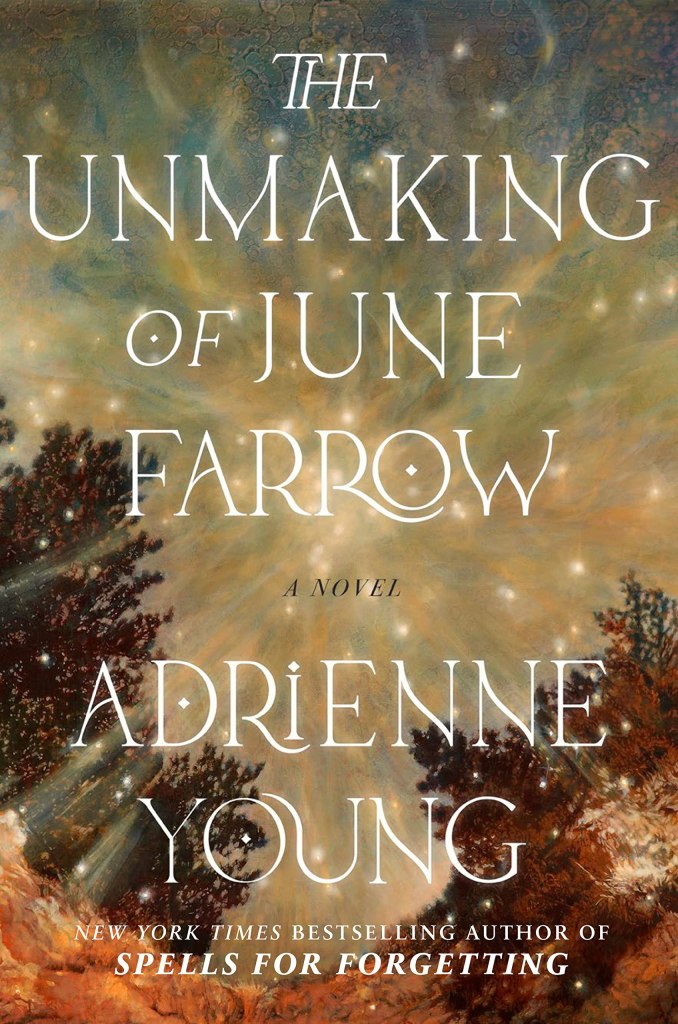
The Unmaking of June Farrow, by Adrienne Young
Starter Villain, by John Scalzi
Vera Wong’s Unsolicited Advice for Murderers, by Jesse Q. Sutanto
The Long Way to a Small, Angry Planet, by Becky Chambers
All the Dead Shall Weep, and The Serpent in Heaven, by Charlaine Harris
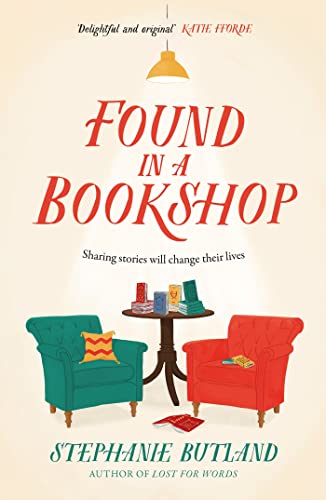
Found in a Bookshop, by Stephanie Butland
I felt throughout the year like I was having trouble discovering books that really resonated with me. Although I had some pleasurable reading discoveries, I never found that one book or series or author that really sucked me in and kept me mesmerized for hours at a time. I found myself reading during breakfast or on my lunch break and easily stopping after a chapter or two to go do something else, rather than wanting to settle in for a solid afternoon of reading. I’m hoping to find more compelling books in the new year. But reading continues to be one of my best-beloved pastimes.
Slog in the woods
I just finished The God of the Woods, by Liz Moore, and perhaps my headline has telegraphed my reaction?
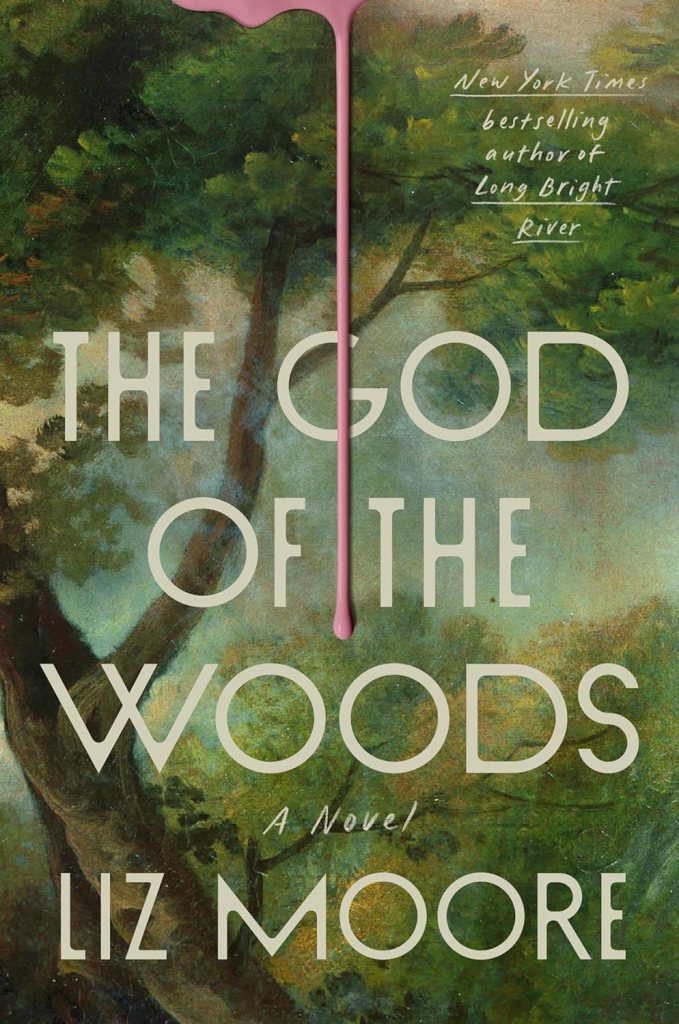
It’s not a bad book. It’s actually an intriguing story, at least initially. It takes place at a summer camp in the Adirondacks owned by the wealthy Van Laar family. This summer is the first time in three generations that any Van Laar child has ever expressed a desire to attend the camp, and ordinarily the family wouldn’t encourage their offspring to mix with the mundanes; but Barbara Van Laar has been such a problem for the past year or so that her parents are happy to put her in this controlled environment at a certain distance from home. She’s still close by—the camp is on one-half of the vast acreage owned by the family—but she’s not underfoot, sulking about in her all-black punk get-up, provoking her father and slamming doors, so all parties are happy with this solution. Until, that is, she goes missing.
Then we get the previous history of the family, which includes a son, Bear, who himself went missing (though not from camp) before Barbara was born, and was never found. A local man was blamed for his disappearance and assumed death, only to himself die before anything could be proved. The family believed he was the culprit, and let the whole thing go until Barbara’s disappearance sparks new interest in that similar set of circumstances, leading to speculation that someone else might have been at fault and is still out there preying on Van Laar children.
The problem is not with the storyline, it’s with how we glean each small morsel of information a teaspoonful at a time. There are seven points of view in this novel, and also a timeline that jumps from the ’50s to the ’60s to the ’70s (present day is 1975) to “day one” etc. of the search for Barbara, and both the narrator and the timeline switch in almost every one of the rather short chapters.
We get the story from the POV of Barbara’s camp counselor, Louise; from her bunkmate Tracy; from Bear and Barbara’s mother, Alice; from Judyta, a junior inspector on the case; from the widow of the presumed kidnapper of Bear; from the manager of the local motel at which the inspector is staying…. And it’s not just the current story regarding Barbara, or even the past story of Bear, it’s also the events leading up to the marriage of Alice into the Van Laar family, the relationship between that family and the managers (current and past) of the camps and with the police officers (current and past) of each investigation. The suspects include a boyfriend of Louise’s who is also the son of the Van Laars’ closest friends, who may have been double-dipping (or taking smorgasbord) in the pool of available females (including Barbara); we get the perspective of Jacob Sluiter, a serial killer (and an initial suspect in Bear’s disappearance) who has escaped from jail and is headed for the Van Laar preserve…kitchen sink doesn’t begin to describe the cast of characters here. The jumping around from person to person and era to era is disconcerting and ultimately offputting—or at least it was to me.
The resolution has a tender, ah-hah moment attached to it that made me momentarily soften toward the story, but there is also an implausibility about it that stuck with me longer than did that small detail, and I finished the book feeling frustrated—unsatisfied by the consequences meted out (or not) to various characters and dismayed by the cynicism surrounding the treatment of the rich vs. the “regular” people, even though I know that differentiation to be all too true in real life.
I do think that this is one of those books to which reactions will be diverse; certainly there are many people who adored it and gave it top marks. I will say that the writing is good, and the characters she develops beyond a certain point are believable and sympathetic; but much of the supporting cast struck me as cardboard clichés who took away from the total effect and made me wish they had either been developed more fully or left out altogether. I think a final pass by an editor determined to trim about 100 pages would have greatly benefited this book. It felt like the author couldn’t quite decide whether to write literary fiction, a mystery, or a full-on thriller, and cutting out some of the extraneous material might have propelled it towards a more defined identity. I was sufficiently engaged that I pushed to finish the book today before it went to the next person on the library check-out list tomorrow when my turn is up, but not so much that I will necessarily seek out this author again.
Readalike

Usually when someone asks for a “readalike,” they mean that they like a particular author and would like to find another author or two who write in the same way, whether because that author publishes infrequently, or has died and won’t be producing any more books, or whatever. But I’m afraid I mean this in a less flattering way, in that the entire time I was reading A Calamity of Souls by David Baldacci, I was thinking about all the ways in which it echoed a favorite Grisham book (and movie), A Time to Kill. The setting is a similar one (the South in the 1960s), the issue is a similar one (a black defendant with a white lawyer trying to get him a fair trial), and there is even the civil rights “savior” who arrives from the North to help the southern lawyer navigate this tricky case in front of a judge and jury who are blatantly racist. (One could also draw parallels with To Kill A Mockingbird, specifically in what ends up happening to one of the main characters.)
Although the cases are different (in ATTK, the defendant has killed his daughter’s rapist, while in this one the black man has been accused of murdering and then robbing his white employers), and although in one the legal genius from the North is a Jewish law student from New York while in the other she’s a black civil rights lawyer and hails from Chicago, the dynamic is very much the same. The difference is, I found Grisham’s story completely gripping, while Baldacci’s has some interesting moments as the two lawyers set about discovering who could have done the crime and then put their client in the hot seat to take the blame, but other than that element of mystery, a lot of the book reads like a Civics lesson.
The author takes pains to mention significant cases (Loving v. Virginia), racially charged props (the Green book, which the author has to find a roundabout way to include because it had ceased publication by 1968), sundown cities, and the like, and much of it seemed both heavy-handed and beside the point. This book presumes that the reader has no first-hand knowledge of the history of racism in the South and its manifestations in the 1960s when laws had been passed to end it but southern whites were dragging their feet to implement them. The characters are mostly one-dimensional, presenting as either a hero(ine), conflicted and confused, or irredeemably evil, with little nuance. One reviewer on Goodreads said they were uncomfortable with the portrayal of the black characters and actually felt that the author perpetuated some stereotypes while trying to do the opposite; I would have to agree.
It’s not an irredeemably bad book, but it’s not very good. It’s my first experience reading Baldacci, as far as I remember (I might have read one back in my 20s?), and to be fair I might try another of his without the obvious agenda and see if I enjoy it more, since so many people rave over his books. But…I’m certainly not on the library website looking for my next one right this minute!
Interesting, but…
I’m going to finish that phrase with “not compelling.”
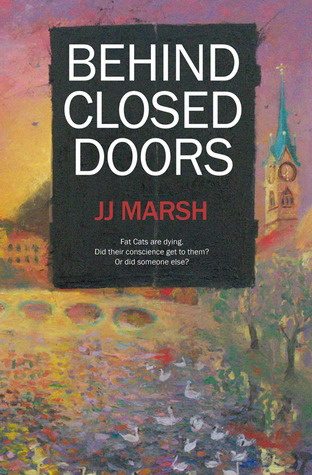
I started a new series by J. J. Marsh called the DI Beatrice Stubbs mysteries, and although the first book, Behind Closed Doors, has much to recommend it, I found myself reacting somewhat tepidly to its charms. There were three books on offer at a discount as a boxed e-book set (with another three-book set if you liked these), and the description—a team of Interpol agents led by a detective inspector from Scotland Yard, trying to solve a bunch of murders camouflaged as suicides—sounded intriguing.
The tip-offs that they were not suicides were two, the first being that DNA from the same individual was found at all the death sites, and the second that these were all singularly unpleasant characters, responsible between them for a lot of dirty dealing and corruption in the world. Obviously, the team feels, someone has targeted them for elimination and has gone to great lengths to do so both thoroughly and cleverly—and also what would have been undetectably save for the DNA. The conclusion is ultimately drawn that the DNA is purposefully planted to give a hint that these were, indeed, diabolically successful revenge killings.
The set-up sounds wonderful: The killings take place across Europe, mostly at glamorous and diverse locations (a luxury hotel, a ski run, a dam) and by creative methods (freezing, asphixiation, beheading). Because the victims are villains, mostly from the world of international finance, no one seems to excessively regret their deaths.
The team of investigators is what should be an interesting crew made up of three women and three men of various ranks and nationalities from several countries and organizations, brought together to definitively determine whether those who initially dealt with the deaths are right to be suspicious. There is a thinly disguised villainess who is either personally or professionally connected to all of the victims, but against whom nothing has been proven. The home base of the team is Zurich, with side trips to all the destinations where the killings took place, and there is a lot of name-dropping of cities and their tourist attractions—museums, opera houses, parks, resorts—to give everything an air of glamour. And yet…
I had a lot of trouble investing in anyone in this book. The main character, Detective Inspector Beatrice Stubbs, is supposed to be the primary driver of the action and thus, presumably, the sympathetic character, and she is nicely rendered as a person of brilliance who has just come back to work after a period of instability during which she may have attempted suicide herself. She is not painted as a tragic figure, though; she has a stable home life with a supportive partner, is committed to regular visits with her therapist, and has a boss who wants her to succeed and has her back. She’s a little older and a bit less fashionable than the other women on the team, which gives her both authority and vulnerability, and she has moments of both darkness and joy in the course of her days.
Other than her, however, I found the members of the team to be opaque. Each of them has a quirk or two that is played up in the course of their interactions, but you never really get to know the people behind those quirks. There’s just not enough detail provided to make you care about them one way or another and, in some cases, the element of personality chosen for them is actively irritating, making you not want to know them.
Similarly, the way the victims are described is probably accurate; since they are all from a certain class of wealthy, ruthless men, one might assume that they would each be likely to fall prey to flattery and deceit by the young women who set out to entrap them— but after a while the stereotypical behavior verges on misandry and becomes both unpleasant and repetitive.
When she’s not writing, J. J. Marsh works as a language trainer in four languages, so her prose is mostly fluid and descriptive. But despite all of this (and high praise from some readers), I found this book to be only okay, and probably won’t read the next two. Another near miss for my reading preferences.
Dog Day Afternoon

No, this isn’t a post about a 1975 bank robbery movie. But the title seemed appropriate, given that it’s National Dog Day and also that I am getting such a late start that my post won’t be available until after noon, one of those hot, sleepy afternoons when dogs (and people) prefer to lie around and languish (i.e., read!) during the summer heat. I did some pre-planning for this post by making a list of some pertinent dog-oriented books, but then my distracted brain failed to follow up, so a list is pretty much all you’re going to get this time. But don’t discount it just because it’s not elaborated upon; these are some great reads, encompassing fantasy, mystery, dystopian fiction, science fiction, some true stories, and a short list for children.
NOVELS FOR ADULTS (AND TEENS)
The Beka Cooper trilogy (Terrier, Bloodhound, Mastiff),
by Tamora Pierce
A Boy and His Dog at the End of the World, by C. A. Fletcher
Iron Mike, by Patricia Rose
A Dog’s Purpose, by W. Bruce Cameron
First Dog on Earth, by Irv Weinberg
The Companions, by Sheri S. Tepper
The Andy Carpenter mysteries, by David Rosenfelt
The Dog Stars, by Peter Heller

DOGGIE NONFICTION
Marley and Me: Life and Love with the World’s Worst Dog,
by John Grogan
Best Friends: The True Story of the World’s Most Beloved
Animal Sanctuary, by Samantha Glen
James Herriot’s Dog Stories, by James Herriot
A Three Dog Life, by Abigail Thomas
Inside of a Dog: What Dogs See, Smell, and Know,
by Alexandra Horowitz

CHILDREN’S BOOKS WITH DOGS
Sounder, by William H. Armstrong
No More Dead Dogs, by Gordon Korman
Harry the Dirty Dog books, by Gene Zion
(illustrator Margaret Bloy Graham)
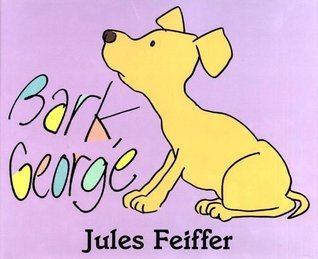
Bark, George, by Jules Feiffer (one of the best for reading aloud!)
And for those who wanted more, here is an annotated list of more dog days books from a previous year, along with some suggestions for dog lovers that go beyond reading about them.
 The Book Adept