Short but jam-packed
As I have mentioned here before, I am generally not a reader of short stories. The last time I blogged about a couple of them that I picked up for my Kindle, I commented that in the future I would resist temptation even if they were written by authors I admire (those two were by Alice Hoffman and Margaret Atwood, so the star power was bright) because I found the brief format unsatisfying, no matter who wrote them. But I didn’t keep that resolution, and this time I’m glad I didn’t, although, alongside the satisfaction they gave me, I still feel a little frustration for the attenuated content.
First I was offered one by John Scalzi, who is one of my latest favorite science fiction authors and, when I saw it was about time travel (a particular fascination of mine), I couldn’t say no. Then one popped up by Alix Harrow, who has written three books since 2019 all of which enthralled me when I read them. This one had a knight in the title, so I assumed it was fairy tale-ish and therefore likely to please me, but it turned out to be something I like even better—a dystopian story.
Why, then, did these impress me so much? In trying to dissect that, the first thing that occurred to me was their immediate impact. In less than a page I knew that I couldn’t stop reading. Part of this is due to something novelists and readers have discussed for years (or millennia or eons): the first line.
When I think of a famous first line, the one that most immediately comes to me is “Last night I dreamt I went to Manderley again.” That’s the opener for Rebecca, by Daphne du Maurier, and if you ask readers on a Facebook page dedicated to books, it’s one that is often quoted. Others that crop up frequently are “It is a truth universally acknowledged, that a single man in possession of a good fortune must be in want of a wife” (Pride and Prejudice, by Jane Austen), and “Call me Ishmael” (Herman Melville’s Moby-Dick), “Happy families are all alike; every unhappy family is unhappy in its own way” (Anna Karenina, by Leo Tolstoy), or “It was the best of times, it was the worst of times…” (A Tale of Two Cities, Charles Dickens). These are all from classics, but there are many others nearly as famous that source from books that are popular, perhaps well known, but not considered in that pantheon, such as “I write this sitting in the kitchen sink” (Dodie Smith, I Capture the Castle), or “When Mary Lennox was sent to Misselthwaite Manor to live with her uncle, everybody said she was the most disagreeable-looking child ever seen” (The Secret Garden, by Frances Hodgson Burnett) or “We were somewhere around Barstow on the edge of the desert when the drugs began to take hold” (Fear and Loathing in Las Vegas, by Hunter S. Thompson).
I cite all these because they have the unique ability to cue you to a lot of what’s coming in one simple phrase. You immediately want to know: What or where is Manderley? who is the dreamer? Why did they leave Manderley in the first place? You want to argue that perhaps the last thing a single man with a good fortune might either want or need is a wife to spend it! If you have any Bible knowledge, you get all the deep connections to the name “Ishmael.” You instantly begin debating whether that statement about families and happiness or lack of same is true—you think about your own, and then you want to know why the author has embraced this premise. If you know that A Tale of Two Cities is about the French Revolution, then it must have been a bad time, but then wonder how being in the middle of a war could also possibly be the best. You ponder why someone would write while sitting in a sink; you immediately perceive that this person might be out of the ordinary and therefore worth cultivating. You want to know why Mary had to go live with her uncle, and what it was that made her disagreeable—was it that, or something else? You think about someone driving across Interstate 40 in a drugged state and are presuming you probably know what will happen next, but you don’t…so you keep reading.
Alix Harrow’s story, “The Knight and the Butcherbird,” begins:
Once upon a time,
a knight came riding into the holler.”
It is immediately arresting, because it’s like that game where you see a group of pictures and are asked the question, “what one thing is not like the others?” The “Once upon a time” and the “knight” immediately set you up for the expectation of fairy tale; but there are few areas in the world where someone would call a small, v-shaped, riverine type of valley a “hollow,” and when that gets transmuted to “holler” you know you are in southern Appalachia, most likely in West Virginia. So, what is a knight (presumably wearing armor to distinguish him as such) doing riding into Appalachia? The disconnect drags you in and glues your eyes to the page.
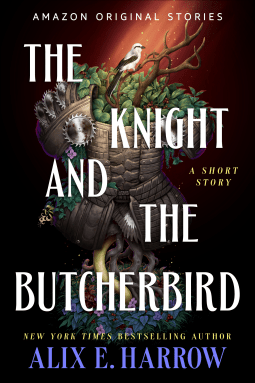
In the next paragraph you find out it’s been 300+ years since “the apocalypse,” that the knight is expected (people are standing around waiting for him), and that the protagonist is a misfit in her community (“I stood among them like a tumor at a birthday party: silent, uninvited. Likely fatal.”)
In the third, you get a picture drawn of the knight—specifically his armor, sewn of fine black steel-corded tire treads, the rusty state of his pauldrons, and the fact that he was “crazy old, maybe even fifty.” He is a Knight of the Enclaves, “tall, raised on multivitamins and clean meat.”
This is all on the first page, and tells us that: something terrible has happened to the world; there are survivors in a backward corner of it who are in need of assistance; and from “somewhere else” there is a person characterized as a knight who has come to help them with their problem. I could immediately, viscerally picture the poor, raggedy, sickly people (the ones raised without the vitamins or untainted protein) standing around at the mouth of their small valley home, waiting patiently for a hero to arrive; and I could also perceive the colossal impact of the knight’s presence.
Wouldn’t you want to keep reading?
John Scalzi’s story “3 Days, 9 Months, 27 Years” doesn’t start with quite such an arresting contradiction, but for a science fiction fan and time travel junkie, it still dragged me in:
The time machine is, in itself, not much to look at.

The remainder of the paragraph goes on to describe its physical appearance, concluding with “At the far end is a portal. One takes the client away. The other brings them back.” With this it is established that time travel has become a business (thus the clients), and that the narrator is probably the operator of the machine (confirmed in the next paragraph). The next page and a half describes in extremely simple terms what happens in the chamber when someone takes a trip and comments that, once the client has returned, “Where they go after that, like where they go when they walk through the first portal, is not specifically my concern. I am here to run the time machine.” The client, however, “has aged three days, or nine months, or twenty-seven years. They have been through a time machine, after all. This is how the time machine works.” Then, however, the operator, who sounds like he is describing the daily duties of a fairground carousel operator, comments that this is the theoretical process, but that is almost never what actually happens. “Theory is almost never practice.”
Could you put it down after that leading sentence? I couldn’t.
I’m not going to go into any more detail here on either story; I will just say that there is an exception to every rule, and I’m glad I made these exceptions to my “no short stories” one. They are special cases because they do absolutely everything that a good novel does: They each have a clearly worked-out premise; they are both amazing at both world- and character-building in the space of a few short sentences or paragraphs; there is a set-up, a conflict, and a resolution; and, best of all, they made me think about issues I had never considered, despite being a long-time reader of fairy tales, dystopian/post-apocalyptic fiction, and time travel theories. I finished both of them two days ago, and they keep on wandering through my mind, inspiring more questions. And yes, one of these is to ask the authors “Why not write the BOOK?”—but many more of them are diverting inquiries into the nature of time, anomalies, and serendipity, or thoughts about the eventual evolution or dissolution of humankind, depending on the paths taken (or not).
Thank you, John Scalzi and Alix Harrow. Keep writing.
Harking back
Somebody on Friends and Fiction (Facebook group) asked for a list of time travel books and, amidst the ones by Connie Willis, Diana Gabaldon, and Bee Ridgway that I have cataloged, I saw an old favorite from the late 1970s and decided to do a reread.

The book is The Door Into Summer, by Robert Heinlein, and it has the distinction of having been written in the 1950s with the expectation that by the 1970s we would already have things like autonomous robotic vacuum cleaners (i.e., android-shaped Roombas), and by the year 2000, well, sky’s the limit—teeth that regenerate, cream that removes a beard, “stick-tite” clothing fasteners (fancy velcro) and so on. It’s kinda fun to hark back to early science fiction and see the optimistic expectations with which the authors pictured our world. We still don’t have those hoverboards from Back to the Future, let alone a lot more practical gizmos, and humans haven’t colonized any other planets just yet, but on the other hand we do have stuff (like the internet and various fancy Apple products) that none of those sci-fi writers ever envisioned.
In this particular book, the protagonist, one Daniel Boone (D.B. or Dan) Davis is an engineer who retires from the military and hangs out his own shingle with his best friend Miles Gentry, with Dan doing the designing of fancy housewives’ helper-type machines while Miles (a lawyer) runs the business end. They are shortly in need of an office manager/secretary type, and hire Belle Darkin, with whom Dan immediately becomes romantically involved. Dan, being a mechanical genius but otherwise a naive trusting soul, leaves the daily doings to these two, who are up to some behind-the-scenes shenanigans and ultimately cheat Dan and expel him from the company. Dan, having lost both his life’s work and his fiancée, resolves to take “the long sleep,” which is basically cryogenic freezing of people, for 30 years. The idea is that you invest your money, go to sleep, and wake up however many years later with your investments having paid off, still young enough to enjoy them. But do these kinds of things ever work out as promised?

Two additional crucial characters are Dan’s cat, Petronius “Pete” Davis, and his (former) buddy Miles’s stepdaughter, Ricky, a precocious 11-year-old who adores both Pete and Dan. Since I have already perhaps given away too much of the story (although there’s a lot more to it), I’ll say no more about the plot. The title of the book comes from an anecdote about Dan and Pete; they lived at one point in an old farmhouse with a dozen doors, and in the cold and snowy winter-time Pete persists in crying to be let out of each door in turn, getting progressively more agitated that one of the doors doesn’t lead to better weather—obviously a metaphor for the rest of the activity in the story.
Heinlein is at once revered and denigrated for his career as a science fiction writer. On the one hand, he wrote some of the best “hard” science fiction stories (meaning he valued scientific accuracy in his books) from the period between 1941 and 1988 when he died (he was born in 1907). But he was also derided for his right-wing ideology, for the rampant misogyny (the condescension is palpable) in his books, and also for a kind of creepy obsession with very young women, all of which got more radical as he aged. This book has a bit of that (the focus on Belle being primarily on her buxom figure), but mostly it’s just a fun and offbeat story about the possibilities of time travel from dual aspects, and (with the caveat that parts are laughably old-fashioned) I wouldn’t hesitate to recommend it (as Heinlein himself would probably characterize it) as a “cracking-good” read, a nice change of pace from today’s fiction offerings. I seem to have been afflicted, as I read it, with a quaint language “bug,” so I’ll say give it a whirl.
Not so magical
I am a huge Alice Hoffman fan. I love magical realism, particularly the brand of it to which she introduced me in early works such as Seventh Heaven, Turtle Moon, and (perhaps her most famous) Practical Magic. I also love her books that don’t contain that specific element but that do include a well-developed sense of whimsy, like one of my personal favorites, Second Nature. I haven’t loved all of her books unreservedly; some are too dark for me. But I’m always willing to give a book of hers a try.
I am also a huge fan of time travel stories. My absolute favorites are by Connie Willis (Doomsday Book and To Say Nothing of the Dog), but I have 25 novels on my Goodreads “time travel” list, and there are only three or four that I didn’t love. If the author takes proper account of the anomalies and forms a logical theory of the mechanics of time travel itself, I’m in. And sometimes, even if they don’t, I’m down with it if the story is sufficiently engrossing.
Finally, I seek out books about books, and this one is definitely a love letter to literature with its focus on the redeeming power of reading and specifically on the life and works of American novelist Nathaniel Hawthorne.

Given those three overwhelmingly positive statements—Hoffman fan, time travel aficionado, lover of books about reading—you would think that Hoffman’s latest book, The Invisible Hour, would be a big-time winner with me. I liked the premise: It’s about a young girl who grows up as a member of a cult in western Massachusetts. Mia is the daughter of Ivy Jacob, child of an affluent Boston family, who got pregnant as a teenager, ran away from home, and joined the Community, mostly as a result of the charismatic influence of its leader, Joel Davis, whom Ivy later marries. But Joel turns out to be a repressively controlling personality, imposing strict rules and regulations on members of the commune and forbidding them contact with the outside world. Ivy, who regrets marrying him and who loves her daughter more than anything, contrives to provide a bit of an outside life for Mia by introducing her to the library in the nearby town and abetting her in borrowing and hiding books to read. At the library, Mia discovers a first edition of The Scarlet Letter, by Nathaniel Hawthorne, and the story’s similarity to her mother’s intrigues her, as does the strange inscription in the book. Later, in an extreme moment in her life, Mia is transported back to the year 1837, where she meets the young Nathaniel Hawthorne some years before he writes what is considered to be his career masterpiece.
The first half of the book revolves around this mother-daughter relationship and explores themes such as familial love, the power of books and reading, and women’s rights, the last theme quite relevant at the current moment as we seem to be reverting in our country to the denial of female autonomy. While the story dealt with the cult years and focused on Mia and Ivy, it was compelling and immediate, containing all the beautiful prose for which I love Alice Hoffman’s books. But once Mia leaves the Community, there is a shift in the narrative so that it becomes much less richly detailed, a chronicling of events rather than an immersive, imagery-filled experience.

And then, when the time travel happens, it feels abrupt and insufficiently explained, and the narrative changes once more, becoming a dry, biographical account of the life of Nathaniel Hawthorne. While the character himself is intimately painted at his introduction and has moments of vulnerability that make him appealing, the discursive nature of the text regarding his timeline and career kept throwing me out of the story and into fact-absorbing mode, and I found it quite jarring. Additionally, the fascinating part of Alice Hoffman’s use of magical realism has always been, to me, the way she sprinkles it throughout a story, letting odd incidents pop up in the midst of an otherwise ordinary sequence of events; but in this book, there is none whatsoever in the first two-thirds of the book, and then the last third is completely focused on the magic. I can’t believe I’m saying this about a book of Hoffman’s, but it just doesn’t work.
I was sufficiently invested in Mia’s story that I was willing to go with it, so I did finish reading the book; but there was one “what the hell?” moment that set me back on my heels. I actually went to Goodreads before writing this and combed through every review on there looking for a “spoiler” entry about this anomaly and, unbelievably, absolutely no one mentioned it as a problem. I won’t say what it was, but it has to do with creating a thoroughly predictable character and then having that person act so uncharacteristically as to invalidate everything that went before. It was an awkward contrivance and frankly made me mad, given that it takes place just pages from the end.
I’m starting to feel like I should be working for Kirkus Reviews (librarians who regularly read reviews know theirs are always the most scathing), and I never intended this blog to be like that, but…do yourself a big favor and read some other Alice Hoffman books, and/or maybe go reread The Scarlet Letter, just for kicks. I won’t say you shouldn’t read this book, because for every person who dislikes it there is one or more who loves it, but that’s my opinion, for better or worse.
What I wished for
The Unmaking of June Farrow, by Adrienne Young, is the book I have been wishing to read. It’s both an elegantly written and a beautifully told story that incorporates a curse, a murder, something sort of like time travel but not exactly, and an emotionally complex web of relationships that are a pleasure to try to untangle. If I had to label it, I guess I would call it magical realism.

June Farrow was born into a family in which the women are believed to be cursed, and June intends to be the last member of this family in order to break that curse, resolving never to marry nor have children.
At some point in each of their lives, the Farrow women are overcome by madness—seeing, hearing, and experiencing things that aren’t there as their minds slowly unravel. June’s own mother, Susanna, became increasingly troubled, finally abandoning the infant June to be raised by her grandmother, then disappearing, never to be seen again. In the past year, June, 34, has begun to experience the warning signs that she, too, is beginning to lose touch with reality. She’s hearing phantom wind chimes, seeing a man’s silhouette looming and smelling cigarette smoke on the breeze from the open window, but there’s no one there. And then there is the red door that appears, standing in the middle of a field of tobacco or at the side of the road outside of Jasper, North Carolina, as if waiting for her to walk up, turn the knob, and step across the threshold. This is the story of what happens when she yields to that impulse.
I don’t want to tell much more than this, because you should be allowed, as I was, to unwrap this tale for yourself. I think it will be enough to say that it is immersive, atmospheric, romantic, and mysterious, and I thoroughly enjoyed it from beginning to unexpected end.

My year of reading: 2021
It’s New Year’s Day! Time to look back at all the books I read in the past 365 days, and reveal which were my favorites, which were the best books I read this year, and whether those are one and the same. Goodreads conveniently kept track of statistics related to my reading goals, so before I get specific, here are some of mine:
This year I read 132 books, which consisted of 50,676 pages.

The shortest was a Linwood Barclay novella of 81 pages, while the longest was one of the Robin Hobb Farseer fantasies at 914 pages. My average book length was 383 pages.
The most popular book I (re)read was Liane’ Moriarty’s Big Little Lies, shelved by almost 1.5 million people!
And now, here are some categories that highlight the year’s journey, from my memories of 2021 reads:
Most excited about:
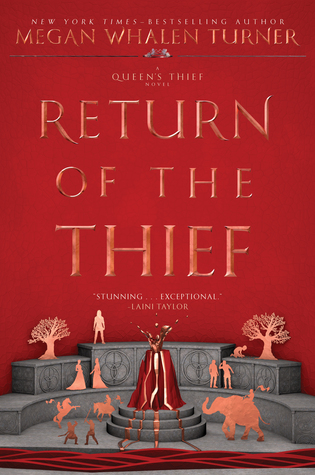
Return of the Thief, the conclusion to the Queen’s Thief series by Megan Whalen Turner, finally arrived, which gave me the perfect opportunity to enjoy re-reading this series for what, the fifth time? She published the first book, The Thief, in 1996! If you are looking for a nontypical fantasy immersion to start off your year of reading, pick up The Thief and savor the story through The Queen of Attolia, The King of Attolia, A Conspiracy of Kings, Thick as Thieves, and Return. It’s one of those series that gets exponentially better as it goes along.
Best discoveries (in any genre):
ROBIN HOBB. I got lost for a month or more in three of her Farseer high fantasy trilogies, and still have two more on my TBR list, which I hope to get to early in the year.
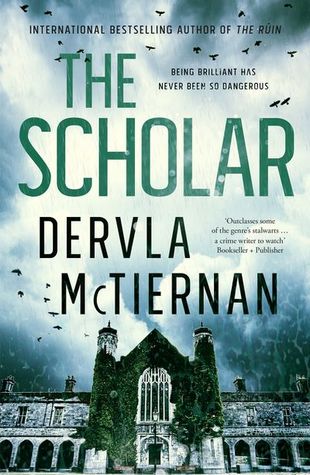
DERVLA McTIERNAN: A wonderful new mystery series writer with books set in Ireland
Best science fiction discoveries:
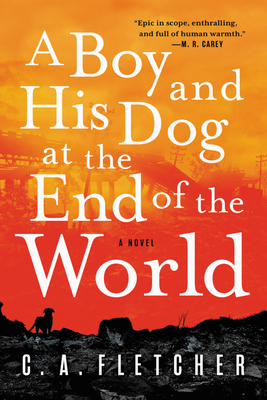
A Boy and His Dog at the End of the World, by C. A. Fletcher
A Psalm for the Wild-built, by Becky Chambers (first in a series still to come)
Both of these would fit best into the dystopian category.
New time travel:
The Jane Austen Project, and The Dream Daughter, both from unlikely authors…
New fantasy I loved:
The House in the Cerulean Sea, by T. J. Klune
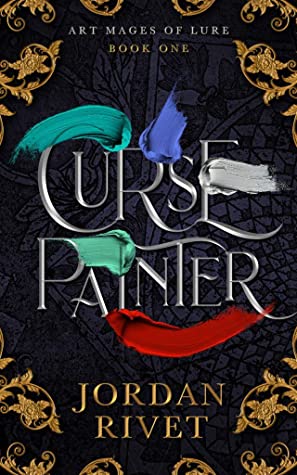
The Art Mages of Lure series, by Jordan Rivet (Curse Painter is the first book)
Most memorable read:
All the Ugly and Wonderful Things, by Brynn Greenwood
Most affecting mainstream fiction with an historical backdrop:
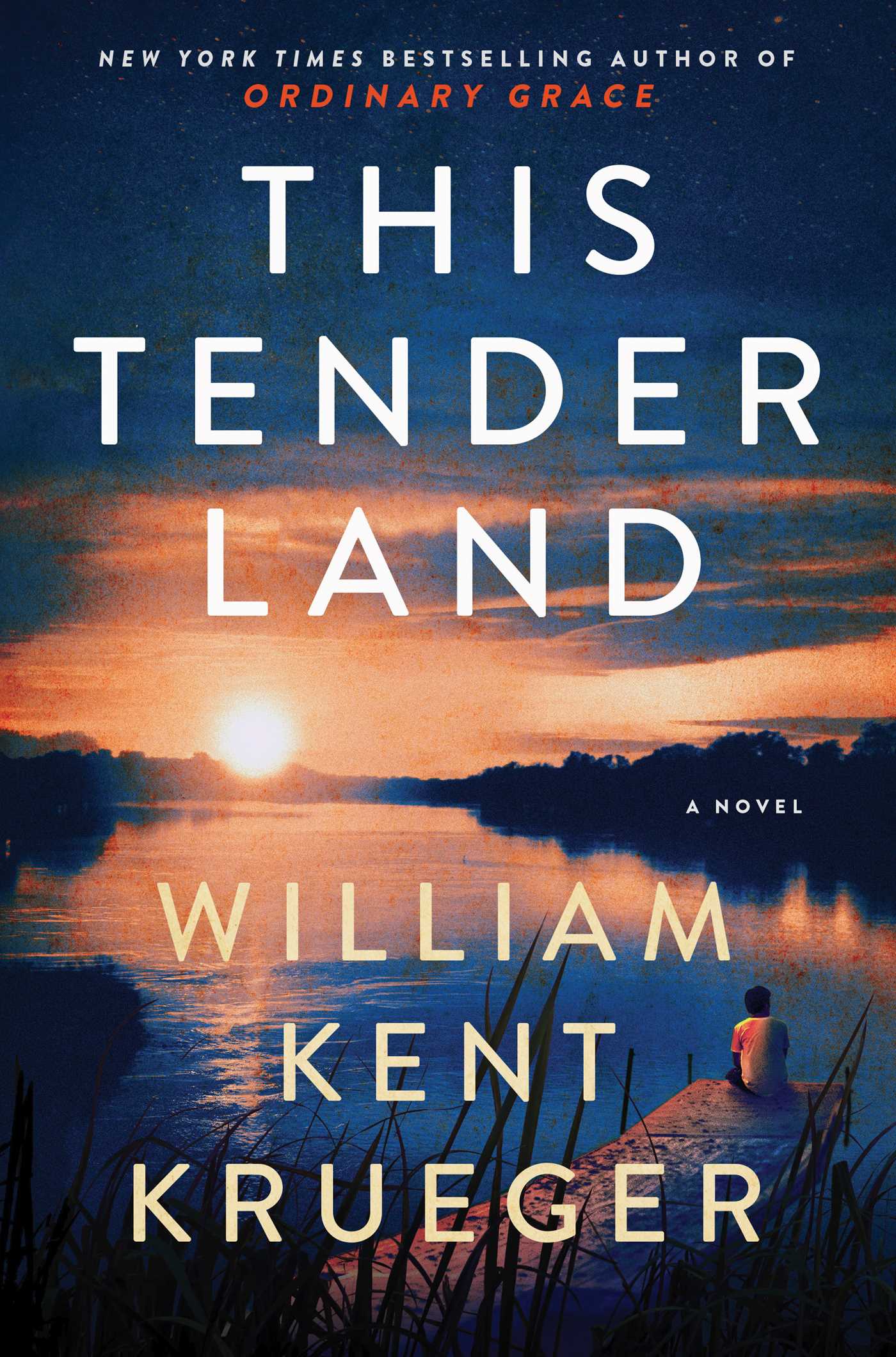
This Tender Land and Ordinary Grace, by William Kent Kreuger
Continuing fan of:
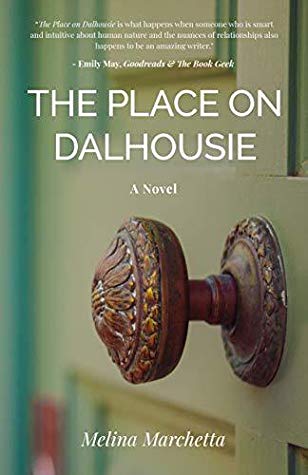
Melina Marchetta for The Place on Dalhousie
On board with the rest of the crowd:
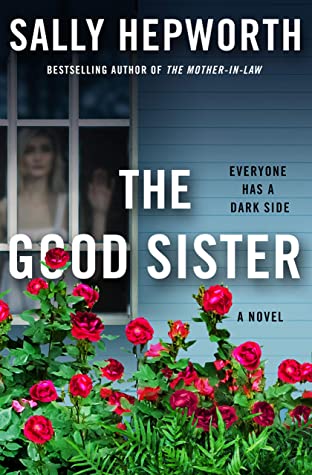
Author Sally Hepworth, with The Good Sister being at the top of the list.





And that about covers the highlights of my year in reading! I have written/published reviews of most of the books I mentioned here, so if anything piques your interest, go to the search box (“Search this site” at the top right under my logo and description), put in a title or an author, and find out why I called out these favorite books.
Author vs. Genre

I picked up The Dream Daughter, by Diane Chamberlain, because it is a time travel book. But as I examined reviews on both Goodreads and in the Facebook group “What Should I Read Next?” I found that I was a member of a tiny minority when it came to motivations: Apparently Diane Chamberlain is a big deal with a certain kind of reader, and many/most of the reviewers confided that they read this book despite its science fiction content, because they read everything by Diane Chamberlain.
My first thought was, Who doesn’t love a good time travel story? Apparently a lot of people! But since this is the one and only Diane Chamberlain novel I have ever read, I am judging her and her writing by the contents of this book about time travel, so my review will be differently framed than most.
When you type “If you like Diane Chamberlain…” into Google, you come back with a whole slew of names, most of whom are listed as authors who write “feel-good fiction with a twist,” “romantic women’s fiction,” and “hometowns and heartstrings.” There is also an occasional mention of historical fiction. But my experience of The Dream Daughter didn’t fit so much into those categories, perhaps because I was so focused on the mechanics of the time travel—whether the author would make it believable, workable, and without unnecessary paradoxes. And although the discovery of the mechanics of it were a little fuzzy, the carrying-out of the process was quite satisfactory. I don’t know whether she borrowed it or came up with it on her own, but the methodology is similar to that in the movie Kate and Leopold, in which the traveler must find both an ideal moment in time and a height off which to step in order to reach the proper destination. The portal timing and location is essential to the plot, since it is the main source of tension in the book—will she/won’t she (or he or they) make it to the location in time, will they land where and when they planned, and what happens when they run out of return options?
The plot begins fairly simply: Carly is a physical therapist in her early twenties. She helps Hunter, a previously uncooperative patient, to regain his health, and introduces him to her sister; he subsequently becomes her beloved brother-in-law. A few years later, in 1970, Carly learns two heart-breaking pieces of news: Her young husband, Joe, won’t be returning from the Vietnam War; and her as-yet-unborn baby daughter has a heart defect that will almost certainly prove fatal once she is born. The baby is all she has left of Joe, and Carly is devastated. But Hunter, a physicist, tells Carly there may be a way the baby’s life can be saved. If she believes him (instead of urging her sister to have him committed to the psych ward), Carly can take a leap of faith that may lead to a healthy daughter.
I really enjoyed this book. It’s definitely more relationship fiction than it is sci fi, but even a “soft” sci-fi element can materially contribute to an otherwise regular story if it’s thought through and properly integrated, which this definitely was. There were a few unexplained plot points that remained puzzling to me (such as the impatience and coldness displayed by Hunter’s mother on several key occasions), but for the most part all the characters were well developed and understandable, as were the situations and narrative, and it has just the right level of suspense and complexity to keep you reading. It shares with books such as 11-22-63, by Stephen King, that dire warning about avoiding changes to history by minimizing interactions, but then (like that book) allows its characters to ignore that warning in certain circumstances, to the benefit of the plot (if not necessarily to history). And this was definitely a gentler read than that angst-filled tome, but no less enjoyable in its more personal focus, and with plenty of similarly entertaining historical details as well.
I feel like this book could appeal equally to fans of relationship fiction, time travel and, of course, to most Diane Chamberlain devotees! I don’t know if I would enjoy her other, “straight” fiction as much as I did this one, but I may give one a try after this.
Jane in person
I am a sucker for time travel stories—although I really hate it when they are poorly conceived and/or realized. Likewise, I am a huge Jane Austen fan, but have learned to be wary of embracing the countless Austen spinoffs and glorified fan fiction spawned by authors who don’t have the chops to write anything close to canon. (I don’t know which is worse—the juxtaposition of Pride and Prejudice with zombies, or the creation of an Austen theme park in which young women can act out their Regency-born fantasies.) So imagine my delight when I discovered a book that sends a couple of intrepid explorers back to 1815 to see if they can retrieve additional Austen materials and bring them up to the present day to delight literary scholars everywhere?
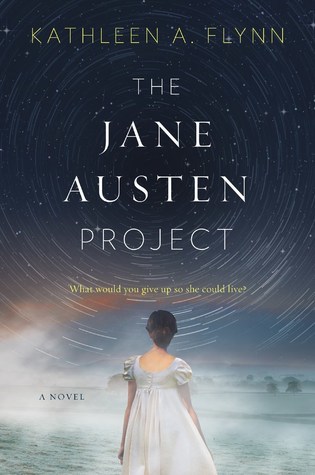
In The Jane Austen Project, by Kathleen A. Flynn, Rachel and Liam are sent from their rather sterile and unsatisfying present—they live in a world that has experienced “the Die-off” (no more trees), and eat food created by 3-D printers—back to 1815 England. They have been immersed in history for months, properly clothed (albeit with only one outfit apiece), and furnished with what will be an inordinate amount of money for the time period (although it’s mostly counterfeit), and the opening to the past has dropped them in a field near a town called Leatherhead. Most important to their mission, they have been cautioned that they must interact as little as possible so as not to effect change while trying to achieve their mission, which paradoxically will require a particularly close acquaintance with their subject! They are cast as the Ravenwoods, brother and sister, recently arrived in London from Jamaica after having manumitted their slaves on the coffee plantation and sold up to make the move. This back story ensures that they have a ready explanation for small awkwardnesses in local custom, as well as their lack of acquaintance with anyone who could expose them as impostors.
Their mission is to cultivate sufficient intimacy with Jane Austen and her family so as to gain access to letters she wrote to her sister Cassandra, as well as to an unpublished manuscript that was previously thought to be incomplete—only three chapters exist in their time—but, it has been learned through the recent discovery of a letter from Jane Austen to a friend, was rather held back from publication because Jane thought it too revealing of her own personal family situation.
Apart from staying in character, which is particularly difficult for Rachel, since she is an independent single woman and a medical doctor in the present day, the challenges are enormous. They have about a year to become established enough in London to curry an acquaintance with Henry Austen, Jane’s brother, and then to win an introduction by him to his reclusive sister, whose books are not even published under her own name. It would be hard for Jane to imagine the extent of her fame and the reverence for her work held by scholars and commoners alike, a couple of centuries hence; almost as hard as it is for Rachel and Liam to restrain their enthusiasm and wonder at being a part of her close circle.
All sorts of things go awry, as they are wont to do in time travel adventures, given the necessity for lying through your teeth, sticking to appropriate behavior for the times, and knowing your specific place in society—whether it’s how familiar to be with your kitchen staff, or how much flirting you can venture without compromising your reputation. There are many surprising turns in this book, and with a year to accomplish their mission, the author was able to space them out nicely and make everything feel logical and/or inevitable.
I really enjoyed reading this and, unlike some books where you wish an editor had stepped in to cut a couple of hundred pages, I could have asked for more. There was adequate detail about everything, but absolutely no excess. I would have liked to know more about Liam, in particular, before the adventure began (the book is told from Rachel’s viewpoint), and also welcome would have been just a little bit more detail about the specifics of daily life in both past and future, and some explanation of why particular interactions turned so awkward. But over all, I have to applaud the author for pulling this story off so well—it had enough history, enough romance, enough intrigue, and never went overboard. If you have enjoyed the Outlander books, or Connie Willis’s multiple forays into time travel, I venture to say you will also get a huge kick out of The Jane Austen Project.

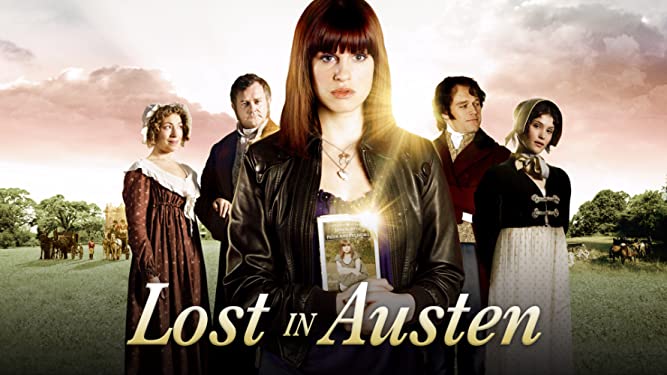
(One exception that I have to confess as a guilty pleasure in this oeuvre is Lost in Austen, a four-part British miniseries in which a P&P fan opens a hitherto unknown door from her bathroom into the Bennet household, trading places with Elizabeth, who steps into the present day, whereupon the door disappears and each is stuck in the other’s life. It’s hilariously well done. Jane Austen is spinning in her grave. Check it out.)
 The Book Adept