Rare books and romance
Looking for something a little more lighthearted after my foray into a post-apocalyptic flooded world, I eagerly picked up a special on Kindle, written by Jenny Colgan and billed as a short story. The Christmas Book Hunt seemed to me more like a novella, being 127 pages long (most short stories don’t exceed 30 pages), but I never mind if something is a longer read than it “should” be, especially if I’m a fan of the author, so I was happy to jump in. Besides, it’s about books…

It’s a story about Mirren, a London-dweller whose beloved, elderly Aunt Violet is fading away. Mirren is anxious to make her last days happy ones, and Violet has expressed a desire to see a book she remembers from childhood—an extremely rare one-off of a well-known children’s classic hand-illustrated by a famous artist—but Violet has no idea what happened to the book after her father was gone and her life took a turn for the impoverished. It’s likely the book was sold, along with most of their other possessions, but it was such a rare and beautiful thing that hopefully it’s still out there somewhere.
Mirren eagerly jumps online to search for it, but can’t find more than a whisper that it even exists; she then decides to venture into the real world of rare books to see if she can track it down by Christmas. But canny dealers are alerted by Mirren’s search and, as she makes her way to bookstores from London to Hay-on-Wye and then to Edinburgh, her progress is being followed by several people who desperately want the book for themselves…
Although the story is billed as a “meet-cute” romance, the parts that deal with this are much less satisfying than is the relationship depicted between Mirren and her aunt, the real love story here. Because of the way the romantic interest (the nephew of a greedy rare book dealer) is introduced, then dropped, only to pop up again at the end, the happily-ever-after possibility that seems to present itself felt unlikely, as well as somewhat insincere. But I really enjoyed the hunt for the book and the unexpected turn of events for Violet. I’m hoping (after the close of the story) that Mirren shows some good sense and treats Theo with the lack of trust that should have been engendered from the beginning if not for her naïveté.
Wrapping up

This year it feels more like a winding down than a wrapping up. I read the fewest books in one year since I started doing the Goodreads Challenge 12 years ago. That year I read 75 books; my highest number ever was in 2019, when I read 159 books while working full-time from January to October (I retired from the library in October of that year). You would think it would be the reverse, since I have so much more time now than I did then; but there were some factors at play that ensured I would read a lot more then. First, I was running three teen book clubs, so I had to read one book per month for each club, plus a couple extra books in each age range (the clubs were 6th- and 7th-graders, 8th- and 9th-graders, and grades 10-12) so I would have ideas to propose as the following month’s read. I was also reviewing books for both the teen and adult library blogs (both of which I supervised), so I was heavily invested in spending all my spare time reading new teen and adult fiction to showcase there. And finally, of course, there was a certain amount of reading for my own particular pleasure! I basically worked, commuted, ate, slept, and read, and did absolutely nothing else!
Nowadays there are circumstances that tend to decrease my reading time: With my particular disability, sitting in one position for long periods of time isn’t great for keeping my legs at their best possible condition for mobility. I also watch a lot more on television these days, now that streaming services let you binge-watch an entire five-season show, one episode after another for as long as you can stay awake, as opposed to waiting for one weekly episode for a 12- to 20-week season and then waiting in turn for the following season. And I spend way too much time “doom-scrolling” political stuff online, or keeping up with friends on Facebook. Finally, once I took up painting I started spending at least a few days a week focused on making a portrait or two or a still life featuring items from my antique collection.
Anyway, this year I read a meager-for-me 66 books. Some of them were literary and some of them were chick lit, some were re-reads of beloved stories, and others were authors previously unknown. My statistics include:
23,782 pages, with an average book length of 360 pages
(shortest was 185, longest was 698)
Average rating was 3.6 stars
Some favorite new titles were:
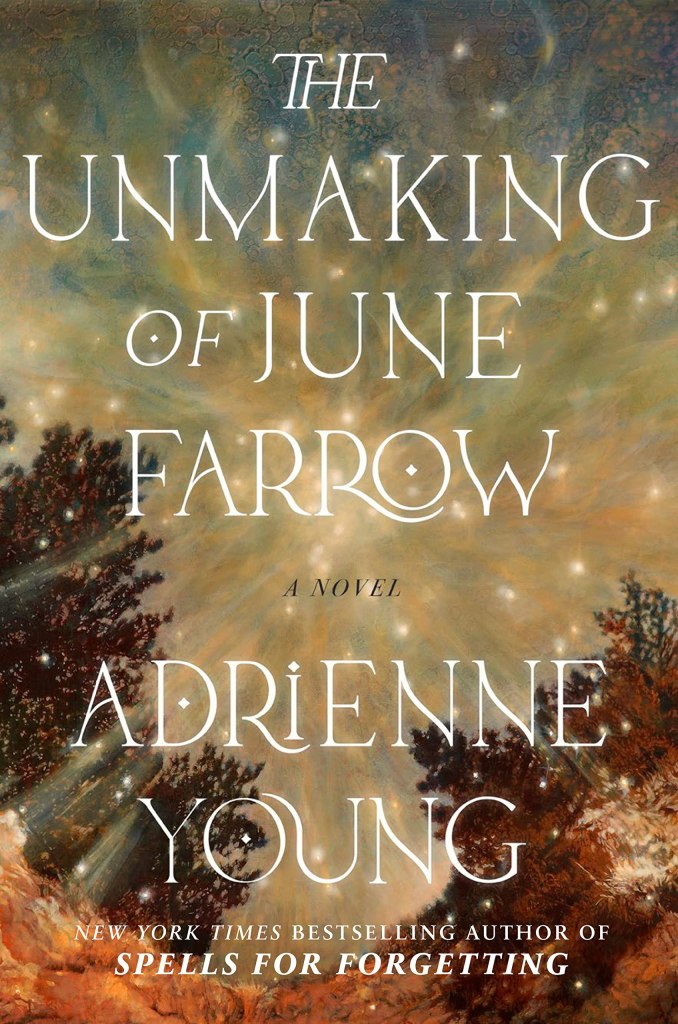
The Unmaking of June Farrow, by Adrienne Young
Starter Villain, by John Scalzi
Vera Wong’s Unsolicited Advice for Murderers, by Jesse Q. Sutanto
The Long Way to a Small, Angry Planet, by Becky Chambers
All the Dead Shall Weep, and The Serpent in Heaven, by Charlaine Harris
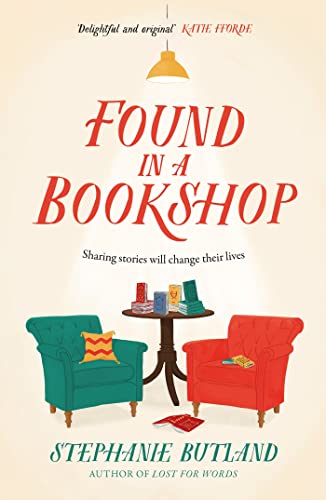
Found in a Bookshop, by Stephanie Butland
I felt throughout the year like I was having trouble discovering books that really resonated with me. Although I had some pleasurable reading discoveries, I never found that one book or series or author that really sucked me in and kept me mesmerized for hours at a time. I found myself reading during breakfast or on my lunch break and easily stopping after a chapter or two to go do something else, rather than wanting to settle in for a solid afternoon of reading. I’m hoping to find more compelling books in the new year. But reading continues to be one of my best-beloved pastimes.
Revisiting Mount Polbearne
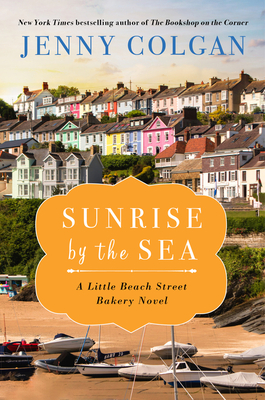
I just finished reading Sunrise by the Sea, the fourth book by Jenny Colgan set on the fictional island of Mount Polbearne, modeled on St. Michael’s Mount in Cornwall with its tide-bound causeway from the mainland. The first book, Beach Street Bakery, tells the story of Polly Waterford, who moves to the island to get over a bad relationship and ends up turning her avocation for bread-baking into a job, then meets Huckle, a local bee keeper with hidden depths. The two subsequent volumes (Summer at the… and Christmas at the…) continue their story. This fourth chapter definitely includes Polly and Huckle and their quirky twins, Avery and Daisy, but it is primarily the story of a newcomer to Mount Polbearne, and could probably be read as a stand-alone, although you would miss some of the nuance contained in Polly and Huckle’s back story.
Marisa Rosso’s grandfather has died and, although he lived in Italy and she saw him rarely (she lives in England), her cherished childhood memories from their time together have sidelined her with grief. The two of them were similar in demeanor and had a quiet but close relationship in the midst of their loud Italian family, and soon the grief has metamorphosed into something bigger; Marisa feels that along with her grandfather she has also lost an essential piece of herself. Grief turns into anxiety and then agoraphobia, and soon Marisa is working her job remotely from the confines of her sublet bedroom and curtailing every other activity. Her rather self-centered landlord thinks he’d prefer a less fraught home existence, and decides that Marisa has to go, to make room for more fun-loving roommates, but he speaks to a wealthy friend of his and manages to get her a place to live in a holiday rental on Mount Polbearne. Once the overwhelming anxiety of getting to Cornwall and out onto the island is past, Marisa thinks she could enjoy the solitude of the tidy little apartment, until her next-door neighbor moves in. He’s large, loud, Russian, and teaches piano lessons from morning to evening, then plays melancholy discordant compositions late into the night, and the constant clamor keeps Marisa in a state. Something has got to give…
This is the usual charming signature Colgan mixture of beguiling location, delightful characters, some life challenges, and lots of cooking and baking. I enjoyed catching up with the protagonists from the other books, and Marisa’s passage through grief is both revelatory and cathartic. It’s not “great literature,” but what can I say—I’m a fan.
Retrograde
The blurb for this book describes it as “funny and heartfelt.” It’s also supposed to be a romance about a woman who writes romances for a living and wants to open a romance-only bookstore with her two best friends, also authors. So you would think I would love it, or at least find it charming and/or germane to my interests. I’m beginning to think all the books I want to read have banded together to evade me on purpose, leaving me with a bunch of hopeful choices that don’t quite pan out.
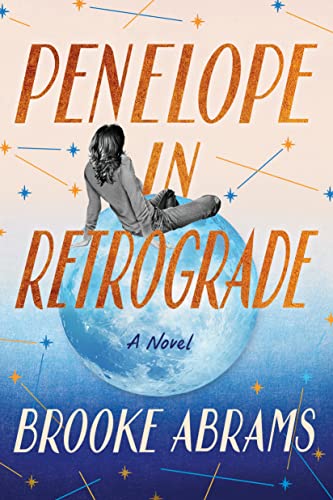
Penelope in Retrograde, by Brooke Abrams, isn’t a bad book, and I didn’t hate it; but it’s too slight to make much of an impression. It’s also annoying in some specific ways. I feel like the author is trying too hard to include all the romance memes, from the meet-cute to the friends-to-enemies-to-friends, and throwing in a conflicted familial situation to spice it all up—none of which turns out to be satisfying.
The main character, Penelope (Penny) has been, not exactly estranged from her family, but out of regular contact for about a decade. Her father is a workaholic businessman in finance; her twin, Phoebe, graduated with honors from college and works in his firm; and Penny has always been the odd one out. Phoebe is successful, Phoebe has a relationship, Phoebe lives close to her parents and sees them on a regular basis, while Penny lives more than half the state of California away from them, and writes romance novels. She is so insecure about her lack of acceptance from her family (her mother wants her to dress better and get a husband and maybe have some kids) that she hasn’t even told them the pen name she uses to write her books.
Once upon a time, Penny was briefly married to Smith, with whom she grew up. She had a better relationship with his family than she does with hers, and mourns the loss of them more than the marriage. The present-day setting of the book is the Thanksgiving holiday, for which Penny is finally returning home after 10 years of avoiding every family gathering. And why is she gracing them with her presence? She needs money to open her bookstore. This immediately made me think poorly of her, since the only reason she’s willing to connect again is to get the funding.
Karma trips her up when she phones for a rideshare from the airport and ends up sharing the Úber with her ex, Smith, who is also returning home to spend the holiday with his sister. Penny then discovers two things: Her parents have invited a young and handsome colleague from her father’s company to dinner, because they never give up matchmaking (even after 10 years of no contact?), and Smith is dating someone new. So Penny immediately decides it’s a good idea for Martin, the set-up guy, to pretend to be her boyfriend. The problem is, her whole family knows he’s not, so he has to convince Smith without revealing what he’s doing in front of her family. The whole thing is cloyingly cute. (Sorry, that was all a little spoiler-y.)
Basically, I agreed with one Goodreads reviewer who said that the story tries way too hard to be funny. Penny’s compulsive avoidance of any genuine conversational moment by turning everything into a joke is grating, while the ride-share scene stretches out forever and is patently silly. Penny’s narrative paints her as the victim of her family’s rigid expectations, but her own behavior shows her up as kind of selfish, and definitely as tone-deaf to their needs as she feels they are to hers. And everybody fights nonstop, which is likewise wearing.
The other thing about this story is that it’s so, so easy. Martin immediately falls in with her plans; Smith turns out not to be plotting what she thinks he is; her father has changed drastically in completely implausible ways while her mother has remained distressingly static; and Nana Rosie as the comic relief is too, too coy. And even though her sister is justifiably irate at how Penny is constantly stealing her thunder, forgiveness also comes easily. Despite Penny raging about how they are all hostile to her, everybody cooperates with hardly a whimper, and then when a stressful life event occurs, Penny transforms into someone else and we have a qualified HEA like all good romance novels. I was surprised when I discovered I had already turned the last page, because I kept expecting things to become, well, more. The desire for more seems to be the one bell I keep ringing lately.
Can anybody recommend something to me that will generate some genuine feelings of joy when I read it?
Giving up Cheetos
If you read only my last couple of posts, you would conclude that I am an overly critical nonreader rather than a lover of books who wants to share my experiences! I assure you that’s not the case, but…hmm.

Last year I read The Housemaid and The Housemaid’s Secret, by Freida McFadden, and likened them to Cheetos: Addictive and entertaining but not in any way subtle or nutritionally redemptive. At the conclusion of my review of the two books, I commented that I was looking forward to book #3 in the junk food franchise. The Housemaid is Watching released a couple of weeks ago, on June 11th, and somehow there was an E-book copy available from my library’s catalog (maybe that should have seemed more revelatory), so I checked it out and got ready to pick up Millie’s story the minute I was done with Veridian’s and with Walt’s (see last two blog posts).

I went to Goodreads and read the synopsis, which places us 11 years after the activities of book #2; Millie has married Enzo and they have a couple of kids, and after scraping and saving for years they have managed to buy a house in a somewhat snooty suburban neighborhood. Millie is thrilled to have finally achieved this pinnacle, but soon, inevitably, things begin to go wrong, starting with weird neighbors, children acting out, shady/skeezy behavior from her husband…in other words, typical Millie World.
I was all set to start indulging in a feast of salty orange puffery when I paused to read some reviews. The first one was a five, but the rest…well…some adjectives included “underwhelming,” “unbelievable,” “messy,” “predictable”…. As a result, what this turns out to be is not a review but a renunciation of a certain level of junk food. Some of the complaints served to remind me of the frankly unbelievable plot points from the previous book and my reaction to them, and I decided to follow my instincts with reading the way I have learned to with actual food: Seek out something that has both substance and the flavor factor—in other words, get the yummy potato chips that are kettle-cooked in the good oil and are doused in half the salt, and forego the fake cheesy stuff that will tantalize but not satisfy.
I guess I now have a new category: Instead of “DNF” for “Did Not Finish,” it’s “DNS” for “Did Not Start.” It won’t count for my Goodreads total for the year, unfortunately. Now to scope out my next book with high hopes for a good report….
Finlay’s road trip

I was excited to get the notice from the library that Finlay Donovan Rolls the Dice, the latest in the series by Elle Cosimano, had landed on my Kindle this week. The overwrought novelist-turned-criminal’s story continues right from where Book #3—Finlay Donovan Jumps the Gun—left off. The open questions at the end of that book: Will Finlay’s nanny, Vero, get out from under her debts to low-life underworld characters? Will her sister Georgia manage to make things last with new FBI girlfriend Sam? Will Finlay convince ex-hubby Steve that things are over between them, and will she finally manage to have a real relationship with police detective Nick—a problematic quandary since she has participated in so many criminal activities to which she can’t “cop,” pardon the pun. Will Finlay and Vero take back the Aston Martin that someone stole from them and also rescue Vero’s crush, kidnap victim Javi? There were so many dangling threads to remember that I almost immediately wished I had stopped to reread #3 before assaying #4!
Because I had read that book within days of its release more than a year ago, it took me a while to get into the rhythm of this new book. The series is really one long story, so you have to be up on all the events from page one of Book #1 in order to really get what’s going on. You also have to understand what this series is and what it is not; while there is a boatload of illegal activity taking place on its pages, it’s really more of a French farce than it is a mystery or thriller, although the fast pace and quick twists and turns certainly make it exciting. Someone on Goodreads compared Finlay and Vero to Lucy Ricardo and Ethel Mertz and, although they are smarter and more savvy, the relationship between them and among all the other disparate characters, from teen hackers to police officers to mob bosses, does bear a certain similarity—and that chemistry is Cosimano’s real advantage.
In Book #4, the cast all take a complicated road trip to Atlantic City in pursuit of their various objectives—and everybody, and I mean everybody, comes along, from Finlay’s mom, kids, and ex-husband to all the cops (crooked and straight) and criminals (major and minor). There are numerous misdirections of everyone involved, no one seems to have a real handle on what’s going on, and all are giving a good imitation of chickens minus their heads.
My ultimate conclusion after reading this chapter in Finlay Donovan’s story is that it was a little too busy. There were so many things happening to so many people all at once, and their connections were sometimes so confusing (wait—who is Ricky, again?) that it was hard to keep straight at times, which meant there was less focus on the strengths of the franchise—the snarky banter, the romantic entanglements, the misunder-standings that propel the heroine and her cohorts. I did enjoy it, but I’m glad that a few characters permanently exited the page (no, I’m not saying who, though some will be a surprise and others not) so that perhaps the next book will be less frenetic and more tightly focused. I did enjoy getting to know Finlay’s mom, Susan, but I also wanted a little more of the Nick/Finlay inter-action, I wanted to hear about Zach’s progress with potty training and Delia’s latest faux pas; and the characters’ days-long lack of sleep and irregular meals made me almost as tired as they were!
I hope that Elle takes a deep breath and keeps everyone closer to home for the next one. Yes, there will be a next one—there was a significant cliffhanger at the end of Dice about nosy neighbor Mrs. Haggerty that leaves us waiting eagerly for its resolution in (sigh) another year!
Silly sequel
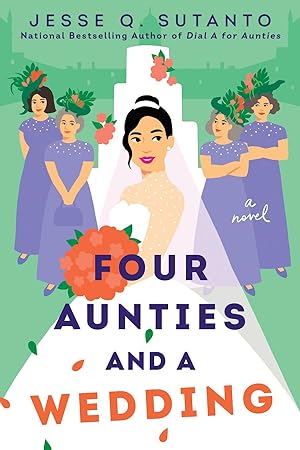
I just finished the sequel—Four Aunties and a Wedding—to yesterday’s book by Jesse Sutanto. It was, like the first, full of the antics of Medellin “Meddy” Chan and her idiosyncratic Indo-Chinese aunties, this time on her wedding day, and although it still had the trademark 2nd-language bloopers and irrational beliefs and superstitions of the first, it was even more frenetic.
Perhaps too frenetic. On the one hand, the descriptions of the aunties’ signature wedding-day outfits and their acquisition of vernacular Brit-speak so as to fit in when they go to London and meet Nathan’s family (their most favored expression being “the dog’s bollocks”) was highly entertaining, and the few interactions between Meddy and bridegroom Nathan were sweet and soulful. But these things were overwhelmed by a plot that took the hard-to-believe events of the first book to a whole less plausible level. (What I’m trying to say here is, it was way over the top.)
Meddy and Nathan are getting married at Christ Church, Oxford, which solves several problems: It’s the hometown of Meddy’s uptight new in-laws, which makes them happy (plus being a beautiful venue), but it lets her off the hook regarding inviting everyone in her entire insanely extended Chinese-Indonesian family, cutting the guest list from the thousands to a mere 200+. She and Nathan want the aunties to enjoy being guests at the wedding, so they have decided to find other vendors to supply the wedding with cake, flowers, makeup, photography, etc. But, as is typical in Meddy’s life, the aunts have worked out a “surprise” for her that she can’t be appropriately filial and still turn down: They have found another Chinese-Indonesian family of five who also do weddings, and hired them on the couple’s behalf.
The first meeting and all the planning goes unexpectedly smoothly, but then Meddy overhears her contemporary, the photographer Staphanie (yes, it’s spelled that way), talking about “taking someone out” on her big day and learns, to her horror, that the family of wedding vendors is Mafia and will reveal her family’s secret (from the first book) if she tells anyone. After this the entire book kicks up the adrenaline to a ridiculous degree as the aunties and Meddy scramble to keep anyone from killing anyone else while keeping it all from Nathan and his parents.
The parts with which I had the most trouble were the actual mechanics of the wedding day. First of all, if any bride spent this much time behind the scenes, ignoring her bridegroom and her guests in favor of running around with her aunts, neither the groom nor the guests would remain so sanguine. Second, about those guests: A few of Nathan’s business investors are highlighted as Meddy and the aunts try to figure out the intended target of the Mafia “hit,” but the rest remain a faceless mass, which is a bit antithetical to the whole idea of only close family and friends attending the wedding. Where were they, and what was their response when Meddy kept disappearing and the aunts became increasingly more embarrassing? And after the description of Meddy’s dress as being tightly corseted on the top half and unbelievably tulle-heavy (and too wide to fit in elevators) on the bottom half, it was hard to believe the things she was accomplishing while wearing it, especially without ripping it or getting it dirty. The thing that bothered me the most, though, was the thought of the total ruin of what was supposed to be a joyful and important occasion. It leant an air of melancholy to this slapstick comedy that lessened its potential impact.
But…I can’t say I didn’t enjoy it, because I did. One thing I liked about both of these books was the highlighting of Indonesian and Chinese cultures, with the contrasts between the lower and upper socioeconomic families and how different they can be despite common descent. The author states that she hoped to create sympathy and understanding without verging on stereotype, and for the most part she pulled it off, although better in the first book than in the second. I’m a little concerned that venturing on volume three may top off my tolerance for quirky mayhem and send me over the edge into annoyance, but I will probably still read it and then complain about it because hey, that’s what I do!
If you enjoyed such reads as the Finlay Donovan series by Elle Cosimano, as I mentioned in my last review, then the Aunties books may be something you would also want to read.
Lighthearted…and also dark?
I love finding a book that successfully combines light and dark humor. The last book/series I read that did that was the Finlay Donovan series by Elle Cosimano, and I have now found another: the “aunties” books by Jesse Q. Sutanto. i just finished the first and liked it enough that I immediately went to my library website and checked out #2 in the series to start on tomorrow morning with breakfast.

In Dial A for Aunties, Meddelin Chan is the third-generation American 20-something from a mixed-race Indonesian/Chinese family of women who all live in close proximity in Glendale, California, and work together in the family wedding business. Big Aunt does the cakes and food, Second Aunt the makeup and hair, Third Aunt (Meddy’s Ma) the flowers, and Fourth Aunt is the entertainment, a singer at the after-wedding reception, while Meddy herself is the wedding photographer. While she loves photography and does enjoy certain aspects of her job, she didn’t really plan for her future to consist of living and working with the aunties (“Don’t leave your big day to chance, leave it to the Chans!“); but she is a dutiful (and guilt-ridden) daughter, and when her (mostly male) cousins all decamped to other cities or states after college, she swore she wouldn’t likewise desert the aunties.
This led to major heartbreak for Meddy, though, because Nathan, her college love and, she believes, the love of her life, was offered a prestigious job in New York City and, rather than disappoint the aunts or hold him back from choosing success on the other side of the country, Meddy breaks up with him so he is free to pursue his dream while she can keep her promises to the family.
The story begins a few years after the breakup. Meddy has dated a few guys in the meantime, but her heart isn’t in it, and her Ma and aunties have begun to despair of ever having grandbabies. So Ma signs up for online dating posing as Meddy, cultivates a relationship with the rich and handsome Jason, and then springs a date on Meddy that’s “blind” for her but not for Jason, as he feels they have really gotten to know one another online and through texts! Meddy reluctantly agrees to the date, which is to take place the night before the family does their thing at a huge society wedding on a resort island off the coast of California. The evening ends up going horribly wrong, leaving Meddy in a panic, needing the aunties to bail her out of trouble in the midst of preparing for their big job.
I don’t want to say much more than this, because the pleasure of this book is in discovering the mishaps as they occur and trying to figure out how the clueless yet ingenious aunties will fix them. The publishers did a disservice to the reader in outlining too much of the story on Goodreads, so don’t read it if you prefer to be surprised, as I do. It’s well worth the wait! Let’s just say it’s an exciting wedding weekend, and there’s a reason for the title being reminiscent of “Dial M for Murder.” I laughed out loud or shrieked in disbelief several times.
Binchy lite?
Several people on the Friends and Fiction page on Facebook have noted, “I love Maeve Binchy, who else can I read who writes like she does?” Most have answered “Rosamunde Pilcher,” but that’s a fairly limited list of books, and then what? Several others mentioned a writer I’d never heard of, also Irish, named Patricia Scanlan, so I decided to check her out (yes, that’s a pun).

The first book I had sent to my Kindle was Francesca’s Party, written in 2020. It’s a classic scenario without the expected resolution: Loving wife (and housewife) of 20 years discovers her husband is cheating on her with a younger “career woman” from his office and goes to pieces. But before we get the scenes of weeping in the bathtub and eating tubs of ice cream, Francesca follows hubby Mark and new squeeze Nikki to the airport, gets their destination, and figures out where they will be staying. She then goes home, packs up a couple of suitcases of his clothes, flies there herself, and knocks on their door to dump the bags at his feet and tell the mistress he’s her problem now. And then she goes home and changes the locks.
So far, so good. But then we get a long slow narrative of rage, bitterness, humiliation, and hibernation on the part of Francesca, interspersed with commentary from the cheating spouse and triumphant girlfriend, and this portion of the book shows how dated the story has become. Somehow Binchy’s books manage to keep their sense of timelessness (for the most part), but this one of Scanlan’s goes in a bit too much for the clichés, and lets you know it’s definitely a product of its time. Scanlan’s writing is also not up to the standard of Binchy or Pilcher; it’s not bad, but it’s nothing out of the ordinary.
Francesca’s Party is, nonetheless, a successful story with a refreshing resolution that one wouldn’t necessarily expect, given the subject matter and the timestamp, and I might try another sometime. I would call it true chick lit; but hey, sometimes that’s what you want, right?
Person, place, thing
I wrapped up my wallow through the writings of familiar authors by reading two books that I really should have saved for six weeks or so but, once discovered, I couldn’t resist them. These were Jenny Colgan’s latest, a two-parter with the same characters and location, The Christmas Bookshop and Midnight at the Christmas Bookshop. Colgan has made a habit out of returning to the scene of a previous novel but setting the action at Christmas (Christmas at the Cupcake Café, Christmas on the Island, Christmas at Rosie Hopkins’ Sweetshop, etc.) but these sequels usually arrive after she has segued to another story or two and then returned. This two-fer is an almost-continuous tale all taking place within about a one-year period bracketed by Christmas seasons, so I was glad that I discovered them both at once and could read straight through from page one of #1 to the last page of #2.
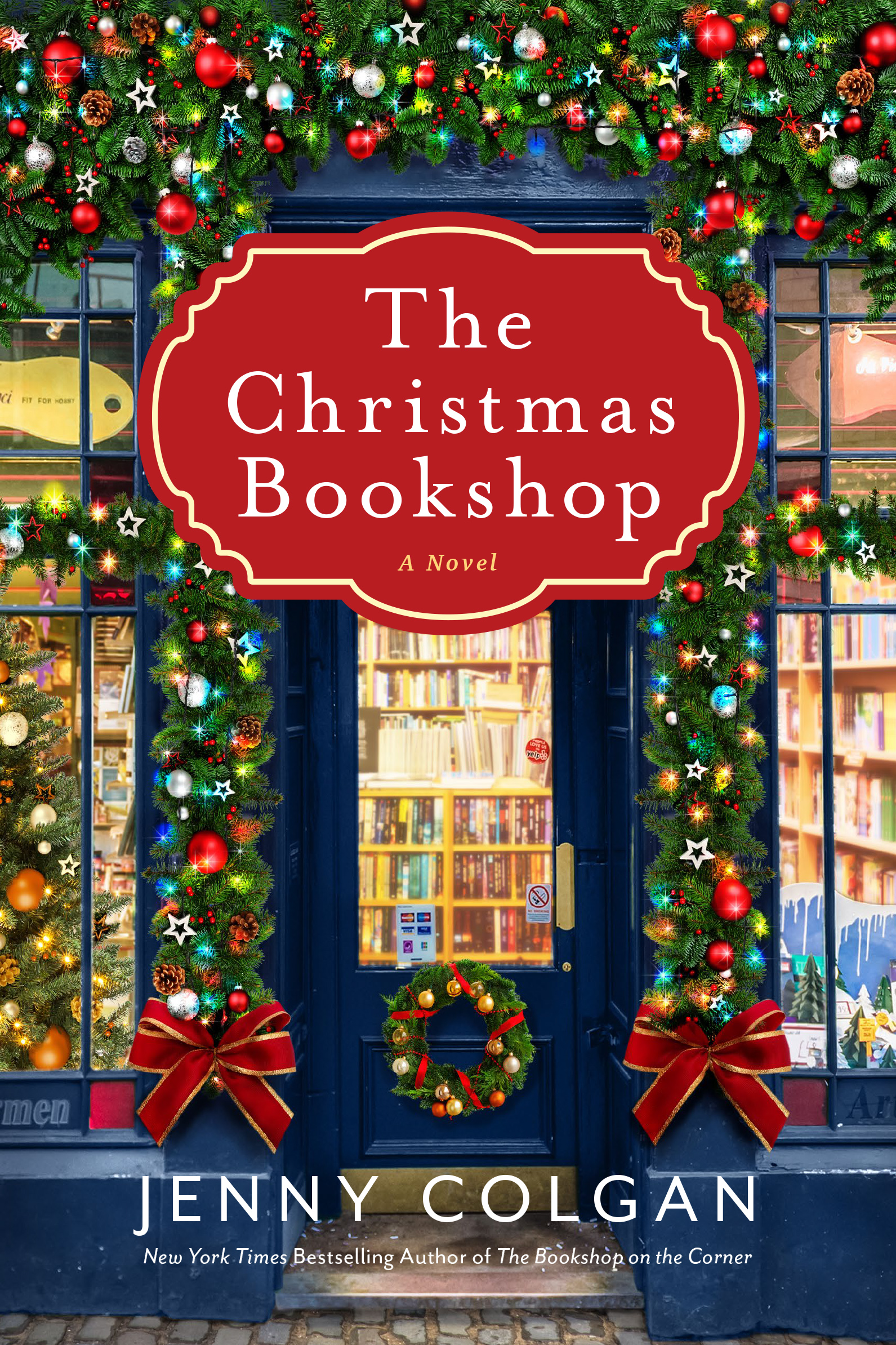
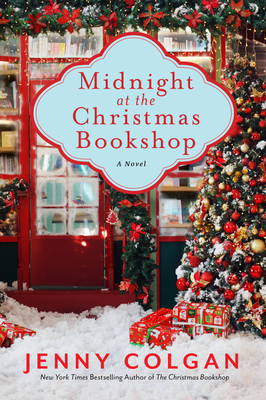
My title for this review takes into account a particular skill of Colgan’s, which is to present us with compelling characters with a specific objective in a spectacular setting that becomes every bit as important to the story as the protagonists. In this case it’s the city of Edinburgh, specifically the Old Town shopping district, so far holding out (for the most part) against the store chains and gimmicky tourist fare to present an authentic experience of one-off original shops, from a hardware store to a chic dress shop to a witch’s herbarium. The focus for Colgan’s bevy of characters is, as frequently happens in her books, a bookshop, in this instance a failing one. Mr. McCredie’s ancestors started the rare book store on the rambling bottom floor of their home, and he has lived and worked there his whole life but, despite his affinity for and encyclopedic knowledge about every sort of book, he’s a terrible salesman, a worse marketer, and is on the verge of forfeiting everything. Enter Carmen Hogan.
Carmen has, in rapid succession, lost her boyfriend, her job, and her apartment, and has been living in a state of denial at her parents’ place, tediously and repetitively grousing about everything and eating way too much junk food. Carmen’s parents are rather desperate to get her out of their house and back on her feet, and enlist Carmen’s sister, Sofia, to help them.
Sofia and Carmen have always been polar opposites: Sofia is the elder type A overachiever, and is now a successful lawyer with a happy marriage, three children (and another on the way), and a beautiful home in Edinburgh, and Mr. McCredie is one of her clients at the law firm. Carmen decided to skip college, and has worked in retail in a large department store since high school until the store closed and made her redundant. Sofia somewhat reluctantly asks Carmen to come live with her family, telling Carmen there is a job for her revamping an Edinburgh rare bookshop; what she doesn’t tell Carmen is that the sole objective is to get the store to turn enough of a profit during the next three months so as to make it an appealing prospect to a buyer, and that as soon as a sale takes place, Carmen will again be out of a job (and presumably a place to live).
While initially reluctant to go live with her sister, Carmen sees that she needs a change, and she loves books, so off she goes to Edinburgh. She is horrified by the magnitude of the job she has taken on: The store is in an advanced state of disrepair and disorganization, and Mr. McCredie is absolutely no use unless someone comes in looking for that one eclectic title about which he happens to know something. But she takes a deep breath and pitches in, and starts to make some headway, particularly when she is able to get a famous writer of self-help books to do a signing at the store. This guy and a student/lecturer at the college are the two love interests in the story, and Carmen goes back and forth between the glamour of the first, with his casual attention and expensive dinners, and the quiet regard of the second, a young Quaker with an intensity she has never experienced.
Carmen and Sofia continue to be mostly at odds, but Carmen discovers an affinity for children, specifically her young nieces and nephew, that she didn’t expect, and bonds particularly with the second daughter, Phoebe, who shares many character similarities with her Auntie Carmen.
There are other fun, although somewhat over the top, characters such as Skylar, Sofia’s yogini nanny, and Jackson, the millionaire who is out to ruin the quaint shopping district by remaking all the stores into purveyors of cheap “tourist tat” sporting too much Scottish tartan, and there are a few improbable story elements that made me say “hmm.” But…
I was truly astounded to see a bunch of two- and three-star ratings of these books on Goodreads, where Colgan normally has solid fours and fives. I thoroughly enjoyed both of them; the magical descriptions of Edinburgh in winter at Christmas made me want to go there despite an almost pathological dislike of cold weather; the children were funny and endearing and memorable; the bookshop’s problems and mysteries were involving; and I liked Carmen as the protagonist and driver of the narrative. I was totally immersed in this two-part story for four days, and was sorry when it ended. I’m hoping, as she occasionally does, that Colgan will go back for a third installment set in this world with these people, because I’d love to know what happens in their next chapters. If you’re looking for something to read to put you in the holiday mood, look no further.

 The Book Adept