The words, the will, the way
Someone recommended The Ten Thousand Doors of January, by Alix E. Harrow, to me, and since it has won several enviable awards in a genre I like, I decided it would be my next book, but alas! the holds list at Los Angeles Public Library thought otherwise. But I noticed that her book The Once and Future Witches was available, so I decided to pass the time by reading that one first.
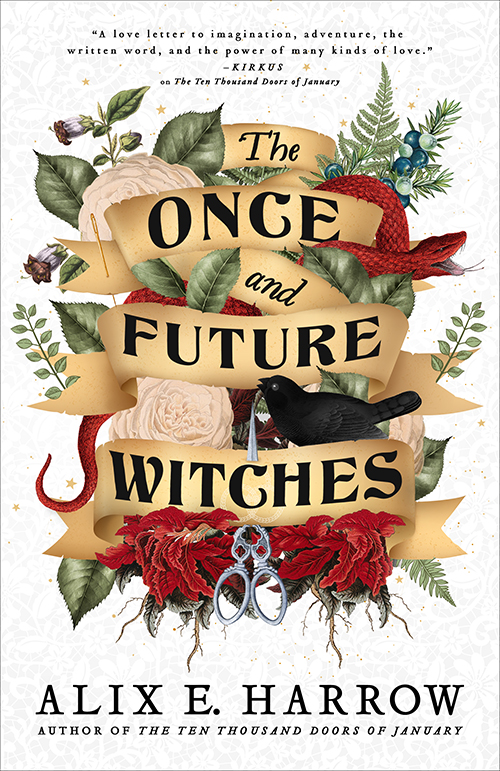
Three estranged sisters who haven’t seen each other for many years end up in the same town (New Salem) at the same event and are drawn together by a weird magical bond. The eldest of the Eastwood sisters, Beatrice Belladonna (Bella), is an introverted librarian who spends her days doing translation and transcription work for others while indulging herself by digging through the archives looking for fairy tale fragments, rhymes, and stories that appeal to her. It is her speaking one of these rhymes aloud that brings about the cataclysmic reunion. The middle sister, Agnes Amaranth, has bitterly accepted that she is not special or entitled, and works in a factory for a living, keeping to herself and letting no one in. The youngest, James Juniper, is the wild and impulsive one, angry with her sisters for leaving her behind with their sadistic father. When she arrives in New Salem (just ahead of the law) and encounters a demonstration/rally by the local group of suffragettes, she is inspired to join up with them, bringing her own background as a spell-caster to shake up their staid activities and hoping to turn the women’s movement into a witch’s movement. Then Bella’s inadvertent recitation of an odd rhyme has an astonishing result and, while it brings the three sisters together, it definitely isn’t anything with which the suffragettes wish to be associated. But June doesn’t let this stop her from recruiting women from their midst who are tired of never getting what they want and are willing to take things into their own hands—women who have the will, and are eager to learn the words and the way.
This book bowled me over. It tapped into some major threads, both for me personally and in the context of current events.
First of all, as have many ex-Christian women, I did my time exploring Wicca, and although I’m not a practitioner, I do have a soft spot for celebrating (or at least acknowledging) the Sabbat rituals, and this story played right into that. The idea that fragments of spells are concealed within fairy tales, legends, and nursery rhymes as a way to pass them on in plain sight with no one else the wiser is simply brilliant. And the book’s chapter headings, each of which is a variation on one of these spells, accompanied by the purpose of the spell and the “tools” needed to accomplish it, gave a delightful continuity to the story, as well as making you want to believe they are true. Likewise, Harrow’s fairy tale retellings, recast in a more feminist mode, made me think twice about story origins. I love it when an author takes the time and thought to make their magic both plausible and useful, and in this book everything is so organic to the atmosphere, the times, the old stories that the narrative just flows.
There are familiar themes from history in this book—the Salem Witch Trials (and burnings), the Triangle Shirtwaist Factory fire, the suffrage movement—but the story is something of an alternate history: Old Salem is a burnt-out ruin and New Salem is taking over its legacy; the suffrage ladies, while brave to a point, are exposed as the elitist, racially exclusive group that they were; and the author freely uses the historical context to serve her story without stubborn adherence to dates and facts, which I thought was fine in a book that doesn’t purport to be historical fiction. You find out late in the book that the action takes place in 1893, but it doesn’t really matter that much to the story, which is universal.
The thing that struck me, in reading it at this particular moment in history, is how cyclical are women’s issues, and how we keep getting trounced until we band together and learn (again) how to stand up for ourselves. We are at a place now where rich white men are once again attempting control over our options and our bodies, and the seditious revolution led by the three witch sisters in this story is a good example of what can happen when information and rebellion spreads from woman to woman, from group to group, to a whole nation of women fighting back.
I can’t say a single negative thing about this book. The protagonists are compellingly realistic (well, apart from the witchcraft, although that feels real as well!), the villain is truly creepy, the side characters contribute wonderful scenes and perspectives, and the setting is both dangerous and mundane in just the right balance. The pacing, the twists and surprises, the bonds between the sisters and in fact between most of the women, are all solid. I’m so glad I had to wait on her other book and took a chance on this one.
Ambivalence…
After having rated TJ Klune’s book The House in the Cerulean Sea as one of my favorite discoveries last year, I was greatly anticipating reading this year’s Under the Whispering Door. I ended up mostly enjoying it, but it was a bit of a struggle to do so.

Although they have different themes, the books do share certain characteristics: an initially unlikeable protagonist (although I mostly felt sorry for Linus in Cerulean, while Wallace in Door was simply an asshole); a quirky gang of main and secondary characters to surround him and serve as foils for his transformation; equally fanciful world-building; and a gay romance. I was intrigued by the subject matter—death and transition—and couldn’t wait to see how this creative author would deal with it. Unfortunately, I had to wait…and wait…and wait some more.
I almost put this book down a couple of times during the first 60 percent of it, simply because nothing much happened. Don’t get me wrong—there are events taking place, they simply don’t appreciably move the plot along, and also can’t compete with the constant, repetitive introspection of the exceedingly annoying protagonist, who protests, whines, and throws tantrums as each of them transpires.
Wallace, a successful and rather egomaniacal big-city attorney, has a blackout moment in his office, and when he wakes up, he’s at a funeral, which turns out to be his own. There are distressingly few people in attendance, none of them kindly disposed towards him, and it’s almost with relief that he notices one well-dressed and intriguing person he’s never met. Mei turns out to be his Reaper, the person who has been sent to retrieve him, now that he’s dead, and to convey him to the Ferryman to make his transition to whatever’s next. This turns out to be Hugo, owner of a tea shop on the outskirts of a small, out-of-the-way town whose inhabitants enthusiastically line up for his and Mei’s croissants and scones, oblivious to the presence of both resident and guest ghosts on the premises.The living quarters are upstairs from the shop and, on the fourth floor, there is a mysterious door in the ceiling that leads, well, somewhere else.
Wallace, however, isn’t yet willing to admit that he’s dead and it’s all over, let alone passively float through that door. He’s angry, he’s resistant, he’s all the many stages of Elisabeth Kubler-Ross, and he’s going to fight with anyone who tries to pressure him into something for which he isn’t ready.
This is a book about what it means to be alive and how to come to terms with death. I appreciated the marked lack of religious symbology and the unique ways in which Klune imagines that all this happens, but was less a fan of the repetitive mantras surrounding the subject matter. There were definitely both ahah! and touching moments throughout the story, and I did invest fairly heavily in most of the characters by book’s end, but there were some things that didn’t feel organic (the romance wasn’t there and then it was, and it was hard at times to understand why) and others that felt extraneous. I ended up enjoying it quite a bit, but the irritation level at pushing through all of the preliminaries that seemed to last way too long brought the pleasure quotient down a bit.
My ultimate verdict would be to read it, but go into it knowing it’s a slow burn of a read and you will have to persist to find gratification.
Ash (aka Cinders)
Back in 2012, I read Malinda Lo‘s science fiction book, Adaptation, and gave it a four-star rating and a good review. It was good storytelling, had romance both gay and straight, and hey, aliens!
Ever since then, I have meant to go back to her and at least read Ash, her Cinderella retelling with a sapphic twist, and this week I finally did so, as part of my preparation for my “speculative fiction” unit at UCLA for my Young Adult Literature class.
I have to say I was underwhelmed. There are nice things to say about the book: The writing is sometimes lyrical, and the scene-setting imagery (descriptions of forests, countryside, hunting on horseback, etc.) is lovely. Some of the characters are attractive, at least in their physical descriptions. But it seemed like Lo didn’t quite know how to both present/exploit the original fairy tale and then deviate from it effectively (or provocatively, as most readers would be expecting).
The details of the original that were retained were clichéd, with the stepmother being almost a cartoon caricature and the daughters’ personalities left unformed beyond the usual, which is to say, the elder is egocentric, frivolous, and mean, while the younger (less attractive and therefore less valuable?) retains a smidgen of humanity. The father likewise becomes the bum who didn’t pay the bills and left everyone in the lurch. And the prince (central to the original tale) has barely a cameo appearance in this book. The character of Aisling’s absent (dead) mother was so much more fully formed than most of the people in this story who were alive—it was both disconcerting and not ultimately useful.
You would think, against this backdrop, that the main players—Aisling or “Ash” (Cinderella), the King’s Huntress, Kasia, and the mysterious Fae suitor, Sidhean, would shine. They don’t, and nor do their relationships. Although Ash regards Sidhean with awe and wonder and looks forward to his visits and his company, there is little emotional involvement visible from either side (except for one or two extremely brief repressed moments on Sidhean’s part), and the prospect of going away with him does not fill Ash with joy, despite her miserable lifestyle from which one would think she would be desperate to escape.
Likewise, the meetings with the Huntress only hint tentatively and subtly at there being any kind of fascination (on either side), let alone attraction, and are so quietly and decorously handled that you keep wondering if you imagined reading the synopsis of the book in which these two supposedly fall in love. There are moments…but they remain unarticulated until almost the very end, and there is little sense of who the Huntress is, with few glimpses into her past and present and almost no indication of her feelings. There is no love story here, except in the vague dim recesses of the two characters’ minds—no verbalization, no wooing, no physical manifestation.
In effect, this book has an almost totally flat affect. Although there are conflicts (as Ash learns from her rather obsessive reading of fairy tales, it’s a big deal to go away with a fae into his land, where time moves differently and people can become trapped forever), they are not ultimately dealt with as if they are that significant. I don’t want to be a spoiler here, but the resolution with Sidhean was puzzling, abrupt, and unsatisfying.
In this setting/world it also seems that a relationship with a fae prince is so much more scandalous than is a lesbian one—which seems almost completely taken for granted—that the reader is denied even the frisson of forbidden love, and when the two women eventually get together, it verges on mundane. And I mean, we all say we want books in which same-sex relationships are accepted and taken for granted, but…this is a fairy tale retelling in which “Ash” supposedly ends up a princess, married to a prince, so…shouldn’t there be some kind of fireworks when that doesn’t happen?
I was just puzzled by this book—especially all the ways the author chose not to go. It’s not exactly a pan—it’s a pleasant enough read, and has some interesting moments—but it was so much less than I hoped or expected.
Too dark
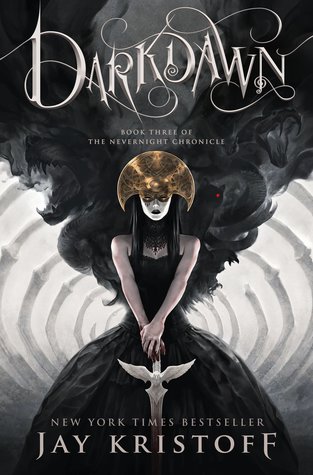
Well, I promised to come back once I had read Darkdawn, the third book in the Nevernight Chronicle by Jay Kristoff, with a final verdict. Sadly, my reaction was mostly one of disappointment.
The action is still tense, the main characters are still developing and doing unexpected things to move the story along, but for me, this was a much less successful book than the first two, for several reasons.
The main one was the love triangle. Having been a teen librarian (and runner of three teen book clubs for 10 years), I can’t tell you how many love triangles I have had to endure in the course of my YA reading. For a period of time they seemed to be an absolute requirement as one element of any book written for teens, and almost none of them improved a story line in any way. This book is not written for teens (I think I mentioned the brutality, language, and raw sexuality of the first two, and that continues here), but for some reason Kristoff just couldn’t resist putting one in, and it’s not pretty. A large part of the book was ruined for me by the callous mean-spiritedness of two of the three participants.
I also didn’t care for what happened to the story line. The first book dealt with origin stories for its characters; the second advanced the revenge plot with a truly horrifying and compelling twist; but in this third book it seemed like everyone involved was just flailing around trying to triumph over one another in a really disorganized way. There were a few saving graces in the early part of the book, such as the interval spent on board ship with the delightful pirate Cloud and his crew, and Mia’s attempt to put things right with her little brother, but by the end the whole thing felt like it had disintegrated into a mash-up of sarcasm and sex, alternating with interventions by various gods and monsters.
Part of what didn’t work for me (and I think this is probably the central issue) is how exactly Mia would manage to counteract her enemies’ moves and at the same time achieve the gods’ ends as she was apparently destined to do. Motives and objectives kept wandering randomly, and at some point it felt to me like Kristoff lost the plot.
You will find, if you look at ratings on Goodreads, that many people disagree with my analysis of this book. It seems like everyone gave it either five stars or one, with no one in between. For the sake of all those (admittedly in the majority) who went with the five and loved this book as unreservedly as the first two, I will say, If you like a sizzling fantasy story with nonstop action, fascinating characters, and big intentions, give the Nevernight trilogy a try. But don’t say I didn’t warn you if you end up on the same page with me by the end of #3.
Dark
My only previous experience of author Jay Kristoff is as the co-writer of the Illuminae books, with Amie Kaufman, which are clever and entertaining but don’t have a singular voice like his Nevernight Chronicles. Someone in a fantasy thread recommended the series; I don’t know how I had gone this long without hearing of it, and decided to give it a try. It didn’t hurt that my Kindle Unlimited was offering the first two for free this month!
I was going to wait until I had read all three books before writing my review, but the combination of how long it is taking me to get through them with the fact that I am still #7 on the wait-list for the library copy of the third book made me decide to review after two. I will come back and comment when I am done with the whole.
My verdict so far is that this series is terrific. I can see why I hadn’t heard of it in the context of young adult literature, because he’s definitely not an author of whom many teens’ parents will approve, since he slings around both traditional and unorthodox language like a dock worker, shockingly emerging from the mouth of his pale, petite, teenage assassin, Mia Corvere. The books are pretty edgy, with graphic descriptions of blood and violence and sex, but the language he uses to describe everything is powerful and sometimes lyrical—it made me happy to read individual passages. (I will say, though, that others have described it as too flowery, over the top, unnecessarily verbose. To each their own.)
This is a series, however, that could be thoroughly enjoyed by older teens (I’m talking 17 up, maybe?), as well as by anyone else who likes sterling world-building, a provocative protagonist, and a driving story line.
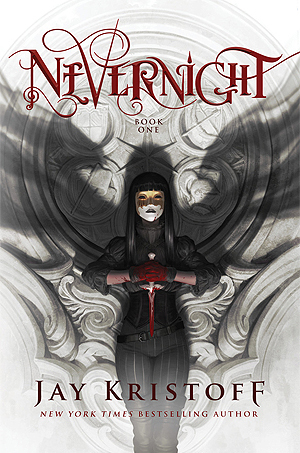
The prevailing theme is a battle between light and dark; but in this tale, the dark is represented by a wronged child who finds refuge in kindly shadows, while the light consists of a bunch of powerful, hypocritical politicians who use the gods of their three suns to reinforce their will as rulers.
Mia Corvere is 10 years old when her father, who has led an uprising to place someone else on the throne, is executed as a traitor in front of her horrified eyes. She is the only family member to escape capture, and hides in the city of Godsgrave, searching for a group of people who will help her with revenge—the Red Church. They are a deadly “school” of assassins, and Mia plans to advance through their ranks to gain the skills to claim the lives of the two powerful men who gloated on the sidelines as her father was hanged.
The first book, Nevernight, consists of Mia’s introduction to and progress amongst the acolytes of the Red Church. Life becomes a competition to the death between herself and her fellow students as they seek to survive while gaining knowledge of steel, poison, and the subtle arts, the eventual goal to be inducted as a Blade of the Lady of Blessed Murder. What she doesn’t know when she enters the dark halls of the school is that a plot is brewing that will, if it succeeds, disastrously counter all her plans for revenge.
In book #2, Godsgrave, Mia is now a Blade, although her induction was a matter of controversy. As the story opens, she is working out of a backwater station of the Red Church, taking assignments to assassinate victims designated by the Church on behalf of their clients. But she begins to suspect that the Church’s motives are far from pure and that their interdiction of her revenge on Consul Scaeva and his priestly cohort, Cardinal Duomo, is less about their need for her to follow orders and more about protecting her mortal enemies in favor of their own self-interest. So she hatches a plot that involves her adopting a desperate masquerade to achieve a confrontation with the men whose lives she seeks to end.
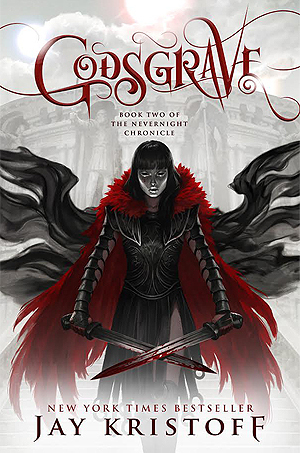
I enjoyed the first book more than the second for two reasons: 1. I always like the origin story the best, and gaining knowledge of the world and learning about where Mia came from and how she arrives at where she needs to be was thoroughly engrossing. 2. The second book is overwhelmingly brutal, bloody, and gory, depicting as it does a group of slaves who fight as gladiators in an attempt to gain their freedom (and some of whom who compete just for the “sanguis et gloria” of it). The second book was also long and involved, and the first half, consisting as it does of a present-and-past flashback/flash forward style, was a little taxing to keep straight. But the whole story bowls along towards the initial revenge plot in a satisfying arc, and after the breathless events of this book, I am greatly anticipating reading part three.
Although…I have to say I’m a little relieved that Darkdawn hasn’t arrived on my Kindle yet, because after two of these books, I need a short break before re-immersion! I finished Godsgrave by pulling a four-hour stint in the middle of the night (did I mention I have chronic insomnia these days?) and I’m kinda exhausted! I’ll be back when I have completed the series.
My year of reading: 2021
It’s New Year’s Day! Time to look back at all the books I read in the past 365 days, and reveal which were my favorites, which were the best books I read this year, and whether those are one and the same. Goodreads conveniently kept track of statistics related to my reading goals, so before I get specific, here are some of mine:
This year I read 132 books, which consisted of 50,676 pages.

The shortest was a Linwood Barclay novella of 81 pages, while the longest was one of the Robin Hobb Farseer fantasies at 914 pages. My average book length was 383 pages.
The most popular book I (re)read was Liane’ Moriarty’s Big Little Lies, shelved by almost 1.5 million people!
And now, here are some categories that highlight the year’s journey, from my memories of 2021 reads:
Most excited about:
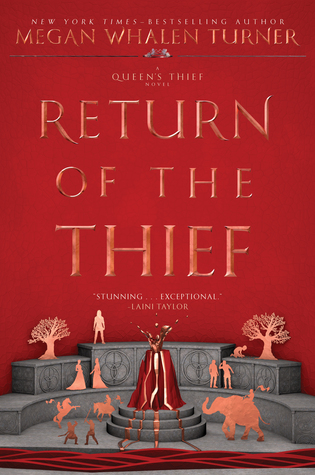
Return of the Thief, the conclusion to the Queen’s Thief series by Megan Whalen Turner, finally arrived, which gave me the perfect opportunity to enjoy re-reading this series for what, the fifth time? She published the first book, The Thief, in 1996! If you are looking for a nontypical fantasy immersion to start off your year of reading, pick up The Thief and savor the story through The Queen of Attolia, The King of Attolia, A Conspiracy of Kings, Thick as Thieves, and Return. It’s one of those series that gets exponentially better as it goes along.
Best discoveries (in any genre):
ROBIN HOBB. I got lost for a month or more in three of her Farseer high fantasy trilogies, and still have two more on my TBR list, which I hope to get to early in the year.
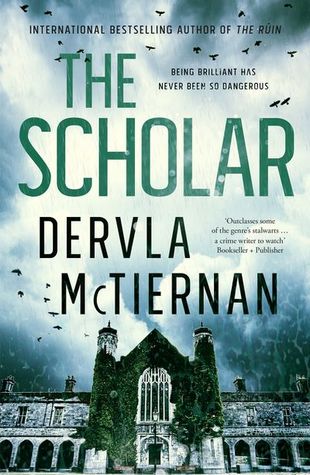
DERVLA McTIERNAN: A wonderful new mystery series writer with books set in Ireland
Best science fiction discoveries:
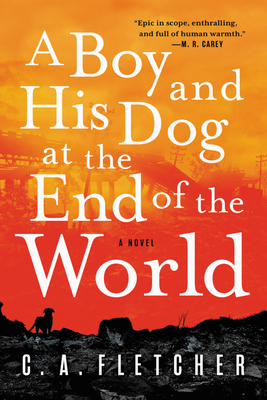
A Boy and His Dog at the End of the World, by C. A. Fletcher
A Psalm for the Wild-built, by Becky Chambers (first in a series still to come)
Both of these would fit best into the dystopian category.
New time travel:
The Jane Austen Project, and The Dream Daughter, both from unlikely authors…
New fantasy I loved:
The House in the Cerulean Sea, by T. J. Klune
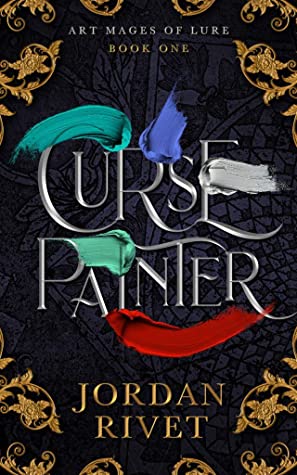
The Art Mages of Lure series, by Jordan Rivet (Curse Painter is the first book)
Most memorable read:
All the Ugly and Wonderful Things, by Brynn Greenwood
Most affecting mainstream fiction with an historical backdrop:
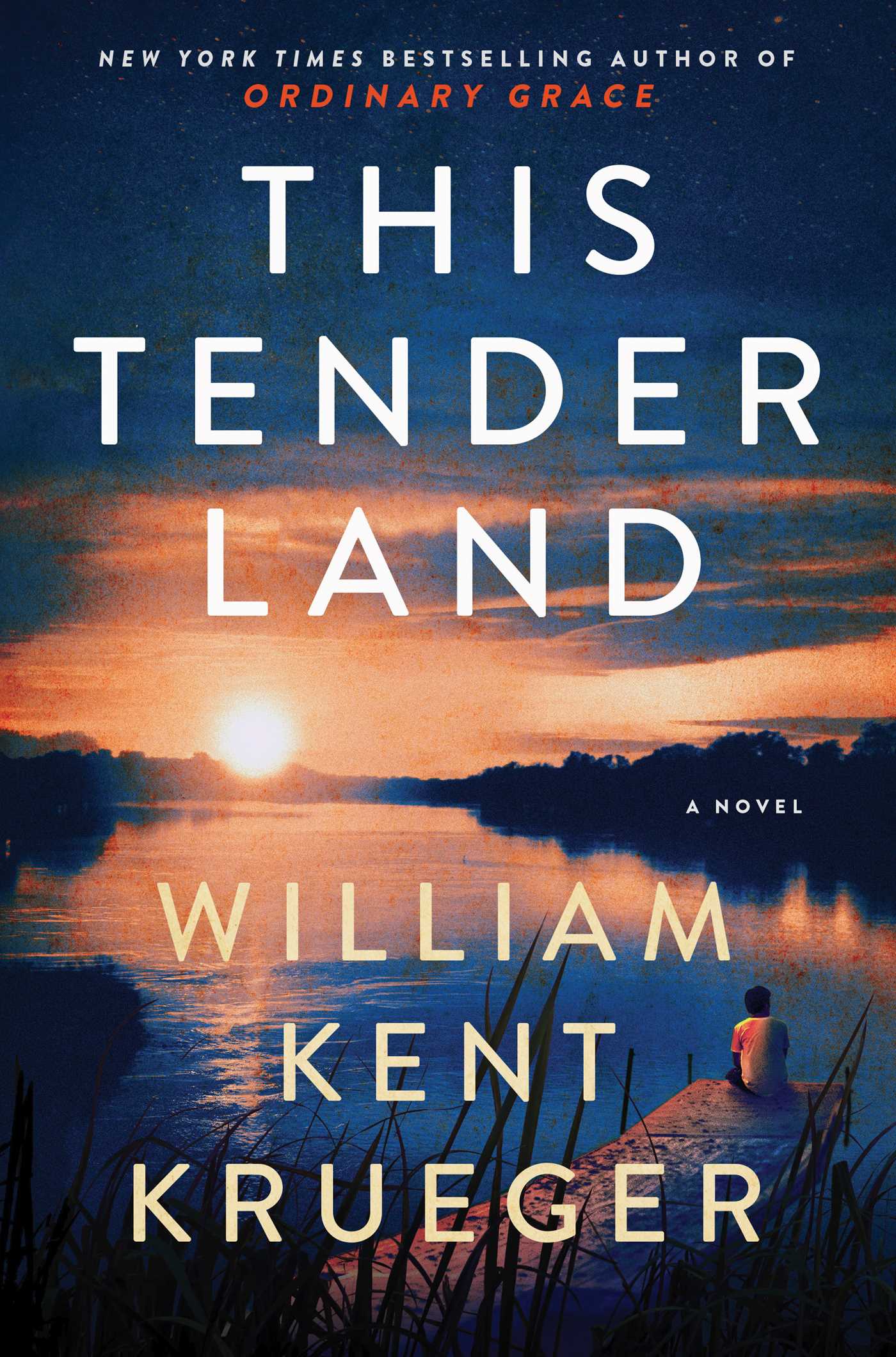
This Tender Land and Ordinary Grace, by William Kent Kreuger
Continuing fan of:
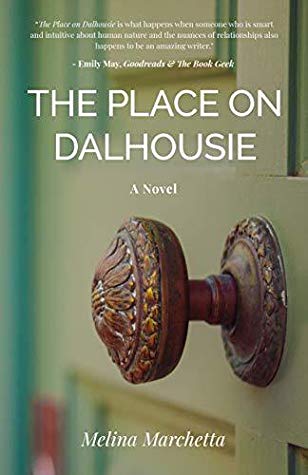
Melina Marchetta for The Place on Dalhousie
On board with the rest of the crowd:
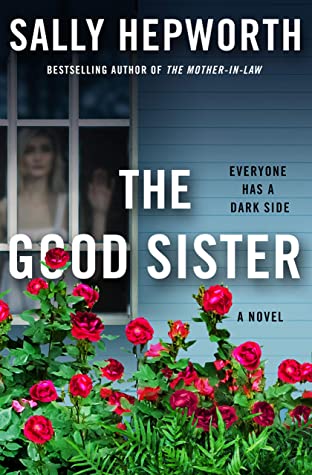
Author Sally Hepworth, with The Good Sister being at the top of the list.





And that about covers the highlights of my year in reading! I have written/published reviews of most of the books I mentioned here, so if anything piques your interest, go to the search box (“Search this site” at the top right under my logo and description), put in a title or an author, and find out why I called out these favorite books.
Paper magic
I began reading The Paper Magician, by Charlie N. Holmberg, with great anticipation—as it turns out, too great. Its opening pages reminded me of another series (of which I have read the first two) that I recently loved (and reviewed here), the Art Mages of Lure books by Jordan Rivet, beginning with The Curse Painter. They seemed like similar systems of magic, in which the practitioner invests everything in learning how to bring magic to the world through a particular medium, in that case paint and in this, paper.
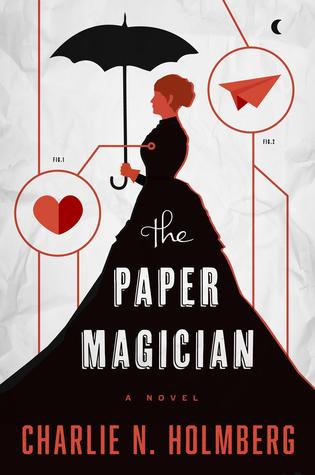
In this series there is a particular magical system, in which potentials attend the Tagis Praff School for the Magically Inclined and (ideally) by the end of their studies have discovered with which material or element their skills are best-suited to work. Ceony Twill has graduated at the top of her class with every expectation of being able to choose her path as a magician, and her inclination is towards becoming a Smelter, a worker of bullets, jewelry, and all things metal. Instead, she is informed by her mentor that there is a severe shortage in the world of magicians who can work with paper, and she is therefore being assigned to a Folder for an apprenticeship in paper magic.
Ceony’s level of dismay is more understandable when you realize that once a magician chooses a material with which she will bond, that is her medium for life—there’s no changing over to a different field in this system. Still, her new mentor/trainer, Magician Emery Thane, has much to forgive in her first few days as she in turn exhibits reluctance and indulges in sarcasm and sheer petulance. But as he pursues his rather quirky methods of instructing her in the folding of paper into marvelous creations with all sorts of uses (and also none, save for beauty and whimsy), Ceony is gradually won over to the idea that being a paper magician might have its own appeal.
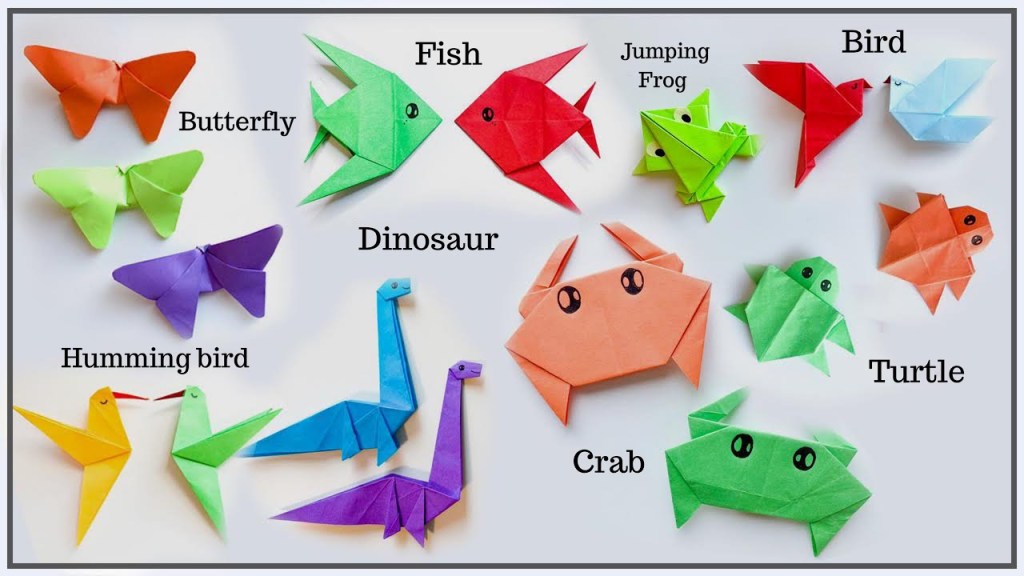
I loved the book up to this point. The idea of binding to a specific material and only casting through that medium was intriguing, and the initial instruction by Mg. Thane (don’t you love that abbreviation?) in how “folding” works was wonderfully portrayed. Consider if you could use origami techniques to fold a paper crane—or a dog, or a dinosaur!—and, if you’d done it perfectly, being able to say “breathe” to it and bring it to life, or at least to animation. Imagine creating an entire garden out of folded paper tulips that would go back to bud every night and bloom again in the morning, or folding a paper airplane that you could actually use to fly across town.
I also loved the grounding of the book in the transitional period between the Victorian era and the Industrial Revolution. Some houses have lightbulbs while others still use gas lamps, or candles. Some drive automobiles while others rely on a horse and buggy for transport. And alongside all this mundane detail, being a magician is equally common—just another job in the world.
Unfortunately, as intrigued with the job of paper folding as she was rapidly becoming, Ceony was also in short order beguiled by the smiling green eyes of her teacher, Mg. Thane. I sighed a little and prepared to be treated to some insta-love alongside the solid characterizations and nice set-up in world-building that Holmberg had created…and then everything went to hell in a handbasket, as people in the 1870s might say.
Why the author chose to hare off on the tangent she did, especially in the first book of the series, is a mystery to me. Suddenly Thane’s ex-wife pops into the picture as a super-villain who takes over the story, even though we have previously never heard of her and are abruptly informed of her ill will towards Thane, his attractive pupil and, in fact, pretty much all and sundry, with a few short sentences about the kind of bad magic she practices; but we have no background on her history, motivations, or abilities. And we are not destined to get any! Instead, she attacks Thane, and Ceony embroils herself (despite being only a couple of weeks into her apprenticeship) in an attempt to save him. Those efforts take up the rest of the book.
I know this is a little spoiler-y, but honestly, I was so exasperated by the turn things took that I couldn’t get over it! There are three more books in this series, although by reading the descriptions it seems like #4 is an add-on; the first three are centered around these two protagonists (Ceony Twill and Emery Thane), while the last seems completely detached per its description. The other books reveal more about the magical system, in that they address people who are able to work glass, plastic, etc., and I am a little tempted to keep reading because of that aspect…but the set-up for book two has Ceony pining over her as-yet lack of attachment to Emery, and I just don’t know if I’m up for it, particularly since there are also promises of a repeat of book one: the introduction of a rogue character who upsets the apple cart again.
I’m not telling you not to read these books; the characters are appealing, and the situations, despite their lack of context, are imaginative. But when I compare this series to the afore-mentioned one by Jordan Rivet, there’s just no contest; and I could wish that this writer had had a more astute editor to say “stop, wait, think” when she decided to take a turn for the dramatic, and point out a more logical, integrated way to pull it off.
Exciting discovery
I am back to pondering people’s personal tastes in reading. I was thinking about the fact that, despite the many books I read every year (my Goodreads total is approaching my year’s goal of 120 quickly enough that I may add on books to carry me through December), it’s rather seldom that I discover an author who perfectly meets my needs and expectations when it comes to preferred reading.
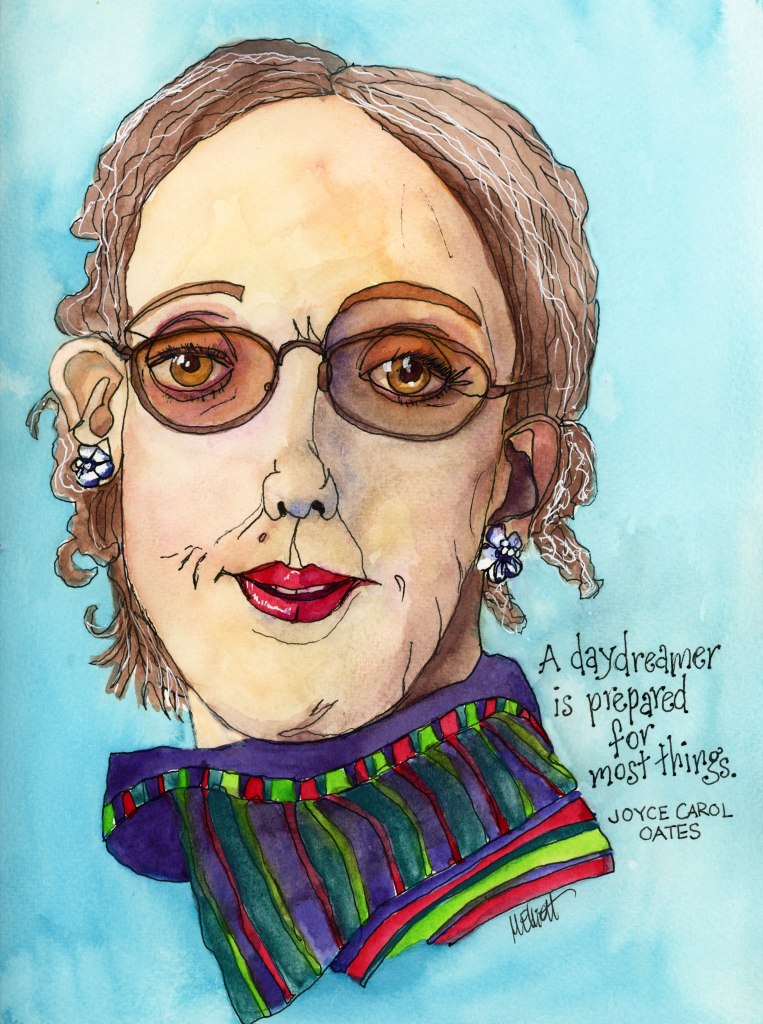
It takes us back to the eternal conundrum of “good” versus “popular,” and also to thinking about how many people are exposed to which kinds of books and why. For instance, I heartily acknowledge that Joyce Carol Oates is a fine writer. But despite my great admiration for her immense skill with words and her always eclectic choice of subject matter, I have never read a single one of her books from beginning to end, even while making sure to purchase copies for the library where I worked—and believe me, I have tried. But…novels, short stories, poems, essays—they all leave me cold. She’s not “my” author.
On the other hand, I have somehow been able to make it through the admittedly creative but nonetheless poorly written and quite clichéd oeuvre of Stephenie Meyer, mistress of sparkly vampires. Okay, yes, partly for my job…but I didn’t really have to read all four volumes of the Twilight saga in order to maintain credibility with my teenagers—the first book probably would have done nicely. And that willingness to persist despite the obvious flaws makes me wonder about the relative readership (and sales) of each of these authors.
This is not to initiate a discussion over whether books are objectively good or bad; as Betty Rosenberg, first editor of Genreflecting (classic textbook for readers’ advisors), first said in 1982, “Never apologize for your reading tastes.” My goal here is rather to discuss the fact that there are authors in the world about whom you have never heard, but when you venture to read one of their books you immediately recognize them as one of yours—a person who makes up a character, builds a world, tells a story just as you would do if only you could, a person who writes specifically for you, whether they know it or not.
There are, of course, levels to this. There are authors whose works I read over and over, either gaining something new or reveling in the precious familiarity every time I approach them again. There are others whose works I will never re-read, but will always remember with happiness whenever I reflect on the experience of discovering them.
I had that experience this week, from an e-book I got for free as part of my Kindle Unlimited subscription. These books have been such a mixed bag of unexpectedly excellent (The Good Sister, by Sally Hepworth) to truly tedious (Her Perfect Family, by Teresa Driscoll) that I am deeply suspicious of every book on offer for free. But occasionally I grab one anyway (I do pay for the subscription!), either intrigued by its blurb or pulled in by the reviews of others. This week I read Curse Painter, by Jordan Rivet, and am now deep into the sequel of the Art Mages of Lure series, Stone Charmer, with no cessation of delight.
I am always surprised that there are still fantasy and science fiction writers whose names are totally unknown to me; while I certainly can’t claim to have read every one, I nonetheless usually recognize the name. But I have never previously come across Jordan Rivet, which is wild since she writes in not one but two of my favorite genres and, on the science fiction side, specifically pens post-apocalyptic fiction!
This series I am reading however, is pure fantasy, and what a fun concept and execution it is. I was initially drawn to the title, being a painter myself, then to the description of the protagonist and her rather controversial calling—using her skills as an artist to curse both objects and people. I adore the idea of magic being based around different types of art, the art mages being painters, singers, fortune-tellers, and sculptors. But I think the point at which Rivet really sold me was when her main character, Briar, started explaining the Three Laws of Curse Painting. Ever since reading Isaac Asimov as a teenager and absorbing the Three Laws of Robotics, I have adored writers who develop new magical or science systems to explain their world. Having to work with the Law of Wholes, the Law of Proximity, and the Law of Resonance makes for some entertaining story-telling as curse painters feel their way around magic’s limitations. Rivet also evolves a system of paint colors and explains to what curse or action they each correspond. I get so tired of both fantasies and sci fi that are either sloppy about their methodology or just flat-out glaze over any explanation of the science in favor of the action, so when I come across someone who understands the importance of rooting their fantasy in solid ground, I’m both thrilled and intrigued.
These books have a solid Robin Hood vibe, with their band of thieves and opportunists led by Archer, co-protagonist and a former noble turned rogue who puts the people’s interests above those of the elite. But although I appreciated that aspect of the books as well, for me the artistry is in the artistry. The descriptions of the pictures and runes Briar applies, the haunting and devastating effects of the voice mages as they sing protection or destruction, and the creativity of the stone charmer, are the heart of the stories.
I am so pleased to know that when I am done with this series, there are five others by this same author to experience. While they don’t (so far) quite rival the immersive quality of Robin Hobb’s FitzChivalry books, they come damn close, and it’s so exciting to be flailing around acquiring books at random only to discover one of “your” authors in the mix.
The birthday of the world

…is the title of one of Ursula K. LeGuin‘s short stories, and today is (or would have been) Ursula Kroeber LeGuin’s 91st birthday (she passed away in 2018 at age 88). I am moved to talk a little about her legacy on this significant date because she is one of my favorite authors and has had a profound affect on both my reading tastes and general philosophy over the decades since I began devouring her stories, novels, essays, and writing manuals.
LeGuin was the first woman to win both the Hugo and Nebula awards for her fantasy and science fiction, going on after that to win seven more Hugos, five more Nebulas, and 22 Locus Awards. In 2003 she was honored as a Grand Master of the Science Fiction and Fantasy Writers of America, after a controversial career in which she defied many of the traditions of this organization and its members.
She was perhaps best known for her fantasy series about the land of Earthsea, which embraces the theme of equilibrium in a coming-of-age saga, and for her extremely forward-looking book about gender and identity, The Left Hand of Darkness; but she wrote more than 20 novels and 100+ short stories, as well as poetry, essays, translations, literary criticism, and children’s books. Prominent social and political themes ran through most of these, including race, gender, sexuality, and political/social structure, and her named influences were varied: cultural anthropology, Taoism (she made her own translation of the Tao Te Ching), feminism, and the work of Carl Jung.
Some of the seminal ideas in her books include the concepts of equilibrium or balance, the reconciliation of opposites, and the necessity for leaving things alone, exploring sociology, psychology, and philosophy through her characters’ experiences. Likewise her writer’s voice was distinct, using unconventional narrative forms. Literary critic Harold Bloom described Le Guin as an “exquisite stylist,” saying that in her writing, “Every word was exactly in place and every sentence or line had resonance.” According to Bloom, Le Guin was…
…a visionary who set herself against all brutality, discrimination, and exploitation.
Harold Bloom
If you are unfamiliar with her writing, I urge you to seek it out. I have probably read the original three of the Earthsea trilogy half a dozen times (and the subsequent sequels at least thrice), and I re-read her book The Dispossessed, a moving personal treatise on anarchy and utopia, at least once a decade. Her Hainish novels are delightfully engaging story-telling, and the last one, The Telling, was the catalyst that sent me off to library school in my late 40s. Her short stories, mainstream fiction, and poetry are likewise intriguing, and as an essayist she can’t be topped. Introduce yourself to her books, or recall the ones you remember fondly and revisit them as a tribute to a giant of literature with, as author Michael Chabon wrote after her death…
the power of an unfettered imagination.”
michael chabon

Crossover nuances
I was trying to decide what genre would next receive attention for possible summer reading recommendations, as August winds down. Some people who are turned off by traditional fantasy (quests, medieval societies, talking animals, etc.) are hooked by what some designate as urban fantasy—a story that takes place in a contemporary setting with “normal” people, but eventually fantastical creatures or events invade that space and change it or them. I started pondering, then, what crossovers there are with urban fantasy—so often, paranormal creatures are the fantasy part of urban fantasy, so I looked to my paranormal list to see what fit and what didn’t within that broader category. It also crossed my mind that works of magical realism could, in some cases, twin as urban fantasy. So this will be a mashup of all of those, which, while technically being separate genres, share the characteristic of something “wyrd” intruding on everyday life. (It is obviously not comprehensive, since that would take a post five times as long. But hopefully it is a representative offering.)
The first urban fantasist who comes to mind when thinking about that genre (at least for me) is Charles de Lint, a writer who sets all of his stories in the fictional Canadian city of Newford. People refer to his work not only as urban fantasy but as magical realism and mythic fiction but, whatever you call it, it’s compelling. He has written at least two dozen books that are consciously numbered Newford #1-21 etc., but many of his nondesignated works also take place in and around that city and its anomalies, as well as several collections of short stories featuring characters from various novel-length works.

I have enjoyed reading most of his books, but my two favorites are Memory and Dream, and Trader. Memory and Dream takes place mostly in flashback: It begins with the story of an artist, Isabelle Copley, who has retreated from the city to an island where she isolates herself and paints only abstract works; but in her youth, she was a vital part of the art scene in and around Newford, and studied with a master painter who abused her but also taught her a method of painting that could (at least theoretically) bring the subjects of her portraits to life. Trader is about a musician and craftsman (he makes musical instruments, mainly guitars) who is going through a bad patch in which he has no joy in life and no appreciation of his situation. Across town, there is another man who is going through an actual (rather than psychological) life crisis generated by his own bad behavior—he’s a gambler and a cheat, and has just been evicted from his home with only the clothes on his back. He has come into possession of an Inuit artifact and, as he goes to sleep that night, he clutches it in his hand and wishes hard for his life to get better, just as the other man is wishing the same. In the morning, everything has changed for both of them.

While de Lint’s books are filled with both events and characters who are out of place in their everyday environment, his are based on myth and legend (mostly from the Original Peoples), with archetypes such as Coyote and Crow (as well as more whimsical made-up characters) making appearances. But the next writer who springs to mind—Seanan McGuire—has much more crossover with the paranormal genre than with magical realism, because her unorthodox characters are mostly scary supernatural creatures—were-people, sentient snakes, monsters that cause those bumps in the night. The protagonist and her family call them cryptids. The early books take place in New York City, where Verity Price (a cryptozoologist) is working in a bar while trying to become a competitive ballroom dancer. But she keeps getting drawn into conflicts between the native cryptids, both advocating for and fighting on their behalf for their right to life against the monster-hunting society called the Covenant of St. George, whose members are dedicated to wiping out the monsters one and all, regardless if they are talking mice or dragons in the subway system.
In addition to these InCryptid stories, McGuire writes another urban fantasy-ish series called Rosemary and Rue, around the protagonist October Daye, a half-human, half-faerie changeling who keeps getting burned by both sides of her heritage. It is set in San Francisco, and is about the remains of the fae (faeries) who exist in the cracks of that city and keep intruding on its existence, sometimes in nefarious ways. Although McGuire has a lot of fans for this series, I found it wordy and tedious compared to the witty, light-hearted tone and fast pacing of the Incryptid books.

Finally, McGuire has a new series about which I have raved in reviews on this blog: the Wayward Children books. They are compact little gems of literary writing based around the fascinating premise that some of the children who disappear every year into the back of the wardrobe or under the faeries’ mound on the heath or down the rabbit hole have been kicked out of their alternate worlds back to this real one, and their sole desire in life is to return to whatever world they discovered when they walked through that mirror. Eleanor West runs a Home for Wayward Children that takes in these unhappy souls; their parents believe that West is attempting to re-acclimate them to their mundane life in this world, but Eleanor’s secret goal is to aid them in finding their way back to the magical lands they long for.

A couple other well-known urban fantasy writers are Jim Butcher, who writes the engaging Dresden Files, about wizard Harry Dresden, who consults with the Chicago P.D. whenever a crime seems a little “out of this world” to be solved by a mundane police force; and Charlaine Harris, who has written full-on paranormal (vampires as a part of everyday life in the Sookie Stackhouse books) and also has been more restrained (as in the wonderful Harper Connelly series, about a woman who was struck by lightning and can, as a result, stand on someone’s grave and tell you how they died). Harris has recently extended her imaginative worlds into both alternate history and dystopian fiction with her Gunnie Rose series, which is also urban fantasy with the inclusion of wizardry by Russian and British practitioners.
There is some debate about whether Melissa Albert‘s books The Hazel Wood and The Night Country should be included in the urban fantasy category, since they are predominantly new fairy tales. But the fact that the protagonist and her mother live in the real world while her grandmother, who wrote a cult classic book of dark fairy tales, has thus created the Hinterland, a parallel land into which the protagonist ultimately travels, makes this duology a candidate for both.
It is difficult—and sometimes arbitrary—to differentiate between urban fantasy and paranormal as two different categories, and after thinking it through, I have decided for myself that the paranormal books only qualify as urban fantasy if the urban setting and mindset predominate. In other words, the scene is first and primarily set in the real world, and the fantasy intrudes upon it to the surprise of the characters living in that setting.

One young adult duology that I adore that qualifies in both categories is Lish McBride‘s Hold Me Closer, Necromancer, and its sequel, Necromancing the Stone. While both books are filled with all sorts of paranormal critters, the first book starts out in a commonplace setting and with an all-too-characteristic protagonist. Sam lives in Seattle, still at home with his single mother despite having graduated high school. He’s not exactly a loser, but he lacks focus and ambition; rather than going to college, he has chosen to continue working in the fast food joint where he and his friends have a light-hearted routine of playing “potato hockey” in the back parking lot during slow periods. But when a potato flies out of control and smashes the headlight on a brand-new Mercedes, Sam comes to the attention of Douglas, a scary dude who turns out to be the neighborhood necromancer and reveals to Sam that he, too, has this “gift.” Douglas is threatened by the presence of what he sees as a rival for his territory, and gives Sam an ultimatum; but Sam, baffled by this amazing discovery, feels helpless to know what to do. Fortunately, his mother, his uncle, and even some of his friends have abilities that can help him out of his dilemma.
Another young adult author who specializes in the urban fantasy/paranormal mashup is Maggie Stiefvater. Some, like her Wolves of Mercy Falls books, fall more heavily on the supernatural side, with setting being instrumental (the necessity of a cold climate) but not primary, while others, such as her Dreamer books, feel a lot more like urban fantasy. The Raven Cycle, four books set in the small town of Henrietta, Virginia, straddle the line between urban fantasy and legend. All are intriguing and beautifully written.

Then we come to the crossover with magical realism. Urban fantasy and magical realism have the connection that there are uncanny things happening within a mundane setting; but in magical realism, the setting is often not as important, and this is seen by some as the dividing line. Who could argue, though, that it wasn’t crucial for the book Chocolat, by Joanne Harris, to be set in the straight-laced French village of Lansquenet, with its narrow-minded mayor and contentious residents? Or that the events in Practical Magic, by Alice Hoffman, would have had the same impact had they not taken place in the Massachusetts town where the Owens women had been renowned for more than 200 years as witches? Or that the events of Once Upon A River, by Diane Setterfield, would have differed significantly had they not been centered on an ancient inn on the banks of the river Thames? Looking through my list on Goodreads of the 50+ books of magical realism I have read, these are three that stand out for their significant settings, while the others could most of them have happened anywhere, as long as it was within this ordinary world and featured extraordinary events or characters. But you can see that there are commonalities that can be significant.
The bottom line for me is that all of these permutations contain the wonderful premise that there are things taking place around us in our everyday lives that, could we only look up at the right moment and see them happen, would change everything in a heartbeat. I love this premise and, therefore, the books that promote it, be they classified as magical realism, paranormal fiction, or urban fantasy. I hope you will find a book or two from this blog post that appeal to you in the same way they have to me.
 The Book Adept