Sci Fi Sequel
 In early 2017, on the recommendation of a librarian friend who shares sci fi love, I picked up Lock In, by John Scalzi. It was a set-up that wouldn’t seem too unlikely in the near future: A contagious virus invades society, taking down everyone who catches it with headaches, fever, and other flu-like symptoms; but a certain small but significant percentage of those who contract it are then afflicted with a follow-up condition termed “lock in.” They are completely and terrifyingly awake and aware, but unable to move or respond to any kind of stimulus. The disease, which is named Haden’s Syndrome after its most famous victim (the First Lady), attacks indiscriminately, affecting people across all spectrums.
Because of the high profile of some of its victims, researchers go all out to solve the various problems of Haden’s Syndrome. Although they haven’t yet come up with a cure, they develop several “work-arounds,” including the implantation of a neural network in the brain of its sufferers that allows them to project their conscious selves—brain, personality, however you want to term it—into mobile units or robots called “threeps” (after, of course, C3PO). Additionally, there are also certain humans who can act as “Integrators” and carry the personality of the Haden within their head, so that a Haden could hire the services of a human with this ability and training and use their body to, say, attend a business meeting, have a romantic evening, or what have you.
The scientific explanation for exactly how all of this works is a bit hazy; but the effect of the science is such a fun concept to play around with that the reader is able to suspend disbelief and go with it. The current story to which all of this is background is a police procedural in which two FBI agents, one a Haden, the other a former Integrator, are assigned a case in which a Haden-related murder may have been committed. Think of the added complexity of solving a murder in which someone else’s personality may have been “driving” the body that committed the crime!
I loved this first book. It was a delightful combination of science fiction and murder mystery—it felt like Asimov’s ‘Lige Bailey and Daneel Olivaw were back, but younger, wittier, fresh. I loved the complexity created by people who could jump from threep to threep and thereby travel wherever, or Integrate to “ride” in someone else’s head/body—it made it difficult to solve crime, that’s for sure. I also enjoyed the widening of the plot to include the changing world of the Haden society.
 Last week, I discovered there was a sequel to Lock In on the library shelf and eagerly checked it out. Head On is billed as a stand-alone, but I personally don’t think you could read it without having more knowledge about this world-built view than is given in the opening synopsis.
FBI agents Chris Shane and Leslie Vann are back, investigating the mysterious death of a professional athlete during a game of Hilketa, a rather medieval sport in which all the players are Haden’s Syndrome folks, using “threeps” to play the game. (It features swords and hammers, and a lot of tearing off and punting of heads through goalposts. Yes, literal robot heads.) What follows is a multi-city investigation involving adultery, deception, personal and corporate speculation, and a sports league in which suddenly murder and violent crime are everywhere, as someone desperately tries to cover up their plan to pervert the sport for their own profit.
I enjoyed this; but not with quite the same pure sense of enjoyment I had from the first book. Again, it’s more of a police procedural than it is a science fiction novel, but with the novelty of Haden’s people being able to jump from town to car to office as long as there is a threep available to receive them, while not being able to do some of the things regular people consider second nature. As a vehicle for speculation about such wide-ranging themes as sexism, ableism, socioeconomic status, and so on, it was admirable; but for me, the story got unnecessarily convoluted with the addition of shady character after red herring after reluctant ally, to the point where I got the corporate guys’ lawyer’s name mixed up with that of a Haden caregiver’s, and misunderstood one passage rather badly until I got that straightened out. I did enjoy all the mayhem, but felt like I needed to understand a little better what was going on as it happened, instead of waiting for the big reveal at the end.
It’s an odd hybrid of fast pacing with extensive explication that I’m not sure would work for either someone in search of a thriller or someone who wanted a complex sci fi story, so a reader needs to be either a fan of both those genres, or have tolerance for one while reading it for the other. As a fan of both, I enjoyed it quite a bit.
Books beloved by readers
Are you a person who enjoys reading about reading? Who loves it when a book has an author as its character, is set in a bookstore or a library, or involves you in some magical aspect of story? If so, here is an eclectic annotated list for you. Some are written for teens, some appear in sci fi or mystery, and some in general adult fiction, but all are great reads for readers:
 The Telling, by Ursula K. LeGuin
The planet Aka used to be a backward, rural, but culturally rich world. But once it came into contact with the Hainish civilization, abrupt changes were made by its ruling faction to transform it into a technologically advanced model society. Sutty, an official observer from Earth, has been dispatched to see if the disconnect has been too great. She learns of a group of outcasts living in the back country who still believe in the old ways and practice a lost religion called the Telling, and seeks them out, at some personal risk to both herself and them, to discover what this society is missing. (Science Fiction)
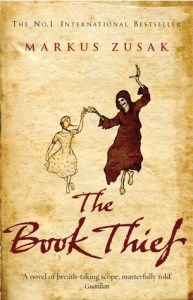 The Book Thief, by Markus Zusak
This is the story of foster child Liesel Meminger, who is living just outside of Munich during World War II. Liesel steals books (thus the name) and–once she learns to read–shares them with her stepfather and also with the Jewish man hiding in their basement. The novel is narrated by Death. The language, the imagery, the story, the unusual point of view are all stellar. I’m not sure why this was pigeon-holed as a teen book, because it’s a universally appealing story. (Young Adult Fiction)
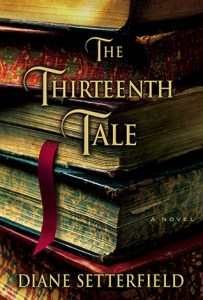
The Thirteenth Tale,
by Diane Satterfield
Biographer Margaret Lea lives above her father’s antiquarian bookshop. One day she receives a letter from one of Britain’s premier novelists. Vida Winter is gravely ill, and wants to tell her life story before it’s too late, and she has selected Margaret to do so. Margaret is puzzled and intrigued (she has never met the author, nor has she read her novels), and agrees to meet with her. Winter finally shares the dark family secrets she has long kept hidden, and Margaret becomes immersed in her story, which is a true gothic tale complete with a madwoman hidden in the attic, illegitimate children, and some ghosts. (Adult Fiction)
 The Book of Lost Things, by John Connelly
David’s mother has died, and the 12-year-old has only the books on his shelf for company. But those books have begun to whisper to him, leading him through a magical gateway to a series of familiar, yet slightly skewed versions of classic fairy tales and aiding him to come to terms with his loss and his new life. (Adult Fiction or sometimes shelved as Young Adult)
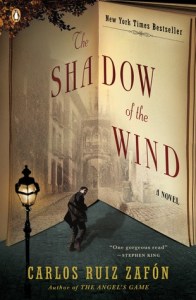
The Shadow of the Wind, by Carlos Ruiz Zafon
Daniel, an antiquarian book dealer’s son in post-Spanish Civil War Barcelona, falls in love with a book, only to discover that someone is systematically destroying all other works by this author. A combination of detective story, fantasy, and gothic horror. (Adult Fiction)

The Eyre Affair,
by Jasper Fforde
In an alternate-history version of London in 1985, Special Operative Thursday Next is tasked by the Special Operations Network with preventing the kidnapping of literary characters from books. When Jane Eyre disappears from the pages of the book by that name, Thursday is determined to prevent the trauma experienced by its fond readers. (If you like this one, there are many more in the series.) (Adult Mystery)

Inkheart (plus sequels Inkspell, Inkdeath),
by Cornelia Funke
Meggie’s father, who repairs and binds books for a living, has an unusual gift that became a curse in their lives: He can “read” characters out of books. But when he is reading a book to young Meggie, some characters escape into their world and her mother gets sucked into the story! Now it’s time for Mo and Meggie to change the course of that story, send the book’s evil ruler back into his book and maybe retrieve the person dear to them both…. (Children’s Fiction)
 Not as directly reader-related, but with twisted versions of fairy tales interspersed throughout its exciting contents is Cornelia Funke’s “Mirrorworld” series that starts with the book Reckless. Again, this series was billed and sold as a series for children and teens, but it’s really a powerful and sophisticated fantasy about an alternate world that will appeal to all ages. There are three books, and more to come, according to Cornelia! (usually shelved as Young Adult Fiction, but…)
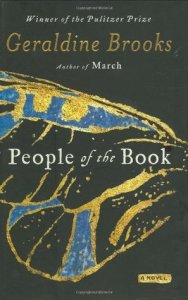
People of the Book, by Geraldine Brooks
The historical saga of how a book–the Sarajevo Haggadah–came to be, and its storied history down through five centuries, written from the point of view of a curmudgeonly rare book conservator. Inspired by a true story, and beautifully written. (Adult Fiction)
Mr. Penumbra’s 24-hour Bookstore, by Robin Sloan
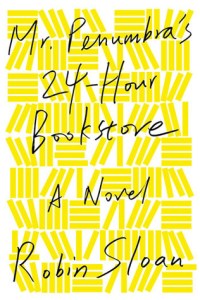
Clay Jannon, a website designer who has lost his job as a result of the dot-com disaster, finds part-time employment on the night shift at Mr. Penumbra’s Bookstore. But soon the strange goings-on at the store have Clay and his friends speculating about how the place stays in business; there are plenty of customers, but none of them ever seems to buy anything, and Clay is forbidden from opening any of the dusty manuscripts they periodically arrive to peruse. But when he gets bored and curious… (Adult Fiction)
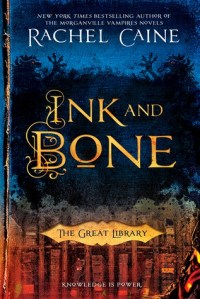
Ink and Bone,
by Rachel Caine
This series is set in an alternate world, in which the Great Library at Alexandria never burned down. Centuries later, having achieved a status not unlike the Vatican in contemporary life, the Great Library and its rulers control the flow of knowledge to the masses. Paradoxically, although anyone can order up any of the greatest works of history from the library (via alchemy), personal ownership of books is forbidden. Jess Brightwell’s family are black market book dealers, but Jess decides he wants to play it straight by entering the service of the Library. Or does he? The sequels are Paper and Fire, and Ash and Quill. (Young Adult Fiction)
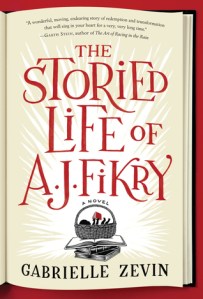
The Storied Life of A. J. Fikry, by Gabrielle Zevin
Fikry, the owner of Island Books on Alice Island (think Martha’s Vineyard) is in a bad way: His beloved wife has just died, sales are dismal, and someone has just stolen his rare edition of an Edgar Allen Poe poem. But then an unexpected discovery—an important “package” abandoned in his bookstore—changes his perspective on everything. (Adult Fiction)
There are probably dozens more books about books, reading, and writing; when I discover them, I’ll share!
Bolton fans, take note!
Sharon Bolton, in addition to some amazingly dark and delicious stand-alone mystery/thriller novels, has written a four-book (so far) series featuring Detective Constable Lacey Flint. What I just found out is that Bolton has been adding to that series by penning a couple of novellas (one is 79 pages, the other 81) that are available only
as e-books.
 The first one (1.5) falls between books 1 and 2, and doesn’t significantly add to or alter the Lacey Flint story: If Snow Hadn’t Fallen is more of a slice of life quickie mystery that fits between Now You See Me and Dead Scared, and was probably written in response to the misogyny, homophobia, and prejudice that have reared their ugly heads in the news lately. A young Pakistani man is set on fire in a public park by a group of men, and Lacey, a witness, is put on the task force to solve the mystery. At first it looks like a straight-up hate crime, but as Lacy digs, she discovers something even worse.

The second novella, Here Be Dragons, features Lacey’s love interest, Mark Joesbury, of Scotland Yard’s Covert Operations Unit, in an undercover role as he tries to ferret out a massive terrorism plot. It, too, would be a simple padding of the series, except for the fact that there is a major cliffhanger at the end of this one, which readers will need to know when going into Book #5, whenever that comes out!
I’m not so sure that this is a considerate gesture to her readers; while we are all pleased by the prospect of getting more tidbits about Lacey while we wait for a major book, those fans who are paper-and-ink readers only and don’t have (or have access to) an e-reader will be left out in the cold, possibly not even knowing that these novellas exist! But for those who can read electronically, check your local library for both of these titles as e-books so you won’t have to miss out.

