Cozy
I felt the need to read something simple and comforting after my unexpected discovery that Miss Benson’s Beetle was anything but (see previous post), so when someone on the Facebook reading page asked for cozy mystery recommendations, I decided to do likewise and find a new author in a gentler genre.

I ended up with the Julia Bird mysteries by Katie Gayle, beginning with An English Garden Murder. I’m a sucker for anything with small quaint British villages, cottage gardens, and hey, a chocolate labrador puppy named Jake as one of the main characters.
Julia Bird has fled London after a somewhat unexpected retirement from a career as a social worker and an extremely surprising divorce in which her husband Peter leaves her for a garden designer named Christopher. She ends up in a picturesque and cozy cottage in the Cotswolds, and settles into a life she expects to contain no bigger excitement than adding a chicken coop and some laying hens to her backyard potagère. But when the local handyman and his son tear down a garden shed in order to replace it with the coop, they find a dead body buried underneath, apparently for decades. No one in the village (including the police) has a clue who it could be, so Julia decides to do her own investigation, which leads, dismayingly, to another dead body! Oops. Someone in the village has apparently killed twice—is Julia in peril as she moves closer to the truth?
I enjoyed the delineation of the characters in this series quite a bit. They are all individuals, with enough detail given about appearance, mannerisms, and possible agendas that you don’t have to keep reminding yourself who is whom, sometimes a problem when there is a fairly large cast. The scene-setting details likewise gave a complete picture of the surroundings, which is always pleasing. There is, every once in a while, a passage filled with so much detail that it seems over the top—a description, say, of the person’s entire morning routine with all the minutiae included, that has no bearing on the story—but this was a fairly minor flaw in what proved an enjoyable read. So, I went on to the next two books: Murder in the Library, and A Village Fete Murder.


This is when I started to think that I would have done better to seek out a more well known cozy series instead of this trio of quickly turned out (all three within nine months!) books by what turns out to be two authors (Katie and Gayle) working together. Say, the Stephanie Plum books by Janet Evanovich or, hey, Agatha Christie! That’s because each of the next two had almost the identical formula to the first. Julia finds the bodies; Julia can’t resist being a busybody by soliciting local gossip and visiting possible suspects on her own without benefit of police oversight; and her poking around then results in another body because someone has caught on to something as a result of the extra attention, and doesn’t want to be found out. No blame to poor Julia, of course (although some of the villagers have nicknamed her the Grim Reaper).
In the second book, the minute one character confided, in front of three other people, that she needed to talk to Julia about something, I knew she was body #2. In the third, Julia carries on a conversation with the local police officer on her cell phone in a public place, and I knew that someone was listening (wasn’t sure who, but someone) who would benefit from the indiscreet conveyance of important information.
So…while I continued to enjoy both the character creation and the descriptions of both the surroundings and the small-town events, the fact that I had solved the crime a while before Julia in each book was a bit off-putting. If you are a person who enjoys having the advantage in this way, you may really like these books, but as for me, even in a cozy genre I prefer my stories to be more challenging. (There will be a fourth book, but I think I’m done with Julia. But if you are intrigued, it’s called Murder at the Inn, due out in August.)
Misspers
Quite by chance, I ended up reading two books in a row about missing persons. The first was Force of Nature, by Jane Harper, one of her Aaron Falk series, and the second was Liane Moriarty’s latest, Apples Never Fall. I didn’t plan it that way (maybe the library did?), but it made for some fun comparing the two as regards suspense, the form of the narrative, and so on. I enjoy the works of both authors, so it wasn’t really a quality comparison, although they brought different things to the table despite their common theme. They are also both set in Australia, another coincidence? Synchronicity strikes again.
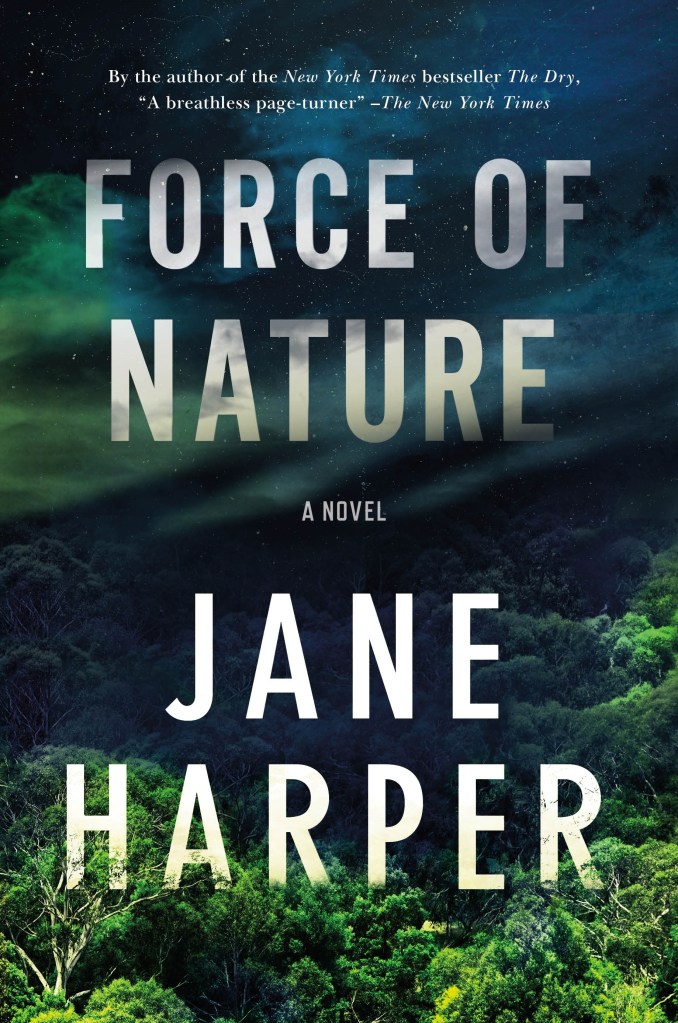
In the first, a company that is secretly being examined by Aaron Falk and his partner for financial crimes sends 10 of its personnel—five men, five women—on a retreat into the wilderness of the Australian bush that is intended as a character-building and bonding exercise. The groups are divided by gender, the men taking one route, the women another. They pack in enough supplies for the first day, and the rest of their food and fuel is stashed for them at two way-stations, each of which they are supposed to reach within a day’s hike. The men successfully complete their retreat and emerge at the expected time, but the women are significantly delayed and, when they do turn up, are exhausted, starving, slightly hysterical, and missing one of their number, Alice Russell. Vague and conflicting accounts are given by the four remaining women and, as the rangers and regular police set up for a comprehensive search of the Giralang range, Federal Police investigator Falk tries to puzzle out whether the missing woman could possibly have met with foul play due to her clandestine connection with his investigation.
I enjoyed the personalities that Harper created—they were both original and yet clichéd in the best manner, in that you could see reflected in them all the characteristics, positive and negative, of the people you yourself might have worked with in a corporate setting—the bully, the ambitious but obsequious assistant, the entitled boss, the low-level couldn’t-care-less data entry clerk, and so on. I also really liked the chemistry and interplay between Aaron Falk and his partner, Carmen. And, as in her novel The Dry, the scene-setting is excellent; you soon feel overwhelmed by the claustrophobic closeness of the trees and the sense that perhaps something is watching from beyond the light of your fire. The book did take a long time to get where it was going, but the jumps from present to past and between multiple narrators/points of view keep it interesting and vibrant. I will continue with this series.

Moriarty’s book is a much more conventional misspers narrative, in that she’s a retired businesswoman and mom from the suburbs. The story opens with a cinematic shot of a deserted bicycle by the side of the road, with a flat front tire and a bunch of apples spilling out of its basket. Then someone comes along and steals the bike, and we realize that a key piece of evidence has just gone missing in a way that guarantees misdirection.
Stan and Joy Delaney, married for 50 years and also partners in a tennis coaching enterprise, have just sold their business and retired, and it’s not going so well. Their four grown children are largely oblivious to this, although certain incidents let them know the marriage is no longer as amicable as they would hope. Then Joy sends the kids a garbled text saying she’s going “off-grid” for a while, and disappears, but Stan doesn’t know anything about where she’s gone or for how long, and has scratches on his face that look like they were inflicted in a struggle. As Joy remains missing day after day with no word and the police seem ever more inclined to look at Stan as their prime suspect in his wife’s disappearance, their children try to come to terms with what they will do if their mother remains missing and if, indeed, their father is the one responsible.
The story is told from a “now” viewpoint and also via a series of flashbacks that cover the past six months or so. Complicating the narrative is the appearance, six months previous, of a stranger—the elfin and bedraggled Savannah—on Stan and Joy’s doorstep, asking for temporary shelter from her abusive boyfriend. The couple welcome her in, but soon her extended stay coupled with her lack of a substantial back story has the Delaney children worried that their kind and gullible parents are being taken in by a grifter.
Moriarty is, as always, a master at creating and developing her characters, and by the end of this you feel like you know each of the Delaneys well enough to predict their actions in any situation. Less predictable is the enigmatic Savannah, and Stan is likewise tough because he holds everything inside and presents a gruff and seemingly uninterested façade to everyone. Although the book probably could have been a bit shorter and still succeeded, I did like the jumping around, as in Harper’s book, from time period to time period and to all the variety of narrators. The one weird thing about the book was its ending, which I should characterize as endings, plural. I read a chapter and the final sentence seemed to put a period on both the scene and the book; then I turned the page to find another chapter, which also seemed conclusive; and this went on for about five more chapters! When the end finally came, it was almost surprising, because Moriarty had dragged it in so many different directions. I found it kind of irritating, but since it also imparted a bunch of information we wouldn’t otherwise have had, I ultimately couldn’t find fault with it, though I feel like it might have been more effective to reveal it all as more a part of the story instead of as a series of addendums, which is how it read. Still, I liked the book a lot, and don’t understand why so many of her readers found it disappointing compared to some of her others. No, it’s not Big Little Lies—but it’s not Nine Perfect Strangers (which I found both weird and unsuccessful) either!
Murder in Alaska
I just finished the first two Kate Shugak mysteries by Dana Stabenow—A Cold Day for Murder, and A Fatal Thaw. Stabenaw started publishing this series in 1992, so I don’t know how I have completely overlooked it until now, but the first book popped up in my Kindle freebies and I gave it a try. I wasn’t really looking for a new mystery series, but I will most likely dip back into it from time to time, now that I have found it.

It’s one of those in which the locale plays as big a part as any protagonist, so you have to be at least marginally interested in the scene-setting because there’s a lot of it. This one takes place in a remote area of Alaska, inside a national park that is largely inaccessible (no roads) for more than half the year and so beloved of its few residents that they want to keep it that way. Niniltna, the closest “town,” consists of about 800 people, but that swells to thousands (flown in) from (very) late spring through summer as the thaw sets in and the various hunting and fishing seasons begin.
Kate Shugak is a member of the Aleut people and, although she has many relatives in the area (including her grandmother, Ekaterina Moonin Shugak, head of the local tribal council), lives alone on a 160-acre homestead, except for her half-wolf, half husky, Mutt. She is in emotional recovery, as the series opens, from a traumatic incident during her tenure as a police officer in Anchorage that left her with a lot of anger, a growly voice, and a ropy white scar that stretches from ear to ear. She mostly keeps to herself, engaged in doing all the things a homesteader in Alaska has to do to get by, but occasionally, when the local police and the FBI can’t seem to solve a case for themselves, they appeal to Kate to get involved, since for all her solitude she has a better handle than they on her neighbors—the miners, hunters, trappers, fishermen, bush pilots, and pipeline workers who populate the area.
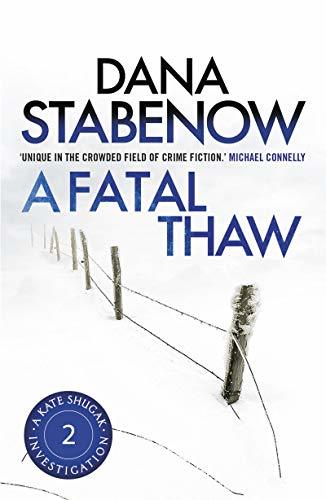
The first book was a bit slow, because the author focused almost exclusively on drawing a picture of the Alaskan scenery and outlining the main players, with all their quirks. It picks up in the second half as Kate gets closer to figuring out what happened to two missing men and turns into more of a mystery, but in general it was pretty low-key. The second book made up for that by opening with a literal bang as a man goes about shooting everyone in sight, and although it bottomed out a little in the middle while Kate ponders her course of action (which she keeps close to the chest and doesn’t share), it had a dramatic ending as well.
I wouldn’t call these books page-turners, but there’s something about them that is appealing, enough so to keep me reading beyond these (although not right now, I have two books about to be due back to the library that I have to finish first). Although there are certain passages involving scenery description that seem a little stiff and extraneous, there are equally beautiful paragraphs that let you know both the author and the protagonist are people who love and are focused on the natural world. There is an element of humor that gives the stories a kick in the pants when needed, and the complex relationships between a lot of people with unmeeting wishes when it comes to their surroundings makes for both interest and fireworks. The book I just started (Jane Harper’s second book, Force of Nature, starring Aaron Falk) beckoned to me, but I admit there was a little reluctance to leave Kate Shugak behind; I had gotten used to hanging out with her.
A World of Curiosities
I was late to the party reading Louise Penny’s most recent in her Chief Inspector Armand Gamache series—they reliably drop in the fall of each year (although this one, coming out in November, was later than the usual August or September denouement), and I have just gotten to it in April, five months later. But I am happy to say it was worth the wait, and harks back, in more ways than one, to the best books of the series.
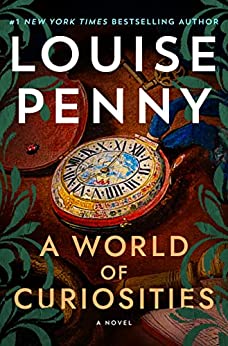
I always enjoy the books in which Penny explores origin stories for her characters, and A World of Curiosities went back to the original meeting and co-opting of Inspector Jean-Guy de Beauvoir into Gamache’s work circle and later, inevitably, into the family. And the case over which they met plays a central role in the current mystery, so that we are simultaneously intrigued by the past case and put into a major state of anticipation over the current one. This is a great ploy for keeping readers enthralled with the story line. It becomes even more engaging with the inclusion of Amelia Choquet, one of my favorite characters.
The creation of the siblings, Sam and Fiona, children of a murdered woman who managed to tragically damage them before she died, gives an entrée into the eternal question of nature vs. nurture, and also messes with the reader’s faith in the instincts of the detectives. Gamache cannot help but feel a frisson of fear and dread each time he encounters Sam, while Beauvoir believes he is completely off base and is being naive by trusting Fiona. When the two become a part of a bigger case, something Gamache believed to be shelved for good along with its perpetrator, John Fleming, lodged in the Special Handling Unit (SHU) of Montreal’s most notorious prison, the tension just keeps ratcheting higher. I loved this quote from one Goodreads reviewer:
“Despite the ravioli and eclairs,
this is no cozy mystery.”
I was also pleased that something lacking in the last book seemed much more present in this one: the Three Pines community. In the last story, interactions amongst the villagers seemed both subdued and incidental, while in this one the presence and significance of the residents came roaring back, with new connections being made and new characters introduced.
I like to scan the star ratings of books on Goodreads to see what other readers thought; I am somewhat puzzled by those for this book, since it was either the absolute favorite with five stars or the most disappointing with one or two! My vote is for the upper end of the spectrum, and I hope Penny will continue to tap into the richness of her characters’ back stories for future tales.
Manufactured mystery
I tried out a new mystery writer, D. D. Black, on the recommendation of someone on “What Should I Read Next?” and I’m feeling a little conflicted about whether to continue after the first two books. On the one hand, I liked the setting a lot (a small town on one of the many islands and peninsulas off Puget Sound, near Seattle), and I also liked the main character, Thomas Austin. He’s a former NYPD detective who, after a personal tragedy, retired on his pension to the Pacific Northwest and bought a combination mini-mart, café, and bait shop to keep him marginally occupied (not a lot of traffic). He’s smart and interesting and intuitive, and a little dark. I also liked the secondary characters, including Anna, a reporter/blogger destined to become a love interest in a future novel if Thomas can get out of his own way, and the three officers from the local police force—Ridley, Lucy, and Jimmy. I also like Austin’s corgi, Run.
What I didn’t particularly care for was the mysteries themselves. I know I have maintained in previous blog posts that mystery lovers read as much for the characters as they do for the mysteries, and that although the plots fade into one another, interest in the character’s ongoing storyline is what keeps the readers coming back. But the caveat to that is, the mysteries have to be at least marginally believable and present some sort of cohesive story arc to provide the background for a favorite detective, and…these didn’t, in my opinion.
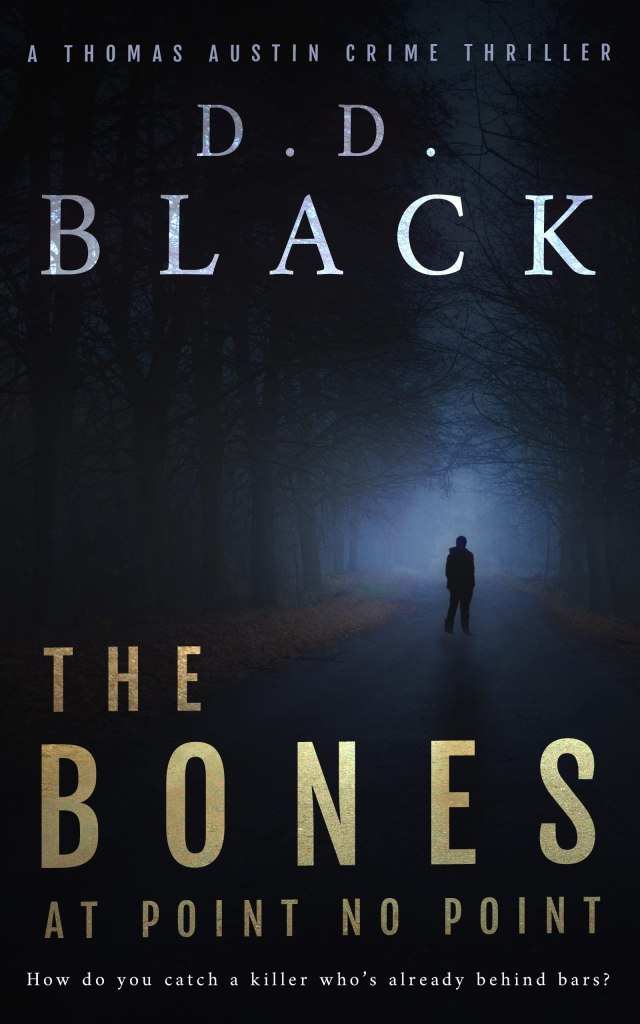
The debut volume, The Bones at Point No Point, did a nice job of introducing all the characters, and then harked back to a case in which Thomas Austin was the lead detective when he was in New York City. It seems there is now a copycat killer on the loose, but the details are so eerily similar that it has him (and everyone else) wondering if he locked up the wrong woman or, at least, missed that she had a partner. This sounds plausible as a bare-bones description, but the likelihood of any of it was highly suspect. Also, for his first novel D. D. Black chose to portray a particularly gruesome murder scenario, in shocking detail, and I didn’t want to read about it, especially because he described it several times in scenes from the past and circumstances in the present.
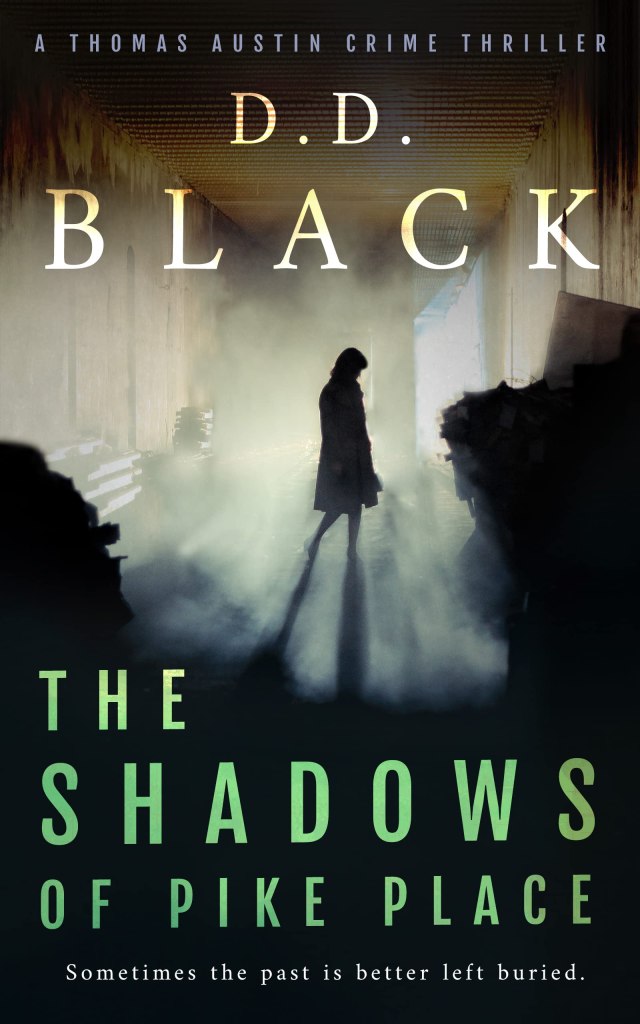
I thought about stopping with the first, but then read the description for the second, The Shadows of Pike Place, and was intrigued. This was more of a “locked-room” mystery, in that the protagonist was murdered during an evening when she was in the company of a limited number of people, and therefore the killer had to be one of those present. Again, I enjoyed the dynamic between Austin and Anna, the introduction of the Seattle police chief, and the colorful characters Black writes as members of the murdered woman’s family; but again, the mystery took off in various weird directions and the result was dependent on so many doubtful events that I found it somewhat absurd and also anticlimactic.
These are what I call “manufactured” mysteries, in that the scenario is so out of the box that it strains credulity. In both cases, I would have much preferred a tamer mystery less dependent on extraordinary events, one that showcased its detective’s abilities rather than dropping him in the midst of chaos and expecting sense to be made of it when it wasn’t plausible in the first place.
I may come back to this series someday, just for the characters and locales, but I think I’m done with the Thomas Austin Crime Thrillers for now—they’re just too frustrating.
Zig-zag
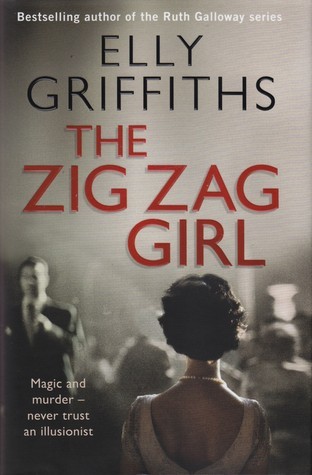
I recently discovered that Elly Griffiths, who writes the Ruth Galloway mysteries and has three volumes in a fairly recent story line starring Harbinder Kaur, has yet another series, called either The Brighton Mysteries or Stephens & Mephisto, new to me although not new. She wrote the first, The Zig Zag Girl, in 2014, and the sixth one came out in 2021, so presumably it is an ongoing effort. I was excited by the prospect of another series by this author, especially because this one is billed as more of a “cozy,” so I picked up the first when it was offered at a discount by Book Bub. I am disappointed to say that it will not be a new favorite.
The first book begins in the 1930s, moves through World War II, and ends up in a “present-day” 1950s mystery in England. The pre-war and war years are told in flashback as background for what is happening “now.” During the war there was a group of recruits called the Magic Men (mostly made up of magicians by trade) who were deployed undercover to Norway to deceive and distract the Germans by building decoy camps, tanks, and aircraft carriers to make the enemy think there was a base of operations about which they should worry. In the present day, one of those people—Edgar Stephens—has gone on to become a police detective; a person associated with the war group has been brutally murdered, and Stephens is assigned to the case. It’s an odd one, employing a magical trick called the Zig Zag Girl, in which the magician’s assistant is apparently sliced into three parts, only to emerge whole at the end of the trick. (In the case of the murder, she has actually been dismembered.)
After a second person, also associated with the undercover war effort, turns up dead, Stephens and his friend Max Mephisto, a magician who still headlines in variety shows around Brighton where the murders have taken place, conclude that not only are the murders related, but that the other members of the group (including themselves) may be in danger. An effort is made to track them down and warn them, simultaneously checking to see if it could be one of them committing the murders.
The premise and the historical time period appealed to me, but there were so many flaws in this initial book that I doubt I will continue on to read another. The historical aspect is sketchy, and the timeline of the war itself doesn’t correspond to reality; the Norway campaign was in 1940, and in the book the group’s efforts there last only two years and a few months before the war ends, leaving out three years of World War II!
The police procedural elements of the book were likewise hard to believe: These are gruesome and high-profile murders (each based on a magic trick, so they were bound to have the media all over them, not to mention capturing the public’s imagination), yet the only people investigating them are one policeman, his assistant at the station, and his magician friend? It’s just too casual—even in the 1950s, there would have been some sort of investigative team. Most of the activities that, in a regular police procedural, would be featured and discussed (for instance, forensics) were merely dropped into narrative between the sole policeman and his civilian buddy, so that they seemed incidental rather than central to the case. Despite its being a murder mystery, there was more attention paid to the lifestyle of the traveling magician than there was to the murders!
Other than the two protagonists, the characters were thinly developed; perhaps the intent was to have you figure them out for yourself, but they just weren’t that interestingly presented, and some members of the Magic Men (even central ones) remained cardboard cutouts to the end. There wasn’t much scene-setting in terms of details about the era. The witness observations were repetitive and clumsy, and although the descriptions frustrated both the detective and the supposedly canny magician, I figured out “whodunnit” from them pretty early on in the book, and from there I was just reading to get to the big reveal.
If this book were a debut novel by a novice writer I might have been a bit more forgiving; but this is a skilled storyteller who has published 29 books and counting. My advice: Stick with Ruth Galloway, or try one of her Harbinder Kaur books. Perhaps the rest of the Brighton Mysteries are better than the initial one, but I don’t intend to investigate. There wasn’t enough zig-zag in this one to draw me further in.
Re-wilding
Scottish-American conservationist John Muir, the “Father of the National Parks,” once wrote that
“…when we try to pick out anything by itself, we find it hitched to everything else.”
John Muir
This quote was specifically called into use when considering the failing ecosystem of Yellowstone National Park, where the purposeful removal of wolves, Yellowstone’s top predator, meant that the elk population overgrazed the plants and trees, leading to the demise of songbirds, beavers, and cold-water fish. Wolves were the missing link in the equation that would keep Yellowstone healthy and, 28 years after they were reintroduced (in 1995), the ripple effect is considered one of the most successful rewilding efforts ever undertaken. The culling of the elk herds by the 80+ wolves now living in Yellowstone benefitted ravens, eagles, magpies, coyotes, and bears. Wolves’ preying on coyotes increased the populations of rabbits and mice, providing a wider food source for hawks, weasels, foxes, and badgers. Muir’s quote was certainly prescient.
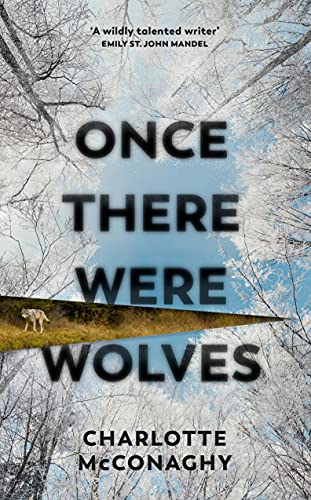
Charlotte McConaghy’s novel Once There Were Wolves posits a similar experiment to bring wolves back to the forests and Highlands of Scotland to rebalance biodiversity, depicting the difficulties inherent in convincing the resident human population (primarily sheep farmers) of the benefits to be had, and protecting the wolves against the farmers’ and ranchers’ conviction that humans and wolves can’t
co-exist on the land.
The protagonist is lead biologist Inti Flynn, a passionate young woman whose unusual upbringing by her father—living a subsistence life deep in the forests of Canada—has shaped both her beliefs and her career. She arrives in Scotland accompanied by her twin, Aggie, who is deeply damaged, mostly silent and passive, and spends all her time sequestered in their cabin. Inti has an extraordinary affinity for the wolves, heightened by an actual neurological condition called mirror-touch synesthesia:
“My brain re-creates the sensory experiences of living creatures, of all people and even sometimes animals; if I see it I feel it, and for just a moment I am them, we are one and their pain or pleasure is my own. It can seem like magic, but really it’s not so far removed from how other brains behave: the physiological response to witnessing someone’s pain is a cringe, a recoil, a wince. We are hardwired for empathy.”
Inti Flynn, Once There Were Wolves, by Charlotte McConaghy
The book is part literary fiction, part mystery, and engrossing in its narrative. Although the rewilding program is officially sanctioned by the government, there is massive resistance by the locals, some of whom are aggressive with their threats to kill wolves who set foot on “their” land. Inti struggles between her desire to protect her wolves and her need to engage with the locals as something other than a know-it-all outsider. She is assisted in making the human connections by the sheriff, local-boy Duncan MacTavish, but he remains something of an enigma throughout the story, and his passivity when it comes to enforcing Inti’s cause frustrates her. Then a local farmer goes missing, and speculation inevitably turns to assumptions about wolf culpability.
The best parts of the book are Inti’s detailed observations about the wolves—how they relate to one another and to their surroundings, and their habits, travels, and behaviors as they integrate into this foreign environment. The reader is transported to the hillside blind where Inti watches a new batch of pups scramble and play just outside the mouth of their den while the adults warily sniff the air, cognizant of the human close by, and the welfare of the small packs dispersed around the town becomes personal as each wolf becomes familiar.
Less effective, for me, was the rest of the narrative, especially that surrounding the sheriff, Duncan, and Inti’s sister, Aggie. I felt like we were too far into the story before we understood what happened to destroy Aggie’s confidence and turn her into the near-catatonic figure she now presents. Likewise, Duncan runs hot and cold, both with Inti and also with his commitment to doing his job (although his devotion to the individuals in his community is touching), and I was frustrated by the incitement to waffle over whether he was a good guy or a bad one. But McConaghy knows how to keep the action flowing throughout the narrative, and the mystery remains intriguing up to its final solution. Readers should be aware that this book presents scenes including violence and abuse, although much of that action takes place “off screen,” or is implied but not graphically described. But the few graphic depictions are powerful and potentially disturbing.
I enjoy a story with some meat on its bones—focusing on a particular iteration of a wider philosophy. As happens with my reading choices from time to time, there was a serendipity of theme between this book and The Crow Trap, by Ann Cleeves, which also detailed a biodiversity study in a rural area, but whereas I found that book almost completely lacking in appeal, Once There Were Wolves delivers all kinds of intellectual and empathetic content. Despite the few caveats above, I would definitely recommend this book to anyone interested in both a gripping story and a thorough education about how the biological world works.
For more information about the Yellowstone rewilding project:
https://www.muchbetteradventures.com/magazine/yellowstone-wolves-rewilding-1995-history-books/
The essence of a genre
As I discuss in my genre lecture in my readers’ advisory class at UCLA, crime fiction accounts for as much as a third of the fiction published in English worldwide. If you regard that statistic you must conclude that there are many for whom the reading of mysteries is an attractive or even compelling way to occupy their leisure time.
A basic definition of mystery fiction is “any work of fiction in which a crime or the threat of a crime is central to the theme or plot.” But there is so much beyond that basic definition—at the very least, Who are the characters? What is the situation? and Who will figure it out? Think about all the elements that can be components: the red herring, the false clues, the inside job; the amateur vs. the professional detective, the reconstruction of the scene and circumstances, the procedural details of discovering the means, motive, and opportunity—the list goes on. There is also, amongst mystery readers, a certain vicarious authority or presence indulged in by their choice of protagonist. In other words, since most mysteries are part of a series, you as the reader are going to be spending a lot of time with that protagonist, i.e., the detective or person acting as such. That protagonist is
going to become far more important to you than any individual plot or story.
If you ask a mystery reader to describe Harry Bosch, the main character in Michael Connelly’s long-running series set in Los Angeles, they can give you a complete catalogue of what he looks like, how old he is, where he lives, how many times he’s been married and to whom, his relationship with his daughter, how many times he has been hired and then fired by the LAPD, in what other capacities he has performed as a detective, and even his war record in Vietnam; but if you ask that same reader the plot of one of the 24 Harry Bosch novels, that person may say “they all run together after a while.” It seems that everything about a series protagonist is recalled as a unit, with little or no memory of which specific texts revealed these details.
That’s not to say that plot isn’t vitally important to the experience; by reading a mystery, you are participating in the process of going from the unknown (the whodunnit) to the known, and following many indicators to get to the resolution, and mystery readers are notoriously unforgiving of a poorly laid-out plot. But characterization, of both the protagonist and the other participants, is key to a successful mystery.

I say all this as a lead-in to discussion of the book I just read, the first of a fairly long (10 books) and apparently successful body of work by a well-respected author whose other, more recent writing (Shetland Islands) I have recently enjoyed. It was because of those books that I decided to sample Ann Cleeves’s more well-known series about Detective Inspector Vera Stanhope, beginning in 1999 with The Crow Trap.
Having finished the book, I am utterly baffled about why, once having read this first one, anyone would bother to continue onward with the rest. Perhaps, if I had first seen the television show Vera, based on the series and starring the wonderful Brenda Blethyn, I might barrel on through, convinced that things could only get better. But if it were left to The Crow Trap to convince me, it simply wouldn’t happen.
To me, this book violated so many of the criteria we mystery readers have come to expect from our genre: A compelling story, an interesting if not charismatic lead, an engaging mystery. Instead, there is a vaguely presented low-key conflict in a country town, about which even the principal players don’t seem passionate, and a detective who isn’t introduced (beyond a cameo appearance where she is mistaken for someone else) until about the 45-percent mark in a book that is about 150 pages too long. There are multiple murders of people that everyone, including the principals, seems hard-pressed to care about. The main characters are not well defined or described, and each of their personalities border on irritating to downright unlikeable. The detective herself is repellent in a way that would, for me, be hard to recover from in subsequent volumes, because I disliked her so much—both her manners and her methods. There is little order or logic to the investigation, and the resolution is so completely underplayed that I had a hard time understanding that yes, indeed, it was this person for these reasons, and the story is over.
This book received a preponderance of four-star ratings on Goodreads, while I struggled between the flat three-star “I liked it” score and the more accurate (but still maybe too enthusiastic) “it was okay” of two stars. I won’t descend to one star, giving Cleeves credit for at least creating an initial interesting scenario, but beyond that I would say, Read her Shetland books instead, or, hey, watch the TV series guilt-free.
Books about/with books, writers
I picked up a bargain e-book last week, a “relationship fiction” novel by author Susan Mallery. I hadn’t read Mallery before, but she’s quite popular, apparently. Most of her books seem to edge over the line into romance, but some are more story- or character-driven. She has quite a few short series and some stand-alones, one of which I chose from the BookBub E-book Deals that arrive in my inbox each day, because I was drawn in by the title: Boardwalk Bookshop. I am a sucker for any book that includes bookstores, libraries, readers, and writers in its title or content, so it was inevitable.
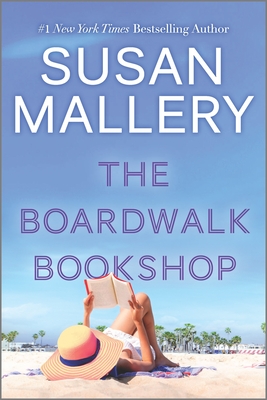
Although supposedly about a bookshop, the store in question is actually one large space divided up into three separate retail establishments (bookstore, bakery, and gift shop) shared by three women who wanted shops on the beachfront but neither needed the larger space nor could afford the price tag on their own. Despite not knowing one another, they impulsively team up to lease the place, installing their three enterprises side by side, each operating independently with their own employees and cash registers but benefitting greatly from the cross traffic of the other two businesses.
Mikki, the gift store owner, is a recently divorced 39-year-old who has two almost-grown children and a comfortable co-parenting arrangement with her ex-husband. Although they have been apart for three years, Mikki has not really moved on; right after the divorce she went on three separate but equally disastrous dates with various partners and gave up. A planned solo trip to Europe has suddenly awakened her to the fact that she could live another 40 or 50 years and doesn’t want to do so alone, but she’s not sure she has it in her to put herself forward again as a single, datable woman, with all the trial-and-error that involves.
Ashley, the baker, is swoonily in love with her live-in boyfriend Seth, who seems like the perfect man and mate except for one large flaw that, when it manifests, throws Ashley for a loop and has her doubting him, herself, and what will ultimately become of their relationship.
Bree, the book purveyor, raised by indifferent, self-involved author parents, met a man equally as brilliant as they were but who seemed to promise what they never gave her—love and a sense of belonging. Instead, he betrayed her rather spectacularly and then died, leaving her a young widow whose walls don’t come down for anyone—even Ashley’s persistently interested brother, Harding (who is also a writer).
The three women, initially bonded over their joint enterprise, slowly become friends and weigh in on each other’s options for romance, personal growth, and more. There is a dynamic, well-fleshed-out cast of secondary characters to interact with them, and the Los Angeles seaside setting is well utilized.
I liked this book, with some reservations: I thought both the narrative and the language could have been more nuanced. I found each of the women in turn to be dithery about her choices and actions. The three kept circling around to the same indecisiveness again and again, and while this may be how real life goes, in a novel it became repetitive and a little irritating. But the growth and change ultimately exhibited by each of them, while uneven, did move along to satisfying conclusions for all, and I mostly enjoyed the reading experience. I could be persuaded to try some other Mallery titles, probably when I am looking for a light, fast read as a palate cleanser between more serious novels.
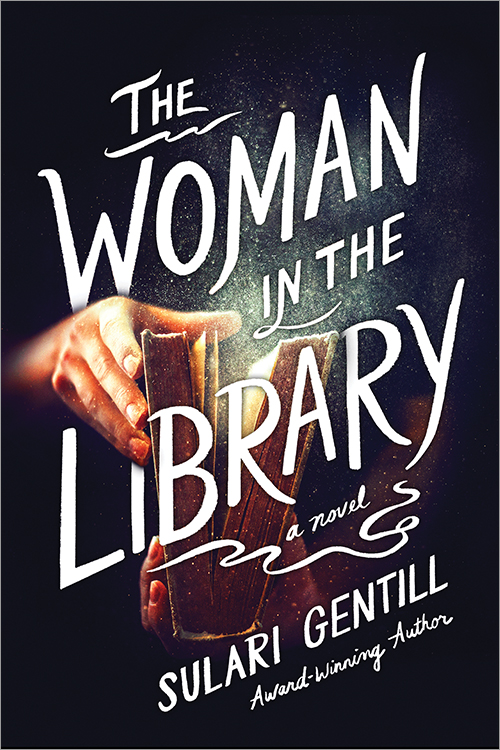
The second book-oriented story I read this week was The Woman in the Library, by Sulari Gentill, and it was a cat of a different color! I don’t remember where I came across this—it might have been on the readers’ Facebook group—but I’m so glad I picked it up, although others were not so happy with it. This is one of those books that (on Goodreads) either gets a five-star exclamation of “Yes!” from its reader, or a one-star “too weird for me.” I fell into the former group, with a few reservations—but mostly I was enthralled.
This book is the ultimate in meta, and the jump between reality and fiction is what kept me reading. The real-life set-up is that an Australian author of mysteries, Hannah Tigone, is writing a novel set in Boston, but she can’t travel from Sydney to do any on-site research due to Covid quarantine restrictions. Enter email pen pal Leo Johnson. Leo is initially introduced as an author trying to get his book published and reaching out to Ms. Tigone, a writer he admires, for suggestions or, preferably, actual assistance with finding an agent. But then Leo moves on to suggest that since he lives in Boston, he can easily assist with on-the-ground research, acting as a beta reader to give her information about locations and also vetting her language, since American slang differs markedly from Australian and it’s easy to slip up (calling a sweater a jumper, for instance) if you’re not paying attention.
After Leo’s initial email, the book moves into Hannah’s writing of her mystery. Her protagonist is Australian Winifred “Freddie” Kincaid, working on her own novel, living in Boston courtesy of the Marriott Scholarship, a writer’s grant that comes with a brownstone in Carrington Square. In the opening, Freddie has gone to the Boston Public Library for the day, planning to work on her book in its famous Reading Room, but is distracted by the three other people sitting at her table. She idly jots down notes on each of them as possible characters—she calls them Handsome Man, Heroic Chin, and Freud Girl—but then all four, along with the rest of the library users, are startled by a terrified scream coming from somewhere nearby. The library is locked down while security searches for the woman who cried out, and the four begin to chat about their immediate circumstance and a little about themselves; when they are released, they decide to go together to get something to eat, and this is the beginning of a four-way friendship.

It becomes harder as you go on to remember that Freddie is not the true protagonist, nor are these others real people—all are a part of Hannah’s story—but at the end of each chapter, the reader is yanked back to that reality by Leo’s comments on the last chapter Hannah has sent to him. Leo becomes increasingly invested in the contents of Hannah’s book, and…but that would be telling, and I have revealed enough. There are two stories here (or are there three?) and their juxtaposition and relation to one another kept me reading to finish this book in 48 hours.
The reservations I mentioned: The pacing wavers here and there, and sometimes the characters are a little flat—not well enough fleshed out. Also, insta-love rears its weary head. But these things didn’t bother me because they are, after all, part of a first draft of a manuscript! Remembering that as you go along makes everything completely believable, because Hannah still has the opportunity to come back and fix or change any of the details.
Hoping you pick this one up and are as delighted by it as I was, rather than falling into the group who considered it “weird.” The truth is, it IS weird and that’s what I liked!
Over the top is okay!
The latest installment of Elle Cosimano’s Finlay Donovan series dropped on January 31st, and I started reading it a few days later when I discovered it on my Kindle (I had prepaid for the e-book dump and then forgotten all about it).
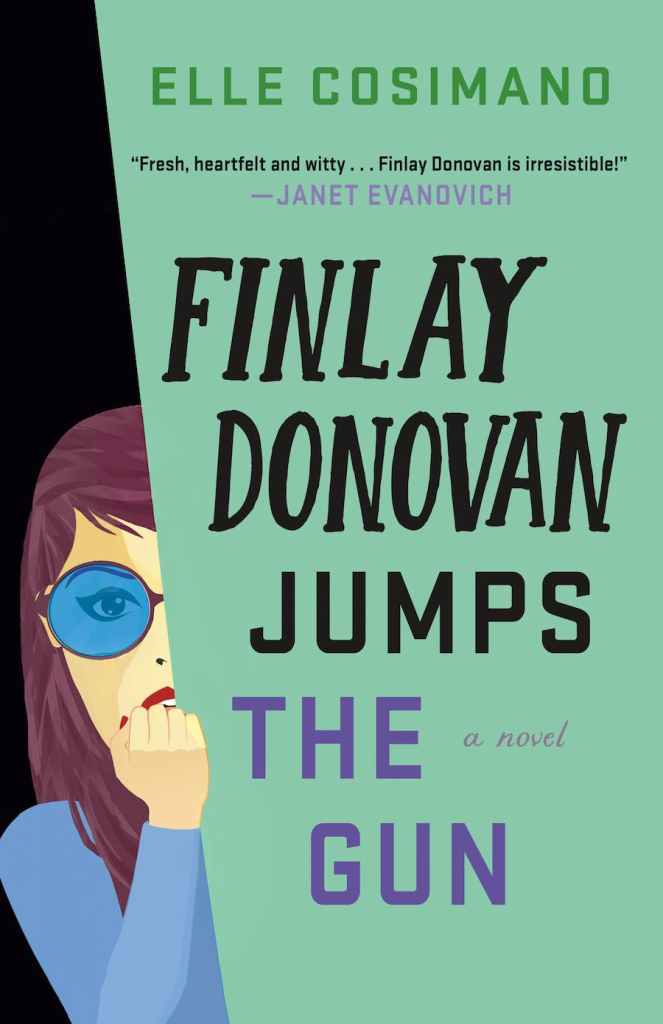
Finlay Donovan Jumps the Gun carries on fairly precisely where the last book left off: Finlay and her sidekick, nanny/ accountant Vero, are indebted to Feliks Zhirov (the local Russian mob boss) for saving them from an embarrassing and dangerous situation, and he (of course) wants something in return. There’s a person called “EasyClean” who is operating online as a paid assassin; Feliks wants to know this person’s identity, and believes that Finlay can deliver that to him. Being impatient (as mob bosses often are, don’t you know), he gives her a two-week deadline, which doesn’t make her one-week time limit with her agent for the final manuscript of her latest novel any easier to achieve, especially since the contents of the book are so close to the circumstances of her personal life that she has run head-on into writer’s block trying to resolve them.
Meanwhile, Vero has a deadline of her own—she’s delinquent on a gambling debt with a loan shark out of Atlantic City, and his enforcers are hot on her heels. What’s the solution? Finlay and Vero decide it’s to enroll in a one-week civilian police academy training. After all, they have come to believe that EasyClean may actually be a cop, so where better to figure it all out than from in amongst ’em? And where else could they be sure that pesky flunkies for the mob won’t be able to touch them? Finlay hands over the kids to Steven for a week, and the two move into the police academy dormitory to see what they can see. And, since it’s Finlay Donovan, chaos immediately ensues. Did I mention that Finlay’s crush, Detective Nick, is running the thing? and that both of his slightly suspicious partners and Finlay’s police officer sister are in attendance? And that the supposedly well-guarded barriers to the facility turn out to be as porous as swiss cheese when it comes to characters, suspicious or otherwise, making their way to the window of Finlay’s room?
In short, this is yet another frenetic flourish of Cosimano’s pen in pursuit of the author/single mom/accidental hit woman, and carries the franchise along nicely. I had been under the impression, for some reason, that this series would be a trilogy, but that’s not the case—this one ended on yet another cliff hanger, ensuring there are more books to come. (If all of this description has intrigued you, read the series in order from the beginning or you will be lost.)
I’m a little torn on my rating for this book. I gave the first one five stars, and the second one got four; I’m tending towards four stars on this one as well. Although it had moments that were totally brilliant (the opening scene with toddler Zach comes to mind), it also had some repetitive stuff (the continued misunderstandings about poor Javi); and the restriction of the scene-setting to the police academy means we miss out on some of the fun interactions with unsuspecting civilians that were so important to the first two books. But I did enjoy the thought processes behind figuring out EasyClean, and Cosimano is an expert at writing the hapless, accidental escalation into total mayhem that feels like Lucy Ricardo has landed in the middle of a murder mystery! I will definitely look forward to the next installment in Finlay’s overwrought journey, particularly the resolution of so many relationships: Will she finally put Steven firmly in his place? Will they ever get Vero out of debt and able to show her face again? Will Finlay be able to have a relationship with Nick without revealing all her (mostly inadvertent) criminal activities? Will Georgia find a girlfriend? Will Zach complete potty training? For these and many other crucial details, we once again await you, Elle Cosimano!
 The Book Adept