All the Devils
If it’s September, it must be time for Louise Penny’s yearly addition to the chronicles of Armand Gamache, always a highly anticipated treat. I am happy to say that this year’s offering renewed my faith in her continued skill to deliver a nuanced, perplexing, utterly enjoyable mystery. (I wasn’t so happy with last year’s book.)

All the Devils Are Here disrupts tradition by setting the entire story in France, rather than centering it in the mysterious town of Three Pines (outside of Montreal) where the Gamaches currently live. Armand and Reine-Marie have traveled to Paris to be in at the birth of their daughter Annie’s and son-in-law Jean-Guy Beauvoir’s second child. The Gamaches’ son, Daniel, and his wife and two daughters have lived in Paris for some time, but the Beauvoirs have only recently moved there, after Jean-Guy chose to leave the Sûreté du Québec for the private sector, an engineering firm in Paris, so this trip reunites everyone in the family.
Paris is also a home to Armand’s beloved godfather, Stephen Horowitz, who raised Armand from about age nine. Although his godfather remains hale and hearty, the man is 93 years old, so there may not be many more encounters in their future, and the occasion of the birth of Armand’s granddaughter is a particularly joyful one to share with Stephen, who serves in the capacity of great-grandfather.
Horowitz is a billionaire with diverse interests, and it becomes apparent to Armand that he is in Paris for more than just the birth. His cryptic statement (taken from Shakespeare’s The Tempest) that “Hell is empty and all the devils are here” reverberates in Armand’s mind throughout this trip. Stephen’s specialty in business has always been to root out corruption and bad dealings within and amongst companies and to reveal or thwart them somehow before they can do more harm but, contrary to his usual practice with Armand, he is silent about whatever issue is pending.
After a dinner en famille at their favorite restaurant, Armand and Reine-Marie watch in horror as a van barrels towards and runs down Stephen, who is crossing the street while looking at his telephone and pauses at the sight of the Eiffel Tower lighting up for the evening. But this was no accident; the hit-and-run was deliberate, and starts the story rolling as the family begins to ponder who would want to harm or kill Stephen and why. It soon becomes apparent that the Paris police, possibly at the very highest levels, are involved/not to be trusted, and Armand, his wife, and his two sons are soon playing a game of cat and mouse, hoping to avoid bad consequences while ferreting out the mystery Horowitz (now in a coma from which he is not expected to recover) has left behind for them to handle.

Paris is not a city about which I can be objective. It enthralls me whenever I am there, whether that’s literally (only twice and that briefly) or within the pages of a book. Penny makes the city one of the chief characters in the novel, especially as she weaves the histories of Horowitz and the various Gamache family members into its environs—Stephen’s presence in the Resistance, Armand’s marriage proposal to Reine-Marie, their current wanderings amongst its landmarks and personal favorite haunts. I thought, as so many others have said, that I would miss the critical element of Three Pines in this book, but I actually think it was brilliant to extract all of the characters from their regular venue—it made the story much more about their interactions and relationships when not constrained by the familiarity of background, especially set against the magnificence of Paris.
Armand’s family is front and center in this book, and we get to know some previously less prominent characters much better, including Reine-Marie and especially Daniel. There has been an estrangement between Armand and his son since Daniel’s adolescence, and this relationship is finally put under the microscope as the two men have to deal with the reality of mutual dependence to save them all from disaster. The scenes between them are among the most emotionally charged we have seen in this series, and that is saying something, considering Penny doesn’t shy away from interpersonal angst or joy.
The mystery, murder, and mayhem are likewise intricate, puzzling, exciting, and ultimately satisfying, involving as they do the past and present of all the characters and drawing in the movers and shakers of society and business and their contracted mercenaries. Penny really makes the reader stay on his or her toes along with the principals in her novels, in order to understand and solve this kind of puzzle.
I would like to say that I do still feel Penny has changed her narrative writing style for the worse, using as she does so many strung-together incomplete sentences punctuated by periods where there should be commas and semicolons: “The cracked and faded picture showed a young woman. Smiling. But her eyes were grave. And beside her was a young man. Arm across her shoulder.”
But…with a triumph this big under her belt, I’m not going to quibble overmuch. I can think of only one or two other entries in this series that I found so compelling. After my comparative disappointment with last year’s book, to say I am relieved is a big understatement.

Keepers
As I have previously mentioned, I belong to a group on Facebook called “What Should I Read Next?” It takes a lot of patience to stay with the group, despite my love of delivering good readers’ advisory to its members, mostly because everyone in it seems to read the same 12 books and enthuse as if they are an original discovery about which no one can have heard. The adminstrator should change the title of the group to “The Nightingale and A Man Called Ove hang out Where the Crawdads Sing with Verity.” Another frustration with the group is that they ask the same questions over and over and over again, such as “Kindle or real book?” “I’m not enjoying this book, should I quit or keep going?” “How do I get my X-yo kid to read?” and a biggie, “What do you do with your books when you’re done reading them?”
This last came up for me this week. My answer to that question is,
If I like it well enough to re-read it, I will keep it. If it is part of a
series I like, I will keep it. If it is one of an oeuvre of a favorite author, I will probably keep it, unless I really dislike it. Everything else gets recycled—given to the library, placed in the local Little Free Library cabinet, or donated to Vietnam Veterans so they can sell the books and help the needy. Even with this strict list of criteria, I still own hundreds of books.
The subject also arose because I was distracted from my reading trajectory by a Facebook friend. I don’t know her well, but she’s an amazing artist whose product and output I admire. She commented on her page that she was re-reading a favorite series of books for the third time, and that she liked them as well and derived pleasure from reading them the third time as much as she had the first. For me, that’s a big deal. I don’t spend re-reading time lightly. I looked up the first book on Amazon, where it was on sale, so I bought it, and when I finished my slightly fluffy cozy mystery reads last week, instead of advancing on to Louise Penny and Jo Walton I detoured to Everything We Keep, by Kerry Lonsdale.
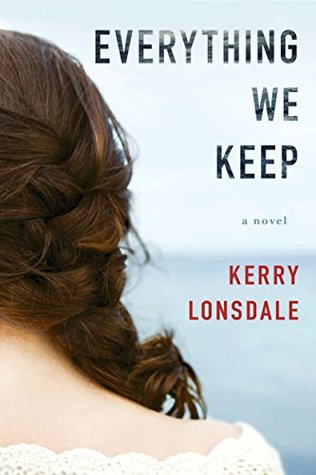
The book title is unfortunately not prophetic: This is not a keeper. (Sorry, Judy.) But before we get to that, what are the odds that, completely at random, I would pick up not one but two series in which psychics figured prominently, in a one-week period? Not to mention psychics with almost the same name?
In my last set of reads, Lucy Valentine had begun coming into her own as a psychic who could use her gift for finding inanimate objects in a creative way to aid her in finding people. Imagine my surprise, therefore, when I started to read Everything We Keep. The story opens at a funeral for a young man named James, and the book is narrated by his erstwhile fiancée, Aimee. The wedding date had been set, the guests had been invited, the flowers had been ordered, and then, two months before, the groom had traveled on business to Mexico, gone missing while out on a fishing trip, and washed ashore weeks later. Not of a mind to be wasteful, the groom’s mother (a cold-hearted one, apparently) decided that the funeral would be held on the wedding day, since the church and flowers were already booked and paid for and the guests had made their travel plans.
After the funeral, as Aimee is attempting to be by herself for a few moments to recover her sorely shaken equilibrium, a young woman approaches her, introduces herself as “Lacey,” and claims that Aimee’s fiancé, James, is alive—he’s not in the coffin, he’s in Mexico, and he’s in danger, so don’t tell anyone, but he needs your help, Aimee! I paused to check the cover of the book for the author’s name, crazily wondering if this could be a later work by the same author who decided to put her psychic character undercover under a slightly different pseudonym in a drama instead of a comedy.
Unfortunately, that wasn’t the case, because despite its dramatic beginnings, this book petered out into a snooze-fest that made Heather Webber’s light and entertaining Lucy Valentine series seem positively frenetic by comparison.
Let me ask you one question, although I think I know the answer: If you had grown up with a boy as his best friend, if this friendship had later turned to love, and if you couldn’t imagine your life without him, if he died just shy of your wedding day and then someone came to you to tell you he was, in fact, alive, and the whole thing was a hoax, wouldn’t you at least check it out? Wouldn’t you immediately (and that’s the key word) borrow, beg, or steal the airfare from someone and head south to see for yourself? Wouldn’t you call the psychic or go to her address and, instead of driving by and thinking “This is crazy” and aborting your trip, stop the car, go into the house, and confront her to discover what she knows or thinks she does? Wouldn’t you at the very least hire a private detective in the country where your lost love supposedly now resides and see if there is any truth to the story?
Nope. Aimee dithers. She worries at the thought, she wonders, she talks. For a YEAR. During that year, she opens a café with money given her by James’s brother as part of his estate, she meets a new guy, Ian (a photographer who takes pix of beautiful landscapes) and designs the interior colors of her café to complement her favorite one of his photos (a beach in Belize) with which he gifts her, and she begins falling in love with said photographer while refusing to do anything about it until she’s sure James is dead. But what does she do to become sure? Does she respond to two more contacts from the psychic? No. Does she listen to the private investigator whom she finally does hire, more than a year after the trail has gone cold, when he tells her there’s nothing and she should give it up? No. When she finally does decide that she needs to know, once and for all, there is no logical reason for why this urge has suddenly come upon her…she drops everything and buys a ticket to Mexico, and she takes Ian along with her. And while she is looking for any sign of James, Ian is having an epiphany in his art career in which he starts taking pictures of people instead of landscapes. No, I’m not kidding.
I won’t go any further because it would be all spoiler from here on out. But if you can get to this point in the book without throwing it across the room, you can find out what happens for yourself. There are two sequels. To say I don’t care would be quite the overstatement. Goodreads reviewer Molly delivered the best few lines I’ve read in a long time:
“If a Thomas Kinkade painting has ever made you tear up a little, this book is for you. Someone reading this is saying,
‘A Thomas Kinkade painting HAS made me tear up a little, you hipster asshole.’ I’ll own it.”
What can I say. I’m an art snob too. And Everything We Keep is going to the Vietnam Vets.
True love, mispers
Although I have a bunch of books lined up to read, including the latest Inspector Gamache mystery from Louise Penny and a new Jo Walton, whom I adore but who is always a challenging author, I decided to take a different kind of a break and read some light, bright, silly fiction for a couple of days. I’ve been working hard on getting ready for my Readers’ Advisory class at UCLA, which starts on September 29th, and also suffering some setbacks with recent art projects as I struggled with a new technique (not to mention the news, which is always fraught these days), so the last thing I need is something else that is too taxing. A reader on Facebook recommended the Lucy Valentine books by Heather Webber as good escapist fare, so I launched into Truly Madly and followed up with Deeply Desperately.

The premise is that Lucy Valentine comes from a long line of matchmakers blest by Cupid himself with a secret ability: They can see people’s auras, and thus match them up according to color, giving the Valentines a 97 percent success rate and making them renowned and also wealthy. Lucy, however, has renounced her trust fund and has been trying to make it on her own, because she doesn’t possess the family talent: She suffered an electrical shock at age 14 that killed her ability to read auras and replaced it with a talent for finding lost objects, which makes her terrible at the family business but handy to have around if your car keys are missing.
The issue the Valentines have that confounds their talent and sometimes their happiness is their own inability to sustain a relationship: Lucy’s parents have been broken up for 20-some years, but maintain a façade of happily married life in order not to ruin their rep as matchmakers; her grandmother, Dovie, got divorced from her beloved Henry a scant year after they got together; and Lucy herself has never had a long-term relationship. They call it “Cupid’s Curse,” and it’s almost as big a secret as their ability to read auras: After all, will people trust a matchmaker who can’t him- or herself keep a relationship going?

But many things are about to change for Lucy: After a scandal (her father was caught in a public display of “affection” with a woman not his wife on a night-time beach) and a subsequent heart attack (brought on by the stress?), Lucy’s parents have gone away to St. Lucia together to let him recover and also to escape the press, leaving Lucy in charge of the agency, to her combined pride and dismay. Sam, the private investigator who rents the top floor in the Valentine building, has just taken on his younger brother, Sean, to help him with the business, and when Lucy gets a vision of a missing wedding ring that shows it gracing the finger of a dead woman, she asks Sean to assist her in solving the mystery. There is a spark between Sean and Lucy that threatens her equilibrium and is obviously reciprocated,
but Lucy, wary of “the curse,” tries to avoid entanglement—at least for now. Meanwhile, Lucy is beginning to see that her gift of finding lost objects just might be able to translate to finding lost people as well, as long as she can get all the factors to work together…
The touch of magical realism (the reading of auras and the finding of lost things) gives the cozy mystery format a charming aspect. Webber knows how to write effective, likeable characters and likewise how to set scenes and describe surroundings, and there is a tiny bit of steam in Lucy’s relationship without its getting either sappy or overly explicit, plus a grace note of humor that lifts them above the common cozy. The author seems to be able to hit just the right combination of whimsy, mystery, and romance, without getting too heavy-handed in any of those areas, rendering the books delightfully engaging. They aren’t anything I would normally seek out, but they have definitely provided the necessary antidote to the seriousness all around me, and I may continue with the series (there are three more so far) to prolong my respite.
Magical realism?
I greatly enjoy magical realism, that kind of story where everything seems perfectly normal except for that one exceptional element that steps outside the boundaries of everyday life. I recently picked up Midnight at the Blackbird Café, by Heather Webber, and by the end of the book I was wishing that both the magic and the realism for which the book is touted had been a bigger part of it, because this book, while in some places magical, is not realism: It’s a cozy.

Not to say that the magical elements felt tacked on—on the contrary, they were the most compelling elements. The most charming part of the narrative, for me, was when the story flashed back to the grandmother, Zee, telling the legend of the blackbirds to her granddaughter, Anna Kate. After Anna Kate’s mother made Zee promise not to talk about the blackbirds, Zee kept to the letter of the law, but that didn’t stop her from sharing their heritage in stories:
Once upon a time there was a family of Celtic women with healing hands and giving hearts, who knew the value of the earth and used its abundance to heal, to soothe, to comfort. Doing so filled their souls with peace and happiness. Those women held a secret. The women are guardians of a place where, under midnight skies, spirits cross from this world through a mystical passageway to the Land of the Dead. The tree keepers, black as twilight…came from overseas a century ago, drawn to a small southern town. There, a passageway is marked with large twin trees. Where their branches meet and entwine, a natural tunnel is formed—and at midnight, that tunnel spans this world and the heavenly one. Twenty-four keepers, black as twilight.
The basic story is this: In Wicklow, Alabama, there is a café, always run by women from the same heritage, where eating a piece of pie can give you a dream in which you receive a communication from a dead loved one. Out behind the café, behind its garden filled with herbs and vegetables, are twin mulberry trees, and from between these trees, at midnight each night, come 24 female blackbirds, who perch on the trees and sing until 1:00 a.m. and then leave the way they came. The trees, the bird, the women’s bloodline, and the pies are all somehow mystically entwined.
Anna Kate has returned to town to bury her beloved Granny Zee, owner of the Blackbird Café. She was planning a quick trip to sell the café and settle her grandmother’s estate, but Granny Zee’s will contained conditions, among them that Anna Kate had to keep the café open and running for a period of months before she can dispose of it. (Of course it did.) So Anna Kate, who is enrolled in medical school for the fall semester, settles in for the summer to learn the business from Zee’s two long-term employees, and in the process begins to get to know her father’s side of the family, from whom she has been estranged her entire life. Her mother left Wicklow at 18, pregnant with Anna Kate and determined never to return after the shabby treatment she received from the Lindens, Anna Kate’s father’s family, and she kept that promise. But in a town the size of Wicklow, Anna Kate finds it difficult to avoid practically constant contact with her parents’ past, including the family ties she was determined to ignore for her mother’s sake.
The 24 blackbirds make a rare appearance in daylight to swoop past during Granny Zee’s funeral, and an eager bird-watcher reports the phenomenon of a flock of Turdas merula, a kind of blackbird not ever seen on this continent. Suddenly the sleepy town, which has lately closed the doors to half the businesses on its main street, is mobbed by birdwatchers, who camp out, frequent the café, buy food and supplies, and prove ripe for the villagers’ marketing of souvenirs of their trip. Following them come the reporters. Like magic, the town finances and the town spirit are revitalized, all due to the blackbirds. But what will happen when their caretaker turns her back on them, sells the café, and heads off to medical school, leaving people without the knowledge of the pies’ secret ingredient to fail to keep the covenant with the door to the other world?
You can probably write the rest of the book for yourself, based on my description because, as I said earlier, it’s a masquerading cozy, a “relationship fiction” book with magical elements. Arguments, the airing of dirty laundry, the placing of blame, the process of forgiveness, reconciliations, and new love interests all lead to doubts about departure from Wicklow for the two protagonists. I didn’t mention there were two? One is Anna Kate, whose existence wasn’t known to the Linden family until she arrived in town for the funeral, and the other is Natalie, the much younger daughter of the Lindens, who is Anna Kate’s aunt despite being only a few years older than she is. Natalie is living in the Lindens’ guest house with her toddler, Ollie, after the death of her husband, trying to come to grips with the tragedy and, with gritted teeth, trying not to react to her mother’s constant oversight and criticism. Both she and Anna Kate come in for a large dose of that.
I did enjoy this book to a point, and I don’t mean to sound like a snob; but the author ranges perilously close to stereotypical with the main characters, and definitely crosses that line when it comes to the depiction of the town “characters.” The southern accents, attitudes, and clichés were a little too “sweet tea,” in my opinion. The transformations wrought by all the brangling—particularly that of Seelie Linden—were too pat and too easy, verging on cheesy. It’s formulaic, and the formula has become threadbare from use. Webber writes well, so it never exactly descends to the level of a Hallmark movie, but at times it comes close. She also needs to learn to vary her metaphors when it comes to romance: If we had to endure mention of Gideon’s “molten lava eyes” one more time….please, no.
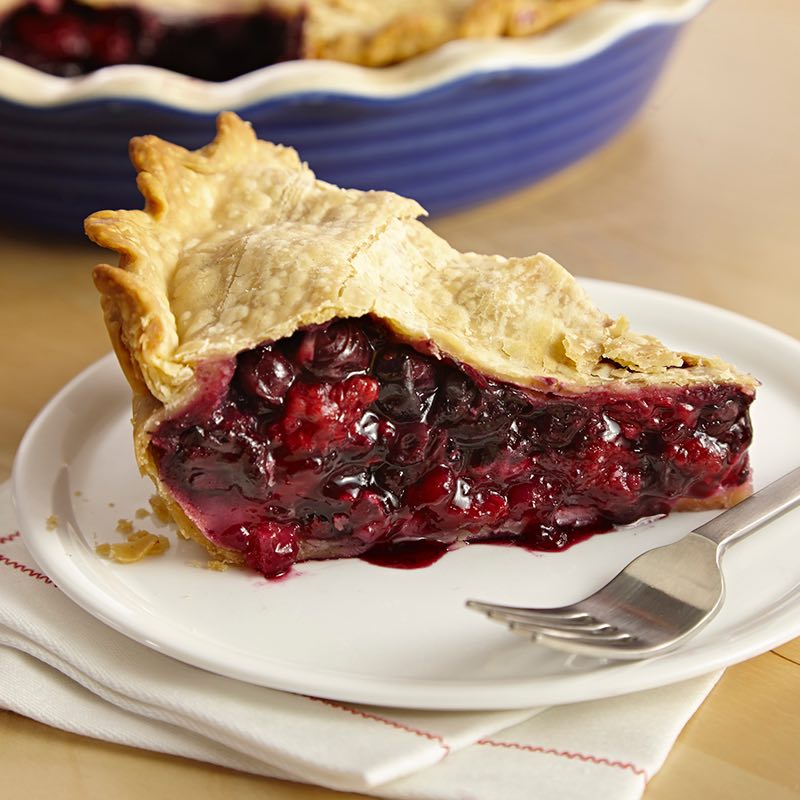
Still, it’s hard to find books with good magical realism included, and the way that part of the story was handled was charming and fresh, so seek it out for that advantage, and see how you react to the book as a whole. Be prepared to crave pie, not to mention biscuits and gravy, fried chicken, barbecue….
The Kiss-off
 Sometimes themes develop accidentally, as you pick up a book here, a book there, and then view all of them at once, deciding what to read next. This particular theme was “fat women,” with one chick-lit debut and one YA by an author already known for heroines with size diversity.
Reviewing One to Watch, by Kate Stayman-London, forces me to confess a deep and shameful secret: I have been known to tune in to an episode or two of The Bachelor or The Bachelorette. Let me hasten to say that I am not one of what the host calls “Bachelor Nation” (ahem pretentious much?)—in fact, it’s been more hate-watching than anything—but I have, over the many surprising seasons it has continued its hackneyed formulaic road to romance, checked it out. The primary motivation for this is a complex cocktail of wanting to see the pretty people and the exotic locales, to mock the uniformly sincere expressions of all the participants who think they might have feelings for someone with whom they have spent six hours, and to marvel at the idiocy or bewilderment of the families who condone this behavior by one of their own. The primary result has been to irritate my cat, who doesn’t like it when I talk back to the television set, particularly when it’s in a scathing tone; but somehow I am as unable to resist seeing what’s going on just once a season as I am prone to wonder who will win Dancing with the Stars.
For that reason, the idea that the show would cast a bachelorette who was of a body type not seen on television unless the actress is playing a grandmother or a police chief intrigued me. A bachelorette who wasn’t a size 4? One who might actually sit down at one of those candlelit tables and eat the delectable dishes laid out in front of her, rather than spend the whole meal sipping her wine and whining about her feelings? Bring it on.
The whole concept that a normal woman—that is to say, someone closer to the American average of size 16—could be celebrated as desirable to 25 bachelors seeking matrimony is enticing, though problematic. After all, regardless of the inclusion of body positivity, the show is still set up to see romance as a cattle-call competition, with the women as prizes.
I am somewhat embarrassed to say, therefore, that I thoroughly enjoyed this book and would recommend it to someone looking for a story with a protagonist to whom they can relate: Someone who has transformed themselves on the outside but is still vulnerable and afraid beneath the surface; someone who decides she is brave enough to take a chance but who then constantly second-guesses herself based on everything that has been pounded into her by society, her family, other women, the men who have failed to requite her love, and the relentless trolls on the internet.
Bea Schumacher is a confident and stylish 30-year-old plus-size fashion blogger. She has good friends, a loving family, thousands of Instagram followers, but no romance. Her secret crush has strung her along for years, and has recently caused her to swear off men for the foreseeable future. But after she writes a blistering blog post about the show Main Squeeze (The Bachelor, thinly veiled) with its lack of body diversity or, for that matter, any kind of diversity in its legions of skinny white people going on fantasy dates, the show calls her and asks if she will be the next star. Bea agrees, but she tells the show’s new producer, Lauren, that on no account will she actually fall in love. She’s going on the show to make a point about anti-fat beauty standards, and maybe to boost her list of followers into seven figures.
Of course things will get more complicated. Of course she will be upset, confused, intrigued, tempted, repulsed, angered, and beguiled as she spends 10 weeks supposedly looking for love. But she can’t possibly let go of all her preconceived notions and believe in the HEA, can she?
The thing I liked about this book was that it turned the reality show on its ear. Yes, there were meet-cute moments and embarrassing tests and awkward interludes just like on the real-life show, but in between that, because Bea isn’t the usual fare, the bachelors (who are mostly the usual fare, either muscular and dumbly sincere or sharp, handsome, and deeply cynical), get jolted out of their complacency as she attempts to have conversations with them that don’t revolve around the typical inanities. Bea is portrayed as a real person, and she reaches out to find the real person in each of the men she ends up with after the “extras” have been kissed off. (I loved that instead of “will you accept this rose,” the woman here gives them a lipstick kiss or “kisses them off,” depending.) As on the show, you really have trouble trusting that the men are telling the truth about themselves, their feelings, and their motivations, which is compounded in the case of Bea.
I thought the author nailed the struggles of being a plus-sized woman, wavering from confident to terrified as she is confronted by the cruelty of society towards women who don’t conform to insane standards of beauty. (She also had some fun pointing out how a blind eye is turned to men in that same category.) She didn’t fall for the temptation to make her protagonist lose weight in order to find her HEA, she forced the show, the men, and the viewing public to accept Bea as she was.
The depiction of the reality TV world—the way things are manipulated to make ratings, the descriptions of the fancy wardrobe, the tensions of the timetable—were well done, as was the use of the social media inserts into the story—text messages, emails, TMZ articles, tweets, and blog posts all added dimension to the story.
Ultimately, the book does pander to wish fulfillment, but then, what did you expect? It’s a rom-com. But it’s entertainingly written and told, and does have a lot to offer about false standards of beauty and their equation with worth. So I say, a positive review.

By contrast, I became almost immediately impatient with both the author and the protagonist of Julie Murphy’s new book, Faith Taking Flight. I should have known better than to broach this book with no expectations, because I found her previous book, Dumplin’, to be full of contradictions that didn’t lend themselves to her avowed goal of advocating for plus-size teens. But the prospect of a fat girl who could fly grabbed my attention, and I jumped in with enthusiasm.
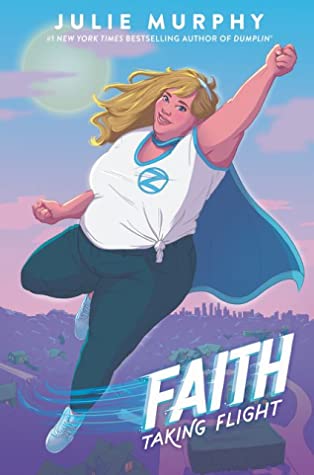 My enthusiasm quickly turned to dismay and derision as I experienced the thin plot development regarding the flying skills. Faith meets Peter, who tells her she’s been chosen to go through some kind of conversion to turn her into a superhero, because she has the potential to become a psiot. This conversation takes place at the mall. Then he tells her (alarm bells should be ringing) that she has to perpetrate a “cover” for herself over the summer—to tell her grandmother that she’s off to journalism camp. She agrees! She climbs trustingly onto a bus, goes to a secret underground facility, is locked in a room and assigned a uniform and a number, and then realizes she’s an experimental subject. Meanwhile, her granny (her guardian) sends mail and makes phone calls for the entire six weeks that she’s gone; Grandma Lou receives not one response, and doesn’t see this as a problem or institute any kind of inquiry, just assumes her granddaughter is fine? Come on. We discover later (way too late in the book) that Faith actually escapes from the facility with Peter’s help, whereupon she simply goes home and does nothing—doesn’t call the authorities, or wonder about all the other kids who were trapped there with her—she just gets a part-time job at an animal shelter, and resumes school in the fall. But this is the most unbelievable part of the entire story: She doesn’t fly! She has this ability, which would excite most of us beyond belief, and she doesn’t go out every night to try it out? doesn’t practice? doesn’t test her limits or tell her friends? No. She pulls it out when necessary (to save someone from falling off a roof, or to look for her grandmother when she wanders off, a victim of senile dementia) and that’s it. Right.
Meanwhile, we have the secondary plot, which is actually the primary one considering how much space it fills in the 338 pages of the book: The cast and crew of the teen soap opera (The Grove) with which Faith has been obsessed since childhood—to the point where she writes the premiere blog about it and publishes weekly recaps and commentary—moves its filming destination to her town, and the star of the show, Dakota Ash, supposedly meets cute with her over adopting a dog from the shelter, but then confesses that she has read the blog and knows who Faith is. Faith is over the moon (but still not literally, because not flying), and we get a lot of detail on this relationship, hurt feelings from abandoned “regular” friends as she tours the lot and has milk shakes with the star, yadda yadda. Oh, and this is the point where Faith explores the idea that she might be gay…or bi? After all, in addition to the tempting Dakota there’s also her journalism swain, Johnny….
Enter third plot: Animals (both strays and pets), homeless people, and random teenage girls have disappeared from town and no one can find them. One dog and one girl reappear, but are catatonic and provide no clues to the mystery.
So how does all of this fit together? Badly. Improbably. Unconvincingly. Incompletely. Because…there may be a sequel in the works. Yeah. Which would actually be good if it clears up any of the picked up and dropped plot points, the fuzzy background and world-building, and Faith’s inexplicable reluctance to use her friggin’ superpower! But based on this one, I highly doubt it. I discovered on Goodreads that this is a prequel novelization of a superhero from Valiant Entertainment comics. If I were the author of those comics, I would not be happy at this moment.
Before I forget, allow me to address the fat girls in the room: Murphy punts in this book as she does in Dumplin’. She gives the heroine the possibility of a romance or two in which Faith speculates, “But what could they see in ME?” and she almost lets her have it, but then pulls back to deliver the same blow fat girls always endure, when they are told that they are not special and that no one would want them. Yeah, maybe that message served the plot at that particular moment, but aren’t we all tired of the incessant battering of that already bruised spot on the fragile fat-girl ego? I know I am.
I finished the book, but I confess that it was only so I could better skewer it. Faith herself is an ebullient and somewhat refreshing protagonist, but she’s so weighed down by a thin, chaotic and nonsensical story line that she’ll never, ever get off the ground.
Summer reads
Before I departed the “beach reads” category for my usual fare of fantasy, science fiction, and mystery, I decided to read two more books by the one author in my experiment whose work I had actually enjoyed, Elin Hilderbrand.
As before, I checked reviews on Goodreads and tried to pick a couple that were popular and well thought of by a majority of readers. I ended up with The Perfect Couple and The Rumor.
The Rumor‘s story in brief:
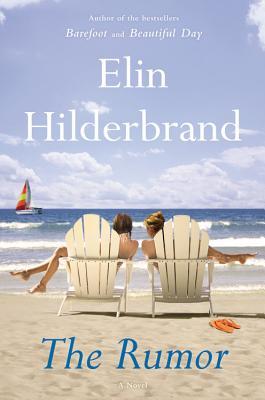 The book revolves around two women who live on Nantucket and who have been best friends. One, Grace, has a husband who is the king of the real estate deal, enabling her to live on a beautiful estate where she is transforming an extensive property into her dream garden. She has twin daughters, one predictably vanilla and the other just as predictably bad news, and her husband seems to adore her—when he’s paying attention, which is less and less these days. But her gorgeous and single landscape architect is making up for that with his attentive behavior.
If there’s one thing Grace envies Madeline for, it’s her devoted relationship with her husband, who acts as if the honeymoon never ended. They also have a wonderful son, Brick, who has never given them a moment’s worry…until he started dating Grace’s “bad twin,” Allegra. Madeline, however, is focused at the moment on her overwhelming case of writer’s block, which is preventing her from even starting the new book that is due at her publisher’s any minute. Bills are piling up, and if she can’t get a fix on her next novel, their precarious financial life will begin to fall apart. Even though she doesn’t have the money for it, Madeline decides to rent a small apartment in town to be her writing retreat, hoping it will facilitate a solution. And that’s where the rumors begin…
I liked this story. Yeah, it’s a little shallow, and a little typical, but Hilderbrand’s characters are real individuals, and I loved the distortion of gossip in a small town, as it morphs and changes from one person’s account to the next until it’s something monstrous instead of a perfectly easily explained anomaly. It’s like that old game of “Telephone” that we used to play at slumber parties—one person whispers a secret into the next one’s ear, and that person into the next one’s, and so on, until you get to the end of the circle and the last person tells what they heard, which never remotely resembles the opening statement. I also liked the atmosphere and character of Nantucket, and the descriptions of Grace’s lush garden and
Madeline’s tortuous writing process. Even the teenagers and husbands were real people.
The Perfect Couple:
 Greer Winbury, mother of the groom, is determined that the Otis-Winbury wedding will be the event of the season. Since the bride, Celeste, comes from modest means (her parents are middle class with a lot of hospital debt piled up from Karen’s cancer), the groom’s family, who are at the peak of wealth and own one of the premier estates on Nantucket, are hosting the event on the island. The wedding has been meticulously planned, but in a bit of a rush, because no one is sure how much longer the bride’s mother has before the end. This is not the tragedy, however, that prevents the wedding from taking place; the incident responsible is the discovery of a member of the wedding party floating dead in Nantucket Harbor the morning of the ceremony. Nearly everyone in the wedding party is suspect, particularly when Chief of Police Ed Kapenash starts discovering multiple acts of deceit and betrayal amongst the family, friends, and guests…
I find it odd that this book gets consistently high marks and The Rumor was not nearly so well liked; I thought that book had much more depth and completeness as a story than did this one. The Perfect Couple seemed like it was wallowing in clichéd characters, from the older wealthy married man having an affair with the young single woman to the flighty bride and her self-satisfied groom…and the worst was the groom’s mother, the mystery novelist who always gets her way. The way they talk, the way they dress, their attitudes, all scream caricature to me, with the familiar misogynist trope of virgin-slut-bitch applied to most of the women—either prizes to be won or else damningly responsible for the men’s inability to say no. I felt like the author simply made up the situations she needed to propel the plot as she went along, and yet some story lines directly detracted from the reader’s focus on that, furthering the effect that Hilderbrand didn’t know for sure whether she wanted to write a love story or a murder mystery. And I don’t want to provide any spoilers, but I simply don’t believe, knowing what they all knew about everyone involved, that the book would have ended as it did. Enough said. It was an okay read, it wasn’t glaringly boring or bad, it just wasn’t as special as some readers seemed to believe.
I will say that both books did fulfill that “setting” or “place” requirement, in that discussion of the surroundings—the stunning views, the warm breezes and starry nights, the ambience of the restaurants and shops (and the descriptions of the luscious seafood)—definitely heightened enjoyment when reading these books.
I can’t believe it’s been 10 days since I last posted a review. I have continued to read, but in between breakfast, lunch, and bedtime, which are my three reading slots of the day, I have been so busy making art or teaching art that I haven’t had the time to put down my thoughts about reading! I will play catch-up now; I have two more books completed and ready to discuss.
(Should you be curious, you can go look at my art blog: The address is https://theslipcover.blogspot.com.)
More results
I read one more book for my experiment regarding “place” and whether the setting of a book was sufficient to carry it: All the Single Ladies, by Dorothea Benton Frank.
My answer to that question for this book was “no.”
Although I did like the descriptions of the South Carolina low country where this book is set—its foliage, its beasties, its unique and delicious-sounding cuisine—and also enjoyed the southern lingo and expressions employed by the characters (reminded me of my own mama, a Virginian), the plot itself was muddled and a bit facile, not to mention improbable.
 It’s hard to summarize the story in brief: It starts with Kathryn, who is in the hospice section of a nursing home, dying of cancer. Lisa is one of her caregivers, and Suzanne and Carrie are her two best friends, who visit regularly. After Kathryn passes, Lisa is determined to keep up with the other two and make them her friends, which she does. Then various life upheavals result in them all living together in the same house with Suzanne’s grandmother, and the rest of the story can be summed up by “other stuff happens.”
The muddled part: There is an initial mystery posed when Kathryn’s landlady claims that some of her possessions actually belong/revert to the landlady, and though the other women are 99 percent sure this isn’t so, they haven’t yet found a way to prove it. So we have this set-up in the beginning and we think this will be a thread throughout the book (Suzanne is the executor), but instead it crops up once and then is subsumed in all the other life details until about the last 25 pages. Not good.
Second, the book is pretty insulting to women of a certain age and, being one of those, I took appropriate umbrage. All three of the main characters are hurting for cash—Carrie lost everything to her boyfriend’s kids (they were about to marry when he died, after living together for seven years), Lisa has brought up and schooled her daughter single-handedly without aid from her ex, leaving her living on the edge from paycheck to paycheck, and Suzanne had a traumatic experience that derailed her initial career and landed her as a dependent on her grandmother, whose house on the beach is the center of this piece. So, what is their solution? Do they start a side hustle, come up with a clever investment, think of some creative way to get them out of their fix? No. Carrie looks for a fourth (!) husband whose wealth will solve her problems. Lisa whines a lot about her daughter’s poor (to her) life choices, to the point where it becomes apparent that the author herself has created this soap box and placed her character carefully atop it to preach. And Suzanne sits helplessly in Grandma’s house waiting for the hammer to fall, because she assumes that upon the death of “Miss Trudie” she will have to move out, sell the house, and split the proceeds three ways with her two ungrateful and unhelpful sisters, all the while admitting that she charges her customers far too little in her florist business. Um, honey? Charge more.
Added to all of this is the unlikely (I said improbable but I would say verging on impossible) fact that all three women (these are women in their late 50s and 60s) manage to discover single, relatively undamaged, enthusiastic, attractive men who want to be with them, and all of them pair off tidily. Sorry, that’s a little bit of a spoiler, but since that goal is set by one of them in the beginning and is practically the theme of the whole book, I’m going to say a giant Who cares?
There are occasional moments when you fall into what should be the central spirit of the book (and would have been if the dating details had been dropped in favor of other solutions), which is the camaraderie between the friends. This shows more between Lisa and Suzanne than it does between either of them and Carrie (the one fixated on finding a hubby), and is mostly illustrated in fun times over food and drink. But it’s just not enough when weighed down by everything else. The best character in the whole book is the 99-year-old grandmother, Trudie. I would much rather have heard her story.
This book gets a giant “MEH” from me. Although it did make me want to travel to the low country sometime to experience its beautiful architecture, afternoon storms, magnificent sunsets, and delectable food, it certainly didn’t make me want to read another book by this author. So “setting” in this case was the only appeal and failed to carry the book.
Results
In my previous post, I posed the question, “Can the setting of a story (a particular place or atmosphere) be a sufficiently appealing element to carry a book?” (Or something like that.) To research the experiment,
I read books by three of the authors recommended to the woman on the “What Should I Read Next?” Facebook page who requested “books that take place at the beach.”
Author #1 was Karen White, and I read her book The Sound of Glass. The title comes from the wind chimes constructed from pieces of polished beach glass that the original owner of the house depicted in the novel made and hung from the rafters all around.
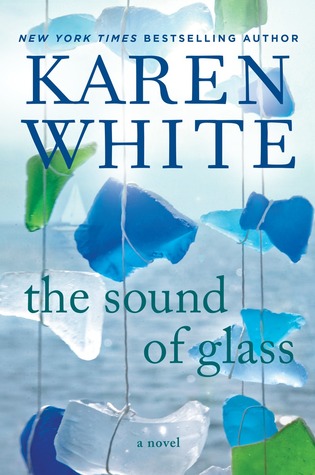 The book is set in Beaufort, South Carolina, which the author classifies as part of the “Outer Banks” (although Wikipedia says those are “a string of peninsulas and barrier islands separating the Atlantic Ocean from mainland North Carolina”). Suffice it to say, the setting is one of open beaches and also of protected swamplands characterized by flat-bottomed boats cruising above pluff mud, and trees covered in Spanish moss. Although there is a minor plot detail involving one of the protagonists’ fear of water, the setting doesn’t have a lot to do with the book, beyond providing evocative sound effects and scents unfamiliar to the one protagonist, who hails from Maine. Scene-setting mostly came down to that character, Merritt, complaining about the stifling heat. A lot.
The story in brief: Merritt’s husband died two years ago. She has recently discovered that his grandmother left him a house in South Carolina, and since he is dead, she inherits. She decides to upend her stagnant life in Maine to go live in it. Shortly after she arrives, so does her stepmother, who is a scant five years older than she is and has a 10-year-old son. The stepmother pleads poverty and asks to stay and Merritt reluctantly agrees, although her father’s marriage to this woman was the reason for her 12-year estrangement from him (he is also now deceased). The two begin to work out their relationship with one another, but it’s complicated by rather large secrets on both sides.
Someone on Goodreads described this book as “relationship melodrama,” and that about sums it up. The thing is, the bones of a good story are here: estranged family who find each other amidst personal crises. But Merritt (the buttoned-up Maine girl), and her counterpart, Loralee (the brash Southern blonde with the pancake makeup), are both such stereotypes that I found it hard to relate to them. Better than the two protagonists, I liked Loralee’s kid, Owen, and Merritt’s doctor/brother-in-law, Gibbes. They were less prone to both drama and cliché, and I think their characters show of what this author is capable if she would quit dropping into the easy channels dug by predecessors.
The secret Loralee is keeping is obvious to everyone but Merritt, but the way she goes about ingratiating herself and her son with her stepdaughter is pretty ingenious. If the story consisted solely of this plot, I think I would have liked it better. Instead, we had to do a whole convoluted study of Merritt’s damaged psyche and how it got that way, and although exposing some of the issues was a worthy goal, her protracted whinging was exhausting. And her ultimate secret, the one that connects grandmother with grandsons with widow, is patently ridiculous.
A comment on writing: When I am reading a book, I subconsciously give the reading the same tests that I give my own writing, one of which is not to use the same descriptive word twice on the same page (let alone in the same sentence), and yet that happens over and over again in this book. The author has the potential for good story-telling, with evocative images and powerful characters, but sloppy writing (uncorrected by her inattentive editors) and tendency to drop into cliché operated for me against enjoyment. I probably will not read any other books by Karen White.
The second author whose work I sought out was that of Elin Hilderbrand, a perennially popular name associated with “beach read” in the Facebook group. I scanned her list of offerings on Goodreads and selected a book that had uniformly higher marks, since some of the others swung wildly between two stars and five. The one I ended up reading was The Identicals.
 I was immediately captivated by the slightly tongue-in-cheek comparison between Nantucket and Martha’s Vineyard in the prologue, citing the benefits of each and the detriments of the other from the residents’ point of view. It was a great set-up for the story: While Nantucket and Martha’s Vineyard may look to the rest of the world like similar places, to the natives they are worlds apart, even though that distance is a scant 11 miles. Similarly, while twins Tabitha and Harper are identical enough to fool others even at age 39, they are completely different in their life choices and affects.
The story in brief: Twins Tabitha and Harper have been estranged for many years, for various reasons. Harper lives on Nantucket near their father, Billy, while Tabitha assists in their mother’s previously successful but now waning design business/dress shop. Things suddenly get stirred up: Billy dies; Harper’s affair with his doctor becomes a common topic of island gossip; and Eleanor (their mother) falls and breaks her hip. Add to that mix Tabitha’s precocious and trouble-making 16-year-old daughter, Ainsley. Harper needs to cultivate a low profile, Tabitha needs to care for their mother in her recuperation but is at her wits’ end with both her teenager and her dress shop, and something needs to be done about Billy’s ramshackle house on Nantucket. All these circumstances combine to make the twins grudgingly reach out to one another for assistance (facilitated by Ainsley, who is dying of curiosity about their lack of relationship) for the first time in decades.
Part of the reason why this plot line works is that the author herself (in the guise of her various narrators) initially sets it up for derision by comparing the separation of the twins at age 17—one going with “Mommy” and one with “Billy” when their parents divorced—to the Hayley Mills/Lindsay Lohan Parent Trap plot. She then uses their wholly different upbringings—Harper’s on Nantucket as a laid-back, casual evolution into an underachieving adulthood, and Tabitha’s on Martha’s Vineyard (and in Boston) as an uptight, socially restrictive one with high expectations of her performance—as a parallel for the respective towns. It was cunningly written.
I also liked that although there were important elements of mistaken identity “hijinks” and romance in the book, the story was by no means restricted to those plot lines and in fact was much more about the obstacles to familial love and how to overcome them. The back stories were also credible, and gave the story depth. Based on this book, I would read another by Hilderbrand.
As far as the influence of setting, in addition to paralleling elements of the story it also made me wish for sea wind in my hair and a big bowl of clam chowder in front of me on the table. The atmosphere definitely both contributed to and influenced the plot.
For my third book, I chose Sunset Beach, by Mary Kay Andrews, an author appearing on the Facebook page and also mentioned to me as one fitting into the category by my friend Patrice.
The story in brief: Drue Campbell has just gone through her mother’s protracted illness and death when her estranged father, who left them 20 years ago, turns up with a proposition: Drue has inherited her grandparents’ ocean-front cottage in the same town where Brice Campbell has his lucrative personal injury law practice, and Brice thinks she should move into the cottage and take a job at his firm. Complicating the issue is his new wife and office manager, Wendy, who also happens to be Drue’s 8th-grade frenemy. Drue is down on her luck and can’t afford to say no, but she agrees with an ill grace and initially resents both the job and her father and “stepmother.” Then, she is arrested by the plight of one of Brice’s former clients, whose lawsuit over a suspicious death didn’t receive the attention it deserved, and decides to investigate.
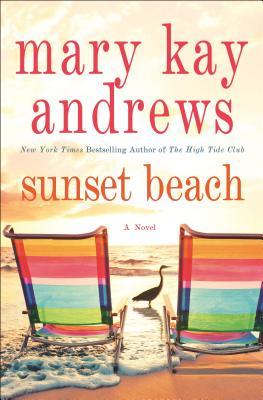 In this book, Drue’s former hobby (kite-boarding) and her nightly walks on the beach and swims in the ocean from the venue of her derelict cottage do give a beachy atmosphere to the book. But I would definitely not call this one “just” a beach read. Although the opening scenes paint this as “relationship fiction” with the reuniting of Drue with her absentee father, the scenes between them are sometimes shallow, with Drue coming across like a snarky teenager. Brice himself is a bit of a cardboard cutout—bland and not particularly compelling—while Wendy (the new wife) is a cliché of a shrew. But the rest of the book—in which Drue starts out working as an information-taker over the phone for her father’s legal practice and ends up (after taking an interest in an old case with an unsatisfactory resolution) as a bull-headed private investigator—is much more compelling. While there are bits of romance and reconciliation here, the main story is the mystery and this is how I would recommend the book if I were to suggest it to someone. Based on this book, I would read another of Andrews’s, although it could have done with a little more depth in the relationships before switching to the mystery.
Of the three books, I would say that only Hilderbrand’s reinforced the theory that setting can be powerful enough to carry a story. Although the beach hotel culture does become fairly important in Andrews’s tale of betrayal and murder, both the other books could probably have been set anywhere without it feeling like something essential was removed from the plot. In Hilderbrand’s, plot and setting were intertwined, which is the ideal when setting is an issue.
As for my other premise, that people who like a “slow build” in pacing in one genre will enjoy the same in others, that will have to wait for another day and some reporting back from other readers!
Disappointed in love
I rarely publish negative reviews of books. I have mostly embraced the viewpoint of the reviewing journals, which simply don’t recognize anything they didn’t like. But occasionally I get so outraged by the level of my disappointment that I need to vent. I should probably restrict that impulse to private conversations instead of featuring it on-line in writing, but…I don’t want anyone else to feel the resentment I do at the time wasted reading this in a world full of better books.
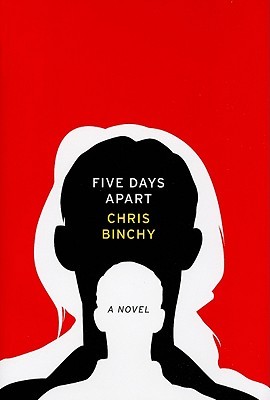 I picked this up as a daily featured discount e-book, which I guess should in and of itself be a warning, but I have found other books among the discounts that I enjoyed. I liked the cover, and I was attracted to it because of the last name of the author, which he shares with one of my favorite Irish writers, Maeve Binchy. It turns out that she’s his aunt. Let me clarify, however, that I wasn’t upset because he didn’t write like her or step up to carry on her legacy. I simply made a space for him on my shelf based on his connection.
Chris Binchy is billed in the book’s description as “bestselling” and with a “formidable talent” and all I can say to that is…Really?! If so, maybe this was an unfortunate choice from among his titles.
The description of the book claims that two men who are lifelong friends both fall in love with an “unforgettable” woman. Already we are straying into the realm of untruth. Apart from one passage where it talks about how she is direct and friendly and draws people in, and another where the eyes of every man in a bar follow her across the room (which could happen with the least charismatic woman if she’s the only female in the bar!), there is no evidence to suggest this woman rises above the mundane. Although the protagonist is obsessed with her, from everyone else’s point of view (including the reader’s, who has little information to go on) she seems like just a regular gal.
The style of writing is odd. The entire book is told by one of the two friends, and his narration is as stilted as he is, which did initially intrigue me. The protagonist, David, seems like a non-comical version of Graeme Simsion’s Don Tillman in The Rosie Project—a socially awkward computer geek who is probably somewhere on the autism spectrum, given his inability to understand or interact with virtually anyone without a great amount of thought, reasoning, and preparation. Also reminiscent of Simsion’s book, David’s best friend, Alex, is a hail-fellow-well-met kind of a guy, with friends in every bar and a way with the ladies. It is inevitable that when David draws Alex’s attention to a woman with whom he is taken, Alex will ultimately take her. Although David asks Alex for help to make a connection with her, Alex misperceives the extent of David’s interest and does his usual thing to make his own impression, and before you know it, Camille and Alex are an item and David is the bitterly unhappy third wheel.
At this point in the book, based on a cryptic remark of David’s that seemed like a veiled threat, I thought the way we were going to go with this story was for David to somehow take Alex out of the picture so he could win Camille for himself. I actually thought, based on his flat affect combined with his extreme self-absorption, that this guy was going to turn out to be a sociopath along the lines of the protagonist in the book You, by Caroline Kepnes! No such luck. Instead, we get another 200-odd pages of David living his life and detailing his dull job opportunities, his dismal solo vacation in Brazil, and his various unproductive encounters with Alex, Camille, and Alex-and-Camille.
Finally, once Alex does his usual thing of alienating himself from whoever he is dating by creating obstacles to the relationship, David has his shot, and…that would be spoiling the rest. But it’s not much of a spoiler, because this book has the flattest, most unsatisfying conclusion in the history of “Lad Lit.”
Seriously, don’t bother.
Light fare, redux
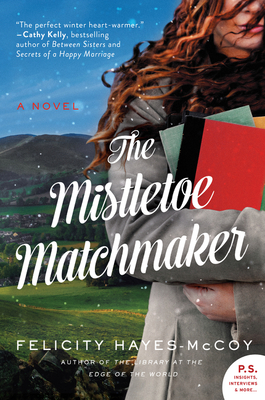 The Mistletoe Matchmaker, by Felicity Hayes-McCoy, popped up on my e-book shelf from Los Angeles Public Library this week, and since I had already read the first two in her trilogy about the Finfarran, Ireland peninsula, I slotted it in between my book club read of Searching for Sylvie Lee, by Jean Kwok (which I finished some time ago but can’t report on until after the book club discusses it on June 2), and my next planned read of Ninth House, by Leigh Bardugo.
I read it to round out the trilogy, but honestly, I needn’t have bothered. The main character, who is the granddaughter of the best friend of Hanna’s mother, Mary, from book #1, and is visiting from Canada, was introduced but not particularly well developed. The relationships in the book were awkward and in many cases the author failed to follow through, giving the story an uneven quality and leaving the reader wondering who was important and who was not. There were several “red herring” set-ups that were complete let-downs when you found out the real stories.
It almost felt like Hayes-McCoy had the seed of an idea and then, instead of really developing it, she took all the leftover, left-out scenes from the previous two books and strung them together to make a third. (In fact, there was one scene that was repeated almost verbatim, like she forgot she had already used it in book #2! Bad writing, and BAD editing.) The cumulative result was the discovery of some additional fun facts about certain favorite characters (Fury and the Divil), but no real continuity or resolution. Yawn.
Also, authors be advised: The word “matchmaker,” when it appears in the title of your book, sets up certain expectations that were NOT fulfilled here.
My conclusion: There is a difference between writing light fare and leaning too hard on a location and some nostalgia to carry a book. My suggestion: Enjoy the first two books of this trilogy and stop there.
 The Book Adept