Digging Finlay
I just finished the newest offering from Elle Cosimano in the Finlay Donovan series, and it definitely lived up to its predecessors and gave me a good time during the three days I took to read it. I have reviewed all the other books in the series on this blog; if you read the review of the first one, it will tell you all you need to know to pull you into this tale of the single mom/romance author who gets mistaken for a contract killer.
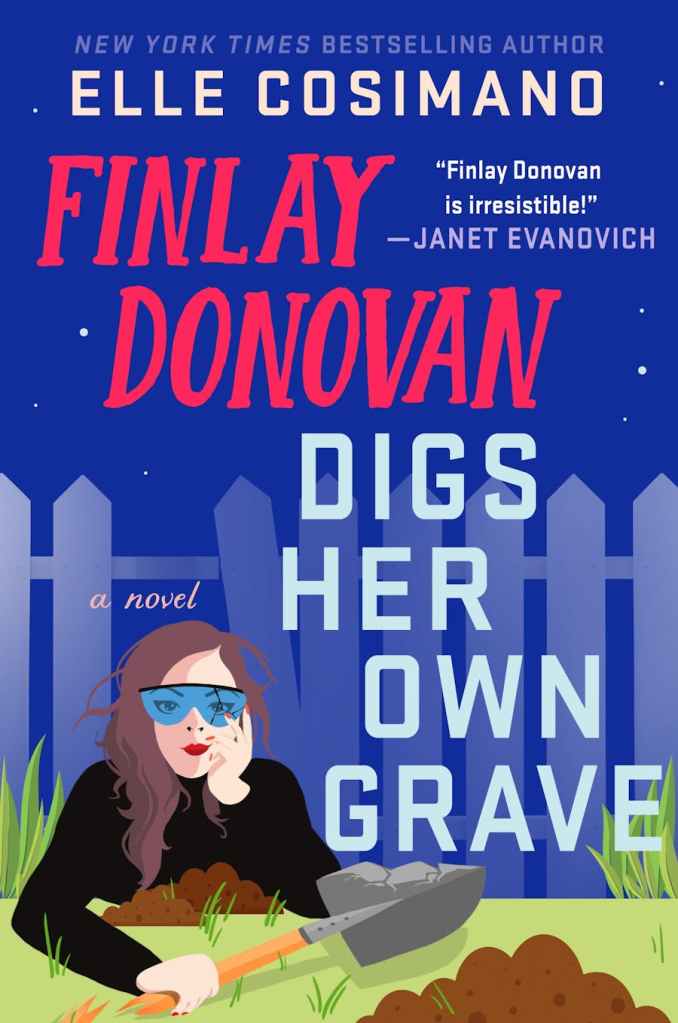
The books are, in order: Finlay Donovan is Killing It, Finlay Donovan Knocks ’em Dead, Finlay Donovan Jumps the Gun, Finlay Donovan Rolls the Dice, and this latest, Finlay Donovan Digs Her Own Grave. (There is also a book 3.5, a novella of 107 pages that reveals some of the back story of nanny Vero Ruiz, called Veronica Ruiz Breaks the Bank. That’s the only one I haven’t read…yet.)
As with the others in the series, not a lot of time has passed since the events of the previous book, but this time Finlay and her nanny/business manager Vero don’t actually create trouble for themselves, but are helped into the thick of it by Finlay’s elderly neighbor, Mrs. Haggerty. Margaret Haggerty has featured in all the other books, mostly as the busybody across the street who keeps a pair of binoculars next to her front window and writes down all the transgressions and suspicious behavior of the people in her neighborhood. (She’s the one who revealed to Finlay that her husband was stepping out on her with his real estate agent, Theresa.) But this time it is Mrs. Haggerty who is under suspicion—a dead body has been found buried under her backyard rose garden, and she’s the prime suspect. The police can find no connection between her and the victim, so she is cleared, but since her house is an active crime scene, she insists on moving in with Finlay, Vero, and the kids until the yellow tape comes down and the heating and electricity are restored.
Finlay, who has just finished a book and has a little breathing room before needing to get on with her next, had been looking forward to some calmer down time, hopefully including some fraternization with hot cop Nick, while Vero is negotiating her reinvigorated relationship with childhood pal and current love interest Javi. Neither of them is overjoyed to welcome Mrs. Haggerty into their home, but when her grandson drops her off and disappears, they haven’t much choice.
Then things take a turn that pulls them into the investigation, when Finlay’s cheating ex-husband, Steven, becomes a suspect! There is a small part of Finlay that wouldn’t mind Steven getting his comeuppance…but he is the father of her children, and ultimately she doesn’t believe he’s a murderer. But how to prove his innocence?
After re-reading the other four books before jumping into the new one, I have to say that I appreciated the slightly less fraught tone of this story. There were still twists and turns and surprises, but it was neither as convoluted nor as frantic, with a little more time to develop characters, and that was a needed development. The cast list was pared down (the last book had several criminals, a half dozen extra cops, multiple murder victims, and enough incidental characters that I kept thinking as I read, “Who is this guy again?”) We didn’t just get to know more about Mrs. Haggerty, but we also deepened our acquaintance with Cam, the teenage computer hacker; we saw Finlay and Nick get to know one another better; and I also loved the vignettes of the children, Delia and Zach, as they navigated being bullied at school and conquering potty training, respectively. There were quite a few laugh-out-loud moments, some genuine suspense, and some big surprises, but it felt like we settled down into a better understanding of the principals, which makes me anticipate the next book with greater pleasure.
If you’re looking for a cross between mystery and French farce, with a dose of middle class angst and some fancy crooks, you will want to try this series for yourself.
Momfluencers
What kind of word is THAT? Ask Jesse Q. Sutanto, author of the thriller You Will Never Be Me. The book is set in the worst cliché-ridden version of Los Angeles (as a 52-year resident of this city, I beg to differ with the exaggerated depiction!), and its two main characters are social media “influencers” who are also moms touting their lifestyle—thus that ghastly splice.
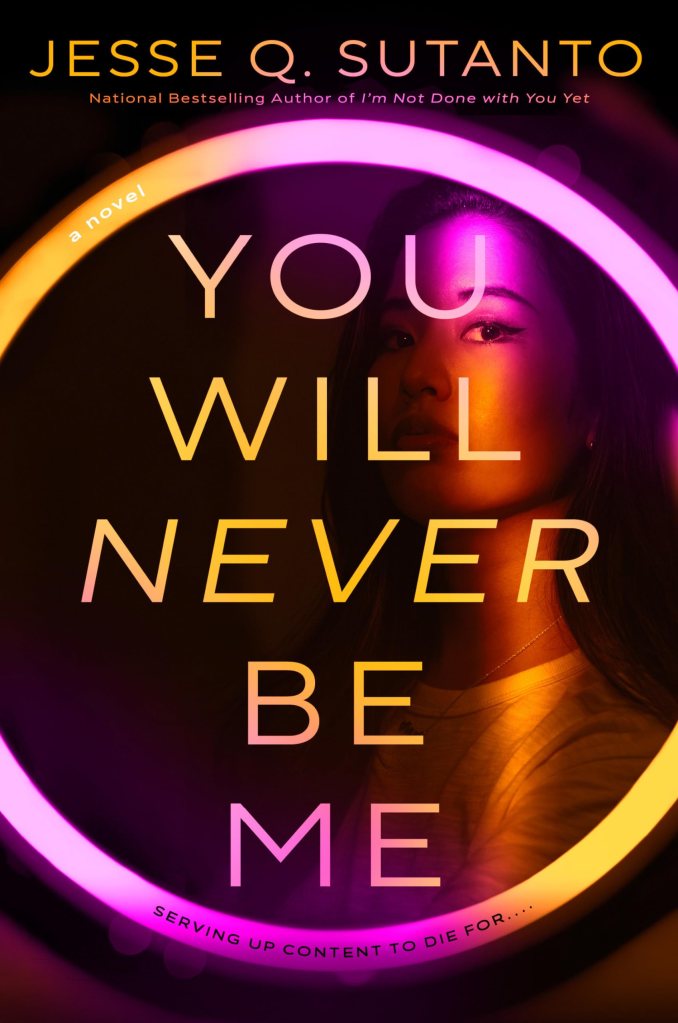
I had previously read Sutanto’s romcoms (the “Aunties” trilogy) and her delightfully silly mystery Vera Wong’s Unsolicited Advice for Murderers, so when I was looking for some lighter dark reading, I decided to try one of her thrillers. The library had this e-book on hand, and as a relative novice to Instagram with fewer followers than I would like (this is for my page featuring my portrait-painting), I thought it would be fun to read about some of the people who have made a true success out of their presence in such forums.
In some ways, it was fun; but I felt at a disadvantage with this book because, although the moms were supposedly besties in all things, the truth that they were jealous competitors who had trouble celebrating each other’s wins (particularly when one substantially overshadowed and outperformed the other) made both of them inherently unlikeable. And although I don’t mind villainous characters, I usually like it better when there is one sympathetic person in the story for whom I can cheer. You know, someone with at least one redeeming quality….
In the beginning, Meredith was the popular rising star and Aspen was the eager but slightly gauche fan. Before Meredith met Aspen, there was a friend-gap in her life; she was so busy trying to become popular to legions of online strangers that she didn’t have time to cultivate people in real life. But when she runs into Aspen at a Hollywood pretty-people party and realizes just how out of her depth she is, Meredith takes a shrewd look at Aspen’s potential and, flattered by her naive, awed admiration, decides to help her. She teaches her about hair and makeup, shows her how to make videos to entice both followers and sponsors, and gives her a leg up into Meredith’s world.
A few years later, Aspen’s star has risen exponentially, while Meredith’s influence has waned—her “brand” is a little tired, a little old. Aspen has crafted a new, polished look, married Ben, and given birth to darling twin girls Noemie and Elea; fueled by motherhood and the need to be the breadwinner in an unequal partnership (her husband is in real estate but not a player), Aspen has switched her brand to become a “momfluencer.” She films the daily routine, presenting herself and her family as living an idyllic existence—the twins always dressed in adorable matching outfits, every meal gourmet and served with panache, home decor curated to shine online. When you collect as many followers as Aspen, the deals for product placement follow, and the dollars flow in.
When Aspen gets pregnant with a third daughter, Meredith decides she has waited long enough for Mr. Perfect and chooses to become a single mother with the help of an anonymous sperm donor. While she wouldn’t go so far as to say she gave birth to baby Luca so that she, too, could go the momfluencer route, well…that’s what she has tried to do. But somehow she just can’t pull it off with the seamless brio of the successful and somewhat patronizing Aspen, who is too busy now to hang with her best friend Mer, drinking wine and gossiping as they used to do. The tables are turned; Aspen is on top, and Mer is, well, not either admiring or in awe. She resents Aspen’s success and especially her lack of willingness to share her ideas and methods the way Mer had shared with her when Aspen was the one at the bottom. Meredith discovers it’s not fun to be ditched, and finally, in frustration, she blows up at Aspen and says some unforgiveable things, and the friendship is over.
A few months later, Mer, who has been stalking Aspen (just a tiny bit, right? nothing serious) gets lucky. Little Elea leaves her iPad out on the patio where an enterprising person can appropriate it. Mer isn’t sure why she took it, but when she discovers that Aspen has created an online calendar that updates automatically onto all the family’s devices, she has access to Aspen’s social media schedule. At first she just tweaks things, causing Aspen to arrive late at a lunch date or forget to pick up the dry cleaning; but soon she is erasing meetings with sponsors and turning up in Aspen’s place to sign lucrative contracts. Meanwhile, Aspen can’t figure out what has gone awry—has the pressure of having to (appear to) be the perfect mom in front of millions caused her to lose her mind and her mojo?
Then something happens that turns the relationship on its head and sends Aspen’s and Mer’s story in a whole new direction…
It sounds like big fun, right? And some of it is. But until the twist 50 percent of the way through the book, there is a lot of snark. We don’t get to live through any of the harmonious early days of Meredith’s and Aspen’s friendship, we are instead dumped directly into the bitter rivalry felt by Meredith and the somewhat dismissive, too-busy inattention exhibited by Aspen. And neither of their lives is the shining example they present online because, let’s face it, motherhood is never that easy. Aspen and Ben have grown apart as he has become increasingly resentful of being on camera 24/7 (and having his nose rubbed in the fact that he’s not the breadwinner), while one of the twins is acting out like she’s 16 instead of seven. Mer is constantly exhausted by the unending round of nursing, changing, and being awakened by baby Luca, and upset by her inability to make more money and have the nice things Aspen has already achieved. None of the supporting characters—Ben, Mer’s sister Claire (or Clara? I could swear her name switched halfway through the book)—is a sympathetic one either. So the whole recitation becomes tiring if you are looking for some comic relief amidst all the anger and angst.
But…that twist. It makes things interesting. And there’s another one later on that takes things in an even more extreme direction. So although at 49 percent I was ready to give this book faint praise (not pan it, exactly, but not promote it either), it turned out to be a much better story than I had expected at the halfway mark. And it’s definitely eye-opening about the online popularity that people who want success must pursue. Although I wish I had the 17K followers my friend Phoebe has scored, and that I sold the bulk of my paintings the way she does, I’m certainly not going to be ruining a treasured friendship over it! (Even if I only have 879 people looking at my portraits today…) How DID she do that?
(If you’d like to follow me and save my friendship with the lovely
and talented Phoebe, you can find me at https://www.instagram.com/losangeles_melliott/.
I’m just sayin’…)
Presumption
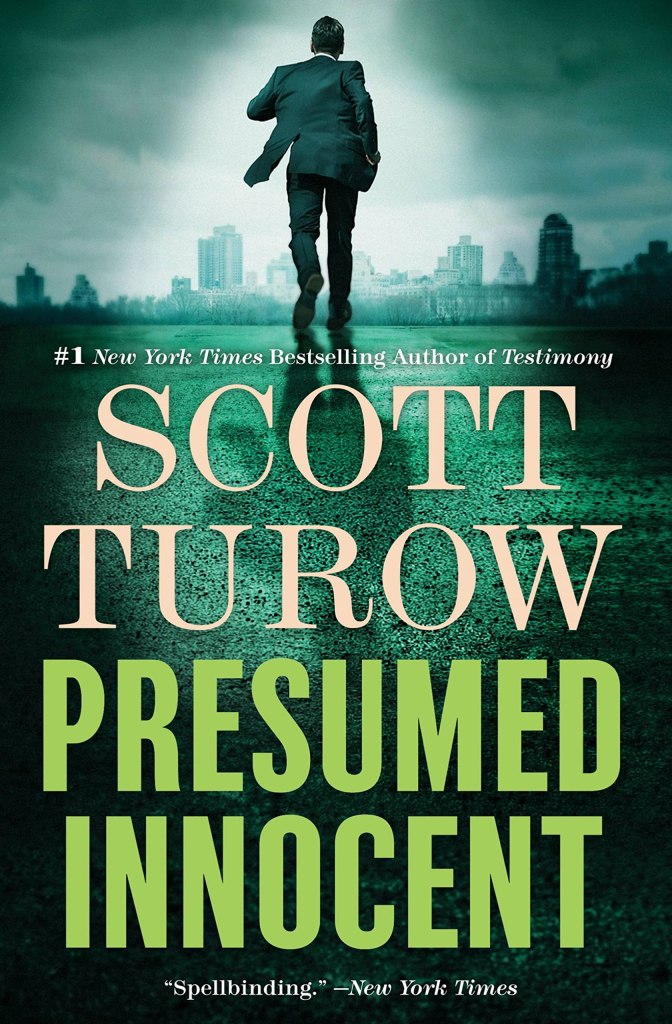
I recently watched the 2024 miniseries revamp of Presumed Innocent, based on the 1987 book by Scott Turow. I had seen the original movie, made in 1990, starring Harrison Ford, Raul Julia, and Greta Scacchi, so I was intrigued to see what Jake Gyllenhaal would make of the lead role as Rusty Sabich, and how an eight-episode miniseries would differ from a two-hour movie. My reactions were mixed: Gyllenhaal and Ruth Negga, who plays Barbara Sabich (the wife) were amazing in their roles; but I thought the woman cast as the notorious Carolyn Polhemus was so mundane and uninteresting compared to Greta Scacchi, for whom that role seemed to be custom-made, from her manner to her appearance.
Watching the miniseries brought up another whole series of questions, however; I believe I did read the book at some point, but the 1990 movie took precedence in my memory and the only way I really recalled the plot was from that. Since the miniseries has a couple of extra characters not in the movie, alters the gender of some of the original characters (which in one instance shifts the plot), and also ends differently, I was curious enough to find out whether I was remembering the book correctly by checking it out of the library for a re-read.
For those who don’t know the story: Rusty Sabich is the chief deputy prosecuting attorney, working directly under boss prosecutor Raymond Horgan, in 1980s Chicago. It’s an election year, and one of Sabich’s colleagues, Nico Della Guardia, is running against Horgan. Just a few months before the election, another colleague, Carolyn Polhemus, is murdered in her apartment, and Horgan, busy with the election, details Rusty to cover the case, hopeful that it will be a quick solve that will boost his campaign. It’s a complicated tale with a lot of stuff I don’t want to reveal because that is the main pleasure of the book—discovering the details as they unfold—but things get distinctly sticky for Sabich.
Turow has a pleasing way of combining suspenseful story-telling with the necessary legal details to create an engrossing courtroom drama. Although there were a few “wince” moments when it came to the language used around both racial and sexual identity (which surprised me a little, given when the book came out), I guess it’s easy to forget when certain language exited the approved lexicon of political correctness, and otherwise the book was not heavy-handed. Over all, it was enjoyable to experience the story one more time, and I confirmed that the first movie was more true to the book. That doesn’t take away from the impact of the miniseries, but it is a different kind of tale in some ways.
I have never read any of the follow-up books (I believe there are eight set in this universe, at least a few of them also starring Sabich), but I may do so now, because I enjoyed the characters Turow created and would like to see what happened to them after this part of their lives was over.
Wrapping up

This year it feels more like a winding down than a wrapping up. I read the fewest books in one year since I started doing the Goodreads Challenge 12 years ago. That year I read 75 books; my highest number ever was in 2019, when I read 159 books while working full-time from January to October (I retired from the library in October of that year). You would think it would be the reverse, since I have so much more time now than I did then; but there were some factors at play that ensured I would read a lot more then. First, I was running three teen book clubs, so I had to read one book per month for each club, plus a couple extra books in each age range (the clubs were 6th- and 7th-graders, 8th- and 9th-graders, and grades 10-12) so I would have ideas to propose as the following month’s read. I was also reviewing books for both the teen and adult library blogs (both of which I supervised), so I was heavily invested in spending all my spare time reading new teen and adult fiction to showcase there. And finally, of course, there was a certain amount of reading for my own particular pleasure! I basically worked, commuted, ate, slept, and read, and did absolutely nothing else!
Nowadays there are circumstances that tend to decrease my reading time: With my particular disability, sitting in one position for long periods of time isn’t great for keeping my legs at their best possible condition for mobility. I also watch a lot more on television these days, now that streaming services let you binge-watch an entire five-season show, one episode after another for as long as you can stay awake, as opposed to waiting for one weekly episode for a 12- to 20-week season and then waiting in turn for the following season. And I spend way too much time “doom-scrolling” political stuff online, or keeping up with friends on Facebook. Finally, once I took up painting I started spending at least a few days a week focused on making a portrait or two or a still life featuring items from my antique collection.
Anyway, this year I read a meager-for-me 66 books. Some of them were literary and some of them were chick lit, some were re-reads of beloved stories, and others were authors previously unknown. My statistics include:
23,782 pages, with an average book length of 360 pages
(shortest was 185, longest was 698)
Average rating was 3.6 stars
Some favorite new titles were:
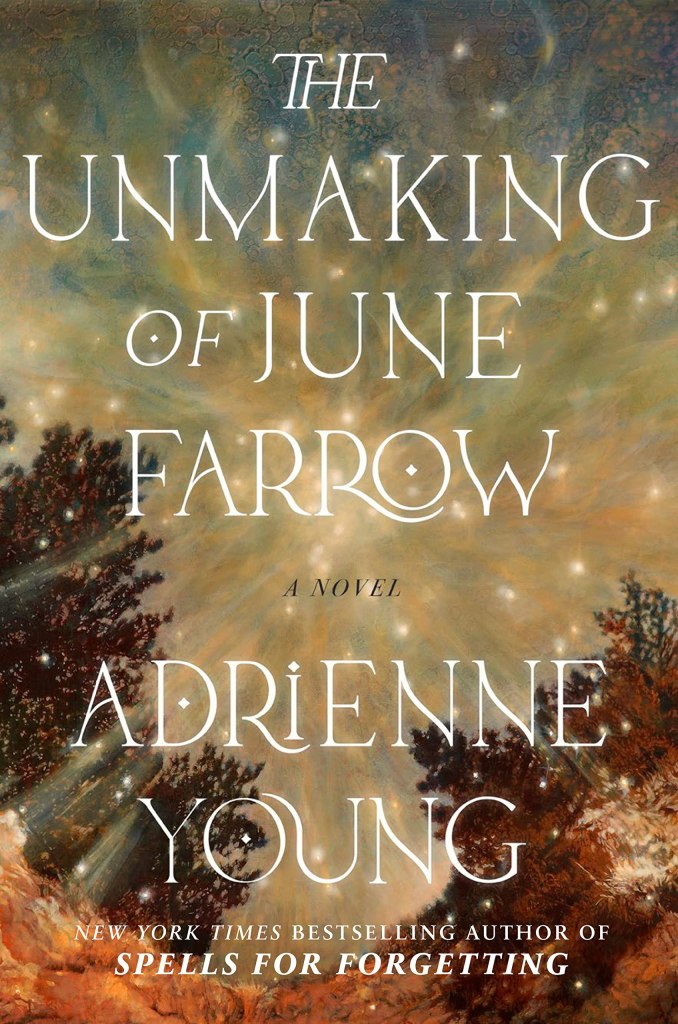
The Unmaking of June Farrow, by Adrienne Young
Starter Villain, by John Scalzi
Vera Wong’s Unsolicited Advice for Murderers, by Jesse Q. Sutanto
The Long Way to a Small, Angry Planet, by Becky Chambers
All the Dead Shall Weep, and The Serpent in Heaven, by Charlaine Harris
Found in a Bookshop, by Stephanie Butland
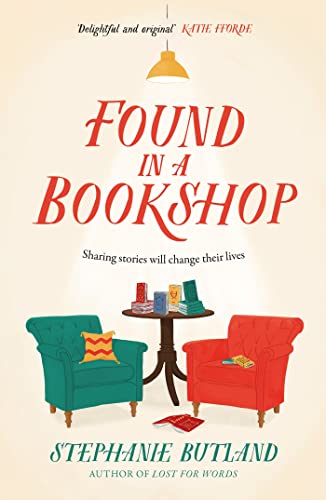
I felt throughout the year like I was having trouble discovering books that really resonated with me. Although I had some pleasurable reading discoveries, I never found that one book or series or author that really sucked me in and kept me mesmerized for hours at a time. I found myself reading during breakfast or on my lunch break and easily stopping after a chapter or two to go do something else, rather than wanting to settle in for a solid afternoon of reading. I’m hoping to find more compelling books in the new year. But reading continues to be one of my best-beloved pastimes.
Slog in the woods
I just finished The God of the Woods, by Liz Moore, and perhaps my headline has telegraphed my reaction?
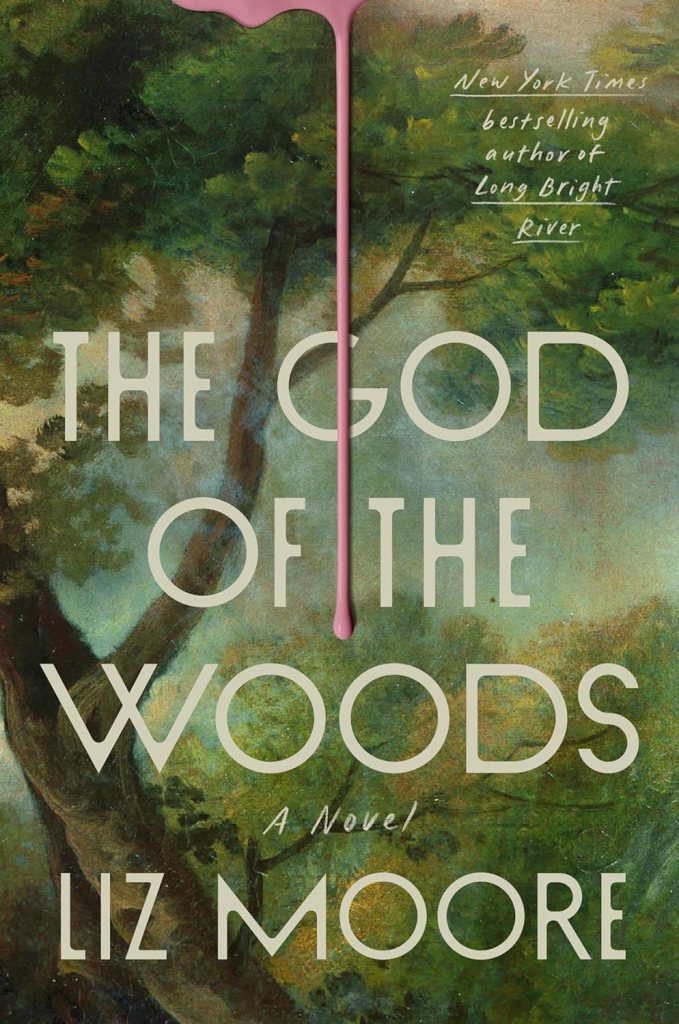
It’s not a bad book. It’s actually an intriguing story, at least initially. It takes place at a summer camp in the Adirondacks owned by the wealthy Van Laar family. This summer is the first time in three generations that any Van Laar child has ever expressed a desire to attend the camp, and ordinarily the family wouldn’t encourage their offspring to mix with the mundanes; but Barbara Van Laar has been such a problem for the past year or so that her parents are happy to put her in this controlled environment at a certain distance from home. She’s still close by—the camp is on one-half of the vast acreage owned by the family—but she’s not underfoot, sulking about in her all-black punk get-up, provoking her father and slamming doors, so all parties are happy with this solution. Until, that is, she goes missing.
Then we get the previous history of the family, which includes a son, Bear, who himself went missing (though not from camp) before Barbara was born, and was never found. A local man was blamed for his disappearance and assumed death, only to himself die before anything could be proved. The family believed he was the culprit, and let the whole thing go until Barbara’s disappearance sparks new interest in that similar set of circumstances, leading to speculation that someone else might have been at fault and is still out there preying on Van Laar children.
The problem is not with the storyline, it’s with how we glean each small morsel of information a teaspoonful at a time. There are seven points of view in this novel, and also a timeline that jumps from the ’50s to the ’60s to the ’70s (present day is 1975) to “day one” etc. of the search for Barbara, and both the narrator and the timeline switch in almost every one of the rather short chapters.
We get the story from the POV of Barbara’s camp counselor, Louise; from her bunkmate Tracy; from Bear and Barbara’s mother, Alice; from Judyta, a junior inspector on the case; from the widow of the presumed kidnapper of Bear; from the manager of the local motel at which the inspector is staying…. And it’s not just the current story regarding Barbara, or even the past story of Bear, it’s also the events leading up to the marriage of Alice into the Van Laar family, the relationship between that family and the managers (current and past) of the camps and with the police officers (current and past) of each investigation. The suspects include a boyfriend of Louise’s who is also the son of the Van Laars’ closest friends, who may have been double-dipping (or taking smorgasbord) in the pool of available females (including Barbara); we get the perspective of Jacob Sluiter, a serial killer (and an initial suspect in Bear’s disappearance) who has escaped from jail and is headed for the Van Laar preserve…kitchen sink doesn’t begin to describe the cast of characters here. The jumping around from person to person and era to era is disconcerting and ultimately offputting—or at least it was to me.
The resolution has a tender, ah-hah moment attached to it that made me momentarily soften toward the story, but there is also an implausibility about it that stuck with me longer than did that small detail, and I finished the book feeling frustrated—unsatisfied by the consequences meted out (or not) to various characters and dismayed by the cynicism surrounding the treatment of the rich vs. the “regular” people, even though I know that differentiation to be all too true in real life.
I do think that this is one of those books to which reactions will be diverse; certainly there are many people who adored it and gave it top marks. I will say that the writing is good, and the characters she develops beyond a certain point are believable and sympathetic; but much of the supporting cast struck me as cardboard clichés who took away from the total effect and made me wish they had either been developed more fully or left out altogether. I think a final pass by an editor determined to trim about 100 pages would have greatly benefited this book. It felt like the author couldn’t quite decide whether to write literary fiction, a mystery, or a full-on thriller, and cutting out some of the extraneous material might have propelled it towards a more defined identity. I was sufficiently engaged that I pushed to finish the book today before it went to the next person on the library check-out list tomorrow when my turn is up, but not so much that I will necessarily seek out this author again.
Darlings
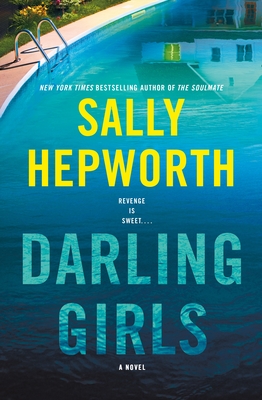
The title of this book is pretty good at pointing up the false affection shown to three foster children by a deeply narcissistic sociopath masquerading as a loving foster mother. I don’t have a lot to say about this book; I enjoyed it less than my favorite of Sally Hepworth’s (that would be The Good Sister) and more than my least favorite (The Mother-in-Law), so it falls somewhere in the middle with the others of hers I have read (three to date).
I did like the format Hepworth chose, in which we get the alternating point of view of each of the three foster sisters—Jessica, Alicia, and Norah—in adulthood and also in childhood (present and past). I didn’t care much for the psychiatrist session segments of the book, mostly because I was so uncomfortable with the way she wrote the therapist’s part (he was so repellent!), but it did render a little more intrigue as the story went on. I felt like the murder mystery was a bit generic—I mean, after we get an idea of who Miss Fairchild (the foster mother) is underneath her sugary sweet façade, it’s hard to believe any red herrings about who could have been responsible for the body buried under the house (that’s a minor spoiler, we find out about the body almost immediately). But the thought that the killer (if there is one) might get away with it definitely carried the suspense further, a good move on the author’s part.
I think part of the reason I didn’t love this book, apart from it feeling obvious in some respects, is that I didn’t feel a strong connection to at least one of the foster children (which turned out to have some basis in reality). I won’t say which one, because that would spoil things further. But it was a fairly engrossing read, and I think most people would find it a quite satisfying example of relationship fiction with a suspense twist. It also points up the ongoing problem of the way fostering is handled and the many opportunities for abuse of that system, which I appreciate.
Three stars out of five for me. But you might like it better.
Books to TV (or movie)
I am usually quite critical of how a favorite book is translated to television or movie form, and in the past I would most likely have favored the book over the visual version almost every time. But in this day of bountiful offerings on a dozen pay channels, the properties are bought and transformed at such a rapid rate that I have found myself getting to know stories and characters on my television screen ahead of reading their origin stories, and in some cases I have to confess that I have enjoyed them far more than I later did the books.
Some for-instances: The writing is sharper and more clever in Shonda Rimes’s Bridgerton than in the books, so much so that I didn’t even finish reading the first book. The racial themes and the character motivations depicted in the Hulu production of Celeste Ng’s Little Fires Everywhere were less enigmatic and more relateable than in the written version. And although I read it first and gave five stars to Liane Moriarty’s suspenseful and engaging Big Little Lies, I equally loved the HBO version for the sheer star power represented and how well they pulled the whole thing off.
I also have to give exceedingly belated and somewhat awed credit to the team of Denis Villeneuve, John Spaihts, and Eric Roth (co-writers) and Villeneuve again as the director of the new version of Dune. After suffering through David Lynch’s 1984 version and Sci-Fi Channel’s three-part miniseries in 2000, I found myself devoutly hoping that no one else would try to take on the depiction of this classic on film or television, but the new one feels, finally, like the intentions of Frank Herbert have been realized.
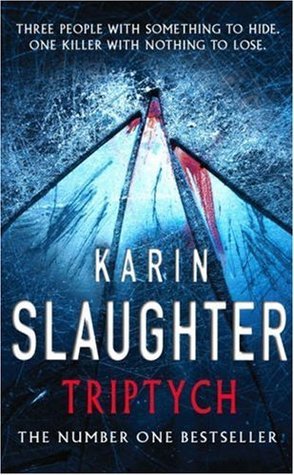
This all brings me to my latest book-vs.-television experience, which has been quite a bit bumpier and more jarring than anything I have yet mentioned.
I started watching the ABC TV show Will Trent with its premier episode, and immediately fell in love with the protagonist, his dog, and the rest of the excellent cast. I didn’t even realize, until near the end of Season Two, that the material came from a series of novels by author Karin Slaughter; the minute the season ended I decided I would spend the time until Season Three reading the original stories. And what a shock it was….
First of all, let me say what things are similar about the series. Will Trent and Angie Polaski grew up as lifelong friends in the foster child system. Will now works for the Georgia Bureau of Investigation (GBI), while Angie is a police officer (Vice) for Atlanta PD. Will’s boss is named Amanda, and she knows a lot about him. Her secretary’s name is Caroline. There is a police officer named Michael Ormewood. And there is a cheeky chihuahua named Betty, an adorable but somewhat ludicrous pet for Will. And…that’s pretty much it.
In the TV series, Will is short, compactly built, and Latino. In the books, Will is tall, blond, and blue-eyed, with significant facial scarring. In the TV series, Angie is tough on the surface but exceedingly vulnerable not too far beneath; she is struggling desperately to stay clean from a severe drug habit, and is involved with Will in a sexual relationship that occasionally verges on emotional. In the book, Angie is tough almost through and through, with a tiny bit of her left open to caring for her friend Will; they “broke up” almost two years ago, because Angie knows she’s not good for him and needs to leave him alone if he’s ever to achieve happiness with someone else. On TV, Will is almost immediately paired with Faith Mitchell as his new partner, while in the books she is still on the horizon by the end of book #1. On TV, Michael Ormewood is Angie’s partner on the police force and also works frequently with Will. He’s not entirely likeable, being reckless and kind of a chauvinist, but he’s basically not a bad guy. In the books, well, that would be a spoiler, but Ormewood isn’t who he seems. He’s also short, compact, and dark-complected in the books, while he’s tall, blond, and blue-eyed in the TV show—the exact opposite of the Will-to-Will transition! The only consistent character between the two mediums is Betty.

After having loved the TV show so much, I struggled for the first third of the book with the written versions of these characters. I came to terms most quickly with the character of Will, because despite the physical differences, the inside person is consistent, from the crippling guilt to the dyslexia to the brilliant insights, and the outside Wills both wear three-piece suits as armor. But I mourned the loss of the vulnerable friend/lover Angie, and when I read in the afterword that there is a “legitimate” love interest for Will starting with book #2, I wasn’t sure I wanted to continue. As for Ormewood…I don’t know how I can look at TV Michael the same after reading about Book Michael. By the end of Triptych I had subconsciously decided that it was worth continuing with Slaughter’s written version, but I honestly don’t think I’ll ever find these people either as likeable or as engrossing as the TV characters, and that’s a real departure for me!
Someone in my “Friends and Fiction” Facebook group told me that I should go back and read the series Slaughter wrote before she arrived at the first Will Trent book in order to thoroughly understand the back story; perhaps I will do that and see where it gets me.
Silence is golden

I picked up The Silent Patient, by Alex Michaelides, on the basis of a bunch of enthusiastic reviews by people on two Facebook reading group pages, and after finishing it, I have to ask…WHY?
I’m not going to use up a lot of space on this one. You may decide to read it anyway, and be as enamored of it as the many who gave it five stars on Goodreads. But here are my thoughts:
The main character is a psychotherapist, but his actions in this book lack any credibility, and in fact may well do a disservice to those who are considering therapy. It’s not the character himself (although I found him to be an unsympathetic one practically from the first page), it’s the lack of knowledge exhibited by the author concerning mental health diagnoses, treatments, and medications. Yes, it’s fiction, and in some instances I would say, Read it for the plot, the suspense, the twists, and don’t pay too much attention to minor inaccuracies; but this book goes too far. The drugs he mentions don’t act as he says they do. The treatment methods are slipshod and would never be tolerated by any facility for whom a licensed psychotherapist would work. The procedures in the supposedly locked and secure facility are laughable. The personal interactions between doctors and patients, doctors and doctors, spouses, and strangers on the street are not believable.
Aside from that, the characters are wooden, the plot is all over the place—including half a dozen unnecessary sub-plots that are nothing but blatant red herrings to distract you from what the other hand is doing—and there’s a fair bit of misogyny exhibited by most of the male characters, and uniformly negative portrayals of the female ones.
My headline for this review may be misleading: You could have taken it to imply that this book with “silent” in the title is golden, i.e., I’m recommending it. You would be wrong. While it may have turned out to be golden in terms of profits, my sole piece of advice would be to take it off your TBR list and breathe a sigh of relief that I saved you from wasting valuable leisure reading time.
Frivolous
The dictionary definition of that title is “not having any serious purpose or value.” You would think that at my age I would consider carefully the books on which I am going to spend my remaining reading time, and look for those that are worthwhile, or profound, uplifting, meaningful,, maybe educational; but it seems that I instead have the occasional need to abandon all thoughts of quality of phrase, good characterization, or realistic world-building to read something that is the snack food equivalent of Cheetos or Skittles. I believe there’s no type of book more addictive than a good thriller, and even the bad ones have the power to keep your attention if the plot points are sufficiently twisty. I proved that point to myself by reading The Housemaid, by Freida McFadden, and then the sequel, The Housemaid’s Secret.


This book has been touted on the “Friends and Fiction” Facebook page I have started to follow as a slightly more upscale version of the “What Should I Read Next?” crowd. The post-ers on F&F seem to read more, more varied, and generally better fiction, but the common denominator of “Oooh, I couldn’t put it down!” still prevails, regardless of quality. Here I am, sounding like a total snob, when one of the tenets of readers’ advisory is “Never apologize for your reading taste!” (Betty Rosenburg’s first law of reading, Genreflecting, 1982), and another is “There is no such thing as an objectively ‘good’ book.” While I try hard to refrain from shaming people for their book choices, what would a review blog be without a little gentle mockery now and then? Especially when it’s directed at myself…
The Housemaid and its sequel star Millie, a down-on-her-luck ex-con who’s trying desperately to find a job that will give her somewhere to sleep besides the back seat of her Nissan. Since she went to prison in her teens and stayed there for 10 years, she has few marketable skills; while she has done her share of fast food gigs, the holy grail at the moment is a job as a live-in housekeeper. The problem is, most people run a background check on someone they plan to hire to fill that role, and once they find out Millie’s past, they politely shut the door. But finally, Millie’s luck changes: Nina Winchester, beautiful and poised on the surface but giving off a bit of a weird vibe, offers Millie a position cleaning, cooking, and occasionally nannying for her little family—husband Andrew and daughter Cecelia—and Millie jumps at the chance. She rapidly discovers some disturbing nuances in the household, but beggars can’t be choosers, so she puts up with Nina’s foibles and her spoiled brat of a daughter, all the while trying not to covet Nina’s lifestyle, not to mention her handsome, soulful, and much put-upon husband. Then things take a dark turn…Dum Dum DUUUUUMMMMM!
The narrative in this book is first-person, and pretty much at the level of “Dear Diary.” It’s hard to tell whether the characterizations are kept purposefully opaque or whether McFadden is just not a good describer. The point of view switches around for sections of the book, but the voice stays a little bit too much the same. The plot twists are arresting, but some of the events on which they are based are laugh-oud-loud ridiculous, as in sitting in your chair reading along and then shouting “Oh, C’MON!” at the text as your cat bolts off your lap in terror. The redemptive value of bits of dark humor here and there can’t be overstated. But still…there’s something that keeps you reading. I loved how one Goodreads reviewer, Dan, put it in his synopsis:
This book is not as clever as it thinks it is. You probably won’t want to put it down. But you may be asking yourself what the hell you just read.
DAN, GOODREADS REVIEWER
As for the sequel, it is exponentially less believable than the first. And yet, I finished it and went looking on Goodreads to see when book #3 in this series will be published (June 2024). Let’s face it: Even Cheetos and Skittles can be addictive.

Psycho Thriller
Yes, “psycho” is an abbreviation for psychological thriller, but also…well, there are characters in this book that might qualify for the title without the abbreviation.
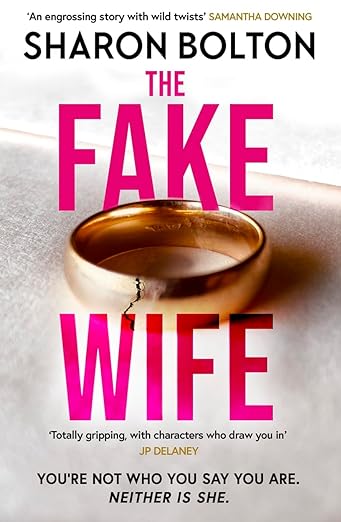
The Fake Wife was not my favorite Sharon J. Bolton thriller, but at this point Bolton is almost an automatic read for me. The book is certainly full of twists and turns, some expected and some definitely not. It’s complex and intriguing, but you really have to pay attention to know what’s happening at any given moment. There are multiple flashbacks from several characters to follow, and we get threads of the story from all directions—the victims, the perpetrators, the cops—that all weave together to gradually reveal what’s going on.
As the book opens, Olive Anderson is having dinner on her own in her hotel dining room in Hexham. A beautiful stranger walks up and seats herself at Olive’s table as if she belongs there, and then starts an elaborate game of pretense, engaging the waiter in banter and implying she is Olive’s wife. Olive is intrigued and decides to play along—it’s a lot more fun than sitting there by herself mulling over her marriage to Labour MP Michael Anderson. But as the evening goes on, the lighthearted pretense morphs into something else, and soon Michael is reporting Olive as missing and DS Lexy Thomas and traffic cop PC Garry Mizon are teaming up to try to solve what becomes an increasingly complex and bewildering situation.
This is an immersive domestic puzzle combined with a police procedural, adding more characters into the mix as the plot continues, with back stories that completely change what you were thinking at the beginning. It’s almost impossible to figure out who is telling the truth—if anyone is. The characterizations are excellent, and as for the setting, the beautiful but frigid winter scenery in the north of England provides both background and an extra sense of menace. If you like reading books that are set at the same time of year and in the same climate you are currently inhabiting, this is definitely a winter tale!
I’m kind of hoping Bolton decides to bring back the odd police couple in another book—their relationship provides both depth and humor in a story that is otherwise kind of dark. But if you enjoy dark (and confusing and exciting and suspenseful), this book might be a good one for your reading list.
 The Book Adept