Gunnie Rose continues!
At the end of my review of the third book in this series, I devoutly hoped there would be more, and I discovered last week that Charlaine Harris has come through with two more volumes while I wasn’t looking! Imagine my delight at getting to continue this entertaining dystopian historical fantasy mash-up for not one book but two!
You can read my entire review of the first two here, and the third one here, but just to quote myself to give a reaction to those too impatient to do so,
“This series is pure delight, from the elaborate world-building to the laconic Western flavor of Texoma, and the characters are so alive they could step off the page. Harris has written this with just the amount of detail you crave, without drowning you in either description or explanation, and the pace of this mystery/adventure story is perfect. The minute I finished the first book, I jumped without hesitation into the second one.”
You really should read at least my review of the first two, because it gives a thorough description of a rather complicated world-building exercise. But even there, Harris achieves the maximum in understanding with the minimum of detail. She is apparently no more a fan of the info-dump than am I, for which I am thankful.
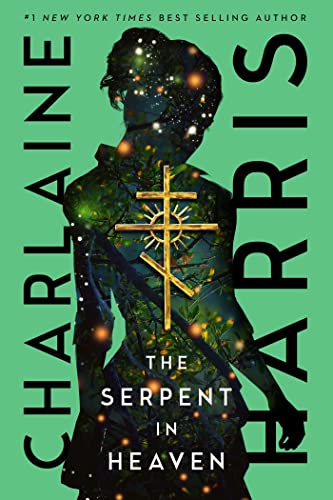
The fourth book, The Serpent in Heaven, picks up pretty much where the third left off; Felicia is now a school boarder at the Grigori academy in San Diego. She was initially admitted as a sort of honorary student because of the need to keep her safely squirreled away, since she is one of the few blood donors remaining who can save young Tsar Alexei’s life should he have a mishap (he’s a hemophiliac). But in this book, due to some unexpected hazards at the school, Felicia reveals the true scope of her wizardy powers and gets promoted to the “real” classes to learn to control, direct, and expand them, mentored by the curmudgeonly Victor.
This book was told from the first person viewpoint of Felicia herself, which added an extra element to the story, since in the course of her narration you get to know her much better and understand her background, upbringing, and level of skill. Lizbeth (Gunnie) and Eli are mostly missing from this chapter, because they have married and gone off to live in Texoma after the disastrous coup that disgraced parts of Eli’s family in the last book. We get news of them only through an occasional letter or telegram or word-of-mouth message. I thought this would be upsetting to the narrative, but I was completely absorbed in Felicia’s story and didn’t miss them, for the most part, compelling characters though they are.

Harris makes up for this in book #5, All the Dead Shall Weep, when Felicia, accompanied by Eli’s brother Peter, goes to visit Lizbeth and Eli in Texoma, mostly to get away from an ongoing threat of kidnapping by various factions who have figured out her value as a wizard and want to (either voluntarily or forcibly) marry her into their bloodline to amp up their descendants’ talent pool. But bad fortune follows Felicia like a hungry stray dog, and there’s also a new military rebellion beginning to muster, with which the sisters and their men must contend. This book is told by alternating narrators Lizbeth and Felicia, which was initially jarring when I didn’t realize the voice had changed, but actually really helpful in giving all the behind-the-scenes thoughts and feelings you craved from these characters.
And this fifth book ends on a truly ominous cliffhanger, historical in nature, which bodes well for more sequels, though ill for their contents! Still a fan. Check them out!
Third time continues the charm
I just finished Alix Harrow’s third full-length novel, Starling House, and was nearly as taken with it as I was by her other two (The Once and Future Witches, and The Ten Thousand Doors of January). That’s saying something—if you read my reviews, you will know how blown away I was by every aspect of those two amazing stories.

This one is perhaps not as original an idea as either of the other two; instead, it takes some trope stuff and makes it fresh and interesting. It’s a combination of a Southern Gothic fantasy/horror hybrid and a coming-of-age story, and has a lot of levels.
In some ways it is a commentary on the bigotry and trauma one encounters as an outsider in a small town, particularly a small “company” town in the deep South. This one is Eden, Kentucky, and the town’s reason for existence is the working of the coal mines owned by the Gravely family. The town and its residents are either singularly unlucky or the story of a curse is true, because a sadder and less hospitable place could scarcely be conceived. The supposed origin of the curse is tied up with the history of E. Starling, a 19th-century children’s book author who was married to one of the three original Gravely brothers, wrote a story about a creepy place called Underland, built a mansion for herself after her husband’s death, and ultimately disappeared. Starling House has since been host to a number of owners, all of whom show up just when the previous owner dies or leaves, but such is its unsavory reputation that the people of the town cross the road rather than walk on the sidewalk near its gates.
The book revolves around Opal, a young woman who has never caught a single break. Her mother died in a car crash when she was a child, and she and her younger brother Jasper have continued to live in the motel room where they landed shortly before her death. Opal works a minimum wage job at the local hardware store, trying to save enough money to get her brother, a smart young man with debilitating asthma made worse by the miasma that hangs over the industrial town, into a private high school far from the environs of Eden; but there’s scant hope of that until she gets a job as a cleaner for Arthur Starling. She’s heard all the rumors about both the house and its owner, but she’d do almost anything to get Jasper the chance he deserves in life, so she begins the task of bringing this house full of dust and cobwebs (and other, more sinister things) back to life. But the feeling of sentience she gets from the house and the weird vibes coming off of Arthur, who seems alternatively tortured, coldly aloof, and strangely sympathetic, are getting under her skin, and she’s wondering where it’s all going to end…
You could scarcely find a less likable protagonist than Opal, but she somehow endeared herself to me. Maybe it’s because every small victory she has is so hard-earned that it’s almost not worth it, and you can feel the palpable intensity of her longing for things to change and her simultaneous hopeless conviction that they never will.
The best thing about this book for me was the language. Admittedly, it’s sometimes over the top or overly descriptive, but there are moments that struck me so forcefully that I marked them in my notes on my Kindle. Alix Harrow knows how, with one phrase, to invoke a memory or even an entire phase of life, as with this one, where she is describing some symbols incised into the wood of a door:
The carved symbols are still very slightly luminescent, like glowsticks the day after a sleepover.
I read that one sentence and jumped back to a moment in childhood: We were in someone’s yard at dusk, at the end of a birthday barbecue. We all cracked glowsticks that had been passed out by the birthday girl’s mother, manically waving the neon tubes and dancing around, lighting up the dark. By the next day, most of the chemical inside the sticks had finished its reaction and was subsiding, but there was still a dim glow to them if you turned out the lights in a windowless room.
The biggest flaw in the story for me is the revelation that Opal is 27 years old. Her character, while honestly and intricately drawn, seems more typical of a teenager—16, 17, maybe 18 tops—than of a young woman approaching her late 20s. Honestly, this book works better as a young adult novel, both in its characterizations and in the way the story is couched in a particular kind of gritty magical realism. But since I am a big fan of good young adult literature (note the emphasis on good), that’s fine with me. I simply decided to forget Opal’s age and read it as it reads. There are other problems—unresolved plot points, underutilized characters, unexplained mysteries—but ultimately it all worked for me, with its beautiful prose, interesting characters, and slow-burn sense of menace.
The Horse Dancer
 I decided on a re-read this week, and picked one of JoJo Moyes’s lesser known books, The Horse Dancer. I enjoyed it enough the second time around to want to revisit (for my newer readers) the review I wrote in 2019 when I first read it.
There are three intertwined stories in this book—one in the past, the other two present-day. The first involves Natasha and her soon-to-be-ex-husband Mac. Natasha is an up-and-coming attorney in the area of child protective services, and channels all her repressed feelings about the end of her marriage into her work and her tentative new relationship with a shiny partner at her firm. Mac is a freelance photographer, and appears to be fairly happy-go-lucky and irresponsible next to the upright and uptight Natasha, but seems to have major regrets about the end of the relationship. The two are in the process of sorting out their mutual possessions and financial issues on the way to divorce when their paths cross with Sarah.
Sarah is a 14-year-old girl who has two major loves in her life: her beloved grandfather, Henri, with whom she lives, and her horse, “Boo.” Her grandfather was, in his youth, a professional rider for the prestigious Cadre Noir, a French dressage academy, but he gave it all up to come to England to marry Florence, the love of his life, recently lost to cancer. Sarah’s dream is to follow in her grandfather’s footsteps and ride with Le Cadre Noir in Saumur, France. Meanwhile, she and her grandfather train the horse in the shadow of an old railway siding in the seedy part of London, where they stable the horse with Henri’s friend, Cowboy Joe. When something terrible happens to Henri, Sarah discovers the fragility of her situation as a child with too many adult responsibilities, and tries her best to deal alone with all the potentially terrible outcomes.
I found this book tremendously moving in several areas. The relationship between Sarah and her horse brought back memories of being that age and wanting that special partnership so badly. (My grandfather, an impulsive bidder at auctions, actually gave me a horse for my birthday when I was 12—an unbroken two-year-old palomino
stallion—and my parents, dismayed by the thought of dealing with the housing, feeding, and exercising of him from the comfort of our suburban lifestyle, made him take it back. I can hardly remember ever feeling more heartbroken.) The scenes that depict the tie between Sarah and Boo are so viscerally and immediately written as to be impossible to resist.
The interplay between Mac and Natasha was painful and confusing, and there were parts I flat-out had trouble believing, but ultimately the idea of the walls we build to protect ourselves that do us more damage than those we built them against resonated with me. The picture Moyes paints of a teen girl who depends on her grandfather and no one else, and of what happens to her when she is thrown on her own resources and believes she must cope all alone, is poignant, real, and frightening. The back story of the grandfather’s youthful experiences in Le Cadre Noir gave the book additional legs. All in all it was a satisfying and touching, albeit somewhat dark, read.
This is a book that is written for adults, but it explores the adult-child (or adult-teen) relationship from both sides, given that it shows both Natasha’s and Sarah’s views of the proper way to deal with the situation in which they find themselves; and I think that there are teens who would appreciate and even benefit from reading this book. Natasha has to transform her view of Sarah as a frustratingly opaque, surly compulsive liar and see that she is a child adrift in an adult’s world who is convinced she has to be as strong and resourceful as an adult; while Sarah has to get past her view of Natasha as a controlling authority figure and see that she is doing her best to be helpful even though Sarah is keeping the bulk of her life secret from everyone. The thing Moyes gets right is that final push through misunderstanding that is essential to a true and lasting love, whether it be between a couple, a parent and child, friends, or a girl and her horse.

My year of reading: 2021
It’s New Year’s Day! Time to look back at all the books I read in the past 365 days, and reveal which were my favorites, which were the best books I read this year, and whether those are one and the same. Goodreads conveniently kept track of statistics related to my reading goals, so before I get specific, here are some of mine:
This year I read 132 books, which consisted of 50,676 pages.

The shortest was a Linwood Barclay novella of 81 pages, while the longest was one of the Robin Hobb Farseer fantasies at 914 pages. My average book length was 383 pages.
The most popular book I (re)read was Liane’ Moriarty’s Big Little Lies, shelved by almost 1.5 million people!
And now, here are some categories that highlight the year’s journey, from my memories of 2021 reads:
Most excited about:
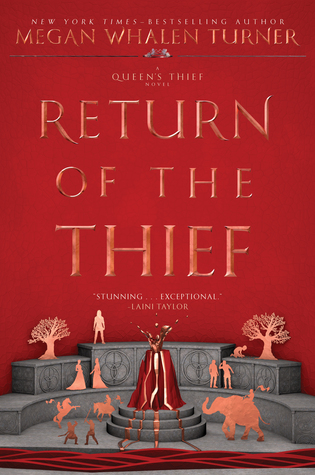
Return of the Thief, the conclusion to the Queen’s Thief series by Megan Whalen Turner, finally arrived, which gave me the perfect opportunity to enjoy re-reading this series for what, the fifth time? She published the first book, The Thief, in 1996! If you are looking for a nontypical fantasy immersion to start off your year of reading, pick up The Thief and savor the story through The Queen of Attolia, The King of Attolia, A Conspiracy of Kings, Thick as Thieves, and Return. It’s one of those series that gets exponentially better as it goes along.
Best discoveries (in any genre):
ROBIN HOBB. I got lost for a month or more in three of her Farseer high fantasy trilogies, and still have two more on my TBR list, which I hope to get to early in the year.
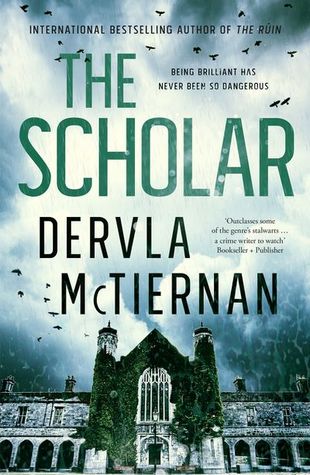
DERVLA McTIERNAN: A wonderful new mystery series writer with books set in Ireland
Best science fiction discoveries:
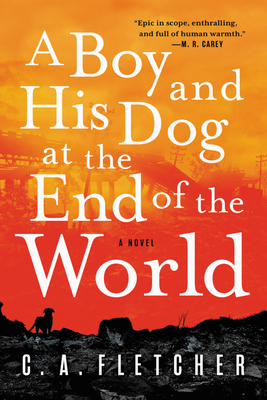
A Boy and His Dog at the End of the World, by C. A. Fletcher
A Psalm for the Wild-built, by Becky Chambers (first in a series still to come)
Both of these would fit best into the dystopian category.
New time travel:
The Jane Austen Project, and The Dream Daughter, both from unlikely authors…
New fantasy I loved:
The House in the Cerulean Sea, by T. J. Klune
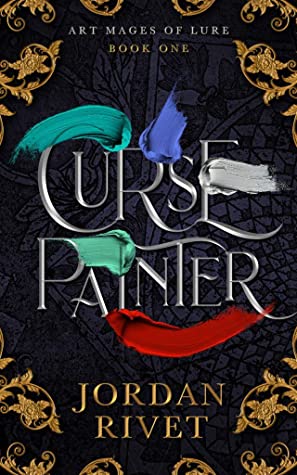
The Art Mages of Lure series, by Jordan Rivet (Curse Painter is the first book)
Most memorable read:
All the Ugly and Wonderful Things, by Brynn Greenwood
Most affecting mainstream fiction with an historical backdrop:
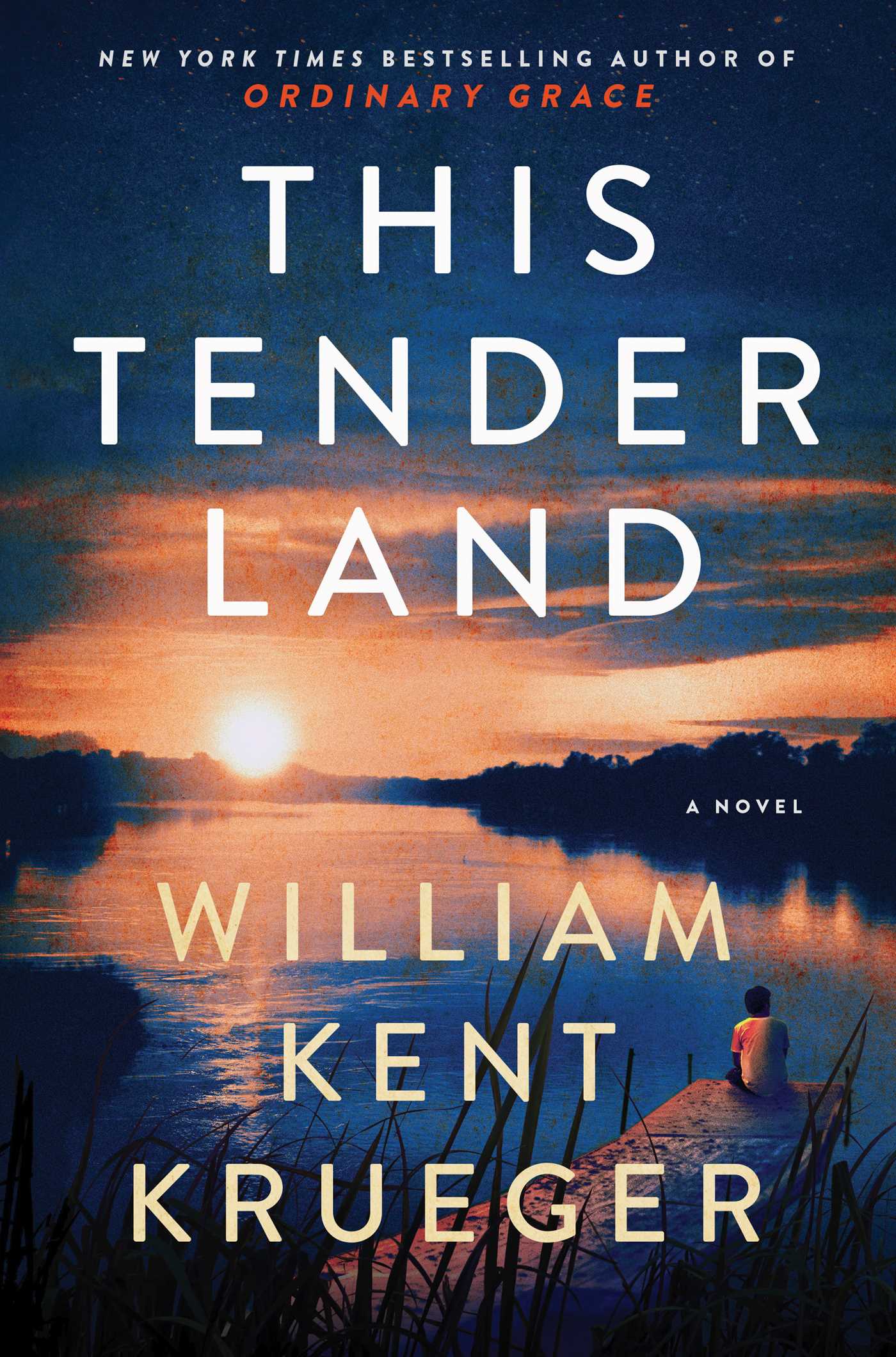
This Tender Land and Ordinary Grace, by William Kent Kreuger
Continuing fan of:
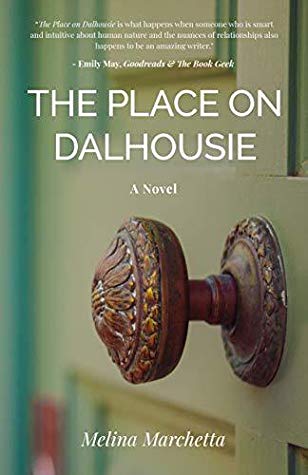
Melina Marchetta for The Place on Dalhousie
On board with the rest of the crowd:
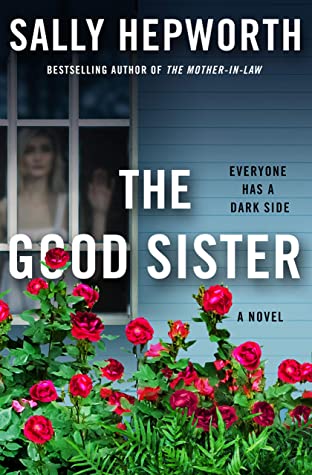
Author Sally Hepworth, with The Good Sister being at the top of the list.





And that about covers the highlights of my year in reading! I have written/published reviews of most of the books I mentioned here, so if anything piques your interest, go to the search box (“Search this site” at the top right under my logo and description), put in a title or an author, and find out why I called out these favorite books.
The birthday of the world

…is the title of one of Ursula K. LeGuin‘s short stories, and today is (or would have been) Ursula Kroeber LeGuin’s 91st birthday (she passed away in 2018 at age 88). I am moved to talk a little about her legacy on this significant date because she is one of my favorite authors and has had a profound affect on both my reading tastes and general philosophy over the decades since I began devouring her stories, novels, essays, and writing manuals.
LeGuin was the first woman to win both the Hugo and Nebula awards for her fantasy and science fiction, going on after that to win seven more Hugos, five more Nebulas, and 22 Locus Awards. In 2003 she was honored as a Grand Master of the Science Fiction and Fantasy Writers of America, after a controversial career in which she defied many of the traditions of this organization and its members.
She was perhaps best known for her fantasy series about the land of Earthsea, which embraces the theme of equilibrium in a coming-of-age saga, and for her extremely forward-looking book about gender and identity, The Left Hand of Darkness; but she wrote more than 20 novels and 100+ short stories, as well as poetry, essays, translations, literary criticism, and children’s books. Prominent social and political themes ran through most of these, including race, gender, sexuality, and political/social structure, and her named influences were varied: cultural anthropology, Taoism (she made her own translation of the Tao Te Ching), feminism, and the work of Carl Jung.
Some of the seminal ideas in her books include the concepts of equilibrium or balance, the reconciliation of opposites, and the necessity for leaving things alone, exploring sociology, psychology, and philosophy through her characters’ experiences. Likewise her writer’s voice was distinct, using unconventional narrative forms. Literary critic Harold Bloom described Le Guin as an “exquisite stylist,” saying that in her writing, “Every word was exactly in place and every sentence or line had resonance.” According to Bloom, Le Guin was…
…a visionary who set herself against all brutality, discrimination, and exploitation.
Harold Bloom
If you are unfamiliar with her writing, I urge you to seek it out. I have probably read the original three of the Earthsea trilogy half a dozen times (and the subsequent sequels at least thrice), and I re-read her book The Dispossessed, a moving personal treatise on anarchy and utopia, at least once a decade. Her Hainish novels are delightfully engaging story-telling, and the last one, The Telling, was the catalyst that sent me off to library school in my late 40s. Her short stories, mainstream fiction, and poetry are likewise intriguing, and as an essayist she can’t be topped. Introduce yourself to her books, or recall the ones you remember fondly and revisit them as a tribute to a giant of literature with, as author Michael Chabon wrote after her death…
the power of an unfettered imagination.”
michael chabon

Marchetta’s latest
I was first introduced to Melina Marchetta when I was a young adult librarian. Although she is probably best known in YA circles for her books Looking for Alibrandi and Saving Francesca, or perhaps her Printz-award-winning On the Jellicoe Road, all of which identify as realistic / contemporary fiction, I first encountered her in the guise of a fantasy writer, with her series the Lumatere Chronicles. We read the first book, Finnikin of the Rock, for high school book club in 2010, two years after it was published, and although I enjoyed it quite a bit, I didn’t really recognize the brilliance of her prose until she came out with the two other books in the trilogy—Froi of the Exiles, and Quintana of Charyn. I won’t go into the details of what the series is about (it’s kind of complicated), but these books are filled with heartache, pain, adventure, mystery, magic, and madness, and the characters, world-building and story-telling would be hard to surpass. It’s one of those series about which I tell people: “You have to read the first one in order to know what’s happening in the subsequent books, but those make it well worth the effort.”
After having read nearly all of Marchetta’s YA books, I was pleased to see, in 2016, that she had written her first for adults. And although Tell the Truth, Shame the Devil contains a bunch of teenagers as significant characters, it is from the adult viewpoint that the story unwinds, and the adults in the story have the typical hard time fathoming the teen mindset. The book was primarily a suspense novel (reviewed here), which proved to me that Marchetta can write pretty much anything successfully.

I was pleased, then, to pick up her latest offering, The Place on Dalhousie, published in 2019 but just discovered by me. It is contemporary fiction, focused on relationships (both romantic and familial), and is fully as compelling, if somewhat more low key, as anything else she has written.
The book is a little bit confusing at first, because there is a “time out of time” quality to the meeting of two of the protagonists. Rosie is living in a small town on the coast of Queensland, serving as caregiver to an elderly woman, and the two are caught up in a natural disaster when the town is flooded. Jimmy Hailler is also by chance in a kind of time-out there, and it is his work helping to save the stubborn villagers from the rising waters that brings he and Rosie together for a cautious two-week interlude fueled by the disaster. Then Rosie returns to Sydney to her childhood home, which is in dispute: Her father built the house for she and her mother, Loredana, but her mother died of cancer when Rosie was 15, and her father married Martha 11 months after Loredana died, sending Rosie off in a fury. A few years later her father also died, and now she is in a standoff with her hated stepmother over the ultimate ownership of the house.
The story picks up 15 months later, when Jimmy tracks down Rosie and arrives on the scene to discover Rosie living upstairs, Martha downstairs, and a battle raging about whether to sell the house. Rosie, a prickly, difficult young woman at the best of times, is suspicious of Jimmy’s motivations in finding her so long after she initially reached out to him, and the remainder of the book, centered on families both interconnected and divided, compromise, love, and identity, proceeds slowly and cautiously to explore not only their relationship but those of almost everyone involved. I don’t want to give away too much, because a huge part of the enjoyment of the book was in discovering the details as you went along. But there are great characters here (she writes women of all ages particularly vividly), and a lot of humor and pathos in the telling of their stories
I thought Jimmy’s name sounded familiar, and when I checked reviews I soon realized that he was one of the characters introduced in Marchetta’s book Saving Francesca, when he and the others were in high school, and the one character of the group notably missing from the sequel, The Piper’s Son. Many refer to him as the most sympathetic or compelling character, and are thrilled to see him turn up in a later incarnation. You don’t have to know any of that or have read the other two books to enjoy this one—it definitely stands on its own. But for those who loved the YA books, this is a culmination of those stories, and some also hold out hope for additional books with the others—Frankie, Tara, Tom, Justine, and Siobhan—as protagonists.
If you do feel moved to read the two YA novels as foundation, you won’t have wasted your time. Marchetta’s writing is severely underrated outside her native land, and it would be lovely to think that I have convinced more people to appreciate her fully.
Crossover nuances
I was trying to decide what genre would next receive attention for possible summer reading recommendations, as August winds down. Some people who are turned off by traditional fantasy (quests, medieval societies, talking animals, etc.) are hooked by what some designate as urban fantasy—a story that takes place in a contemporary setting with “normal” people, but eventually fantastical creatures or events invade that space and change it or them. I started pondering, then, what crossovers there are with urban fantasy—so often, paranormal creatures are the fantasy part of urban fantasy, so I looked to my paranormal list to see what fit and what didn’t within that broader category. It also crossed my mind that works of magical realism could, in some cases, twin as urban fantasy. So this will be a mashup of all of those, which, while technically being separate genres, share the characteristic of something “wyrd” intruding on everyday life. (It is obviously not comprehensive, since that would take a post five times as long. But hopefully it is a representative offering.)
The first urban fantasist who comes to mind when thinking about that genre (at least for me) is Charles de Lint, a writer who sets all of his stories in the fictional Canadian city of Newford. People refer to his work not only as urban fantasy but as magical realism and mythic fiction but, whatever you call it, it’s compelling. He has written at least two dozen books that are consciously numbered Newford #1-21 etc., but many of his nondesignated works also take place in and around that city and its anomalies, as well as several collections of short stories featuring characters from various novel-length works.

I have enjoyed reading most of his books, but my two favorites are Memory and Dream, and Trader. Memory and Dream takes place mostly in flashback: It begins with the story of an artist, Isabelle Copley, who has retreated from the city to an island where she isolates herself and paints only abstract works; but in her youth, she was a vital part of the art scene in and around Newford, and studied with a master painter who abused her but also taught her a method of painting that could (at least theoretically) bring the subjects of her portraits to life. Trader is about a musician and craftsman (he makes musical instruments, mainly guitars) who is going through a bad patch in which he has no joy in life and no appreciation of his situation. Across town, there is another man who is going through an actual (rather than psychological) life crisis generated by his own bad behavior—he’s a gambler and a cheat, and has just been evicted from his home with only the clothes on his back. He has come into possession of an Inuit artifact and, as he goes to sleep that night, he clutches it in his hand and wishes hard for his life to get better, just as the other man is wishing the same. In the morning, everything has changed for both of them.

While de Lint’s books are filled with both events and characters who are out of place in their everyday environment, his are based on myth and legend (mostly from the Original Peoples), with archetypes such as Coyote and Crow (as well as more whimsical made-up characters) making appearances. But the next writer who springs to mind—Seanan McGuire—has much more crossover with the paranormal genre than with magical realism, because her unorthodox characters are mostly scary supernatural creatures—were-people, sentient snakes, monsters that cause those bumps in the night. The protagonist and her family call them cryptids. The early books take place in New York City, where Verity Price (a cryptozoologist) is working in a bar while trying to become a competitive ballroom dancer. But she keeps getting drawn into conflicts between the native cryptids, both advocating for and fighting on their behalf for their right to life against the monster-hunting society called the Covenant of St. George, whose members are dedicated to wiping out the monsters one and all, regardless if they are talking mice or dragons in the subway system.
In addition to these InCryptid stories, McGuire writes another urban fantasy-ish series called Rosemary and Rue, around the protagonist October Daye, a half-human, half-faerie changeling who keeps getting burned by both sides of her heritage. It is set in San Francisco, and is about the remains of the fae (faeries) who exist in the cracks of that city and keep intruding on its existence, sometimes in nefarious ways. Although McGuire has a lot of fans for this series, I found it wordy and tedious compared to the witty, light-hearted tone and fast pacing of the Incryptid books.

Finally, McGuire has a new series about which I have raved in reviews on this blog: the Wayward Children books. They are compact little gems of literary writing based around the fascinating premise that some of the children who disappear every year into the back of the wardrobe or under the faeries’ mound on the heath or down the rabbit hole have been kicked out of their alternate worlds back to this real one, and their sole desire in life is to return to whatever world they discovered when they walked through that mirror. Eleanor West runs a Home for Wayward Children that takes in these unhappy souls; their parents believe that West is attempting to re-acclimate them to their mundane life in this world, but Eleanor’s secret goal is to aid them in finding their way back to the magical lands they long for.

A couple other well-known urban fantasy writers are Jim Butcher, who writes the engaging Dresden Files, about wizard Harry Dresden, who consults with the Chicago P.D. whenever a crime seems a little “out of this world” to be solved by a mundane police force; and Charlaine Harris, who has written full-on paranormal (vampires as a part of everyday life in the Sookie Stackhouse books) and also has been more restrained (as in the wonderful Harper Connelly series, about a woman who was struck by lightning and can, as a result, stand on someone’s grave and tell you how they died). Harris has recently extended her imaginative worlds into both alternate history and dystopian fiction with her Gunnie Rose series, which is also urban fantasy with the inclusion of wizardry by Russian and British practitioners.
There is some debate about whether Melissa Albert‘s books The Hazel Wood and The Night Country should be included in the urban fantasy category, since they are predominantly new fairy tales. But the fact that the protagonist and her mother live in the real world while her grandmother, who wrote a cult classic book of dark fairy tales, has thus created the Hinterland, a parallel land into which the protagonist ultimately travels, makes this duology a candidate for both.
It is difficult—and sometimes arbitrary—to differentiate between urban fantasy and paranormal as two different categories, and after thinking it through, I have decided for myself that the paranormal books only qualify as urban fantasy if the urban setting and mindset predominate. In other words, the scene is first and primarily set in the real world, and the fantasy intrudes upon it to the surprise of the characters living in that setting.

One young adult duology that I adore that qualifies in both categories is Lish McBride‘s Hold Me Closer, Necromancer, and its sequel, Necromancing the Stone. While both books are filled with all sorts of paranormal critters, the first book starts out in a commonplace setting and with an all-too-characteristic protagonist. Sam lives in Seattle, still at home with his single mother despite having graduated high school. He’s not exactly a loser, but he lacks focus and ambition; rather than going to college, he has chosen to continue working in the fast food joint where he and his friends have a light-hearted routine of playing “potato hockey” in the back parking lot during slow periods. But when a potato flies out of control and smashes the headlight on a brand-new Mercedes, Sam comes to the attention of Douglas, a scary dude who turns out to be the neighborhood necromancer and reveals to Sam that he, too, has this “gift.” Douglas is threatened by the presence of what he sees as a rival for his territory, and gives Sam an ultimatum; but Sam, baffled by this amazing discovery, feels helpless to know what to do. Fortunately, his mother, his uncle, and even some of his friends have abilities that can help him out of his dilemma.
Another young adult author who specializes in the urban fantasy/paranormal mashup is Maggie Stiefvater. Some, like her Wolves of Mercy Falls books, fall more heavily on the supernatural side, with setting being instrumental (the necessity of a cold climate) but not primary, while others, such as her Dreamer books, feel a lot more like urban fantasy. The Raven Cycle, four books set in the small town of Henrietta, Virginia, straddle the line between urban fantasy and legend. All are intriguing and beautifully written.

Then we come to the crossover with magical realism. Urban fantasy and magical realism have the connection that there are uncanny things happening within a mundane setting; but in magical realism, the setting is often not as important, and this is seen by some as the dividing line. Who could argue, though, that it wasn’t crucial for the book Chocolat, by Joanne Harris, to be set in the straight-laced French village of Lansquenet, with its narrow-minded mayor and contentious residents? Or that the events in Practical Magic, by Alice Hoffman, would have had the same impact had they not taken place in the Massachusetts town where the Owens women had been renowned for more than 200 years as witches? Or that the events of Once Upon A River, by Diane Setterfield, would have differed significantly had they not been centered on an ancient inn on the banks of the river Thames? Looking through my list on Goodreads of the 50+ books of magical realism I have read, these are three that stand out for their significant settings, while the others could most of them have happened anywhere, as long as it was within this ordinary world and featured extraordinary events or characters. But you can see that there are commonalities that can be significant.
The bottom line for me is that all of these permutations contain the wonderful premise that there are things taking place around us in our everyday lives that, could we only look up at the right moment and see them happen, would change everything in a heartbeat. I love this premise and, therefore, the books that promote it, be they classified as magical realism, paranormal fiction, or urban fantasy. I hope you will find a book or two from this blog post that appeal to you in the same way they have to me.
2020 Faves
I don’t know if anyone is dying for a reprise of my favorite books of 2020. Since I am such an eclectic reader, I don’t always read the new stuff, or the popular stuff. Sometimes I discover something popular three years after everyone else already read it, as I did The Hate U Give this past January (it was released in 2017). Sometimes I find things that no one else has read that are unbelievably good, and I feel vindicated by my weird reading patterns when I am able to share it on my blog. But mostly I just read whatever takes my fancy, whenever it comes up and from whatever source, and readers of the blog have to put up with it.
Anyway, I thought I would do a short summary here of my favorite reads for the year, and since they are somewhat evenly populated between Young Adult and Adult books, I will divvy them up
that way.
YOUNG ADULT DISCOVERIES
Fantasy dominated here, as it commonly does, both because fantasy is big in YA and because I am a big fantasy fan. I discovered a stand-alone and two duologies this year, which was a nice break from the usual trilogy and I think worked better for the authors as well (so often the middle book is weak and the last book is rushed in those cases).
The first was The Hazel Wood and The Night Country, by Melissa Albert, and although I characterized them as fantasy, they are truthfully much closer to fairy tale. I say that advisedly with the caveat that this is not the determinedly nice Disney fairy tale, but a real, slightly horrifying portal story to a place that you may not, in the end, wish to visit! Both the story and the language are fantastic, in all senses of the word.
The stand-alone was Spinning Silver, by Naomi Novik. The book borrows a couple of basic concepts from “Rumpelstiltskin,” turns them completely on their heads, and goes on with a story nothing like that mean little tale. There are actual faerie in this book, but they have more to do with the fey creatures of Celtic lore than with any prosaic fairy godmother. It is a beautifully complex, character-driven story about agency, empathy, self-determination, and family that held my attention from beginning to end.
The second duology was The Merciful Crow and The Faithless Hawk, by Margaret Owen, and these were true fantasy, with complex world-building (formal castes in society, each of which has its own magical properties), and a protagonist from the bottom-most caste. It’s a compelling adventure featuring good against evil, hunters and hunted, choices, chance, and character. Don’t let the fact that it’s billed as YA stop you from reading it—anyone who likes a good saga should do so!
I also discovered a bunch of YA mainstream/realistic fiction written by an author I previously knew only for her fantasy. Brigid Kemmerer has published three books based on the fairy tale “Beauty and the Beast” (and they are well done), but the books of hers I fell for this year were about typical teenagers with problems that needed to be solved and love lives that needed to be resolved. My favorite of the four was Letters to the Lost, but I also greatly enjoyed More Than We Can Tell, Thicker Than Water, and Call it What You Want.
These were my five-star Young Adult books for 2020.
ADULT FICTION
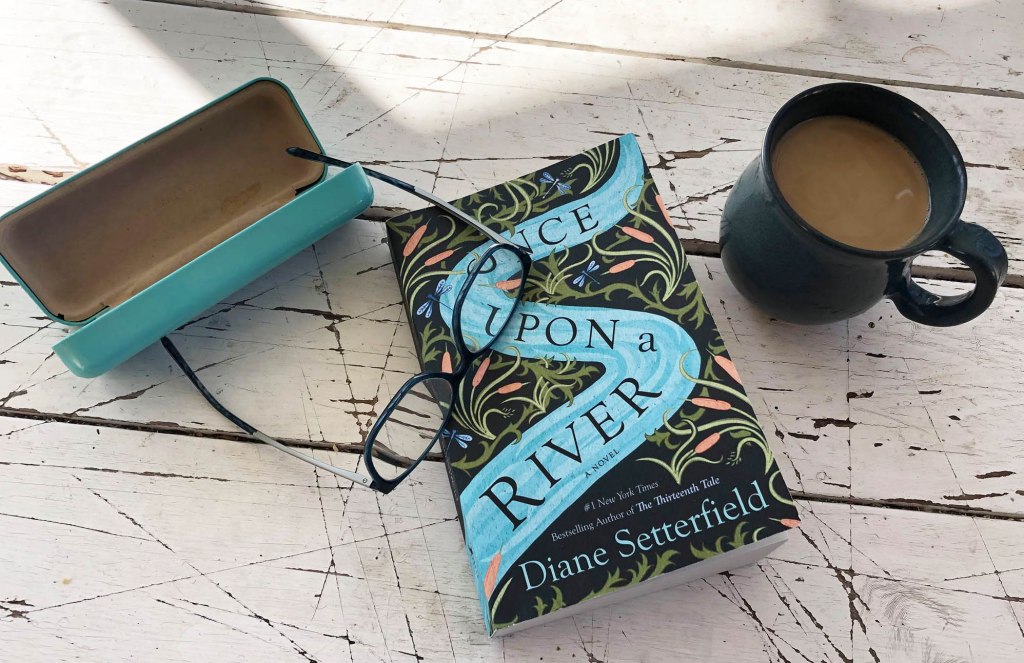
As YA selections were dominated by a particular genre, so were my books in Adult fiction, almost all of them falling in the mystery section. But before I give you that list, I will finish up with fairy tale by lauding an original adult story that engaged me from the first page and has stuck with me all year: Once Upon A River, by Diane Setterfield. The fairy tale quality is palpable but the archetypal nature of fairy tales doesn’t dominate the story, which is individual and unique. It is the story of three children and the impact of their disappearances (and possible reappearance) on the people close to them, as well as on the inhabitants of one small town beside the river Thames who are caught up by chance in the events that restore a child to life. But the story encompasses more than her fate: It gives extraordinary insight into the issues of life and death—how much they are worth, how they arrive, how they depart, and what is the best way to pursue them.
Another book I encountered in 2020 that didn’t fall into the mystery genre or belong to a series was the fascinating She Rides Shotgun, by Jordan Harper. This was a short, powerful book by a first-time author, a coming of age story set down in the middle of a dark thriller that bowled me over with its contradictory combination of evil deeds and poignant moments.
And the last stand-alone mainstream fiction novel I enjoyed enough to bestow five stars was Just Life, by Neil Abramson. The story showcases the eternal battle between fear and compassion, and involves a deadly virus and a dog shelter in a fast-paced, gripping narrative that takes over the lives of four people. It made me cry, three times.

Most of the mysteries I enjoyed this year came from a “stable” of staple authors I have developed over the decades and upon whom I rely for at least one good read per year. The first is Louise Penny, whose offering All the Devils Are Here in the ongoing Armand Gamache series is nuanced, perplexing, and utterly enjoyable, all the more so for being extracted from the usual Three Pines venue and transported to the magical city of Paris.
Sharon J. Bolton is a reliable source of both mystery and suspense, and she didn’t disappoint with The Split, a quirky story that takes place over the course of six weeks, in stuffy Cambridge, England, and remote Antarctica. Its main character, a glaciologist (she studies glaciers, and yes, it’s a thing) is in peril, and will go to the ends of the earth to escape it…but so, too, will her stalker, it seems. The Split is a twisty thriller abounding in misdirection, and definitely lives up to Bolton’s previous offerings.
Troubled Blood, by “Robert Galbraith,” aka J. K. Rowling, is my most recent favorite read, and is #5 in that author’s series about London private detective Cormoran Strike and his business partner, Robin Ellacott. It’s a police procedural with a lot of detail in service of both the mystery and the protagonists’ private lives, it’s 944 pages long, and I enjoyed every page.
Finally, this year i discovered two series that are new to me, completely different from one another but equally enjoyable.
The first is the Detective Constable Cat Kinsella series by Caz Frear, which currently encompasses three books. I read the first two earlier in the year and promptly put in a reserve at the library on the third (which had yet to be published at the time), and Shed No Tears just hit my Kindle a couple of days ago. They remind me a bit of Tana French, although not with the plethora of detail, and a bit of the abovementioned Sharon Bolton’s mystery series starring Lacey Flint. Cat is a nicely conflicted police officer who comes from a dodgy background and has to work hard to keep her personal and professional lives from impinging one upon the other, particularly when details of a case threaten to overlap the two. I anticipate continuing with this series of novels as quickly as Frear can turn them out.
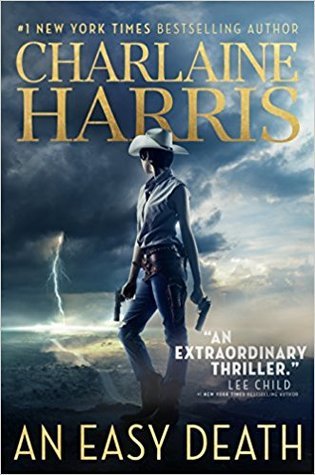
The second, which is a mash-up of several genres, is Charlaine Harris’s new offering starring the body-guard/assassin Gunnie Rose. I read the first two books—An Easy Death and A Longer Fall—this year, and am eagerly anticipating #3, coming sometime in 2021 but not soon enough. The best description I can make of this series is a dystopian alternate history mystery with magic. If this leads you to want to know more, read my review, here.
These are the adult books I awarded five stars during 2020.
I hope you have enjoyed this survey of my year’s worth of best books. I am always happy to hear from any of you, and would love to know what you found most compelling this year. I think we all did a little extra reading as a result of more isolation than usual, and what better than to share our bounty with others?
Please comment, here or on Facebook, at https://www.facebook.com/thebookadept. Thanks for following my blog this year.
And a timely sequel
I previously enthused here about The Merciful Crow, by Margaret Owen, and mentioned how excited I was to move on to the sequel, The Faithless Hawk. I picked that book up this week, and right away discovered two things I liked about it:
- It continued to be timely, in the same weird way as was the first book, as far as its association with current events is concerned;
- Although I had thought (I think because of the title of #2, which didn’t seem to indicate finality) that this was going to be a trilogy, it turned out to be a duology, complete in two books. I wouldn’t have minded reading more about these characters, but the second book was as tightly and dramatically written as the first, and you couldn’t ask for a better wrap-up. Since so many times a trilogy turns out to have either a weak second book or a rushed-to-be-completed third one, I was satisfied and happy with the arc of this two-book story.

The second book picks up about a month after the first one left off; Fie’s troop of Crows are still on the road, and they’re taking her Pa to a Crow way station, which is the equivalent of retirement. He will live there and provide safety and supplies for all Crow troops who seek sanctuary. While at his designated way station, Fie meets with an enigmatic caretaker who is supposed to be the contemporary stand-in for the mythical god “Little Witness.” But to Fie’s surprise, awe, and unease, the person she meets is the actual Little Witness, and she hints things to Fie about her past and her future that are truly disquieting. One of them is that Fie has not yet fulfilled her contract with the Covenant, which she thought she had met by saving Prince Jasimir and bringing him to the General who is keeping him safe while championing his cause. But apparently Fie’s indebtedness to the Covenant goes back many lifetimes and is, in fact, the reason why the Crows roam friendless on the roads.
Just when Fie is absorbing all of this, she and her troop learn of the death of the king, Surimir, by Plague, and they decide to make their way to the Prince, who is with General Draga and her son Tavin, Fie’s love (and the Hawk of the title). A short time after they reunite, however, they are all thrown into dismay and confusion by the machinations of Queen Rhusana, who will do anything to ascend the throne. Once again Fie realizes that the fate of the kingdom may rest on her unready but stubborn shoulders.
In The Merciful Crow, the focus was much more on the journey (both physical and metaphorical) made by Prince Jasimir, Fie, and Tavin, discovering more about the current situation of the kingdom and about each other, and specifically cultivating the romance between Tavin and Fie. By comparison, The Faithless Hawk focuses on a bigger picture: the system of magic, the history of the various castes’ birthrights, and politics in general. This book really fleshed out the world-building, but it didn’t neglect its characters; we also get to learn more about Fie and start to fathom why she is such a central character to this conflict.
The content I mentioned at the top of this review—about its being timely and in synch with current events—has to do with the examination of the entire system of governance, caste, and society. One character remarks,
“We made a society where the monarchs could ignore the suffering of their people because it was nothing but an inconvenience, and we punished those who used their position to speak out.”
I don’t want to give away the entire plot here, but a seminal part of this story is how the characters come to realize that if this world is going to work for everyone, simply substituting a new ruler at the pinnacle of the government probably won’t serve. The rules and systems need to be examined, and must adapt, change, or be abolished in order to make things safe for all people going forward. In The Faithless Hawk, it takes the predations of an unexpectedly corrupt ruler and the threat of a worldwide plague to make that plain.
Some trigger warnings about this duology: There are seriously gory, disgusting scenes with realistic and thorough descriptions of what has occurred; and the use of teeth in their form of magic/wizardry is creepy/troubling (especially to those of us with dental anxiety to begin with). But the books are well worth a few squeamish moments for their powerful portrayals. I hope this immersive fantasy gets the attention
it deserves.
Cross-genre delight
One thing you learn when becoming a readers’ advisor is,
you can’t be a book snob. Some people pride themselves on only reading “worthy” or “classic” or “literary” fiction. Others believe that while mainstream fiction is legitimate, anything that falls within a genre description is somehow less-than. When you read so as to address the interests of every type of reader, the fortunate outcome is that you discover there are “worthy” books—that is to say, engaging, well written, and with something to say—within every category of fiction.
I have wondered whether I should bother reviewing older books here, or whether I should just be addressing newly released works, to keep up with the ever-changing whims of contemporary readers. My conclusion so far has been that it’s all right to cover older reads, because no matter how long ago they were written, they will be new to someone.
Today, I just finished rereading Bloodhound (Beka Cooper #2), by Tamora Pierce. Pierce is much beloved by many fantasy readers, and has been incredibly prolific in the number of books and series she has written that are all set in the kingdom of Tortall. Tortall is a semi-feudal land populated by knights and ladies (and some knights who are also ladies), master craftspeople and master thieves, commoners both honest and corrupt, and the supernatural creatures who also make an appearance. The gods are definitely present (though mostly in subtle ways) in Tortall.
Rather than write one long series with a particular cast of characters, Pierce has broken down the Tortall legend into small “cycles” of three or four books each, that come at the world and its events from many different perspectives. While all these novels are immensely popular with a wide variety of people from 10-year-olds to the elderly, it does seem to me that the earlier books were specifically written to appeal to middle-school teens. Although many adults read them, there is a large percentage who do so out of nostalgia, because they read Pierce as a child and want to revisit the world of Tortall.
The first thing I like about the Beka Cooper series, therefore, is that while the books are completely teen-friendly and accessible (and are, indeed, marketed to teens), they are written from a much more adult viewpoint. While Beka, the narrator, is a young woman, she is more woman than girl, and the others with whom she interacts are likewise more mature. This is yet another in the growing list of teen fantasy series that could equally well (or perhaps more successfully) have been marketed to adult fantasy readers.
The second thing I like about the series is that it so fluidly combines medieval fantasy with mystery and police procedural, using a memoir format—basically, all my favorite genres rolled into one. The characters (and there are many) are engaging, the situations are surprisingly sophisticated (how many young adult novels expound on the effects of counterfeiting on a nation’s economy?), and the mysteries are well paced and satisfying. Beyond this, Pierce has exerted herself to provide a made-up language, reminiscent of the “thieves’ cant” you find in Regency romance novels, that give the books a particular flavor. The inclusion of this lingo also cleverly circumvents any criticisms she might get from parents who ban language and sexuality by expressing things that she couldn’t do in a teen book if she put them in contemporary English. Pierce has taken pains to spell out the differences in rank from that of the King in his palace down to the lowliest gixie picking pockets amongst the slums. There is no difference made in the characterizations between children, teens, and adults in terms of attention to detail, and while Beka remains firmly the main character, the people with whom she partners, the neighborhood from where she rose to the police force, and the “coves and mots” she encounters in the course of her work are all given a real existence. Finally, the books feature strong female heroines, a welcome departure from some fantasies.
 Terrier, the first book (released in 2006), takes us away for the first time from the lords and ladies, knights and squires of the other series and introduces Beka Cooper, an orphaned 17-year-old with some special gifts that lead her from the Lower City (the worst neighborhood) of Tortall into a career as a “Dog,” or police officer, in the Provost’s Guard. She is assigned as a trainee (“puppy”) to two veterans, Tunstall and Goodwin, and proves herself as an officer who hangs onto a case like a terrier until it’s solved.
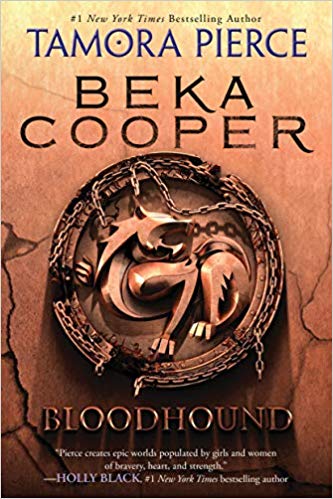 In Bloodhound (2009), her second year on the force is also documented in the pages of her journal, and it’s quite a ride. As a new Dog, she is matched up with four different partners who don’t work out, and she ends up instead working solo with Achoo, a scent hound she rescues from an abusive handler. She and Clary Goodwin, one of her former training partners, are then sent by the Provost General, Lord Gershom, down the river to Port Caynn, on a secret investigation to discover who is behind the spread of counterfeit silver coins that are destroying the economy. She falls in love, falls afoul of the Port Caynn Rogue (Queen of the thief caste), and earns her new nickname as she doggedly (pun intended) pursues the solution to the case.
 The third book, Mastiff (2011), is equally compelling. Three years after their mission in Port Caynn, Clary Goodwin has finally opted to promote to a (stationary) command position, and Beka is now paired with Goodwin’s former partner (and her other former training officer), Tunstall. Beka has suffered a recent tragedy—her fiancé, a fellow Dog, has been killed while pursuing slavers—and she doesn’t know how to go on, mostly because she was on the verge of breaking up with him when he died, and now she’s feeling guilty for receiving unwanted attention as the grieving almost-widow. But an assignment abruptly pulls her away from her familiar surroundings and sends her, her partners both human and canine, and a strange mage assigned to their team on a hunt the outcome of which will determine the future of the Tortallan royal family and government. As with the second book, the pacing ramps up as the Dogs get closer to their quarry, and unexpected elements throw several wicked curves into the story before it ends.
 There have been two things against this series when I talked it up to others: The first was the truly abysmal cover art on the original paperbacks, which was actively ugly and made it almost impossible to “sell” these books to anyone (especially teenagers). The photographic image chosen to represent Beka was both laughable and disrespectful. The recent re-release of this series with new covers may give it a chance; if you are a librarian reading this, please consider immediately replacing your originals with the new versions!
The second is the supernatural element, which I sometimes completely leave out of my descriptions. When you say that a book is about a girl who gets messages from the recently dead by listening to pigeons, and who also gathers clues by standing in the middle of dust devils and picking up bits of conversation the dust devil has been hoarding, people look at you like you’re crazy!
This fantasy series has so many facets and is so hard to adequately describe that I don’t often find myself promoting it to anyone—but after rereading #2 on impulse this weekend, I decided to make another pitch, because these books are a worthy, intriguing, and entertaining addition to the mainstream fantasy canon.
 The Book Adept