I’m fine

That’s everyone’s socially acceptable response when someone asks “How are you?”, right? But how often is it actually true?
My initial reaction to the first third of Eleanor Oliphant is Completely Fine, by Gail Honeyman (despite some clues in the opening pages that would have led me elsewhere had I been paying sufficient attention), was that it reminded me of The Rosie Project, by Graeme Simsion. Socially awkward protagonist with no friends, wedded to routine, on whom a random suggestion acts as a catalyst to start changing things up, check. Protagonist meets someone completely outside their wheelhouse and makes an unexpected connection, check. But that’s not quite how this book ended up going. The two books share a sense of humor, and their protagonists share the quality of being literal and inept at human relations as they attempt to navigate their way through life. But the reasons behind their similar states are different, as are the resolutions.
There are lots of books out there (fiction and nonfiction) about various kinds of mental health issues. Not many of them, however, address the situation of loneliness as either a cause or an outcome. Eleanor believes that she is completely self-sufficient—after all, her physical needs are being met, and in all her years in the foster care system she didn’t get a chance to indulge any emotional needs, or even recognize that she had any. But when she has two chance encounters that change her focus, these events and the people connected with them worm their way into her formerly solitary existence and begin to show her that she had very little idea what a full life could be like.
Eleanor is, in many ways, profoundly broken, and her metamorphosis depends on courage that she wouldn’t have found without making some human connections, but it is not a romantic book, for which I was grateful. This is a book about Eleanor, and Gail Honeyman doesn’t fall into the trap of leading her out of her unhappiness by making her fall in love—in fact, quite the contrary. Her story is told in a tender, sweet, and humorous way that isn’t manipulative and never descends into mawkishness, that pulls both Eleanor and the reader out of melancholy into hopefulness. I was impressed that this was the author’s debut novel: The language, the characters, and the world in which she places them are smart and engaging, and she writes with confidence.
I have encountered only a few books that, the minute I turned the last page, I wanted to go back and re-read to see what I missed or to re-experience the emotions brought forth by the story. This was one of them.
Note: This was a re-read for me—I originally read this in 2018 and had the impulse to revisit it. The above was my review from 2018. Nothing materially changed from the reread, except that I found the book, if anything, more emotionally moving. If you enjoyed this book as I did, you might also like to read The Good Sister, by Sally Hepworth.
My Year in Books 2025
I managed to read quite a few more books this year than last (95 to 2024’s 66), but I don’t know that I realized much advantage from doing so, beyond just clocking the reading time. My stats, according to Goodreads, were:
95 books
28,425 pages read
Average book length: 346 pages (longest book 908 pages!)

Although I discovered some enjoyable reads, there wasn’t one single book that truly bowled me over or made me immediately check out another book by that author or settle in to read a lengthy series. And most of the books I did like were the lightweight ones that I ended up reading as a sort of relief between the tougher titles. Here’s a list:
The Lost Ticket, by Freya Sampson
The Busybody Book Club, also by Freya Sampson
Vera Wong’s Guide to Snooping (On a Dead Man),
by Jesse Q. Sutanto
Finlay Donovan Digs Her Own Grave, by Elle Cosimano
My favorite science fiction book was The Road to Roswell, by Connie Willis.
My new discovery in YA fantasy, with an intriguing Egyptian-like setting, was His Face is the Sun, by Michelle Jabes Corpora. I look forward to the sequel(s).
I read a few books that were award-winners, or by well-known literary authors, or touted by other readers as amazing reads, but found most of them problematic in some way, and therefore didn’t feel wholeheartedly pleased to have read them. They were:
James, by Percival Everett
The Seven Husbands of Evelyn Hugo, by Taylor Jenkins Reid
Horse, by Geraldine Brooks
The Mare, by Mary Gaitskill
Horse Heaven, by Jane Smiley
Three Days in June, by Anne Tyler
Gentlemen and Players, by Joanne Harris
These have all been reviewed on this blog, so do a search for the title or the author if you want the specifics. None of them received a thumbs-down, but none of them lit up my imagination either.
The most disappointing part of the reading year was the letdown I felt each time I finished the next book in a bestselling series I had previously enjoyed. I read two books by Michael Connelly—The Waiting, and Nightshade—and had a “meh” reaction to both. The Grey Wolf, by Louise Penny, didn’t deliver the characteristic Gamache love, and was filled with tangents and extraneous story lines. Perhaps the least successful (for me, at least) was The Hallmarked Man, by “Robert Gabraith,” aka J. K. Rowling, which was so endlessly convoluted that I felt the need to reread it—but so long, wordy, and unsatisfying that I didn’t! I’m really hoping these authors rally in the new year, but it’s more of a “fingers crossed” than an actual expectation.
Honestly, my best and most sustained reading took place when I got fed up enough to revisit beloved books from decades past by such authors as Rumer Godden, Georgette Heyer, and Charlaine Harris.
Today I am starting on 2026, two days ahead of schedule! Onward, readers!
Public, secret lives

I finally got around to reading The Seven Husbands of Evelyn Hugo, by Taylor Jenkins Reid. Although she has written some other well-received books (Daisy Jones and The Six, Carrie Soto Is Back), this was the first of hers I have read. I’m always a bit skeptical about reading “popular” books, because I have been let down so many times by the promise created by all the hoopla, but I have to say that this one actually surpassed my expectations.
For those who have managed to avoid the book clubbers’ raves and have remained oblivious to this book, the basic outline is this: Evelyn Hugo is a Hollywood icon in her late 70s—retired, wealthy, and reclusive—who made it out of Hell’s Kitchen in the 1950s as a teenager and did whatever it took to become a Hollywood film star. Some of that meant entering into marriages for a variety of purposes that included true love, lust, ambition, politics, and money. Her relationships helped to shape both her career and her legend, but the men she married weren’t all of them the most important people to figure in her life—there is a story behind all the stories, and this is what Evelyn, now alone for many years, is ready to reveal while she still can.
She selects as her biographer a young journalist, Monique Grant, for reasons that are somewhat but not wholly connected to Monique’s writing abilities (and that’s another story) and gives her exclusive access. They spend days and nights together as Evelyn unpacks her entire glamorous and scandalous life—all the turning points, decisions, triumphs, and tragedies—until she finally reveals something that sets Monique back on her heels.
I’m not going to say much more about the story, because it’s one of those that you need to experience for yourself as you go along, rather than having it wrapped up in a couple of summarizing paragraphs. I will say that Jenkins’s writing style and the creation of the character and story of Evelyn are so evocative that you feel like you’re in the room with her as she tells it, as well as accompanying her to every movie set, red carpet, shop, motel, mansion, beach, or city street. It’s an enthralling look at Old Hollywood with its studio contracts and glitzy movie stars. The narrative creates a rich tapestry woven of ambition, betrayal, love, and a search for identity and authenticity. It’s full of historical detail and paints a colorful picture of the woman, her companions, and their backdrops.
My one caveat is that I would have liked to know just a little bit more about Monique Grant. Although we do get her basic story line, her character is so eclipsed by that of Evelyn that you tend to forget she’s in the room until Evelyn says “let’s stop there for today” and someone else’s hand reaches out to turn off the recording device.
Aside from that, I was captured and fascinated by this book and character from beginning to end, with no detail feeling extraneous. That’s a rarity, in my experience.
Memorable
I just finished Say You’ll Remember Me, by Abby Jimenez, and it seems that I am among the few who enjoyed it more than some of her other popular titles. I think I did because it was a simple story with mostly believable obstacles that came from real-world issues and not from elaborate mind games on the part of its protagonists.
The problem I frequently have with these contemporary relationship novels is that they require so much suspension of disbelief. Every trope comes with its moment where you think “Oh, c’mon, nobody would be that obtuse!” So often there are massive misunderstandings that keep couples apart, but the story relies on the reader accepting that, despite being in a relationship, these people never talk to one another, that they make blanket assumptions they don’t check out, then refuse to believe credible evidence, etc., and after a while I become impatient that I’m reading a book whose whole premise depends on two people not initiating one simple conversation.

This one was refreshingly different. It did have its flaws—but for the most part it felt believable to me.
Samantha has been living in Minnesota, having been drawn there for her work. She finds and decides to adopt a kitten, and takes it to a veterinarian who gives her advice she absolutely does not want to take. She is incensed by his attitude, which feels defeatist, and decides to prove him wrong, but when she actually pulls it off, she is surprised to discover that he readily admits he was mistaken and apologizes. Then Dr. Xavier Rush asks her out. Since his revised attitude comes along with Greek god-like good looks and a particular intensity that appeals to Sam, she decides to accept. They have one absolutely perfect date, and then everything blows up. Samantha had learned that her mother’s early-onset Alzheimers is advancing at a rapid rate and realized that she needs to be spending time with her and helping her family with her mom’s care, and she is scheduled to move back home to California the very next day.
That’s the real-world conflict that keeps them apart: geography and bad timing. They resolve to forget what might have been if they could have continued seeing one another…but neither Sam nor Xavier seems able to move past their undeniable connection.
The problem is, neither can change their circumstances to make a move. Xavier just opened his veterinary clinic a couple of years previous and is in debt for the start-up in an amount greater than he could get for selling it. And he can’t just hire someone to work there and run it in his absence, because he can’t afford to pay them—he’s been living on the leftovers after the loan payments are made, but no one else would do that. He’s stuck in Minnesota until circumstances change, but that could take a decade. And Samantha can’t and won’t shirk her responsibilities and cut her ties just to be with him.
But having a long-distance relationship with the burdens under which each of them is operating is nearly impossible, and although they give it a try, the thought that this situation might last for years is so daunting that neither of them is happy.
What happens when the person you have realized is “the one” for you can’t be in your life for more than a weekend every three months?
There were some features of the story that were less believable than others, and it does bog down in the middle when the angsty stuff becomes somewhat repetitive, but the attention to the details of Xavier’s back story, Samantha’s relationship with her family, and their undeniable chemistry when together keep it going. If you’re looking for a less formulaic relationship story, try this one.
Through-story
I ran out of time and out of steam before completing Jane Smiley’s Horse Heaven this week, and didn’t make it to the finish line. To tell the truth, I lost impetus before the library due date arrived, and switched to another book.
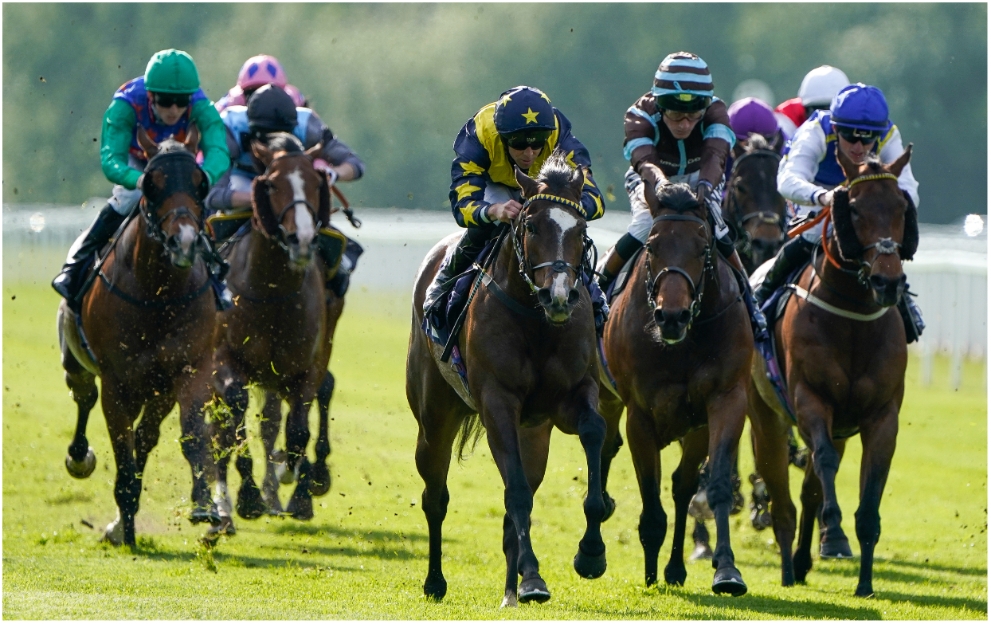
It’s not that I disliked Horse Heaven; in fact, the stories, characters, and language are actually quite wonderful. But that’s what it seems like—not a novel, but a series of short stories, strung together because they are all about the same subject—horses and all the people who surround them (owners, trainers, jockeys, etc.) in the racing business. And while I love horses and stories about them, I have never been a short story person. Short stories are, to me, like all the worst parts of starting to read a new book, with none of the payoff of getting to enjoy it once I’m invested.
As I kept going, the anecdotes and vignettes were beginning to add up, and I had hopes they would eventually converge into something, but it was taking a long time. I liked the picture she was painting, but a “through story” never developed, so the book didn’t drag me along in the way a novel would, making me want to know what would happen next.
While “through-story” isn’t a concept commonly used in readers’ advisory when we talk about appeals, maybe it should be. Without it, a compelling quality of story—momentum—is missing, and without momentum some readers have trouble getting to the end of a book. Even those of us who revel in language, character development, and world-building can have trouble with a book essentially lacking a plot—that ordered sequence of events that includes exposition, conflict, rising action, climax, falling action, and resolution. While a plot may exist in Horse Heaven, its presence is so diffuse as to be indiscernible (at least to me).
After reading it for at least an hour a day for about a week, I received an email notice from the library that my book would be due in three days. I felt sure I was getting close to the end, or at least the three-quarter mark, and could beat my deadline, but when I checked the page count on my Kindle I discovered that I was at page 267 out of 543! At that point I decided to go read something (shorter) with a beginning, middle, and end that is all of a piece. I’ll come back to Horse Heaven someday when I’m in a different mood.
Three hours in June?
I just finished Anne Tyler’s book Three Days in June. I picked it up because it kept popping up everywhere on people’s faves lists; I knew I had read Tyler before, but it was so long ago that I didn’t remember what, so I looked at her bibliography and was surprised to find that I had actually read three—The Accidental Tourist, Dinner at the Homesick Restaurant, and Breathing Lessons. Since these were all written back in the 1980s, it was long before Goodreads was available to keep track of thoughts and ratings and, frankly, I hardly remember any of them. (A LOT of reading has been undertaken since then, at a rate of 50 to 150 books per year for about 35 years.) But I did remember thinking they were good, so I confidently picked up this latest, published this year.

Hmm.
Here’s a synopsis: A socially awkward mother of the bride narrates her experience on the day before, the day of, and the day after her daughter’s wedding. The book follows Gail as she grapples with her feelings about the past, the present and, possibly, a different future.
Well, first of all, although the book is billed as “a novel” right on its cover, it’s 165 pages long, which I believe qualifies it for novella status. The technical definition is in words, not pages, but if you ask Google to convert it to pages, it comes out to “between 70 and 160,” so I guess technically she made it by five pages? Yeah, no. It’s a novella. Which is what I referenced by saying “three hours in June” in my title—actually, I think it took less than that to read it.
Some people raved about this very thing, by saying that Anne Tyler writes what is necessary and no more. I guess you could make that case; on the other hand, another reviewer said “feels like half a novel.” I have to confess I was torn; in terms of length, I wanted more, but not if these characters didn’t become a little more interesting and also less opaque and slightly more warm and fuzzy.
I will say that Anne Tyler is a keen observer of everyday life and writes believable (if not always charismatic) characters. The protagonist, Gail Baines, is 61, and has just lost her job as assistant headmistress of a private girl’s school in Baltimore, primarily because of her lack of “people skills.” The headmistress is urging her to move on with the next chapter of her life by finding something else to do, and Gail (as most of us would at 61) is thinking, “What?! I got the degree! I worked my way up! And also, I’m effing 61!”
It also happens to be the day before her daughter’s wedding, and her ex-husband (who was invited to stay with their daughter, Debbie) lands on Gail’s doorstep because he comes accompanied by a cat he is fostering, and Debbie’s fiancé is wildly allergic. The job situation, the wedding (with some unforeseen complications on top of the natural sense of loss felt by a parent whose child is marrying), and the reunion with her ex all cause Gail to reflect on what brought her here, as we progress from the day before the wedding through the big day and on to the aftermath, with a few passages of flashback to explain some of the current situation.
And…that’s it.
The story does have a pleasing natural arc to it, but some of the resolutions are both messy and unexpected, given the circumstances, and I was left feeling a bit flat. If you have never read Anne Tyler, I’d take a trip back to the ’80s and check out some of her more complex (and more masterful) works rather than hanging your opinion on this one.
Boarding-school books
I’m off on my own personal nostalgia kick right now, re-reading Georgette Heyer novels to escape from the depressing real world of politics and sub-optimum health. But on one of the book-lovers’ pages on Facebook, a mom was asking for recommendations for her teenage son who is a reluctant reader, so I combed through my various categories of YA fiction for some and was thus inspired to write about this sub-set of coming-of-age fiction, the boarding-school book.
I think those who have never attended a boarding school are in some way fascinated with the culture—I know I always have been, from the time I read my first children’s book with a protagonist who had been posted off by their parents to “sleep-over” school. And there are a lot (hundreds) of examples out there of the away-from-home scholastic experience, from Harry Potter to A Separate Peace. There are books in every genre, for almost every age, so I thought I’d mark some of my personal favorites and some that seem to be perennially popular.
The boarding-school book is by no means limited to children and teens—there are many written for (and sometimes about) adults as well, especially if you include the college boarding experience. I’ll give age groups and categories and (in some cases) some brief synopses, and if you have the same interest I do, you can gravitate to whichever piques your interest.

For children, a classic example is
A Little Princess, by Frances Hodgson Burnett, about a young girl sent home to England from India, where her father is a successful merchant, because it was believed that the climate of India was not salubrious for British children. They were separated from their families and entrusted to the care of an English boarding school, where they would hopefully get an education and a proper upbringing and be reunited with their families when they were grown. Young Sara Crewe goes from riches to rags when her father disappears and is presumed dead, and Miss Minchin’s Select Seminary can no longer collect hefty fees for her maintenance. I sometimes think of this book as the child’s version of the first third of Jane Eyre, by Charlotte Brontë (although Sara is much better-natured than Jane ever was!). It’s a romantic story with a protagonist who remains upbeat and optimistic in the face of cruelty, guaranteed to appeal to the kind of reader I was at a young age.

There are many boarding-school books with more fantastical settings, the most well known probably being the Harry Potter books, in which gifted children are sent to Hogwarts School of Witchcraft and Wizardry to hone their talents. But in the fantasy category are also the Harper Hall books by Anne McCaffrey, which take place on the planet Pern and feature dragons and fire lizards in these stories of children studying to be professional musicians; and The Rithmatist, by Brandon Sanderson, featuring another magical school, this time for math geniuses with a little something extra. These are all for younger children and teens (maybe 4th through 8th grades?), although older teens and adults can (and do) enjoy these books as well.

In the specifically Young Adult category, there are fantasies, mysteries, and realistic fiction all set at private academies that either offer the standard schooling or are geared towards inhabitants with a specialty. For the middle school set: One realistic one in which the rule of the bullies and the plight of the bullied are revealed is The Mockingbirds, by Daisy Whitney. Another fairly normal boarding school that is the site of a mystery is the backdrop for the Truly, Devious trilogy by Maureen Johnson, in which death visits Ellingham Academy. And the Gallagher Girls series by Ally Carter (beginning with I’d Tell You I Love You But Then I’d Have to Kill You) showcases a girls’ school that is supposedly for the upper-crust daughters of the snobby set but is actually a training curriculum for those who wish to become undercover agents for the CIA and like agencies.

Among the boarding-school franchise for older teens, there are also a variety of settings. In the realistic category are such mainstream stories as Winger, by Andrew Smith (at a boys’ school focused on rugby); and Looking for Alaska, by John Green and Saving Francesca, by Melina Marchetta, both with a challenging co-ed population. A fun book in its development of one character from age 14 to 16 as she figures out how to dominate her environment is The Disreputable History of Frankie Landau-Banks, by E. Lockhart. Another is the trilogy by Stephanie Perkins that begins with Anna and the French Kiss, following a Georgia girl who is transplanted to an American school in Paris for her senior year.

A huge boarding-school subset is the paranormal category, with vampires dominating and witches coming in a close second—the Vampire Academy books by Richelle Mead, the Hex Hall series by Rachel Hawkins, the Gemma Doyle stories by Libba Bray, and Evernight, by Claudia Gray. One series that I particularly like and admire is Wayward Children by Seanan McGuire, which could arguably be classed as either YA or adult; the books are unusual, smart, and varied in their approach. I reviewed them on this blog when I first discovered them, and continue to find them unique.

Moving on to books more appropriate for adults, there are some in every category. The Magicians (and sequels) by Lev Grossman have been billed as Harry Potter for grown-ups. Mysteries that feature boarding schools include Well-Schooled in Murder, from the Inspector Lynley mysteries by Elizabeth George; The Secret Place, one of the Dublin Murder Squad books by Tana French; and The River King, by magical realism author Alice Hoffman. A book that is written about young people but is (in my opinion) too intense for their age group to read is Brutal Youth, by Anthony Breznican, a co-ed Lord of the Flies set in a Catholic private school in Pennsylvania. I didn’t so much enjoy reading it as remain fascinated and unable to put it down. It’s definitely powerful, and in some ways brilliant, but also stark and frightening. Gentlemen and Players, by Joanne Harris, is written from the point of view of the teaching staff at St. Oswald’s Grammar School for Boys, a cat-and-mouse tale of revenge as one staff member with secret ties to the school tries to destroy it from the inside. Finally, Never Let Me Go, by Kazuo Ishiguro, is dystopian literary fiction with a boarding school setting that may not be what you had in mind when you read the initial description, but it’s a fascinating premise with a heartbreaking (and kind of depressing) outcome.
This is a mere drop in the bucket of what’s out there; if you want to research this category further, go to Goodreads, select “browse” and “lists” and type “boarding schools” into the search box, and you will find multiple lists containing all these and many more. But the books mentioned here are a great start if you, like me, enjoy that particular setting for your fiction.

Read the blurb!
After my foray into depressing post-apocalyptic water-world, I didn’t feel quite up to broaching a new nonfiction book about politics that my friend Marya told me it was essential that I read. I am dreading the takeover of the new regime, and the novella by Jenny Colgan wasn’t sufficient to lift my spirits. So I decided I would deliberately read something fun, and the author whose name popped into my head was Sophie Kinsella. I mean, Shopaholic, right? I pulled up her list of e-books on the library website, checked out the most recent—called What Does It Feel Like?—and sat down yesterday at breakfast to lose myself in fluff.
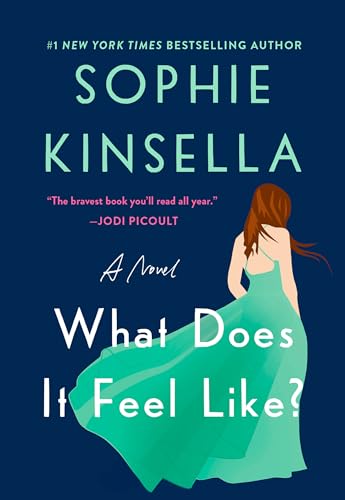
Okay, a successful writer, a lovely husband who takes care of the five kids while she’s writing, a book optioned for a movie, a walk on the red carpet, so far so good. And then…a stage four glioblastoma in her brain lands her in the hospital, where she has surgery, loses her short-term memory and most of her mobility, and has to start from scratch to relearn how to be a functional human while receiving chemotherapy and radiation, because of course it was malignant. C’mon!
Turns out it’s an autobiographical novelization of Kinsella’s recent experience. Oh, no! But she has apparently survived to write a book about it, so I finished it, even though I didn’t want to. (It’s only 144 pages, another novella.) If this is something you are experiencing, however, it’s a good read to get you through, cheer you up, and give you hope plus some wry jokes about bucket lists.
Next time, I will definitely read the blurb first.
One last book
I managed to fit in one more before the artificial barrier that is New Year’s Eve divides us from our past and pushes us into the future. Don’t we as humans have weird customs? I mean, I understand turning-point events like the solstices and equinoxes, where something actually happens (the day becomes longer, the night becomes shorter, or vice versa, the seasons change, etc.), but artificial constructs like New Year’s Eve/New Year’s Day are a bit baffling. It would seem more logical that the winter solstice would be the year’s turning point, but no, it’s 10 days later. Why?
Anyway, enough with the futile speculation; I read another book! And although I technically finished it on New Year’s Day, since I read 93 percent of it before the turn of the year, I’m counting it as last of last, instead of first of next.
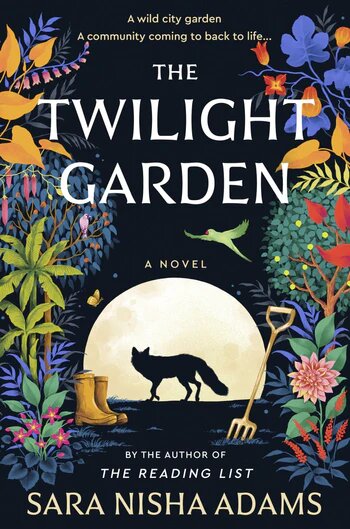
This one is called The Twilight Garden, by Sara Nisha Adams, author of The Reading List, which I previously reviewed here. That book caused a rather lengthy rant about all the things authors don’t know about librarians when they write their supposedly library-centered books; but while her research left a lot to be desired, she was a good storyteller and I like books about gardening, so I decided to give this one a try.
It takes place in a small neighborhood called Stoke Newington in the city of London, where two brownstone-like side-by-side residences (one owned, one rented) share a common garden space that was obviously at one point well cared for, but has been neglected by a string of tenants until it has become choked with nettles and bindweed, showing only faint outlines of its former glory. Living in one side of the property (renters) are Lewis and Winston, a couple who began as bankers at the same institution but who diverged sharply in their goals and aspirations when Winston decided the financial scene wasn’t for him and instead found a job as a clerk in a local grocery, while Lewis continued up the competitive ladder. On the other side (owners) are divorcée Bernice and her 11-year-old son, Sebastian (Seb), the mom prickly and privileged (Winston has nicknamed her Queen of Sheba) and the son friendly and disarming. None of them (except Seb) has any desire to spend a minute with the others and, in fact, Winston and Bernice have an initially adversarial relationship that annoys them both to no end. But when Winston, in the midst of life changes that make him desperate for something to occupy his time and his mind, begins laboring in the garden, prompted by some unexpected input, Bernice is first irritated but then intrigued. Soon the garden begins working its magic to bring these two and others together…
The book takes place with dual casts in two separate timelines, with the property as the unifying element; one timeline is in the 1970s-80s, while the other is (almost) present-day (2018-2019). With the exception of three people, all the major players are Indian immigrants or the children or grandchildren of immigrants, so there are some nice scenes featuring Gujurati cuisine and traditions accompanied by some less pleasant events tied to racism and prejudice. But the heart-warming scenes are far more prevalent than are the hints of discord, and the book is a lovely picture of what happens when people come together to celebrate their triumphs and share their losses while creating a beautiful garden that will have longevity. It’s populated by interesting and memorable characters and has enough specific gardening details to satisfy those who were drawn to it for that reason. A lovely read—not too heavy, but with plenty of depth. I also liked the perfectly narrative art of the cover.
Slow burn
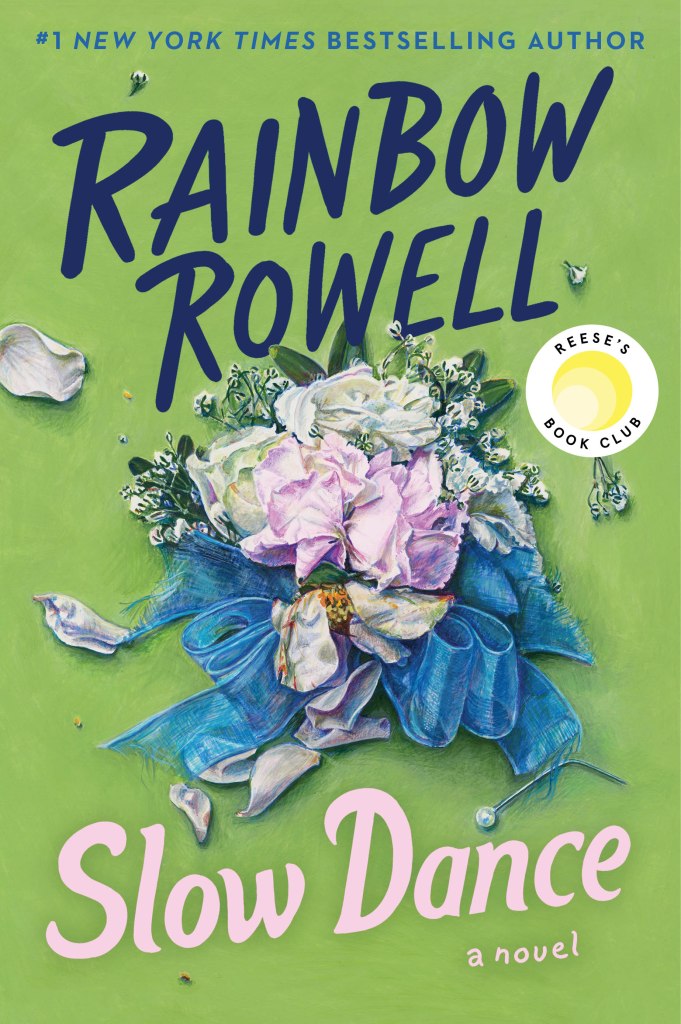
I just finished Rainbow Rowell’s newest novel for adults, called Slow Dance. Back when I was a brand-new teen librarian, her book Eleanor and Park hit the top of the chart for teen novels, and I read it with my high school book club and fell in love—with her characters and their story, and with her writing. This book could be about Eleanor and Park at 33, if they followed certain trajectories that first took them away from one another and then brought them back together after a fair number of life experiences, although Eleanor and Park had the sense to figure out just how much they liked each other, while Shiloh and Cary (despite one experience during their college-age years) are frustratingly obtuse about their feelings.
This is a longer novel than it needs to be, and I say that out of a fair amount of impatience at certain points with the sheer pigheaded insistence both characters show when it comes to misunderstanding one another’s motives, thoughts, and feelings. But at the same time, I got it; if you have ever been in a one-sided relationship—or even one that you thought was one-sided—and struggled with how much or how little to reveal, and whether to go for it or keep it to yourself forever, you will get it too.
Shiloh and Cary were best friends in high school, part of a steadfast trio with their pal Mikey, and while they were inseparable and had secret feelings for each other, they never managed to make it out of the “friend zone,” except for a weekend of bliss coupled with massive misunderstandings during Shiloh’s college years. They grew up on the poor side of Omaha, and both had plans to escape; Shiloh was going to be an actress and probably head for New York City, while Cary’s exit plan was to join the Navy. Cary fulfilled his objective, but Shiloh dabbled in theater until she met an acting teacher with partner potential, then produced two children followed by a divorce, and remained stuck in Omaha, living with her mom and kids in the house where she grew up. Fourteen years later, they both attend a second wedding for their friend Mikey, and reconnect—sort of. The old feelings resurface, along with the misunderstandings, the ambivalence, the life conflicts, the water under the bridge…in short, they have a lot to get over and get past if they are ever to share something meaningful. The will-they won’t-they, combined with the flashback story of how they got to this point in their lives, is the story here.
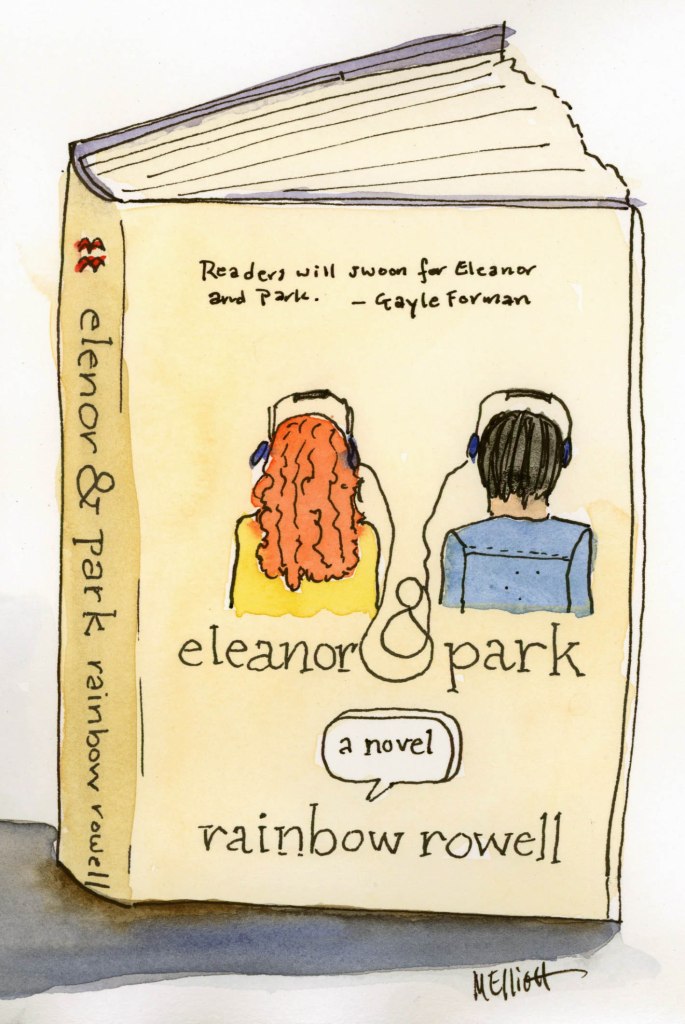
The saucy banter, the genuine emotions, and the honesty of expression brought back the best parts of Eleanor and Park; and although there are moments when you want to take one or both of them by the shoulders and give them a good shake, you’re mostly rooting for Cary and Shiloh to get it together and succeed at this second-chance romance. (And you also want a happily ever after for Shiloh’s extremely engaging children, Juniper and Gus.) A solid entry for Rowell’s adult realistic fiction shelf.
 The Book Adept