Momfluencers
What kind of word is THAT? Ask Jesse Q. Sutanto, author of the thriller You Will Never Be Me. The book is set in the worst cliché-ridden version of Los Angeles (as a 52-year resident of this city, I beg to differ with the exaggerated depiction!), and its two main characters are social media “influencers” who are also moms touting their lifestyle—thus that ghastly splice.
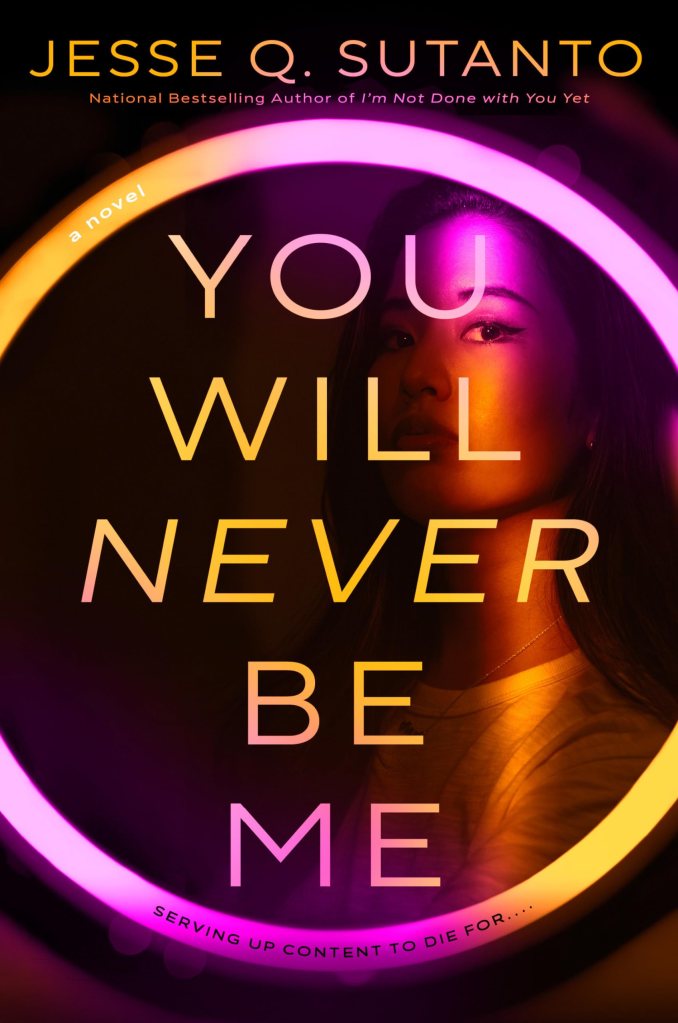
I had previously read Sutanto’s romcoms (the “Aunties” trilogy) and her delightfully silly mystery Vera Wong’s Unsolicited Advice for Murderers, so when I was looking for some lighter dark reading, I decided to try one of her thrillers. The library had this e-book on hand, and as a relative novice to Instagram with fewer followers than I would like (this is for my page featuring my portrait-painting), I thought it would be fun to read about some of the people who have made a true success out of their presence in such forums.
In some ways, it was fun; but I felt at a disadvantage with this book because, although the moms were supposedly besties in all things, the truth that they were jealous competitors who had trouble celebrating each other’s wins (particularly when one substantially overshadowed and outperformed the other) made both of them inherently unlikeable. And although I don’t mind villainous characters, I usually like it better when there is one sympathetic person in the story for whom I can cheer. You know, someone with at least one redeeming quality….
In the beginning, Meredith was the popular rising star and Aspen was the eager but slightly gauche fan. Before Meredith met Aspen, there was a friend-gap in her life; she was so busy trying to become popular to legions of online strangers that she didn’t have time to cultivate people in real life. But when she runs into Aspen at a Hollywood pretty-people party and realizes just how out of her depth she is, Meredith takes a shrewd look at Aspen’s potential and, flattered by her naive, awed admiration, decides to help her. She teaches her about hair and makeup, shows her how to make videos to entice both followers and sponsors, and gives her a leg up into Meredith’s world.
A few years later, Aspen’s star has risen exponentially, while Meredith’s influence has waned—her “brand” is a little tired, a little old. Aspen has crafted a new, polished look, married Ben, and given birth to darling twin girls Noemie and Elea; fueled by motherhood and the need to be the breadwinner in an unequal partnership (her husband is in real estate but not a player), Aspen has switched her brand to become a “momfluencer.” She films the daily routine, presenting herself and her family as living an idyllic existence—the twins always dressed in adorable matching outfits, every meal gourmet and served with panache, home decor curated to shine online. When you collect as many followers as Aspen, the deals for product placement follow, and the dollars flow in.
When Aspen gets pregnant with a third daughter, Meredith decides she has waited long enough for Mr. Perfect and chooses to become a single mother with the help of an anonymous sperm donor. While she wouldn’t go so far as to say she gave birth to baby Luca so that she, too, could go the momfluencer route, well…that’s what she has tried to do. But somehow she just can’t pull it off with the seamless brio of the successful and somewhat patronizing Aspen, who is too busy now to hang with her best friend Mer, drinking wine and gossiping as they used to do. The tables are turned; Aspen is on top, and Mer is, well, not either admiring or in awe. She resents Aspen’s success and especially her lack of willingness to share her ideas and methods the way Mer had shared with her when Aspen was the one at the bottom. Meredith discovers it’s not fun to be ditched, and finally, in frustration, she blows up at Aspen and says some unforgiveable things, and the friendship is over.
A few months later, Mer, who has been stalking Aspen (just a tiny bit, right? nothing serious) gets lucky. Little Elea leaves her iPad out on the patio where an enterprising person can appropriate it. Mer isn’t sure why she took it, but when she discovers that Aspen has created an online calendar that updates automatically onto all the family’s devices, she has access to Aspen’s social media schedule. At first she just tweaks things, causing Aspen to arrive late at a lunch date or forget to pick up the dry cleaning; but soon she is erasing meetings with sponsors and turning up in Aspen’s place to sign lucrative contracts. Meanwhile, Aspen can’t figure out what has gone awry—has the pressure of having to (appear to) be the perfect mom in front of millions caused her to lose her mind and her mojo?
Then something happens that turns the relationship on its head and sends Aspen’s and Mer’s story in a whole new direction…
It sounds like big fun, right? And some of it is. But until the twist 50 percent of the way through the book, there is a lot of snark. We don’t get to live through any of the harmonious early days of Meredith’s and Aspen’s friendship, we are instead dumped directly into the bitter rivalry felt by Meredith and the somewhat dismissive, too-busy inattention exhibited by Aspen. And neither of their lives is the shining example they present online because, let’s face it, motherhood is never that easy. Aspen and Ben have grown apart as he has become increasingly resentful of being on camera 24/7 (and having his nose rubbed in the fact that he’s not the breadwinner), while one of the twins is acting out like she’s 16 instead of seven. Mer is constantly exhausted by the unending round of nursing, changing, and being awakened by baby Luca, and upset by her inability to make more money and have the nice things Aspen has already achieved. None of the supporting characters—Ben, Mer’s sister Claire (or Clara? I could swear her name switched halfway through the book)—is a sympathetic one either. So the whole recitation becomes tiring if you are looking for some comic relief amidst all the anger and angst.
But…that twist. It makes things interesting. And there’s another one later on that takes things in an even more extreme direction. So although at 49 percent I was ready to give this book faint praise (not pan it, exactly, but not promote it either), it turned out to be a much better story than I had expected at the halfway mark. And it’s definitely eye-opening about the online popularity that people who want success must pursue. Although I wish I had the 17K followers my friend Phoebe has scored, and that I sold the bulk of my paintings the way she does, I’m certainly not going to be ruining a treasured friendship over it! (Even if I only have 879 people looking at my portraits today…) How DID she do that?
(If you’d like to follow me and save my friendship with the lovely
and talented Phoebe, you can find me at https://www.instagram.com/losangeles_melliott/.
I’m just sayin’…)
Breaking a curse
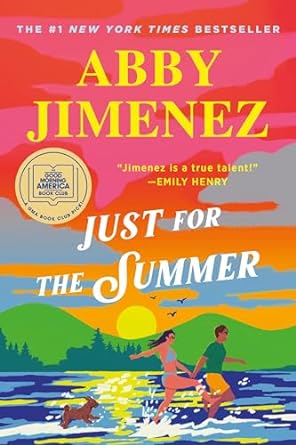
I picked up Abby Jimenez’s book Just for the Summer from Kindle Unlimited thinking it was written by Abbi Waxman, whose books I have enjoyed twice before. I later figured it out, but the plot sounded sufficiently appealing that I read it anyway, and I’m glad I did, because I really enjoyed it. It’s a “relationship” story along the lines of Emily Henry or Christina Lauren, some sort of meet-cute with complications and a hopefully HEA ending, but it’s better than many/most I have read.
It’s billed as third in a series, but it’s not one that is dependent on having read the others; they share some characters in common, but there’s not really a through-story here. This one is about Justin and Emma, two unfortunates who suffer from the same “curse”: Whenever they date anyone and then break up, their exes go on to find their “soulmates” in the very next person they date. (There’s a 2007 movie called Good Luck Chuck with this same “syndrome,” but in that case only the guy exhibits it.)
Justin does a funny “am I the asshole?” post about this on Reddit, Emma replies by saying she has the same problem, and after enjoying chatting with one another, they come up with a plan: They will date each other, break up, and cancel out the curse, so that each will then meet the love of his/her life. They do some calculating and figure out all the common denominators: They have to go out at least four times, communicate daily by text or by phone over the course of a month, kiss once, and then break up.
It’s a great plan, but there are a few problems: Emma is a traveling nurse, currently located in Colorado and planning to go with her friend Maddy (also a traveling nurse) to Hawaii for a three-month gig as their next stop, while Justin, who lives in Minnesota, has a big life-change coming up that will limit his freedom, so he can’t follow Emma to Hawaii even if he wanted to, and certainly not to stay for a month. So Emma persuades Maddy (with some judicious bribery) to go to Minnesota for the summer, and the experiment is set. But an unforeseen complication in Emma’s life plus the possibility of actual feelings between the two threaten the whole plan…

This was a story with a little more depth than some from this category; I liked the characters, who were all delineated precisely and filled out their roles in the plot. I liked that the complications weren’t manufactured but were things that actually happen to people, messy events and emotions with which they struggle. And the story arc was really well distributed, not building up to a rushed and idyllic ending—the pacing was measured, something that, again, felt real. Sure, there are a few of the standard clichés, but in this case they are made to work with the story and not against it.
Based on this book, I would definitely consider reading others by Jimenez.
Read the blurb!
After my foray into depressing post-apocalyptic water-world, I didn’t feel quite up to broaching a new nonfiction book about politics that my friend Marya told me it was essential that I read. I am dreading the takeover of the new regime, and the novella by Jenny Colgan wasn’t sufficient to lift my spirits. So I decided I would deliberately read something fun, and the author whose name popped into my head was Sophie Kinsella. I mean, Shopaholic, right? I pulled up her list of e-books on the library website, checked out the most recent—called What Does It Feel Like?—and sat down yesterday at breakfast to lose myself in fluff.
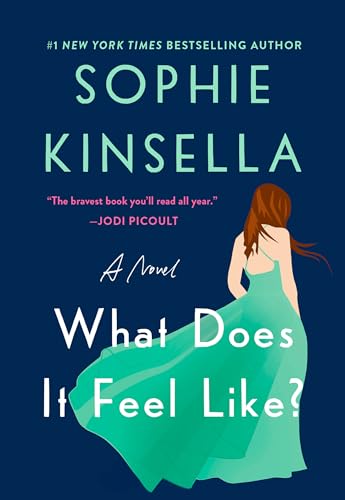
Okay, a successful writer, a lovely husband who takes care of the five kids while she’s writing, a book optioned for a movie, a walk on the red carpet, so far so good. And then…a stage four glioblastoma in her brain lands her in the hospital, where she has surgery, loses her short-term memory and most of her mobility, and has to start from scratch to relearn how to be a functional human while receiving chemotherapy and radiation, because of course it was malignant. C’mon!
Turns out it’s an autobiographical novelization of Kinsella’s recent experience. Oh, no! But she has apparently survived to write a book about it, so I finished it, even though I didn’t want to. (It’s only 144 pages, another novella.) If this is something you are experiencing, however, it’s a good read to get you through, cheer you up, and give you hope plus some wry jokes about bucket lists.
Next time, I will definitely read the blurb first.
Rare books and romance
Looking for something a little more lighthearted after my foray into a post-apocalyptic flooded world, I eagerly picked up a special on Kindle, written by Jenny Colgan and billed as a short story. The Christmas Book Hunt seemed to me more like a novella, being 127 pages long (most short stories don’t exceed 30 pages), but I never mind if something is a longer read than it “should” be, especially if I’m a fan of the author, so I was happy to jump in. Besides, it’s about books…

It’s a story about Mirren, a London-dweller whose beloved, elderly Aunt Violet is fading away. Mirren is anxious to make her last days happy ones, and Violet has expressed a desire to see a book she remembers from childhood—an extremely rare one-off of a well-known children’s classic hand-illustrated by a famous artist—but Violet has no idea what happened to the book after her father was gone and her life took a turn for the impoverished. It’s likely the book was sold, along with most of their other possessions, but it was such a rare and beautiful thing that hopefully it’s still out there somewhere.
Mirren eagerly jumps online to search for it, but can’t find more than a whisper that it even exists; she then decides to venture into the real world of rare books to see if she can track it down by Christmas. But canny dealers are alerted by Mirren’s search and, as she makes her way to bookstores from London to Hay-on-Wye and then to Edinburgh, her progress is being followed by several people who desperately want the book for themselves…
Although the story is billed as a “meet-cute” romance, the parts that deal with this are much less satisfying than is the relationship depicted between Mirren and her aunt, the real love story here. Because of the way the romantic interest (the nephew of a greedy rare book dealer) is introduced, then dropped, only to pop up again at the end, the happily-ever-after possibility that seems to present itself felt unlikely, as well as somewhat insincere. But I really enjoyed the hunt for the book and the unexpected turn of events for Violet. I’m hoping (after the close of the story) that Mirren shows some good sense and treats Theo with the lack of trust that should have been engendered from the beginning if not for her naïveté.
One last book
I managed to fit in one more before the artificial barrier that is New Year’s Eve divides us from our past and pushes us into the future. Don’t we as humans have weird customs? I mean, I understand turning-point events like the solstices and equinoxes, where something actually happens (the day becomes longer, the night becomes shorter, or vice versa, the seasons change, etc.), but artificial constructs like New Year’s Eve/New Year’s Day are a bit baffling. It would seem more logical that the winter solstice would be the year’s turning point, but no, it’s 10 days later. Why?
Anyway, enough with the futile speculation; I read another book! And although I technically finished it on New Year’s Day, since I read 93 percent of it before the turn of the year, I’m counting it as last of last, instead of first of next.
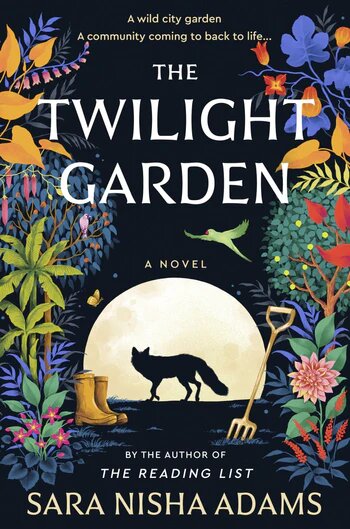
This one is called The Twilight Garden, by Sara Nisha Adams, author of The Reading List, which I previously reviewed here. That book caused a rather lengthy rant about all the things authors don’t know about librarians when they write their supposedly library-centered books; but while her research left a lot to be desired, she was a good storyteller and I like books about gardening, so I decided to give this one a try.
It takes place in a small neighborhood called Stoke Newington in the city of London, where two brownstone-like side-by-side residences (one owned, one rented) share a common garden space that was obviously at one point well cared for, but has been neglected by a string of tenants until it has become choked with nettles and bindweed, showing only faint outlines of its former glory. Living in one side of the property (renters) are Lewis and Winston, a couple who began as bankers at the same institution but who diverged sharply in their goals and aspirations when Winston decided the financial scene wasn’t for him and instead found a job as a clerk in a local grocery, while Lewis continued up the competitive ladder. On the other side (owners) are divorcée Bernice and her 11-year-old son, Sebastian (Seb), the mom prickly and privileged (Winston has nicknamed her Queen of Sheba) and the son friendly and disarming. None of them (except Seb) has any desire to spend a minute with the others and, in fact, Winston and Bernice have an initially adversarial relationship that annoys them both to no end. But when Winston, in the midst of life changes that make him desperate for something to occupy his time and his mind, begins laboring in the garden, prompted by some unexpected input, Bernice is first irritated but then intrigued. Soon the garden begins working its magic to bring these two and others together…
The book takes place with dual casts in two separate timelines, with the property as the unifying element; one timeline is in the 1970s-80s, while the other is (almost) present-day (2018-2019). With the exception of three people, all the major players are Indian immigrants or the children or grandchildren of immigrants, so there are some nice scenes featuring Gujurati cuisine and traditions accompanied by some less pleasant events tied to racism and prejudice. But the heart-warming scenes are far more prevalent than are the hints of discord, and the book is a lovely picture of what happens when people come together to celebrate their triumphs and share their losses while creating a beautiful garden that will have longevity. It’s populated by interesting and memorable characters and has enough specific gardening details to satisfy those who were drawn to it for that reason. A lovely read—not too heavy, but with plenty of depth. I also liked the perfectly narrative art of the cover.
Wrapping up

This year it feels more like a winding down than a wrapping up. I read the fewest books in one year since I started doing the Goodreads Challenge 12 years ago. That year I read 75 books; my highest number ever was in 2019, when I read 159 books while working full-time from January to October (I retired from the library in October of that year). You would think it would be the reverse, since I have so much more time now than I did then; but there were some factors at play that ensured I would read a lot more then. First, I was running three teen book clubs, so I had to read one book per month for each club, plus a couple extra books in each age range (the clubs were 6th- and 7th-graders, 8th- and 9th-graders, and grades 10-12) so I would have ideas to propose as the following month’s read. I was also reviewing books for both the teen and adult library blogs (both of which I supervised), so I was heavily invested in spending all my spare time reading new teen and adult fiction to showcase there. And finally, of course, there was a certain amount of reading for my own particular pleasure! I basically worked, commuted, ate, slept, and read, and did absolutely nothing else!
Nowadays there are circumstances that tend to decrease my reading time: With my particular disability, sitting in one position for long periods of time isn’t great for keeping my legs at their best possible condition for mobility. I also watch a lot more on television these days, now that streaming services let you binge-watch an entire five-season show, one episode after another for as long as you can stay awake, as opposed to waiting for one weekly episode for a 12- to 20-week season and then waiting in turn for the following season. And I spend way too much time “doom-scrolling” political stuff online, or keeping up with friends on Facebook. Finally, once I took up painting I started spending at least a few days a week focused on making a portrait or two or a still life featuring items from my antique collection.
Anyway, this year I read a meager-for-me 66 books. Some of them were literary and some of them were chick lit, some were re-reads of beloved stories, and others were authors previously unknown. My statistics include:
23,782 pages, with an average book length of 360 pages
(shortest was 185, longest was 698)
Average rating was 3.6 stars
Some favorite new titles were:
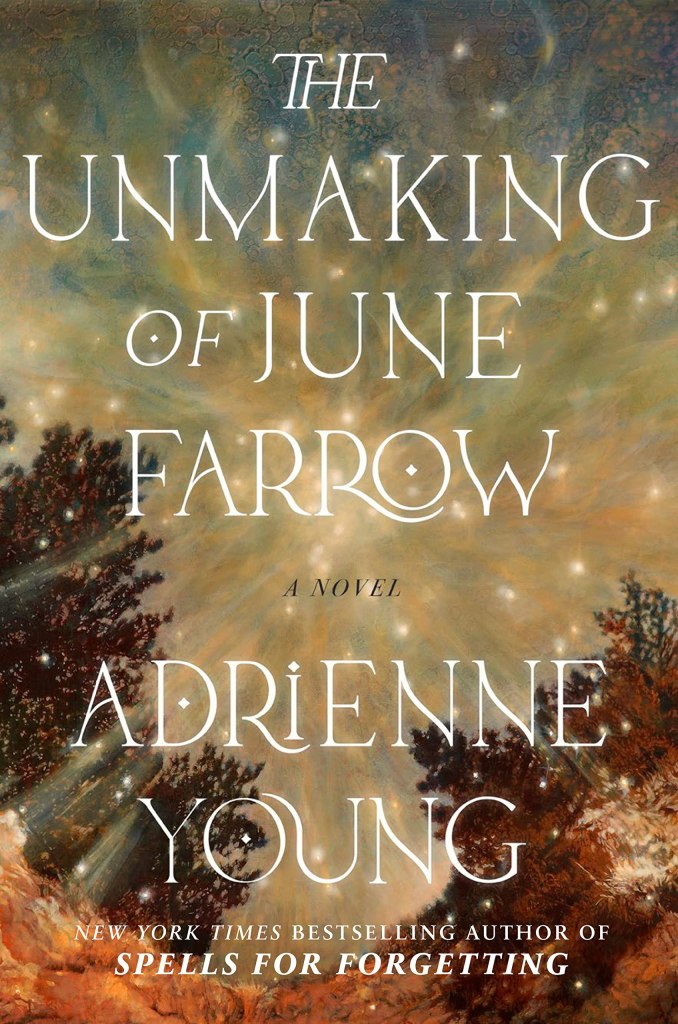
The Unmaking of June Farrow, by Adrienne Young
Starter Villain, by John Scalzi
Vera Wong’s Unsolicited Advice for Murderers, by Jesse Q. Sutanto
The Long Way to a Small, Angry Planet, by Becky Chambers
All the Dead Shall Weep, and The Serpent in Heaven, by Charlaine Harris
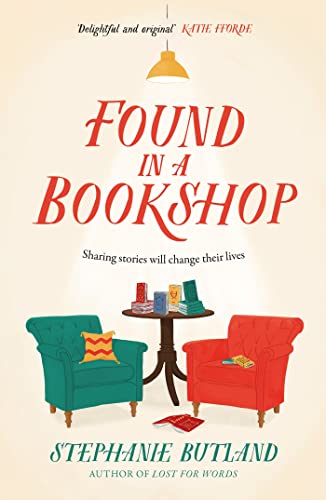
Found in a Bookshop, by Stephanie Butland
I felt throughout the year like I was having trouble discovering books that really resonated with me. Although I had some pleasurable reading discoveries, I never found that one book or series or author that really sucked me in and kept me mesmerized for hours at a time. I found myself reading during breakfast or on my lunch break and easily stopping after a chapter or two to go do something else, rather than wanting to settle in for a solid afternoon of reading. I’m hoping to find more compelling books in the new year. But reading continues to be one of my best-beloved pastimes.
Metaphor
Flying is such a useful metaphor for all sorts of movement in life, and Jenny Colgan makes the most of this in her book, The Summer Skies, the first in the McIntyre books. (I recently read and reviewed #2, not realizing there was one before it.)
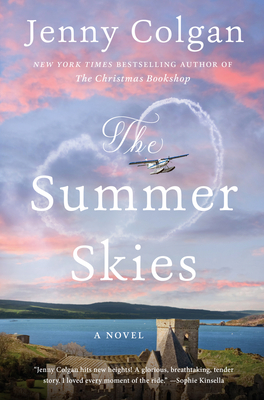
This is the book in which we meet Morag McIntyre, an accomplished young pilot, the third generation to learn to fly in her great-grandfather’s 18-seater Twin Otter prop plane, Dolly, above the windswept archipelago of northern Scotland. The family runs a business that fetches mail, packages, tourists, medicine, and occasionally livestock between islands, a vital lifeline for the sparse population inhabiting them.
Morag is pursuing a life out in the wider world, piloting great airbuses on commercial flights to exotic locales, but one day she has a fraught experience in the air that shakes her self-confidence to the core. One good thing comes out of it when the human resources person who has to vet her return to the cockpit turns out to be the handsome and charismatic Hayden. Despite her secret misgivings about flying again, she is cleared by him and then begins dating him. When Hayden’s office transfers him to Dubai, Morag considers moving with him, but first, news of her grandfather’s illness sends her home to Scotland for a visit. She is pressed into service as co-pilot on a flight to the tiny island of Inchborn—home to a ruined abbey, a bird-watching station, and a visiting ornithologist from Glasgow—where an unexpected delay gives Morag the time she needs to figure out what she really wants, from flying and from life.
I really enjoyed this book. Several reviewers on Goodreads expressed disappointment because it didn’t feel, according to them, like a typical Colgan book, but I would have to disagree. It may have been simpler in plot and more spare with its characters than some (and also lacking recipes), but it felt, nonetheless, like a return to the familiar, which is to say, a trip to the icy but beautiful Scottish isles occupied by quirky characters with life issues to which we can most of us relate.
I will acknowledge one reviewer’s caveats, because they are germane: The research into how pilots are trained for aviation and what they are and are not permitted and/or expected to do (especially regarding switching back and forth between kinds of planes/flying) was incredibly sloppy, and I am surprised Colgan made these kinds of errors. I will also remark (again) about how poorly (and inaccurately) this book was described on Goodreads. (I have written a new summary and am working to get it substituted.) But the focus of this book is also on the relationships, and in that area it was entertaining and felt true to life. And as always with these books set in remote areas of Scotland, I was romanced likewise by the scenery.
Grave Talk
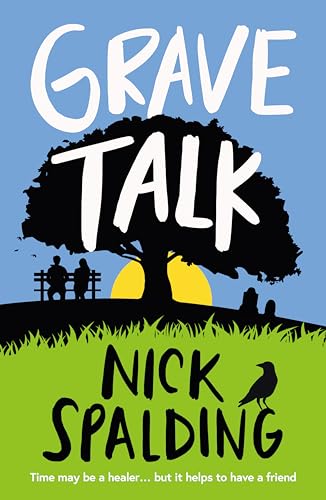
I am always a fan of a good title, and this one works on a couple of levels. Nick Spalding has created an interesting premise for discussing life and death and grief in this book that documents the interaction of two people who have recently lost loved ones and are having an impossible time moving past the experience.
Alice’s husband Joe died of a heart attack in his early 40s, and she didn’t make it to the hospital in time. She has a feeling that something or someone messed up when Joe came into the emergency room for treatment, because why else would such a young man go like that? Ben’s brother Harry, a rising young surgeon, was diagnosed with leukemia and succumbed rather abruptly, and Ben, who is struggling with his need to live up to the rest of his family (they’re all doctors), is especially bereft because Harry was the one who was there for him when his parents were absent or too busy for their younger son. One day, the two mourners visit the cemetery where their people are buried, and the coincidence of the grave sites being closely adjacent brings them together in an oddly freeing ritual of friendship.

There is a certain comedic element to the book, based on Harry’s last wish left for Ben in his will. Harry asks Ben to visit the cemetery yearly, dressed each time as a different character dictated by Harry and carrying out a ritual that is meaningful to the two of them. So on that first fateful day when Ben meets Alice, she is prodded out of her focus on her own all-encompassing grief by the unusual experience of sharing the cemetery with a man dressed in a Kermit the Frog costume, standing at attention and humming the song “We Are the Champions” under his breath. Once Ben manages to convince her that he’s not a weirdo but rather the victim of his sadistic dead brother’s practical joke, the two of them have a meaningful conversation about their losses and agree to meet up at the graves on the same day each year to check in on each other.
This goes on for some time, and the once-a-year encounter showcases for Ben and Alice and also for the reader how uneven is the movement away from grief and how prolonged it can be, far beyond the expectations of those who haven’t experienced bereavement firsthand.
I liked the characters and felt that for the most part their development over the once-yearly visits was believable. I would have liked a little more detail about each of them than the bits they were able to convey in that annual conversation with one another, but the characters did develop and grow and remain interesting. Their respective resolutions felt a tiny bit facile to me, but over all I empathized with them and found the story engrossing, if not riveting. Er, ribbeting?
Meant to be
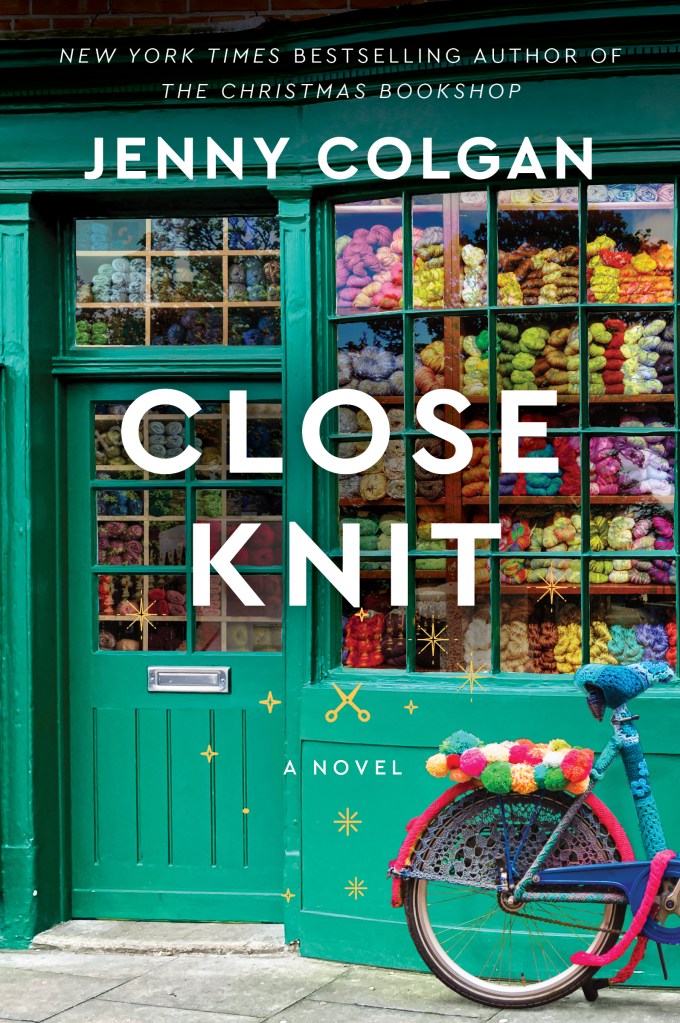
I don’t in general believe that anything is “meant to be.” But if anything could convince a cynic that there is such a thing as destiny, it would be one of Jenny Colgan’s novels. Close Knit was particularly illustrative of that theme, in that it was perhaps a little more transparent than its author might have intended in telescoping the story. I pretty much knew who the protagonist would end up with from about the third chapter (despite various rather transparent red herrings), and spent the rest of the book waiting for her to figure it out for herself and/or for the author to put her and her intended in the right kind of meet-cute circumstances to make it happen.
I didn’t know that there is a book—The Summer Skies—that precedes this one and stars another main character (the pilot) as its protagonist. But this read perfectly well as a stand-alone, and now I can go back and enjoy that one too.
As is usual with Colgan’s books, the beautiful, bare, wind-swept islands of northern Scotland are as much a character as anybody else in the book, and reading her lyrical descriptions almost persuades me that I would love to live in a locale that is fairly constantly beset by frigid winds, in almost total darkness during the winter and perpetual light in summer due to its place far above the equator. Likewise, the people with whom she populates the small towns and villages of the islands are in equal parts ordinary and distinctive, most of them sounding like the perfect neighbors and friends, with a curmudgeon or a crank thrown in here and there for ballast.
Authors should have to vet the copy written to describe their books on Goodreads (or does it come from the publisher? if so, shame on them!), because there were many inaccuracies in the details of this one. First of all, it’s described as a summer novel, which I suppose you could marginally support, since some of the action takes place in May; but in a clime where May can bring rain, hail, or even snow, it’s not exactly a typical summer vacay beach read! Second, the main character is described as having many friends, but the truth is, everyone in her knitting club is her mother’s age (or older), and Gertie is more their pet project than their contemporary. She is actually rather isolated, being a shy, dreamy “girl” of 30 who has no girlfriends or dates her own age. Third, when Gertie decides to take on a new job, it’s described as air stewardess on a small plane, but in fact her actual primary task is to run the desk at the tiny terminal, checking in the passengers and their belongings and making sure everything goes smoothly in the run-up to each flight. She is required to go up in the plane in order to understand aspects of her job and to occasionally serve as crew, but that’s a much less important function.
A final pet peeve is the cover design: While there is a knit shop in the village similar to the one depicted on the cover, the women of the knitting club have a persistent feud with its owner and, in fact, hardly frequent it, so to give it pride of place as the cover design is as bad as the stationary bookstore on a street corner that appears on one of Colgan’s other books about a mobile bookmobile that travels around an island supplying reading wherever it goes.
The story line that propels the action of Close Knit is that Gertie has somehow let her life slip through her fingers. She lives at home with her mother and grandmother, and her friends are their knitting club ladies, so she has no significant men in her life. She got a job 10 years ago at the local market and somehow the time has passed her by while she unloaded groceries, dusted shelves, and worked the till. Her only real entertainment is knitting beautiful scarves, socks, and hats, and the only place she experiences excitement is in her romance novel-driven dreams. Then she’s given the opportunity to switch jobs, which she does partly because there is a handsome and charismatic airline owner whose planes and helicopters use the terminal and she thinks this might be an opportunity to get to know him. But fate has something different in mind for Gertie…
Even knowing what would probably happen, I thoroughly enjoyed going through the process, as one enjoys a cup of cocoa and some warm slippers at the end of a long, cold afternoon. That’s probably more than half the appeal of a Colgan novel—the tactile and culinary descriptions set in the perfect atmosphere in which to enjoy them. The designation “cozy” was meant for her books.
Slow burn
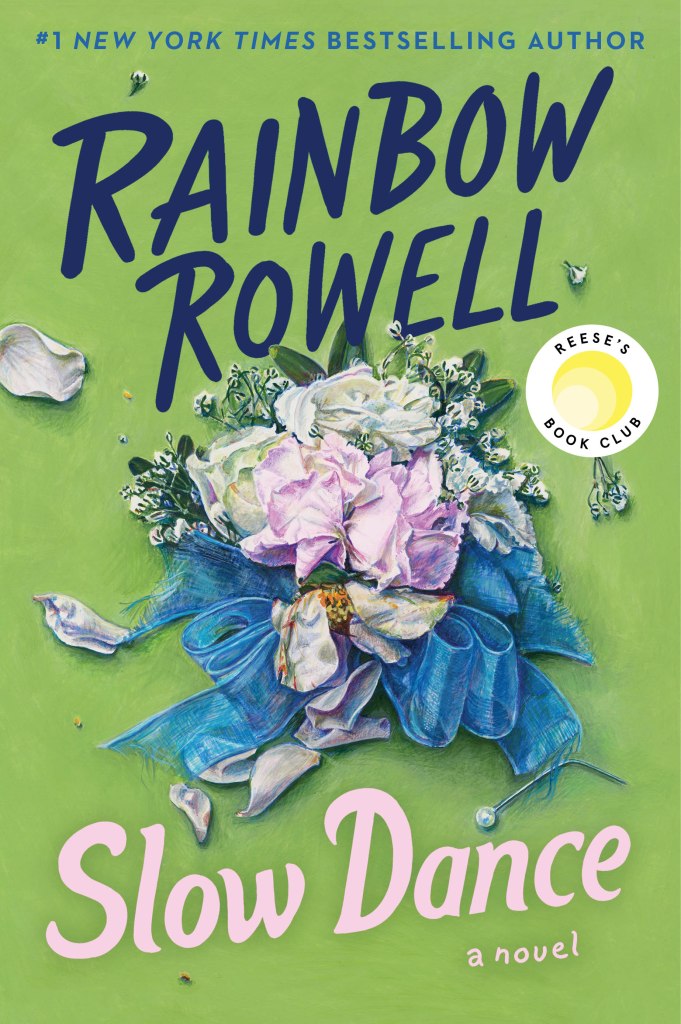
I just finished Rainbow Rowell’s newest novel for adults, called Slow Dance. Back when I was a brand-new teen librarian, her book Eleanor and Park hit the top of the chart for teen novels, and I read it with my high school book club and fell in love—with her characters and their story, and with her writing. This book could be about Eleanor and Park at 33, if they followed certain trajectories that first took them away from one another and then brought them back together after a fair number of life experiences, although Eleanor and Park had the sense to figure out just how much they liked each other, while Shiloh and Cary (despite one experience during their college-age years) are frustratingly obtuse about their feelings.
This is a longer novel than it needs to be, and I say that out of a fair amount of impatience at certain points with the sheer pigheaded insistence both characters show when it comes to misunderstanding one another’s motives, thoughts, and feelings. But at the same time, I got it; if you have ever been in a one-sided relationship—or even one that you thought was one-sided—and struggled with how much or how little to reveal, and whether to go for it or keep it to yourself forever, you will get it too.
Shiloh and Cary were best friends in high school, part of a steadfast trio with their pal Mikey, and while they were inseparable and had secret feelings for each other, they never managed to make it out of the “friend zone,” except for a weekend of bliss coupled with massive misunderstandings during Shiloh’s college years. They grew up on the poor side of Omaha, and both had plans to escape; Shiloh was going to be an actress and probably head for New York City, while Cary’s exit plan was to join the Navy. Cary fulfilled his objective, but Shiloh dabbled in theater until she met an acting teacher with partner potential, then produced two children followed by a divorce, and remained stuck in Omaha, living with her mom and kids in the house where she grew up. Fourteen years later, they both attend a second wedding for their friend Mikey, and reconnect—sort of. The old feelings resurface, along with the misunderstandings, the ambivalence, the life conflicts, the water under the bridge…in short, they have a lot to get over and get past if they are ever to share something meaningful. The will-they won’t-they, combined with the flashback story of how they got to this point in their lives, is the story here.
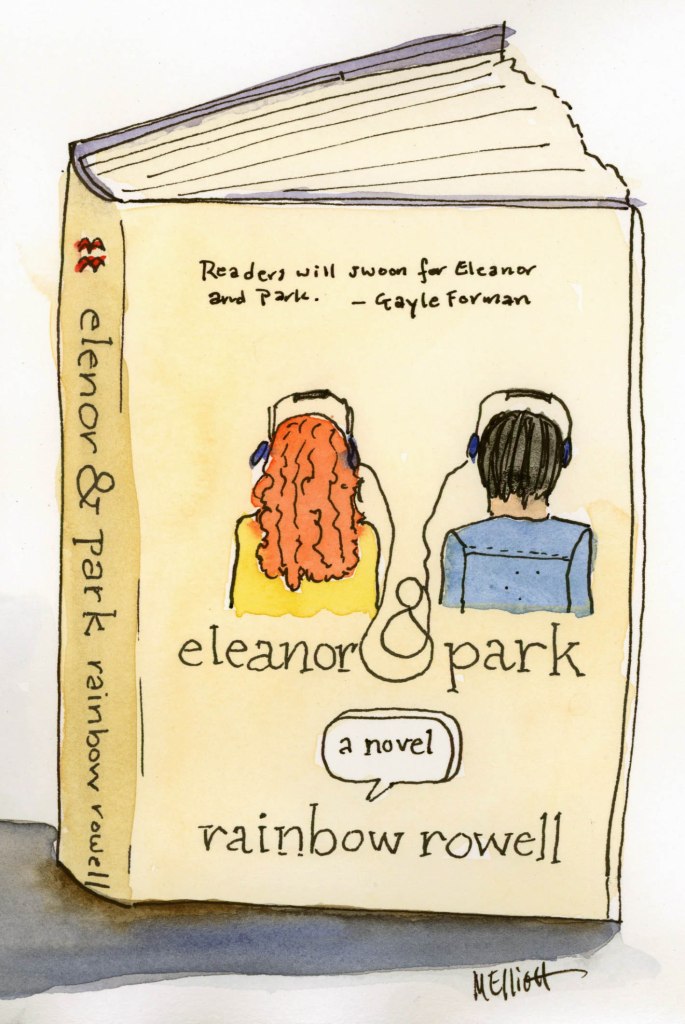
The saucy banter, the genuine emotions, and the honesty of expression brought back the best parts of Eleanor and Park; and although there are moments when you want to take one or both of them by the shoulders and give them a good shake, you’re mostly rooting for Cary and Shiloh to get it together and succeed at this second-chance romance. (And you also want a happily ever after for Shiloh’s extremely engaging children, Juniper and Gus.) A solid entry for Rowell’s adult realistic fiction shelf.
 The Book Adept