The Wong way

Vera Wong rises to another occasion in Vera Wong’s Guide to Snooping (On A Dead Man), by Jesse Q. Sutanto, the second (but hopefully not the last) in the saga of this intensely curious proprietor of a Chinatown tea shop in San Francisco. (The first was Vera Wong’s Unsolicited Advice for Murderers, reviewed here.)
Although the dead body didn’t land on the floor of her shop this time, he did, in some sense, seek her out. When Vera pays a visit to the police station to see Officer Selena Gray (the woman she hopes will marry her son, Tilly) about a problem of her own, she notices a troubled girl lurking outside the station, pacing back and forth and wringing her hands but unable to bring herself to enter. Vera knows, as a Chinese grandmother, that it is her duty to interrogate, er, offer a sympathetic ear until the young Millie gives up whatever is bothering her, so Vera takes her back to the shop for a sustaining cup of tea. Millie tells Vera that her best friend, Thomas, is missing…but Vera knows there’s a lot Millie is holding back.
That weekend, while cat-sitting at their apartment for Tilly and Selena, Vera discovers a treasure trove of information (she looks at the files in Selena’s briefcase) about a young man who has been fished dead out of Mission Bay, presumably a suicide, and although the man is listed as John Doe, it soon becomes clear that this is Millie’s missing friend. But as events progress, we learn that he had a public face as well, under a different name, as a prominent “influencer” on social media; four other people besides Millie who have possibly suspicious connections to the dead man convince Vera that this was murder, not suicide. Vera, bored since her last adventure as an amateur sleuth, jumps in with both feet to meet, interrogate, and adopt her new list of suspects into the chosen family she acquired the first time around. Despite Selena’s warnings to stay out of her investigation, Vera is determined to be one step ahead of everyone in figuring out this mystery, thus proving she is as intrepid at solving it as she was last time.
I think I liked this book even better than the first, which I thoroughly enjoyed. Vera has no filter, and her misunderstanding of American slang and her slyly manipulative cozening of people to get what she wants—which also usually corresponds to what they need from her—provides a lot of humor. It also lets us get acquainted with the cast of characters much more quickly as Vera grills them mercilessly in her quest to solve the murder. But although she can be a bit much, Vera makes up for it with her caring, which she exhibits in her preparation of vast quantities of food and tea for all and sundry. (Don’t read this when you’re hungry. You will immediately spend a fortune on DoorDash, and then be disappointed that it doesn’t measure up to the cuisine of Vera Wong.)
I was initially a little put off by yet another book with a prominent character who is an Instagram influencer, especially having recently read Sutanto’s previous book You Will Never Be Me, which was a much darker tale about two women obsessed with their online presence as “momfluencers.” But before I decided to put it down, I was drawn further into the story as each subsequent character revealed what they knew and a complicated back story emerged about the actual life of “Thomas” that led to his death.
I loved the moments in the story when each member of the motley crew that Vera assembles has the realization that…
“[L]ife gets much easier when you hand over the reins to Vera.”
Some on Goodreads said they didn’t like it that Sutanto took the story in that more serious direction, but I felt it was the perfect balance—a cozy with substance when it comes to societal issues such as family relationships, loneliness, generational differences and expectations, and also the fatal effects of greed and exploitation. It had a little bit of everything, but for me the Wong way was the right way, ha ha!
And, judging from the closing chapter, we may not have seen the last of Vera…and the next adventure could take in a much wider world than San Francisco’s Chinatown!
The Mare (the girl)
Having read Horse, by Geraldine Brooks, a few months back, when someone recommended the book The Mare, by Mary Gaitskill, I was primed to read it, especially because the teenage main character was named Velvet, immediately transporting me back to the joy of reading National Velvet in my childhood. And, similar to that book, this story was about a disadvantaged child whose encounter with horses changes things for her, although the child in this one is a much more extreme example. I didn’t grow up in a financial or social environment that would indicate the need for escape, but I was an introverted, solitary child who longed for the connection with horses in lieu of any relationship with people, so books like this spoke to me, and still do.
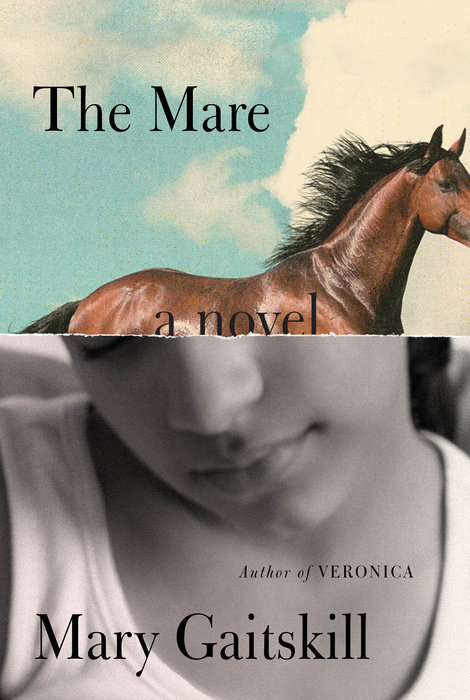
Velvet (short for Velveteen) Vargas is the daughter of a single mother, Sylvia, an immigrant from the Dominican Republic. They, along with Velvet’s little brother, Dante, live in Crown Heights (an inner city section of Brooklyn), and it is a limited, hand-to-mouth existence. Sylvia is hard and bad-tempered, shaped by the fearful responsi-bilities she has been forced to take on from a young age, and she is alternately loving, manipulative, and abusive with her children. The effect on Velvet’s sense of self, in particular, is both negative and confusing, and Velvet is a troubled, conflicted child.
Through Velvet’s school, they find out about the Fresh Air Fund; although the actual organization apparently sends children to six-week summer camps so they can have outdoor experiences and take leadership workshops, the program in this book pairs up inner-city children with more well-to-do host families from the country, with whom they spend a couple of weeks’ holiday. Both Dante and Velvet participate, although we never hear any more about Dante’s experience after he is put on a bus at Penn Station that first summer.
Velvet, age 11, is matched with Ginger and Paul, from rural upstate New York. Ginger is a painter, although she has been blocked for a long time; she is also a recovering alcoholic. Paul is a teacher, and met Ginger at an AA meeting. They have been together for some time without having children, and Ginger longs for some kind of connection; they initially sign up to host because Ginger wants to experience what it might be like to adopt an older child. (Paul has a daughter from a former marriage and is lukewarm, at best, about this.)
Ginger and Paul live near a horse stable, and it is the incentive of being able to ride horses that most appeals to Velvet about the experience. The book carries its characters through several years, as Velvet transitions from child to teenager while paying sporadic weekend and holiday visits to the couple’s home, and is told through the primary viewpoints of Velvet and Ginger, with a few scattered chapters giving added perspective from Paul and Sylvia.
The surface story is a coming-of-age saga, but the underlying context is the stark contrasts inherent in race and socioeconomic class. The switch between Velvet’s world and Ginger’s holds up the realities of inequality in our country by showcasing minority poverty and its relationship to white liberal guilt and its accompanying savior complex.
My reaction to the first part of the book was positive; it’s written in a rather quirky style that appealed to me because it was so internal. Conversations are had, but they don’t exist as present-tense dialogue; rather, each person is narrating from her sole point of view, and relating the conversations second-hand as she perceives them. It makes for an experience that is simultaneously cerebral and intimate.
The path of the story is choppy; sometimes we get to see the same scene and actions as experienced by Velvet and then again by Ginger, but at others we see things only from the one point of view and then the timeline is continued by the other, as when Velvet narrates her day at the barn and Ginger takes up the story when Velvet returns to the house and Ginger tries to get an account of the day’s events out of a recalcitrant and somewhat inarticulate teenager. Everything about the story is filtered through one or the other psyche (with the exception of the few short chapters related by Paul or Silvia), so there isn’t really a factual feel about it, since both viewpoints are opinion colored by personality and emotion.
Where the book started to break down for me was when Velvet (at home in Brooklyn) started paying attention to boys, and one boy, Dominic, in particular, and her attention is riveted on him to the exclusion of her own family, her host family, and the horses. Although it was probably a natural development in the life of a young girl from this neighborhood and, more widely, that of a pubescent girl from any neighborhood, it was a disappointing distraction from Velvet’s previous one-track focus on her almost mystical relationship with the horses and with one mare in particular.
The mare was a problem horse from whom everyone was warned off, as she was both unpredictable and occasionally vicious, but Velvet felt a kinship with the horse that developed, over the course of several years, into something so compelling that to draw the attention away from that to a helpless crush on an older boy who doesn’t really want her was disappointing. (Some of the best writing in the book is when Velvet is trying to articulate the feelings and internal dialogue between herself and the horses and how those translate into action.)
I also have to say that although I don’t mind stories that are more character- than plot-driven, I truly loathe ones that are open-ended, and when I got to the last page of this book I had a momentary flare of irritation that I had spent so much time persevering to finish reading it. In retrospect I don’t exactly regret it, but I really wish there had been a more definitive story arc with an end as engaging as its beginning.
Boarding-school books
I’m off on my own personal nostalgia kick right now, re-reading Georgette Heyer novels to escape from the depressing real world of politics and sub-optimum health. But on one of the book-lovers’ pages on Facebook, a mom was asking for recommendations for her teenage son who is a reluctant reader, so I combed through my various categories of YA fiction for some and was thus inspired to write about this sub-set of coming-of-age fiction, the boarding-school book.
I think those who have never attended a boarding school are in some way fascinated with the culture—I know I always have been, from the time I read my first children’s book with a protagonist who had been posted off by their parents to “sleep-over” school. And there are a lot (hundreds) of examples out there of the away-from-home scholastic experience, from Harry Potter to A Separate Peace. There are books in every genre, for almost every age, so I thought I’d mark some of my personal favorites and some that seem to be perennially popular.
The boarding-school book is by no means limited to children and teens—there are many written for (and sometimes about) adults as well, especially if you include the college boarding experience. I’ll give age groups and categories and (in some cases) some brief synopses, and if you have the same interest I do, you can gravitate to whichever piques your interest.

For children, a classic example is
A Little Princess, by Frances Hodgson Burnett, about a young girl sent home to England from India, where her father is a successful merchant, because it was believed that the climate of India was not salubrious for British children. They were separated from their families and entrusted to the care of an English boarding school, where they would hopefully get an education and a proper upbringing and be reunited with their families when they were grown. Young Sara Crewe goes from riches to rags when her father disappears and is presumed dead, and Miss Minchin’s Select Seminary can no longer collect hefty fees for her maintenance. I sometimes think of this book as the child’s version of the first third of Jane Eyre, by Charlotte Brontë (although Sara is much better-natured than Jane ever was!). It’s a romantic story with a protagonist who remains upbeat and optimistic in the face of cruelty, guaranteed to appeal to the kind of reader I was at a young age.

There are many boarding-school books with more fantastical settings, the most well known probably being the Harry Potter books, in which gifted children are sent to Hogwarts School of Witchcraft and Wizardry to hone their talents. But in the fantasy category are also the Harper Hall books by Anne McCaffrey, which take place on the planet Pern and feature dragons and fire lizards in these stories of children studying to be professional musicians; and The Rithmatist, by Brandon Sanderson, featuring another magical school, this time for math geniuses with a little something extra. These are all for younger children and teens (maybe 4th through 8th grades?), although older teens and adults can (and do) enjoy these books as well.

In the specifically Young Adult category, there are fantasies, mysteries, and realistic fiction all set at private academies that either offer the standard schooling or are geared towards inhabitants with a specialty. For the middle school set: One realistic one in which the rule of the bullies and the plight of the bullied are revealed is The Mockingbirds, by Daisy Whitney. Another fairly normal boarding school that is the site of a mystery is the backdrop for the Truly, Devious trilogy by Maureen Johnson, in which death visits Ellingham Academy. And the Gallagher Girls series by Ally Carter (beginning with I’d Tell You I Love You But Then I’d Have to Kill You) showcases a girls’ school that is supposedly for the upper-crust daughters of the snobby set but is actually a training curriculum for those who wish to become undercover agents for the CIA and like agencies.

Among the boarding-school franchise for older teens, there are also a variety of settings. In the realistic category are such mainstream stories as Winger, by Andrew Smith (at a boys’ school focused on rugby); and Looking for Alaska, by John Green and Saving Francesca, by Melina Marchetta, both with a challenging co-ed population. A fun book in its development of one character from age 14 to 16 as she figures out how to dominate her environment is The Disreputable History of Frankie Landau-Banks, by E. Lockhart. Another is the trilogy by Stephanie Perkins that begins with Anna and the French Kiss, following a Georgia girl who is transplanted to an American school in Paris for her senior year.

A huge boarding-school subset is the paranormal category, with vampires dominating and witches coming in a close second—the Vampire Academy books by Richelle Mead, the Hex Hall series by Rachel Hawkins, the Gemma Doyle stories by Libba Bray, and Evernight, by Claudia Gray. One series that I particularly like and admire is Wayward Children by Seanan McGuire, which could arguably be classed as either YA or adult; the books are unusual, smart, and varied in their approach. I reviewed them on this blog when I first discovered them, and continue to find them unique.

Moving on to books more appropriate for adults, there are some in every category. The Magicians (and sequels) by Lev Grossman have been billed as Harry Potter for grown-ups. Mysteries that feature boarding schools include Well-Schooled in Murder, from the Inspector Lynley mysteries by Elizabeth George; The Secret Place, one of the Dublin Murder Squad books by Tana French; and The River King, by magical realism author Alice Hoffman. A book that is written about young people but is (in my opinion) too intense for their age group to read is Brutal Youth, by Anthony Breznican, a co-ed Lord of the Flies set in a Catholic private school in Pennsylvania. I didn’t so much enjoy reading it as remain fascinated and unable to put it down. It’s definitely powerful, and in some ways brilliant, but also stark and frightening. Gentlemen and Players, by Joanne Harris, is written from the point of view of the teaching staff at St. Oswald’s Grammar School for Boys, a cat-and-mouse tale of revenge as one staff member with secret ties to the school tries to destroy it from the inside. Finally, Never Let Me Go, by Kazuo Ishiguro, is dystopian literary fiction with a boarding school setting that may not be what you had in mind when you read the initial description, but it’s a fascinating premise with a heartbreaking (and kind of depressing) outcome.
This is a mere drop in the bucket of what’s out there; if you want to research this category further, go to Goodreads, select “browse” and “lists” and type “boarding schools” into the search box, and you will find multiple lists containing all these and many more. But the books mentioned here are a great start if you, like me, enjoy that particular setting for your fiction.

Momfluencers
What kind of word is THAT? Ask Jesse Q. Sutanto, author of the thriller You Will Never Be Me. The book is set in the worst cliché-ridden version of Los Angeles (as a 52-year resident of this city, I beg to differ with the exaggerated depiction!), and its two main characters are social media “influencers” who are also moms touting their lifestyle—thus that ghastly splice.
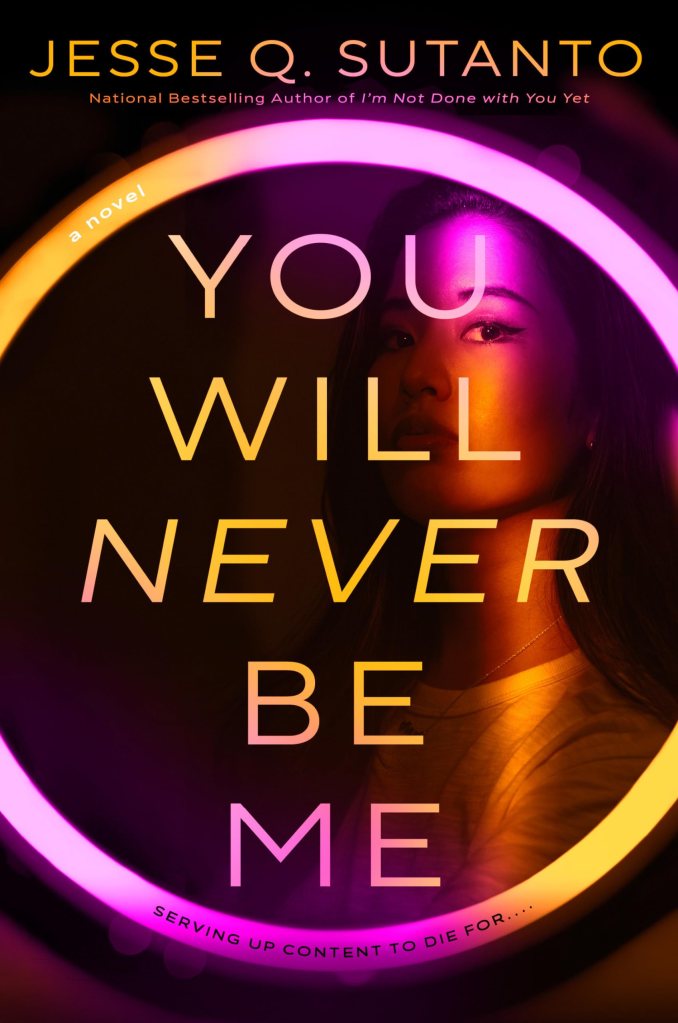
I had previously read Sutanto’s romcoms (the “Aunties” trilogy) and her delightfully silly mystery Vera Wong’s Unsolicited Advice for Murderers, so when I was looking for some lighter dark reading, I decided to try one of her thrillers. The library had this e-book on hand, and as a relative novice to Instagram with fewer followers than I would like (this is for my page featuring my portrait-painting), I thought it would be fun to read about some of the people who have made a true success out of their presence in such forums.
In some ways, it was fun; but I felt at a disadvantage with this book because, although the moms were supposedly besties in all things, the truth that they were jealous competitors who had trouble celebrating each other’s wins (particularly when one substantially overshadowed and outperformed the other) made both of them inherently unlikeable. And although I don’t mind villainous characters, I usually like it better when there is one sympathetic person in the story for whom I can cheer. You know, someone with at least one redeeming quality….
In the beginning, Meredith was the popular rising star and Aspen was the eager but slightly gauche fan. Before Meredith met Aspen, there was a friend-gap in her life; she was so busy trying to become popular to legions of online strangers that she didn’t have time to cultivate people in real life. But when she runs into Aspen at a Hollywood pretty-people party and realizes just how out of her depth she is, Meredith takes a shrewd look at Aspen’s potential and, flattered by her naive, awed admiration, decides to help her. She teaches her about hair and makeup, shows her how to make videos to entice both followers and sponsors, and gives her a leg up into Meredith’s world.
A few years later, Aspen’s star has risen exponentially, while Meredith’s influence has waned—her “brand” is a little tired, a little old. Aspen has crafted a new, polished look, married Ben, and given birth to darling twin girls Noemie and Elea; fueled by motherhood and the need to be the breadwinner in an unequal partnership (her husband is in real estate but not a player), Aspen has switched her brand to become a “momfluencer.” She films the daily routine, presenting herself and her family as living an idyllic existence—the twins always dressed in adorable matching outfits, every meal gourmet and served with panache, home decor curated to shine online. When you collect as many followers as Aspen, the deals for product placement follow, and the dollars flow in.
When Aspen gets pregnant with a third daughter, Meredith decides she has waited long enough for Mr. Perfect and chooses to become a single mother with the help of an anonymous sperm donor. While she wouldn’t go so far as to say she gave birth to baby Luca so that she, too, could go the momfluencer route, well…that’s what she has tried to do. But somehow she just can’t pull it off with the seamless brio of the successful and somewhat patronizing Aspen, who is too busy now to hang with her best friend Mer, drinking wine and gossiping as they used to do. The tables are turned; Aspen is on top, and Mer is, well, not either admiring or in awe. She resents Aspen’s success and especially her lack of willingness to share her ideas and methods the way Mer had shared with her when Aspen was the one at the bottom. Meredith discovers it’s not fun to be ditched, and finally, in frustration, she blows up at Aspen and says some unforgiveable things, and the friendship is over.
A few months later, Mer, who has been stalking Aspen (just a tiny bit, right? nothing serious) gets lucky. Little Elea leaves her iPad out on the patio where an enterprising person can appropriate it. Mer isn’t sure why she took it, but when she discovers that Aspen has created an online calendar that updates automatically onto all the family’s devices, she has access to Aspen’s social media schedule. At first she just tweaks things, causing Aspen to arrive late at a lunch date or forget to pick up the dry cleaning; but soon she is erasing meetings with sponsors and turning up in Aspen’s place to sign lucrative contracts. Meanwhile, Aspen can’t figure out what has gone awry—has the pressure of having to (appear to) be the perfect mom in front of millions caused her to lose her mind and her mojo?
Then something happens that turns the relationship on its head and sends Aspen’s and Mer’s story in a whole new direction…
It sounds like big fun, right? And some of it is. But until the twist 50 percent of the way through the book, there is a lot of snark. We don’t get to live through any of the harmonious early days of Meredith’s and Aspen’s friendship, we are instead dumped directly into the bitter rivalry felt by Meredith and the somewhat dismissive, too-busy inattention exhibited by Aspen. And neither of their lives is the shining example they present online because, let’s face it, motherhood is never that easy. Aspen and Ben have grown apart as he has become increasingly resentful of being on camera 24/7 (and having his nose rubbed in the fact that he’s not the breadwinner), while one of the twins is acting out like she’s 16 instead of seven. Mer is constantly exhausted by the unending round of nursing, changing, and being awakened by baby Luca, and upset by her inability to make more money and have the nice things Aspen has already achieved. None of the supporting characters—Ben, Mer’s sister Claire (or Clara? I could swear her name switched halfway through the book)—is a sympathetic one either. So the whole recitation becomes tiring if you are looking for some comic relief amidst all the anger and angst.
But…that twist. It makes things interesting. And there’s another one later on that takes things in an even more extreme direction. So although at 49 percent I was ready to give this book faint praise (not pan it, exactly, but not promote it either), it turned out to be a much better story than I had expected at the halfway mark. And it’s definitely eye-opening about the online popularity that people who want success must pursue. Although I wish I had the 17K followers my friend Phoebe has scored, and that I sold the bulk of my paintings the way she does, I’m certainly not going to be ruining a treasured friendship over it! (Even if I only have 879 people looking at my portraits today…) How DID she do that?
(If you’d like to follow me and save my friendship with the lovely
and talented Phoebe, you can find me at https://www.instagram.com/losangeles_melliott/.
I’m just sayin’…)
Horse

Although I started out as a little girl who liked dolls, as I got older I turned into a horse fan(atic). (My mother continued to collect Madame Alexander dolls on my behalf long after my interest waned.) I went through that stage around 9-13 years old where I read everything horse-related I could find: the Marguerite Henry tales of the wild ponies of Chincoteague; Black Beauty, by Anna Sewell (multiple times); My Friend Flicka, by Mary O’Hara; National Velvet, by Enid Bagnold; and all the Black Stallion books by Walter Farley. With my parents and their best friends, I spent two spring vacations at a “dude ranch” in Arizona, riding daily for two weeks each year (the photo is from there). After that I begged for riding lessons in my home town of Riverside, California, and spent some months riding an ornery “rental” horse named Shadow who dumped me off more than once in the (thankfully soft) dry river bottom of the Santa Ana river. (I wasn’t that bad a rider; I was jumping him over logs and bushes at the time, fantasizing about being Velvet Brown in the Grand National, and he had a spiteful habit of blowing up his belly when his girth was being tightened so that the saddle would go sliding at inopportune moments.)
My ultimate goal was, of course, to have my own horse, and I almost fulfilled that wish; my grandfather, a farmer who was essentially a childlike man notorious for making rash decisions without considering consequences, went to the local livestock auction in Chowchilla one Saturday morning and bought me an unbroken palomino colt. I was overjoyed, but my parents sat me down and explained to me that it wouldn’t be realistic to keep a horse in Riverside, where he would have to be boarded out and I, with my crowded schedule of academics, piano lessons, and thrice-weekly church, would have scant time to see him, let alone ride or care for him. There was also the matter of the expense of both training and boarding him, which we couldn’t really afford. I was devastated, but I was at heart a sensible and agreeable child, with the result that Granddad sold him on to another buyer, and I went back to my books. I never did, however, wholly lose the longing for a horse companion; I wasn’t so much into riding, I just liked being around horses. Their energy and temperament held a fascination for me that has never waned.

It was, therefore, probably inevitable that I would at some point get around to reading Geraldine Brooks’s book Horse. I resisted for a while, for a couple of reasons: First, I’m not drawn to historical fiction; it seems to me that the history so often interferes with the author’s ability to tell a good story, being constrained by actual events (and feeling the need to include them all!). I tend to steer clear of anything “based on a true story.” I have discovered a few exceptions that I love, but mostly I avoid these books for fear of disappointment. (Also, does everyone in the world have to write a book set during World War II?!) The other reason was because I read her book March and, contrary to the popular opinion, didn’t care for it much. Louisa May Alcott’s Little Women books were cherished childhood favorites, and Brooks exploded some of the myth in her tale of Mr. March in ways I didn’t appreciate (and also, I found parts of it vastly boring).
But…horses. HORSE. So I put my name on the library waitlist and was finally granted access to the e-book last week. It was both more and less than I was expecting, and I thoroughly enjoyed some parts while being put off by others.
The story is set in three time periods and jumps back and forth between those and also between multiple narrators in each one. The first takes place in the years just prior to the Civil War, and begins with the birth of a bay foal who will become the famed and gifted racehorse Lexington. The enslaved boy Jarret becomes first his groom, later his trainer, and his fiercest advocate as they essentially grow up together. The other spokesman in this time period is an equestrian portraitist, Thomas Scott. The second (much less significant) storyline is set in New York City’s art world of the late 1950s, from the viewpoint of art dealer Martha Jackson. The third, contemporary tale occurs in Washington, D.C. in 2019, with Jess, an Australian woman who works at the Smithsonian Institution’s Osteology Prep Lab (she articulates skeletons for display), and Theo, a Nigerian-American Ph.D. student writing a dissertation about American equestrian art (specifically focusing on images of slaves in paintings of racehorses). All these timelines are connected by a portrait of a horse and his black groom that Theo discovers abandoned on his neighbor’s curb. The horse is Lexington, the groom is Jarret, and the book weaves together all the connecting threads.
The relationship between Jarret and Lexington is moving, poignant, and sometimes heartbreaking. The back story of the history of American horse-racing, specifically in the South, was fascinating to me, as were the contemporary details about the science of the preservation of natural history and the restoration of paintings.
There is, of course, a subtext to the entire book, which is racism. It is effectively and affectingly dealt with in the pre-Civil War sections by the clear depiction of the sale of humans being much more common and vastly less considered than the sale of horses.
I found the theme less compelling when Brooks moved to the present-day embedded culture of racism in America. The societal injustices of slavery were clear-cut, anger-provoking, and heartbreaking; but I felt like once she approached the more subtle but nonetheless ubiquitous prejudices of the present day, she fell too often into either avoidance or cliché. I particularly didn’t like the egocentric behavior of Jess, who let her initial reaction to Theo become an ongoing mea culpa that was much more concerned with her own embarrassment than it was about her injury of Theo.
Despite those caveats, the depth of the research and Brooks’s deft mix of history, science, and art were enthralling, especially due to her evocative writing. The horse-racing scenes were both powerful and visceral, and the pictures she paints of the various settings and environments are beautiful and memorable. Even with its flaws, I’m glad I read this book.
Beyond Cerulean
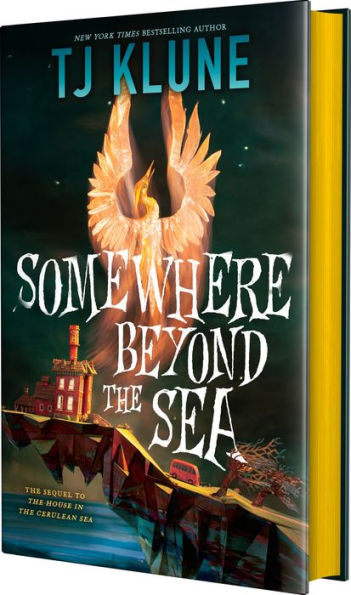
Just as I began my review of the first book (The House in the Cerulean Sea) with the words
“I had high hopes that I would love this book,” I hoped to wrap up my review of this one, its sequel, with the same conclusion I drew then—”This book was an unalloyed delight from start to finish.” Alas, I can’t quite say that.
Many of the same delights were present, the chief of them being the wonderful characters. A big pleasure of this book was to see how the children of the Marsyas Island “orphanage” have grown and come into their own under the positive attention of Arthur Parnassus and his partner, Linus Baker. My favorite parts of the narrative were the insights and revelations from Sal, Phee, Chauncey, Talia, Lucy, and Theodore, and the fresh perspective from David, the yeti child new to the family. The interactions, in particular, between David and the other children were such lovely models of how to bring someone into your orbit and make them feel wanted.
I also initially liked the political nature of the tale—the defiance of those in power when they try to use fear to silence and censor outliers. The opening—in which Arthur Parnassus testifies in public to the committee overseeing DICOMY and DICOMA about the abuse he suffered as a child at the hands of the department supposedly detailed to protect him—was a dramatic kickoff to the book-long campaign setting Arthur and Linus and their little band of hopefuls against the gaslighting of a self-serving, unaccountable government. The book is obviously meant to encourage people who have been “othered”—LGBTQ, as well as those who are racially and ethnically diverse—to stand up in solidarity and resist oppression and marginalization. The continuing revelations about the treatment of the magical community hark back to indigenous colonization and even genocide, and the story is also plainly intended to enlist “the rest of us” to stand with the othered, as Klune illustrates with his conversion of the townspeople of Marsyas into allies and supporters.
There are some dramatic moments that live up to this goal. I found it quite arresting when there was suddenly a realization by Arthur that rather than constantly fighting, he can just refuse outright to play the game. Instead of either resisting or buying into the government constraints, he has the ability simply to refuse to acknowledge their authority. It was a textbook lesson in how to leave someone flatfooted—stop collaborating with them in their appropriated self-importance.
But there are also a number of events that are so preachily on the nose (and in some cases either patently ridiculous or hail-mary impossible) that they actively take away from the message. I feel like those were a direct result of the “elephant in the room,” who appears by name in the acknowledgments but is caricatured and parodied in the book in the person of Jeanine Rowder, villainous government official. The choice Klune made to take on the anti-trans author J. K. Rowling by writing her into his book as the villain is the moment at which he lost the plot for me. The book morphed into a vehicle to scapegoat and belittle, on a too-personal level. Am I saying she doesn’t deserve pushback for her targeting of people who do her no harm? No. But there are many more egregiously hateful people in this world on whom a book villain might have been modeled, and perhaps the story wouldn’t have become so pointedly petty in the process. It felt like the set-up of a straw man to symbolically knock down. I wanted more nuance.
I still enjoyed most of the book. But the turn things took did make me sit back and wonder: Was there sufficient purpose to this sequel? Or did the personal agenda derail it from being what Klune intended? I’m honestly not sure.
I am also not fond of a deus ex machina-type resolution, so…there’s that.
My final conclusion is that I don’t regret reading the book, and would encourage others to do so—with the caveat that they take from it the intended message, the parts that are true heirs to the sentiments of the first one. Is that good advice? I don’t know. You’ll have to take your chances and come back to me on that.
Breaking a curse
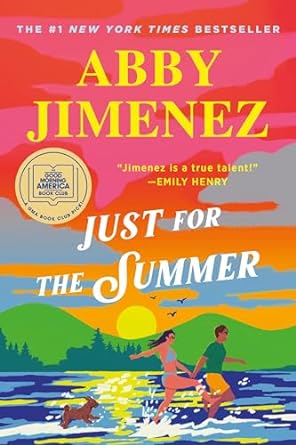
I picked up Abby Jimenez’s book Just for the Summer from Kindle Unlimited thinking it was written by Abbi Waxman, whose books I have enjoyed twice before. I later figured it out, but the plot sounded sufficiently appealing that I read it anyway, and I’m glad I did, because I really enjoyed it. It’s a “relationship” story along the lines of Emily Henry or Christina Lauren, some sort of meet-cute with complications and a hopefully HEA ending, but it’s better than many/most I have read.
It’s billed as third in a series, but it’s not one that is dependent on having read the others; they share some characters in common, but there’s not really a through-story here. This one is about Justin and Emma, two unfortunates who suffer from the same “curse”: Whenever they date anyone and then break up, their exes go on to find their “soulmates” in the very next person they date. (There’s a 2007 movie called Good Luck Chuck with this same “syndrome,” but in that case only the guy exhibits it.)
Justin does a funny “am I the asshole?” post about this on Reddit, Emma replies by saying she has the same problem, and after enjoying chatting with one another, they come up with a plan: They will date each other, break up, and cancel out the curse, so that each will then meet the love of his/her life. They do some calculating and figure out all the common denominators: They have to go out at least four times, communicate daily by text or by phone over the course of a month, kiss once, and then break up.
It’s a great plan, but there are a few problems: Emma is a traveling nurse, currently located in Colorado and planning to go with her friend Maddy (also a traveling nurse) to Hawaii for a three-month gig as their next stop, while Justin, who lives in Minnesota, has a big life-change coming up that will limit his freedom, so he can’t follow Emma to Hawaii even if he wanted to, and certainly not to stay for a month. So Emma persuades Maddy (with some judicious bribery) to go to Minnesota for the summer, and the experiment is set. But an unforeseen complication in Emma’s life plus the possibility of actual feelings between the two threaten the whole plan…

This was a story with a little more depth than some from this category; I liked the characters, who were all delineated precisely and filled out their roles in the plot. I liked that the complications weren’t manufactured but were things that actually happen to people, messy events and emotions with which they struggle. And the story arc was really well distributed, not building up to a rushed and idyllic ending—the pacing was measured, something that, again, felt real. Sure, there are a few of the standard clichés, but in this case they are made to work with the story and not against it.
Based on this book, I would definitely consider reading others by Jimenez.
Revisiting in preparation
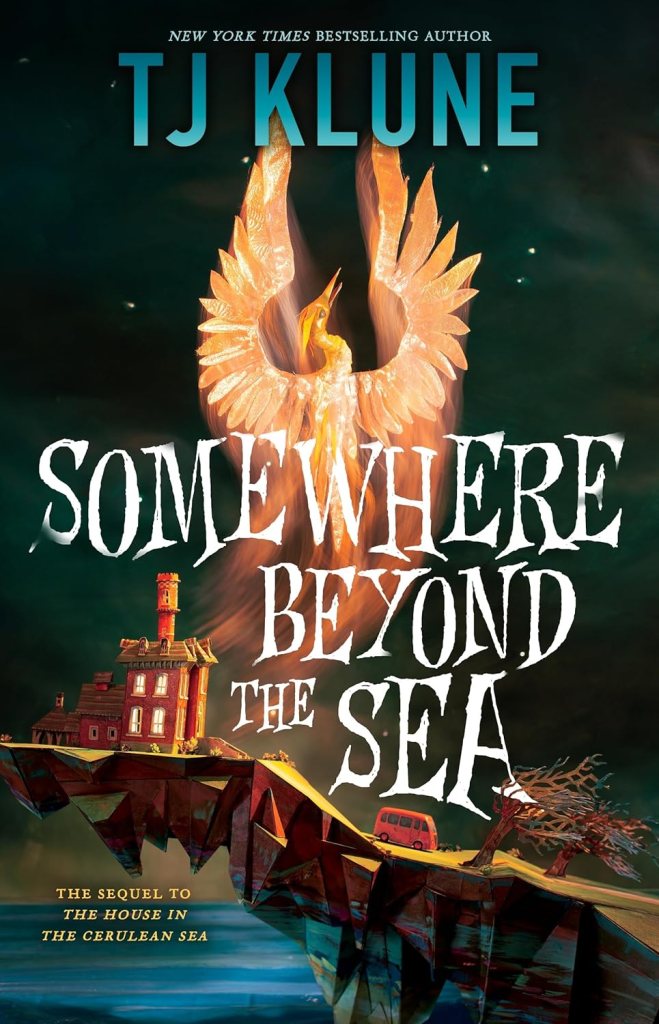
When I learned that TJ Klune had written a sequel to his book The House in the Cerulean Sea, I was excited. I was less pleased to discover that there were 706 holds on 171 copies at the Los Angeles Public Library. But this allowed me time to renew my delight in this quirky fantasy with a reread. I won’t rehash what I wrote the first time, I’ll just link it here for those who wish to read my review, and I’ll repost the art inspired by my first read, of orphans Chauncey and Sal. And I will read and review some other stuff on my list while patiently waiting for Somewhere Beyond the Sea to make its way to me.

The green blob is Chauncey, whose sweet nature belies his monstrous form, and whose most dearly held wish is to become a bell-boy at a hotel in the city (thus the bellman’s cap). The Pomeranian peeking out from behind him (and faintly visible in his entirety through the amorphous blob of Chauncey’s body) is Sal, a large, shy, silent boy who shifts, in moments of panic, into the form of a small dog.
Readalike

Usually when someone asks for a “readalike,” they mean that they like a particular author and would like to find another author or two who write in the same way, whether because that author publishes infrequently, or has died and won’t be producing any more books, or whatever. But I’m afraid I mean this in a less flattering way, in that the entire time I was reading A Calamity of Souls by David Baldacci, I was thinking about all the ways in which it echoed a favorite Grisham book (and movie), A Time to Kill. The setting is a similar one (the South in the 1960s), the issue is a similar one (a black defendant with a white lawyer trying to get him a fair trial), and there is even the civil rights “savior” who arrives from the North to help the southern lawyer navigate this tricky case in front of a judge and jury who are blatantly racist. (One could also draw parallels with To Kill A Mockingbird, specifically in what ends up happening to one of the main characters.)
Although the cases are different (in ATTK, the defendant has killed his daughter’s rapist, while in this one the black man has been accused of murdering and then robbing his white employers), and although in one the legal genius from the North is a Jewish law student from New York while in the other she’s a black civil rights lawyer and hails from Chicago, the dynamic is very much the same. The difference is, I found Grisham’s story completely gripping, while Baldacci’s has some interesting moments as the two lawyers set about discovering who could have done the crime and then put their client in the hot seat to take the blame, but other than that element of mystery, a lot of the book reads like a Civics lesson.
The author takes pains to mention significant cases (Loving v. Virginia), racially charged props (the Green book, which the author has to find a roundabout way to include because it had ceased publication by 1968), sundown cities, and the like, and much of it seemed both heavy-handed and beside the point. This book presumes that the reader has no first-hand knowledge of the history of racism in the South and its manifestations in the 1960s when laws had been passed to end it but southern whites were dragging their feet to implement them. The characters are mostly one-dimensional, presenting as either a hero(ine), conflicted and confused, or irredeemably evil, with little nuance. One reviewer on Goodreads said they were uncomfortable with the portrayal of the black characters and actually felt that the author perpetuated some stereotypes while trying to do the opposite; I would have to agree.
It’s not an irredeemably bad book, but it’s not very good. It’s my first experience reading Baldacci, as far as I remember (I might have read one back in my 20s?), and to be fair I might try another of his without the obvious agenda and see if I enjoy it more, since so many people rave over his books. But…I’m certainly not on the library website looking for my next one right this minute!
Piglet
When they talk about reading this book, people have a lot to say about misogyny, about agency, about maintaining façades, but not so much about the thing that struck me, something pretty literal about the whole plot as it relates to the main character: People are failing her, life is failing her, and she is failing herself because she is trying to make and keep herself small.

A few people on Goodreads reacted negatively to this book as just another eating disorder saga. I didn’t read it like that at all. Yes, she has an intense relationship with food, but if everything else were copacetic, that would be considered normal—she’s a cookbook editor and a foodie, so what? But everything else isn’t right in Piglet’s life (imagine, for instance, going through life being called “Piglet” by all your loved ones!), and the common denominator is that she’s too big for the life she has been seeking.
She’s too big for the lower-middle-class background into which her parents and sister expect her to continue to fit herself; she’s too big for the upper-class environment to which she aspires—too flamboyant, too expressive, too filled with emotions. She’s too big to fit into the expectations of her fiancé, who wants her to act appropriately despite his own bad behavior. She’s too big physically—tall, awkward, a little overweight. And everyone faults her for this, and keeps encouraging her to cram herself into roles, relationships, corsets, dresses, mindsets, all of which goes against her nature. But it takes her just a little bit too long to figure out that none of the behavior she is forcing upon herself will fill up her hunger for love, for acceptance, for recognition. So she makes a series of disastrous decisions that feel inevitable in the moment, until they don’t and she rebels.
She has one voice of reason in all of this—her pregnant maid of honor, Margo, who ends up going into labor early and has to miss the wedding, but who persists in telling Piglet that she deserves more. Piglet doesn’t listen, but when she upends everything, Margo is the one she seeks out.

This is being touted as literary fiction, and I wouldn’t quite go there, but…the author is immensely skillful in the way she gets the reader to think about big-picture decisions by dwelling on seemingly incidental conversations and descriptions of food—choosing it, preparing it, eating it. She is also really good at creating essentially unlikeable characters and getting you to care about them. The book tells a story that is in one way small in scope, but in another is about a very big question: What’s the point? What do we want? In certain moments I felt an overwhelming impatience with Pippa’s choices (yes, that’s her real name)—or lack of them—but I have to confess that I mostly loved this book and found it as satisfying as one of the meals she makes during the course of the story.
Addendum: I found it fascinating that this novel was written by Lottie Hazell in conjunction with, and inspired by, getting her Ph.D. in Creative Writing, with a focus on food-writing in twenty-first-century fiction. I would definitely read another book by this author.
 The Book Adept