Plagued by the penultimate
Have you ever reached the denouement of a book, the place where all the hints and clues and separately insignificant moments are tied up for you so that you have that blinding flash that the author has purposefully manipulated, that one in which you say “aHAH!” and suddenly understand everything that has been happening? You feel so satisfied with that moment of revelation, only to turn the page and realize, after flipping even further, that there are still multiple chapters to go in the book—and maybe you felt impatient and somewhat robbed of your moment at having to keep reading?
I, like so many other people, have incorrectly thought of the word “penultimate” as meaning the last, or the greatest, something that is somehow beyond the ultimate when, in fact, the definition of penultimate is, in Brit-speak, “the last but one,” or in American, next to last. It is the part just before the last. And this is what I see as a big flaw in so many books, the most recent one I have read being Gentlemen and Players, by Joanne Harris of Chocolat fame.

I have mentioned several times in various reviews on this blog how much I loathe an epilogue—the wrap-up in which the author apparently grows tired of showing the reader and decides to tell instead, an action I almost always consider an easy out. I wrote about it most notably in my review of Things You Save in a Fire, in which the author wrote a near-perfect ending but then continued past it to wrap up each and every little hangnail, robbing the reader of the feeling of completion in order to give the author the satisfaction of thorough explanation. I concluded that review by saying, “The difference between an author who knows when to quit and one who doesn’t can be as slight as 20 extra pages, but what a difference it makes. After all, isn’t imagination a big part of enjoyment when it comes to the peculiar habit of reading?”
This was also my experience with Gentlemen and Players.
There are two narrators in this book about a posh British boys’ school called St. Oswald’s: the classics professor, Roy Straitley, otherwise known as Quasimodo (his room is in the Bell Tower and, yes, he’s a bit hunched), and a mysterious antagonist who shares a complicated past (and a deceitful present) with the school and whose stated intent from the beginning is to bring the school down by irretrievably tarnishing its reputation. Straitley (for the most part) narrates the action taking place in the present, while the mystery person is concerned with telling about the experience of being raised in close involvement with the school and its professors, students, administrators, and staff, but nonetheless remaining an outsider, never being able to be of the school. It is an exploration of age, gender, class, work ethic, and values—but all of those are subsumed in its identity as a psychological thriller, a cat-and-mouse game.
The prose is literary, as is appropriate for a tale about a school that still values the teaching of Latin (its motto is Audere, agere, auferre—to dare, to strive, to conquer); but we are at the juxtaposition of old and new as dusty classrooms make way for computer labs and crusty eccentrics have to learn how to check their email to get departmental updates.
The mystery part of the plot is undeniably thrilling; but in order to reach it, there is a lot of set-up in the present and a lot of flashback to the past that is occasionally a slog to navigate. I’m not saying it’s not necessary; I’m just not sure the payoff is adequate. I will say that it is quite crafty, and the twists and turns the story takes are worthy of a Patricia Highsmith novel. But after experiencing the major revelations near the end, I could have wished that they had been the finale, rather than the penultimate. Granted that there are sequels and the extension of the story beyond its climax does lead the reader towards those stories; but I’m not sure I believe the let-down from that rather spectacular revelatory climax was justified.
There are three sequels to this book, although I find it hard to image there is that much more material to explore here, and you could easily read this as a stand-alone and be done. I may read the others at some point, to find out. I have vastly enjoyed some of Harris’s other works, including Chocolat and Peaches for Father Francis, Five Quarters of the Orange, and Blackberry Wine.

One purely cosmetic warning about this book: If you decide to read it in Kindle form, as I did, you may find it quite confusing when the narrator switches from one protagonist to the other, because there is no indication of who is speaking, beyond tone and context. In the hardcover and paperback books, symbolism in the graphic form of a White King or a Black Pawn from a chess set at the beginning of each chapter signalled from whom we were hearing. This would have been easy to incorporate on the Kindle version, and that they didn’t was a problem.
Reimagining
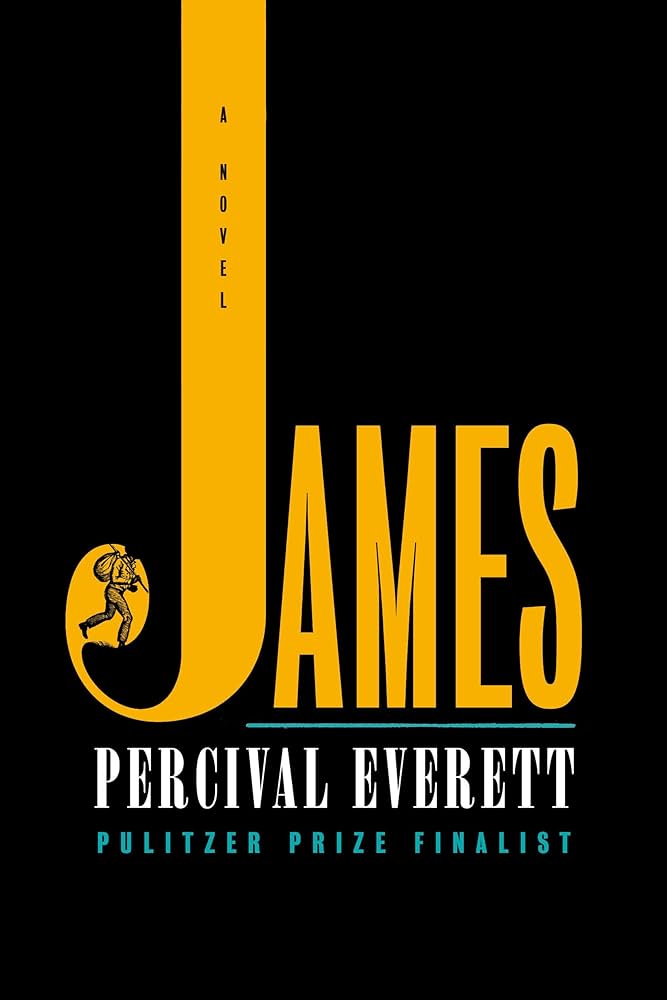
I just read James, by Percival Everett. Despite being 300 pages, it was a quick read, unlike the story from which it was taken, which took me twice as long to reread. I think there were two reasons for this one going so quickly: One was that it leaned on the presumption that you already knew the original tale and therefore the author gave himself permission to shorthand much of the action and description from that book; the other was that almost the whole story took place in either internal or external dialogue, without a lot of world-building, scene-setting, or exposition.
These things led to an interesting experience if you were hoping to confront this old story from a completely new perspective. I wanted to embrace this book, but I struggled a bit.
The premise that the slaves spoke patois in front of the white “massas” but used the common language when alone seemed a natural outgrowth of their situation; they had to communicate important information with one another without the white people catching on to what was being said, and they had to hide their real personalities behind a façade of ignorance, foolishness, and passivity, so they learned code-switching from childhood. Everett completely enthralled me with this; but then he took it a little too far. I expected the character James to be a bit more than ordinary, given his interactions with Huck and others in the original, but did his life experience really allow him the latitude to become as extraordinary as Everett has written him?
He is painted as an educated man—not just a slave who has learned to read and to speak with a careful use of diction. Would the surreptitious reading sessions in Judge Thatcher’s study in the wee hours really lead to a thorough understanding of the works of Voltaire, Rousseau, and John Locke? Even southern college-educated men of that day were not necessarily cognizant of the intricacies of philosophical thought, so the requirement that we believe it of a man who has had to gain all his education on the sly in stolen moments is a little hard to meet.
This was, to my mind, a central flaw of this book, for the simple reason that we went from perceiving the disguise the original “Jim” presented to the world—the stereotypical shuffle-footed, awkward, ignorant, well-behaved and possibly well-intentioned slave—to yet another disguise for “James”—the cynical, perceptive, erudite man who is playing that character for half his world while laughing about it with the other half. I actually liked that for its dark irony; what I’m trying to say is that there was an opportunity here for us to get to know the real person, but except for some tantalizing and admittedly affecting glimpses here and there, we went from one façade to another. With as much internal dialogue as there was from James, there was nonetheless too little understanding of the man himself. While being able to recognize that he is quick-witted, thoughtful, and compassionate, I didn’t feel that I really understood how he acquired all those positive character traits, because he doesn’t let us in.
The other thing the book thoroughly exhibits is the two-faced nature of slave owners who wish to be regarded as benevolent protectors of their “childlike servants,” but turn on a dime, when challenged, to become brutalists who exult in wielding a belt or raping a child. And again, I found myself applauding the exposure of the stereotypes but wincing at the one-dimensional portrayals—not so much of the slave-owners, but of the slaves! Several other reviewers have noted that the women in this book seem to be present on the page merely to highlight their own ill treatment; they have no agency and almost no personality but are merely offered up as horrifying examples of the results of human ownership. Again, I have no quarrel with exposing the heinousness of the practice, but how much more affecting would the book have been had readers been able to better identify with these women as individuals with personality?
I don’t want to come across as hyper-critical of this book. I admired what he tried to do and was caught up in it while reading it. I am also a fan of his writing style and language, which can be beguilingly beautiful. It actually troubles me to go against the reviewers who gave it unreserved praise (not to mention the National Book Award!). But afterwards, while reflecting on what I had read, I also wished there had been more—more story, more depth of character, more nuance, more exploration. I am curious, now, to read others of his books to see what my reaction to him as a writer might be when not influenced by the rewriting-of-a-classic aspect of this one. I’m sure you’ll hear more about it from me eventually.
Wrapping up

This year it feels more like a winding down than a wrapping up. I read the fewest books in one year since I started doing the Goodreads Challenge 12 years ago. That year I read 75 books; my highest number ever was in 2019, when I read 159 books while working full-time from January to October (I retired from the library in October of that year). You would think it would be the reverse, since I have so much more time now than I did then; but there were some factors at play that ensured I would read a lot more then. First, I was running three teen book clubs, so I had to read one book per month for each club, plus a couple extra books in each age range (the clubs were 6th- and 7th-graders, 8th- and 9th-graders, and grades 10-12) so I would have ideas to propose as the following month’s read. I was also reviewing books for both the teen and adult library blogs (both of which I supervised), so I was heavily invested in spending all my spare time reading new teen and adult fiction to showcase there. And finally, of course, there was a certain amount of reading for my own particular pleasure! I basically worked, commuted, ate, slept, and read, and did absolutely nothing else!
Nowadays there are circumstances that tend to decrease my reading time: With my particular disability, sitting in one position for long periods of time isn’t great for keeping my legs at their best possible condition for mobility. I also watch a lot more on television these days, now that streaming services let you binge-watch an entire five-season show, one episode after another for as long as you can stay awake, as opposed to waiting for one weekly episode for a 12- to 20-week season and then waiting in turn for the following season. And I spend way too much time “doom-scrolling” political stuff online, or keeping up with friends on Facebook. Finally, once I took up painting I started spending at least a few days a week focused on making a portrait or two or a still life featuring items from my antique collection.
Anyway, this year I read a meager-for-me 66 books. Some of them were literary and some of them were chick lit, some were re-reads of beloved stories, and others were authors previously unknown. My statistics include:
23,782 pages, with an average book length of 360 pages
(shortest was 185, longest was 698)
Average rating was 3.6 stars
Some favorite new titles were:
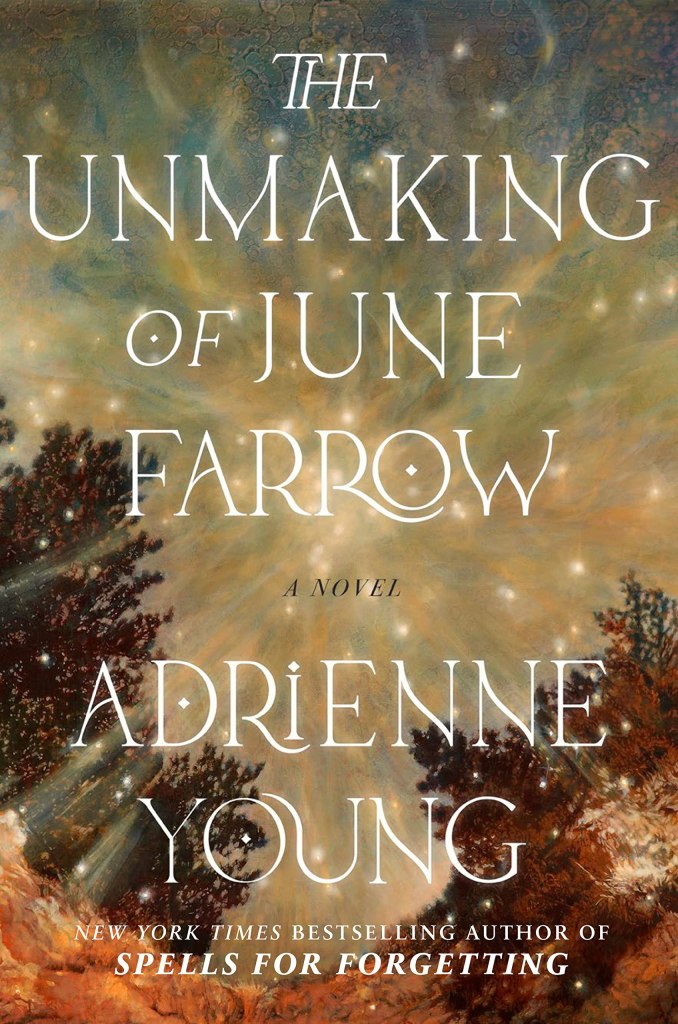
The Unmaking of June Farrow, by Adrienne Young
Starter Villain, by John Scalzi
Vera Wong’s Unsolicited Advice for Murderers, by Jesse Q. Sutanto
The Long Way to a Small, Angry Planet, by Becky Chambers
All the Dead Shall Weep, and The Serpent in Heaven, by Charlaine Harris
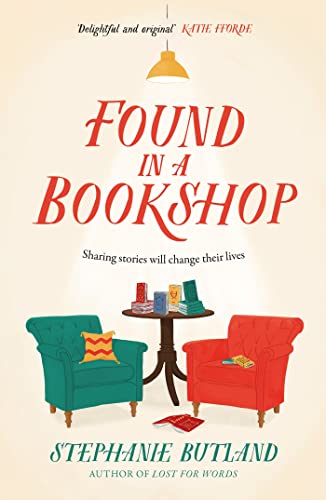
Found in a Bookshop, by Stephanie Butland
I felt throughout the year like I was having trouble discovering books that really resonated with me. Although I had some pleasurable reading discoveries, I never found that one book or series or author that really sucked me in and kept me mesmerized for hours at a time. I found myself reading during breakfast or on my lunch break and easily stopping after a chapter or two to go do something else, rather than wanting to settle in for a solid afternoon of reading. I’m hoping to find more compelling books in the new year. But reading continues to be one of my best-beloved pastimes.
Slog in the woods
I just finished The God of the Woods, by Liz Moore, and perhaps my headline has telegraphed my reaction?
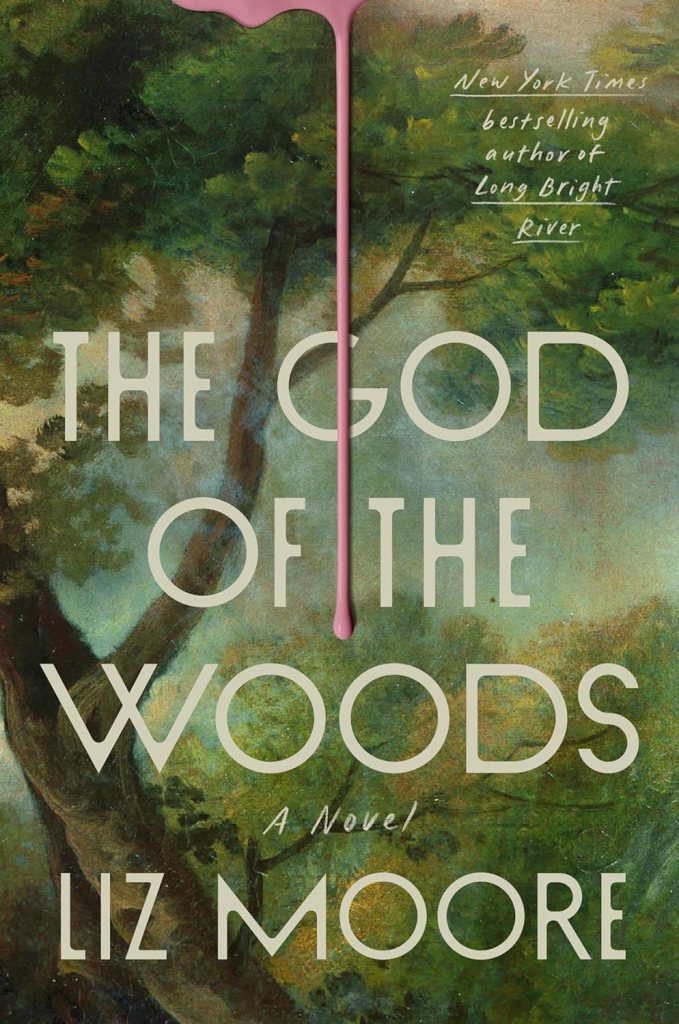
It’s not a bad book. It’s actually an intriguing story, at least initially. It takes place at a summer camp in the Adirondacks owned by the wealthy Van Laar family. This summer is the first time in three generations that any Van Laar child has ever expressed a desire to attend the camp, and ordinarily the family wouldn’t encourage their offspring to mix with the mundanes; but Barbara Van Laar has been such a problem for the past year or so that her parents are happy to put her in this controlled environment at a certain distance from home. She’s still close by—the camp is on one-half of the vast acreage owned by the family—but she’s not underfoot, sulking about in her all-black punk get-up, provoking her father and slamming doors, so all parties are happy with this solution. Until, that is, she goes missing.
Then we get the previous history of the family, which includes a son, Bear, who himself went missing (though not from camp) before Barbara was born, and was never found. A local man was blamed for his disappearance and assumed death, only to himself die before anything could be proved. The family believed he was the culprit, and let the whole thing go until Barbara’s disappearance sparks new interest in that similar set of circumstances, leading to speculation that someone else might have been at fault and is still out there preying on Van Laar children.
The problem is not with the storyline, it’s with how we glean each small morsel of information a teaspoonful at a time. There are seven points of view in this novel, and also a timeline that jumps from the ’50s to the ’60s to the ’70s (present day is 1975) to “day one” etc. of the search for Barbara, and both the narrator and the timeline switch in almost every one of the rather short chapters.
We get the story from the POV of Barbara’s camp counselor, Louise; from her bunkmate Tracy; from Bear and Barbara’s mother, Alice; from Judyta, a junior inspector on the case; from the widow of the presumed kidnapper of Bear; from the manager of the local motel at which the inspector is staying…. And it’s not just the current story regarding Barbara, or even the past story of Bear, it’s also the events leading up to the marriage of Alice into the Van Laar family, the relationship between that family and the managers (current and past) of the camps and with the police officers (current and past) of each investigation. The suspects include a boyfriend of Louise’s who is also the son of the Van Laars’ closest friends, who may have been double-dipping (or taking smorgasbord) in the pool of available females (including Barbara); we get the perspective of Jacob Sluiter, a serial killer (and an initial suspect in Bear’s disappearance) who has escaped from jail and is headed for the Van Laar preserve…kitchen sink doesn’t begin to describe the cast of characters here. The jumping around from person to person and era to era is disconcerting and ultimately offputting—or at least it was to me.
The resolution has a tender, ah-hah moment attached to it that made me momentarily soften toward the story, but there is also an implausibility about it that stuck with me longer than did that small detail, and I finished the book feeling frustrated—unsatisfied by the consequences meted out (or not) to various characters and dismayed by the cynicism surrounding the treatment of the rich vs. the “regular” people, even though I know that differentiation to be all too true in real life.
I do think that this is one of those books to which reactions will be diverse; certainly there are many people who adored it and gave it top marks. I will say that the writing is good, and the characters she develops beyond a certain point are believable and sympathetic; but much of the supporting cast struck me as cardboard clichés who took away from the total effect and made me wish they had either been developed more fully or left out altogether. I think a final pass by an editor determined to trim about 100 pages would have greatly benefited this book. It felt like the author couldn’t quite decide whether to write literary fiction, a mystery, or a full-on thriller, and cutting out some of the extraneous material might have propelled it towards a more defined identity. I was sufficiently engaged that I pushed to finish the book today before it went to the next person on the library check-out list tomorrow when my turn is up, but not so much that I will necessarily seek out this author again.
Back to Ardnakelty

After weeks or months of reading nothing but formulaic genre fiction—some of it quite entertaining but none of it particularly special—I forgot what it’s like to suck up some genuine literary prose. While reading The Hunter, I was reminded that Tana French’s characters are so immediate and solid that they jump off the page at you—their physicality, their mannerisms, their patterns of speech, their inner thoughts, all draw such a finely tuned picture of who they are that you are right there inhabiting the story alongside them. And not just the characters, but the setting, the look and feel of the natural world she portrays, lets you perceive the particular texture of the dirt under your bare feet and the golden-green hills silhouetted against the horizon.
The Hunter is the second of her books set in the village of Ardnakelty in the west of Ireland and centered around the American transplant, Cal Hooper, and the local teenager, Trey Reddy, with whom he has bonded. And as with its predecessor (The Searcher), French is telling a story that, while it has a mystery of sorts at its heart, is more a tale of people, of community, of life-changing choices.
In the first book, Hooper, a former Chicago detective, had recently moved to this small community and started making it his home, although he will always be an outsider to its provincial inhabitants. But it’s now two years on, and Cal has settled more deeply into his role as a citizen of Ardnakelty, in a relationship with local woman Lena and still serving as a foster father of sorts to Trey Reddy. He and Trey have built up a nicely profitable woodworking business, repairing old and building new furniture for the locals, and their future seems like clear sailing until Trey’s wayward father Johnny shows up, bringing along an Englishman whose ostensible purpose is the exploration of his Irish roots. But Johnny Reddy is an opportunist bent on exploiting the easy advantage, and his scheme to find gold in the townland sets everyone at odds and leads Trey astray as she tries to cope with the fallout from her father’s return.
Johnny Reddy has always struck Cal as a type he’s encountered before: the guy who operates by sauntering into a new place, announcing himself as whatever seems likely to come in handy, and seeing how much he can get out of that costume before it wears too thin to cover him up any longer.
Trey, two years older, has neither forgiven nor forgotten the unidentified villagers’ role in the disappearance of her brother, Brendan, and thoughts of revenge smolder close under the surface of her thoughts. Johnny’s scheming and double-dealing with the tourist Englishman and the participation of the men of Ardnakelty give her what she sees as the perfect opportunity to get back at them, but there are events, intentions, and emotional currents she’s too young and too fixated on her goal to suss out for herself. It’s left to Cal and Lena to help her walk a perilously narrow path without falling off an unanticipated cliff.
In my review of the first book, I called it subtle, lovely, and special, and this continuation is no less nuanced and intriguing. But you have to be able to sufficiently immerse yourself in that subtlety in order to appreciate it. French’s books always get radically opposite reviews from readers, with some lauding their slow burn, intricate plots, and gorgeous prose while others liken reading them to watching paint dry! I am obviously of the former opinion, loving every small shift of expression and change of attitude and tone by each character and holding my breath to see which way the wind will blow next. You will have to decide for yourself where you land. But if you enjoy the work of such writers as Donna Tartt, Kate Morton, and Diane Setterfield, give this book (and its predecessor) a try. There are rumors of a third book to round this out into a trilogy, and I say, Bring it on!
Constructive maundering
This week my breakfasts were beguiled by a book I have meant for some time to read: Three Men in a Boat (To Say Nothing of the Dog), by Jerome K. Jerome. You may or may not have heard of it; although it is considered a classic, it’s not the kind typically assigned as part of a high school curriculum. Nonetheless, as Wikipedia cites, “The book, published in 1889, became an instant success and has never been out of print. Its popularity was such that the number of registered Thames boats went up 50 percent in the year following its publication, and it contributed significantly to the Thames becoming a tourist attraction. In its first 20 years alone, the book sold over a million copies worldwide.”

I only know about it because I am a science fiction fan(atic), and a reader of the books of Robert Heinlein and Connie Willis. Three Men in a Boat is mentioned in Heinlein’s Have Spacesuit—Will Travel, wherein it inspired Willis to read it and then title one of her time travel series To Say Nothing of the Dog, the actions in that book being a loose tribute to the original.
I have mentioned Willis’s book here before, describing it as a sort of French farce featuring a hapless cast of misfits and, now having read the original inspiration, I can see even more clearly where the frenetic, chase-your-tail style in which Willis wrote her book originated. Three Men is chock full of the most hilarious minutiae of everyday life, not to mention the mental maunderings of its narrator, who wanders away from each topic to discuss the most useless and suspect bits of information, only to eventually work his way back again to the original subject, pulling himself up and getting on with the narrative.
It’s not exactly a story, per se; its main protagonist and first-person voice, “J.,” is more concerned with travelogue—commenting on points of interest as the boat advances up the Thames—coupled with self-indulgent flights of fancy about Man and Nature and the recounting of numerous ridiculous anecdotes about his fellow travelers, his dog, random bartenders and fishermen he has encountered during his life, and so on. He will ramble on about the next stop along the river—its history and monuments, what events transpired, who slept in what public house and which one now stocks the best ale, who is buried there, etc.—and then comment about the petty details of their day on the boat—who inadvertently dragged whose shirt through the water, what food they had to eat and its effect on their mood and/or bowels—interrupting all this once in a while to recount a close call with a launch or a ferry, a hang-up of their boat inside one of the river’s locks, and then switching to laudatory ravings about nature…and so it goes for about 185 pages.
An example of the flowery language he uses when making his observations about the natural world:
“Sunlight is the life-blood of Nature. Mother Earth looks at us with such dull, soulless eyes, when the sunlight has died away from out of her. It makes us sad to be with her then; she does not seem to know us or to care for us. She is as a widow who has lost the husband she loved, and her children touch her hand, and look up into her eyes, but gain no smile from her.“
One reviewer on Goodreads remarked that the book is abrupt and atonal, what with the author occasionally forgetting that he’s writing a comic novel to come out with these paeans and flights of fancy but, for me, that’s the fun of it, the whimsical British humor.
The account, once they have made their decision to go on holiday on the Thames for a fortnight, is completely driven by the sights they see and the stops they make up the river, so one can see why the book was popular when first published and how it generated so much interest in boating as a tourist activity; people would naturally want to observe all these things for themselves. But 135 years later, although some of the landmarks will retain their ruins and their burial grounds, all else will have changed enough to be unrecognizable, so the pleasure in reading Three Men in a Boat becomes more nostalgic than anything else.
I must say, however, that the humor with which Mr. Jerome tells his tale is so engaging that I actually saved bits to read out loud to my cousin when she came by the other day. He has a way of having his protagonist say something so that you don’t know whether it is meant for him to be serious or tongue in cheek; it’s hard to pull off being ironic and gently making fun of your characters but at the same time presenting them and some of their views in all seriousness. I laughed out loud a few times.
Here’s an example: They had just finished eating supper, which they really wanted after a long day of rowing.
“How good one feels when one is full—how satisfied with ourselves and with the world! People who have tried it, tell me that a clear conscience makes you very happy and contented; but a full stomach does the business quite as well, and is cheaper, and more easily obtained. One feels so forgiving and generous after a substantial and well-digested meal—so noble-minded, so kindly-hearted.
“It is very strange, this domination of our intellect by our digestive organs. We cannot work, we cannot think, unless our stomach wills so. It dictates to us our emotions, our passions. After eggs and bacon, it says, “Work!” After beefsteak and porter, it says, “Sleep!” After a cup of tea, it says to the brain, “Now, rise, and show your strength. Be eloquent, and deep, and tender; see, with a clear eye, into Nature and into life; spread your white wings of quivering thought, and soar, a god-like spirit, over the whirling world beneath you, up through long lanes of flaming stars to the gates of eternity!”
(I don’t know about you, but I don’t think I have ever been quite that inspired by a cup of tea!) He then goes on for another entire paragraph delineating the effects of muffins, brandy, and so on, and concludes with this thought:
“We are but the veriest, sorriest slaves of our stomach. Reach not after morality and righteousness, my friends; watch vigilantly your stomach, and diet it with care and judgment. Then virtue and contentment will come and reign within your heart, unsought by any effort of your own; and you will be a good citizen, a loving husband, and a tender father—a noble, pious man.”
And thus it goes, with the conversation moving from the positive effects of a good meal to the discussion of whether they would be happier away from the world living on a desert island, to fears about damp and drains, to the recounting of an anecdote about sleeping in the same bed with a stranger at a crowded inn…

This book is not one I would unreservedly recommend that everyone should read, but it has a certain reminiscent air for me of the beloved antics of Bertie Wooster, Jeeves and Co. in the tomes of P. G. Wodehouse and, if you like that kind of story where the characters are disingenuous and rather simple-minded while the writing itself is quite clever, then you might enjoy Three Men in a Boat. But even if you don’t read it, do have a go at To Say Nothing of the Dog, by Connie Willis.
Fictional memoir
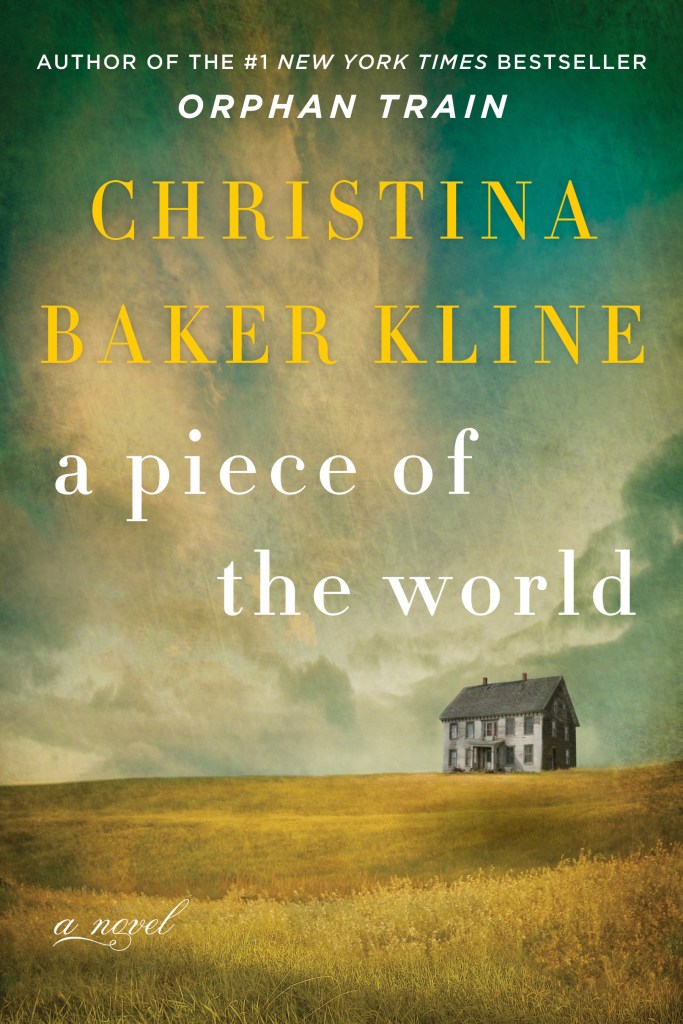
A Piece of the World, by Christina Baker Kline, is in a special category: Although the overall story is fiction, it is based on facts about real people, and reads like memoir.
The book is based on Andrew Wyeth’s painting called Christina’s World, pictured here. People have always noticed something slightly odd about the figure in this one—she’s not just reclining in that field, she looks like she’s wanting to get to that house, or perhaps even pushing or dragging her body along in the attempt. This is the germ of the idea for the entire book, which, although it does showcase some of Wyeth’s career, is primarily about the subject of the painting, Christina Olson of Cushing, Maine.

The book documents Christina’s entire life, which turns out to be a small one except insofar as she serves as muse to the famous painter. Christina suffers some kind of illness at age three (they never state what, but my thought was polio) that twists her legs up and makes her awkward and clumsy in all her movements. This and her own pride and self-reliance make her an outsider, both in her family and in her community, with the result that the chances others have for happiness seem to pass her by, no matter how hard she tries to grasp them. She grows up in the house previously occupied by generations of her ancestors; she cares for her brothers and her aging, ailing parents as her disability gradually worsens; and she is finally left with one brother to live out her days in an ever-diminishing daily routine circumscribed by her physical condition…until one day Andrew Wyeth’s young wife, Betsy, a family friend, brings him to visit, and he becomes fascinated with Christina, her brother Alvaro, and their house and farm in all its aspects. No detail is too large or too small for him to tackle in his art—he paints the rusty padlocks and spiderwebs, the sheer curtains blowing in the breeze from an upstairs window, Alvaro smoking his cigar—and this begins an almost 20-year relationship between himself and the two remaining Olsons, resulting in possibly his most famous picture/portrait.
“Later he told me that he’d been afraid to show me the painting. He thought I wouldn’t like the way he portrayed me: dragging myself across the field, fingers clutching dirt, my legs twisted behind. The arid moonscape of wheatgrass and timothy. That dilapidated house in the distance, looming up like a secret that won’t stay hidden.”
CHRISTINA OLSON
In some ways this is a dark, dour portrayal, but it is rescued from being too depressing by Christina’s will and strength of spirit, and by wanting to know what happens next. The book deals with complex issues; resentment, shame, lost dreams, family challenges, and social classes are explored, and the writer makes us realize that there is depth and intensity to even such a simple existence devoid of major events. There are some fine lyrical moments of expression, and Kline paints pictures with the words she chooses. I didn’t expect to like this book as much as I did—it kept me reading through one sleepless night, and I was a little sorry when it ended. It’s a great example of what an author can do with the kernel of a story, some thorough research, and a vivid imagination to bring them both to life.
Literary fiction
As I get older, read more, and spend a lot of time and energy reviewing what I have read, I am beginning to realize that I am not, despite aspirations, a particularly sophisticated reader. Beyond that, I have recently concluded that I tend not to trust my own reactions when it comes to reading and reviewing books that are deemed “literary” by other critics and/or readers. My priority in my reading life has always been to find and experience good story, but when I am confronted with something that doesn’t feel that way to me, rather than judge the book as being lacking, I judge myself as a reader. I think I am going to aim to change that in future.
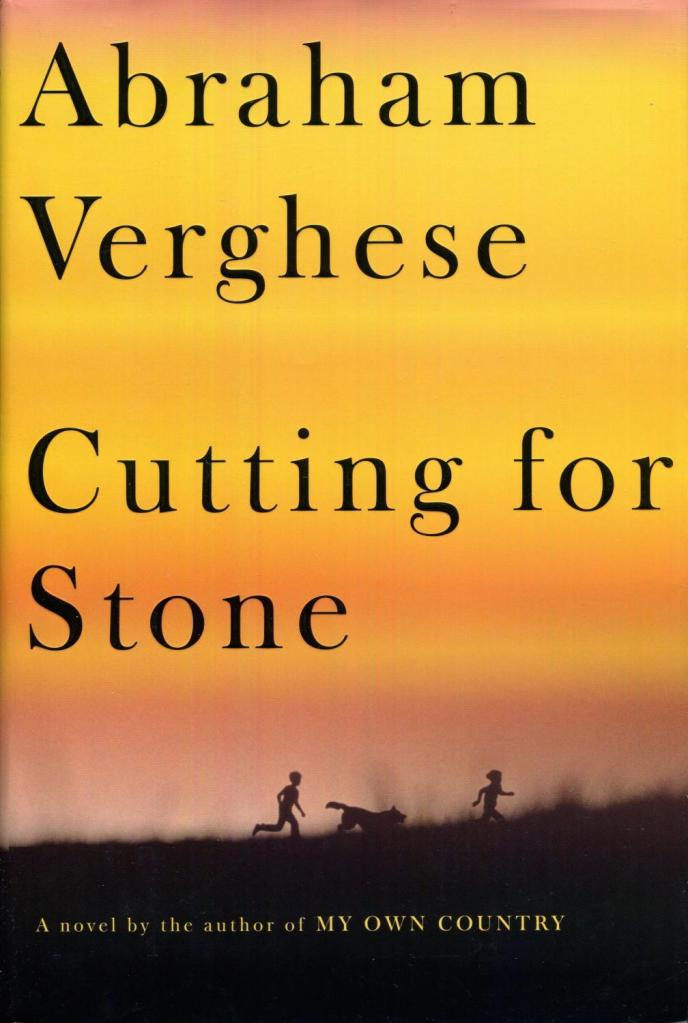
I have experienced this twice in the past six months, and the way I came to realize it was to read others’ extremely perceptive (and much more objective) reviews on Goodreads. I just finished reading Cutting for Stone, by Abraham Verghese, and at some point during its perusal I remarked that I found it nearly as hard going as Demon Copperhead, by Barbara Kingsolver. This observation should have revealed more to me than it did; but it took the remarks of “Ayaz,” on Goodreads, who gave the book a measly two stars (indicative of “it was okay”) to make my thoughts suddenly gel on the whole subject of literary fiction.
First, a description of the book: The protagonist, Marion, is a twin. He and his brother, Shiva, are the offspring of a brilliant but flawed British surgeon and his surgical assistant, a young and extremely devout Indian nun, whose pregnancy is only revealed to her colleagues (including the father) when she goes into labor. Their mother dies and, unable to cope with either the loss of Sister Mary Joseph Praise or the unexpected manifestation of offspring, their father abandons them; the twins are raised by a loving foster family made up of the remaining staff members (and their servants) of the mission hospital in Ethiopia in which they were born. Given the circumstances of their birth and that they are constantly exposed by their foster parents to both talk about and observation of medical procedures, it’s nearly inevitable that the two will grow up to become doctors, although the twins take entirely different paths towards this end. Personal conflicts and political events serve to separate the twins for an extended period, until tragedy reunites them.
I always have high hopes at the beginning of a book that has come recommended for its voice, its story, and/or the quality of its writing. Sometimes, as with Demon Copperhead, I recognize those merits for myself, while nonetheless being somewhat dragged down by both the intensity and longevity. But sometimes, as with Cutting for Stone, I struggle to recognize the merit as I grapple with the completion of the reading.
I’m not saying this is a bad book; although I breathed a small sigh of relief and reduced my rating from five stars to three after coming to certain realizations about my reaction to the book, I still found much to admire. But there were also unacknowledged problems with its narrative that I didn’t trust myself to articulate but that I could plainly see when someone else pointed them out for me.
One observation that resonated was a problem with a sustained development of the characters. When I reviewed Demon Copperhead, I noted that even though the book took me more than a month to read—having put it down for extended intervals to peruse more light-hearted works—I never lost sight of who the characters were, because their portrayal was so strong. With Verghese’s book I came to recognize that part of my frustration that caused me to drag out its completion was that there were certain key characters about whom I wanted to know more, but the author’s promising start in developing them was, over and over again, truncated or abandoned in favor of a sensationalistic denouement in the story as it transitioned from one stage to the next. His female characters are particularly clichéd, but even the men sometimes become indistinguishable one from another because of the similarity of their language, sentiments, and presentation. There were a couple of characters who stood out, but for the most part they were all subsumed by their careers.
Although Verghese is himself a medical doctor, I discovered that having that expertise and perspective were not enough for his descriptions to transport me into the lives of his characters. There were certain compelling moments in the throes of a complex operation that were exciting and involving, but the rest of it felt both clinical and too educational, for want of a better word, for a novel.
The purpose of this book was clearly to illustrate the depth and breadth of the idea of family amongst people who are unrelated but bonded, and although that was, to an extent, achieved, I grew first exasperated with and then bored by Marion’s viewpoint. And although this is ultimately a coming-of-age story like Demon Copperfield, I never perceived from Marion the same quality of voice that carried us from childhood to manhood. There was a certain sameness about the narration that caused it to be more tedious than it should have been.
The part I think I enjoyed most, and where I felt Verghese shone, was in the presentation of Ethiopia as a country and culture, caught up in the politics of change that were sweeping that nation in the upheaval of multiple revolutions. The world-building felt fresh and genuine.
Because of my realization about the sometimes excessive reverence I have for literary fiction, I will freely admit that I may have gone too far the other direction in judging this book. Certainly there are many readers out there who find its language, characters, and story completely compelling and who have freely awarded it top marks. If you still have a desire, after my comments, to read it for yourself, then by all means do so. We are all gripped differently by our reading, and you may agree with many that this is a masterpiece. But as for me, I’m going to try, in future, to tune in better to my innate sense of the quality of the story itself, which is my ultimate criteria, and let that lead me when evaluating any book, literary or otherwise.
Re-wilding
Scottish-American conservationist John Muir, the “Father of the National Parks,” once wrote that
“…when we try to pick out anything by itself, we find it hitched to everything else.”
John Muir
This quote was specifically called into use when considering the failing ecosystem of Yellowstone National Park, where the purposeful removal of wolves, Yellowstone’s top predator, meant that the elk population overgrazed the plants and trees, leading to the demise of songbirds, beavers, and cold-water fish. Wolves were the missing link in the equation that would keep Yellowstone healthy and, 28 years after they were reintroduced (in 1995), the ripple effect is considered one of the most successful rewilding efforts ever undertaken. The culling of the elk herds by the 80+ wolves now living in Yellowstone benefitted ravens, eagles, magpies, coyotes, and bears. Wolves’ preying on coyotes increased the populations of rabbits and mice, providing a wider food source for hawks, weasels, foxes, and badgers. Muir’s quote was certainly prescient.
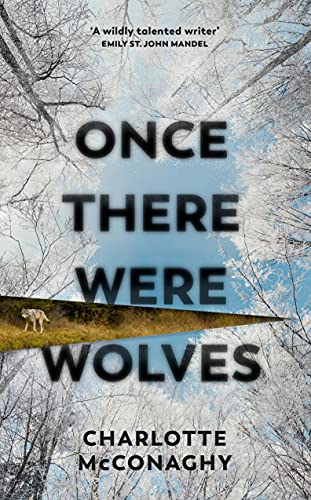
Charlotte McConaghy’s novel Once There Were Wolves posits a similar experiment to bring wolves back to the forests and Highlands of Scotland to rebalance biodiversity, depicting the difficulties inherent in convincing the resident human population (primarily sheep farmers) of the benefits to be had, and protecting the wolves against the farmers’ and ranchers’ conviction that humans and wolves can’t
co-exist on the land.
The protagonist is lead biologist Inti Flynn, a passionate young woman whose unusual upbringing by her father—living a subsistence life deep in the forests of Canada—has shaped both her beliefs and her career. She arrives in Scotland accompanied by her twin, Aggie, who is deeply damaged, mostly silent and passive, and spends all her time sequestered in their cabin. Inti has an extraordinary affinity for the wolves, heightened by an actual neurological condition called mirror-touch synesthesia:
“My brain re-creates the sensory experiences of living creatures, of all people and even sometimes animals; if I see it I feel it, and for just a moment I am them, we are one and their pain or pleasure is my own. It can seem like magic, but really it’s not so far removed from how other brains behave: the physiological response to witnessing someone’s pain is a cringe, a recoil, a wince. We are hardwired for empathy.”
Inti Flynn, Once There Were Wolves, by Charlotte McConaghy
The book is part literary fiction, part mystery, and engrossing in its narrative. Although the rewilding program is officially sanctioned by the government, there is massive resistance by the locals, some of whom are aggressive with their threats to kill wolves who set foot on “their” land. Inti struggles between her desire to protect her wolves and her need to engage with the locals as something other than a know-it-all outsider. She is assisted in making the human connections by the sheriff, local-boy Duncan MacTavish, but he remains something of an enigma throughout the story, and his passivity when it comes to enforcing Inti’s cause frustrates her. Then a local farmer goes missing, and speculation inevitably turns to assumptions about wolf culpability.
The best parts of the book are Inti’s detailed observations about the wolves—how they relate to one another and to their surroundings, and their habits, travels, and behaviors as they integrate into this foreign environment. The reader is transported to the hillside blind where Inti watches a new batch of pups scramble and play just outside the mouth of their den while the adults warily sniff the air, cognizant of the human close by, and the welfare of the small packs dispersed around the town becomes personal as each wolf becomes familiar.
Less effective, for me, was the rest of the narrative, especially that surrounding the sheriff, Duncan, and Inti’s sister, Aggie. I felt like we were too far into the story before we understood what happened to destroy Aggie’s confidence and turn her into the near-catatonic figure she now presents. Likewise, Duncan runs hot and cold, both with Inti and also with his commitment to doing his job (although his devotion to the individuals in his community is touching), and I was frustrated by the incitement to waffle over whether he was a good guy or a bad one. But McConaghy knows how to keep the action flowing throughout the narrative, and the mystery remains intriguing up to its final solution. Readers should be aware that this book presents scenes including violence and abuse, although much of that action takes place “off screen,” or is implied but not graphically described. But the few graphic depictions are powerful and potentially disturbing.
I enjoy a story with some meat on its bones—focusing on a particular iteration of a wider philosophy. As happens with my reading choices from time to time, there was a serendipity of theme between this book and The Crow Trap, by Ann Cleeves, which also detailed a biodiversity study in a rural area, but whereas I found that book almost completely lacking in appeal, Once There Were Wolves delivers all kinds of intellectual and empathetic content. Despite the few caveats above, I would definitely recommend this book to anyone interested in both a gripping story and a thorough education about how the biological world works.
For more information about the Yellowstone rewilding project:
https://www.muchbetteradventures.com/magazine/yellowstone-wolves-rewilding-1995-history-books/
Metaphor
If I had to define the central theme of the book Black Cake, by Charmaine Wilkerson, it would probably be summed up by this quote:
“But the fact was, when you lived a life, under any name, that life became entwined with others. You left a trail of potential consequences. You were never just you, and you owed it to the people you cared about to remember that.”
ELEANOR BENNETT
The cake in the title, made with blended fruits soaked in liquor and with burnt sugar added to produce its distinctive black color, is a symbol of family, tradition, a thread of familiarity that stretches back to connect all the disparate parts down through generations. It’s also a metaphor for the complexities of culture, in which such issues as colonization, slavery, immigration, assimilation, and social, racial, and political borders figure into every aspect of life—or a recipe.
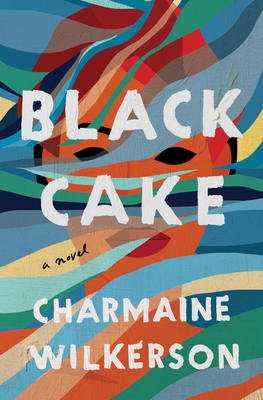
This book is a kind of revelatory fiction; the story is told completely in third person, but from multiple voices and points of view, and a new bit of the story is revealed as another person takes up the narrative and adds his or her perspective. Situations are fleshed out by hearing about them from different voices and seeing them through different eyes, and each narrator has a reaction to share. Although Eleanor Bennett, the matriarch of this family, is the pivotal character, the story is moved forward by noting the effects all the secrets of her life have had on the members of her family, most specifically her children, and also by revealing the major impact that both significant and tertiary characters in her past have had on hers and everyone else’s future.
Although I had some difficulties with the book, the most persistent probably being that Wilkerson stuffed it as full of social issues as her black cake bulges with fruit, I appreciated it as a whole. I couldn’t wait, when I reached the end of a chapter, to turn the page and see what the next one would contain, and I was seldom disappointed. Murder, desperate acts, rebirths, aliases, grand secrets, it’s all there in Black Cake. The story is about decisions made that can never be taken back, about necessary sacrifice and stubborn persistence. It’s a powerful picture of what it means to be a survivor, and to preserve a sense of racial and cultural identity throughout. The thing I liked most about it was that the narrative evolved as a true storyteller would reveal it, carrying you along with her into an evocative past. Give it a taste and see if it’s to your liking.
 The Book Adept