Circus!
I’m at the end of Week Six of self-quarantine, and feeling restless. That’s not to say that I agree with any of these initiatives to hurry to open things back up—we stay inside to lower the curve, to protect others and ourselves, and it isn’t time yet. But I can acknowledge my feelings and those of others who are going a little stir-crazy.
So, what could be better to read in a time of restriction than something completely escapist? And what could be a more familiar escape trope than running away to join the circus? It’s a notion secretly cherished by people young and old. Running away is one thing, but in this fantasy, destination is all.
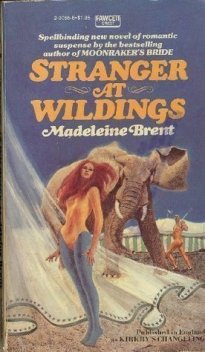 I have a few favorites in the run-away-to-the-circus panoply of titles. First on my list is A Stranger at Wildings, originally titled Kirkby’s Changeling, by Madeleine Brent (otherwise known as Peter O’Donnell). At age 13, Chantal discovers the devastating truth about her parentage, and is about to be sent to an orphanage; instead, she decides to disappear into the world of the circus that has just paused in her English town on its way to Hungary. We follow Chantal’s career as a trapeze artist until she turns 18, at which point events conspire to change her life and send her back to England. But she’s not sure she wants this change, especially if it means leaving her circus family. It’s pure gothic magic in the style of Mary Stewart.
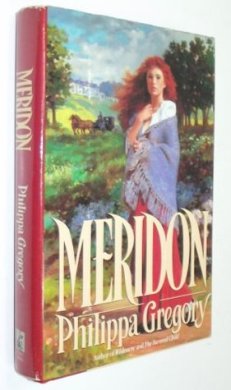 The book Meridon, by popular historical fiction writer Philippa Gregory, is one of my personal favorites, because the protagonist is both a gypsy and a bareback rider, so you get lots of horsey bits. But the book is the third in the Wideacre trilogy, and you really do need to have read the first two in order to understand particularly the second half of this book. All three books are engaging (although a bit scandalous here and there), so if you have the time…and you do…? The first two are Wideacre and The Favored Child (neither of which has any circus motif).
The following would most likely be found in the young adult section:
Wonder When You’ll Miss Me, by Amanda Davis, is a coming-of-age book, a triumph over adversity book, a story in which a seriously damaged and divided girl gets the chance to work through it all and pull herself together, with a backdrop of circus life that jumps off the page. The writing is beautiful, the characters are real and individual, and the story-telling is captivating. I wish the publisher had designed a cover to match.
 That Time I Joined the Circus, by J. J. Howard, tells of Lexi, a snarky New York City girl, who makes a huge mistake and faces a terrible tragedy. In the face of this, she decides she must track down her mother, who is rumored to be traveling with a circus somewhere in Florida. Lexi doesn’t find her mother there, but she does find a temporary home with the circus. In this story, what the protagonist is running from is equally as important as what she is running to, and she
has to resolve these issues, which are dealt with in jumps from past
to present.
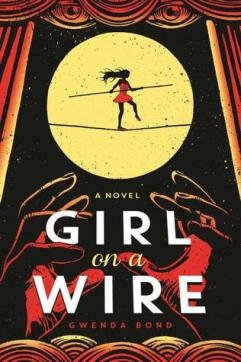 Even in the circus sub-genre, there are books with “girl” in the title!
Girl on a Wire, by Gwenda Bond, is a little different, in that most of these stories start with someone running away to the circus, but Julieta Maroni is already a circus performer who is fleeing her family to convince her father, the best wire walker in the world, to join the giant Cirque American despite his feud with their other stars, the Flying Garcias. It’s a rather obvious Romeo-and-Juliet set-up, but it’s also a mystery, a fantasy, and a great depiction of performances on the high wire and trapezes. It has a sequel,
Girl in the Shadows, with a different protagonist but taking place at the same circus.
Some more adult books in this sub-genre:

One title to which your mind will probably immediately go is The Night Circus, by Erin Morganstern, in which the circus is the magical, seductive background for both a battle of wills and a deeply romantic love story.
 Another is Johannes Cabal the Necromancer, by Jonathan L. Howard, a funny gothic tale about a man who sold his soul to the devil, but decides he wants it back. Satan agrees to a wager: Johannes has to persuade 100 other people to sign over their souls in exchange for his own. He can have one calendar year and a traveling carnival as the timeframe and setting to achieve his task. Johannes summons an unearthly crew and takes his show on the road.
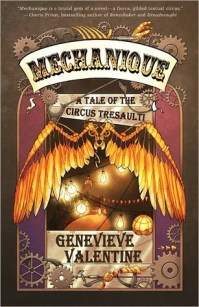 Mechanique: A Tale of the Circus Tresaulti, by Genevieve Valentine portrays a post-apocalyptic future in which a band of lost souls travels from one ruined city to the next, bringing their marvels to eager crowds of war-ravaged humans. It’s been described as steampunk, as a prose poem, and as a disjointed tapestry of image and text that will only appeal to a few—but those few rave about it.
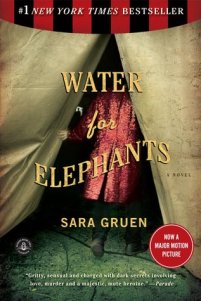 In Water for Elephants, by Sara Gruen, Jacob Janowski, 23 years old and only days away from his final exams to become a veterinarian, is devastated (and stricken by poverty) when his parents are killed in an auto accident. He hops a freight train that happens to be transporting a circus, and soon becomes an integral part, caring for the animals while yearning after a married woman and a difficult elephant. The story is told in flashback, from the viewpoint of an elderly nursing home resident reflecting on his past. (There is also a movie, though I haven’t seen it.)
 The Blue Moon Circus, by Michael Raleigh, is the highly rated story of ringmaster Lewis Tully, who gathers together an eclectic group of people to form an independent traveling show. It’s sweet and funny, with likeable characters both human and animal, and a lot of heart.
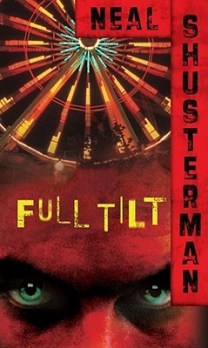 There are also those stories of circuses that occupy the dark end of the spectrum, the evil circus or carnival from which you wish to escape, such as the classic Something Wicked This Way Comes, by Ray Bradbury, Full Tilt, by Neal Shusterman, or The Carnivorous Carnival, by Lemony Snicket. (To this day, hearing the eerie carousel music soundtrack to the movie version of Something Wicked can really mess with my mood.)
Goodreads has quite a comprehensive list of “circus and carnival books” you might want to visit, if one of these books whets your appetite for more “escapist fiction”! One I have always wanted to try is Nights at the Circus, by Angela Carter.
En pointe
After my trip down childhood’s memory lane,
I decided to jump over to read a YA novel set in a ballet school in Manhattan.
 Tiny Pretty Things, by Sona Charaipotra and Dhonielle Clayton, takes the usual envies, rivalries, and jealousies of adolescent girls and ramps them up exponentially by placing them within the rarefied atmosphere of one of the elite—and therefore intensely competitive—ballet schools feeding into the American Ballet Theatre. The girls in the story are at levels 6-8, the top three at their school, and therefore about the equivalent of juniors and seniors in high school, except that their preferred outcome to academic distinction and college is a place as a dancer at the top ballet company in the country.
The authors do well at distinguishing the various personalities among the girls. There is Bette, a dainty ice-blonde diva with a perfect turnout, whose older sister’s legendary prowess weighs heavily on her. Her boyfriend, Alec, is also her talented dance partner, looks as if he could be her taller, more muscular blond brother, and is the son of one of the members of the board of trustees, giving him (and Bette by extension) an edge.
June, Korean name E-Jun, is fighting against both the school’s and her mother’s judgment to keep her place; her dance technique is all but perfect, but she has never been cast as anything but an understudy, and is desperately starving herself and rehearsing hours a day to change that judgment. It doesn’t help that her fellow Koreans at the school shun and belittle her.
Eleanor, as Bette’s best friend, has been eclipsed by her in every way, although gaining a certain caché by being a part of her entourage; it’s hinted that she may have found another, less reputable way of working herself up the corps de ballet ranks into a solo position. And Giselle, known as Gigi, the new girl in school, is a mixed-race carefree Californian, immensely talented but not used to the intense and sometimes hateful climate of these surroundings, and with a secret malady that puts her at a disadvantage should anyone find out.

There is a back story involving the previous new-girl-in-school, Cassie, a cousin of Alec’s who was injured last year when she was dropped from a hold during a rehearsal and broke her hip. Will, the dancer who dropped her, has a secret that certain people were willing to keep if he would help them out by removing Cassie from competition, but no one thought it would be so permanent. Henri, a newly enrolled student from France, turns out to have a connection with Cassie that has brought him to the school to discover who sabotaged her career. And now that Cassie has been replaced by Gigi, odd occurrences start up again to dog her progress, from malicious rumors to damning pictures to active attempts at injury.
I can definitely see how both the romance of the dance and the competitive snarkiness of the dancers in this book would appeal to teens. It’s another iteration of Gossip Girls, but with ballet as its background. The characters are well defined, the world-building backdrop of ballet school is convincing, and the drama is compelling.
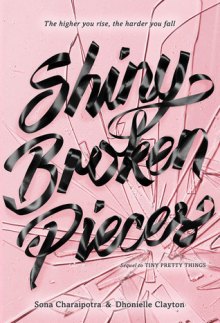 The big flaw for me was that there is absolutely no resolution in this book. Suspicions are high that Bette is behind the pranks that turn ugly, but then we discover that in fact she is only accountable for a few of the most obvious, and someone else behind the scenes is conducting the rest of the campaign. We receive hints at who it might be, but nothing is ever confirmed, and after reading the entire book waiting for resolution to the mystery, I discovered that there is a whole other book, Shiny Broken Pieces, that you have to read to find out what happens to Bette, June, and Gigi! And while I mostly enjoyed this volume, by the end I was weary of the tiresome back-and-forth he-said-she-said of who was responsible for what, and I don’t think I have the patience or the interest to pursue those answers for another almost 400 pages! Perhaps I’ll come back to this story someday…
There are numerous other books, some written for teens, that incorporate ballet (and other kinds of dance, too, of course) in fiction. One I read and enjoyed was Bunheads, by Sophie Flack. Another is the dark and disturbing The Walls Around Us, by Nova Ren Suma. And of course there is the classic children’s book, Ballet Shoes, by Noel Streatfeild, immortalized by Meg Ryan in the movie You’ve Got Mail. If you like this theme, here is a list of YA Dance Books compiled by Goodreads members, some of which you might enjoy.
Serendipity
It’s so fun when you have a friend who also likes to read and who gets excited about what she’s reading and wants to tell you all about it.
It’s even more fun when your friend thinks she has discovered a new author, only you know something about this author that she doesn’t and can share that.
 I went to a concert the other night with my friend Lisa, and while we were waiting for the performance to begin, she said to me, “Oh! I’m reading the BEST BOOK right now, I just discovered this author and I love everything about it, the story, the writing style, it’s so good! You have to read it!” Then she pulled out her phone, punched a few buttons, and held up a picture of the book cover, which was
Ninth House, by Leigh Bardugo.
“Oh!” I said, “Leigh Bardugo!”
Lisa looked surprised. “Do you already know about this book?” she asked.
“No. That is, I’ve heard of it, but no, I know her because she’s a young adult author.”
Lisa had no idea that before she penned her first adult novel, Bardugo had written the Shadow and Bone trilogy, the Six of Crows duology, and King of Scars, returning to the Grisha universe (as well as Wonder Woman: Warbringer). So I got to tell her all about those books, and recommend the ones I particularly like (Six of Crows and Crooked Kingdom), as well as tell her the story of when Leigh Bardugo was a brand-new, just-published author who visited Book Café at Burbank Public Library and did a stunning visual presentation for our teenagers of all the ways in which she had found her ideas for writing the Grisha books.
 My comments about Six of Crows, from Goodreads:
I liked the first series by Bardugo well enough, but was fatigued by all the magic and angsty pseudo-romance by the end of it. But this one stars a good old-fashioned gang of thieves with skills and exploits attributable for the most part to themselves, not to their paranormal powers. There are Grisha in the mix, but they are much more human, and humanized by association with the rest of the characters. There is attraction among the characters, but it’s much more subtle and doesn’t take over the story, just adds to it. I particularly liked the main protagonist, Kaz, and the Wraith, Inej. And Bardugo’s writing has jumped up to beautifully lyrical, not an awkward word anywhere. Likewise, the world-building and plotting are amazing. Can’t wait to read the next one.
 And about Crooked Kingdom:
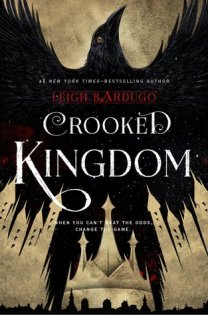
I thought Six of Crows was good, but this one really raised the bar. I got about a third of the way through it and thought, how can it get better than this? and after everything that has happened, how can there still be two-thirds of the book to go? But there was, and things just kept getting more interesting, more desperate, more seemingly unsolvable and insurmountable, with a great big build-up that made me crazy to finish but made me want to savor it all at the same time. I ended up reading the last five chapters a couple of times; I’d read a chapter at breakfast and then at lunch, instead of moving on, I’d go back and read what I read at breakfast to make sure I had caught everything, seen all the possibilities, gathered all the nuance. You know a book is good when your first response at turning the last page is a more than half-hearted desire to start the book over again right that minute. Way to step up your game, Leigh Bardugo.
So now, I will have the pleasure of reading her first book for adults, and Lisa can go back and dip into her back list. Isn’t it wonderful to have friends who read?
Call Down the Hawk
The mind of Maggie Stiefvater is a strange, labyrinthine forest of compelling characters, lyrical prose, and tantalizing half-formed truths not quite available to anyone but her.
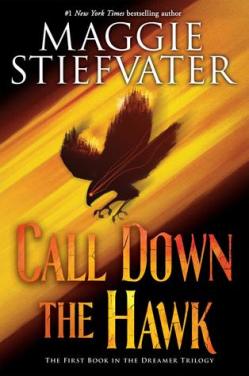 This much-anticipated book is the first of a new trilogy that nonetheless revisits some familiar characters. Starring in this series are the Lynch brothers—Declan, Ronan, and Matthew—previously seen in Stiefvater’s Raven Boys books, plus a new dreamer, Jordan Hennessy, and her creations, a host of doppelgangers pulled from her sleep-time. All of these actors—familiar and unfamiliar—are fascinating, fallible, and easy to like or at least to follow.
Less sympathetic because harder to fathom are the “Zed” (dreamer) hunters who are on a mission to kill due to some nebulous vision that a dreamer will end the world if not stopped. The only one of these we get to know in some measure is the enigmatic but sympathetic Carmen Farooq-Lane; the rest of her “crew” by uneasy association (Lock, Ramsay, etc.) are mere names and occasional paragraphs of words, all hired, paid, and spurred on by an unnamed organization about which we are fated to know nothing, at least in this volume. Equally puzzling are the Visionaries who are in on the kill by association, in that their visions lead the hunters to the dreamers.
But it’s hard to understand where they came from, what was their original purpose, and why they are cooperating in the death of people who are, let’s face it, more sympathetically aligned with them than are these killers.
You will get from this description that there are parts of this book that are clear, linear, and engaging, and other parts that are frustrating, tangential, and confusing.
I was happy to see Ronan in the driver’s seat. I was less happy with the few glimpses we get of his paramour, Adam, away at college, but there are implied promises that Adam will reappear down the road. I loved the revelations about Declan’s persistent efforts to present a false face to the world, because in The Raven Boys and sequels I found his stance unbelievable and knew there was something better underneath the smug, preppy exterior. The new character(s) Jordan Hennessy, with her skills and her plight, are interesting and endearing and make you hope for their salvation. The exterior details surrounding everyone—the art forgeries, the black market, the odd foreshadowy people who turn up here and there, the bizarre real estate—give an extra depth to the story.
 This is definitely not a stand-alone work, what with all of its many implications left hanging. Truths are almost but not quite revealed about so many puzzles left over from The Raven Boys books or opened up for speculation in this one—the origins of Niall and Aurora Lynch, the disembodied voice of Bryde hocking Rowan from his dreams, the as-yet-unknown Dreamer X who is responsible for the hypothetical apocalypse…. This book is made of dreams and, like the dreaming mind, it all seems to make perfect sense until you wake up and realize you have a lot of questions! Can you please write a little faster, Saint Mags?
Crossover novels
Two of my favorite YA books of recent years were written by the same person. She’s not a well-known author, and not that many people have read her books compared to the overwhelming numbers who buy every book written by realistic fiction writers Sarah Dessen, John Green, or Rainbow Rowell. But if you haven’t read at least two of her books, you’re really missing out.
 I just did a re-read of her first,
I’ll Be There. Previous to writing this realistic YA novel, Holly Goldberg Sloan was a screenwriter for family feature films, and some of that particular skill comes across in her first novel. It’s told in third person omniscient, so there isn’t nearly as much dialogue as you might expect, but you do find out a lot about the characters from the inside out, as you follow their thoughts about those with whom they are interacting. And these insights are a big part of the magic of this book.
Emily Bell is just a regular girl. Her mother is a nurse; her father is the choir director at their church; and she has an endearing little brother and a dog. Up until her 16th year, Emily’s life has followed a fairly conventional path. But as a result of taking one risk, she meets a boy unlike anyone she has ever known before, and this boy is going to change Emily’s destiny in a multitude of ways.
I know what you’re thinking: A meet-cute, followed by insta-love and some kind of semi-fake drama that throws them together or tears them apart or whatever. But this book, while written simply and clearly with largely knowable and understandable characters, is anything but typical.
Sam Border and his little brother, Riddle, have lived a life that is the polar opposite of Emily’s prosaic suburban existence. Their father, Clarence, a narcissistic grifter, stole them from their mother when Sam was in grade school and Riddle was little more than a toddler, and they haven’t had a home since. They travel wherever the luck takes Clarence, living in condemned houses and broken-down trailers, sometimes sleeping in Clarence’s truck. Sam never made it past second grade, and Riddle has never attended school.
When Emily and Sam meet and get together, each one is a conundrum to the other. Sam may see Emily more clearly than Emily sees Sam, because he knows the circumstances in which she was raised, while Emily has no clue about a life that doesn’t include a clock or a cell phone, in which people forage for leftovers from the trash at the fast food place and never know when they will be moving on. All Emily really knows about Sam is that he is different from anyone she has ever met, and she wants to know more. Their worlds are bridged by their attraction for one another.
Emily’s parents, concerned about their daughter’s fascination with this stranger, encourage her to bring Sam home to dinner, and when they begin to figure out what Sam’s life must be like, and then meet Riddle for the first time, their concern shifts to a desire to help. But the paranoid Clarence, who has trained his boys in how to remain invisibly under the radar, interprets this attention as a threat, and once again the boys are launched into the unknown, dragged at Clarence’s heels. This time, however, someone knows, someone cares, and someone is looking for them.
The book is filled with whimsy, pathos, humor, tragedy, and love. I have read it three times, and can imagine reading it again a few more. The book reminded me a bit of Trish Doller’s book Where the Stars Still Shine, because of the similar circumstances of a parent who lives his or her life with almost total disregard for the well-being of the children.
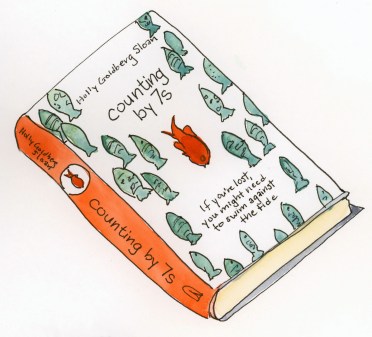
Sloan’s other notable book is called Counting by 7s, and was Amazon’s best novel of the year for middle grade when it came out in 2013. Although it, too, highlights a child who is different from everyone around her (the one fish swimming against the current), it could scarcely be more different a story than the romance between Emily and Sam.
Willow Chance is a 12-year-old genius, a quirky obsessive-compulsive whose life was saved when her parents adopted her as a small child. Although she doesn’t fit in well with her peers, her multitude of interests (medicine, gardening, languages) keep her happy, if solitary. (Think of Sheldon Cooper as a small mixed-race girl.) Tragedy strikes when both her parents are killed in an automobile accident and Willow has to confront the possibility of foster care while doing without the love of the only two people who ever made an effort to understand her. What she does to reconstruct her life and find a family will keep you riveted to the end.
The only similarity of this book to the first one is Sloan’s multi-character-driven storytelling, which makes Willow’s story particularly vivid. The writing is spare yet incredibly dense in detail, if that’s possible. Although this book received a lot of attention from a multitude of literary awards geared towards writing for young people, I have always argued with my librarian colleagues that while it is about a middle-school-age child, the story is more sophisticated than can be appreciated by children of that age. One Goodreads reviewer conceived of Willow as “an American Matilda,” that beloved heroine created by Roald Dahl, which I thought was particularly insightful; and another character of whom I am reminded is that of Flavia de Luce, the amateur chemist and sleuth from Alan Bradley’s mystery series that began with The Sweetness at the Bottom of the Pie. There, as here, while the protagonist is a young girl, the story is for adults.
Don’t miss out on these two stories. Whether you are a teen or a grown-up, they are well worth your reading time.
Big Library Read
From November 4th through November 18th, the e-book and audio book platform OverDrive, which supports digital formats in most library systems, sponsored what they called the Big Library Read. For this reading initiative, OverDrive selected a book and provided unlimited copies to all library customers to download for free, with no wait-list.
One thing I believe OverDrive is hoping to do with these kinds of initiatives is to get library users accustomed to the idea that if they check out a digital book, it returns itself to the library at the end of the lending period, so there are no late fees. Another incentive I have personally found appealing since I no longer work full-time and find myself increasingly reluctant to leave the house is that if you finish the book you are reading at bed-time and haven’t got another book lined up ready to go, you can hop on your library’s website at 2:00 in the morning, if need be, find an e-book you want to read, and 60 seconds later (unless it’s wait-listed) it’s on your Kindle or other device, ready to go. Even Amazon Prime can’t beat that.
 The book OverDrive selected for November’s Big Library Read was I’m Not Dying with You Tonight, by Kimberly Jones and Gilly Segal. The book looked intriguing to me, with its theme of race relations—I am always looking for new books with teen appeal to include in my Young Adult Literature class as examples of inclusivity and the outing of privilege. I liked the idea that the book was written from two separate perspectives, one black girl and one white, by two authors with diverse experiences dictated partially by race.
The book begins with newcomer Campbell reluctantly agreeing, under pressure from a teacher, to work the concessions stand at the Friday night football game. The teacher presents it idealistically as a chance to get to know others at the high school to which Cameron has just transferred—both the kids with whom she will work the stand, and the ones who come to buy—but Campbell has her doubts. She was sent to this school when her mom moved overseas for a job, leaving her to live with her dad, and it’s a different experience for her—the school is in a predominantly black neighborhood, whereas her last school had only a handful of black students. Since Campbell hardly knows anyone, the teacher assures her father—who is leaving that night to go out of town for the weekend—that she will drop Campbell at home after they wrap things up at the stand.
Unfortunately, things at this concession stand are neither planned out nor conducted in the same efficient way to which Campbell was accustomed at her old school, where she worked with a bunch of her friends. She is stuck with a couple of people who are patently not interested in being there (or helping), and the burden of the labor falls on her. As the line lengthens at the window and the increasingly desperate Campbell falls further behind, the people waiting begin to verbally abuse her.
Enter Lena. Campbell has seen Lena around school, but they know each other only well enough to say hi. Lena’s initial reaction to the milling crowd around the concessions stand is to tell Campbell to get her butt in gear, but she soon realizes that what’s going on isn’t Campbell’s fault. Then an altercation breaks out between a couple of people standing in line, and what begins as a minor food fight abruptly escalates. Lena jumps inside the stand with Campbell, and they decide to just ride things out in there…until shots are fired. Lena’s cell phone is dead, and Campbell’s is in her backpack in a classroom far from where they are, so they can’t call for help. This is the set-up for a night of escalating violence and chaos in which Lena and Campbell have to rely on and trust one another to get themselves out of this mess, which has turned into a town-wide race riot.
I liked this book, but…it felt like something was lacking. It will be a winner for sure with teen book clubs (and maybe some adult ones too), because there are so many things to discuss—the precon-ceptions, the white and black perspectives, the differing attitudes, the connectedness (or lack of) to the community, the whole boyfriend thing (to what lengths will I go to keep my man), etc. But I almost felt like it was written specifically with this purpose in mind—to provide lots of fodder for a discussion group—and not simply as a novel.
There’s no real story arc; it’s more of a slice of life-type thing, with documentation of two girls’ experiences of the same events over the course of one night. It’s intense and fast-paced, and keeps you reading, and it’s not bad…but I think I would have appreciated it a lot more had there been more development, more interplay between the girls, maybe even some continuity beyond this one night. There wasn’t enough “there” there. People have been citing this as the natural follow-up book to The Hate U Give, but while it focuses on some of the same issues, has great characterizations, and raises lots of questions, it’s not a STORY the way that book was, and that’s disappointing. While I wouldn’t turn you away from it, if you want a more comprehensive treatment of these issues I’d say to read The Hate U Give, On the Come Up, How It Went Down, or Lies We Tell Ourselves instead.
On the Come Up
You always worry when the first book of a new author is as good and as much of a hit as was The Hate U Give (THUG), by Angie Thomas—sales, prizes, a movie, all for a first novel. You worry that she’ll be a one-hit-wonder, that the kudos for the first book will freeze her in her tracks, that she’ll never be able to up her game. But this book was definitely “on the come up.”
Having read both, I feel like maybe this one more directly expresses the personality and background of its author, that perhaps it was a project closer to her heart and to her authentic self.
THUG was about a girl who was being victimized by the system and figures out that speaking her mind and finding her voice are important. It’s about the giant and overwhelming exterior forces that shape a person, and what it means to go up against them.

On the Come Up is the story of quite a different girl, one whose story is driven by the choices she makes while pursuing her dream. Although the books share some commonalities (project kids going to school in the privileged white world, conflicts between the traditions of home vs. the expectations of outsiders), this book is more intimate, with a tight narrative focused on protagonist Bri.
Bri Jackson lives with her mother, Jay, and her older brother, Trey. Her father, a rapper, was shot by a gang member when Bri was little; her mother, eight years clean after a drug addiction, is doing her best to provide for the family, working as a secretary at their church. Trey, who graduated from college summa cum laude, can’t find a “real” job and is working in a pizza parlor to help make ends meet until he can figure out a way to continue his schooling (he wants to be a doctor), but sometimes, when trying to stretch the dollars, it’s a choice between rent, food, or lights. Then Bri’s mom loses her job, and the desperation accelerates.
Bri is a talented rapper who wants to follow in her father’s footsteps, but using her own words and style. She is well motivated by a desire to take care of her family, but she’s also 16 years old, so she is impulsive, stubborn, and occasionally irrational as she acts out against the injustices in her life. She is also determined on getting what she wants, for her, for fame and security, for love. She is pushed and pulled by people who want to help her and those who merely want to profit by her talent, and she hasn’t yet figured out that if she’s not true to herself, none of it will work.
The incorporation of Bri’s lyrics give the story authenticity and depth. Writing prose and writing poetry (or lyrics) are such different skill-sets that it’s always impressive when an author manages both in the same work, and makes them work. Thomas is a gifted writer, and her exploration of the themes of systemic racism and inequality, social injustice, and gang violence are only exceeded by her skills at depicting them through utterly believable characters and a compelling story line. I’m impressed with book #2, and can’t wait to see what she’ll be up to next.
Here is the author herself, delivering some of Bri’s lines in the rapper “ring”:
READERS’ ADVISORY NOTES: Thomas’s books would obviously appeal to anyone looking for diversity in their reading material. But just as the so-called “problem novels” of the 1970s and ’80s fell by the wayside because they were too one-track, diversity can never be the only reason for a book to be judged “good.” Angie Thomas writes powerful stories of coming of age in an atmosphere of adversity. They are artfully written, character-driven, and satisfying. Most young adult readers who enjoy realistic fiction and like a scrappy, determined protagonist would appreciate and enjoy On the Come Up. The evocation of empathy with the targets of racial profiling is a big plus to a good story.
Ash & Bramble
“What if the stories aren’t told?
What if they’re lived? What if you were forced
to live your life in the shape of a story that is
not your own, with no choice about who you are
and where you’re going?”
Ash & Bramble, by Sarah Prineas, has an intriguing premise…and buries it so deeply (the above quote is from page 265) that it’s hard not to be confused and frustrated before you arrive at a partial explanation; and after that it’s equally difficult to put up with the lack of certain details that end up detracting from the true potential of the book.
 Despite all its publicity copy, I would not
call this a true fairy tale retelling.
It’s a book with a bigger concept,
a philosophical question in which fairy tales are used as illustrations, in a way. It reminded me a little of Cornelia Funke’s Mirrorworld series (Reckless, Fearless, and The Golden Yarn), in which various remnants of fairy tales are present but in a dark and twisted setting that isn’t about that trademark feel-good happy ending they all promise (marry-the-prince trope).
People may scream “spoiler” when I explain, but honestly, I would have been somewhat happy had someone spoiled things for me a little earlier on in the book. Basically, Story has become a powerful force in the world, and wants everything its way; it has co-opted the Godmother (nothing fairy-like about her) to enforce its will on the people by making them all act out the same stories, over and over and over again. In service of this series of “passion plays,” the Godmother has enslaved countless unfortunates to labor without ceasing behind the scenes to make shoes, sew dresses, dip candles, construct props, and spin straw into gold. So between the people working their fingers to the bone as prop-makers and the ones being forced onto the stage to re-enact the same tales, pretty much everyone in this book is miserable.
Pin (a seamstress) and Shoe (a shoemaker) are trapped in the Godmother’s fortress of fairy tale props, but because Pin possesses a secret artifact (a magic thimble), they have an advantage over their zombified colleagues and are able to look outside their presumed fates and aspire to something better. Unfortunately for Pin, the Godmother has her own magic thimble, is aware of Pin’s speshulness (although not aware of the twin thimble), and Pin wakes up one day to find herself cast by the Godmother as the lead in that hoary old tale of Cinderella.
In this way, the book itself echoes the state of its characters: There is the Before (everyone’s past), and the After (in which they have been brain-wiped and re-set to participate), and there is also the Before (in the fortress) and the After (in the tale) for the reader.
I’m not going to say that I didn’t enjoy the book, because it had some wonderful aspects to it. I thought the world-building and scene-setting were good; I was enamored of a couple of the characters, intrigued by the idea of Story as a power all its own, and caught up in the action of rebellion. But when we get to the end of the book without finding out one simple thing—where the thimbles came from and what was their intended use (as opposed to the perversion of powers wielded by at least one of their wearers)—I have to admit that I gave the writer a great big “C’mon!” There were several other glaring unlikelihoods that I won’t share here but that have caused an outcry among some reviewers on Goodreads. With all of that, I wouldn’t tell you not to read Ash & Bramble, because in many ways it’s better than the bulk of the true retellings out there. But be aware that it is more a foe than a fan of fairy tale.

Parenthetically, can we talk for a minute about that cover? Ornate typography? Good. Brambles with accompanying thorns? Good. Big floaty red chiffon skirt edged with ashy gray? Good. Backless sequined slutty Las Vegas-style “bodice”? C’MON. So close.
Cross-genre delight
One thing you learn when becoming a readers’ advisor is,
you can’t be a book snob. Some people pride themselves on only reading “worthy” or “classic” or “literary” fiction. Others believe that while mainstream fiction is legitimate, anything that falls within a genre description is somehow less-than. When you read so as to address the interests of every type of reader, the fortunate outcome is that you discover there are “worthy” books—that is to say, engaging, well written, and with something to say—within every category of fiction.
I have wondered whether I should bother reviewing older books here, or whether I should just be addressing newly released works, to keep up with the ever-changing whims of contemporary readers. My conclusion so far has been that it’s all right to cover older reads, because no matter how long ago they were written, they will be new to someone.
Today, I just finished rereading Bloodhound (Beka Cooper #2), by Tamora Pierce. Pierce is much beloved by many fantasy readers, and has been incredibly prolific in the number of books and series she has written that are all set in the kingdom of Tortall. Tortall is a semi-feudal land populated by knights and ladies (and some knights who are also ladies), master craftspeople and master thieves, commoners both honest and corrupt, and the supernatural creatures who also make an appearance. The gods are definitely present (though mostly in subtle ways) in Tortall.

Rather than write one long series with a particular cast of characters, Pierce has broken down the Tortall legend into small “cycles” of three or four books each, that come at the world and its events from many different perspectives. While all these novels are immensely popular with a wide variety of people from 10-year-olds to the elderly, it does seem to me that the earlier books were specifically written to appeal to middle-school teens. Although many adults read them, there is a large percentage who do so out of nostalgia, because they read Pierce as a child and want to revisit the world of Tortall.
The first thing I like about the Beka Cooper series, therefore, is that while the books are completely teen-friendly and accessible (and are, indeed, marketed to teens), they are written from a much more adult viewpoint. While Beka, the narrator, is a young woman, she is more woman than girl, and the others with whom she interacts are likewise more mature. This is yet another in the growing list of teen fantasy series that could equally well (or perhaps more successfully) have been marketed to adult fantasy readers.
The second thing I like about the series is that it so fluidly combines medieval fantasy with mystery and police procedural, using a memoir format—basically, all my favorite genres rolled into one. The characters (and there are many) are engaging, the situations are surprisingly sophisticated (how many young adult novels expound on the effects of counterfeiting on a nation’s economy?), and the mysteries are well paced and satisfying. Beyond this, Pierce has exerted herself to provide a made-up language, reminiscent of the “thieves’ cant” you find in Regency romance novels, that give the books a particular flavor. The inclusion of this lingo also cleverly circumvents any criticisms she might get from parents who ban language and sexuality by expressing things that she couldn’t do in a teen book if she put them in contemporary English. Pierce has taken pains to spell out the differences in rank from that of the King in his palace down to the lowliest gixie picking pockets amongst the slums. There is no difference made in the characterizations between children, teens, and adults in terms of attention to detail, and while Beka remains firmly the main character, the people with whom she partners, the neighborhood from where she rose to the police force, and the “coves and mots” she encounters in the course of her work are all given a real existence. Finally, the books feature strong female heroines, a welcome departure from some fantasies.
 Terrier, the first book (released in 2006), takes us away for the first time from the lords and ladies, knights and squires of the other series and introduces Beka Cooper, an orphaned 17-year-old with some special gifts that lead her from the Lower City (the worst neighborhood) of Tortall into a career as a “Dog,” or police officer, in the Provost’s Guard. She is assigned as a trainee (“puppy”) to two veterans, Tunstall and Goodwin, and proves herself as an officer who hangs onto a case like a terrier until it’s solved.
 In Bloodhound (2009), her second year on the force is also documented in the pages of her journal, and it’s quite a ride. As a new Dog, she is matched up with four different partners who don’t work out, and she ends up instead working solo with Achoo, a scent hound she rescues from an abusive handler. She and Clary Goodwin, one of her former training partners, are then sent by the Provost General, Lord Gershom, down the river to Port Caynn, on a secret investigation to discover who is behind the spread of counterfeit silver coins that are destroying the economy. She falls in love, falls afoul of the Port Caynn Rogue (Queen of the thief caste), and earns her new nickname as she doggedly (pun intended) pursues the solution to the case.
 The third book, Mastiff (2011), is equally compelling. Three years after their mission in Port Caynn, Clary Goodwin has finally opted to promote to a (stationary) command position, and Beka is now paired with Goodwin’s former partner (and her other former training officer), Tunstall. Beka has suffered a recent tragedy—her fiancé, a fellow Dog, has been killed while pursuing slavers—and she doesn’t know how to go on, mostly because she was on the verge of breaking up with him when he died, and now she’s feeling guilty for receiving unwanted attention as the grieving almost-widow. But an assignment abruptly pulls her away from her familiar surroundings and sends her, her partners both human and canine, and a strange mage assigned to their team on a hunt the outcome of which will determine the future of the Tortallan royal family and government. As with the second book, the pacing ramps up as the Dogs get closer to their quarry, and unexpected elements throw several wicked curves into the story before it ends.
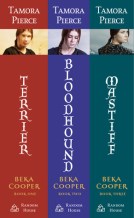 There have been two things against this series when I talked it up to others: The first was the truly abysmal cover art on the original paperbacks, which was actively ugly and made it almost impossible to “sell” these books to anyone (especially teenagers). The photographic image chosen to represent Beka was both laughable and disrespectful. The recent re-release of this series with new covers may give it a chance; if you are a librarian reading this, please consider immediately replacing your originals with the new versions!
The second is the supernatural element, which I sometimes completely leave out of my descriptions. When you say that a book is about a girl who gets messages from the recently dead by listening to pigeons, and who also gathers clues by standing in the middle of dust devils and picking up bits of conversation the dust devil has been hoarding, people look at you like you’re crazy!
This fantasy series has so many facets and is so hard to adequately describe that I don’t often find myself promoting it to anyone—but after rereading #2 on impulse this weekend, I decided to make another pitch, because these books are a worthy, intriguing, and entertaining addition to the mainstream fantasy canon.
The power of flowers
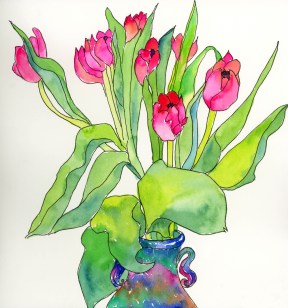 Because of an extraordinary amount of rain and snow this year, many parts of the country (mine included) have had a particularly colorful spring when it comes to both wildflower superblooms and the overflowing roses, peonies, and daffodils in cultivated gardens. Observing this bounty has caused me to take a look at some books, both fiction and nonfiction, that deal not only with the appearance but also with the language of flowers.
Although flowers and other plants have had symbolic significance for centuries, the full blossoming, if you will, of the use of flowers as symbols for emotions was in the approximate 75-year span of the Victorian Era in England. Restrictive social conventions prohibited direct expression through conversation between those whose interests were loverlike, so whatever was deemed unacceptable by etiquette to share openly was encoded in the giving of particular flowers or combinations of flowers to convey specific meanings. This practice became so commonplace that the language of flowers was christened “floriography.” The practice has also captured the imagination of various authors, who have used it as a vehicle to tell their stories. Among them:
 The Language of Flowers,
by Vanessa Diffenbaugh
From the title, you’d think this book would be soft and romantic, but it’s not at all. The main character, Victoria, is an 18-year-old who has just aged out of the foster care system. She has no friends, no family, no history, no prospects, and no skills, and soon she is homeless. Once she had a foster parent who taught her the language of flowers (i.e., asters = patience, red roses = love, etc.), and since she left that home, she has pursued her knowledge further. Based on this, she finds a florist willing to give her some under-the-table work, and creates for herself a small, regular life—for awhile. The book is told in alternating chapters between the one good foster home she was in at age 10 and her present existence, and the level of tension maintained as you wait to find out what happened that brought her to her current fix keeps you eagerly reading. The protagonist is engaging despite herself, and you don’t know whether you feel sorry for her or want to shake her. It’s a poignant story, and although Victoria isn’t always a likeable character, her courage is inspiring.
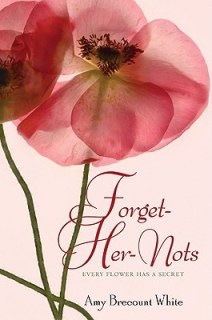 Forget-Her-Nots, by Amy Brecount White
While researching the Victorian language of flowers for a school project, 14-year-old Laurel discovers that the bouquets she creates have peculiar effects on people. Her mother hinted at an ancient family secret, and Laurel suspects it has something to do with her new-found talent, but her mom was never able to share either the gift or its use with Laurel. Unfortunately, Laurel uses this talent to meddle, and a string of incidents that involve the misuse of flowers threaten to mess significantly with everyone’s prom night experience. Clever, fun, and informative, too. (Young Adult fiction.)
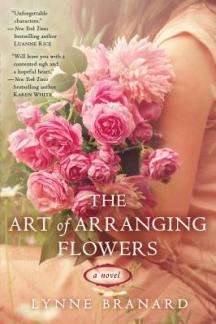 The Art of Arranging Flowers, by Lynne Branard
Ruby Jewell grew up in a harsh environment, her only comfort being her close relationship with her sister, Daisy. Daisy’s death when Ruby was in her early 20s was devastating as well as life altering. Instead of pursuing her studies to become a lawyer, Ruby just wanted to curl up and die, too. It was the flowers that saved her. For 20 years now, Ruby has created floral arrangements at her shop in the small town of Creekside. With a few words from a customer, she knows just what flowers to use to help kindle a romance or heal a broken heart. However, Ruby has a barrier around her own heart and is determined that she will not allow it to be broken. It takes an extraordinary group of people to bring Ruby out from behind her wall.
If reading any or all of these causes you to be intrigued by the background these authors used to create their floral fantasies, you can read about Victorian identification in…
 Kate Greenaway’s Language of Flowers
This is a charming reproduction of a rare volume by a 19th-century illustrator that includes a full-color illustrated list of more than 200 plants and their supposed meanings: tulip = fame; blue violet = faithfulness, etc.
And if you feel further inspired, you can read some germane nonfiction delving into the scientific significance of blooms:
 The Botany of Desire: A Plant’s Eye View of the World,
by Michael Pollan
Michael Pollan has a vision in his garden that leads him to question the interrelationship between humans and plants. He postulates that the plant species humans have nurtured over the past 10,000 years may have benefited as much from their association with us as we have from ours with them. He decides to investigate four plants—apples, tulips, potatoes, and marijuana—and he digs into history, anecdote, and personal revelation to do so. It’s entertaining, philosophical, and smart.
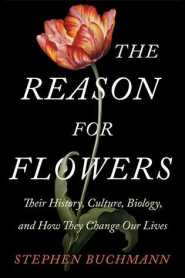 The Reason for Flowers: Their History, Culture,
Biology, and How They Change Our Lives,
by Stephen L. Buchmann
This is a comprehensive examination of the roles flowers play in the production of our foods, spices, medicines, and perfumes. Buchmann also goes into the cultural history of flowers, examining everything from myths and legends, decor, poetry, and esthetics to their basis for various global industries. From the flowers to the pollinators to the people who pursue the many intertwined careers sparked by these natural wonders, Buchmann inquires about it all. A fascinating volume, liberally illustrated.
If you want more, there is a 17-book list on Goodreads on the subject of floriography.
Here’s hoping your next tussy-mussy conveys the emotions you desire!
 The Book Adept