A mesmerizing tale
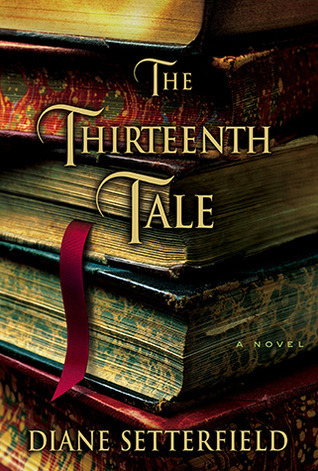
I just finished reading The Thirteenth Tale, by Diane Setterfield. It’s kind of a mystery to me—not the book itself, but my history with it. My Goodreads listings show that i read the book in 2015, and that I gave it a four-star rating. I reference having enjoyed it in reviews of two others of her books, and I just bought it for a friend’s birthday based on that information; but when I started reading it, I had absolutely no memory of the story! That IS the year that I read 152 books (I was a librarian who ran three teen book clubs with a different book to read for each, which accounted for 72 of those—one to discuss, another to propose for next month), so there have been some books that faded from memory based on the rapidity with which I went through them. But this wasn’t like that; it wasn’t even vaguely familiar.
I didn’t remember anything beyond what one could get from reviewing the synopsis: A famously reclusive author decides out of the blue to tell her life story to a minor biographer who has no idea why she was singled out for this task. Over many encounters with the press during her career, prolific and popular author Vida Winter created various life histories for herself, but all had proven to be false—or as she phrased it, “a story.” Now, though, at the end of her life, she has decided to come clean, and has summoned a biographer with some parallels in her own life story to tell Vida’s truth.
When I first started reading I sort of recognized the opening scenario, which was of the biographer’s daily existence working in a used/rare bookstore beside her father. But I have read several books that started out approximately that way and, as the story went along, I struggled to find anything else familiar about it. So, I simply gave in and read it as if it were brand new.
I’m glad that I gifted it to my friend, because that prompted me to read it myself, and not only did I become totally immersed in it, but also believe my friend will like it. (She’s listening on audio, so it may take her longer to finish.) The characters are interestingly bizarre, the storytelling is well paced and carries you along with it, there are various surprising reveals that give the story a twist here and there, and the book is resolved nicely, with enough secrets revealed to be satisfying but without that “tied-up-with-a-bow” feeling that I dislike.
The person who synopsized it for Goodreads concludes the description with these words:
“The Thirteenth Tale is a love letter to reading, a book for the feral reader in all of us, a return to that rich vein of storytelling that our parents loved and that we loved as children.”
This was an astute observation that I can only echo. Several classics figure in the story, including multiple mentions of Jane Eyre, by Charlotte Brontë, which bears some relation to a particular aspect of the story. I read that book maybe 15 times between the ages of 12 and 17, and the way this book is written—with a slightly gothic flare and an acute understanding of human nature—makes me feel the way I did when revisiting Jane. It also features twins, about whom I was obsessed when I was a child (I was an “only,” who fantasized a missing twin who should have been my companion), so that made it even more fascinating.
The book is rich in language and imagery, and Setterfield really knows how to tease out a story. I read her book Bellman & Black a few years ago (based on my “memory” of having enjoyed this book, ironically enough) and disliked it; but this one redeemed my faith in her, as did Once Upon A River. I’m glad to now be able to definitively say that I have read and will remember The Thirteenth Tale!
Scary season
It’s Decorative Gourd season, and I should be coming up with a great list of scary reads to share with you. But…I’m going to be exceedingly lazy here and post a link to last year’s book recommendations for the spookily inclined. I am not a horror reader and, although I do like a good ghost story, I haven’t read any new ones this past year except for Wyrd Sisters and Mort, by Terry Pratchett and, while they do have a resident ghost or two (not to mention Death) as characters, they aren’t exactly fright-inducing! So if you haven’t read any of last years’s selection, try one, and if you have, you could always suggest one to me! Be convincing about its merits and I might post it!
Go HERE to find them.
Spooky reads for October
There are a lot of requests on Facebook reading pages for haunted tomes to make their month more enjoyable (and more chilling). So I decided to comb through my “horror” and “paranormal” categories on Goodreads to see if I could find some good reads to recommend. I am not much of a horror aficionado, so those are in short supply, but I do like a good ghost story. Here’s a list of a few I have enjoyed, both new and classic, with some young adult stuff thrown in because it is also entertaining for we grownups.
The Haunting of Hill House, and We Have Always Lived in the Castle, by Shirley Jackson. Very different vibes in these two, but I can say that they are both truly creepy. Don’t judge the first by its movie(s), it’s so much more nuanced and weird than anything Hollywood managed to put onscreen.
Starling House, by Alix E. Harrow. Southern gothic horror. Here is my review.
Vampire books by Anne Rice (the first two are the best). Classic paranormal. I also liked Sunshine, by Robin McKinley, a completely different take. And if you like sex and diners with your vamps, there is, of course, the “Sookie Stackhouse” series by Charlaine Harris.
The Harper Connelly books, also by Charlaine Harris, recently reread and commented on by me here. You could also try the “Midnight, Texas” series, though they are not my faves apart from my love for their protagonist.
The Graveminder, by Melissa Marr. “Sleep well, and stay where I put you!”
The Library of the Dead, by T. L. Huchu. Ghosts with a Zimbabwean twist. I reviewed this one too.
A Certain Slant of Light, by Laura Whitcomb. A dreamy, unusual ghost story. There is a sequel I haven’t read, called Under the Light.
Hold Me Closer, Necromancer, by Lish McBride, a somewhat comedic take on a modern necromancer and his paranormal pals. Big fun. There is a sequel called Necromancing the Stone.
The “Visions” series by Lisa McMann.
Also, please enjoy the following excellent ghostly tales, which I reviewed here for a previous Hallowe’en post:
Meet Me at the River, by Nina de Gramont
The “Lockwood & Co.” series, by Jonathan Stroud.
The “Shades of London” series, by Maureen Johnson.
…and a few more.

Third time continues the charm
I just finished Alix Harrow’s third full-length novel, Starling House, and was nearly as taken with it as I was by her other two (The Once and Future Witches, and The Ten Thousand Doors of January). That’s saying something—if you read my reviews, you will know how blown away I was by every aspect of those two amazing stories.

This one is perhaps not as original an idea as either of the other two; instead, it takes some trope stuff and makes it fresh and interesting. It’s a combination of a Southern Gothic fantasy/horror hybrid and a coming-of-age story, and has a lot of levels.
In some ways it is a commentary on the bigotry and trauma one encounters as an outsider in a small town, particularly a small “company” town in the deep South. This one is Eden, Kentucky, and the town’s reason for existence is the working of the coal mines owned by the Gravely family. The town and its residents are either singularly unlucky or the story of a curse is true, because a sadder and less hospitable place could scarcely be conceived. The supposed origin of the curse is tied up with the history of E. Starling, a 19th-century children’s book author who was married to one of the three original Gravely brothers, wrote a story about a creepy place called Underland, built a mansion for herself after her husband’s death, and ultimately disappeared. Starling House has since been host to a number of owners, all of whom show up just when the previous owner dies or leaves, but such is its unsavory reputation that the people of the town cross the road rather than walk on the sidewalk near its gates.
The book revolves around Opal, a young woman who has never caught a single break. Her mother died in a car crash when she was a child, and she and her younger brother Jasper have continued to live in the motel room where they landed shortly before her death. Opal works a minimum wage job at the local hardware store, trying to save enough money to get her brother, a smart young man with debilitating asthma made worse by the miasma that hangs over the industrial town, into a private high school far from the environs of Eden; but there’s scant hope of that until she gets a job as a cleaner for Arthur Starling. She’s heard all the rumors about both the house and its owner, but she’d do almost anything to get Jasper the chance he deserves in life, so she begins the task of bringing this house full of dust and cobwebs (and other, more sinister things) back to life. But the feeling of sentience she gets from the house and the weird vibes coming off of Arthur, who seems alternatively tortured, coldly aloof, and strangely sympathetic, are getting under her skin, and she’s wondering where it’s all going to end…
You could scarcely find a less likable protagonist than Opal, but she somehow endeared herself to me. Maybe it’s because every small victory she has is so hard-earned that it’s almost not worth it, and you can feel the palpable intensity of her longing for things to change and her simultaneous hopeless conviction that they never will.
The best thing about this book for me was the language. Admittedly, it’s sometimes over the top or overly descriptive, but there are moments that struck me so forcefully that I marked them in my notes on my Kindle. Alix Harrow knows how, with one phrase, to invoke a memory or even an entire phase of life, as with this one, where she is describing some symbols incised into the wood of a door:
The carved symbols are still very slightly luminescent, like glowsticks the day after a sleepover.
I read that one sentence and jumped back to a moment in childhood: We were in someone’s yard at dusk, at the end of a birthday barbecue. We all cracked glowsticks that had been passed out by the birthday girl’s mother, manically waving the neon tubes and dancing around, lighting up the dark. By the next day, most of the chemical inside the sticks had finished its reaction and was subsiding, but there was still a dim glow to them if you turned out the lights in a windowless room.
The biggest flaw in the story for me is the revelation that Opal is 27 years old. Her character, while honestly and intricately drawn, seems more typical of a teenager—16, 17, maybe 18 tops—than of a young woman approaching her late 20s. Honestly, this book works better as a young adult novel, both in its characterizations and in the way the story is couched in a particular kind of gritty magical realism. But since I am a big fan of good young adult literature (note the emphasis on good), that’s fine with me. I simply decided to forget Opal’s age and read it as it reads. There are other problems—unresolved plot points, underutilized characters, unexplained mysteries—but ultimately it all worked for me, with its beautiful prose, interesting characters, and slow-burn sense of menace.
Clandestine

That’s the word most descriptive of the third “episode” in Cynthia Harrod-Eagles’s newish series about the inhabitants of Ashmore Castle. This one is called The Mistress of Ashmore Castle, although I was a bit puzzled, by the end, at the name, since the book seems to divide its attention equally between multiple “actors” without focusing particularly on Kitty, aka the new Lady Stainton.
Lord Stainton, Giles, has rejected the stifling existence at the castle to resume his chosen avocation excavating tombs in Egypt, leaving poor Kitty behind to cope with their young son, the house, and the rest of his family, while longing for him to return. Kitty seems to be the only one in her family-by-marriage (my mother always called them “the outlaws,” which works here) to love the person with whom she is paired; Giles remains enamored of Kitty’s best friend Nina, who is married to the elderly and smitten businessman Joseph Cowling but who returns Giles’s affections. Both must keep their forbidden feelings a secret from their respective spouses and from everyone else; Nina attempts to deflect her energies towards a pursuit of women’s rights, while Giles is reunited in Egypt with Julia, the daughter of an old friend on a previous dig, who was six years old when he met her but is now in the full flower of sultry Italian womanhood. He is enjoying what he thinks is the simple resumption of their friendship, but his attentions may be giving Julia other ideas. (Giles is kind of a dick.)
Meanwhile, Giles’s sister, Rachel, is having her coming-out season in London. Fueled by Kitty’s money, Giles’s mother has thrown a lavish ball for the richly attired and vivacious Rachel, at which she is supposed to fall in love with a suitable suitor and make a marriage; instead, she succumbs to an infatuation for her cousin Angus, who reciprocates her passion despite his father instructing him to propose to Diana, a wealthy heiress. Thus ensues much wailing and angst and a convoluted letter-writing campaign (Angus resides in Scotland) enabled by their sisters’ connivance.
Meanwhile, Giles’s other sister, Alice, still harbors a doomed passion for the hunky woodsman on the Ashmore estate despite his inherent unsuitability; his uncle Sebastian continues his hopeless pursuit of the castle’s seamstress, who loves him but already has a husband somewhere in London; and his brother Richard hasn’t given up on persuading their father’s former mistress to come away with him to Europe, if only he can find the funds to support them both. There is even a romance (of sorts) in the offing for Giles’s formidable mother, Maud, the previous Lady Stainton, who is much affronted by anyone daring to approach her in this way, but is also considering the alternative—no longer ruling the roost of her former home, and collapsing into grandmotherhood—and wondering if a second marriage could be tolerated if enough wealth came along with it.
In short, there is not one truly happy individual in the entire bunch, either above- or below-stairs. And non-romantic drama is also brewing amongst the staff, as Mr. Moss (the butler) suffers a loss that is taken advantage of by the dastardly footman James Hook, who covets money and position and will ruthlessly exploit his position to gain both.
The ins and outs of all the relationships are simultaneously enthralling and exhausting, and while I enjoyed reading this one as much as I did the first two, Ms. Harrod-Eagles has once again dropped the ending amidst multiple cliffhangers, causing me to swear audibly at breakfast when I turned the next page only to find a listing of “other books written by Cynthia Harrod-Eagles.” And once again I have read the latest volume of this series mere days after its release, so a long year of anticipation for the next will again ensue. Sigh.
On an up note, a friend on Facebook just told me that Elly Griffiths has just published the last in her series about archaeologist Ruth Galloway, in which she finally resolves the relationship between Ruth and her baby-daddy, DCI Harry Nelson. Since I hadn’t yet read what turns out to be the next-to-last book, I’m perusing it now, so I can get on to the big finish.
Hanging chads
In case you don’t get the reference: In the 2000 presidential election between Al Gore and George W. Bush, portions of the state of Florida used a punch-card type ballot that was easily misread; during the furor that followed the initially indeterminate election, the public soon became familiar with references to hanging, dimpled, and pregnant “chads,” which were the little pieces of the punch-card that were, in theory, supposed to be removed by the punch tool, but instead either hung by a corner or, worse, looked like they had been pressed on with intent, but not punched out. The recount in Florida resulted in a bunch of wrangling, with many lawsuits and counter suits between the parties, until ultimately Gore conceded, although he had won the popular vote. It’s a controversy to this day, and one wonders on what trajectory our country would be now had Gore, and not Bush, become President.
I reference it here because I just had a reading experience that reminded me of the bewilderment of the Florida election officials trying to discern the intent of the voters by interpreting the various states of chads.

You will recall that at the beginning of July I decided to go beyond her Bill Slider mystery series to explore the other genre of author Cynthia Harrod-Eagles, by reading the first book in a new series, The Secrets of Ashmore Castle, an enjoyable Upstairs / Downstairs, Downton Abbey read-alike. In that review, I mentioned that the ending was “somewhat abrupt,” and bemoaned the fact that the sequel wouldn’t be available for more than a month. Well, I have just completed the sequel—The Affairs of Ashmore Castle—and it is this that has given me the unsettling feeling provoked by hanging chads!
Lest you should think I am panning the book, I am emphatically not—I quite enjoyed it. In fact, the deepening stories of all the main and subsidiary characters provided an even richer and more involving experience than did the first book in the series. The various marriages and matches made in the first volume by the ruling classes were developed and took interesting turns, the world of the servants likewise became more transparent, and I followed all the story lines with anticipation. That anticipation carried on up to the very last page, when one character asks another, “What do you really come here for, Lady Alice?” and, swiping my finger impatiently across the face of my Kindle to turn the page and discover the answer, I was instead treated to Amazon’s “Before You Go…review this book” prompt! I was in such disbelief that that could possibly be the end of the book that I actually went back to the beginning, checked the number of chapters, and clicked on the last one to see if there had been some glitch with my Kindle that had caused the last third of the book to disappear!

Nope. She really did end it there. She used the last few chapters to set up some truly urgent situations with both the “upstairs” and “downstairs” protagonists, and then left them all hanging, or dimpled, or pregnant, and JUST. STOPPED. WRITING. I haven’t been this disconcerted since I read Connie Willis’s gargantuan time travel duology, Blackout and All Clear; at the end of Blackout—or I should say, where Blackout stopped—I looked up articles about the two books and discovered that Willis had originally intended it as one gigantic tome, but that the publisher convinced her she must split it in two (the first book being 491 pages, while the second is 656, published within nine months of one another). And split it in two she did, with no warning, no wrap-up, no transition whatsoever—book one simply stopped on a page, and book two took up on the next page. It made me nuts.
What makes me even more dissatisfied with the abrupt stoppage of the Ashmore story is that I read the second volume a mere day after it was published, and will presumably have to wait a year (or more, depending on what other series she has on the boil) to discover the fates of all involved! And by then I will have read so many books in the meantime that it will probably mean a reread. Sigh. You wound me, Ms. H-E.
Open ended
Writing a book review by basing it on this readers’ advisory concept may be unfair, in that it’s a sort of spoiler. If you plan or planned to read this book but decide not to because I reveal that the ending is somewhat inconclusive, then I apologize. But I mention it for the good reason that I usually avoid open-ended fiction like the plague, being a person who wants my stories resolved, if not tied up with a too-tidy bow—but I enjoyed the questions left by this one and applaud the author for ending it in the manner she chose.

The book I am talking about is Verity, by Colleen Hoover, and I have been under subtle pressure to read it for a long time. Most of the pressure came from my own mind, but some from friends who urged it on me. It is one of the five books continually discussed, lauded, and recommended as “best” on the “What Should I Read Next?” Facebook page of which I am a member. This week, I discovered that the e-book was actually available from the library, and I finally succumbed.
Too much hype is almost always off-putting, and I think I probably would have enjoyed this book a little more if I had come to it with fewer expectations. Fortunately, I had never previously read a description of it, so some semblance of surprise remained intact. I knew Colleen Hoover was a romance writer, and for some reason I expected this to be romantic historical fiction, so when I opened the book to the first line, I was shocked and somewhat taken aback, but also intrigued.
In case you know nothing about this book (which seems impossible but probably isn’t), it’s the story of a self-effacing young author, Lowen Ashleigh, who has had some critical success but is on the verge of financial disaster when she is asked to “collaborate on” (which turns out to be code for write) the last three books in a series by the well known and immensely popular writer Verity Crawford. Verity has been in a debilitating automobile accident and her condition is “uncertain” at the moment, according to her publishers. Lowen accepts the lucrative offer made by Verity’s husband, Jeremy, and travels down to the Crawford home to look through Verity’s notes to get an idea of how to proceed. Although she plans to be there for only a day, financial difficulties paired with the sheer volume of material to peruse (plus her undeniable attraction to Jeremy) causes her to stay a while. But the entire sojourn is made increasingly uncomfortable by the discovery of an autobiography written by Verity that reveals a horrifying side to the Crawfords’
tragic story.
On its face, this is a rather typical gothic plot: Our heroine, young and unsure of herself, is put into a situation where she craves the attention of a seemingly unavailable man who may actually be more receptive than she initially believes. An obstacle (this time in the form of a critically injured wife) presents itself, but there may be a way around it, resulting in the union of the star-crossed couple. Victoria Holt mastered this one many times over, back in the 1970s.
That’s not to say that this book is a cliché, only that it’s not as unique as some would paint it. There are several things that set it apart: the frank depiction of sexual activities, which was verboten in the gothic oeuvre; the extenuating circumstances that occurred before the current timeline in this disaster-prone family; and the sheer creepiness of the alternation between the protagonist’s and the author’s voices as we jump back and forth between the present-day narrative (Lowen) and the words of the autobiography (Verity). And there is also the dark quality of life in the Crawford domicile in this moment, which is not to be discounted.
The final difference is that in the gothic romance tradition, all is resolved by the end of the book. Not so here, where a crucial piece of information casts all certainty into doubt and the reader is left to ask, What the hell just happened?
In the past in this column, I have complained of authors who just couldn’t resist putting the fix on every single dangling detail of their plot, to the detriment of the book, as in my rant about the epilogue of Things You Save In A Fire. At the same time, I am a person who does in general like a clear resolution to a story; it doesn’t have to be absolute, but if something is left hanging, I want it to give the implication that there will be satisfaction at some point. But having read Verity, I will say that there is something incredibly effective about making your reader say “Whaaaat?” at the end, which is that it keeps them thinking about your book for days after!
Perhaps you will read it and see what I mean; or perhaps you will curse me for leading you down this path without a pretty conclusion. Either way, be prepared for an interval of wild energy, uneasiness, confusion, and dread, wondering about the sanity of anyone who would willingly stay in a situation permeated by those emotions, regardless of the incentive.
Surprise heir

Ruth Ware’s novel The Death of Mrs. Westaway incorporates several things I love, and I was drawn to it from the first page. The protagonist, Hal (Harriet) Westaway, is such a vibrant character and her precarious existence is so appealing that it’s hard not to buy in.
Hal has been raised by a single mother in a small but unusual and fulfilling life; her mother was a tarot card reader in a booth on the pier in Brighton Beach and, partly through instruction and partly through absorbing the daily atmosphere of her mother’s tradecraft, Hal has acquired all the skills to follow after her when she is tragically killed by a hit-and-run driver right outside their front door.
Hal stays in their small but known and comforting bed-sit after her mother is gone, and takes up the mantle of tarot card reader, although she always hearkens to her mother’s voice in her ear that tells her not to believe the patter that makes her so successful with her clients. Hal enjoys the combination of the beauty of the tarot and the skillful use of psychological clues to direct the faith of the tourists and drunken hen parties in her “fortunes”; she doesn’t care for those few fanatics who return again and again trying to come at truths that Hal knows better than to promise them.
Hal has made one foolish decision in the aftermath of her mother’s death; between the halting start-up of her takeover of the tarot booth and the slow months of winter that don’t contain the huge number of customers present during the tourist season, Harriet got behind on her bills and resorted to visiting a moneylender. She is stunned to realize how quickly and disastrously the interest on this loan has compounded, and is in imminent danger from the loan shark’s enforcers if she doesn’t come up with the money soon.
Just at the crux of this fraught situation, Hal receives a letter from a law firm, telling her that her grandmother, Hester Westaway, has died and that her presence is required at the funeral and subsequent reading of the will. She knows just enough about her mother’s family to realize that someone has made a mistake; but there are sufficient similarities in her background that cause her to grasp at the idea that she can pull off a deception and perhaps come into some funds that will help her out of her desperate straits. She scrapes together the last of her funds, buys a ticket to Porthleven, and sets out to collect “her” inheritance.

Haven’t we all imagined at some point that a long-lost legacy will arrive in the mail or via a phone call? That we will be pulled back at the last second from the brink of ruin by the generosity of a remote relative who turns out to have doted on us as a precocious three-year-old and has been generous in their bequest? I loved the entire set-up for this story, and Hal’s tentative but determined foray into a strange house filled with family that may or may not be hers.
The tale owes a lot to both Agatha Christie and Daphne du Maurier: First of all, it takes place in Cornwall, scene of the bulk of du Maurier’s storytelling, and the creepy housekeeper definitely gives off an obsessive Mrs. Danvers vibe. The house itself is a gothic nightmare straight out of Christie, of cold, dark, dust-filled rooms reverberating with an unhappy past, and the Westaway family, though cordial on the surface, has obviously been greatly affected (and not in a good way) by their upbringing. It’s no coincidence that Hal feels the greatest affinity for the sole in-law in the bunch!
I have to say that the strong-willed, smart, and likeable character of Hal largely carried this book for me. I loved her back story, her personality, her profession, and her daring. The rest of the characters were, by comparison, made of cardboard, and some were outright cliché. They were okay as a backdrop for Hal, but it would have been nice if the only glimpses into their story had gone farther than a few incomplete and unsatisfying diary entries. None of them is overtly friendly, no one voluntarily supplies family history, and despite being surrounded by all these people, Hal has to solve her mystery through a not always compelling combination of research and subterfuge.
The thing is, The Death of Mrs. Westaway is not exactly a mystery, although there are mysterious elements to solve; it’s not entirely suspense, although it’s suspenseful; and the resolution is a bit telegraphed and not as exciting as it could have been. At several points in the story, it seems like the book doesn’t know whether it’s trying to be gothic horror, an Agatha Christie-style whodunnit, or a psychological thriller. But if you focus on the story as being Hal’s alone, and simply let yourself enjoy the atmospheric vibes, it ends up being a satisfying read. The integration of the tarot into the story made it special for me, as I have always had a fascination with both the artwork and the infused meaning of those cards. This is the second Ruth Ware book I have read, and although the other one was better conceived and executed, I believe I prefer this one based simply on the appeal of character.
Circus!
I’m at the end of Week Six of self-quarantine, and feeling restless. That’s not to say that I agree with any of these initiatives to hurry to open things back up—we stay inside to lower the curve, to protect others and ourselves, and it isn’t time yet. But I can acknowledge my feelings and those of others who are going a little stir-crazy.
So, what could be better to read in a time of restriction than something completely escapist? And what could be a more familiar escape trope than running away to join the circus? It’s a notion secretly cherished by people young and old. Running away is one thing, but in this fantasy, destination is all.
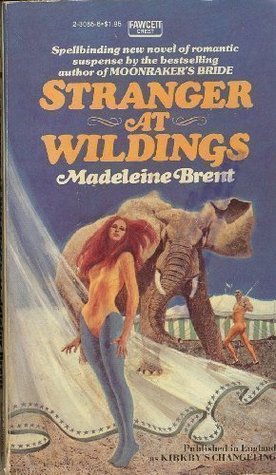 I have a few favorites in the run-away-to-the-circus panoply of titles. First on my list is A Stranger at Wildings, originally titled Kirkby’s Changeling, by Madeleine Brent (otherwise known as Peter O’Donnell). At age 13, Chantal discovers the devastating truth about her parentage, and is about to be sent to an orphanage; instead, she decides to disappear into the world of the circus that has just paused in her English town on its way to Hungary. We follow Chantal’s career as a trapeze artist until she turns 18, at which point events conspire to change her life and send her back to England. But she’s not sure she wants this change, especially if it means leaving her circus family. It’s pure gothic magic in the style of Mary Stewart.
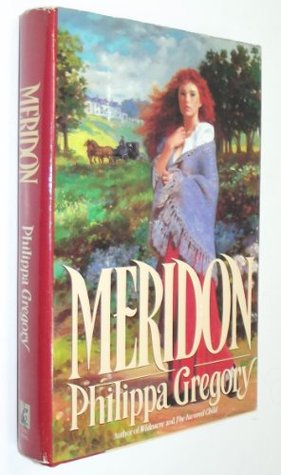 The book Meridon, by popular historical fiction writer Philippa Gregory, is one of my personal favorites, because the protagonist is both a gypsy and a bareback rider, so you get lots of horsey bits. But the book is the third in the Wideacre trilogy, and you really do need to have read the first two in order to understand particularly the second half of this book. All three books are engaging (although a bit scandalous here and there), so if you have the time…and you do…? The first two are Wideacre and The Favored Child (neither of which has any circus motif).
The following would most likely be found in the young adult section:
Wonder When You’ll Miss Me, by Amanda Davis, is a coming-of-age book, a triumph over adversity book, a story in which a seriously damaged and divided girl gets the chance to work through it all and pull herself together, with a backdrop of circus life that jumps off the page. The writing is beautiful, the characters are real and individual, and the story-telling is captivating. I wish the publisher had designed a cover to match.
 That Time I Joined the Circus, by J. J. Howard, tells of Lexi, a snarky New York City girl, who makes a huge mistake and faces a terrible tragedy. In the face of this, she decides she must track down her mother, who is rumored to be traveling with a circus somewhere in Florida. Lexi doesn’t find her mother there, but she does find a temporary home with the circus. In this story, what the protagonist is running from is equally as important as what she is running to, and she
has to resolve these issues, which are dealt with in jumps from past
to present.
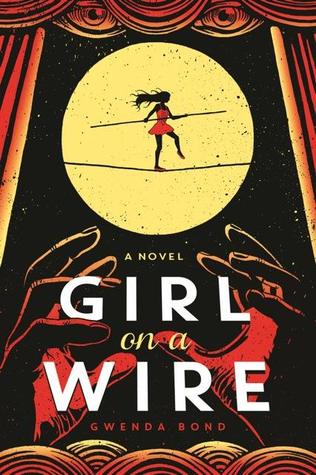 Even in the circus sub-genre, there are books with “girl” in the title!
Girl on a Wire, by Gwenda Bond, is a little different, in that most of these stories start with someone running away to the circus, but Julieta Maroni is already a circus performer who is fleeing her family to convince her father, the best wire walker in the world, to join the giant Cirque American despite his feud with their other stars, the Flying Garcias. It’s a rather obvious Romeo-and-Juliet set-up, but it’s also a mystery, a fantasy, and a great depiction of performances on the high wire and trapezes. It has a sequel,
Girl in the Shadows, with a different protagonist but taking place at the same circus.
Some more adult books in this sub-genre:

One title to which your mind will probably immediately go is The Night Circus, by Erin Morganstern, in which the circus is the magical, seductive background for both a battle of wills and a deeply romantic love story.
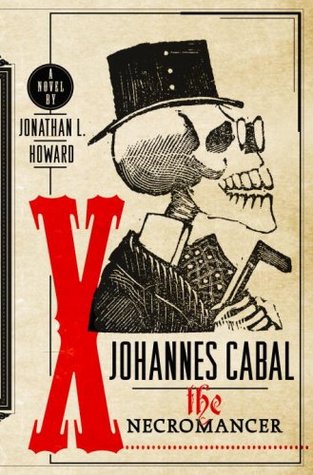 Another is Johannes Cabal the Necromancer, by Jonathan L. Howard, a funny gothic tale about a man who sold his soul to the devil, but decides he wants it back. Satan agrees to a wager: Johannes has to persuade 100 other people to sign over their souls in exchange for his own. He can have one calendar year and a traveling carnival as the timeframe and setting to achieve his task. Johannes summons an unearthly crew and takes his show on the road.
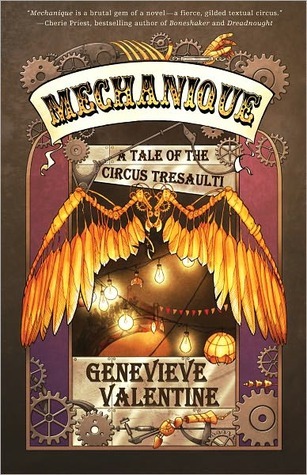 Mechanique: A Tale of the Circus Tresaulti, by Genevieve Valentine portrays a post-apocalyptic future in which a band of lost souls travels from one ruined city to the next, bringing their marvels to eager crowds of war-ravaged humans. It’s been described as steampunk, as a prose poem, and as a disjointed tapestry of image and text that will only appeal to a few—but those few rave about it.
 In Water for Elephants, by Sara Gruen, Jacob Janowski, 23 years old and only days away from his final exams to become a veterinarian, is devastated (and stricken by poverty) when his parents are killed in an auto accident. He hops a freight train that happens to be transporting a circus, and soon becomes an integral part, caring for the animals while yearning after a married woman and a difficult elephant. The story is told in flashback, from the viewpoint of an elderly nursing home resident reflecting on his past. (There is also a movie, though I haven’t seen it.)
 The Blue Moon Circus, by Michael Raleigh, is the highly rated story of ringmaster Lewis Tully, who gathers together an eclectic group of people to form an independent traveling show. It’s sweet and funny, with likeable characters both human and animal, and a lot of heart.
 There are also those stories of circuses that occupy the dark end of the spectrum, the evil circus or carnival from which you wish to escape, such as the classic Something Wicked This Way Comes, by Ray Bradbury, Full Tilt, by Neal Shusterman, or The Carnivorous Carnival, by Lemony Snicket. (To this day, hearing the eerie carousel music soundtrack to the movie version of Something Wicked can really mess with my mood.)
Goodreads has quite a comprehensive list of “circus and carnival books” you might want to visit, if one of these books whets your appetite for more “escapist fiction”! One I have always wanted to try is Nights at the Circus, by Angela Carter.
Unreliable
The book I read this week is a fairly classic example of a story told by an unreliable narrator. It is also written in epistolary form, which is to say in the form of a letter to another person. You might also view this book as an example of Victorian Gothic, although it takes place in 2017, because of the setting and some of the events.
A narrator always serves as a filter for her story, and if that story is told in first person, then the only person’s viewpoint we are able to discover is that of the storyteller. As readers, we generally believe that the narrator is truthful and is providing, as far as she is able, an accurate view of the story. But an unreliable narrator is one whose version of the story the reader comes to realize cannot be trusted; there is a point in the narration at which the reader discovers there are lies involved, a hidden agenda is revealed, or the nature of the narrator is discovered to be criminal, crazy, naive, pathological, or any other aberration that would call the person’s views into question. Motivations are revealed that cast doubt on the narrator’s veracity, and the reader has to decide whether the narrator is being willfully deceptive, or is just deceiving herself.
 Whatever the case, it takes a certain level of skill to write an unreliable narrator that readers will continue to follow even when they have discovered this deceptive nature. The protagonist in The Turn of the Key, by Ruth Ware, is one such character.
The book opens with a set of incomplete letters, each addressed to a solicitor, a Mr. Wrexham—impassioned pleas for him to listen to her story, to believe her, and to defend her. Rowan Caine is a nanny sitting in jail awaiting trial for the murder of one of her charges. She already has an attorney, but believes (with some justification) that he is one of the reasons she is behind bars, and is looking for someone who will hear her out instead of dismissing the (admittedly odd) details of her story as irrelevant. Eventually she manages to push through all her false starts and put the events down on paper for Mr. Wrexham.
It proves to be a disturbing and convoluted explanation, with multiple reveals as we discover that Rowan is not who she pretended to be, on at least two separate levels. It also furnishes plenty of questions about the motivations of the other characters, but once you realize that she has lied about some significant events, you are provided with many reasons to doubt her experiences.
The story’s gothic elements arise from the setting, which is an old Victorian mansion set in the wilds of Scotland that has been bought and massively but jarringly remodeled by a husband-and-wife team of architects. The front half of the house maintains its pristine Victorian façade and ornate interior, while the rear has been demolished and replaced with an über-modern structure of cement and glass that provides a jarring disconnect when moving from one part of the mansion to another. And it also turns out that when the mansion was stripped and refinished, certain secrets of its architecture remained unknown to the builders, while other aspects of the house are almost too well known through its surveillance app that provides a view and a microphone to almost every room.

The couple in question, Bill and Sandra Elincourt, have four children—a teenager, an eight-year-old, a five-year-old, and a toddler. They have gone through four nannies within the past year, and are looking for someone qualified, reliable, and without a surfeit of imagination or superstition to take responsibility while they are pursuing their busy careers. Enter Rowan Caine, beguiled by the generous salary, the beautiful house, and the apparently well-behaved children. But when the Elincourts take off for a few weeks of conventions and client meetings, things begin to disintegrate, starting with the behavior of the children and ending with a series of strange events that may or may not be related to the remote controls installed in the house.
This is a suspenseful story, with vivid description and a gripping, slightly ominous feel throughout. The story builds to its conclusion, which is both cryptic and satisfying. The only thing I am pondering is whether I loved or hated the ending. It’s plausible, it explains much, but the result it implies is vague enough that I had to read it a couple of times to decide what I thought and whether I believed it.
For readers who are looking for a thrill, who enjoy a tale with twists, and who embrace the ploy of an unreliable narrator, The Turn of the Key will satisfy.
 The Book Adept