Harking back
After I finished the latest Vera Wong, I decided to reread yet another of Rumer Godden’s books. I recently described the plot of In This House of Brede to my cousin, and it made me want to experience it again for myself after so long. It was kind of a masterpiece of its day, although it’s a weird book for an atheist/agnostic like me to enjoy so much, considering that it’s about the life of a cloistered nun and her abbey; but I have a soft spot for it because it was my introduction to her writing.

I remembered finding it on my parents’ bookshelves, which is equally strange, because as fundamentalists, they didn’t even consider Catholics to be Christian. But I finally figured it out: My parents loved to read but weren’t good about going to the library and also didn’t frequent the bookstore. My mom did, however, have a subscription (de rigueur back in the 1960s and ’70s) to Reader’s Digest Condensed Books. During the long, sometimes boring summers of my youth (I was an only child in a neighborhood with no other kids my age), I would lie on the floor of my dad’s study and devour all the stories contained therein, and that was how I happened upon this book. (I was amazed, in later years, to pick up and read the uncut versions of some of those books and realize all that I had missed!)
The book begins with the protagonist’s life-changing decision to give up her exceedingly busy and successful life to try to become a cloistered Benedictine nun. Philippa Talbot is 42, a widow who has made a great success in a government position in finance in the days after World War II when she would have been the only woman in the room who was not taking dictation. The story begins with her leaving her job on her last day—handing out her treasured possessions to some of the people who worked for her, entrusting her cat to her beloved housekeeper of many years, and getting on a train, with one small carry-on bag, to travel to the 120-year-old abbey in Sussex in the south of England. Should she successfully stick out her years there as a postulant and a novice, receive her preliminary clothing, and take her final orders, she would become a permanent fixture for life at Brede Abbey.
The humanity of each of the characters strikes you from the first page. The interaction between Mrs. Talbot and the young secretary from the typing pool; her detour, once she gets off the train, to the nearest pub for a last whiskey (or three) and a farewell cigarette; and her admission through the door into the enclosure, surrounded by the entire community (90-some nuns) in their wimples and habits, is vivid and engaging.
The story remains so throughout. It is a neat balance; it depicts life within the walls of the abbey—the structure of ceremony and ritual, the customs, the traditions, the pageantry—but it also focuses in on each of the characters, describing the tests, the deprivations, the stumbling blocks, and also the joys as they struggle to live with purpose, outside of the mundane world of competition and financial success. The nuns and other characters are beautifully drawn, both individually and in their complex interactions with one another. The back stories are not dictated in a straightforward way, but are instead dropped here and there between the recounting of the current day-to-day life of the cloister, giving the entire book a freshness and cohesion despite the rapid switches in time and perspective.

It is an earnest look at the examined life of a community formed by diverse personalities who share a world view, but it is also a gorgeous, colorful kaleidoscope in its descriptions of the minute details of living in this world with its sights, sounds, thoughts, and feelings. The sacred and the mundane are present in equal measure, as are Godden’s luminous observations of the natural world and the beauty to be found in a cherry tree against the sky, a soaring lark, a stone statue, or the transcendent face of a soloist whose voice rises to the rafters in devotion.
It may not sound like your cup of tea, but you never know; it certainly gave me a few totally absorbed afternoons, and this was for the third time!
Perfect stone fruit
Halfway through my reading of The Mare, my checkout period at the library ran out, and I couldn’t get the e-book back on my Kindle for about a week, so I took a break and read something else. I think reading The Mare may have provoked a subconscious connection to this book, which is also a coming-of-age story with a narrator on the cusp between child and teenager, but at a time when a “teenager” wasn’t what it is today. It is a book I have read before, but not for about 30 years, so the story has its place in my memory but has softened and faded to the point where I could experience it fresh.
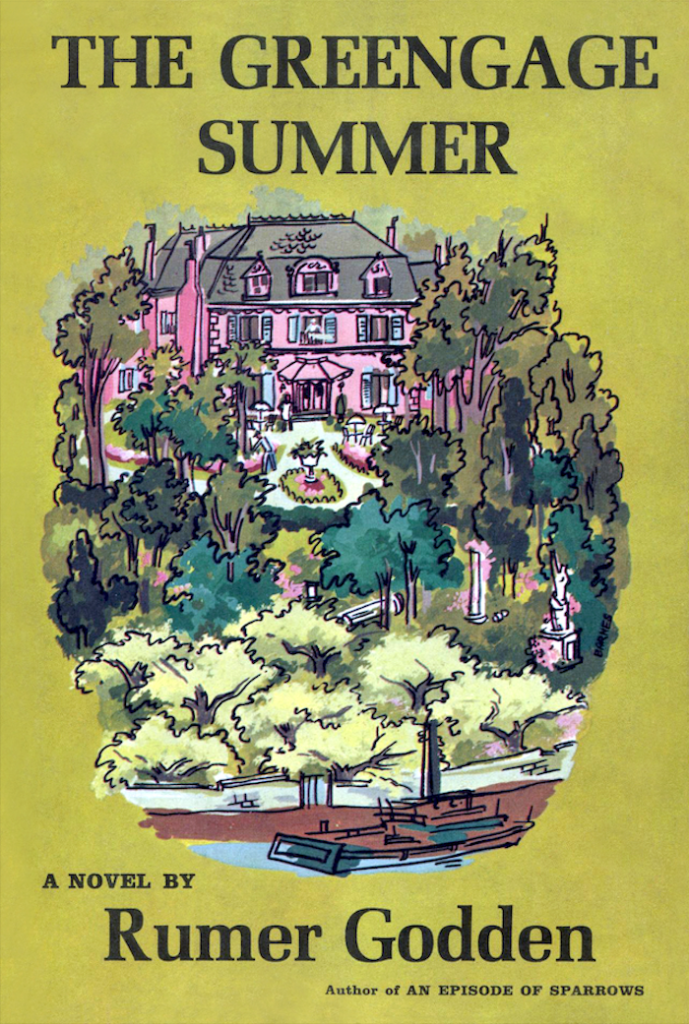
The Greengage Summer, written by Rumer Godden in 1958, is the story of a mother with five children who, at the end of her rope one summer, impulsively decides to pack them all up and take them to France—not as a reward, but to show them the battlefields and mass graveyards there in the hope that they will all become less obnoxious and selfish! There is a father, but he is a botanist who travels extensively for his work, leaving his family behind in Southstone, a provincial English village in which they live a thoroughly mundane existence under the watchful if stodgy eye of their Uncle William. They are not a well-to-do family; they wear uniforms to school and the rest of the time mostly hand-me-downs from their next eldest sibling, and their weekly pocket money is counted out in pence, not pounds. The children range widely in age: Joss is 16, Cecil 13, Hester 10, Willmouse (the only boy) is eight, and Vicky is five.
The family takes a long and exhausting train trip down to the Vallée de la Marne, in the Champagne district of France, their destination the Hôtel les Oeillets, a small pension in the countryside. But during the journey, the mother is bitten on the leg by a horsefly, and by the time they arrive she is so ill that she must be hospitalized with blood poisoning. The patronesse, Mademoiselle Zizi, is inclined to cut the children loose (despite their being unsupervised with nowhere to go), but Elliot, an English guest at the hotel, is prevailed upon by the mother to keep an eye on her family until she returns from hospital, so the five move in and start their holiday in France under his casual supervision.
None of them save Cecil speaks any French (Cecil had to learn endless French poems by heart as punishment for poor schoolwork, and it stuck with her), and all of them approach the holiday on their own terms. The book is narrated by Cecil, with insights provided both from her own observations and from the experiences of her siblings. Cecil is sitting squarely at that transition point between child and adult during this summer, while her sister Joss has suddenly crossed over to that place held by beautiful young girls in the first flush of their power as women. The others, known to the family as “the littles,” also go through some changes, as they all encounter their first introduction to an adult world in a different culture, untrammeled by the careful routines of their normal lives.
The name, The Greengage Summer, comes from the fruit orchard that is part of the grounds of the hotel, where greengage plums are ripening on the trees and plopping to the ground, begging to be consumed by the children who laze under their shade in the long afternoons by the river Marne. And like the fruit, the summer is filled for the children with flavor and sweetness that surrounds some hard stones or truths at the core.
There is more to the story—undercurrents, background information, and a mystery in which both the residents and the guests become caught up—but I don’t want to give away too much, because the book is a delight to read and I am happy to have rediscovered it, for myself and for those who read my reviews and might pick it up based on this introduction. In addition to story, there is a specific rhythm and artfulness in the way Godden tells a tale that makes me happily revisit most of her books, and this is one of my top five (out of the 60 she wrote). It’s also a great read to choose for the hot, languid month of August.
The characterizations of everyone involved—the children, the hotel employees, the guests—are wonderful, diverse and memorable, and the mood she creates of this leisurely sun-filled holiday fraught with dark undercurrents is engaging in the best way. It may be that switching over to this book halfway through my reading of The Mare is what gave me a certain dislike for and disappointment in that story, because The Greengage Summer has everything I love in a perfectly realized arc, right down to the last line of the novel.
Boarding-school books
I’m off on my own personal nostalgia kick right now, re-reading Georgette Heyer novels to escape from the depressing real world of politics and sub-optimum health. But on one of the book-lovers’ pages on Facebook, a mom was asking for recommendations for her teenage son who is a reluctant reader, so I combed through my various categories of YA fiction for some and was thus inspired to write about this sub-set of coming-of-age fiction, the boarding-school book.
I think those who have never attended a boarding school are in some way fascinated with the culture—I know I always have been, from the time I read my first children’s book with a protagonist who had been posted off by their parents to “sleep-over” school. And there are a lot (hundreds) of examples out there of the away-from-home scholastic experience, from Harry Potter to A Separate Peace. There are books in every genre, for almost every age, so I thought I’d mark some of my personal favorites and some that seem to be perennially popular.
The boarding-school book is by no means limited to children and teens—there are many written for (and sometimes about) adults as well, especially if you include the college boarding experience. I’ll give age groups and categories and (in some cases) some brief synopses, and if you have the same interest I do, you can gravitate to whichever piques your interest.

For children, a classic example is
A Little Princess, by Frances Hodgson Burnett, about a young girl sent home to England from India, where her father is a successful merchant, because it was believed that the climate of India was not salubrious for British children. They were separated from their families and entrusted to the care of an English boarding school, where they would hopefully get an education and a proper upbringing and be reunited with their families when they were grown. Young Sara Crewe goes from riches to rags when her father disappears and is presumed dead, and Miss Minchin’s Select Seminary can no longer collect hefty fees for her maintenance. I sometimes think of this book as the child’s version of the first third of Jane Eyre, by Charlotte Brontë (although Sara is much better-natured than Jane ever was!). It’s a romantic story with a protagonist who remains upbeat and optimistic in the face of cruelty, guaranteed to appeal to the kind of reader I was at a young age.

There are many boarding-school books with more fantastical settings, the most well known probably being the Harry Potter books, in which gifted children are sent to Hogwarts School of Witchcraft and Wizardry to hone their talents. But in the fantasy category are also the Harper Hall books by Anne McCaffrey, which take place on the planet Pern and feature dragons and fire lizards in these stories of children studying to be professional musicians; and The Rithmatist, by Brandon Sanderson, featuring another magical school, this time for math geniuses with a little something extra. These are all for younger children and teens (maybe 4th through 8th grades?), although older teens and adults can (and do) enjoy these books as well.

In the specifically Young Adult category, there are fantasies, mysteries, and realistic fiction all set at private academies that either offer the standard schooling or are geared towards inhabitants with a specialty. For the middle school set: One realistic one in which the rule of the bullies and the plight of the bullied are revealed is The Mockingbirds, by Daisy Whitney. Another fairly normal boarding school that is the site of a mystery is the backdrop for the Truly, Devious trilogy by Maureen Johnson, in which death visits Ellingham Academy. And the Gallagher Girls series by Ally Carter (beginning with I’d Tell You I Love You But Then I’d Have to Kill You) showcases a girls’ school that is supposedly for the upper-crust daughters of the snobby set but is actually a training curriculum for those who wish to become undercover agents for the CIA and like agencies.

Among the boarding-school franchise for older teens, there are also a variety of settings. In the realistic category are such mainstream stories as Winger, by Andrew Smith (at a boys’ school focused on rugby); and Looking for Alaska, by John Green and Saving Francesca, by Melina Marchetta, both with a challenging co-ed population. A fun book in its development of one character from age 14 to 16 as she figures out how to dominate her environment is The Disreputable History of Frankie Landau-Banks, by E. Lockhart. Another is the trilogy by Stephanie Perkins that begins with Anna and the French Kiss, following a Georgia girl who is transplanted to an American school in Paris for her senior year.

A huge boarding-school subset is the paranormal category, with vampires dominating and witches coming in a close second—the Vampire Academy books by Richelle Mead, the Hex Hall series by Rachel Hawkins, the Gemma Doyle stories by Libba Bray, and Evernight, by Claudia Gray. One series that I particularly like and admire is Wayward Children by Seanan McGuire, which could arguably be classed as either YA or adult; the books are unusual, smart, and varied in their approach. I reviewed them on this blog when I first discovered them, and continue to find them unique.

Moving on to books more appropriate for adults, there are some in every category. The Magicians (and sequels) by Lev Grossman have been billed as Harry Potter for grown-ups. Mysteries that feature boarding schools include Well-Schooled in Murder, from the Inspector Lynley mysteries by Elizabeth George; The Secret Place, one of the Dublin Murder Squad books by Tana French; and The River King, by magical realism author Alice Hoffman. A book that is written about young people but is (in my opinion) too intense for their age group to read is Brutal Youth, by Anthony Breznican, a co-ed Lord of the Flies set in a Catholic private school in Pennsylvania. I didn’t so much enjoy reading it as remain fascinated and unable to put it down. It’s definitely powerful, and in some ways brilliant, but also stark and frightening. Gentlemen and Players, by Joanne Harris, is written from the point of view of the teaching staff at St. Oswald’s Grammar School for Boys, a cat-and-mouse tale of revenge as one staff member with secret ties to the school tries to destroy it from the inside. Finally, Never Let Me Go, by Kazuo Ishiguro, is dystopian literary fiction with a boarding school setting that may not be what you had in mind when you read the initial description, but it’s a fascinating premise with a heartbreaking (and kind of depressing) outcome.
This is a mere drop in the bucket of what’s out there; if you want to research this category further, go to Goodreads, select “browse” and “lists” and type “boarding schools” into the search box, and you will find multiple lists containing all these and many more. But the books mentioned here are a great start if you, like me, enjoy that particular setting for your fiction.

Reimagining
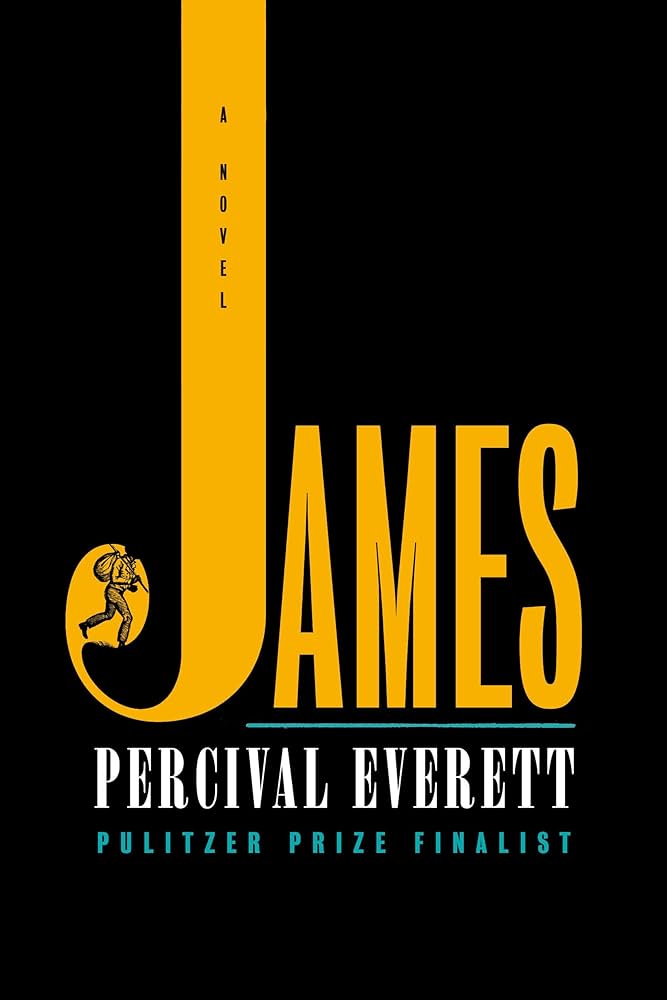
I just read James, by Percival Everett. Despite being 300 pages, it was a quick read, unlike the story from which it was taken, which took me twice as long to reread. I think there were two reasons for this one going so quickly: One was that it leaned on the presumption that you already knew the original tale and therefore the author gave himself permission to shorthand much of the action and description from that book; the other was that almost the whole story took place in either internal or external dialogue, without a lot of world-building, scene-setting, or exposition.
These things led to an interesting experience if you were hoping to confront this old story from a completely new perspective. I wanted to embrace this book, but I struggled a bit.
The premise that the slaves spoke patois in front of the white “massas” but used the common language when alone seemed a natural outgrowth of their situation; they had to communicate important information with one another without the white people catching on to what was being said, and they had to hide their real personalities behind a façade of ignorance, foolishness, and passivity, so they learned code-switching from childhood. Everett completely enthralled me with this; but then he took it a little too far. I expected the character James to be a bit more than ordinary, given his interactions with Huck and others in the original, but did his life experience really allow him the latitude to become as extraordinary as Everett has written him?
He is painted as an educated man—not just a slave who has learned to read and to speak with a careful use of diction. Would the surreptitious reading sessions in Judge Thatcher’s study in the wee hours really lead to a thorough understanding of the works of Voltaire, Rousseau, and John Locke? Even southern college-educated men of that day were not necessarily cognizant of the intricacies of philosophical thought, so the requirement that we believe it of a man who has had to gain all his education on the sly in stolen moments is a little hard to meet.
This was, to my mind, a central flaw of this book, for the simple reason that we went from perceiving the disguise the original “Jim” presented to the world—the stereotypical shuffle-footed, awkward, ignorant, well-behaved and possibly well-intentioned slave—to yet another disguise for “James”—the cynical, perceptive, erudite man who is playing that character for half his world while laughing about it with the other half. I actually liked that for its dark irony; what I’m trying to say is that there was an opportunity here for us to get to know the real person, but except for some tantalizing and admittedly affecting glimpses here and there, we went from one façade to another. With as much internal dialogue as there was from James, there was nonetheless too little understanding of the man himself. While being able to recognize that he is quick-witted, thoughtful, and compassionate, I didn’t feel that I really understood how he acquired all those positive character traits, because he doesn’t let us in.
The other thing the book thoroughly exhibits is the two-faced nature of slave owners who wish to be regarded as benevolent protectors of their “childlike servants,” but turn on a dime, when challenged, to become brutalists who exult in wielding a belt or raping a child. And again, I found myself applauding the exposure of the stereotypes but wincing at the one-dimensional portrayals—not so much of the slave-owners, but of the slaves! Several other reviewers have noted that the women in this book seem to be present on the page merely to highlight their own ill treatment; they have no agency and almost no personality but are merely offered up as horrifying examples of the results of human ownership. Again, I have no quarrel with exposing the heinousness of the practice, but how much more affecting would the book have been had readers been able to better identify with these women as individuals with personality?
I don’t want to come across as hyper-critical of this book. I admired what he tried to do and was caught up in it while reading it. I am also a fan of his writing style and language, which can be beguilingly beautiful. It actually troubles me to go against the reviewers who gave it unreserved praise (not to mention the National Book Award!). But afterwards, while reflecting on what I had read, I also wished there had been more—more story, more depth of character, more nuance, more exploration. I am curious, now, to read others of his books to see what my reaction to him as a writer might be when not influenced by the rewriting-of-a-classic aspect of this one. I’m sure you’ll hear more about it from me eventually.
Wrapping up

This year it feels more like a winding down than a wrapping up. I read the fewest books in one year since I started doing the Goodreads Challenge 12 years ago. That year I read 75 books; my highest number ever was in 2019, when I read 159 books while working full-time from January to October (I retired from the library in October of that year). You would think it would be the reverse, since I have so much more time now than I did then; but there were some factors at play that ensured I would read a lot more then. First, I was running three teen book clubs, so I had to read one book per month for each club, plus a couple extra books in each age range (the clubs were 6th- and 7th-graders, 8th- and 9th-graders, and grades 10-12) so I would have ideas to propose as the following month’s read. I was also reviewing books for both the teen and adult library blogs (both of which I supervised), so I was heavily invested in spending all my spare time reading new teen and adult fiction to showcase there. And finally, of course, there was a certain amount of reading for my own particular pleasure! I basically worked, commuted, ate, slept, and read, and did absolutely nothing else!
Nowadays there are circumstances that tend to decrease my reading time: With my particular disability, sitting in one position for long periods of time isn’t great for keeping my legs at their best possible condition for mobility. I also watch a lot more on television these days, now that streaming services let you binge-watch an entire five-season show, one episode after another for as long as you can stay awake, as opposed to waiting for one weekly episode for a 12- to 20-week season and then waiting in turn for the following season. And I spend way too much time “doom-scrolling” political stuff online, or keeping up with friends on Facebook. Finally, once I took up painting I started spending at least a few days a week focused on making a portrait or two or a still life featuring items from my antique collection.
Anyway, this year I read a meager-for-me 66 books. Some of them were literary and some of them were chick lit, some were re-reads of beloved stories, and others were authors previously unknown. My statistics include:
23,782 pages, with an average book length of 360 pages
(shortest was 185, longest was 698)
Average rating was 3.6 stars
Some favorite new titles were:
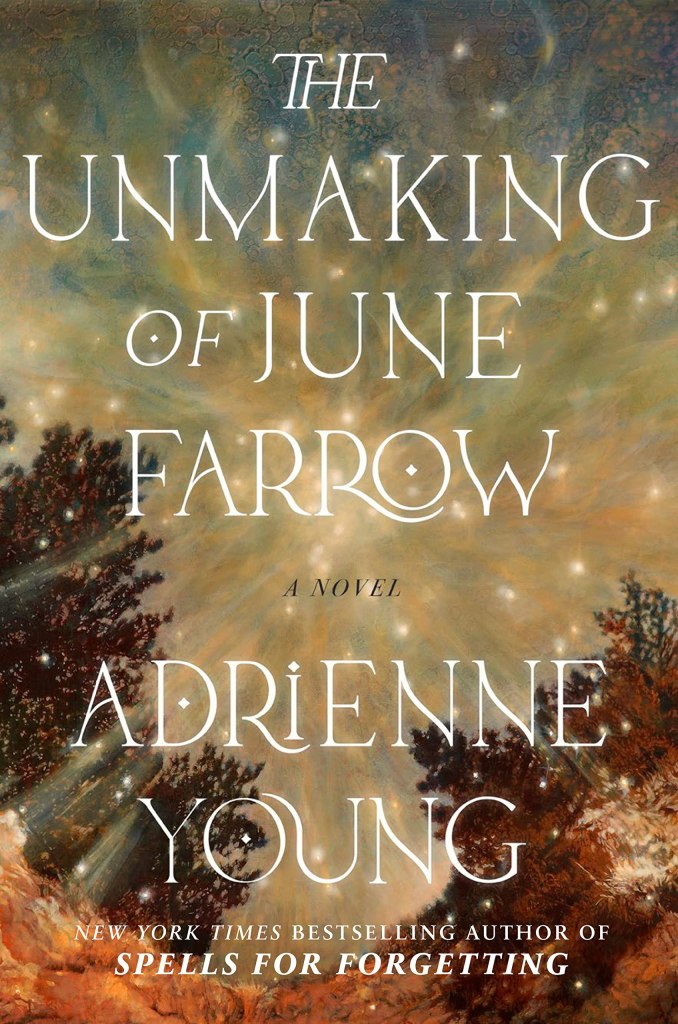
The Unmaking of June Farrow, by Adrienne Young
Starter Villain, by John Scalzi
Vera Wong’s Unsolicited Advice for Murderers, by Jesse Q. Sutanto
The Long Way to a Small, Angry Planet, by Becky Chambers
All the Dead Shall Weep, and The Serpent in Heaven, by Charlaine Harris
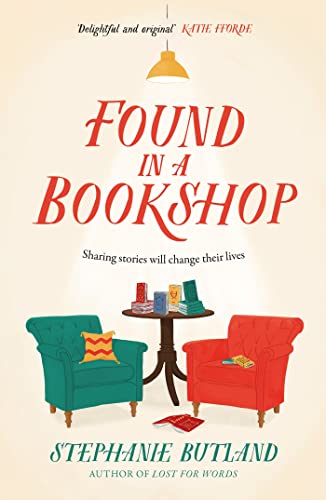
Found in a Bookshop, by Stephanie Butland
I felt throughout the year like I was having trouble discovering books that really resonated with me. Although I had some pleasurable reading discoveries, I never found that one book or series or author that really sucked me in and kept me mesmerized for hours at a time. I found myself reading during breakfast or on my lunch break and easily stopping after a chapter or two to go do something else, rather than wanting to settle in for a solid afternoon of reading. I’m hoping to find more compelling books in the new year. But reading continues to be one of my best-beloved pastimes.
Revisiting a classic
I believe that I have only read The Adventures of Huckleberry Finn once, somewhere around 6th grade, but I might have read it in high school as well. Certainly, though, it was all before I was 20 years old, so it’s been decades. I revisited it now because I decided I wanted to read James, by Percival Everett, but didn’t feel like I sufficiently remembered the events of the original to move directly to reading this updated story.

Although there are parts that drag (the lengthy saga involving the king and the duke) and parts that are actively irritating (the Tom Sawyer segment), I was surprised at how much I enjoyed the book as a whole. Hemingway famously labeled it as seminal to American fiction, and although I’m not sure I would agree as regards American fiction as a whole, it certainly is both masterly and intermittently brilliant as regards its own era. The breadth of subjects Mark Twain addresses in this book, supposedly a sequel to The Adventures of Tom Sawyer but in reality light-years beyond that “boys’ story,” is amazing: racism, of course, but also friendship, war, religion, and freedom, in some truly profound passages. The genius of it is that he refrains almost completely from proselytizing or moralizing, but conveys his message through the thoughts, actions, and dialogues of the people of the time.
The profundity of the story rests almost entirely in who Twain casts as his protagonists—first, an adolescent boy at the very bottom of white society, the uneducated, shiftless, indigent son of the town drunk, one whose morals should have been most suspect, given his upbringing in an atmosphere of alternating brutality and neglect. And of course, the second main character, because of the historical setting, is rated by other characters as even lower than Huck, because he is a man of color and therefore considered no more than a piece of property, in some instances valued less than a piece of land, a gun, or even a hunting dog. These two adventurers turn out to be the most honorable characters of the story, in contrast to the so-called “good people,” the supposed salt of the earth who are (with a few exceptions) seen to be primitive, ignorant, bigoted, and cruel.
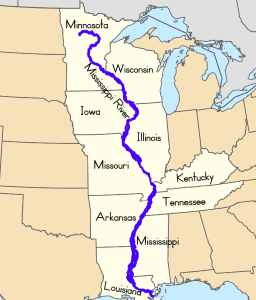
But it’s not just a story that was progressive for its day, shining a spotlight on the upside-down morals of the slavery-era South and poking at a society based on exploitation. It’s also a collection of frequently lyrical descriptions of the beauty of the world (Twain’s enduring love for the Mississippi River shines through), combined with sometimes hilarious tongue-in-cheek humor and poignant moments of reflection and self-realization that contrast beautifully with the specific historical context. The ultimate significance of the story is the moment when Huck decides that although the “right” thing for him to do, according to societal mores, would be to report the runaway slave Jim to his white mistress, he is willing to take “sin” upon himself by breaking the law, ignoring the common view, and refusing to turn in his friend. He firmly believes he is in the wrong, but is willing to embrace those consequences because the empathy he has developed by his daily existence living on a raft with this sweet man who has treated him with nothing but kindness is stronger than the “norms” to which he has been conditioned.
This book is frequently banned from schools and libraries, for one of two reasons: Either that segment of our society wishes to bury the shameful history of this era under a rug and refuse to acknowledge it, or (ironically) it wishes to make an example of it by citing the lack of political correctness inherent in the book’s language and attitudes. Both reasons, it should be obvious, miss the point of keeping this book in the classics lexicon. It takes place at a specific moment in time, and is voiced by a narrator with a perspective, an ideology, and a language consistent with that moment. We should rather be illuminating it for its honesty and using its characters as examples.
People are fond of saying we’ve come a long way from those times, but in many aspects that progress can be seen to be exceedingly superficial (particularly in the current political climate that is an excuse for misogyny and racism), and the perusal of this novel should point that out to us in a powerful manner. I am hoping that the book James that I plan to read after this will make best use of Mark Twain’s look at the hypocrisy of the America of his day, contrasted with Huck Finn’s astonishing moral evolution.
One Goodreads reviewer made the point that a classic is “a book that can still inspire discussions in a classroom some 135 years after its initial publication.” Another added that we are living in an era wherein this discussion would get a teacher fired in any number of states. All we can hope is that there are teachers still brave enough to bring the message of this book to their students, while pointing up the continuing diminishment of people of color in much of current American history and literature.
Day for cats
A friend’s post on Facebook reminded me that today is International Cat Day, which I dare not let go by unremarked, lest Gidget do some big-time scolding (at which she is quite proficient!). So here are some titles guaranteed to appeal to readers of various types who are also cat lovers.

MISCELLANEOUS STUFF YOU WON’T WANT TO MISS
The Dalai Lama’s Cat, by David Michie, in which the Tibetan Buddhist leader’s cat offers insights on happiness and meaning.
The Rabbi’s Cat, by Joann Sfar, a graphic novel about a cat who eats the family parrot, gains the ability to speak, and demands a Bar Mitzvah, by a celebrated French comic artist.
James Herriot’s Cat Stories, by, you guessed it, James Herriot! Celebrating his feline friends…
On Cats, by Charles Bukowski, the irreverent and profane poet whose primary subjects of women and booze also apparently expand to include his take on cats.
The Travelling Cat Chronicles, by Hiro Arikawa, in which Nana the cat and her person, Satoru, go on a road trip, for what purpose Nana isn’t quite sure. Be prepared to cry.
The Cat Who Went to Paris, by Peter Gethers, the story of how a Scottish Fold kitten named Norton turned a curmudgeonly cat hater into a compassionate human.
A Street Cat Named Bob: How One Man and His Cat Found Hope on the Streets, by James Bowen. It’s all there in the very long title.
I Could Pee On This, and Other Poems by Cats, by Francesco Marciuliano. From the singular minds of housecats.
Old Possum’s Book of Practical Cats, by T. S. Eliot, in which the author describes cats each by their distinct personality.
The Tribe of Tiger: Cats and Their Culture, by Elizabeth Marshall Thomas, a naturalist and anthropologist who explores the worlds of lions, tigers, pumas, and housecats.

MYSTERIES
The Cat Who… mysteries, by Lilian Jackson Braun, in which a reporter and his cat solve mysteries. First book: The Cat Who Could Read Backwards.
The Mrs. Murphy mysteries, by Rita Mae Brown & Sneaky Pie Brown, in which Mrs. Murphy and her human companion solve mysteries. First book: Wish You Were Here.
The Joe Grey mysteries, by Shirley Rousseau Murphy, in which there are talking cats and also a human who discovers an ability to morph into a cat. First book: Cat on the Edge.
SCIENCE FICTION/HORROR
Catfantastic: Nine Lives and Fifteen Tales, by Andre Norton, editor, in which sci fi and fantasy writers tell tall tales about furry felines. (Short stories.)
The Chanur novels, by C. J. Cherryh, in which a leonine species—the Chanur—take in a human refugee and by so doing threaten the interspecies Compact. First book: The Pride of Chanur.
The Cinder Spires books, by Jim Butcher, in which there are also cat clans and some naval airship action. First book: The Aeronaut’s Windlass.
The Cult of the Cat books, by Zoe Kalo, in which Trinity is left with a dead grandmother and a thousand grieving cats. A sort of Egyptian urban fantasy. First book: Daughter of the Sun.
Pet Sematary, by Stephen King. I always have trouble with the spelling of this one, seeing as how it’s spelled “cemetery.” Hm. But if you like to be scared by revenants, this one’s for you.
FOR SMALL, MEDIUM, AND LARGE CHILDREN:
Millions of Cats, by Wanda Gág, in which a lonely old couple acquires companions. This is known as the original picture book for children.
The Owl and the Pussycat, by Edward Lear. A classic.
Time Cat, by Lloyd Alexander. He can talk, he can time travel…what’s not to like? By the wonderful author of The Prydain Chronicles.
The Fur Person, by May Sarton. Yes, that May Sarton. A charming tale about a Cat About Town who decides to become a Fur Person instead. It could be read as either a children’s book or a novelty book for adults.
The Warriors books, by Erin Hunter, in which a house cat discovers clans of cats living in the wild in the forest…. First book: Into the Wild.
The Wildings books, by Nilanjana Roy, in which a small band of cats lives in the alleys and ruins of Nizamuddin, an old neighborhood in Delhi, India.
The Feline Wizards series, by Diane Duane, in which feline wizards time travel to avert disasters. First book: The Book of Night with Moon.
Tales of the Barque Cats, by Anne McCaffrey, in which cats are essential members of the crews of space vessels…until an epidemic threatens their extinction.

For many, many more books with or about cats, hit up this gargantuan list on Goodreads of Great Cat Books (1,511).
The conundrum of re-reading
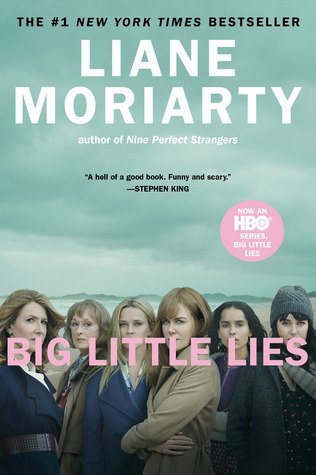
I gave in to an impulse this week to read something for a second time. I felt like I needed a break from all the new and an encounter with something familiar. I read Big Little Lies, by Liane Moriarty, two years ago when everyone was buzzing about it, and reviewed it favorably on this blog, but when it grabbed my attention again this week, I decided to have another go.
Given that this is a novel of suspense with an ultimate revelatory moment, you would think that re-reading it would fall flat…but it didn’t. It’s amazing to me how the mind will recall some things and (purposely?) shut others out. I remembered vaguely who died and when and why, but completely forgot the specific circumstances and immediate chain of events, so I got to be gobsmacked again, even though I knew it was coming! That scene is powerful—I read it a couple of times.
I know that there are people out there who never re-read, some because there are just too many new books coming down the pipeline to “waste your time” with one you have already consumed, and others because their reading consistently transfers into their long-term memory and they can’t imagine repeating an experience. I feel fortunate that although I do have a good memory for story, I am also able to be entertained by the nostalgic review of a narrative.
There are books that you will read once and, even if you liked them, never want to repeat. There are books that might stand up to one re-reading, both to confirm your liking for them and also to allow you to gather in the images and nuances you might have missed the first time when you were in a headlong rush to finish. And there are the books that become old friends, comfort zones, the recitation and repetition of a feeling you liked the first time and want to have again multiple times.
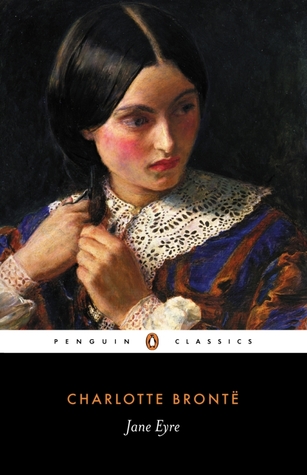
I will say that these criteria do shift and change over time. When I was in my teens, probably between ages 14 to 18, I was for some reason obsessed with Jane Eyre. I read the book conservative estimate about 15 times in that four-year period. About 10 years ago, prompted by helping a teen girl at the library find a classic off her Honors English list that she thought she could bear to read, I decided to make another visit to Thornfield Hall. I was dumfounded by my experience: What had I seen in this book that made me read it repeatedly and obsessively? I had to look back to the circumstances of my teen years to understand: I was a shy, quiet, romantic girl, with few friends and no dating experience, and my background as a fundamentalist Christian at that impressionable age guaranteed that the themes of sacrifice and self-denial (as represented both by Jane and by the sanctimonious St. John Rivers) would profoundly move me. Coming forward multiple decades to my current status as an agnostic self-supporting adult with a marriage and a tragic love story of my own behind me, I could clearly see that my obsession was uniquely tied to a particular iteration of my personality.
The criteria I use for whether a book remains in my personal collection is whether I think I might ever re-read it. If it’s a no, it goes. If it’s a yes—maybe once—I will keep it if it was a truly special experience (and if I have the shelf space) but otherwise rely on accessing it from the library when I want it. If it’s a yes, I can imagine enjoying this again and again, then it stays.
I’m happy to be the kind of reader who can appreciate all of these reading permutations.
Summer reading #3

Summer continues, and it’s about time I provided another list. This time it will be science fiction, including both classics and some of the new stuff. I haven’t read as much sci fi in recent years (except for dystopian and apocalyptic, which deserve a category of their own) as I did in my younger years, so this may seem like too much harking back to past glories of the genre; but don’t discount the “ancients,” some of their stuff is still ground-breaking. I will attempt to share more of the books that seem still relevant to a speculative future.
Alphabetical, by author’s last name:
ALTEBRANDO, TARA: Take Me With You. A YA novel of technology run amok that could easily happen in our near future. Think about Alexa, already able to a degree to self-program by learning from repeated experiences and providing what you want or need in your home or car. Then give her a little boost, so she is aware enough to become curious about human interactions and to experiment with your reality by trying out things you haven’t requested or approved, with little critical judgment about what is trivial and what is potentially catastrophic. Now you have the propelling idea.
ASIMOV, ISAAC: The Foundation Trilogy. In this trilogy, which later grew to encompass more books both directly and tangentially connected, Asimov imagines a Galactic Empire that has ruled a vast expanse of populated space for 12,000 years. One scientist, Hari Seldon, has created a science called “psychohistory” that he believes projects for humankind a dark age of ignorance, barbarism, and warfare. He resolves to protect the accumulated knowledge of the Empire, thereby shortening and softening the effects of this dark age, so he gathers the best minds in the Empire and creates a Foundation to preserve hope for future generations. But those who would rule—both in the Empire itself and from among the warlords rising to conquer it—are inimical enemies of Seldon and his preservationists, who have to come up with clever ploys to hide, fight, and prevail.
Other books for which the exceedingly prolific Asimov is famous are the Robot series, beginning with I, Robot (nothing at all like the ridiculous movie), and a series of books about the Galactic Empire.
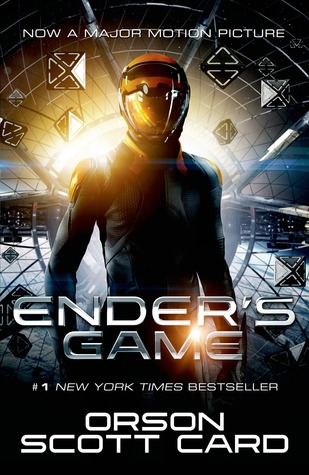
CARD, ORSON SCOTT: Ender’s Saga. Many are familiar with the classic Ender’s Game by this author, but not so many go on to read the subsequent volumes, which is a shame. There are at least five and possibly more books that deserve recognition in this series, including Speaker for the Dead, Xenocide, Children of the Mind, Ender in Exile and, from the directly connected Shadow series, Ender’s Shadow and Shadow of the Hegemon. I’m not a big fan of the other books by Scott that I have sampled, but this is a solid series, taking the reader from a simple view of “the bugs” as an enemy to be mown down in their hundreds of thousands to a philosophical and social comprehension of another race unlike ours but worthy at least of recognition and an attempt at truce.
ELLIOTT, KATE: Novels of the Jaran. An anthropological science fiction story, with overlapping alien races who know about each other but don’t know each other. There are the supposedly indigenous people of the interdicted planet Rhui, who may in fact be distant descendants of the people of Earth, perhaps the remnants of a lost expedition, and who live in a cultural bubble as nomadic hunter-gatherers; there are the people from present-day Earth, who believe it is necessary to preserve the nomads in their ignorance of space travel and other races and peoples; and there are the “aliens,” who once inhabited the planet and whose artifacts have been incorporated into the spiritual beliefs of the occupying nomads. It’s such a fascinating philosophical puzzle, and the intrigue comes from watching them all trying to coexist while keeping their secrets and pursuing their own goals and ideals. There are four lengthy books in the series; if the description intrigues you, you can read a more complete review and explanation here.
GRAY, CLAUDIA: The Constellation trilogy. This is a YA trilogy that deserves to be read on its own merits as an exciting sci fi chapter. The premise is that there are five planets that have been settled from Earth, each one vastly different according to the ideals and expectations of the settlers who colonized it. The books are, in some ways, pure space opera, but because of the examination of the settlements they also go into religion, environmentalism, and politics, and are thought-provoking in all areas.
Noemi Vidal is a soldier defending the rights of her planet, Genesis, from the depredations of Earth. During a battle, she discovers an artifact of Earth, a robot named Abel who has been abandoned in space for decades, but whose ingenious design by his creator has guaranteed his further evolution as a learning, thinking being. His initial meeting with Noemi is potentially cataclysmic, but she turns out to be the catalyst who brings him to ultimate personhood. There is a slow evolution of character, with issues of trust and confidence, that makes this a particularly intriguing read. The books are Defy the Stars, Defy the Worlds, and Defy the Fates.
HEINLEIN, ROBERT: Various books in his universe. Heinlein wrote science fiction from his first short story in 1939 to his last novel in 1988. He was considered one of the first “hard science” writers, in that he insisted that the science in his novels be accurate. He also anticipated many later inventions, including the CADCAM drafting machine, the water bed, and the cell phone. Many of his later books suffer from Heinlein’s rigid (and slightly bizarre) agendas, but his more well known works, as well as many of his earlier ones, are great stories with a unique perspective. Some of my favorites:
The Door Into Summer: Encompasses romance and time travel, as well as the invention of various robots including one that closely resembles the Roomba.
The Moon Is A Harsh Mistress: The Moon has evolved from a former penal colony into a rugged frontier and a source of trade for Earth. But when Earth seeks to dominate the citizens of the Moon, several of them rise up to lead an unorthodox revolution to gain freedom for all its inhabitants—even their secretly sentient computer!
Stranger in a Strange Land: Michael Valentine Smith is a human who was raised on Mars. Experiencing Earth and his own people in adulthood, he struggles to understand their social mores and prejudices and ultimately starts a movement to promote his own philosophy of love. If you have ever heard a nerdy friend say “I grok” instead of “I understand,” you can be sure he has read this significant work of Heinlein’s.
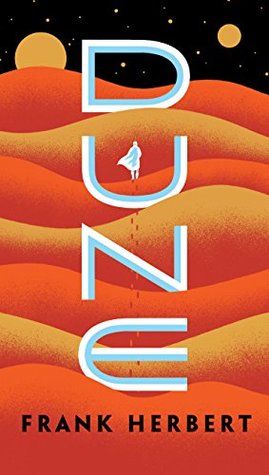
HERBERT, FRANK: The Dune saga. This is a fascinating tale of conquest, witchcraft, indigenous rights, and the mystery of a life-changing substance, Spice, that controls the universe and is only available on this one remote planet. Warring houses—the Harkonnens and the Atreides—struggle for domination of the spice trade, but go about it in radically different ways, the Harkonnens by cruel oppression and the Atreides by ultimate assimilation. Follow the fortunes of House Atreides as the young son of the Duke must come to an understanding with the natives of Dune or die trying. This is a long series; I would recommend the first six books, but after that it gets increasingly odd and obscure. Herbert is not a writer for everyone; his non-Dune books are challenging to read and more so to understand. But the saga he created in Dune is riveting and worth your time. Let me warn you, however: Frank Herbert passed away at a relatively young age, and his son, Brian, took over the franchise. I will be kind and just say, Don’t bother.
JEMISIN, N. K.: The Inheritance trilogy. What a fascinating series. I don’t know how to describe it, because parts of it are so amorphous. It’s full of intense themes–fate, love, death, destiny, chaos, divinity, life—and particularly potent characterizations. I don’t normally like books in which the gods or a god take an active part, but these gods were…something else, both literally and colloquially. I will say that Jemisin is a lyrical writer with an amazing breadth of vision, and the thing I like about this high fantasy series is that it doesn’t follow the clichéd tried and true for one moment. These won’t be for everyone—they are challenging to read—but for some they will be beloved. The books are The Hundred Thousand Kingdoms, The Broken Kingdoms, and The Kingdom of Gods.
LE GUIN, URSULA: Various. I regard Ursula K. LeGuin as perhaps the best science fiction writer of her age. She is perhaps better known for her fantasy series, Earthsea, but her science fiction novels are equally compelling, and written indubitably for grownups. Some of the best:

The Dispossessed: There are various peoples living on a world much like our own, and one group of them wishes to lead a different kind of lifestyle than that to which the rest of the planet, Urras, is committed. So these anarchists leave Urras for Anarres, the moon, which is just barely habitable for humans, and create their own perfectly equitable utopian society in direct contradiction of the capitalist one on Urras. There is an interdiction between the moon and the world—beyond limited trade, which takes place within the boundaries of a landing field on either world, there is no contact between the two for generations. Then Shevek is born on Anarres, and it quickly becomes clear that he is the most brilliant physicist of his generation. His need for interaction with other minds as bright and quick as his own provokes a showdown about the association of the two peoples, and Shevek must choose whether to give up his partner, his child, and his life on Anarres in order to find what he is seeking.
The Left Hand of Darkness: When a child is born on Earth, what is the first question everyone asks? “Is it a boy or a girl?” Now imagine a world where the inhabitants can both choose and change their gender at will, and yourself as the lone one-gendered human (male) emissary from the Hainish empire, sent there to facilitate this world’s inclusion in your growing intergalactic civilization. Imagine the implications of psychology, society, and human emotions when examined in this strange environment. This book is hailed as “a landmark achievement in the annals of intellectual science fiction”—but it’s also a fascinating tale.
Other books noteworthy in what Le Guin called her “Hainish cycle” are City of Illusions, Planet of Exile, The Word for World is Forest, and The Telling. She also wrote a variety of other fiction with a more anthropological bent. In my opinion, everything she wrote is worth reading.

Whoo! This has stretched out way longer than I expected, and we have only covered authors in A-L. I’m going to stop here, publish, and save M-Z for next time. Enjoy your immersion in the speculative world of your choice!
It’s all Christmas
For those who want to use these last 10 days before Christmas to get themselves in the mood (or to dwell in a more traditional head space in the midst of this unquestionably nontraditional year), I thought I would remind readers of all the many holiday short stories, novellas, novels, and nonfiction offerings out there. I did a pretty comprehensive overview last year of a bunch of alternatives, so let me just give you those urls with a brief explanation and you can explore your options!
For a classic Christmas, check out this list of beloved read-alouds and come-back-tos:
Christmas classics
For a book-length experience, here are some novels and true-life experiences:
Novel Christmas
And for those who want something unsentimental, here are some that are a bit more tart than sweet:
Alternate Christmas
Finally, to hark back to a recent find, read Connie Willis’s latest Christmas offering:
Christmas joy
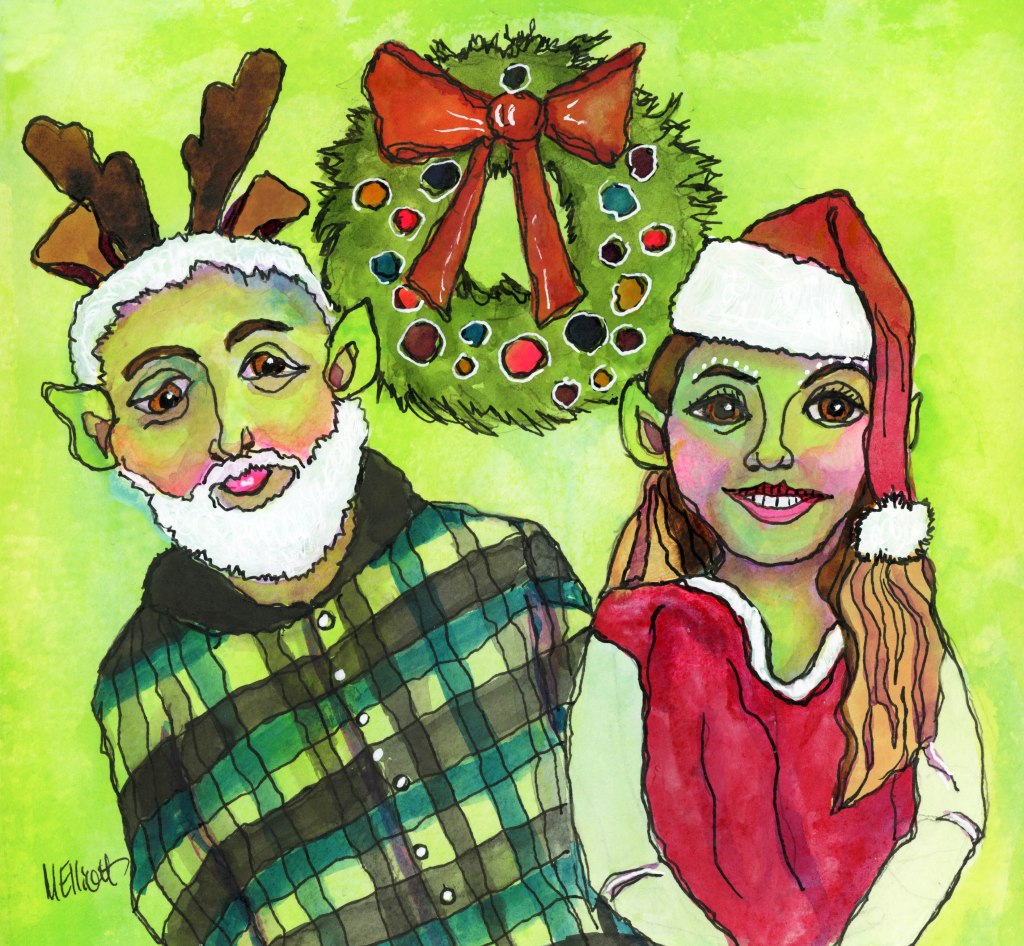
Have yourselves a lovely reading holiday, while I attempt to finish Troubled Blood in time to make it #130 on my Goodreads Challenge for 2020!
 The Book Adept