Slog in the woods
I just finished The God of the Woods, by Liz Moore, and perhaps my headline has telegraphed my reaction?
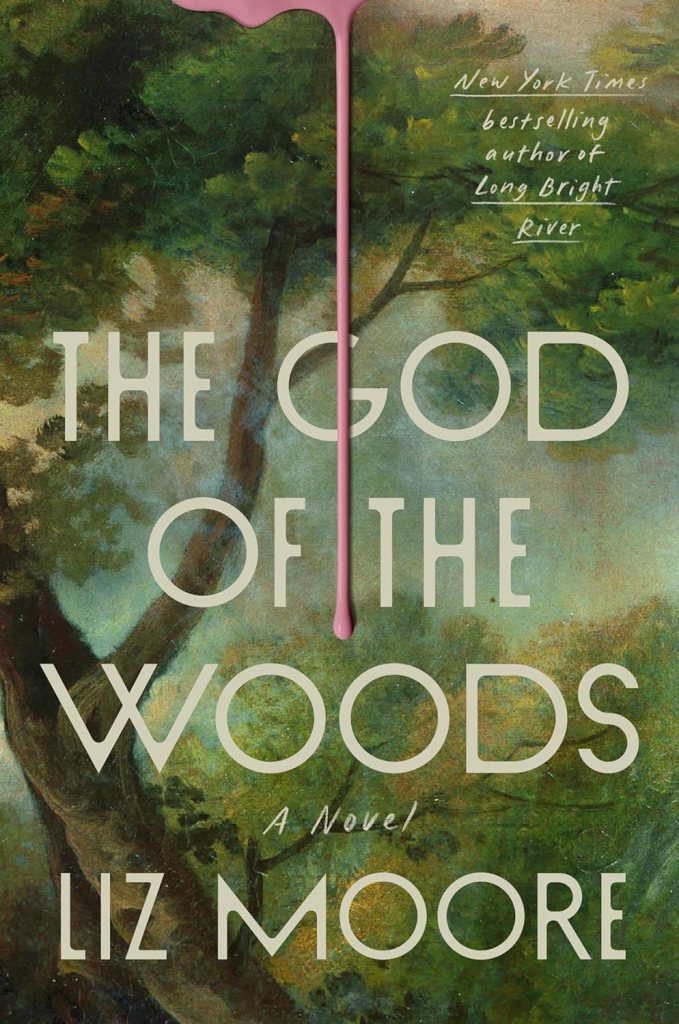
It’s not a bad book. It’s actually an intriguing story, at least initially. It takes place at a summer camp in the Adirondacks owned by the wealthy Van Laar family. This summer is the first time in three generations that any Van Laar child has ever expressed a desire to attend the camp, and ordinarily the family wouldn’t encourage their offspring to mix with the mundanes; but Barbara Van Laar has been such a problem for the past year or so that her parents are happy to put her in this controlled environment at a certain distance from home. She’s still close by—the camp is on one-half of the vast acreage owned by the family—but she’s not underfoot, sulking about in her all-black punk get-up, provoking her father and slamming doors, so all parties are happy with this solution. Until, that is, she goes missing.
Then we get the previous history of the family, which includes a son, Bear, who himself went missing (though not from camp) before Barbara was born, and was never found. A local man was blamed for his disappearance and assumed death, only to himself die before anything could be proved. The family believed he was the culprit, and let the whole thing go until Barbara’s disappearance sparks new interest in that similar set of circumstances, leading to speculation that someone else might have been at fault and is still out there preying on Van Laar children.
The problem is not with the storyline, it’s with how we glean each small morsel of information a teaspoonful at a time. There are seven points of view in this novel, and also a timeline that jumps from the ’50s to the ’60s to the ’70s (present day is 1975) to “day one” etc. of the search for Barbara, and both the narrator and the timeline switch in almost every one of the rather short chapters.
We get the story from the POV of Barbara’s camp counselor, Louise; from her bunkmate Tracy; from Bear and Barbara’s mother, Alice; from Judyta, a junior inspector on the case; from the widow of the presumed kidnapper of Bear; from the manager of the local motel at which the inspector is staying…. And it’s not just the current story regarding Barbara, or even the past story of Bear, it’s also the events leading up to the marriage of Alice into the Van Laar family, the relationship between that family and the managers (current and past) of the camps and with the police officers (current and past) of each investigation. The suspects include a boyfriend of Louise’s who is also the son of the Van Laars’ closest friends, who may have been double-dipping (or taking smorgasbord) in the pool of available females (including Barbara); we get the perspective of Jacob Sluiter, a serial killer (and an initial suspect in Bear’s disappearance) who has escaped from jail and is headed for the Van Laar preserve…kitchen sink doesn’t begin to describe the cast of characters here. The jumping around from person to person and era to era is disconcerting and ultimately offputting—or at least it was to me.
The resolution has a tender, ah-hah moment attached to it that made me momentarily soften toward the story, but there is also an implausibility about it that stuck with me longer than did that small detail, and I finished the book feeling frustrated—unsatisfied by the consequences meted out (or not) to various characters and dismayed by the cynicism surrounding the treatment of the rich vs. the “regular” people, even though I know that differentiation to be all too true in real life.
I do think that this is one of those books to which reactions will be diverse; certainly there are many people who adored it and gave it top marks. I will say that the writing is good, and the characters she develops beyond a certain point are believable and sympathetic; but much of the supporting cast struck me as cardboard clichés who took away from the total effect and made me wish they had either been developed more fully or left out altogether. I think a final pass by an editor determined to trim about 100 pages would have greatly benefited this book. It felt like the author couldn’t quite decide whether to write literary fiction, a mystery, or a full-on thriller, and cutting out some of the extraneous material might have propelled it towards a more defined identity. I was sufficiently engaged that I pushed to finish the book today before it went to the next person on the library check-out list tomorrow when my turn is up, but not so much that I will necessarily seek out this author again.
Readalike

Usually when someone asks for a “readalike,” they mean that they like a particular author and would like to find another author or two who write in the same way, whether because that author publishes infrequently, or has died and won’t be producing any more books, or whatever. But I’m afraid I mean this in a less flattering way, in that the entire time I was reading A Calamity of Souls by David Baldacci, I was thinking about all the ways in which it echoed a favorite Grisham book (and movie), A Time to Kill. The setting is a similar one (the South in the 1960s), the issue is a similar one (a black defendant with a white lawyer trying to get him a fair trial), and there is even the civil rights “savior” who arrives from the North to help the southern lawyer navigate this tricky case in front of a judge and jury who are blatantly racist. (One could also draw parallels with To Kill A Mockingbird, specifically in what ends up happening to one of the main characters.)
Although the cases are different (in ATTK, the defendant has killed his daughter’s rapist, while in this one the black man has been accused of murdering and then robbing his white employers), and although in one the legal genius from the North is a Jewish law student from New York while in the other she’s a black civil rights lawyer and hails from Chicago, the dynamic is very much the same. The difference is, I found Grisham’s story completely gripping, while Baldacci’s has some interesting moments as the two lawyers set about discovering who could have done the crime and then put their client in the hot seat to take the blame, but other than that element of mystery, a lot of the book reads like a Civics lesson.
The author takes pains to mention significant cases (Loving v. Virginia), racially charged props (the Green book, which the author has to find a roundabout way to include because it had ceased publication by 1968), sundown cities, and the like, and much of it seemed both heavy-handed and beside the point. This book presumes that the reader has no first-hand knowledge of the history of racism in the South and its manifestations in the 1960s when laws had been passed to end it but southern whites were dragging their feet to implement them. The characters are mostly one-dimensional, presenting as either a hero(ine), conflicted and confused, or irredeemably evil, with little nuance. One reviewer on Goodreads said they were uncomfortable with the portrayal of the black characters and actually felt that the author perpetuated some stereotypes while trying to do the opposite; I would have to agree.
It’s not an irredeemably bad book, but it’s not very good. It’s my first experience reading Baldacci, as far as I remember (I might have read one back in my 20s?), and to be fair I might try another of his without the obvious agenda and see if I enjoy it more, since so many people rave over his books. But…I’m certainly not on the library website looking for my next one right this minute!
Interesting, but…
I’m going to finish that phrase with “not compelling.”
I started a new series by J. J. Marsh called the DI Beatrice Stubbs mysteries, and although the first book, Behind Closed Doors, has much to recommend it, I found myself reacting somewhat tepidly to its charms. There were three books on offer at a discount as a boxed e-book set (with another three-book set if you liked these), and the description—a team of Interpol agents led by a detective inspector from Scotland Yard, trying to solve a bunch of murders camouflaged as suicides—sounded intriguing.
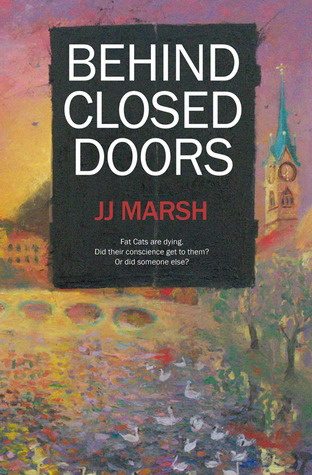
The tip-offs that they were not suicides were two, the first being that DNA from the same individual was found at all the death sites, and the second that these were all singularly unpleasant characters, responsible between them for a lot of dirty dealing and corruption in the world. Obviously, the team feels, someone has targeted them for elimination and has gone to great lengths to do so both thoroughly and cleverly—and also what would have been undetectably save for the DNA. The conclusion is ultimately drawn that the DNA is purposefully planted to give a hint that these were, indeed, diabolically successful revenge killings.
The set-up sounds wonderful: The killings take place across Europe, mostly at glamorous and diverse locations (a luxury hotel, a ski run, a dam) and by creative methods (freezing, asphixiation, beheading). Because the victims are villains, mostly from the world of international finance, no one seems to excessively regret their deaths.
The team of investigators is what should be an interesting crew made up of three women and three men of various ranks and nationalities from several countries and organizations, brought together to definitively determine whether those who initially dealt with the deaths are right to be suspicious. There is a thinly disguised villainess who is either personally or professionally connected to all of the victims, but against whom nothing has been proven. The home base of the team is Zurich, with side trips to all the destinations where the killings took place, and there is a lot of name-dropping of cities and their tourist attractions—museums, opera houses, parks, resorts—to give everything an air of glamour. And yet…
I had a lot of trouble investing in anyone in this book. The main character, Detective Inspector Beatrice Stubbs, is supposed to be the primary driver of the action and thus, presumably, the sympathetic character, and she is nicely rendered as a person of brilliance who has just come back to work after a period of instability during which she may have attempted suicide herself. She is not painted as a tragic figure, though; she has a stable home life with a supportive partner, is committed to regular visits with her therapist, and has a boss who wants her to succeed and has her back. She’s a little older and a bit less fashionable than the other women on the team, which gives her both authority and vulnerability, and she has moments of both darkness and joy in the course of her days.
Other than her, however, I found the members of the team to be opaque. Each of them has a quirk or two that is played up in the course of their interactions, but you never really get to know the people behind those quirks. There’s just not enough detail provided to make you care about them one way or another and, in some cases, the element of personality chosen for them is actively irritating, making you not want to know them.
Similarly, the way the victims are described is probably accurate; since they are all from a certain class of wealthy, ruthless men, one might assume that they would each be likely to fall prey to flattery and deceit by the young women who set out to entrap them— but after a while the stereotypical behavior verges on misandry and becomes both unpleasant and repetitive.
When she’s not writing, J. J. Marsh works as a language trainer in four languages, so her prose is mostly fluid and descriptive. But despite all of this (and high praise from some readers), I found this book to be only okay, and probably won’t read the next two. Another near miss for my reading preferences.
Dog Day Afternoon

No, this isn’t a post about a 1975 bank robbery movie. But the title seemed appropriate, given that it’s National Dog Day and also that I am getting such a late start that my post won’t be available until after noon, one of those hot, sleepy afternoons when dogs (and people) prefer to lie around and languish (i.e., read!) during the summer heat. I did some pre-planning for this post by making a list of some pertinent dog-oriented books, but then my distracted brain failed to follow up, so a list is pretty much all you’re going to get this time. But don’t discount it just because it’s not elaborated upon; these are some great reads, encompassing fantasy, mystery, dystopian fiction, science fiction, some true stories, and a short list for children.
NOVELS FOR ADULTS (AND TEENS)
The Beka Cooper trilogy (Terrier, Bloodhound, Mastiff),
by Tamora Pierce
A Boy and His Dog at the End of the World, by C. A. Fletcher
Iron Mike, by Patricia Rose
A Dog’s Purpose, by W. Bruce Cameron
First Dog on Earth, by Irv Weinberg
The Companions, by Sheri S. Tepper
The Andy Carpenter mysteries, by David Rosenfelt
The Dog Stars, by Peter Heller

DOGGIE NONFICTION
Marley and Me: Life and Love with the World’s Worst Dog,
by John Grogan
Best Friends: The True Story of the World’s Most Beloved
Animal Sanctuary, by Samantha Glen
James Herriot’s Dog Stories, by James Herriot
A Three Dog Life, by Abigail Thomas
Inside of a Dog: What Dogs See, Smell, and Know,
by Alexandra Horowitz

CHILDREN’S BOOKS WITH DOGS
Sounder, by William H. Armstrong
No More Dead Dogs, by Gordon Korman
Harry the Dirty Dog books, by Gene Zion
(illustrator Margaret Bloy Graham)
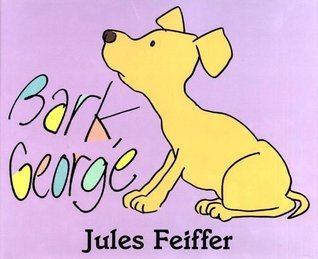
Bark, George, by Jules Feiffer (one of the best for reading aloud!)
And for those who wanted more, here is an annotated list of more dog days books from a previous year, along with some suggestions for dog lovers that go beyond reading about them.
Choices
As I have mentioned before, I am an enthusiastic reader of mysteries of all kinds. I enjoy series featuring one lead detective or partners, with private eyes or amateur sleuths; and I enjoy police procedurals, legal mysteries, stuff that might be considered thrillers rather than straight-out mysteries, and even the occasional cozy. In short, my mystery tastes are pretty eclectic. And in general I am not one to shy away from stuff that can be graphic, although I don’t specifically seek it out. But everybody has their limits, and mine seems to be that I don’t want to read things that are unrelentingly dour and depressing.
After discovering the Will Trent series on TV and thoroughly enjoying it, I decided to check out Karin Slaughter’s original creation of this character and his world, and although I found the writing and story-telling to be good, I struggled with all the differences between the written and televised versions, ultimately deciding that I vastly prefer the TV show to the books and choosing not to read any more of them. This is almost sacrilegious for me, but…there it is.
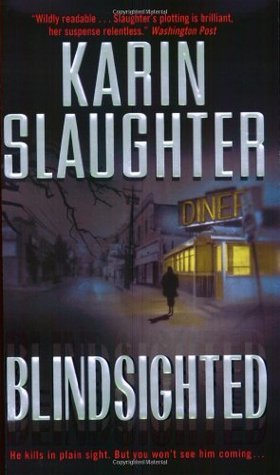
I did, however, decide that I would explore some of Slaughter’s pre-Will books, so I picked up Blindsighted, the first in the Grant County series featuring pediatrician and part-time small-town coroner Sara Linton. The description sounded intriguing, and I always enjoy a female protagonist. The fact that she’s a doctor rather than a detective is a nice twist, and the connection to the law via her ex-husband, police chief Jeff Tolliver, keeps everything legitimate in terms of solving cases. In short, it sounded like something I might like. But there were a few words in the Goodreads description to which I should have paid more attention: brutal, twisted, macabre, sadistic, malevolent.
I didn’t, unfortunately, and once I got started I felt obligated to give the book a shot. In the absence of any other book waiting in the wings, I kept reading and finished it, but I have decided that the books of Karin Slaughter aren’t for me; the subject matter is just too much. This being the first in the series, I can only wonder where she goes next, after a story this grueling. I used to like Patricia Cornwell’s Kay Scarpetta books—likewise headed by a medical examiner—but had to stop reading them when they got too dark. This one was too dark out of the gate.
I think there also has to be a balance in books like this: If there are going to be horrifying murders committed by deranged serial killers, you need a certain amount of balance provided by a stable and focused protagonist. That was what ultimately made me turn aside from Cornwell and, now, Slaughter: Not only were the murders gruesome and strange, but the protagonists and all those surrounding them were angry, sad, depressed, and distressed. I can take one or the other, but the entire experience can’t be an unrelenting downer.
While I have always believed that people should read outside their comfort zones in order to discover things they never knew they loved, I also believe that it’s good to be able to narrow your choices by deciding what’s okay with you and what’s not. I just found one author who is unfortunately not, even though she seems talented and writes prolifically. Too bad, but sometimes despite doing everything right, a writer isn’t for you. I’ll move on and keep looking.
Colonel Custard…
On the plains of Montana, with a Remington…
I couldn’t resist! One of the reviewers on Goodreads called it “Custard’s Last Stand” (without irony), and the vision of a Clue board swam through my mind….
I am, of course, talking about Craig Johnson’s 16th book in his Walt Longmire series, in which Walt is called in to explore a possible art heist of the famous painting Custer’s Last Fight, by Casilly Adams, which was supposedly lost in a fire in 1946, although a lithograph copy of that painting was the most reproduced print of the 19th and 20th centuries.

I was actually pleased by the prospect of a somewhat less fraught plot for a Longmire novel, given the bad reaction I had to #14 (Depth of Winter) and my so-so response to #15 (Land of Wolves). I felt like Johnson betrayed all the essential ideals of the character in #14, and that the following book was a confusing mess because of the fallout in Walt’s life from his previous experiences, so I was hoping this one would bring us back to “normal” Longmire life. I also, of course, love reading any book that’s about painting. I hadn’t realized, until a friend mentioned reading the latest in this series, that I am actually four books behind, Walt’s story having progressed to #20, which just came out last month, so I have some catching up to do. And whether I chose to do so hinged on this book, Next to Last Stand.
At this moment the book is looking like my last stand with this series. I opened it up and started reading, and the initial scene in which we meet the inhabitants of the Wyoming Home for Soldiers & Sailors was such a disaster that I closed the book again and put it in my “abandoned for now” category on Goodreads. I was astonished by this, because one thing Craig Johnson has always been good at is carefully crafting the voices of his characters so that they are distinctive and memorable. The extended exchange between the group of veterans sitting in their wheelchairs out by the highway was not only stilted and hard to believe as an actual conversation, but each person’s dialogue jumped back and forth between formal and informal English within the same sentence, with the effect of jerking the reader out of the flow of the story with every jarring transition. I know that to some, grammar issues will sound like a ridiculous reason for not reading a book, but I honestly couldn’t get past this scene into the story.
Has Johnson changed editors? Has he quit vetting his own books as extensively? Has he gotten bored and lost his motivation? I can’t say, but this is the third book of his I have found problematic. In writing circles, the Rule of Three is a storytelling principle that suggests people better understand concepts, situations, and ideas in groups of three. But for me, it works equally to say that if you are disappointed by a storyteller three times in a row, it’s time to move on. I’m sad to do so, but I’ll have to find out about the fate of this painting some other way.
(To my friends who also read this series, am I missing out? Should I change my mind? Speak up if you have a different perspective!)
Heists and capers
I am a big fan of heist plots, particularly if they are art-related. When I was a teen librarian I enjoyed the Ally Carter Heist Society books, and really liked the crew and their capers portrayed by Leigh Bardugo in the Six of Crows duology. One of my favorite fantasies is the Queen’s Thief series by Megan Whalen Turner, and I also thoroughly enjoy more mainstream heist books like The Great Train Robbery, by Michael Crichton, or The Lock Artist, by Steve Hamilton, which includes the ideal combination of safe-cracking and the creation of graphic novels. I also enjoy all the movies in this sub-genre, such as The Italian Job, The Thomas Crown Affair, Tower Heist, Baby Driver, and the Ocean franchise. And I just finished binge-watching the TV series White Collar, which follows a thief and forger who works with the FBI in order to achieve a limited amount of freedom (he’s not in jail, but wears an anklet that limits his radius to two square miles of New York City). So when I saw that one of last week’s Amazon Kindle First Reads was an art forgery mystery, I enthusiastically grabbed Veridian Sterling Fakes It, by Jennifer Gooch Hummer.
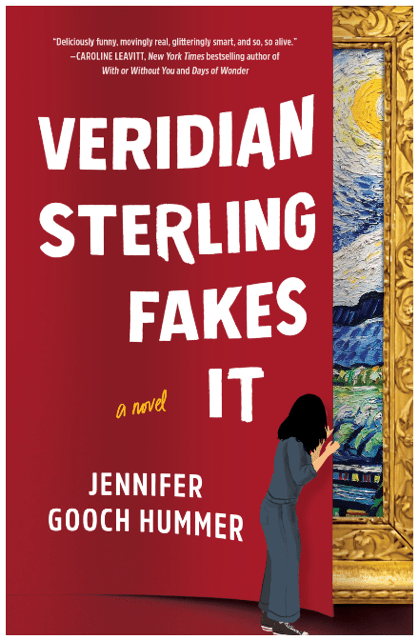
I won’t say that I was disappointed; it was sufficiently populated with interesting characters and situations and art-related historical facts that I read it with a certain amount of pleasure. But ultimately the book never really figured out what it wanted to be, and this lack of definitive direction made it a somewhat meandering and diffuse story with a lot of implausible elements and some clichés I could have done without. There are multiple different directions in which the author takes a few steps and then draws back instead of fully committing, which proves to be a frustrating narrative to read.
Veridian Sterling is a recent grad from the Rhode Island School of Design, with the typical hopes of everyone who excels in their art school classes and hopes that will translate into finding a gallery to display their work, interest (and sales) from the world of art aficionados, making a name for themselves…. And, like most art school grads, she quickly discovers that none of that is going to be forthcoming and that if she wants a place to live and food on her plate, she’d better find a “day job” to sustain her while she works on the rest of the dream. Veri has a job in the beginning at a laundromat/dry cleaners, but when she loses that she takes a position as an assistant at an art gallery that has rejected her paintings. The owner happens to be a former friend and roommate of Veri’s mother’s, when her mother was herself at RISD, and she is all too obviously modeled on Miranda Priestly from The Devil Wears Prada but without the icy demeanor and impeccable taste or, in fact, any redeeming qualities whatsoever. I found this character to be unnecessarily shrill and unlikeable and wished the author had chosen a different option.
We get a lot of stuff about working in the gallery and living her life, meeting an intriguing guy (the driver for a wealthy art dealer who visits the gallery regularly), discovering things she didn’t know about her mother, and various interactions with her best friend, all of which are overlaid with a level of stress that should be building up to something but takes an awfully long time to do so. By the time we finally get to the crux of the story (the mystery, the art crimes, the revelations), we’re just a teensy bit exhausted by the angst and the minutiae. Said plot point doesn’t even arrive until well past halfway through the book, and turns out not to be much of a mystery. While there was a build-up to what should have been the high drama, it felt like the stress level remained almost constant throughout, which did a big disservice to the revelatory bits.
In fact, while reading this book I was constantly reminded of one with a somewhat similar plot that I read and thoroughly enjoyed a few years back (in fact, I liked it enough to read it three times in six years!), so I’ll put in a plug for that one here. It’s The Art Forger, by Barbara A. Shapiro (see my review by clicking the title link), and that author achieved what I think this one was hoping to accomplish, by smoothly combining the multiple levels of mystery, art, and moral dilemma. One of the mistakes I think Hummer made was in attempting to include the slightly goofy humor and irony of such books as Finlay Donovan Is Killing It, by Elle Cosimano, but in trying to be all things to all readers, she couldn’t successfully pull together all the elements to make it work. So if you want a fairly lightweight version of the art forgery world, read this book; if you’d prefer an in-depth exploration of the same theme, go for Shapiro’s instead.
Finally, Christopher Booker famously made the case in 2004 for there being only seven basic narrative plots in all of storytelling and, having just finished watching White Collar, I do wonder whether part of this plot was a result of that coincidental symmetry or else this author did some binge-watching of her own….
Books to TV (or movie)
I am usually quite critical of how a favorite book is translated to television or movie form, and in the past I would most likely have favored the book over the visual version almost every time. But in this day of bountiful offerings on a dozen pay channels, the properties are bought and transformed at such a rapid rate that I have found myself getting to know stories and characters on my television screen ahead of reading their origin stories, and in some cases I have to confess that I have enjoyed them far more than I later did the books.
Some for-instances: The writing is sharper and more clever in Shonda Rimes’s Bridgerton than in the books, so much so that I didn’t even finish reading the first book. The racial themes and the character motivations depicted in the Hulu production of Celeste Ng’s Little Fires Everywhere were less enigmatic and more relateable than in the written version. And although I read it first and gave five stars to Liane Moriarty’s suspenseful and engaging Big Little Lies, I equally loved the HBO version for the sheer star power represented and how well they pulled the whole thing off.
I also have to give exceedingly belated and somewhat awed credit to the team of Denis Villeneuve, John Spaihts, and Eric Roth (co-writers) and Villeneuve again as the director of the new version of Dune. After suffering through David Lynch’s 1984 version and Sci-Fi Channel’s three-part miniseries in 2000, I found myself devoutly hoping that no one else would try to take on the depiction of this classic on film or television, but the new one feels, finally, like the intentions of Frank Herbert have been realized.
This all brings me to my latest book-vs.-television experience, which has been quite a bit bumpier and more jarring than anything I have yet mentioned.
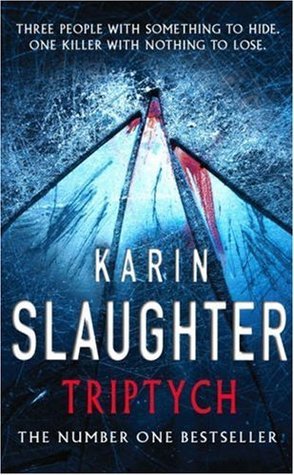
I started watching the ABC TV show Will Trent with its premier episode, and immediately fell in love with the protagonist, his dog, and the rest of the excellent cast. I didn’t even realize, until near the end of Season Two, that the material came from a series of novels by author Karin Slaughter; the minute the season ended I decided I would spend the time until Season Three reading the original stories. And what a shock it was….
First of all, let me say what things are similar about the series. Will Trent and Angie Polaski grew up as lifelong friends in the foster child system. Will now works for the Georgia Bureau of Investigation (GBI), while Angie is a police officer (Vice) for Atlanta PD. Will’s boss is named Amanda, and she knows a lot about him. Her secretary’s name is Caroline. There is a police officer named Michael Ormewood. And there is a cheeky chihuahua named Betty, an adorable but somewhat ludicrous pet for Will. And…that’s pretty much it.
In the TV series, Will is short, compactly built, and Latino. In the books, Will is tall, blond, and blue-eyed, with significant facial scarring. In the TV series, Angie is tough on the surface but exceedingly vulnerable not too far beneath; she is struggling desperately to stay clean from a severe drug habit, and is involved with Will in a sexual relationship that occasionally verges on emotional. In the book, Angie is tough almost through and through, with a tiny bit of her left open to caring for her friend Will; they “broke up” almost two years ago, because Angie knows she’s not good for him and needs to leave him alone if he’s ever to achieve happiness with someone else. On TV, Will is almost immediately paired with Faith Mitchell as his new partner, while in the books she is still on the horizon by the end of book #1. On TV, Michael Ormewood is Angie’s partner on the police force and also works frequently with Will. He’s not entirely likeable, being reckless and kind of a chauvinist, but he’s basically not a bad guy. In the books, well, that would be a spoiler, but Ormewood isn’t who he seems. He’s also short, compact, and dark-complected in the books, while he’s tall, blond, and blue-eyed in the TV show—the exact opposite of the Will-to-Will transition! The only consistent character between the two mediums is Betty.

After having loved the TV show so much, I struggled for the first third of the book with the written versions of these characters. I came to terms most quickly with the character of Will, because despite the physical differences, the inside person is consistent, from the crippling guilt to the dyslexia to the brilliant insights, and the outside Wills both wear three-piece suits as armor. But I mourned the loss of the vulnerable friend/lover Angie, and when I read in the afterword that there is a “legitimate” love interest for Will starting with book #2, I wasn’t sure I wanted to continue. As for Ormewood…I don’t know how I can look at TV Michael the same after reading about Book Michael. By the end of Triptych I had subconsciously decided that it was worth continuing with Slaughter’s written version, but I honestly don’t think I’ll ever find these people either as likeable or as engrossing as the TV characters, and that’s a real departure for me!
Someone in my “Friends and Fiction” Facebook group told me that I should go back and read the series Slaughter wrote before she arrived at the first Will Trent book in order to thoroughly understand the back story; perhaps I will do that and see where it gets me.
Back to Ardnakelty

After weeks or months of reading nothing but formulaic genre fiction—some of it quite entertaining but none of it particularly special—I forgot what it’s like to suck up some genuine literary prose. While reading The Hunter, I was reminded that Tana French’s characters are so immediate and solid that they jump off the page at you—their physicality, their mannerisms, their patterns of speech, their inner thoughts, all draw such a finely tuned picture of who they are that you are right there inhabiting the story alongside them. And not just the characters, but the setting, the look and feel of the natural world she portrays, lets you perceive the particular texture of the dirt under your bare feet and the golden-green hills silhouetted against the horizon.
The Hunter is the second of her books set in the village of Ardnakelty in the west of Ireland and centered around the American transplant, Cal Hooper, and the local teenager, Trey Reddy, with whom he has bonded. And as with its predecessor (The Searcher), French is telling a story that, while it has a mystery of sorts at its heart, is more a tale of people, of community, of life-changing choices.
In the first book, Hooper, a former Chicago detective, had recently moved to this small community and started making it his home, although he will always be an outsider to its provincial inhabitants. But it’s now two years on, and Cal has settled more deeply into his role as a citizen of Ardnakelty, in a relationship with local woman Lena and still serving as a foster father of sorts to Trey Reddy. He and Trey have built up a nicely profitable woodworking business, repairing old and building new furniture for the locals, and their future seems like clear sailing until Trey’s wayward father Johnny shows up, bringing along an Englishman whose ostensible purpose is the exploration of his Irish roots. But Johnny Reddy is an opportunist bent on exploiting the easy advantage, and his scheme to find gold in the townland sets everyone at odds and leads Trey astray as she tries to cope with the fallout from her father’s return.
Johnny Reddy has always struck Cal as a type he’s encountered before: the guy who operates by sauntering into a new place, announcing himself as whatever seems likely to come in handy, and seeing how much he can get out of that costume before it wears too thin to cover him up any longer.
Trey, two years older, has neither forgiven nor forgotten the unidentified villagers’ role in the disappearance of her brother, Brendan, and thoughts of revenge smolder close under the surface of her thoughts. Johnny’s scheming and double-dealing with the tourist Englishman and the participation of the men of Ardnakelty give her what she sees as the perfect opportunity to get back at them, but there are events, intentions, and emotional currents she’s too young and too fixated on her goal to suss out for herself. It’s left to Cal and Lena to help her walk a perilously narrow path without falling off an unanticipated cliff.
In my review of the first book, I called it subtle, lovely, and special, and this continuation is no less nuanced and intriguing. But you have to be able to sufficiently immerse yourself in that subtlety in order to appreciate it. French’s books always get radically opposite reviews from readers, with some lauding their slow burn, intricate plots, and gorgeous prose while others liken reading them to watching paint dry! I am obviously of the former opinion, loving every small shift of expression and change of attitude and tone by each character and holding my breath to see which way the wind will blow next. You will have to decide for yourself where you land. But if you enjoy the work of such writers as Donna Tartt, Kate Morton, and Diane Setterfield, give this book (and its predecessor) a try. There are rumors of a third book to round this out into a trilogy, and I say, Bring it on!
Jakarta farce

I just finished reading The Good, the Bad, and the Aunties, the third book in the series by Jesse Q. Sutanto, and I have to say I am glad the trilogy ends here. Again, as in the second book, it wasn’t bad…but it didn’t make it to great either. The book suffers from the droning extended inner dialogue of its main character, Meddy, who is a mass of frets and worries about everything under the sun, with no real ideas of her own for how to combat them. She has been dominated her whole life by her Ma and her four aunties, and while one would hope to see some evolution from the first book to the third—particularly because during that timespan she has reconnected with her long-lost love, gotten married, and killed and disposed of at least two people—she’s essentially the same self-deprecating bundle of nerves we met on page one of the first book.
Similarly, the aunties are characterized each by their one or two distinguishing qualities, and never expand into fully fleshed-out human beings. Big Aunt is dictatorial and imposing, Second Aunt is sly and competitive, Ma is loud and bossy, and Fourth Aunt, the most cosmopolitan of the women, fancies herself as the coolest (she is a singer) and comes across as disdainful and dismissive. They have a few wee moments, here and there, of dropping out of character to become more humanized, but the overall picture hasn’t changed.
Nathan is a nice addition to the family, now that we are past the wedding, but his personality is mainly filtered to us through Meddy’s astonishment at how well he is getting along with her crazy family, and aside from some random observations by Meddy on the excellence of his abs, is likewise kind of faceless
The premise of this one is that Meddy and Nathan, after an extended honeymoon tour around Europe, have met up with the aunties in Jakarta to spend Chinese New Year with the Indonesian side of the family, which is vast and lively and shares many of the qualities we have come to expect from the aunties themselves—overly concerned with things like good manners, saving face, being extravagantly hospitable, and so on. I did enjoy the group scene of them all celebrating together, the cousins and children bonding over food and fun and much eye-rolling over the burden of dealing with the older generation. But this isn’t enough to carry the rather silly plot, and all too soon it’s back to the aunties doing the wrong thing in the clutch and Meddy having to figure out how to save the day despite her crippling anxiety and low self-esteem.

At the big celebration, an old beau of Second Aunt’s shows up to reclaim her affection, bearing extravagant gifts. “Red envelopes” are given out to the children—packets of cash that are traditional gifts for the new year—but there is one packet amongst them that was intended for someone else entirely (a business associate of the beau’s) but got mistakenly gifted to who knows who in the confusion of the celebration. Now those in the know (the beau, the aunties, and Meddy and Nathan) have to figure out who has it, get it back, and give it to the business rival to avoid dire consequences. But, as is usual with this cast of characters, things go typically awry and get ever more complicated.
Maybe I’m just in a weird mood—not the one to sufficiently appreciate this book—since many people gave it four and five stars. I found it more stressful than enjoyably chaotic, and was glad when it was over. I vastly preferred her stand-alone book that I read a few weeks ago, and hope she writes more like that one.
 The Book Adept